2022年4月27日星期三

RPR Induction Pipeline Coating Removal

RPR Induction Pipeline Coating Removal-Induction Rust Paint Coating Removal

How Induction Stripping Works?

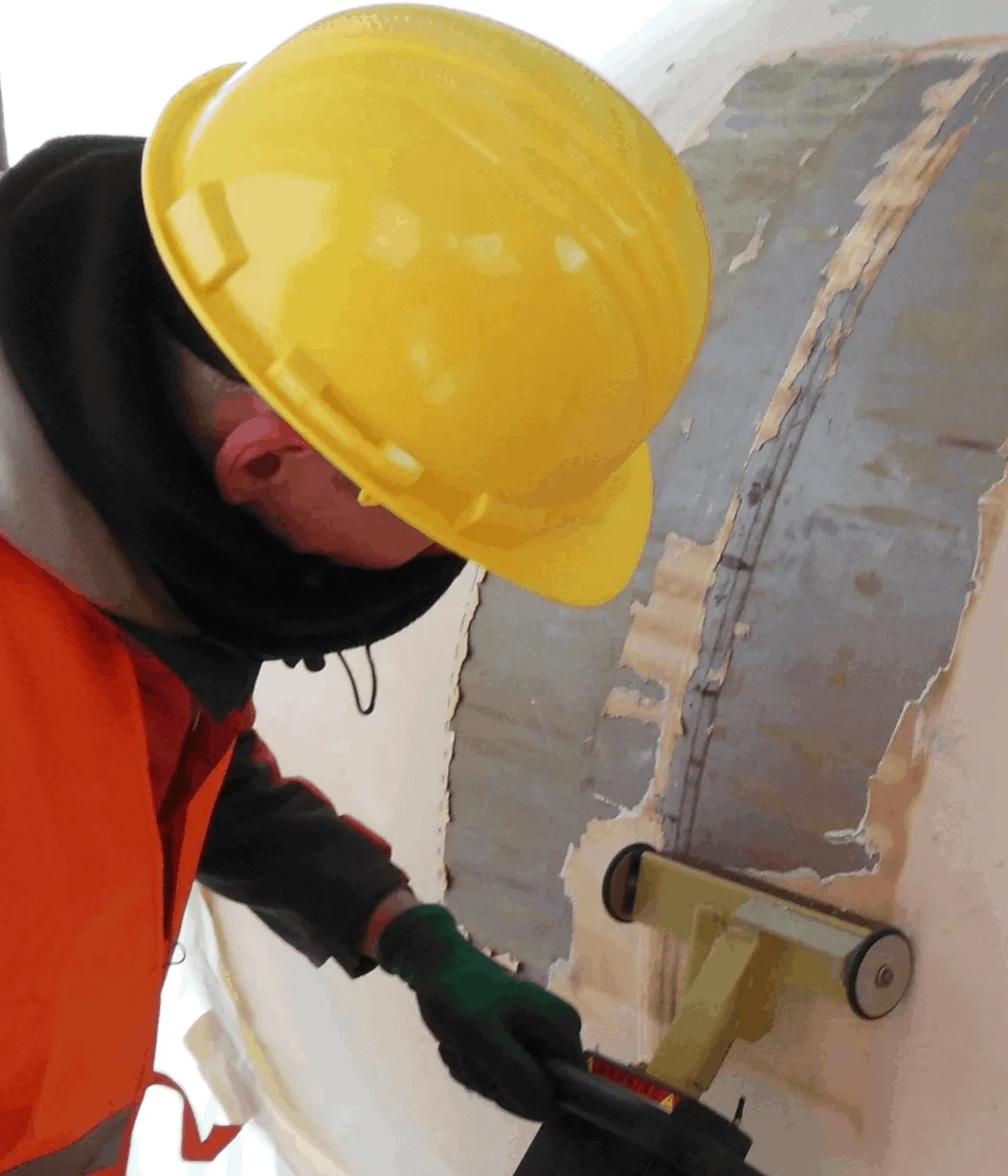
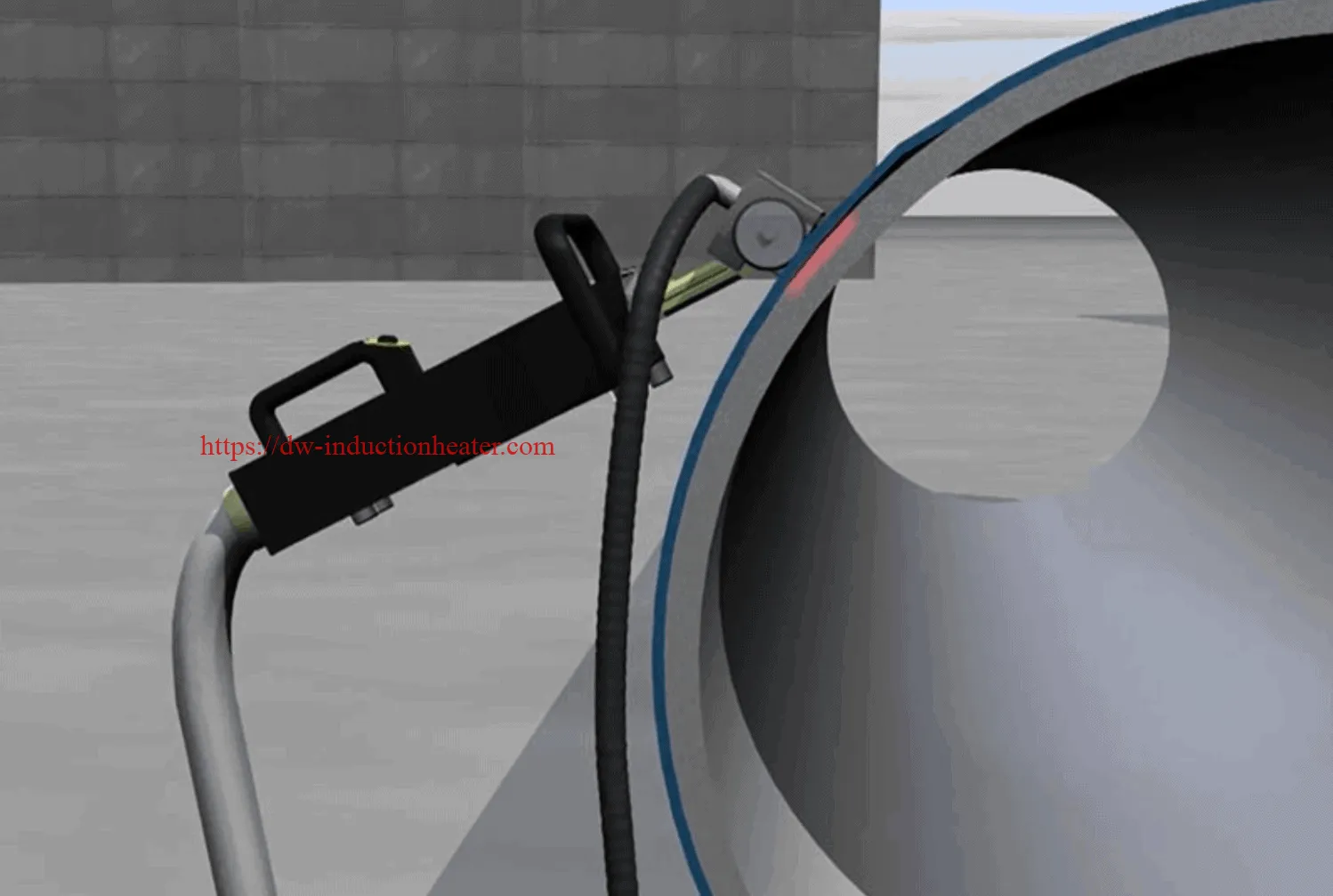
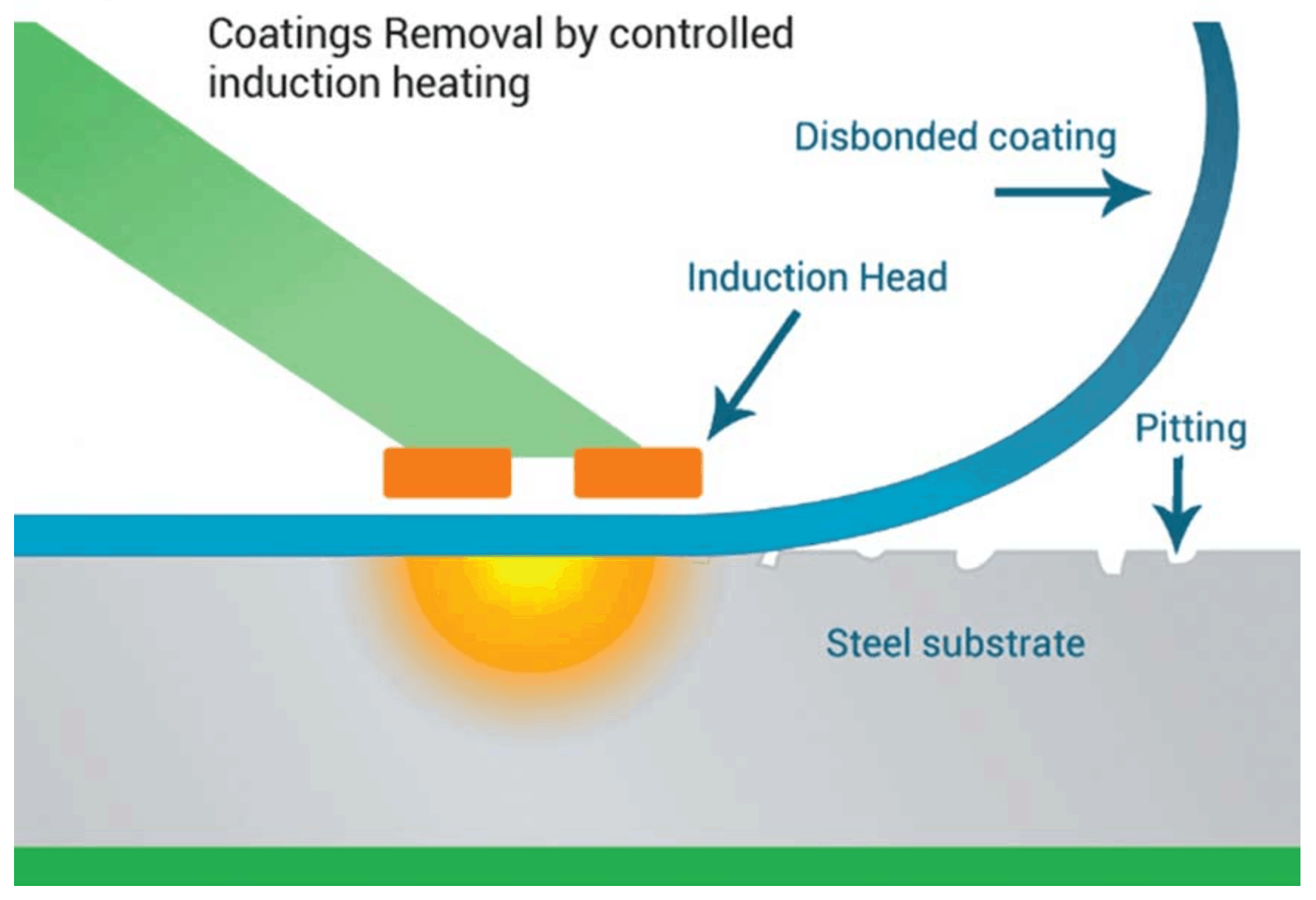
Induction stripping is a hot surface preparation process.An induction generator sends alternating current through an induction coil, which generates an electromagnetic field. This field induces currents that are converted into heat in contact with conducting materials such as steel. The heat is generated beneath the coating, causing the coating to peel rapidly. This method is suitable for treating flat or curved surfaces on the jobsite and does not require any confinement. The induction stripping system will strip paint, other coatings, heavy rust, bacterial corrosion and oil and grease electrically conductive surfaces (ferromagnetic steel) breaking the interfacial bonding between the material and the substrate etch residues, induction heating localized and controlled which consumes minimal energy. HLQ simplifies your coatings removal needs with yet another revolutionary technology: Induction Stripping! HLQ’s induction stripping equipment removes your toughest coatings from steel structures with no noise or secondary waste—getting right down to the steel.
If you have ever wished for a magic wand to solve your coatings removal headaches, HLQ has the next best thing. HLQ technician can wave our induction wand over your coating catastrophe and dis-bond some of the hardest to remove coatings at rates that are up to 10 times faster than competing technologies like sandblasting.It’s not magic, but our induction stripping technology is a close second! When HLQ technicians move our induction head over a steel surface, it creates sufficient heat (typically 300 to 400 degrees) to quickly unbond most coatings from tanks, tankers, pipelines, ships and offshore platforms, allowing coatings (up to 1-inch thick) to be removed in sheets. RPR Heat Induction coating removal works by the principle of induction. Heat is generated in the steel substrate and the bond at the steel and coating interface is broken. The coating is then removed entirely without disintegrating and completely free from contaminating agents, i.e.. blast media. This makes disposal and recycling of waste easier and more cost effective.   With minimum power consumption even the thickest and hardest coatings can be completely removed. RPR Heat Induction is faster than conventional methods. A silent method of coating removal means that our engineers can operate day or night with no noise pollution. Because of the many advantages of our induction heating process, we’ve been able to provide a wide range of Alliance customers with the service they need. We’ve worked with customers in industries such as:
  • Oil & gas
  • Financial
  • Food & beverage processing
  • Retail and food services
  • Marine
  • Hotels & hospitality
  • Commercial pools and aquariums
HLQ’s jaw-dropping induction dis-bonding process removes most coating types, including:
  • Coal Tar Epoxy
  • Polyethylene
  • Fiberglass
  • Anti-skid
  • Rubber
  • Chartek fireproofing or other intumescent coatings

Faster, Quieter, Cleaner, Safer Surface Preparation

Some might say induction stripping is the “quick and dirty” way to get the job done, but truthfully it’s quick, and not messy at all. Because induction stripping creates no secondary waste, cleanup is simplified. Dealing with sheets or strips of coating is infinitely easier than dealing with blast media and dust.
In many cases, containment can be simplified or eliminated altogether. Imagine eliminating a costly scaffolding and containment project and replacing it with a snorkel lift and a drop cloth! Other trades can work in close proximity to HLQ’s induction stripping activities because it is a very quiet process that will not create obnoxious noises that disrupt the productivity of other contractors you may have working on your project. Our induction stripping equipment has no moving parts, making our process much safer than hydro-blasting or sandblasting for your employees, other contractors, customers and passersby. RPR induction removes paint, coatings, thick rust, bacterial corrosion and oil & grease residues from electrically conductive surfaces (steel, etc.) by breaking the interfacial bonding between the material to be removed and the substrate using controlled, localized induction heating with a mini- mum consumption of energy.

The induction heating principle

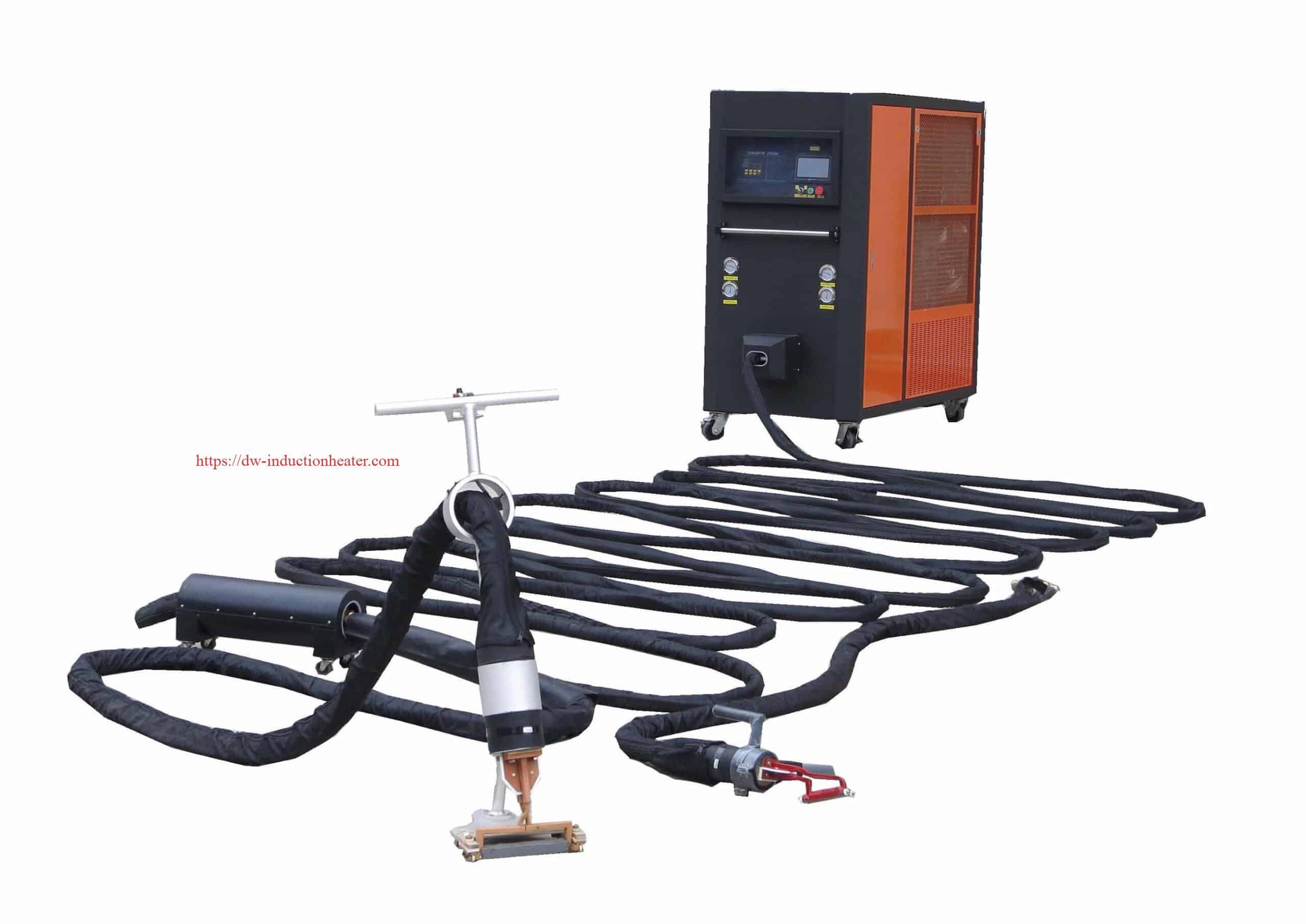
The RPR induction generator sends alternating current through an induction heating coil, which gener- ates an electro-magnetic field. This magnetic field induces eddy currents in a conductive mate- rial like steel. Due to the resistance of the steel, these currents are converted to heat = induction heating. The heat is generated below the coat- ing, resulting in quick and clean disbonding. The RPR system is ideal for the removing paint, rust, and other coatings (vulcanized rubber, fire protectant, epoxies, etc. with control possibili- ties for the following functions: • Energy consumption • Disbonding temperature range • Heat penetration • Removal speed With above setting possibilities, RPR delivers unequalled performance and is the system of choice for cost-effective, safe and environmentally friendly surface coating removal from steel substrates. RPR is ideal for: marine, tanks, offshore and land-based pipelines

Induction Coating Machine & Induction Paint Stripping System & RPR Induction System


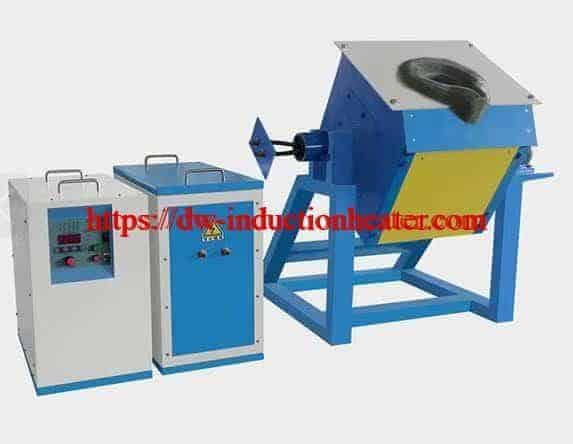
Tilting Crucible Melting Induction Furnace

Tilting Crucible Melting Induction Furnace

Tilting Crucible Melting Induction Furnace

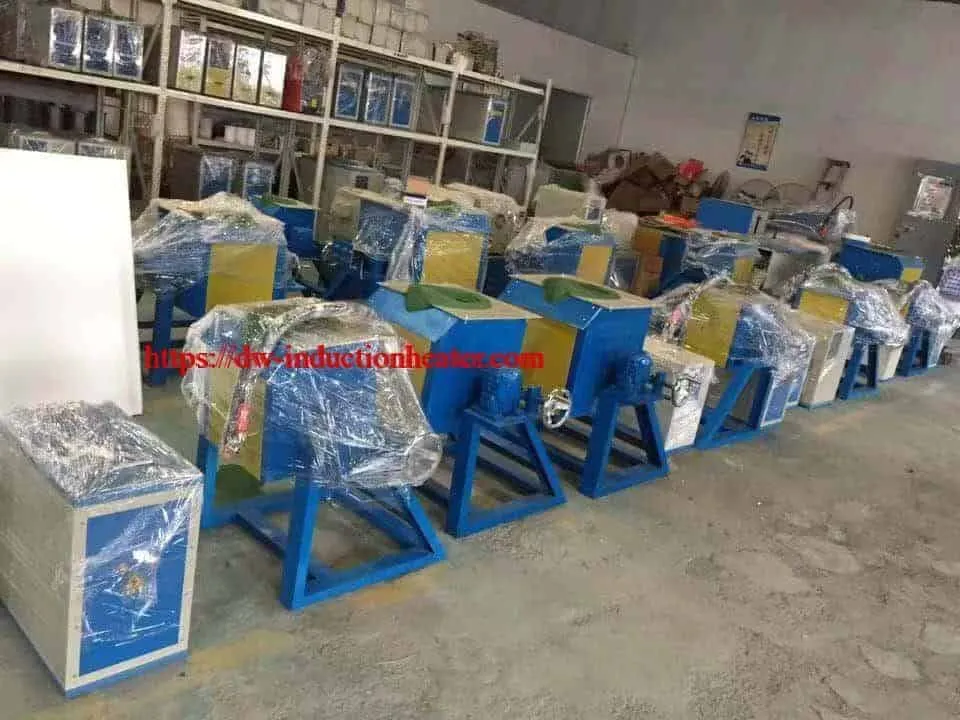
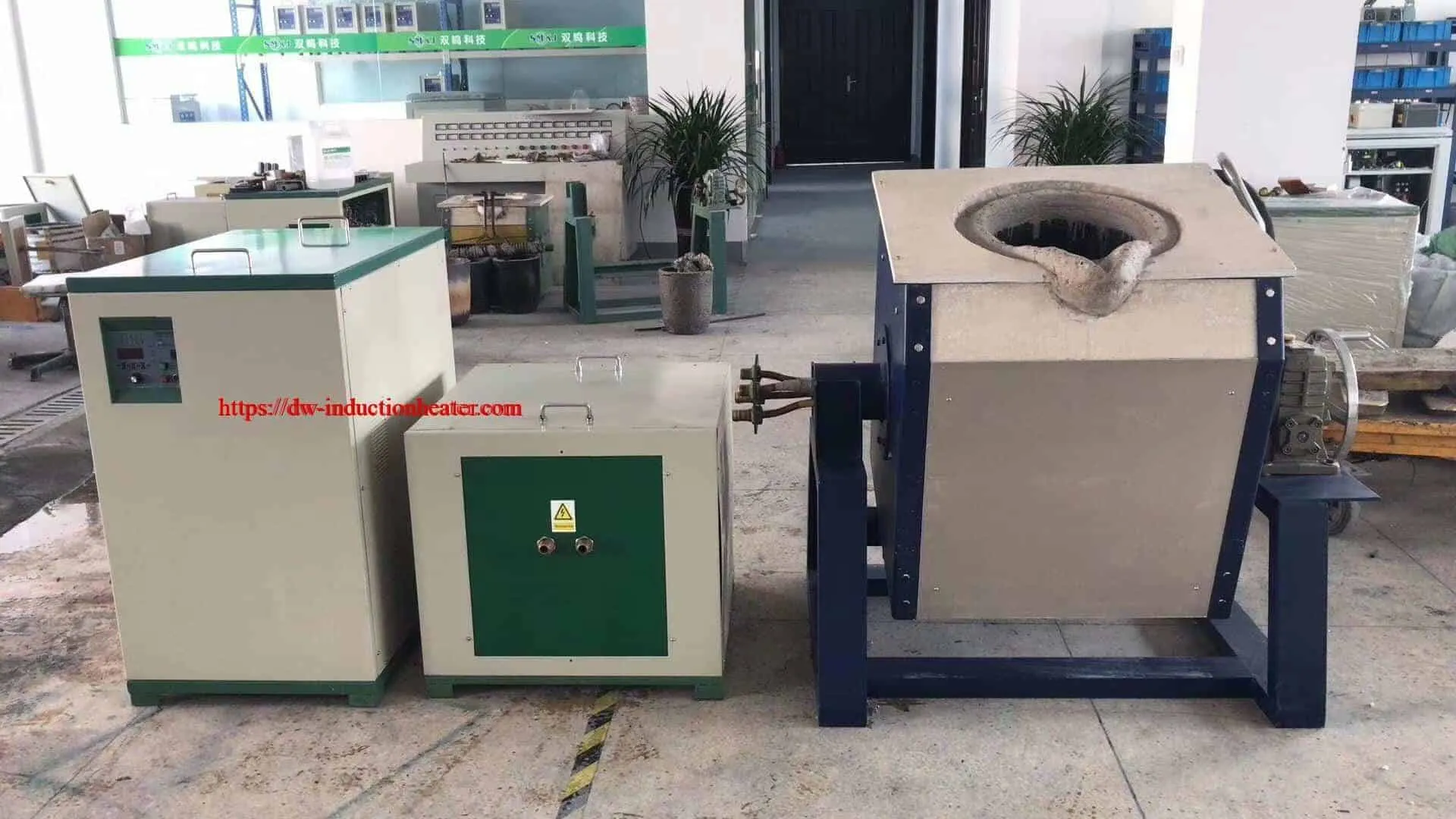
HLQ Induction Equipment Co has a complete line of Tilting Crucible Melting Induction Furnaces to melt Aluminum, Copper,Iron steel,gold,silver,aluminum alloy, etc. Melting Furnaces are provided for temperature ranges from 600℃ to 900℃ by air cooled  (max 1700℃  by water cooled ).

Application Range:

Tilting Crucible Melting Induction Furnace is widely used for the melting and keep warm process of the Low & High melting point non-ferrous metals, such as aluminum, iron steel copper, zinc, lead, tin, cadmium and other alloys. Suitable for all kinds of aluminum alloy castings, die castings, piston, engine block, automotive aluminum wheels, etc Our Crucible Melting Furnaces are provided for temperature ranges from 600℃ to 900℃ not water cooled.

Product Features:

HLQ Induction Equipment Co has been designing, engineering, and manufacturing Tilting Crucible Melting Induction Furnaces since 1996.

Tilting type aluminum melting induction furnace, it unload liquid aluminum through diversion trench, also can be used to cast aluminum. It safe and reliable pouring used 2 hydraulic cylinders with end bearing dampers on tilting frame. The furnaces are using ultra save energy structure of ceramic fiber insulation. Very low heat loss due to excellent thermal insulation. Thermally efficient multi layered lining, insulated refractory lining, Longer crucible life, Fast, easy installation. High quality crucible, fast crucible thermal conductivity, high thermal efficiency, long service life. Designed for hand or robotic ladling directly to the die or mold or pressurized for low pressure die casting. HLQ Induction Equipment Co provides aluminum liquid holding furnace, which is mainly used for heat preservation, let stand, degassing and refining of melted aluminum alloy.

Benefits:

  1. High efficiency and energy saving
  2. High thermal efficiency
  3. Stable and reliable operation
Tilting Crucible Induction Furnace Tilting Crucible Melting Furnace   Tilting Crucible Metals Melting Induction Furnace

Induction Soldering Copper Tap

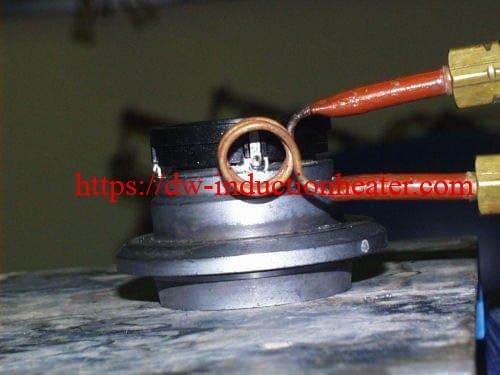
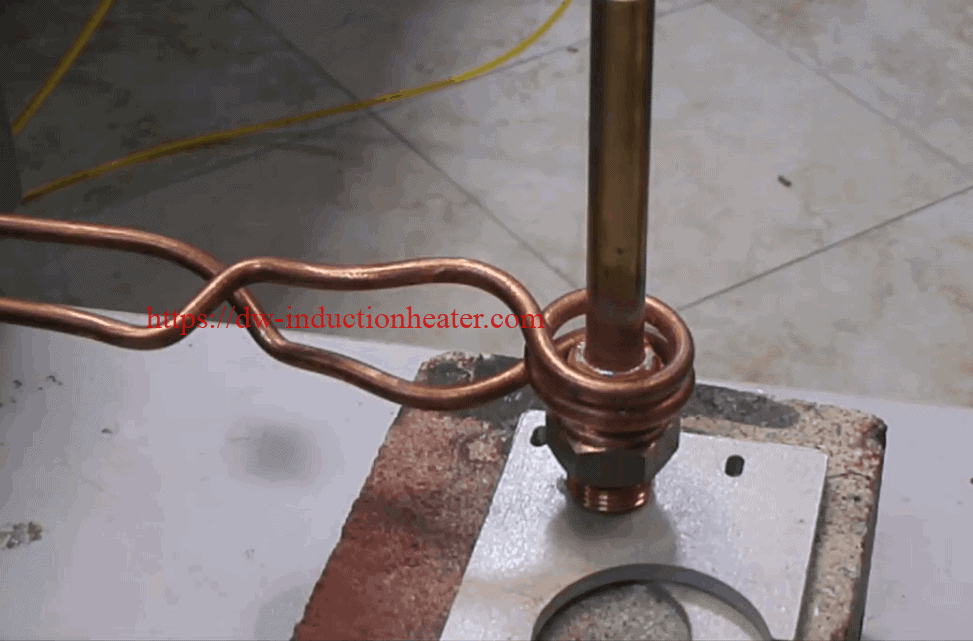
Induction Soldering Copper Tap on a Speaker Ring with IGBT Induction Heater Objective Heat copper tab until the solder reflows. Material Copper tab 0.25 X 0.25 inch square about 0.05 inches thick. Lead free solder material (higher melting temperature than regular solder.) Temperature 500 ºF for 1.25 seconds Frequency 286 kHz Equipment DW-UHF-4.5 kW, 150-400 kHz solid state induction heating system equipped with a remote heat station containing one 1.2 μF capacitor and a specially-designed work coil.. A multi-turn helical coil about 3/16 inch internal diameter made out of 1/16 inch diameter tubing. Process Solder wire is fed onto speaker tab area using an automatic wire feeder. It is then heated to re-flow the solder. Results/Benefits With an efficient coil design induction heating easily reaches the desired reflow temperature in a very short amount of time. induction soldering copper

2022年4月26日星期二

Induction Brazing Stainless Steel Tubing Joints

The Professional Induction Brazing Stainless Steel Tubing Joints Technology

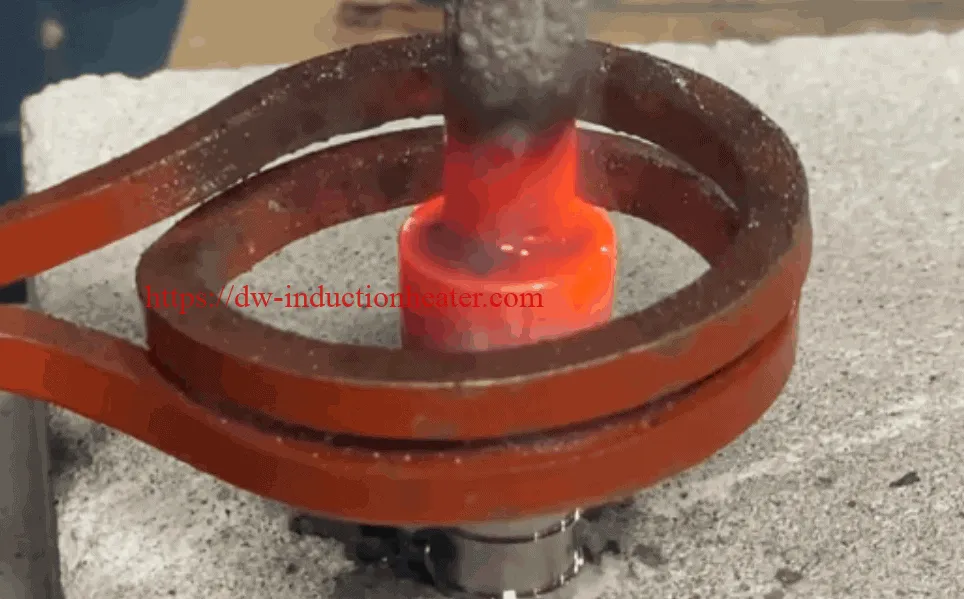
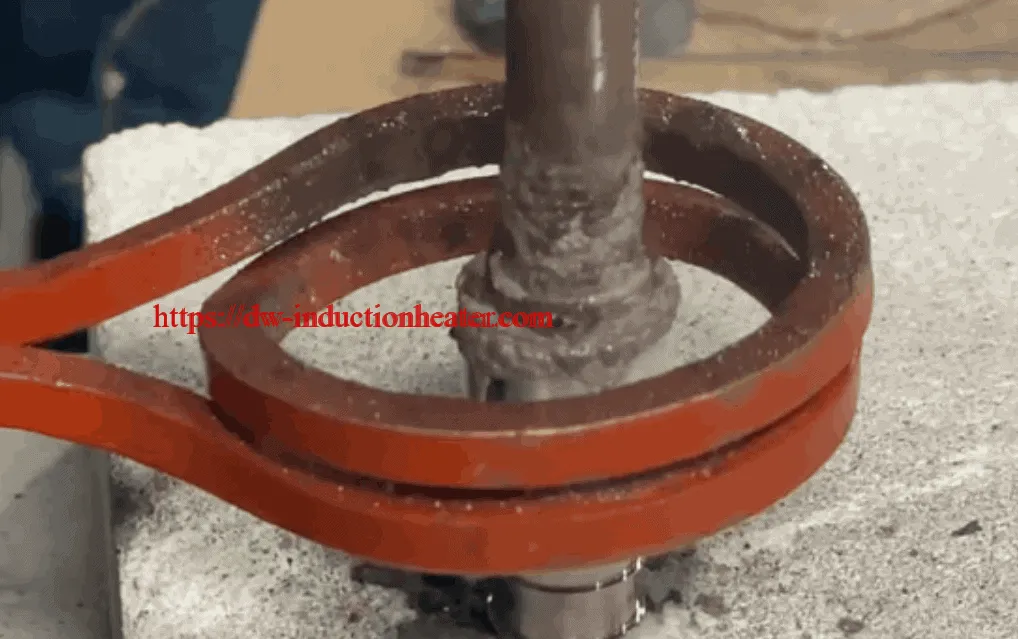
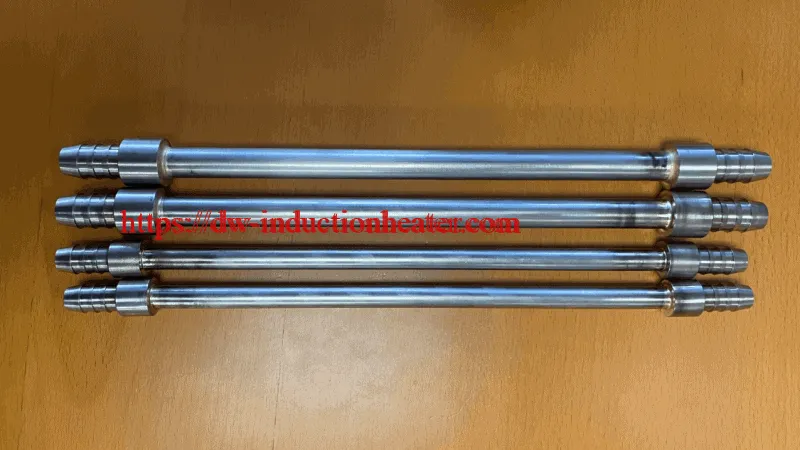
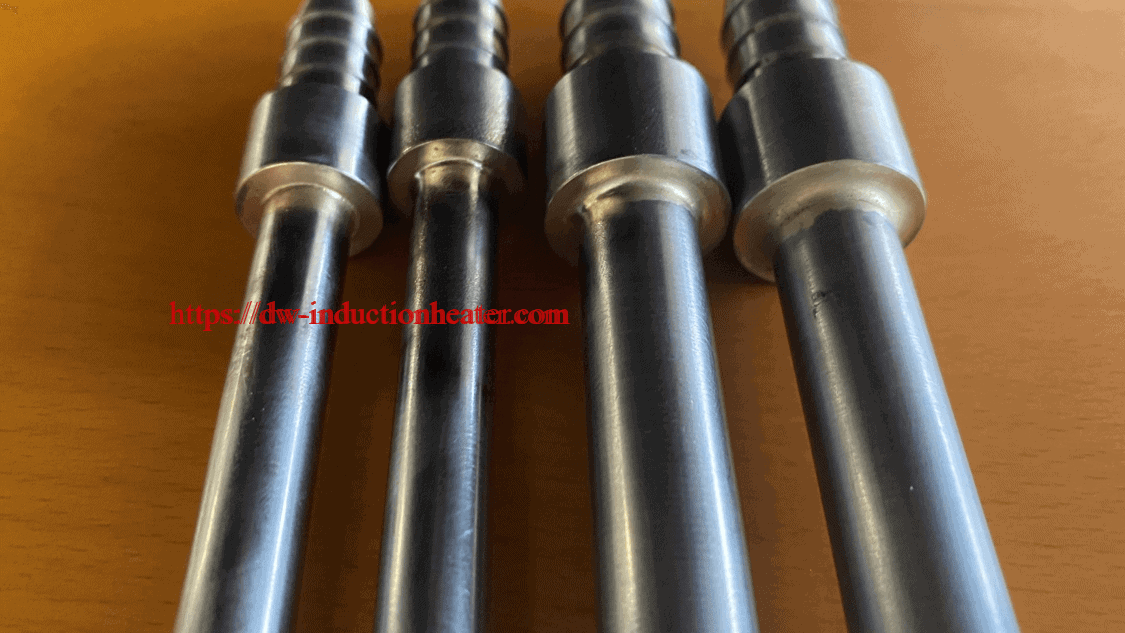
The goal of this induction brazing application test is for Induction Brazing Stainless Steel Tubing Joints evenly for increased repeatability. Industry: Automotive Equipment:  DW-UHF-10KW induction brazing machine Time: 15 sec. Materials: Stay Silv Black Flux Temperature:  1472°F  (800°C) Power: 8 kW
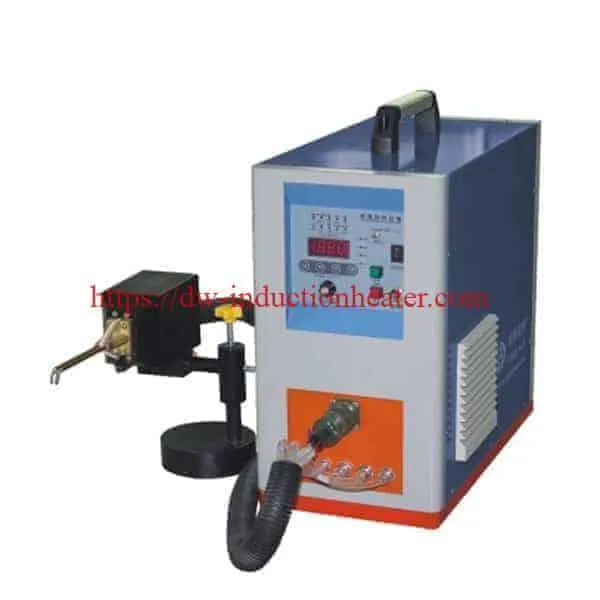
Process: The two stainless tubes where joined together and an alloy ring was placed around the joint. Black flux was then applied to the joint for a better induction brazing process. The work piece was placed inside the helical coil for 15 seconds where 8 kW of induction heating power was applied. The work piece reached 1472°F  (800°C) and was successfully brazed.  The HLQ induction heating equipment recommend for this application is the  DW-UHF-10KW induction brazing heater along with a 10 kW power supply.

induction heating diffusion pump with electromagnetic heater

induction heating diffusion pump with electromagnetic heater

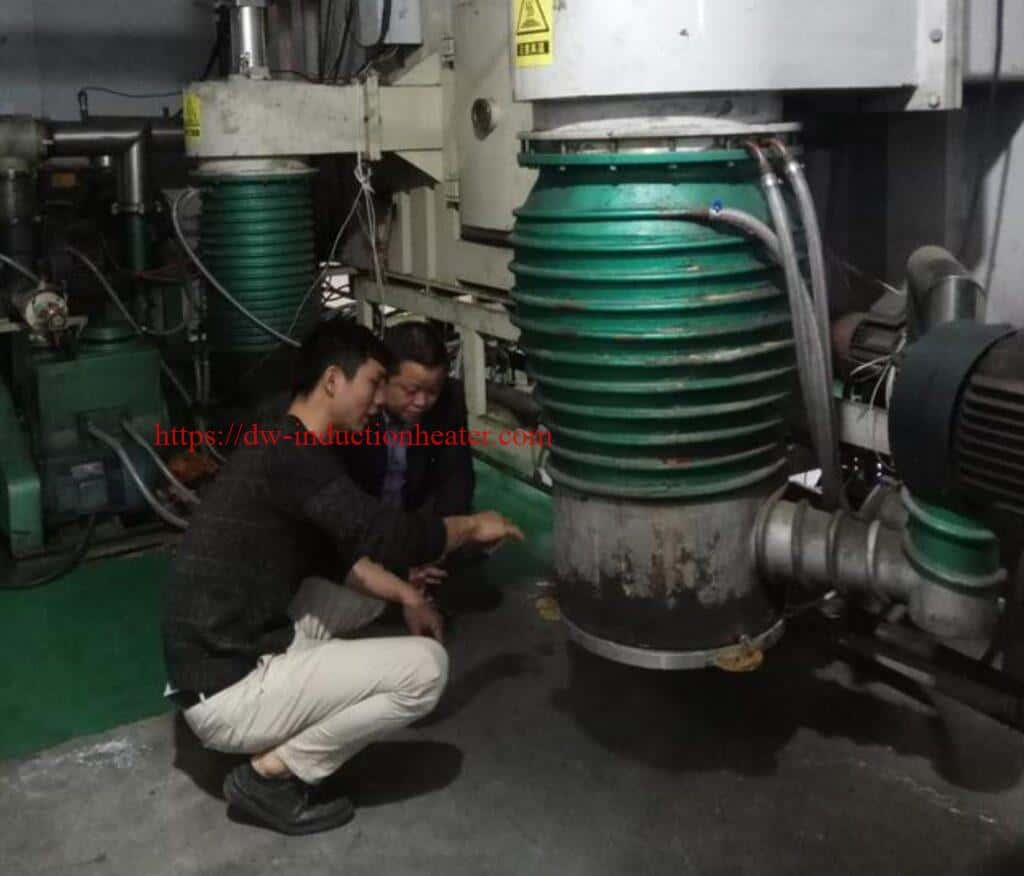
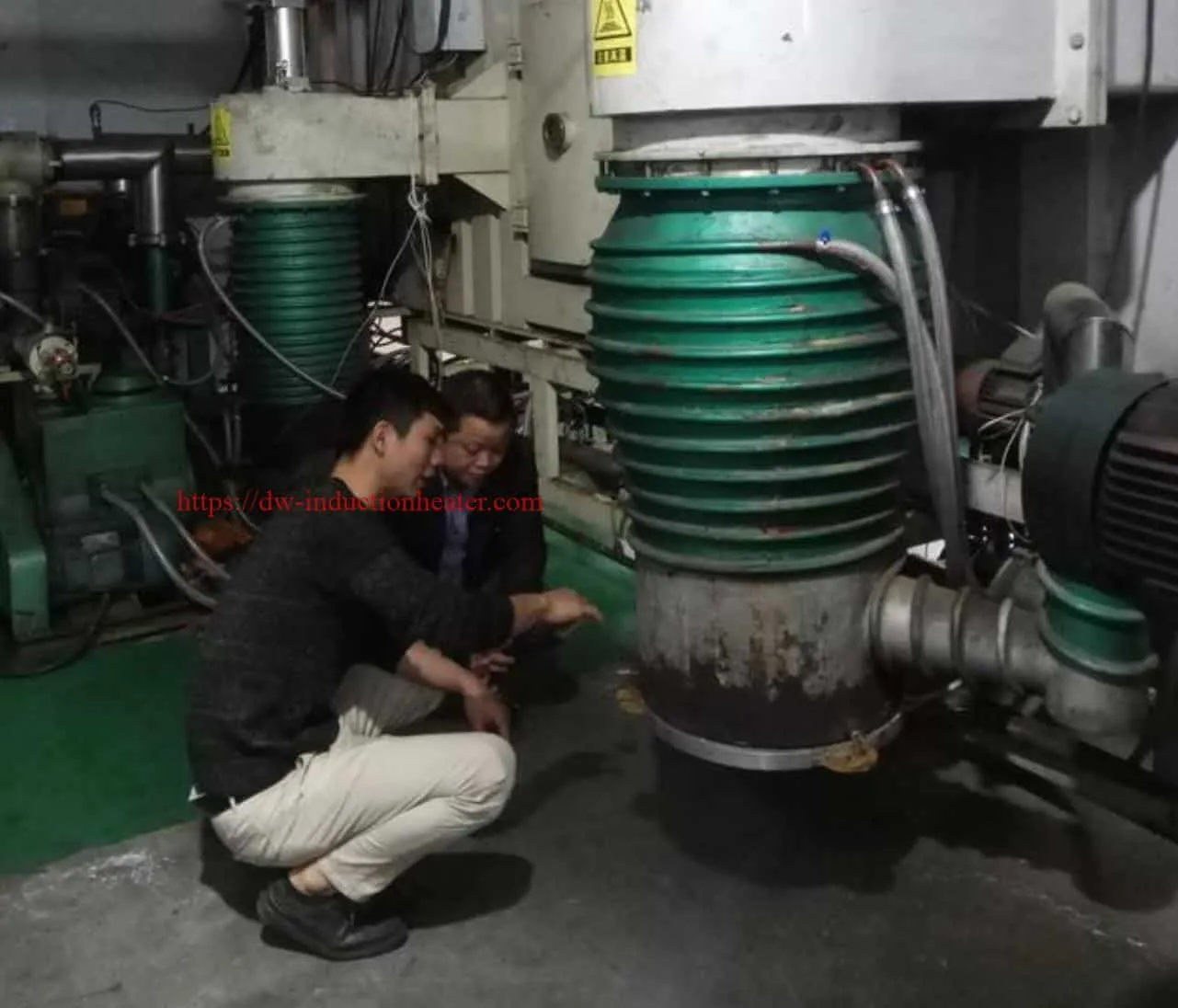
Induction Heating diffusion pump-Vacuum coating diffusion pump electromagnetic induction heater instead of resistance heating plate can save how much electricity?
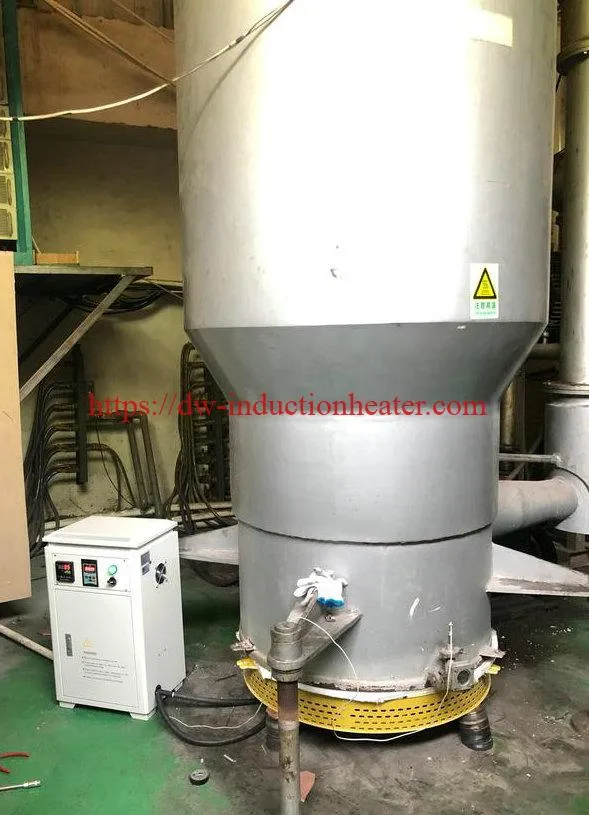
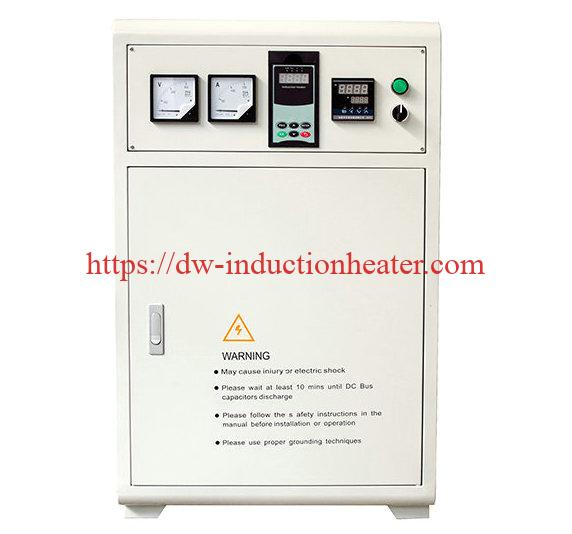
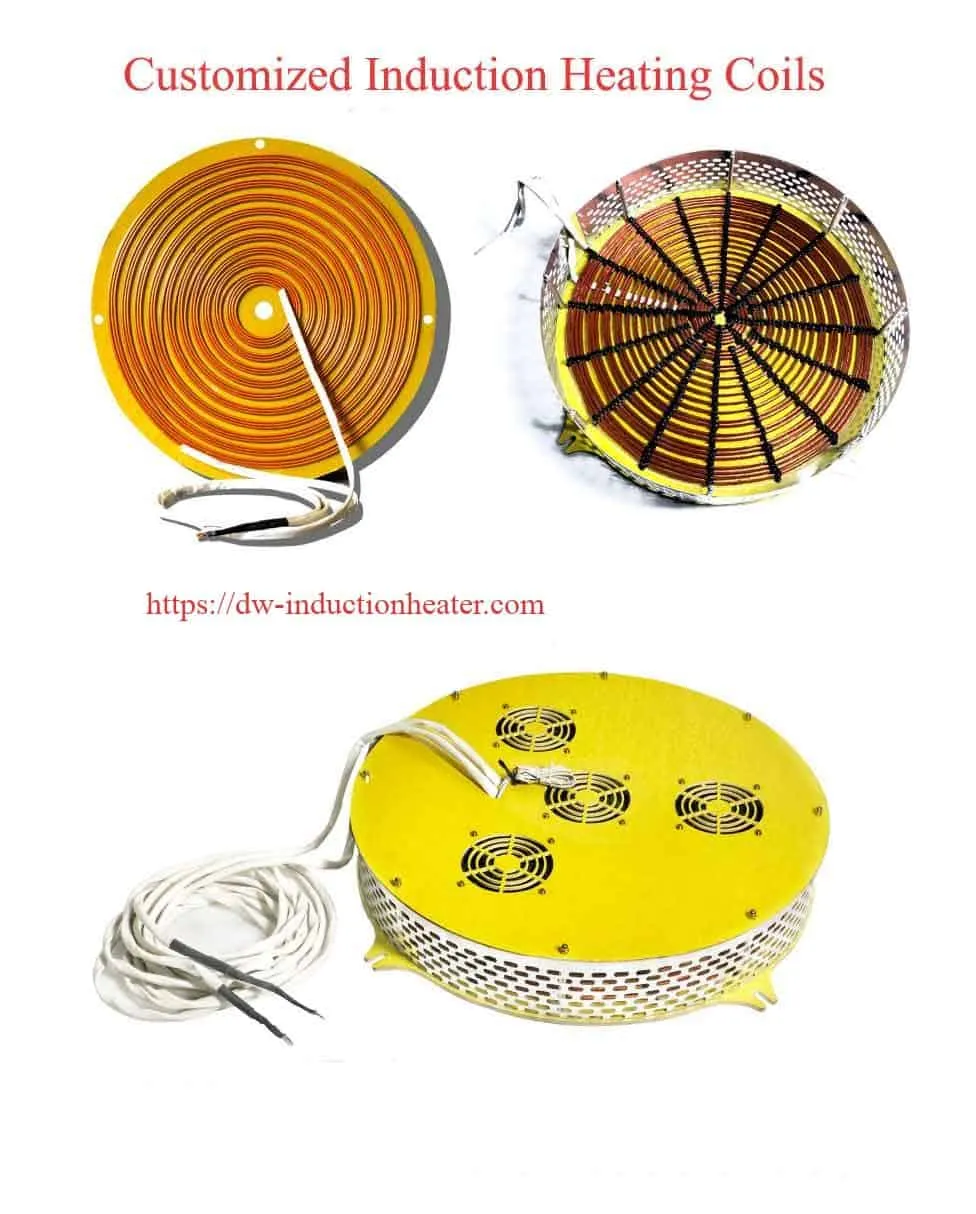
The traditional diffusion pump is slow to warm up, and also has broken wires, easy to short circuit, low reliability, and easy failure. It brings a lot of inconvenience to the actual operation. For this reason, HLQ has specially developed a special electromagnetic induction heater for diffusion pump, which consumes 7-8 kWh of electricity per hour after transformation. The time is shortened by more than half, and the operation is convenient, the installation is easy, and the style is novel, which may bring good news to the vacuum coating industry.
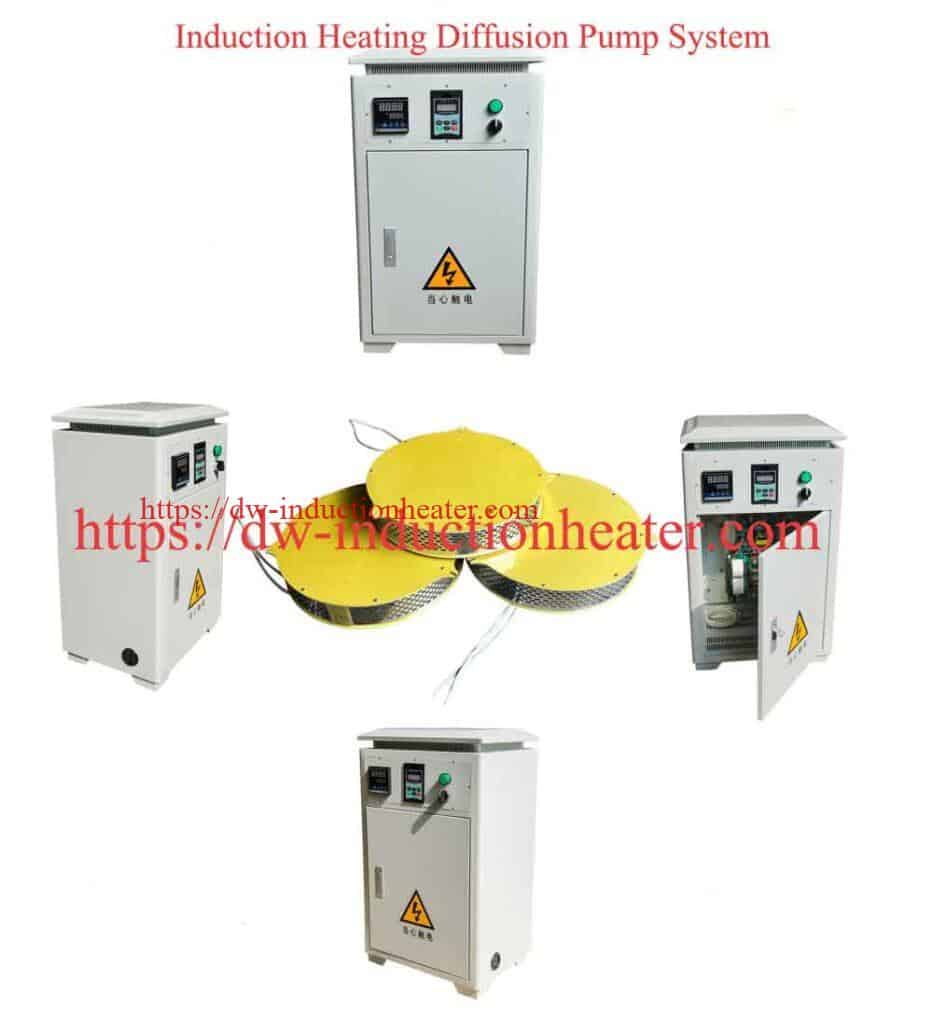
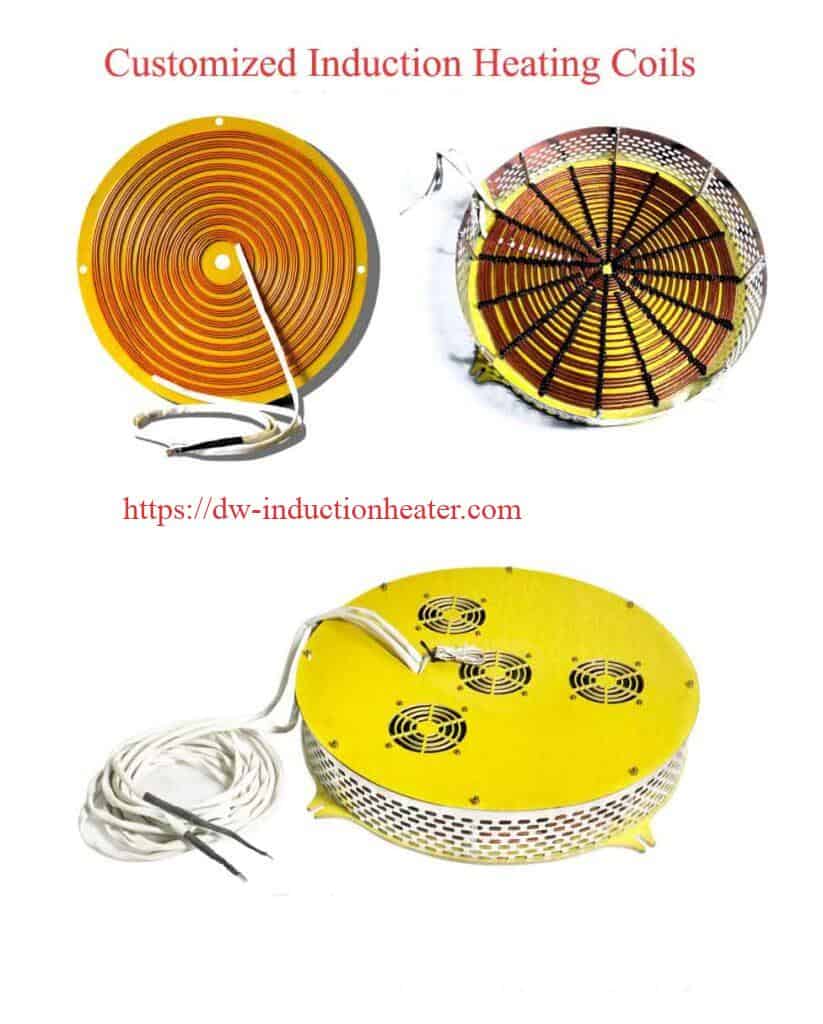
Electromagnetic induction heating is a way of heating the body itself by converting electrical energy into magnetic energy. Electromagnetic induction heating cable disk directly ACTS on the bottom of the pump through induction to generate a magnetic field, so that the pump generates heat itself. The electromagnetic furnace plate does not generate heat, the thermal conversion efficiency reaches more than 98%, the temperature control is accurate, PID can automatically adjust the power.
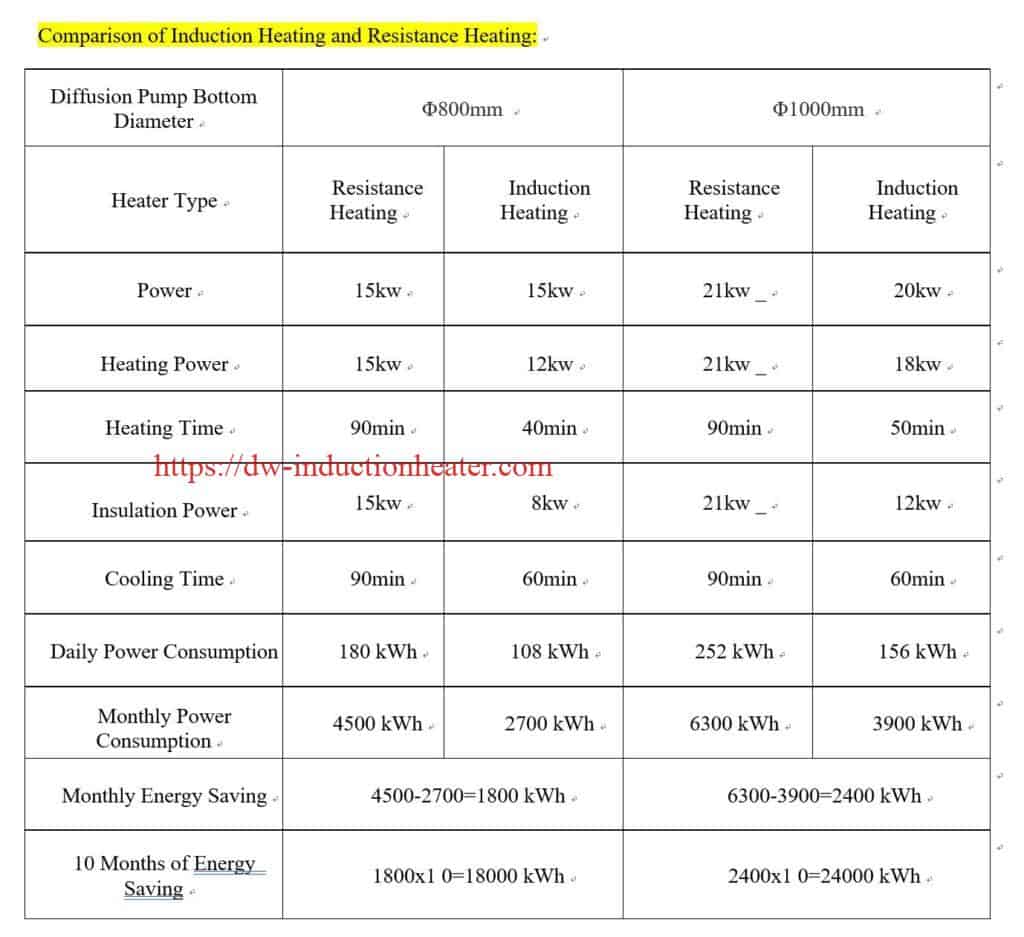
Advantages of diffusion pump electromagnetic induction heating over resistance wire heating:

(1) high efficiency and energy saving, saving more than 30% electricity than resistance wire heating. (2) fast heating speed and even heating. (3) stable operation and accurate temperature control (4) easy operation and long service life At room temperature, it takes 70-90 minutes for a traditional 15kw resistance wire for a diffusion pump with a diameter of 830mm to rise to 230 degrees and can no longer be heated up, while the 15kw electromagnetic heating coil only takes 35-40 minutes to raise the temperature to 230 degrees , greatly shorten the preheating time, improve the production efficiency, and save a lot of power. When the equipment is shut down, when the resistance wire heating method is used, because the electric furnace has residual heat, the cooling pump will work for a long time before it can stop, and the coil used for electromagnetic heating has no heat. After the equipment is shut down, it can be quickly Stop the cooling pump. This also saves the power consumption of the cooling pump. It can be seen that electromagnetic heating saves at least 30%-60% energy than traditional resistance wire heating. Electromagnetic induction heating evaporation coating can greatly improve the evaporation rate, and the evaporation temperature is stable, which can avoid the splash phenomenon of the coating material, the film will not have the effect of pinholes, greatly improve the qualification rate of the product, and the purity requirements of the coating material are also higher than the resistance. The requirements of the furnace are lower. The high-purity material required by the resistance furnace (electric furnace wire) must reach 99.99% purity, while the electromagnetic heating evaporation only needs to reach 99.9%. From every point, it can be seen that the electromagnetic heating evaporation technology has reduced Coating production cost. Diffusion pump induction heating has automatic constant temperature, automatic shifting and adjustable functions, energy saving, environmental protection, durability and longevity Up to 50,000 hours or more, no open flame, can reduce the indoor temperature and prolong the life of the cooling water pipe. Easy installation and disassembly, as well as maintenance of the diffusion pump. After installation, it does not affect the vacuum, does not affect the product, and does not affect the time to make a furnace product. product is guaranteed for 12 months free of charge, and technical support is provided for life. The product is not easy to break, and can be easily replaced with a resistance furnace. Once there is a problem with the product, the manufacturer will send a spare machine to replace it in time.
Induction heating machine is widely used in heat transfer forging, quenching, tempering, annealing, quenching and other heat treatment industries, as well as preheating, hot charging and other industries.

So what are the advantages of electromagnetic induction heating system that make it widely used in all walks of life? Nowadays, many users are using this induction heater. Users use it because it has its own advantages. Induction heating machine adopts electromagnetic induction heating process to directly heat the workpiece. It has the advantages of fast on-off speed and high working frequency.
  1. Energy saving and environmental protection. Now the state's control of air pollution is becoming more and more strict. This is the advantage of induction heating machine
  2. The use of induction heating machine can reduce the production cost.
  3. Induction heating machine has high technical content, so its energy efficiency is also very good.
  4. Induction heating machine can be used with very good performance and high efficiency.
https://dw-inductionheater.com/induction-heating-diffusion-pump-with-electromagnetic-heater.html?feed_id=116200&_unique_id=6268a62f0849b
induction brazing brass pipe to brass part

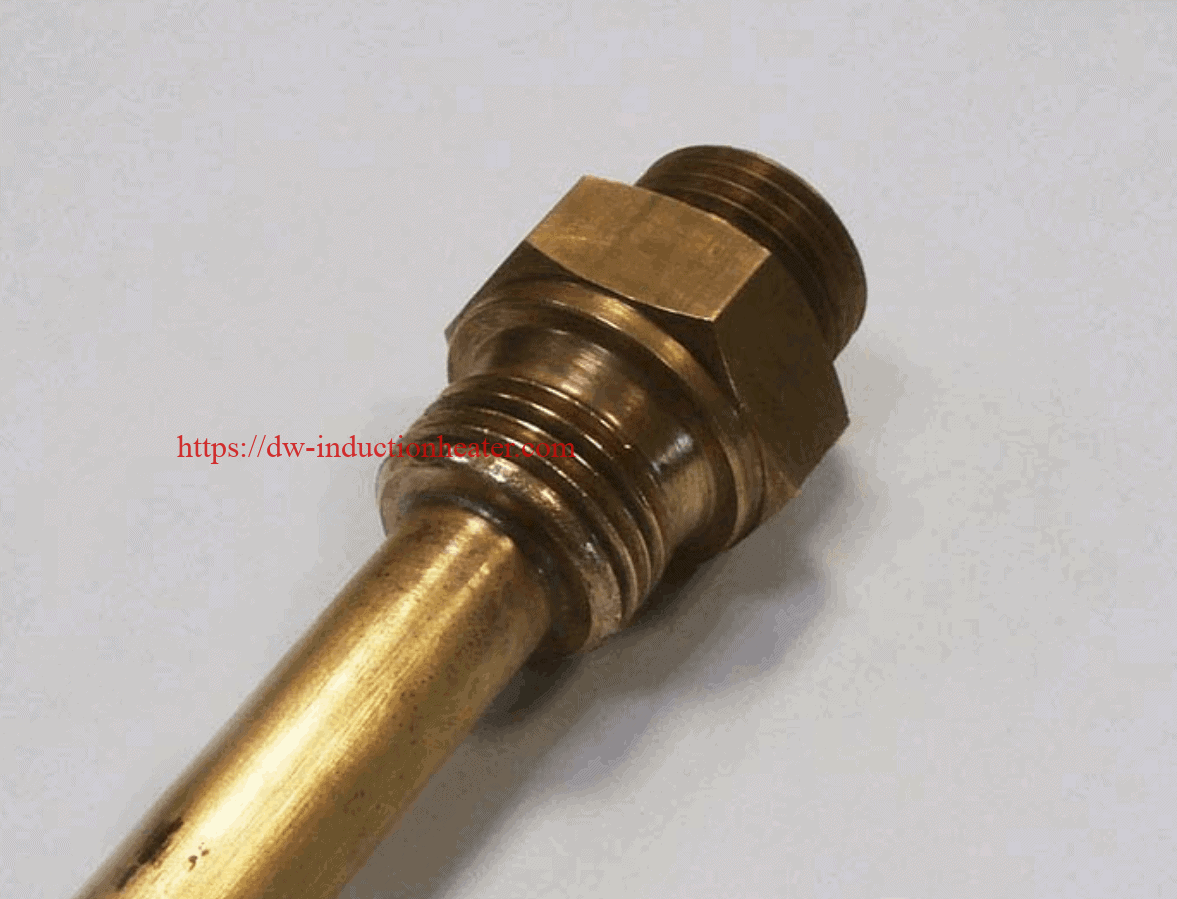
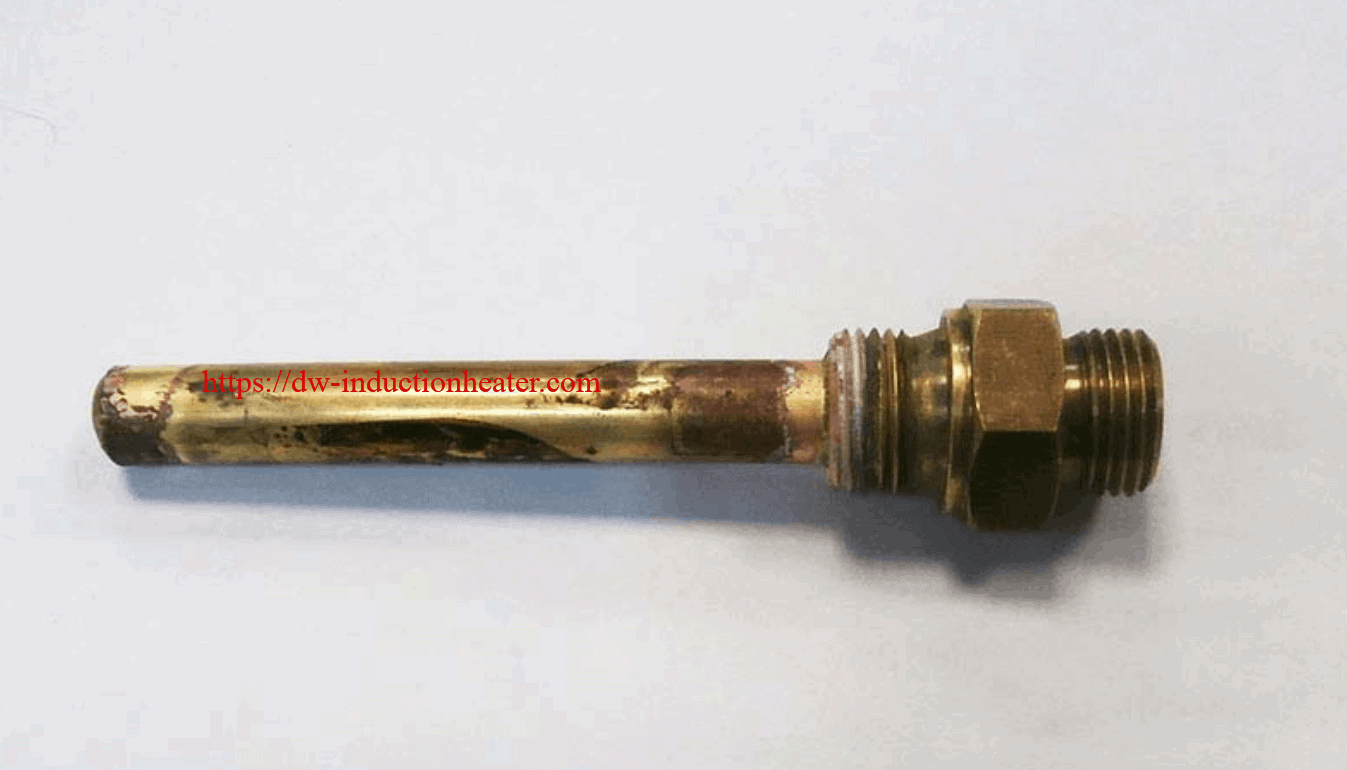
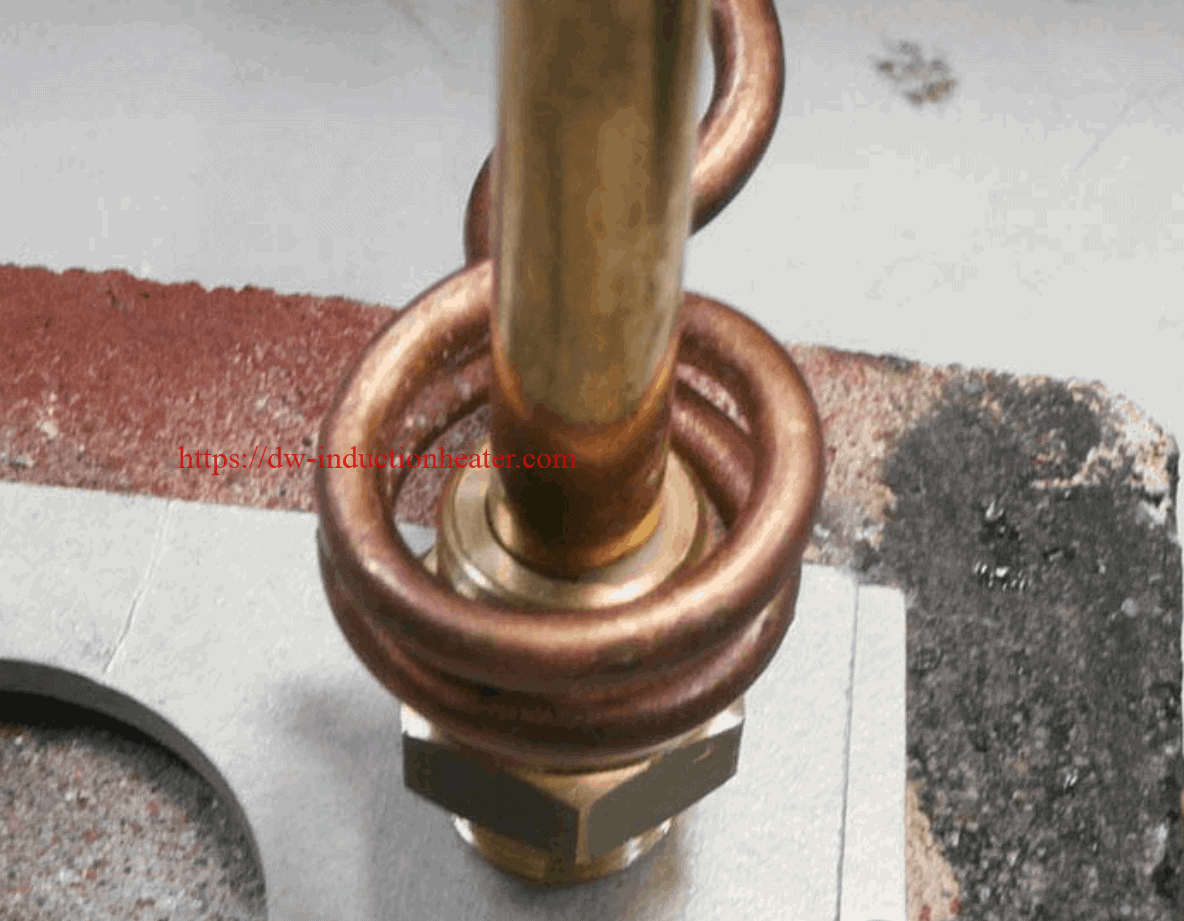
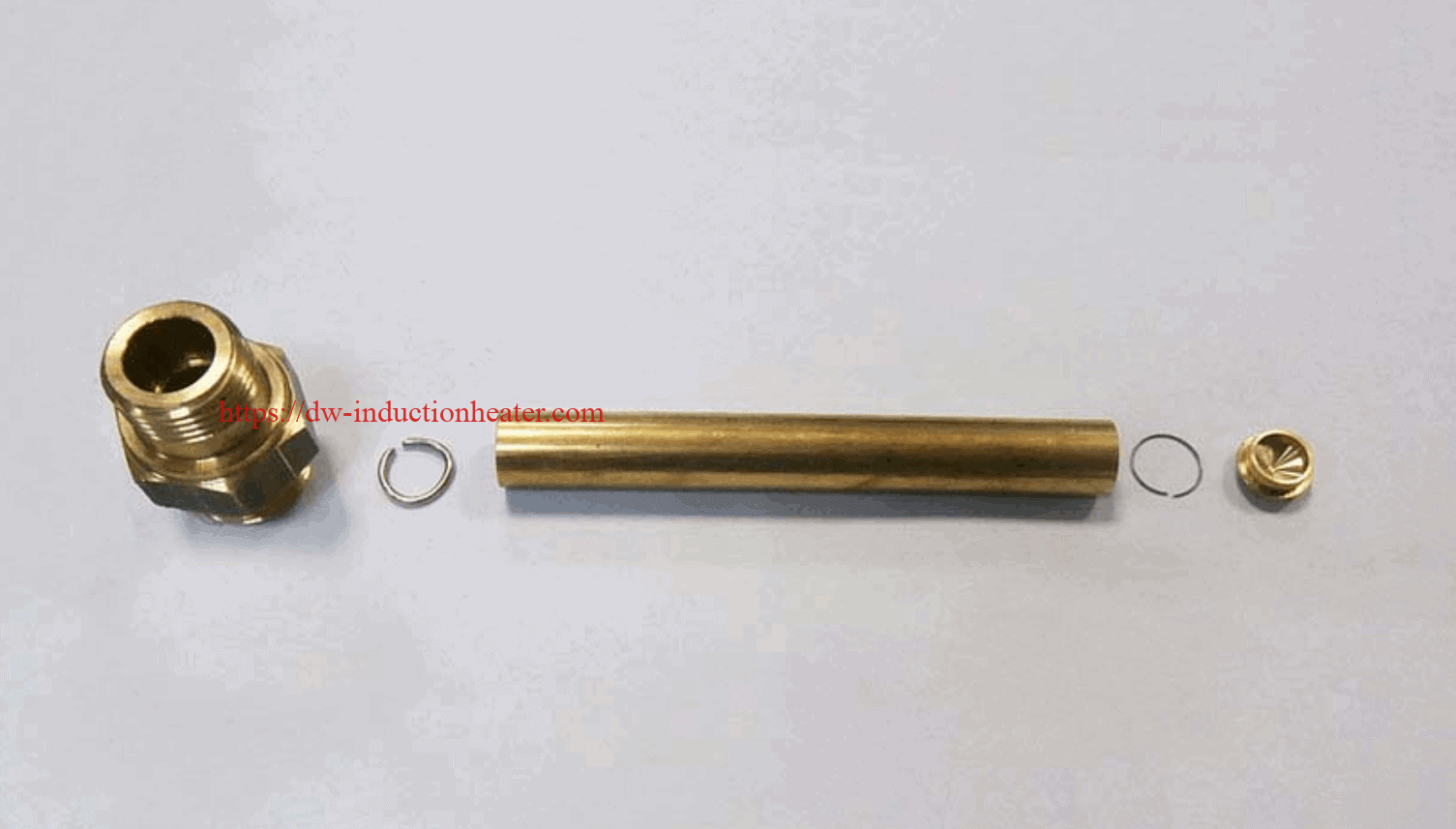
Objective High Frequency Induction Brazing brass pipe to brass part and a brass tip in under one minute using induction.
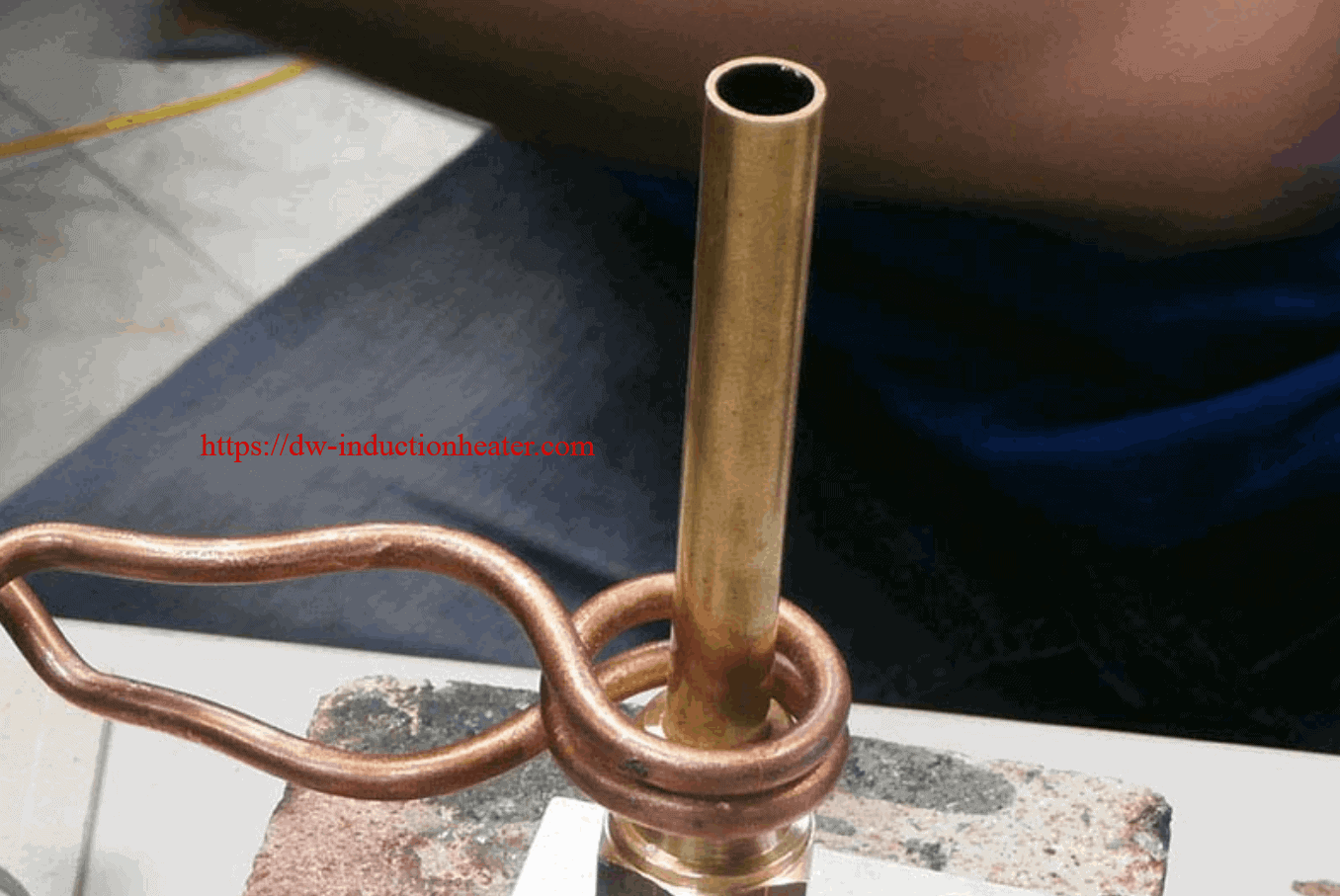
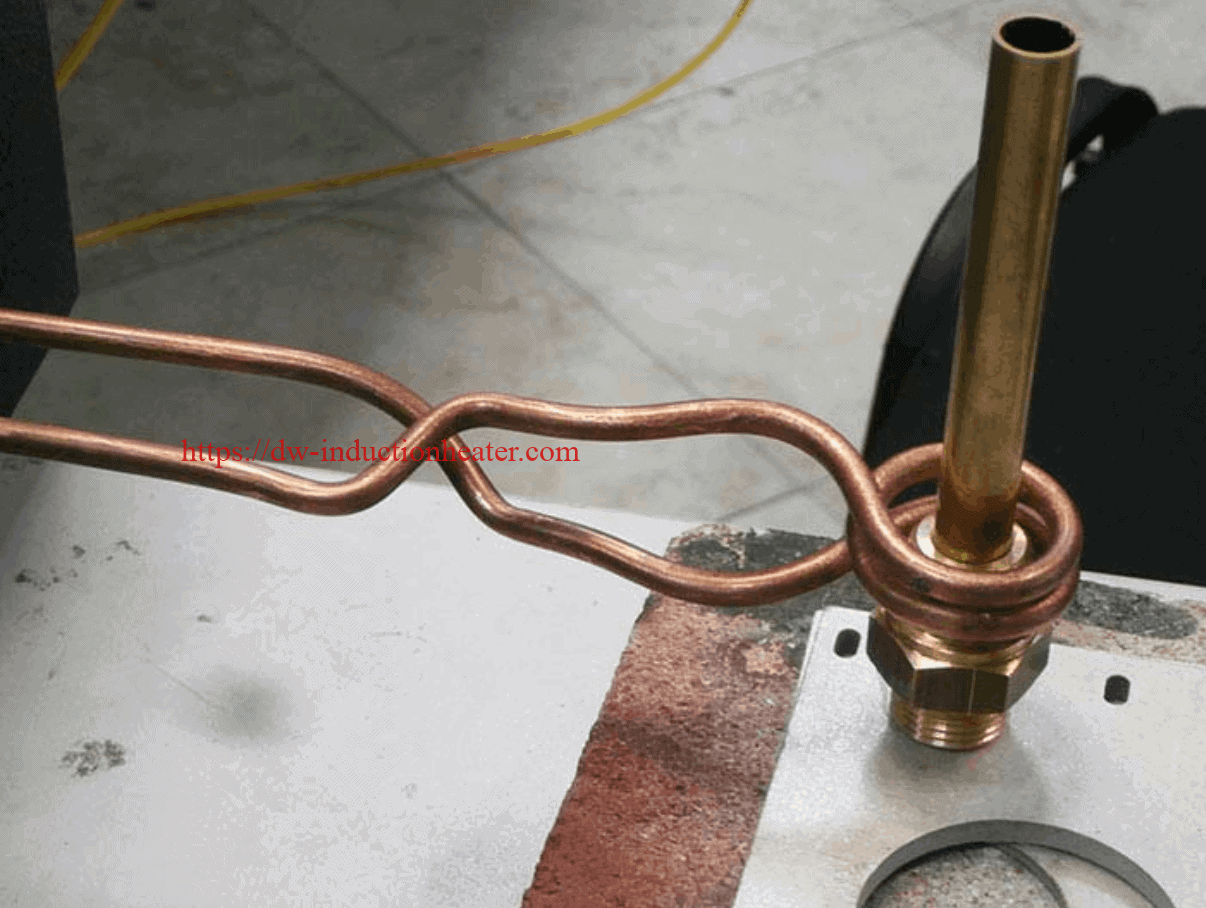
Equipment DW-UHF-6KW-III handheld induction brazing machine handheld inductino heater 2 turns coil Materials • Wide brass part • Brass pipe • Silver-based brazing alloy, provided by customer
Test 1 – Pipe to wide part: Key Parameters Power: 4.4 kW Temperature: Approximately 1400° F (760° C) Time: 38 sec
Test 2 – Pipe to tip: Key Parameters Power: 4.4 kW Temperature: Approximately 1400° F (760° C) Time: 17 sec
Process: Test 1
  • The wide part and brass pipe are assembled and a brazing alloy ring is placed between them.
  • The assembly is put inside the induction heating coil and induction heat is applied.
  • The joint is completed in 38 seconds.
Test 2
  • The tip and pipe are assembled and a brazing alloy ring is placed between them.
  • The assembly is put inside the coil and induction heat is applied.
  • The joint is completed in 17 seconds.
Results/Benefits: Induction heating provides:
  • Strong durable joints
  • Selective and precise heat zone, resulting in less part distortion and joint stress than welding
  • Less oxidation
  • Faster heating cycles
  • More consistent results and suitability for large volume production, without the need for batch processing
  • Safer process than flame brazing

Induction Brazing T Shaped Copper Tubing Assemblies

High Frequency Induction Brazing T Shaped Copper Tubing Assemblies

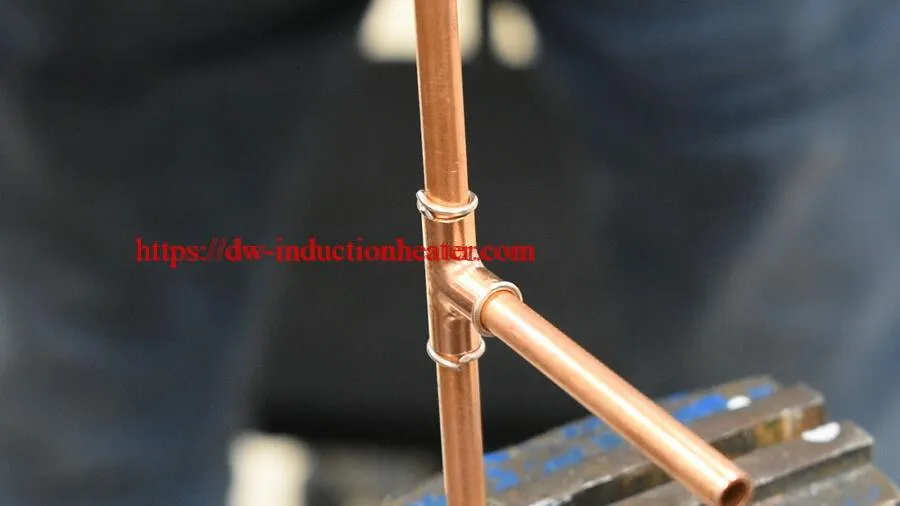
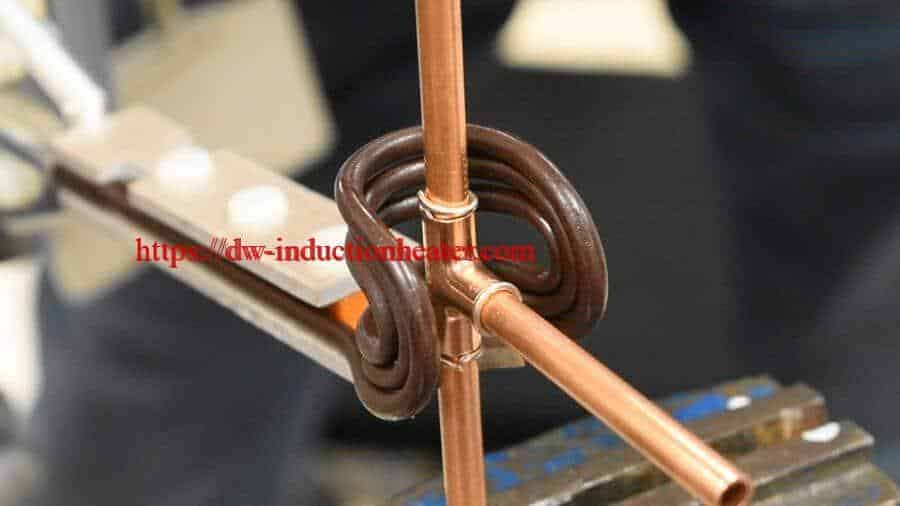
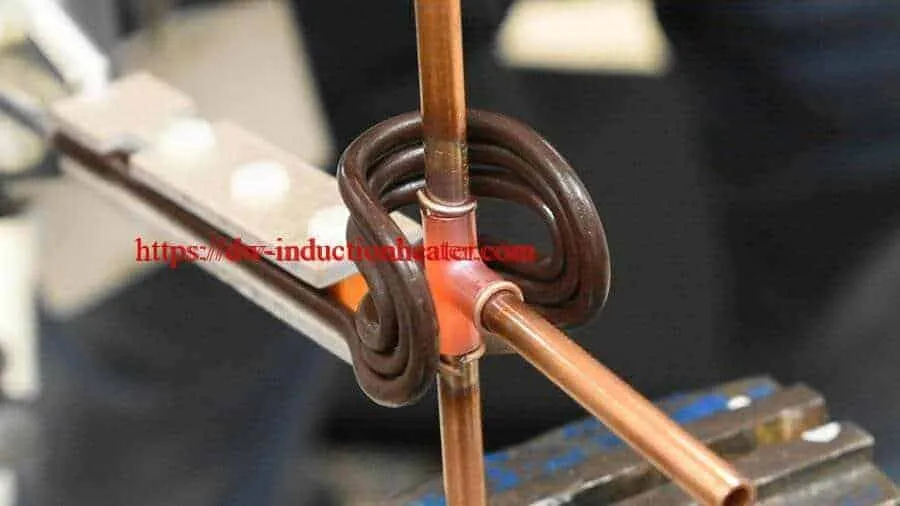
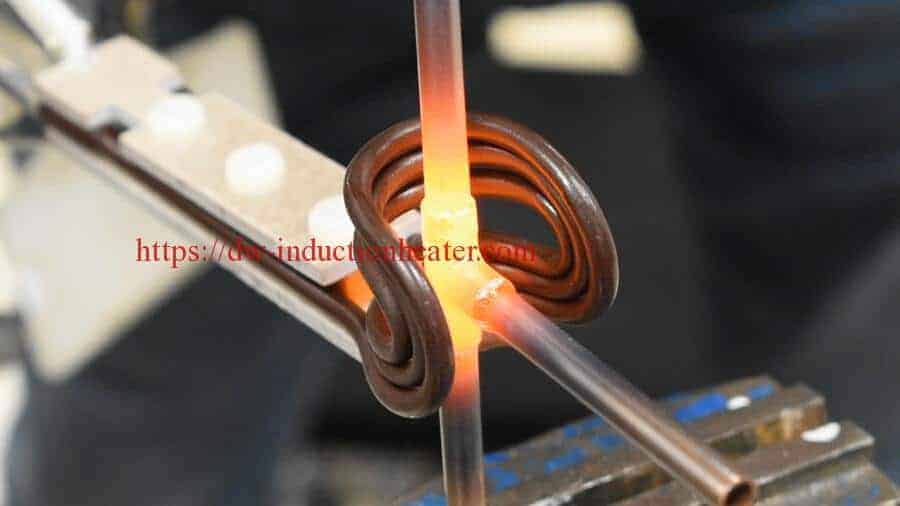
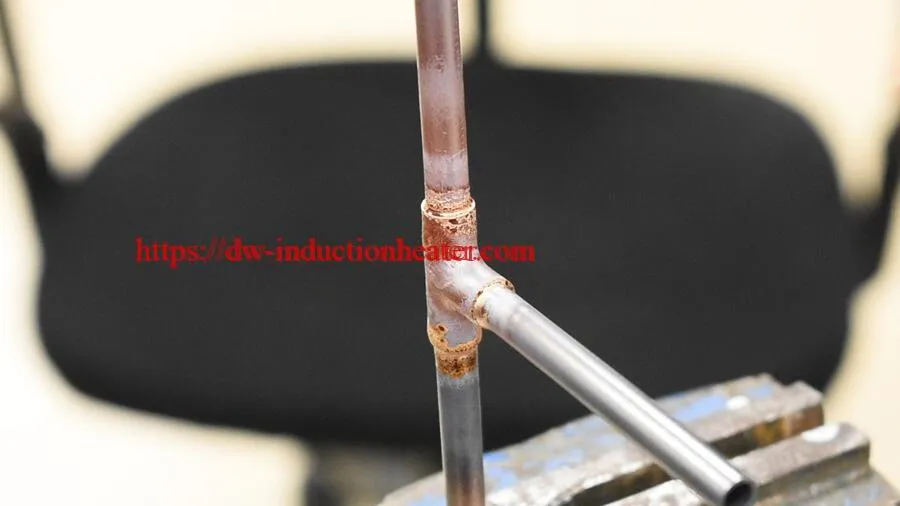
Objective: Test 1 – Induction brazing T-shaped copper tubing assemblies – 3 joints simultaneously Test 2 – Induction brazing copper tubing Industry: HVAC Materials: Copper tubers  6, 8, 10, 12 mm ( 01564, 0516, 025⁄64, 015⁄32inch. ); thickness: 1 mm ( 0364 inch.) Alloy: Cu-P-Ag rings TIP: The use of alloy rings is highly recommended with a hand-held brazing gun.
Equipment: DW-UHF-20kw induction brazing machine Power: Test 1 ( 7-8kW ) Test 2 ( 6.5-9.2kW ) Time: 8 secs. Coil: Regular induction heating coil. Custom coil design is possible upon request. The Process: We successfully carried out two induction brazing tests with several copper assemblies.  First, Cu-P-Ag alloy rings were placed around the thinner of the copper tubings. No additional flux was needed.  The pipes were then carefully aligned. The process of induction brazing was initiated. Once the induction brazing was complete, the two samples were submerged in cold water in order to be cooled instantly. The excessive amount of flux can be furtherly cleaned.

关注者

我的简介

我的照片
HLQ induction heating machine manufacturer provides the service of induction brazing,melting,hot forming,hardening surface,annealing,shrink fitting,PWHT,etc.