显示标签为“inductionheating”的博文。显示所有博文

2024年5月9日星期四

Heating Shrink Fitting Camshaft Gear

Induction Heating Shrink Fitting Camshaft Gear with IGBT Induction Heater Objective: Heating a camshaft gear with a bore size of 1.630" to shrink fit over a steel shaft that has a diameter of 1.632". A temperature of 5000F is required for the gear to expand 0.002" in order to slip over the shaft. Production is presently done at a rate of 15-20 gears per 24 hour shift by heating the gear on a hot plate. The hot plate heating cycle lasts for approximately 45 minutes. The customer would like to explore the options available in terms of heating times and machine size. Material: Steel Camshaft Gear measuring 7" in diameter, 1" thick, with a bore size of 1.630". Temperature: 5000F Application: A unique three (3) turn helical coil along with the various DAWEI solid state induction power supplies were used to achieve the following results: - 5000F was reached in three (3) minutes while using the DW-HF 5, 5 kW output solid state induction power supply. - 5000F was reached in five (5), eight (8), and ten (10) minutes using the DW-HF-3, 5 kW output solid state induction power supply. - Even heating was observed as a result of the unique three (3) turn helical induction coil. Equipment: DW-HF-35 and DW-HF-55 kW output solid state induction power supplies respectively, including remote heat stations and a unique three turn helical coil made from 3/16" copper tubing and having a 4.4" inside diameter. Frequency: 62 kHz Shrink Fitting Camshaft Gear https://dw-inductionheater.com/heating-shrink-fitting-camshaft-gear.html?feed_id=244916&_unique_id=663cbd5e95158

2024年4月28日星期日

Is induction heating cheaper than gas heating?

The cost-effectiveness of induction heating compared to gas heating depends on various factors, including the application, local energy prices, efficiency rates, and initial setup costs. As of my last update in 2024, here's how the two compare in general terms:

Efficiency and Operating Costs

  • Induction Heating: Induction heating is highly efficient because it directly heats the object using electromagnetic fields, with minimal heat loss to the surrounding environment. This direct method of heating often results in quicker heating times compared to gas heating. Since it uses electricity, its cost will depend on local electricity rates, which can vary widely around the world.
  • Gas Heating: Gas heating, which often involves combustion to produce heat, can be less efficient due to heat loss through exhaust gases and the surrounding environment. However, natural gas is typically cheaper per unit of energy produced than electricity in many regions, which can offset the efficiency differences and make gas heating cheaper in operational costs in those areas.

Setup and Maintenance Costs

  • Induction Heating: The upfront cost for induction heating equipment can be higher than conventional gas heating setups. Induction heaters also require a supply of electricity, which might necessitate upgrades to the electrical system in some instances. On the maintenance side, induction systems generally have fewer moving parts and do not combust fuel, potentially leading to lower maintenance costs over time.
  • Gas Heating: Initial setup for gas heating can be lower, especially if the infrastructure for gas is already in place. However, maintenance might be more demanding and costly due to the combustion process and the requirement for venting exhaust gases, checking for leaks in the gas supply, and regular cleaning of combustion chambers.

Environmental Considerations

While not directly related to cost, environmental impact is an increasingly important consideration. Induction heating produces no direct emissions at the point of use, making it a cleaner option if the electricity is sourced from renewable or low-emission sources. Gas heating involves the combustion of fossil fuels, leading to CO2 and potentially other harmful emissions, although advances in technology and the use of biogas can mitigate this impact somewhat.

Conclusion

Whether induction heating is cheaper than gas heating is highly contextual. For areas with low electricity costs, especially where those costs are lower due to a high proportion of renewable energy sources, induction heating can be more cost-effective in the long run, factoring in its higher efficiency and potentially lower maintenance costs. In regions where natural gas is cheap and electricity is expensive, gas heating might be the more economical choice, at least in terms of operating costs. It's also crucial to consider the specific application (e.g., industrial, commercial, or residential), as the scale and nature of the heating requirements can significantly influence which method is more cost-effective.
https://dw-inductionheater.com/is-induction-heating-cheaper-than-gas-heating.html?feed_id=243558&_unique_id=662ec95e84232

how does induction heating work?

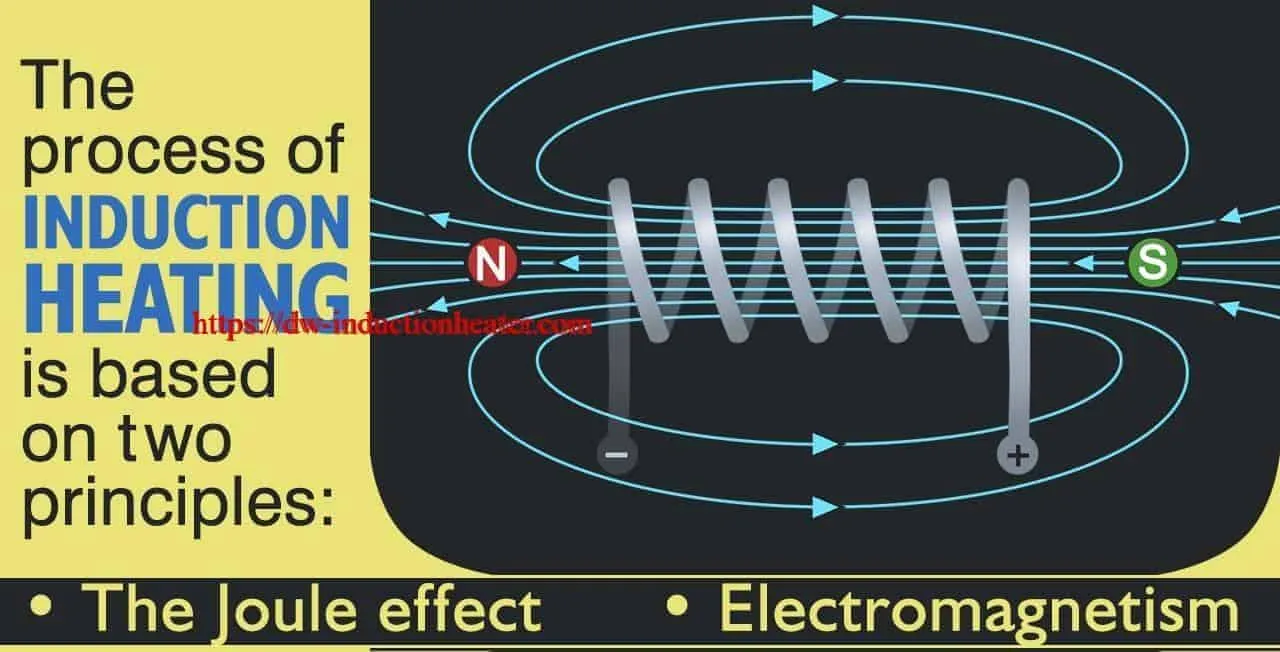
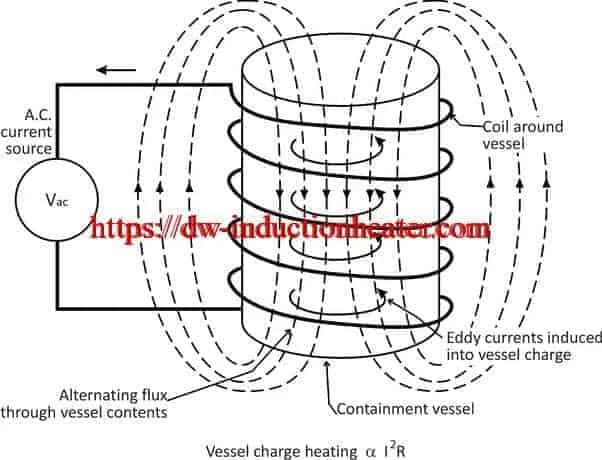
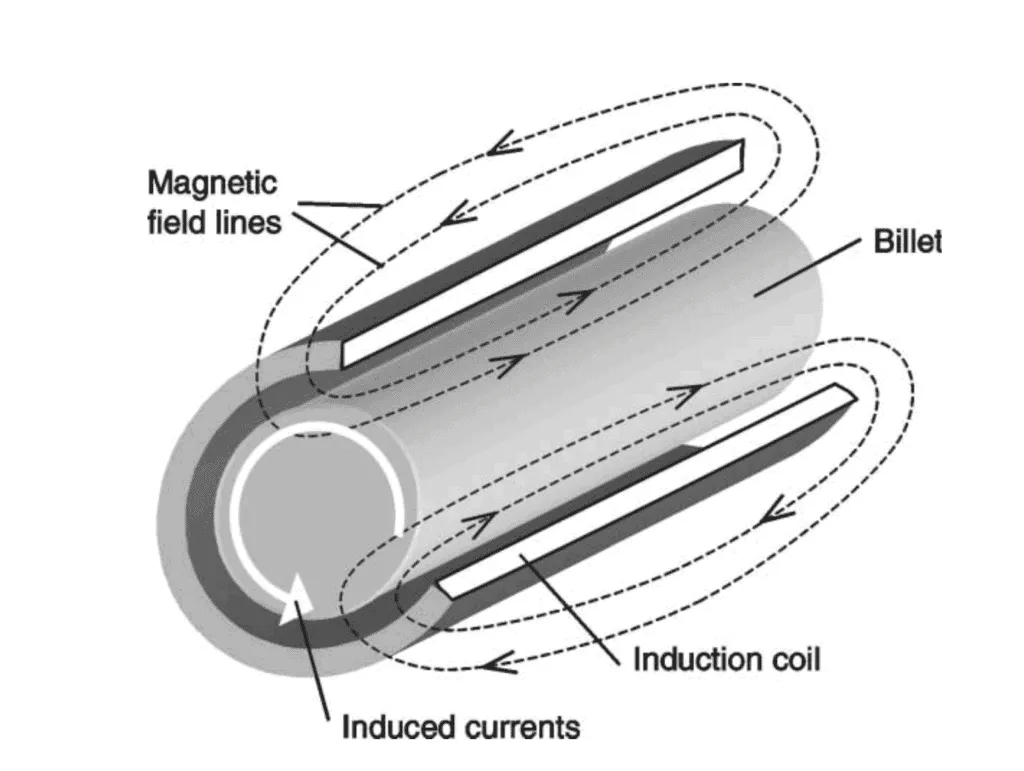
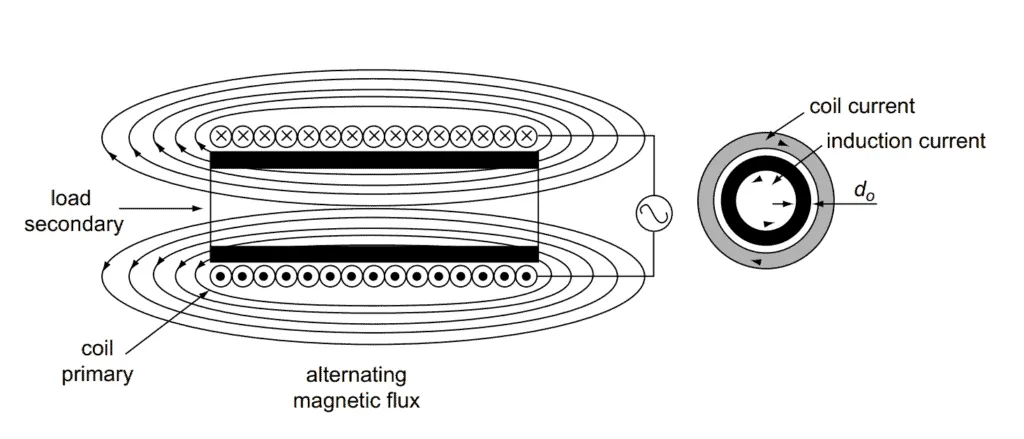
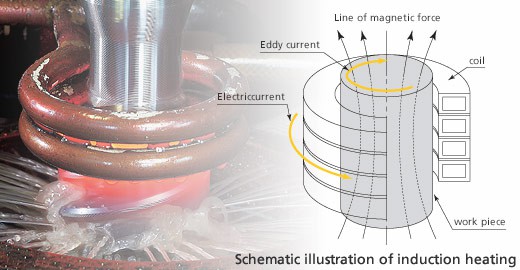
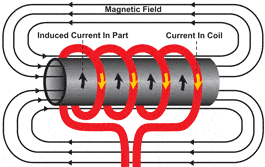
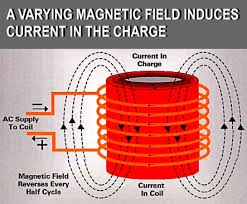
A source of high frequency electricity is used to drive a large alternating current through a induction coil. This induction heating coil is known as the work coil. See the picture opposite. The passage of current through this induction heating coil generates a very intense and rapidly changing magnetic field in the space within the work coil. The workpiece to be heated is placed within this intense alternating magnetic field. Depending on the nature of the workpiece material, a number of things happen... The alternating magnetic field induces a current flow in the conductive workpiece. The arrangement of the work coil and the workpiece can be thought of as an electrical transformer. The work coil is like the primary where electrical energy is fed in, and the workpiece is like a single turn secondary that is short-circuited. This causes tremendous currents to flow through the workpiece. These are known as eddy currents. In addition to this, the high frequency used in Induction Heating applications gives rise to a phenomenon called skin effect. This skin effect forces the alternating current to flow in a thin layer towards the surface of the workpiece. The skin effect increases the effective resistance of the metal to the passage of the large current. Therefore it greatly increases the induction heating effect of the induction heater caused by the current induced in the workpiece. [pdf-embedder url="https://dw-inductionheater.com/wp-content/uploads/2018/08/induction_heating_principle-1.pdf" title="induction_heating_principle"] https://dw-inductionheater.com/how-does-induction-heating-work.html?feed_id=243490&_unique_id=662e7512c0d85

Is induction heating cheaper than gas heating?

The cost-effectiveness of induction heating compared to gas heating depends on various factors, including the application, local energy prices, efficiency rates, and initial setup costs. As of my last update in 2024, here's how the two compare in general terms:

Efficiency and Operating Costs

  • Induction Heating: Induction heating is highly efficient because it directly heats the object using electromagnetic fields, with minimal heat loss to the surrounding environment. This direct method of heating often results in quicker heating times compared to gas heating. Since it uses electricity, its cost will depend on local electricity rates, which can vary widely around the world.
  • Gas Heating: Gas heating, which often involves combustion to produce heat, can be less efficient due to heat loss through exhaust gases and the surrounding environment. However, natural gas is typically cheaper per unit of energy produced than electricity in many regions, which can offset the efficiency differences and make gas heating cheaper in operational costs in those areas.

Setup and Maintenance Costs

  • Induction Heating: The upfront cost for induction heating equipment can be higher than conventional gas heating setups. Induction heaters also require a supply of electricity, which might necessitate upgrades to the electrical system in some instances. On the maintenance side, induction systems generally have fewer moving parts and do not combust fuel, potentially leading to lower maintenance costs over time.
  • Gas Heating: Initial setup for gas heating can be lower, especially if the infrastructure for gas is already in place. However, maintenance might be more demanding and costly due to the combustion process and the requirement for venting exhaust gases, checking for leaks in the gas supply, and regular cleaning of combustion chambers.

Environmental Considerations

While not directly related to cost, environmental impact is an increasingly important consideration. Induction heating produces no direct emissions at the point of use, making it a cleaner option if the electricity is sourced from renewable or low-emission sources. Gas heating involves the combustion of fossil fuels, leading to CO2 and potentially other harmful emissions, although advances in technology and the use of biogas can mitigate this impact somewhat.

Conclusion

Whether induction heating is cheaper than gas heating is highly contextual. For areas with low electricity costs, especially where those costs are lower due to a high proportion of renewable energy sources, induction heating can be more cost-effective in the long run, factoring in its higher efficiency and potentially lower maintenance costs. In regions where natural gas is cheap and electricity is expensive, gas heating might be the more economical choice, at least in terms of operating costs. It's also crucial to consider the specific application (e.g., industrial, commercial, or residential), as the scale and nature of the heating requirements can significantly influence which method is more cost-effective.
https://dw-inductionheater.com/is-induction-heating-cheaper-than-gas-heating.html?feed_id=243456&_unique_id=662e533363f2c

2024年4月27日星期六

Induction Curing Heating of Organic Coating

Induction Curing Heating of Organic Coating

Induction Heating is used to cure organic coating such as paint on metallic substrates by generating heat with in the subtract .By this mean curing occurs from within minimizing the tendency for formation of coating defects . A typical is application is drying of paint on sheet metal. Induction heating of metal parts to adhesive induction curing temperatures is utilized in a many automotive processes, such as the use of thermosetting adhesives to produce clutch plates, brake shoes and auto bumper components. Shafts are typically bonded to the squirrel cage rotors in the manufacture of small motors. In copying machines, plastic components are adhesively bonded to aluminum rotors; a thermoplastic glue is used to hold foam rollers on metal shafts. Once the rollers wear out, the shaft is heated and the foam replaced. Modern induction heating can solve many of these problems. Heating with induction provides reliable, repeatable, non-contact and energy-efficient heat in a minimal amount of time, so that the curing process can be completed with minimal energy and time. Improved temperature ramping cycles can be achieved with computer control of the solid state power supply. To eliminate extra steps for loading and unloading ovens, induction heat stations can be incorporated into a production line. Finally, induction heating can be performed in extremely clean environments, vacuum conditions or special atmospheres, allowing for unique curing solutions. Although induction heating is normally used with metals or other conductive materials, plastics and other non-conductive materials can often be heated very effectively by using a conductive metal susceptor to transfer the heat. Typical RF power supplies for induction curing applications range from 4 to 60kW, depending on the parts and application requirements. https://dw-inductionheater.com/induction-curing-heating-of-organic-coating.html?feed_id=243325&_unique_id=662d08246d5d8

Induction Curing Heating of Organic Coating

Induction Curing Heating of Organic Coating

Induction Heating is used to cure organic coating such as paint on metallic substrates by generating heat with in the subtract .By this mean curing occurs from within minimizing the tendency for formation of coating defects . A typical is application is drying of paint on sheet metal. Induction heating of metal parts to adhesive induction curing temperatures is utilized in a many automotive processes, such as the use of thermosetting adhesives to produce clutch plates, brake shoes and auto bumper components. Shafts are typically bonded to the squirrel cage rotors in the manufacture of small motors. In copying machines, plastic components are adhesively bonded to aluminum rotors; a thermoplastic glue is used to hold foam rollers on metal shafts. Once the rollers wear out, the shaft is heated and the foam replaced. Modern induction heating can solve many of these problems. Heating with induction provides reliable, repeatable, non-contact and energy-efficient heat in a minimal amount of time, so that the curing process can be completed with minimal energy and time. Improved temperature ramping cycles can be achieved with computer control of the solid state power supply. To eliminate extra steps for loading and unloading ovens, induction heat stations can be incorporated into a production line. Finally, induction heating can be performed in extremely clean environments, vacuum conditions or special atmospheres, allowing for unique curing solutions. Although induction heating is normally used with metals or other conductive materials, plastics and other non-conductive materials can often be heated very effectively by using a conductive metal susceptor to transfer the heat. Typical RF power supplies for induction curing applications range from 4 to 60kW, depending on the parts and application requirements. https://dw-inductionheater.com/induction-curing-heating-of-organic-coating.html?feed_id=243325&_unique_id=662d08246d945

2024年4月18日星期四

Why Choose Induction Heating and what are its advantages

Why Choose Induction Heating and what are its advantages

Why choose induction heating over convection, radiant, open flame or another heating method? Here's a short summary of the major advantages that modern solid state induction heating offers for lean manufacturing:

Induction heating advantagesOptimized Consistency

Induction heating eliminates the inconsistencies and quality issues associated with open flame, torch heating and other methods. Once the system is properly calibrated and set up, there is no guess work or variation; the heating pattern is repeatable and consistent. With modern solid state systems, precise temperature control provides uniform results; power can be instantly turned on or shut off. With closed loop temperature control, advanced induction heating systems have the capability to measure the temperature of each individual part. Specific ramp up, hold and ramp down rates can be established & data can be recorded for each part that is run.

Maximized Productivity

Production rates can be maximized because induction works so quickly; heat is developed directly and instantly (>2000º F. in < 1 second) inside the part. Startup is virtually instantaneous; no warm up or cool down cycle is required. The induction heating process can be completed on the manufacturing floor, next to the cold or hot forming machine, instead of sending batches of parts to a remote furnace area or subcontractor. For example, a brazing or soldering process which previously required a time-consuming, off-line batch heating approach can now be replaced with a continuous, one-piece flow manufacturing system.

Improved Product Quality

With induction, the part to be heated never comes into direct contact with a flame or other heating element; the heat is induced within the part itself by alternating electrical current. As a result, product warpage, distortion and reject rates are minimized. For maximum product quality, the part can be isolated in an enclosed chamber with a vacuum, inert or reducing atmosphere to eliminate the effects of oxidation.

Extended Fixture Life

Induction heating rapidly delivers site-specific heat to very small areas of your part, without heating any surrounding parts. This extends the life of the fixturing and mechanical setup.

Environmentally Sound

Induction heating systems do not burn traditional fossil fuels; induction is a clean, non-polluting process which will help protect the environment. An induction system improves working conditions for your employees by eliminating smoke, waste heat, noxious emissions and loud noise. Heating is safe and efficient with no open flame to endanger the operator or obscure the process. Non-conductive materials are not affected and can be located in close proximity to the heating zone without damage.

Reduced Energy Consumption

Tired of increasing utility bills? This uniquely energy-efficient process converts up to 90% of the energy expended energy into useful heat; batch furnaces are generally only 45% energy-efficient. And since induction requires no warm-up or cool-down cycle, stand-by heat losses are reduced to a bare minimum. The repeatability and consistency of the induction process make it highly compatible with energy-efficient automated systems. induction heating High frequency induction machines and induction heating technology is currently the highest heating efficiency of the metallic materials, the fastest speed, and low power consumption of environmental protection. It has been widely used in various industries on the thermal processing of the metal material, heat treatment, hot assembly and welding, melting process. It can not only heating the workpiece as a whole, but also on the relevance of the workpiece local heating; deep through the heat of the workpiece can be realized, to focus only on its surface, the surface heating; not only the direct heating of the metal material, but also on non-metallic material indirect heating. And so on. Thus, induction heating technology is more widely used in all walks of life. Local heating of the surface of the workpiece with the induced current heat treatment process. This heat treatment process commonly used in the surface hardening, but also can be used for partial annealing or tempering, and sometimes also used for the overall quenching and tempering. The early 1930s, the United States, the Soviet Union has applied to the induction heating method for surface hardening of parts. With industrial development, induction heating, heat treatment technology continue to improve, continue to expand the range of applications. Basic principles: the workpiece into the inductor (coil), and when the sensors pass into the alternating current of a certain frequency, alternating magnetic field is generated around. The electromagnetic induction effect of the alternating magnetic field so that the induction current the workpiece generated within a closed ─ ─ vortex. Induced currents are very unevenly distributed in the cross section of the workpiece, a high current density of the workpiece surface, the inwardly gradually decreases, this phenomenon is called the skin effect. The high current density of the workpiece surface energy into thermal energy, so that the temperature of the surface layer is increased, i.e. the surface heating. The current frequency is higher, the current density of the workpiece surface and the internal differential is the greater, the heating layer is thinner. Rapid cooling, the temperature of the heating layer over the temperature of the critical point of steel surface hardening can be achieved. Classification: according to the frequency of the alternating current, the induction heating and heat treatment is divided into UHF, HF, RF, MF, working frequency. (1) ultra-high frequency induction heating treatment used in the current frequency up to 27 MHz, the heating layer is extremely thin, only about 0.15 mm, can be used for complex shapes such as circular saws and workpiece thin surface hardening. ② high-frequency induction heating heat treatment is usually used in current frequency of 200 to 300 kHz, the depth of the heating layer is 0.5 to 2 mm can be used for the gear, cylinder sleeve, cam, shaft and other parts of the surface quenching. ③The  radio induction heating heat treatment with the current frequency of 20 to 30 kHz, with a super audio induced current small modulus gear heating, the heating layer roughly along the tooth profile distribution, the pure fire better performance. 4 MF (Medium Frequency) induction heating of the heat treatment using the current frequency is generally from 2.5 to 10 kHz, the depth of the heating layer is 2 to 8 mm, and more for large modulus gear, having a larger diameter shaft and cold roll the workpiece such as surface hardening. ⑤ power frequency induction heating heat treatment used in the current frequency of 50 to 60 Hz, the depth of the heating layer is 10 to 15 mm, can be used for the surface hardening of large workpieces. Characteristics and application: The main advantage of induction heating: ① having overall heating workpiece deformation is small, small power consumption. The ② pollution. ③ heating speed, the workpiece surface oxidation and decarbonization lighter. ④ surface hardened layer can be adjusted as needed, easy to control. (5) heating equipment can be installed in the mechanical processing production line, easy to realize mechanization and automation, easy to manage, and can reduce the transportation, saving manpower, improve production efficiency. ⑥ hardened layer martensite smaller, hardness, strength, toughness, are higher. ⑦ surface hardening of the workpiece surface greater compression internal stress, higher workpiece anti-fatigue breaking ability. Induction heating machineThe induction heating heat treatment also has some drawbacks or disadvantages. Compared with flame hardening, induction heating equipment is more complex, and adaptability to poor, difficult to guarantee the quality of some of the complex shape of the workpiece. The induction heater is more complex, once the cost of inputs is relatively high, interchangeability and adaptability of the induction coil(inductor) is poor, can not be used for some complex shape of the workpiece. But obviously,the advantages outweighed the disadvantages. Therefore, the induction heating is a better choice of metalworking for replacing coal heating, oil heating, gas heating, electric cooker, electric oven heating and other heating methods.
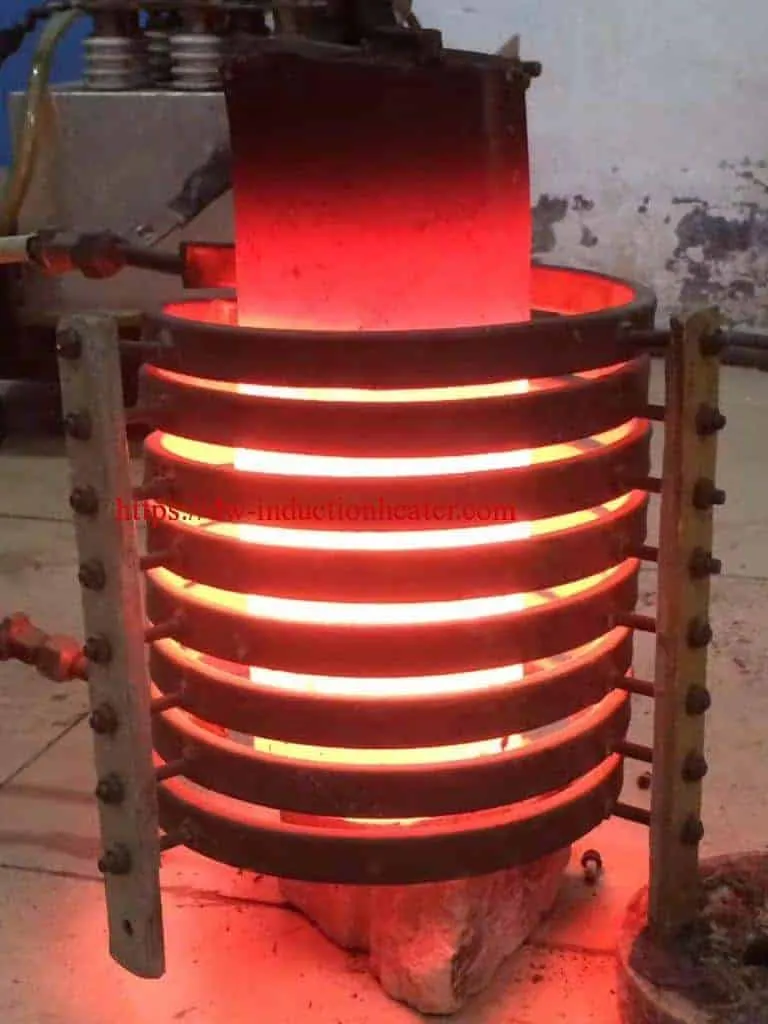
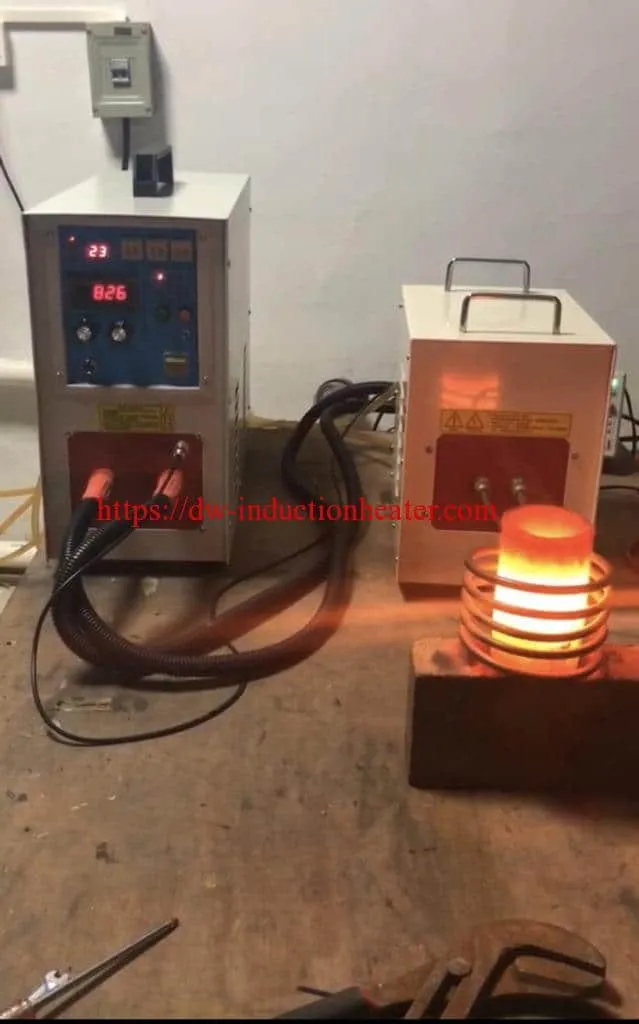
Applications: Induction heating is widely used for the surface hardening of the gears, shafts, crankshafts, cams, rollers, etc. of the workpiece, the purpose is to improve the abrasion resistance and anti-fatigue breaking capability of these artifacts. Automobile rear axle using induction heating surface hardening, fatigue design load cycles increases by about 10 times more than the quenched and tempered. Induction heating surface hardening of the workpiece material is generally in the carbon steel. In order to meet the special needs of some of the workpiece has been developed for induction heating surface hardening dedicated low hardenability steel. High-carbon steel and cast iron workpiece can also be used induction heating surface hardening. The quenching medium commonly Water or polymer solution. Equipment: Induction Heat Treatment Equipment power equipment, quenching machine and sensor. The main role of the power supply apparatus is suitable output frequency of the alternating current. The high-frequency current power supply tube high-frequency generator and two SCR inverter. IF current power supply generator sets. General power supply can only output a frequency current, some equipment can change the current frequency, directly with the 50 Hz power frequency current induction heating. Selection: the depth of the induction heating device selection and the workpiece requires heating layer. Heating the deep layer of the workpiece, using the current low frequency power supply apparatus; the heating layer shallow workpiece, the current high frequency power supply apparatus should be used. Select other conditions of the power supply is the power of the device. Heating surface area increases, the electrical power required by the corresponding increase. When the heating surface area is too large, or when insufficient power supply, the method may be continuously heated, so that the relative movement of workpiece and the sensor, the front heating, behind cooling. But the best, or the entire heating surface heating. This can use the the workpiece core section waste heat so that the hardened surface layer tempering so that the process is simplified, and also saving energy. The main role of the induction heating machine is the workpiece positioning and necessary movement. It should also be accompanied by the quenching media device. Quenching machine can be divided into standard machine tools and special machine tools, the former applies to the general workpiece, which is suitable for mass production of complex workpieces. Inductive heating of heat treatment, in order to ensure the quality of the heat treatment and to improve thermal efficiency, it is necessary according to the shape of the workpiece and requirements, design and manufacturing structure appropriate sensors. Common sensor heating the outer surface of the sensor, inner hole heating sensor plane heat sensor, universal heating sensor, a special type of heating sensor, a single type of heating sensors, the composite heated sensor, smelting furnace .     https://dw-inductionheater.com/why-choose-induction-heating-and-what-are-its-advantages.html?feed_id=242074&_unique_id=6620e3d19ea5a

2024年4月15日星期一

Induction Heating Basic

Induction Heating Basics

Induction heating takes place in an electrically conducting object (not necessarily magnetic steel) when the object is placed in a varying magnetic field. Induction heating is due to the hysteresis and eddy-current losses. Induction heating basicsInduction heating is the process of heating an electrically conducting object (usually a metal) by electromagnetic induction, through heat generated in the object by eddy currents. An induction heater consists of an electromagnet and an electronic oscillator that passes a high-frequency alternating current (AC) through the electromagnet. The rapidly alternating magnetic field penetrates the object, generating electric currents inside the conductor, called eddy currents. The eddy currents flowing through the resistance of the material heat it by Joule heating. In ferromagnetic (and ferrimagnetic) materials like iron, heat may also be generated by magnetic hysteresis losses. The frequency of current used depends on the object size, material type, coupling (between the work coil and the object to be heated) and the penetration depth. Hysteresis losses only occur in magnetic materials such as steel, nickel, and very few others. Hysteresis loss states that this is caused by friction between molecules when the material is magnetized first in one direction, and then in the other. The molecules may be regarded as small magnets which turn around with each reversal of direction of the magnetic field. Work (energy) is required to turn them around. The energy converts into heat. The rate of expenditure of energy (power) increases with an increased rate of reversal (frequency). Eddy-current losses occur in any conducting material in a varying magnetic field. This causes heading, even if the materials do not have any of the magnetic properties usually associated with iron and steel. Examples are copper, brass, aluminum, zirconium, nonmagnetic stainless steel, and uranium. Eddy currents are electric currents inducted by transformer action in the material. As their name implies, they appear to flow around in swirls on eddies within a solid mass of material. Eddy-current losses are much more important than hysteresis losses in induction heating. Note that induction heating is applied to nonmagnetic materials, where no hysteresis losses occur. Induction heating theoryFor the heating of steel for hardening, forging, melting, or any other purposes which require a temperature above Curie temperature, we cannot depend upon hysteresis. Steel loses its magnetic properties above this temperature. When steel is heated below the Curie point, the contribution of hysteresis is usually so small that it can be ignored. For all practical purposes, the I2R of the eddy currents is the only way in which electrical energy can be turned into heat for induction heating purposes. Two basic things for induction heating to occur:
  • A changing magnetic field
  • An electrically conductive material placed into the magnetic field
https://dw-inductionheater.com/high-frequency-induction-heating-basic.html?feed_id=241802&_unique_id=661e08f0ae384

2024年4月9日星期二

Induction Brazing Copper T Pipe With Induction Heating Machine

Induction Brazing Copper T Pipe With Induction Heating Machine

High frequency Induction brazing copper pipe
Objective Evaluate replacing of flame copper t pipe brazing with induction brazing. Equipment DW-HF-25kw high frequency induction heating machine
Materials
• Copper main tube – 1.13” (28.7 0mm) OD 1.01” (25.65 mm) ID • Riser tube copper – 0.84” (21.33 0mm)  OD,  0.76” (19.30 0mm)  ID Power: Power manually reduced from max output of 10kW to 15kW to provide even heat distribution on the assembly with the modified test coil. NOTE: Heat time can be improved with custom coil design. Temperature:  Approximately 704° C (1300° F) Time: 25sec
Process Steps: Induction brazing copper pipeThe copper tubes were cleaned and assembled. Two preformed alloy rings were made from available alloy in lab for the demonstration.  The wire used measured 0.787mm (0.031”) in diameter  Both the riser an base copper tubes were pre-fluxed with white braze flux. The assembly was placed in the test coil per the video bellow and the alloy flowed to form a joint at the “T” interface in 30seconds. Results and Conclusions: The target heat time for the smallest T joint assembly is 20 seconds . Using a lab test coil, we were able to effect a braze in the interface section of the tubes (copper) in 30 seconds. Induction brazing copper pipe  
Induction brazing copper pipe  
https://dw-inductionheater.com/induction-brazing-copper-t-pipe-with-induction-heating-machine.html?feed_id=240796&_unique_id=661576c3c085d

2024年3月14日星期四

Induction Heating Theory PDF

INDUCTION HEATING was first noted when it was found that heat was produced in transformer and motor windings, as mentioned in the Chapter “Heat Treating of Metal” in this book. Accordingly, the theory of induction heating was studied so that motors and transformers could be built for maximum efficiency by minimizing heating losses. The development of high-frequency induction power supplies provided a means of using induction heating for surface hardening. The early use of induction involved trial and error with built-up personal knowledge of specific applications, but a lack of understanding of the induction heating principles. Throughout the years the understanding of the basic principles has been expanded, extending currently into computer modeling of heating applications and processes. Knowledge of these basic theories of induction heating helps to understand the application of induction heating as applied to induction heat treating. Induction heating occurs due to electromagnetic force fields producing an electrical current in a part. The parts heat due to the resistance to the flow of this electric current..... [pdf-embedder url="https://dw-inductionheater.com/wp-content/uploads/2020/05/induction_heating_theory.pdf"] induction_heating_theory https://dw-inductionheater.com/induction-heating-theory-pdf.html?feed_id=236590&_unique_id=65f3300213ac8

2024年3月11日星期一

Induction Heating Coils Design and Basic PDF

Induction Heating Coils Design and Basic PDF

In a sense, coil design for induction heating is built upon a large store of empirical data whose development springs from several simple inductor geometries such as the solenoid coil. Because of this, coil design is generally based on experience. This series of articles reviews the fundamental electrical consider- ations in the design of inductors and describes some of the most common coils in use......   Induction_Heating_Coils_Design_and_Basic.pdf   [wpforms id="3947"] https://dw-inductionheater.com/induction-heating-coils-design-and-basic-pdf.html?feed_id=236095&_unique_id=65eee6fb89ce4

2024年3月3日星期日

induction heating reactor tank-vessels

Induction Heating Reactors Tank-Vessels

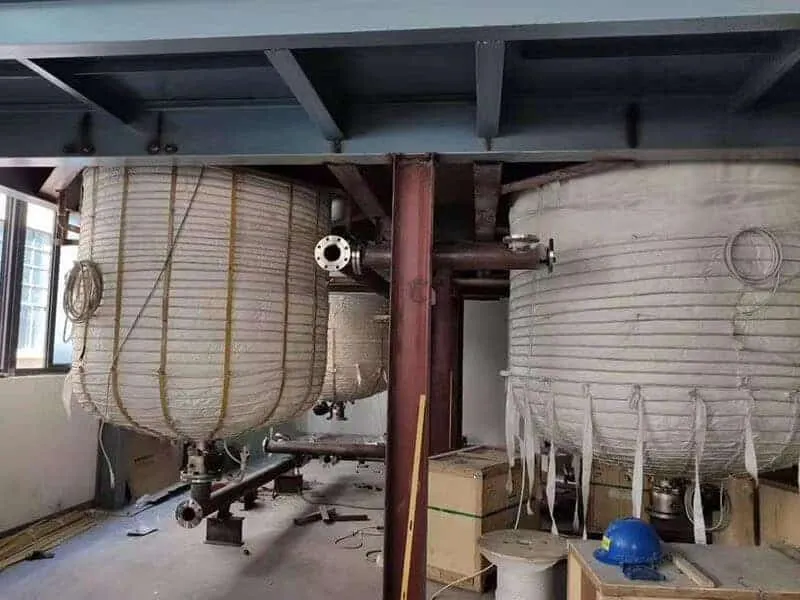
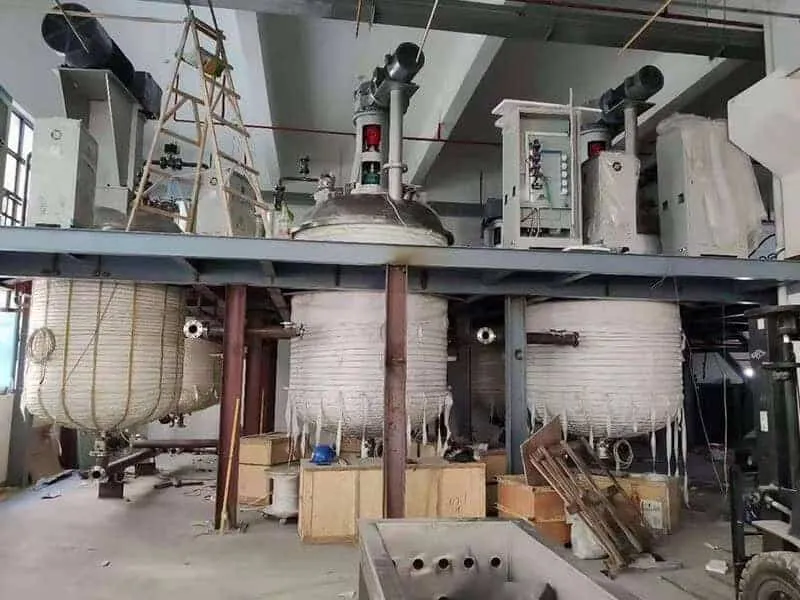
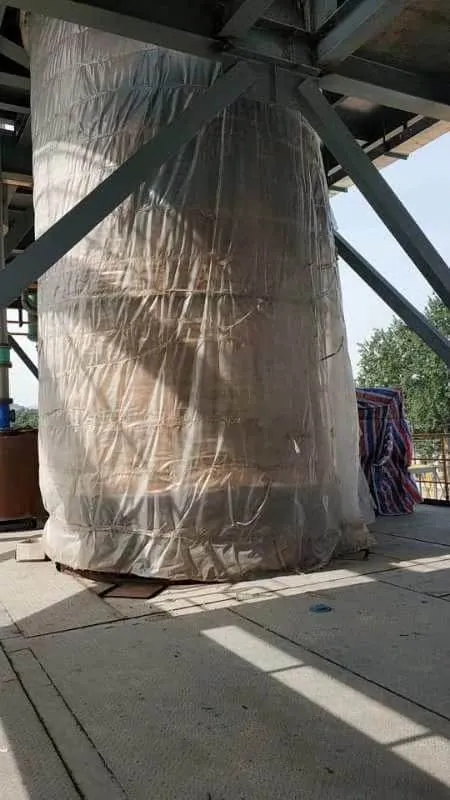
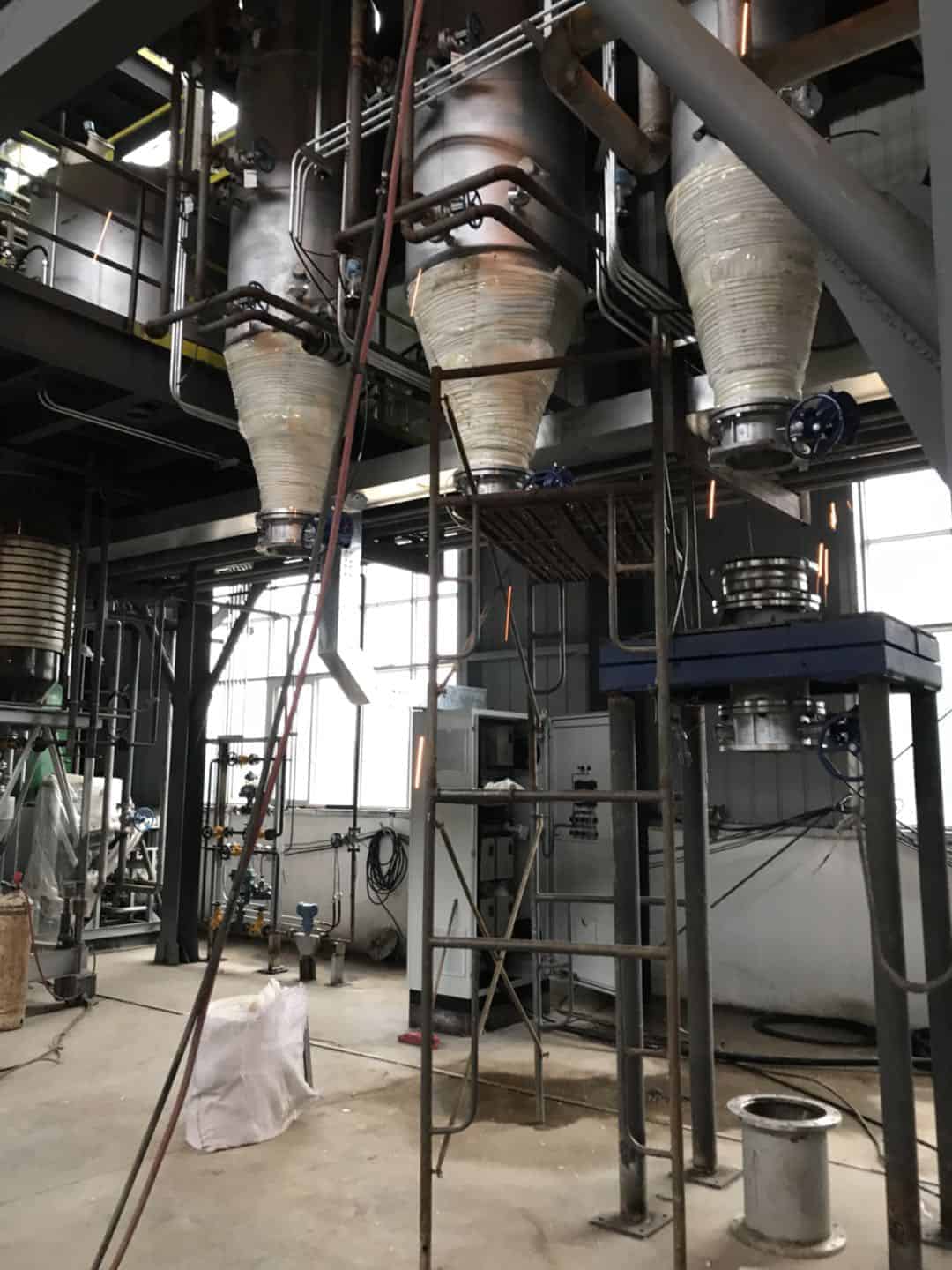
We have over 20 years experience in induction heating and have developed, designed, manufactured, installed and commissioned Vessel and Pipe Heating systems to many countries all over the world. Due to the heating system being naturally simple and very reliable, the option of heating by induction should be regarded as the preferred choice. Induction heating embodies all the conveniences of electricity taken direct to the process and transformed to heat exactly where it is required. It can be applied successfully to virtually any vessel or pipe system needing a source of heat. Induction offers many benefits unobtainable by other means and gives improved plant production efficiency and better operating conditions since there is no significant emission of heat to the surroundings. The system is particularly suitable for close control reaction processes such as the production of synthetic resins in a Hazard Area. As each induction heating vessel is bespoke to each customers specific needs and requirements, we offer varying sizes with differing heat up rates. Our engineers have had many years of experience in evolving custom built induction heating systems for a wide range of applications in a wide range of industries. Heaters are designed to suit the precise requirements of the process and are constructed for quick fitting onto the vessel either in our works or on site.

UNIQUE BENEFITS

• No physical contact between induction coil and heated vessel wall. • Rapid start-up and shut-down. No thermal inertia. • Low heat loss • Precision product and vessel wall temperature control without over shoot. • High energy input. Ideal for automatic or micro-processor control • Safe hazard area or standard industrial operation at line voltage. • Pollution free uniform heating at high efficiency. • Low running costs. • Low or high temperature working. • Simple and flexible to operate. • Minimum maintenance. • Consistent product quality. • Heater self-contained on vessel generating minimum floor space requirement. Induction heating coil designs are available to suit metallic vessels and tanks of most forms and shapes in current use. Ranging from a few centremetres to several metres diameter or length. Mild steel, clad mild steel, solid stainless steel or non ferrous vessels can all be successfully heated. Generally a minimum wall thickness of 6mm is recommended. Unit rating designs range from 1KW to 1500KW. With induction heating systems there is no limit on power density input. Any limitation that exists is imposed by the maximum heat absorption capacity of the product, process or metallurgical characteristics of the vessel wall material. Induction heating embodies all the conveniences of electricity taken direct to the process and transformed to heat exactly where it is required. Since heating takes place direct in the vessel wall in contact with the product and the heat losses are extremely low, the system is highly efficient (up to 90%). Induction heating offers a great many benefits unobtainable by other means and gives improved plant production efficiency and better operating conditions since there is no significant emission of heat to the surroundings.

Typical industries using induction process heating:

• Reactors and kettles • Adhesive and special coatings • Chemical, gas and oil • Food processing • Metallurgical and metal finishing • Preheating Welding • Coating • Mold heating • Fitting&Unfitting • Thermal Assembly • Food Drying • Pipeline Fluid Heating • Tank & Vessel Heating and Insulation

The HLQ Induction In-Line Heater arrangement can be used for applications include:

• Air and Gas heating for Chemical and Food Processing • Hot Oil Heating for Process and Edible Oils • Vaporising and Superheating: Instant steam raising, low and high temperature / pressure (up to 800ºC at 100 bar)

Previous Vessel and Continuous Heater projects include:

Reactors and Kettles, Autoclaves, Process Vessels, Storage and Settling Tanks, Baths, Vats and Still Pots, Pressure Vessels, Vapourisors and superheaters, Heat Exchangers, Rotary Drums, Pipes, Dual Fuel Heated Vessels

Previous In-Line Heater project include:

High Pressure Super Heated Steam heaters, Regenerative Air Heaters, Lubricating Oil Heaters, Edible Oil and Cooking Oil Heaters, Gas heaters including Nitrogen, Nitrogen Argon and Catalytic Rich Gas (CRG) heaters. Induction heating is a non-contact method of selectively heating electrically-conductive materials by applying an alternating magnetic field to induce an electric current, known as an eddy current, in the material, known as a susceptor, thereby heating the susceptor. Induction heating has been used in the metallurgical industry for many years for the purpose of heating metals, e.g. melting, refining, heat treating, welding, and soldering. Induction heating is practiced over a wide range of frequencies, from AC powerline frequencies as low as 50 Hz up to frequencies of tens of MHz. At a given induction frequency the heating efficiency of the induction field increases when a longer conduction path is present in an object. Large solid work pieces may be heated with lower frequencies, while small objects require higher frequencies. For a given size object to be heated, too low a frequency provides inefficient heating since the energy in the induction field does not generate the desired intensity of eddy currents in the object. Too high a frequency, on the other hand, causes non-uniform heating since the energy in the induction field does not penetrate into the object and eddy currents are only induced at or near the surface. However, induction heating of gas-permeable metallic structures is not known in the prior art. Prior art processes for gas phase catalytic reactions require that the catalyst have a high surface area in order for the reactant gas molecules to have maximum contact with the catalyst surface. The prior art processes typically use either a porous catalyst material or many small catalytic particles, suitably supported, to achieve the required surface area. These prior art processes rely on conduction, radiation or convection to provide the necessary heat to the catalyst. To achieve good selectivity of chemical reaction all portions of the reactants should experience uniform temperature and catalytic environment. For an endothermic reaction, the rate of heat delivery therefore needs to be as uniform as possible over the entire volume of the catalytic bed. Both conduction, and convection, as well as radiation, are inherently limited in their ability to provide the necessary rate and uniformity of heat delivery. GB Patent 2210286 (GB '286), which is typical of the prior art, teaches mounting small catalyst particles that are not electrically conductive on a metallic support or doping the catalyst to render it electrically conductive. The metallic support or the doping material is induction heated and in turn heats the catalyst. This patent teaches the use of a ferromagnetic core passing centrally through the catalyst bed. The preferred material for the ferromagnetic core is silicon iron. Although useful for reactions up to about 600 degrees C., the apparatus of GB Patent 2210286 suffers from severe limitations at higher temperatures. The magnetic permeability of the ferromagnetic core would degrade significantly at higher temperatures. According to Erickson, C. J., “Handbook of Heating for Industry”, pp 84–85, the magnetic permeability of iron starts to degrade at 600 C and is effectively gone by 750 C. Since, in the arrangement of GB '286, the magnetic field in the catalyst bed depends upon the magnetic permeability of the ferromagnetic core, such an arrangement would not effectively heat a catalyst to temperatures in excess of 750 C, let alone reach the greater than 1000 C required for the production of HCN. The apparatus of GB Patent 2210286 is also believed chemically unsuitable for the preparation of HCN. HCN is made by reacting ammonia and a hydrocarbon gas. It is known that iron causes the decomposition of ammonia at elevated temperatures. It is believed that the iron present in the ferromagnetic core and in the catalyst support within the reaction chamber of GB '286 would cause decomposition of the ammonia and would inhibit, rather than promote, the desired reaction of ammonia with a hydrocarbon to form HCN. Hydrogen cyanide (HCN) is an important chemical with many uses in the chemical and mining industries. For example, HCN is a raw material for the manufacture of adiponitrile, acetone cyanohydrin, sodium cyanide, and intermediates in the manufacture of pesticides, agricultural products, chelating agents, and animal feed. HCN is a highly toxic liquid which boils at 26 degrees C., and as such, is subject to stringent packaging and transportation regulations. In some applications, HCN is needed at remote locations distant from large scale HCN manufacturing facilities. Shipment of HCN to such locations involves major hazards. Production of the HCN at sites at which it is to be used would avoid hazards encountered in its transportation, storage, and handling. Small scale on-site production of HCN, using prior art processes, would not be economically feasible. However, small scale, as well as large scale, on-site production of HCN is technically and economically feasible using the processes and apparatus of the present invention. HCN can be produced when compounds containing hydrogen, nitrogen, and carbon are brought together at high temperatures, with or without a catalyst. For example, HCN is typically made by the reaction of ammonia and a hydrocarbon, a reaction which is highly endothermic. The three commercial processes for making HCN are the Blausaure aus Methan und Ammoniak (BMA), the Andrussow, and the Shawinigan processes. These processes can be distinguished by the method of heat generation and transfer, and by whether a catalyst is employed. The Andrussow process uses the heat generated by combustion of a hydrocarbon gas and oxygen within the reactor volume to provide the heat of reaction. The BMA process uses the heat generated by an external combustion process to heat the outer surface of the reactor walls, which in turn heats the inner surface of the reactor walls and thus provides the heat of reaction. The Shawinigan process uses an electric current flowing through electrodes in a fluidized bed to provide the heat of reaction. In the Andrussow process, a mixture of natural gas (a hydrocarbon gas mixture high in methane), ammonia, and oxygen or air are reacted in the presence of a platinum catalyst. The catalyst typically comprises a number of layers of platinum/rhodium wire gauze. The quantity of oxygen is such that the partial combustion of the reactants provides sufficient energy to preheat the reactants to an operating temperature in excess of 1000° C. as well as the required heat of reaction for HCN formation. The reaction products are HCN, H2, H2O, CO, CO2, and trace amounts of higher nitrites, which must then be separated. In the BMA process, a mixture of ammonia and methane flows inside non-porous ceramic tubes made of a high temperature refractory material. The inside of each tube is lined or coated with platinum particles. The tubes are placed in a high temperature furnace and externally heated. The heat is conducted through the ceramic wall to the catalyst surface, which is an integral part of the wall. The reaction is typically carried out at 1300° C. as the reactants contact the catalyst. The heat flux required is high due to the elevated reaction temperature, the large heat of reaction, and the fact that coking of the catalyst surface can occur below the reaction temperature, which deactivates the catalyst. Since each tube is typically about 1″ in diameter, a large number of tubes are needed to meet production requirements. Reaction products are HCN and hydrogen. In the Shawinigan process, the energy required for reaction of a mixture consisting of propane and ammonia is provided by an electric current flowing between electrodes immersed in a fluidized bed of non-catalytic coke particles. The absence of a catalyst, as well as the absence of oxygen or air, in the Shawinigan process means that the reaction must be run at very high temperatures, typically in excess of 1500 degrees C. The higher temperatures required place even greater constraints on the materials of construction for the process. While, as disclosed above, it is known that HCN can be produced by the reaction of NH3 and a hydrocarbon gas, such as CH4 or C3H8, in the presence of a Pt group metal catalyst, there is still a need to improve the efficiency of such processes, and related ones, so as to improve the economics of HCN production, especially for small scale production. It is particularly important to minimize energy use and ammonia breakthrough while maximizing the HCN production rate in comparison to the amount of precious metal catalyst used. Moreover, the catalyst should not detrimentally affect production of HCN by promoting undesirable reactions such as coking. Furthermore, it is desired to improve activity and life of catalysts used in this process. Significantly, a large part of the investment in production of HCN is in the platinum group catalyst. The present invention heats the catalyst directly, rather than indirectly as in the prior art, and thus accomplishes these desiderata. As previously discussed, relatively low frequency induction heating is known to provide good uniformity of heat delivery at high power levels to objects that have relatively long electrical conduction paths. When providing the reaction energy to an endothermic gas phase catalytic reaction, the heat needs to be directly delivered to the catalyst with minimum energy loss. The requirements of uniform and efficient heat delivery to a high-surface-area, gas-permeable catalyst mass seem to conflict with the capabilities of induction heating. The present invention is based on unexpected results obtained with a reactor configuration wherein the catalyst has a novel structural form. This structural form combines the features of: 1) an effectively long electrical conduction path length, which facilitates efficient direct induction heating of the catalyst in a uniform manner, and 2) a catalyst having a high surface area; these features cooperate to facilitate endothermic chemical reactions. The complete lack of iron in the reaction chamber facilitates the production of HCN by the reaction of NH3 and a hydrocarbon gas.  
https://dw-inductionheater.com/induction-heating-reactor-tank-vessels.html?feed_id=235537&_unique_id=65e4e79288b44

2024年2月13日星期二

induction heating for surface quenching of steel

The kinetics of induction heating for surface quenching of steel

The kinetics of induction heating for surface quenching of steel depend on factors: 1) which induce changes in the electric and magnetic parameters of steels as the result of the increased temperature (these changes lead to changes in the amount of absorbed heat at a given intensity of the electric field at a given induction current) and, 2) on factors which are responsible for the change of the intensity of the electromagnetic field during heating (i.e., change of the current in the inductor). These factors are related to the change in the parameters of the inductors during the heating of steel and to the peculiarities of a given design of the high-frequency apparatus, i.e., whether the power utilized is regulated during the heating process. In most cases the intensity of the electromagnetic field of the inductor does not remain constant during heating, and this change affects the shape of the temperature-time curve. Induction heating in the heat treatment of automobile parts was first used at our plant. In 1937-1938 surface quenching of the necks of crank shafts of the ZIS-5 engine was developed at our plant in collaboration with the staff of the V. P. Vologdin laboratory. The equipment was installed as part of the continuous production line,in which the parts were subjected to mechanical treatment on semi-automatic high-frequency apparatus. More than 61% of alt the parts of the engines of ~ae ZIL-164A and ZIL-157K automobiles are surface hardened by induction heating. Surface Quenching of Machine Parts After Induction Heating. Induction heating is widely used for surface treatment of parts. The kinetics of induction heating for surface quenching of steel https://dw-inductionheater.com/induction-heating-for-surface-quenching-of-steel.html?feed_id=234013&_unique_id=65cbe8de8e33f

2024年2月9日星期五

Induction heating of cylindrical nonmagnetic ingots

Induction heating of cylindrical nonmagnetic ingots

Induction heating of cylindrical nonmagnetic billets by their rotation in static magnetic field is modeled. The magnetic field is produced by a system of appropriately arranged permanent magnets. The numerical model is solved by our own full adaptive higher-order finite element method in a monolithic formulation, i.e., both magnetic and temperature fields are solved simultaneously, respecting their mutual interaction. All principal nonlinearities are included in the model (permeability of ferromagnetic parts of the system as well as temperature dependences of physical parameters of the heated metal). The methodology is illustrated by two examples whose results are discussed. Induction heating of cylindrical nonmagnetic ingots https://dw-inductionheater.com/induction-heating-of-cylindrical-nonmagnetic-ingots.html?feed_id=233746&_unique_id=65c6326c1bfbd

2024年2月8日星期四

Induction heating of aluminium billets

Induction heating of aluminium billets using superconducting coils

Induction heating of aluminium and copper billets Induction heating is widely applied for heating of metals because it is a clean, fast and in most cases a very energy-efficient method. An alternating current is passed through the copper windings of a coil to generate a time-varying magnetic field. The field induces currents and thereby resistive losses in the workpiece to be heated, (see Fig. 1) Induction heating of aluminium billets   https://dw-inductionheater.com/induction-heating-of-aluminium-billets.html?feed_id=233716&_unique_id=65c57b9becaca

Induction heating of aluminium billets

Induction heating of aluminium billets using superconducting coils

Induction heating of aluminium and copper billets Induction heating is widely applied for heating of metals because it is a clean, fast and in most cases a very energy-efficient method. An alternating current is passed through the copper windings of a coil to generate a time-varying magnetic field. The field induces currents and thereby resistive losses in the workpiece to be heated, (see Fig. 1) Induction heating of aluminium billets   https://dw-inductionheater.com/induction-heating-of-aluminium-billets.html?feed_id=233716&_unique_id=65c57b9be4528

Induction Heating System Topology Review

Induction Heating System Topology Review

[caption id="attachment_7044" align="alignnone" width="1024"] Induction Heating System Topology Review[/caption] All induction heating systhems are developed using electromagnetic induction which was first discovered by Michael Faraday in 1831. Electromagnetic induction refers to the phenomenon by which electric current is generated in a closed circuit by the fluctuation of current in another circuit placed next to it. The basic principle of induction heating, which is an applied form of Faraday’s discovery, is the fact that AC current flowing through a circuit affects the magnetic movement of a secondary circuit located near it. The fluctuation of current inside the primary circuit provided the answer as to how the mysterious current is generated in the neighboring secondary circuit. Faraday’s discovery led to the development of electric motors, generators, transformers, and wireless communications devices. Its application, however, has not been flawless. Heat loss, which occurs during the induction heating process, was a major headache undermining the overall functionality of a system. Researchers sought to minimize heat loss by laminating the magnetic frames placed inside the motor or transformer. Faraday’s Law was followed by a series of more advanced discoveries such as Lentz’s Law. This law explains the fact that inductive current flows inverse to the direction of changes in induction magnetic movement. Induction Heating System Topology Review https://dw-inductionheater.com/induction-heating-system-topology-review.html?feed_id=233686&_unique_id=65c4c4ce13df2

2024年2月7日星期三

Induction Heating PDF

Induction Heating

Works like a transformer (Step down transformer –low voltage and high current ) – electromagnetic induction principle

Induction Heating Advantages

No contact is required between the work piece and the induction coil as the heat source Heat is restricted to localized areas or surface zones immediately adjacent to the coil. Alternating current (ac) in an induction coil has an invisible force field (electromagnetic, or flux) around it

Induction Heating Rate

The rate of heating of the work piece is dependent on the : Frequency of the induced current, The intensity of the induced current, The specific heat of the material (ability to absorb heat), The magnetic permeability of the material, The resistance of the material to the flow of current. induction_heating https://dw-inductionheater.com/induction-heating-pdf.html?feed_id=233656&_unique_id=65c40ded01ff3

2024年1月29日星期一

Application of Induction Heating In Food

Application of Induction Heating In Food Processing

Induction heating is an electromagnetic heating technology that has several advantages such as high safety, scalability, and high energy efficiency. It has been applied for a long time in metal processing, medical applications, and cooking. However, the application of this technology in food processing industry is still in its early stages. The objectives of this article were to review the basics of induction heating technology and the factors affecting its performance and to assess the application status of this technology in food processing. The research needs and future perspectives of this technology in food processing are also presented. Although several patents on using the induction heating to process food materials are available, there is still a need to generate more scientific data on the design, performance, and energy efficiency of the induction heating technology to be applied in different unit operations, such as drying, pasteurization, sterilization, and roasting, in food processing. It is needed to optimize different design and operational parameters, such as applied current frequency, type of equipment material, equipment size and configuration, and coil configurations. The information on the effect of the induction heating on sensory and nutritional quality of different food materials is lack. Research is also needed to compare the efficiency of the induction heating and other heating technologies, such as infrared, microwave, and ohmic heating, for food processing applications. Application of Induction Heating in Food Processing and Cooking https://dw-inductionheater.com/application-of-induction-heating-in-food.html?feed_id=233146&_unique_id=65b8484f451cc

关注者

我的简介

我的照片
HLQ induction heating machine manufacturer provides the service of induction brazing,melting,hot forming,hardening surface,annealing,shrink fitting,PWHT,etc.