显示标签为“InductionHeatingPDF”的博文。显示所有博文

2024年3月14日星期四

PDF of Induction Heating Principle and Applicatons

Induction Heating Principle and Applications PDF download for Research

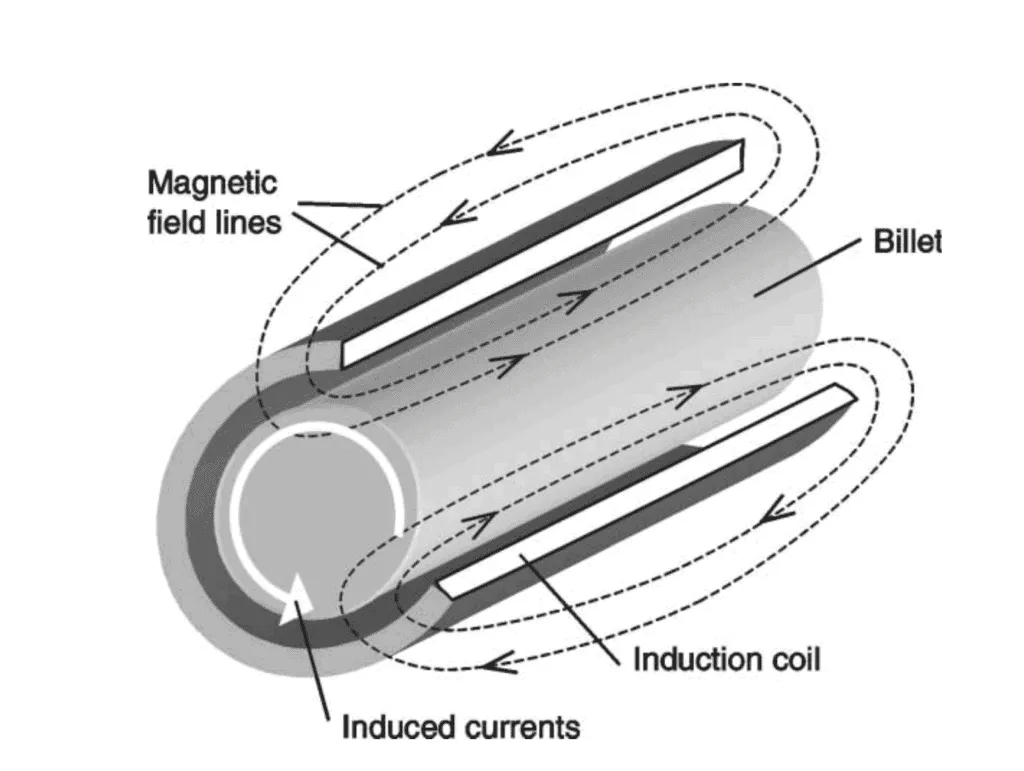
Electromagnetic induction, simply induction, is a heating technique for electrical conductive materials (metals). Induction heating is frequently applied in several thermal processes such as the melting and the heating of metals. Induction heating has the important characteristic that the heat is generated in the material to be heated itself. Because of this, induction has a number of intrinsic trumps, such as a very quickheated itself. Because of this, induction has a number of intrinsic trumps, such as a very quick response and a good efficiency. Induction heating also allows heating very locally. Tare extremely high because of the high power density..... [caption id="attachment_5482" align="alignnone" width="1024"] induction heating principle and applications[/caption]   induction_heating_principle_and_applications https://dw-inductionheater.com/pdf-of-induction-heating-principle-and-applicatons.html?feed_id=236658&_unique_id=65f3e674be8a4

Induction Heating Theory PDF

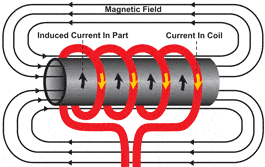
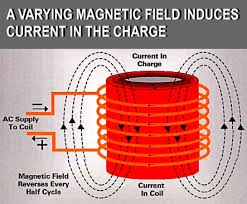
INDUCTION HEATING was first noted when it was found that heat was produced in transformer and motor windings, as mentioned in the Chapter “Heat Treating of Metal” in this book. Accordingly, the theory of induction heating was studied so that motors and transformers could be built for maximum efficiency by minimizing heating losses. The development of high-frequency induction power supplies provided a means of using induction heating for surface hardening. The early use of induction involved trial and error with built-up personal knowledge of specific applications, but a lack of understanding of the induction heating principles. Throughout the years the understanding of the basic principles has been expanded, extending currently into computer modeling of heating applications and processes. Knowledge of these basic theories of induction heating helps to understand the application of induction heating as applied to induction heat treating. Induction heating occurs due to electromagnetic force fields producing an electrical current in a part. The parts heat due to the resistance to the flow of this electric current..... [pdf-embedder url="https://dw-inductionheater.com/wp-content/uploads/2020/05/induction_heating_theory.pdf"] induction_heating_theory https://dw-inductionheater.com/induction-heating-theory-pdf.html?feed_id=236590&_unique_id=65f3300213ac8

2024年3月13日星期三

induction heating system technology PDF

Induction Heating Technology Review

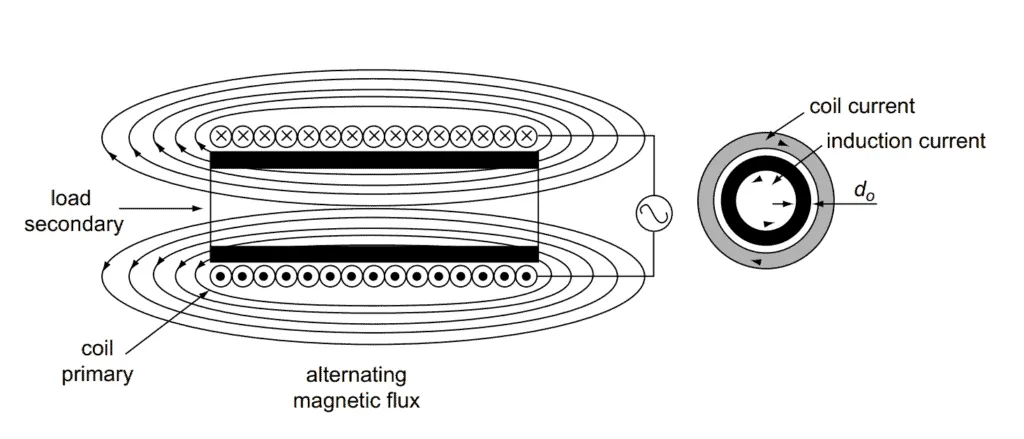
1. Introduction All IH (induction heating) applied systems are developed using electromagnetic induction which was first discovered by Michael Faraday in 1831. Electromagnetic induction heating refers to the phenom- enon by which electric current is generated in a closed circuit by the fluctuation of current in another circuit placed next to it. The basic principle of induction heating, which is an applied form of Faraday’s discovery, is the fact that AC current flowing through a circuit affects the magnetic movement of a secondary circuit located near it. The fluctuation of current inside the primary circuit provided the answer as to how the mysterious current is generated in the neighboring secondary circuit. Faraday’s discovery led to the development of electric motors, generators, transformers, and wireless communications devices. Its application, however, has not been flawless. Heat loss, which occurs during the induction heating process, was a major headache undermining the overall functionality of a system. Researchers sought to minimize heat loss by laminating the magnetic frames placed inside the motor or transformer. Faraday’s Law was followed by a series of more advanced discoveries such as Lentz’s Law. This law explains the fact that inductive current flows inverse to the direction of changes in induction magnetic movement. Heat loss, occurring in the process of electromagnetic induction, could be turned into productive heat energy in an electric induction heating system by applying this law. Many industries have benefited from this new breakthrough by implementing induction heating for furnacing, induction quenching, and weld- ing. In these applications, induction heating has made it easier to set the heating parameters with- out the need of an additional external power source. This substantially reduces heat loss while maintaining a more convenient working environment. Absence of any physical contact to heating devices precludes unpleasant electrical accidents. High energy density is achieved by generating sufficient heat energy within a relatively short period of time...... Induction_Heating_System_Technology.pdf [wpforms id="3947"]   https://dw-inductionheater.com/induction-heating-system-technology-pdf.html?feed_id=236522&_unique_id=65f278dac0c10

Induction Heating fundamentals PDF

Induction heating fundamentals physical principles

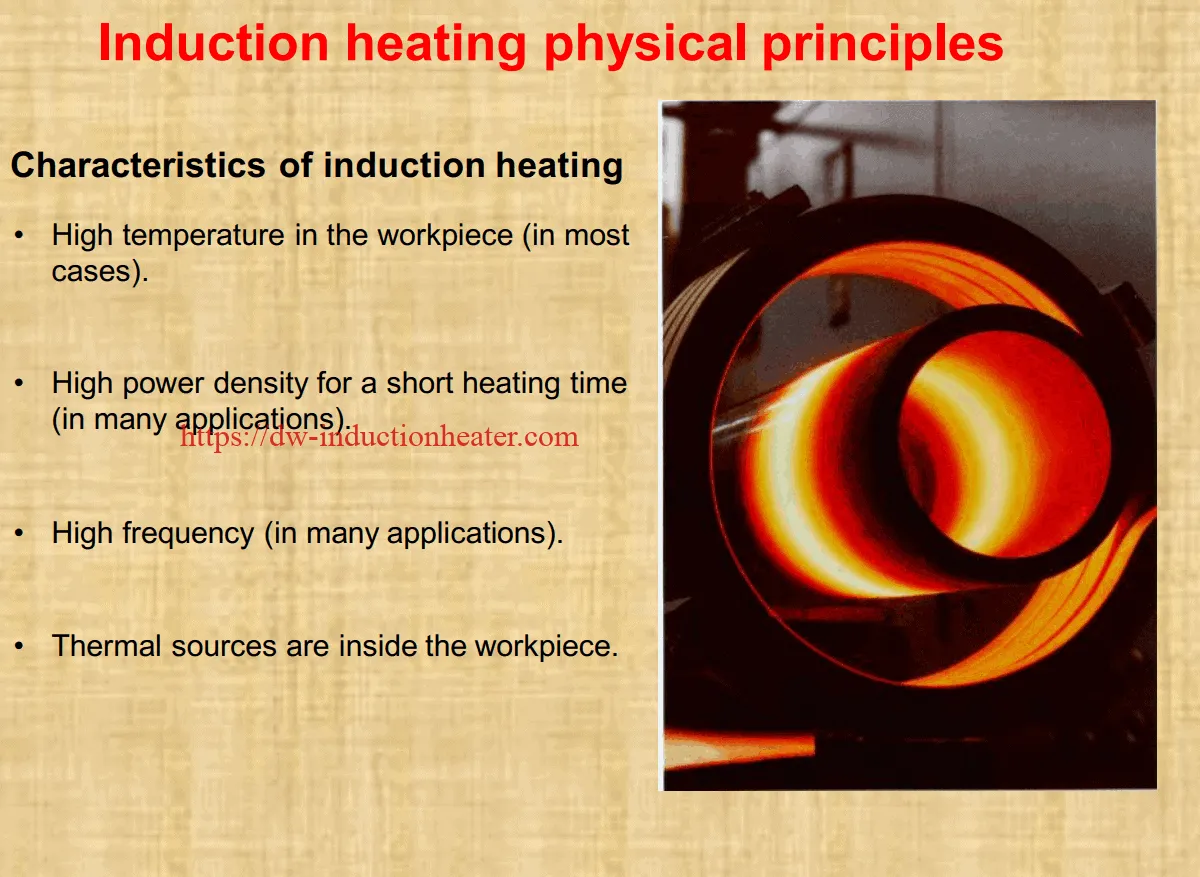
Characteristics of induction heating • High temperature in the workpiece (in most cases). • High power density for a short heating time (in many applications). • High frequency (in many applications). • Thermal sources are inside the workpiece. Induction Heating fundamentals Induction-Heating-fundamentals.pdf https://dw-inductionheater.com/induction-heating-fundamentals-pdf.html?feed_id=236425&_unique_id=65f1c20d0ed0e

2024年3月12日星期二

Induction heating bearings machine PDF

The development of possibilities of machines depends on the production of bearings that can work at high rotating speeds. A modern type of bearing that is used in mechanical industry is an induction heating bearing. This bearing has several advantages. Induction heating bearings do not need a lubricating substance. There is no mechan- ical contact between working parts of the bearing. It works silently with little friction. The lifetime of this bearing is much longer than that of a conventional one. Analytical methods for the analysis of thermoelec- tric problems in induction bearings are not convenient. For the model presented, we use the finite element method to carry out calculations. The heating of in- duction bearings should be carefully examined, when the gap between the working parts is small because temperature increases can cause the bearing to seize up...... induction heating bearings   https://dw-inductionheater.com/induction-heating-bearings-machine-pdf.html?feed_id=236357&_unique_id=65f10b6485dc1

2024年3月11日星期一

Induction Heating Coils Design and Basic PDF

Induction Heating Coils Design and Basic PDF

In a sense, coil design for induction heating is built upon a large store of empirical data whose development springs from several simple inductor geometries such as the solenoid coil. Because of this, coil design is generally based on experience. This series of articles reviews the fundamental electrical consider- ations in the design of inductors and describes some of the most common coils in use......   Induction_Heating_Coils_Design_and_Basic.pdf   [wpforms id="3947"] https://dw-inductionheater.com/induction-heating-coils-design-and-basic-pdf.html?feed_id=236095&_unique_id=65eee6fb89ce4

2024年2月25日星期日

Plastic Injection Molding with Induction Heating

Plastic Injection Molding with Induction Heating Machine

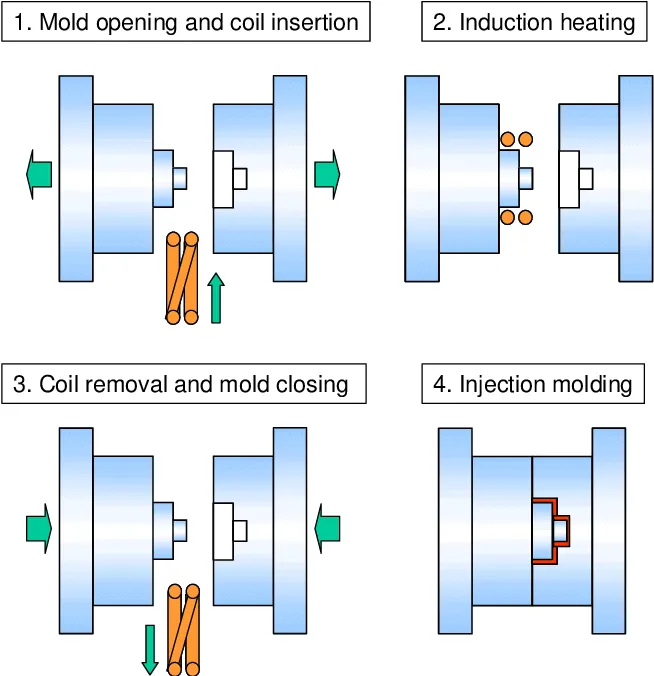
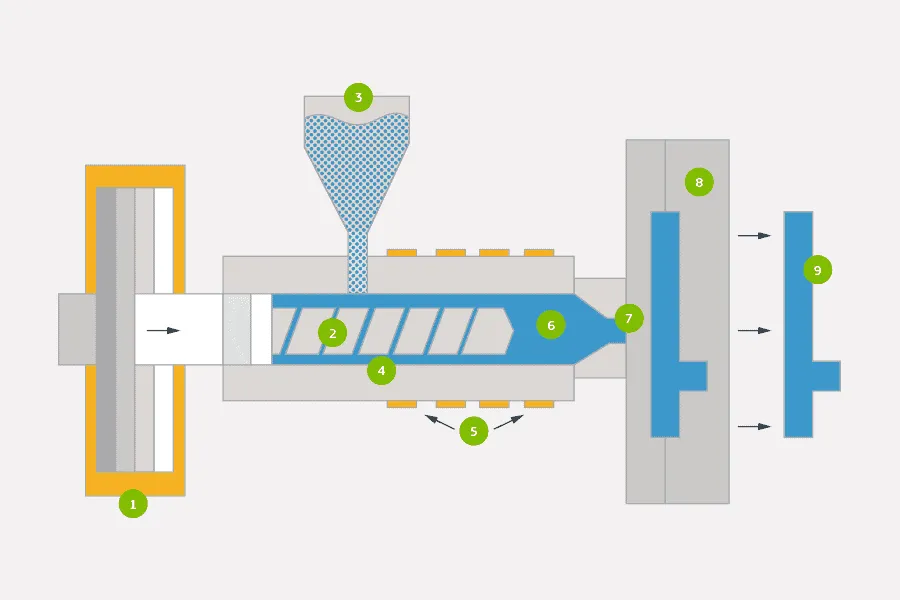
Plastic Injection molding with induction heating requires pre-heating of the molds to a higher temperature, to ensure the proper flow or curing of the injection-molded material. Typical heating methods used in the industry are steam or resistive heating, but they are messy, inefficient, and unreliable. Induction heating is a clean, fast and energy-efficient alternative which has been widely used in recent years to replace steam, gas or resistive heating of molds and dies.

What is Injection Moulding?

Plastic injection moulding with induction heating is the process of melting plastic pellets (thermosetting/ thermoplastic polymers) that once malleable enough, are injected at pressure into a mould cavity, which fills and solidifies to produce the final product.

How Does Plastic Injection Moulding Work?

The plastic injection moulding process at Protolabs is a standard process involving an aluminium mould. Aluminium transfers heat much more efficiently than steel, so does not require cooling channels - which means the time we save on cooling can be applied to monitoring fill pressure, cosmetic concerns and producing a quality part.

Resin pellets are loaded into a barrel where they will eventually be melted, compressed, and injected into the mould’s runner system. Hot resin is shot into the mould cavity through the gates and the part is moulded. Ejector pins facilitate removal of the part from the mould where it falls into a loading bin. When the run is complete, parts (or the initial sample run) are boxed and shipped shortly thereafter.

How Induction Heating is used in Dies & Molds Industry?

  • Induction Preheating of tools and molds for plastic injection molding
  • Heating of molding tools for curing of rubber product and automobile tires
  • Die induction heating for catheter tipping and medical products manufacturing
  • Die and platen heating for metal stamping and forming
  • Induction Preheating of casting molds in the metal casting industry
  • Induction Heat treating and hardening of stamping and punching tools and dies

Plastic Injection Molding with Induction Heating https://dw-inductionheater.com/plastic-injection-molding-with-induction-heating.html?feed_id=234946&_unique_id=65db9ef979e55

2024年2月9日星期五

Induction heating of cylindrical nonmagnetic ingots

Induction heating of cylindrical nonmagnetic ingots

Induction heating of cylindrical nonmagnetic billets by their rotation in static magnetic field is modeled. The magnetic field is produced by a system of appropriately arranged permanent magnets. The numerical model is solved by our own full adaptive higher-order finite element method in a monolithic formulation, i.e., both magnetic and temperature fields are solved simultaneously, respecting their mutual interaction. All principal nonlinearities are included in the model (permeability of ferromagnetic parts of the system as well as temperature dependences of physical parameters of the heated metal). The methodology is illustrated by two examples whose results are discussed. Induction heating of cylindrical nonmagnetic ingots https://dw-inductionheater.com/induction-heating-of-cylindrical-nonmagnetic-ingots.html?feed_id=233746&_unique_id=65c6326c1bfbd

2024年2月8日星期四

Induction heating of aluminium billets

Induction heating of aluminium billets using superconducting coils

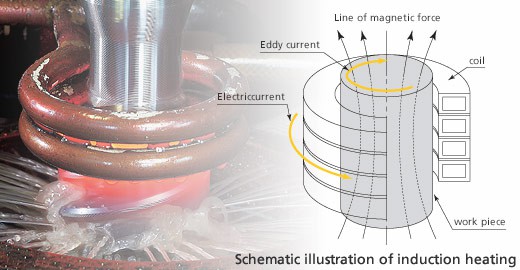
Induction heating of aluminium and copper billets Induction heating is widely applied for heating of metals because it is a clean, fast and in most cases a very energy-efficient method. An alternating current is passed through the copper windings of a coil to generate a time-varying magnetic field. The field induces currents and thereby resistive losses in the workpiece to be heated, (see Fig. 1) Induction heating of aluminium billets   https://dw-inductionheater.com/induction-heating-of-aluminium-billets.html?feed_id=233716&_unique_id=65c57b9becaca

Induction heating of aluminium billets

Induction heating of aluminium billets using superconducting coils

Induction heating of aluminium and copper billets Induction heating is widely applied for heating of metals because it is a clean, fast and in most cases a very energy-efficient method. An alternating current is passed through the copper windings of a coil to generate a time-varying magnetic field. The field induces currents and thereby resistive losses in the workpiece to be heated, (see Fig. 1) Induction heating of aluminium billets   https://dw-inductionheater.com/induction-heating-of-aluminium-billets.html?feed_id=233716&_unique_id=65c57b9be4528

Induction Heating System Topology Review

Induction Heating System Topology Review

[caption id="attachment_7044" align="alignnone" width="1024"] Induction Heating System Topology Review[/caption] All induction heating systhems are developed using electromagnetic induction which was first discovered by Michael Faraday in 1831. Electromagnetic induction refers to the phenomenon by which electric current is generated in a closed circuit by the fluctuation of current in another circuit placed next to it. The basic principle of induction heating, which is an applied form of Faraday’s discovery, is the fact that AC current flowing through a circuit affects the magnetic movement of a secondary circuit located near it. The fluctuation of current inside the primary circuit provided the answer as to how the mysterious current is generated in the neighboring secondary circuit. Faraday’s discovery led to the development of electric motors, generators, transformers, and wireless communications devices. Its application, however, has not been flawless. Heat loss, which occurs during the induction heating process, was a major headache undermining the overall functionality of a system. Researchers sought to minimize heat loss by laminating the magnetic frames placed inside the motor or transformer. Faraday’s Law was followed by a series of more advanced discoveries such as Lentz’s Law. This law explains the fact that inductive current flows inverse to the direction of changes in induction magnetic movement. Induction Heating System Topology Review https://dw-inductionheater.com/induction-heating-system-topology-review.html?feed_id=233686&_unique_id=65c4c4ce13df2

2024年2月7日星期三

Induction Heating PDF

Induction Heating

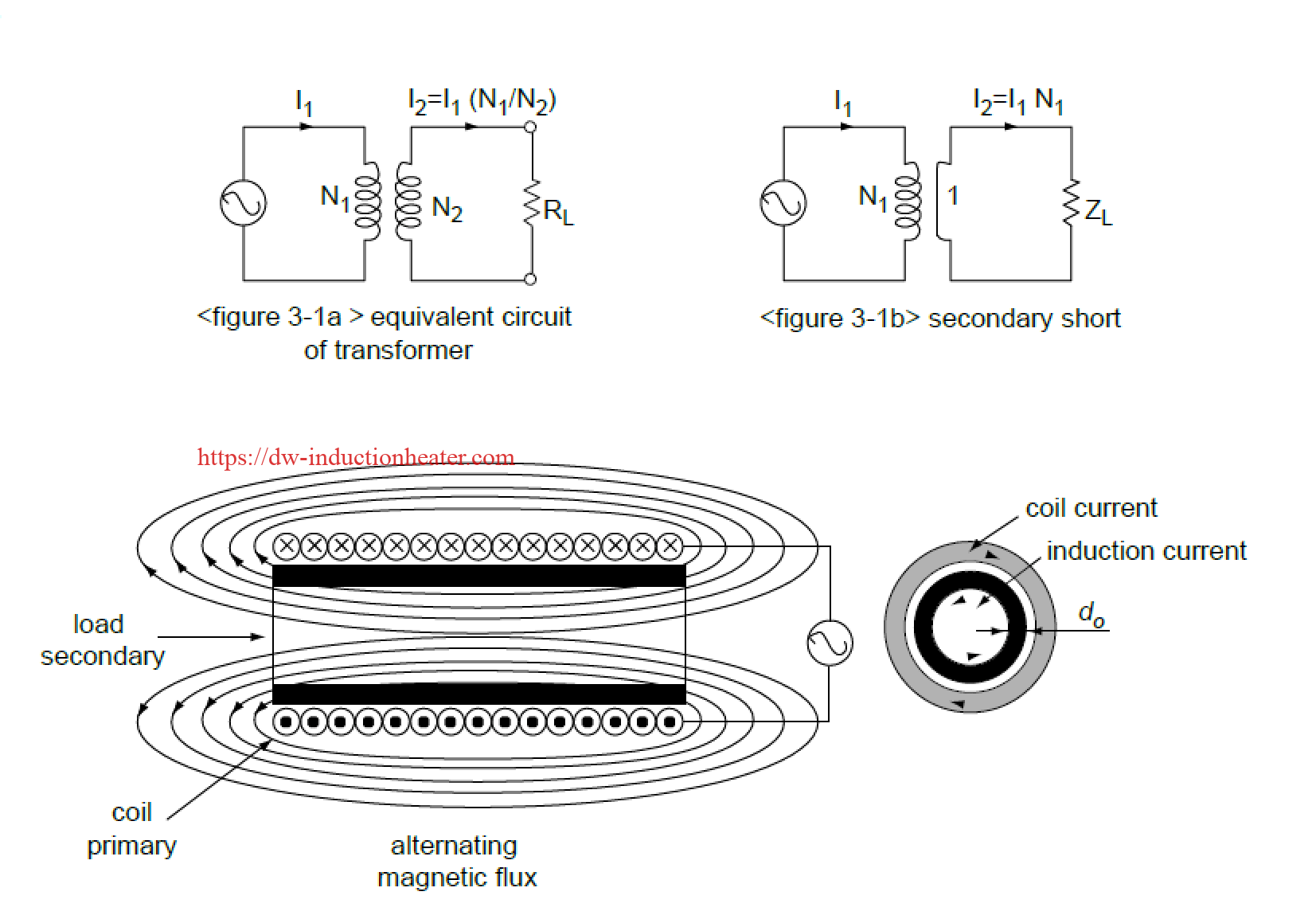
Works like a transformer (Step down transformer –low voltage and high current ) – electromagnetic induction principle

Induction Heating Advantages

No contact is required between the work piece and the induction coil as the heat source Heat is restricted to localized areas or surface zones immediately adjacent to the coil. Alternating current (ac) in an induction coil has an invisible force field (electromagnetic, or flux) around it

Induction Heating Rate

The rate of heating of the work piece is dependent on the : Frequency of the induced current, The intensity of the induced current, The specific heat of the material (ability to absorb heat), The magnetic permeability of the material, The resistance of the material to the flow of current. induction_heating https://dw-inductionheater.com/induction-heating-pdf.html?feed_id=233656&_unique_id=65c40ded01ff3

2024年2月6日星期二

INDUCTION HEATING FOR SURFACE QUENCHING

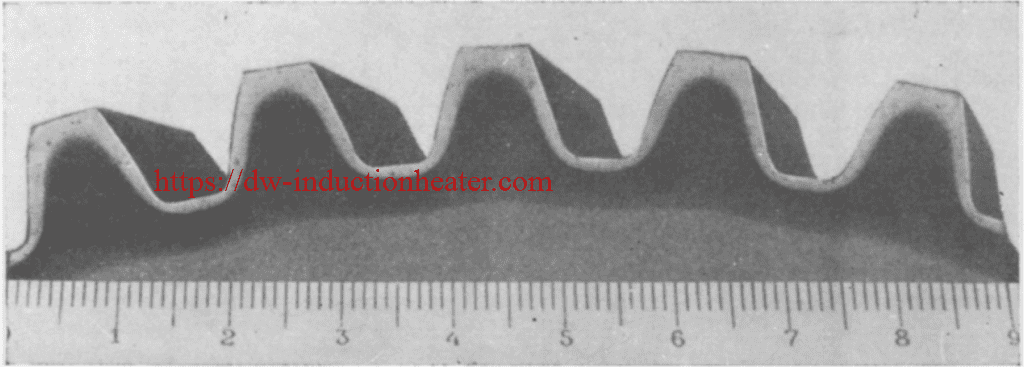
The kinetics of induction heating for surface quenching of steel depend on factors: 1) which induce changes in the electric and magnetic parameters of steels as the result of the increased temperature (these changes lead to changes in the amount of absorbed heat at a given intensity of the electric field at a given induction current) and, 2) on factors which are responsible for the change of the intensity of the electromagnetic field during heating (i.e., change of the current in the inductor). Induction heating in the heat treatment of automobile parts was first used at our plant. In 1937-1938 surface quenching of the necks of crank shafts of the ZIS-5 engine was developed at our plant in collaboration with the staff of the V. P. Vologdin laboratory. The equipment was installed as part of the continuous production line,in which the parts were subjected to mechanical treatment on semi-automatic high-frequency apparatus. More than 61% of alt the parts of the engines of ~ae ZIL-164A and ZIL-157K automobiles are surface hardened by induction heating. The kinetics of induction heating for surface quenching of steel https://dw-inductionheater.com/induction-heating-for-surface-quenching.html?feed_id=233596&_unique_id=65c2a071bd756

2024年2月3日星期六

handbook of induction heating eddy current

PDF handbook of induction heating eddy current

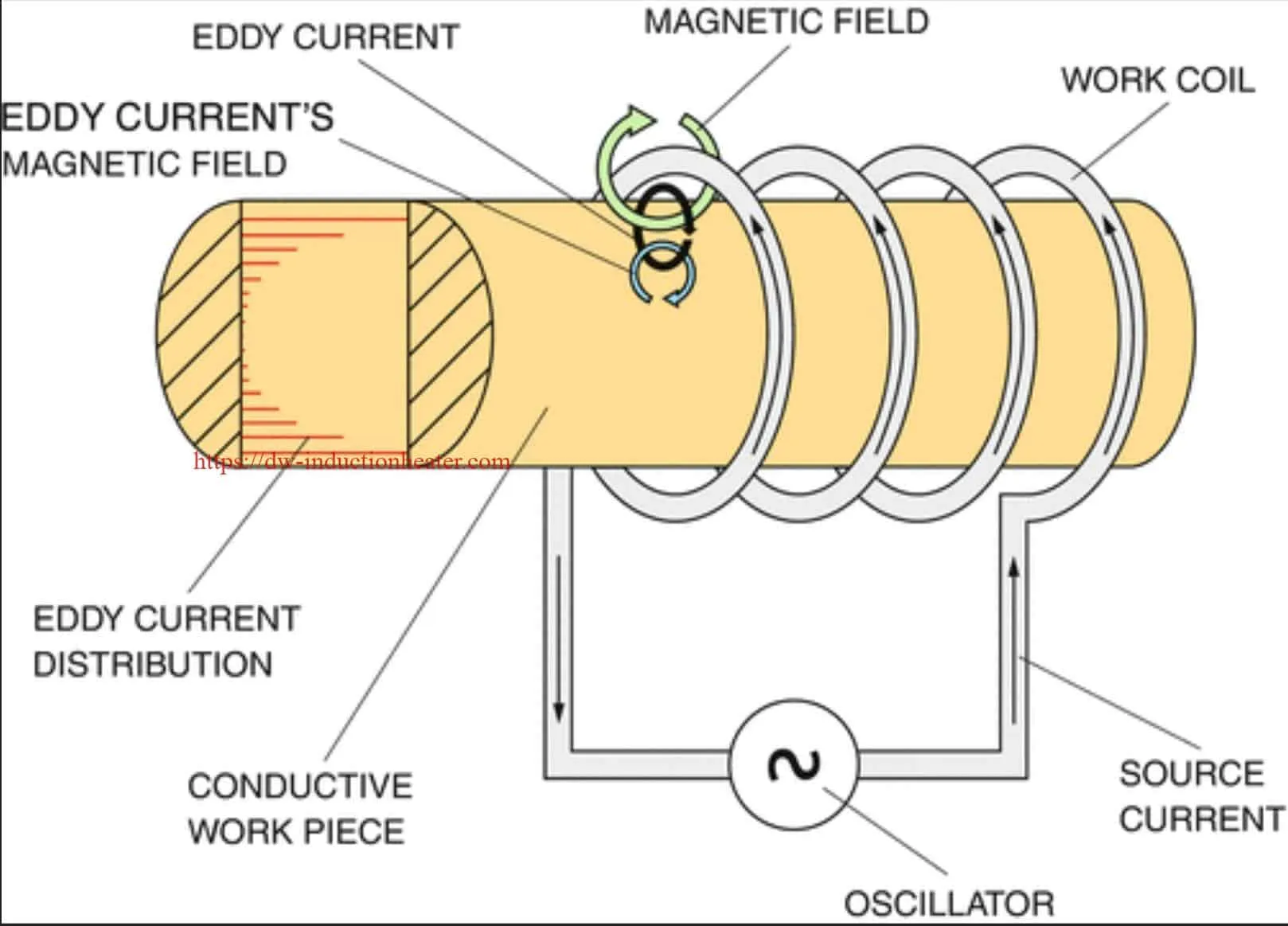
Both induction heating and eddy current testing work with coils, generators, ac-current and ac-voltage, frequencies, field strength and induction law. Contrary to heating of the test parts, the eddy current test does not want to heat the parts at all but wants to examine them for their metallurgical microstructure, thus for their mechanical features like hardness, case depth or alloy. The eddy current test does not provide absolute values (e.g. "56 HRC" or "2.6 mm case depth"). The eddy current test does detect fine differences in micro-structure with high sensitivity. In the production line, within a fraction of a second, a non-destructive 100 % test for hardness case depth hardness run out, hardness pattern tensile strength carbon content soft spots surface decarburisation is completed, and thus quick corrective reactions to any variance from the specified structure can be realized. With a suitable mechanical part handling arrangement, the transport from the hardening station to the test station takes only a few seconds. Faulty parts, caused by a damaged inductor, a jammed quench nozzle or an unknown reason are immediately detected, providing an enormous savings in time and costs! [caption id="attachment_7309" align="alignright" width="1024"] induction-heating-eddy-current.[/caption] Different from the induction heating, the energy for eddy current testing is very small, in the milliwatt range. Field strength is low and permeability is in the range of the initial permeability. Test frequencies ranging from some Hz to some hundreds of kHz provide information on undesired structures via the frequency dependent penetration depth of the eddy current and on the formation of permeability. Very small electrical signals require a very precise evaluation in order to assure their differentiation from ambient interferences. A small drift from variation in temperature and high long term stability are absolutely necessary. Digitization of input voltages immediately at the front end of the electronic evaluation is of huge advantage. Handbook-Induction-Heating-Eddy-Current-Paper-EN https://dw-inductionheater.com/handbook-of-induction-heating-eddy-current.html?feed_id=233416&_unique_id=65be5782c15cb

2024年1月22日星期一

Induction Heater is the Energy Saving heating Source for Rotary Dryers

Induction Heater is the Energy Saving heating Source for Rotary Dryers

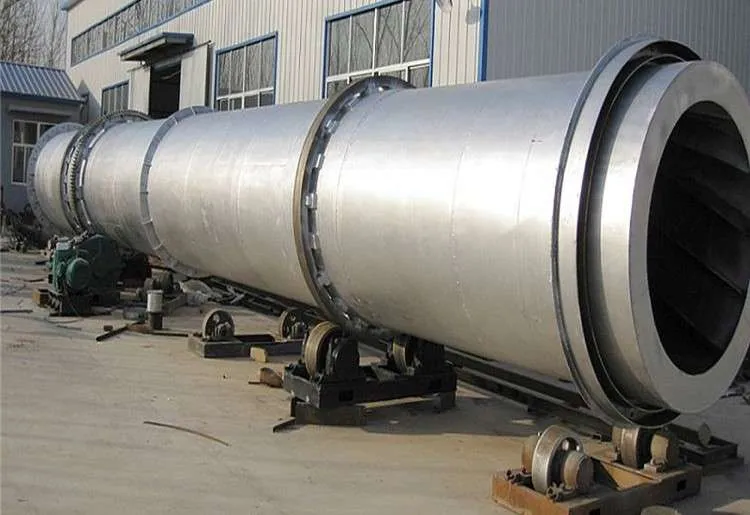
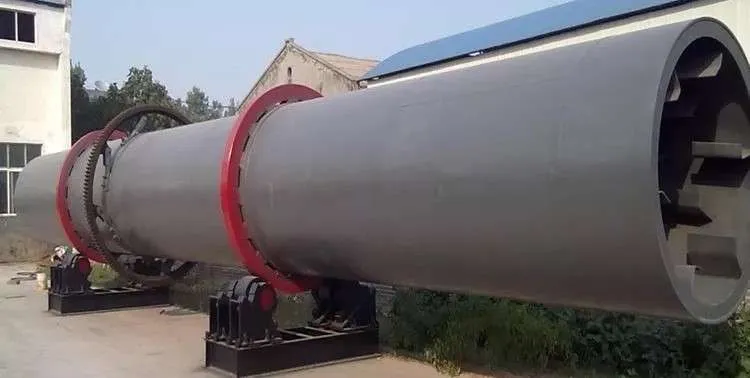
Drying is an operation of great commercial importance in many industrial applications ranging through the food, agricultural, mining, and manufacturing sectors. Drying is certainly one of the most energy-intensive operations in industry and most dryers operate at low thermal efficiency. Drying is a process in which an unbound and=or bound volatile liquid is removed from a solid by evaporation.Large quantities of granular material with particles of 10 mm or larger that are not too fragile or heat-sensitive, or cause any other handling problems are dried in rotary dryers in process industries. The conventional heat transfer methods for drying are convection, conduction, and infrared radiation and dielectric heating. In modern drying techniques, internal heat is generated by radio or microwave frequencies. In most dryers heat is transferred by more than one method, but each industrial dryer has one predominant heat transfer method. In the rotary dryer this is convection, the necessary heat usually being provided by direct contact of a hot gas with the wet solid. Rotary drying is a complicated process involving simultaneous heat, mass transfer, and momentum transfer phenomena. A substantial number of papers have been published on rotary dryers covering various aspects such as drying, residence time distribution, and solids transportation. A static model for counter-current rotary dryer was developed by Myklesstad[1] to obtain a moisture profile for solids in both constant and falling rate periods. Shene et al.[2] developed a mathematical model to predict the solid and drying gas temperature and moisture content axial profiles along a direct contact rotary dryer by focusing on the drying kinetics based on phenomenological models. Shone and Bravo[3] used two different approaches to predict the solid moisture content and solid temperature profiles along a continuous, indirect contact rotary dryer heated with steam tubes by applying heat and mass balances to the solid phase in a differential element of dryer length . Drying of Solids in a Rotary Dryer https://dw-inductionheater.com/induction-heater-is-the-energy-saving-heating-source-for-rotary-dryers.html?feed_id=232702&_unique_id=65aea198403f0

2024年1月21日星期日

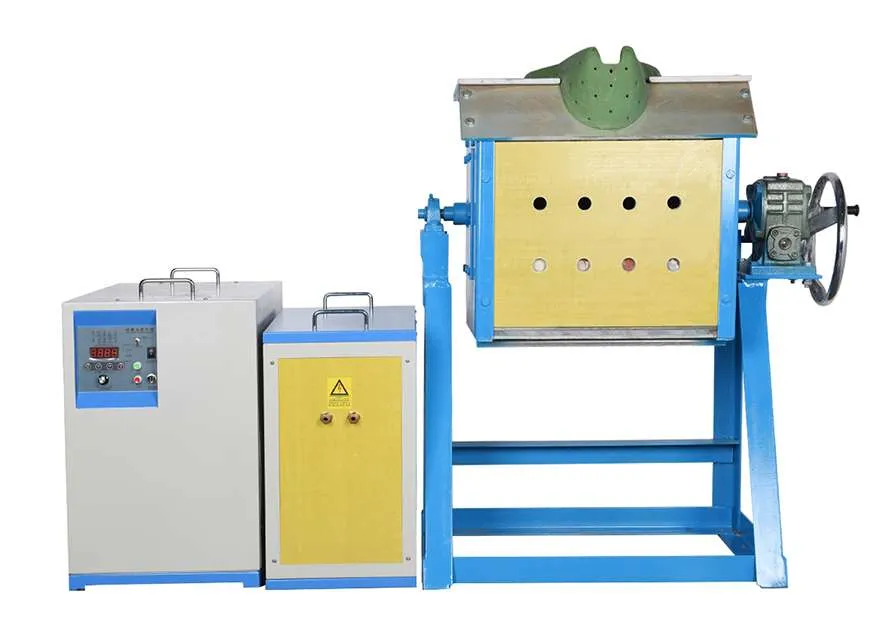
Induction Furnace for melting copper brass and iron steel

Full Solid IGBT Induction Furnace | Induction Melting Furnace for melting copper, brass, iron steel,gold and other metals.

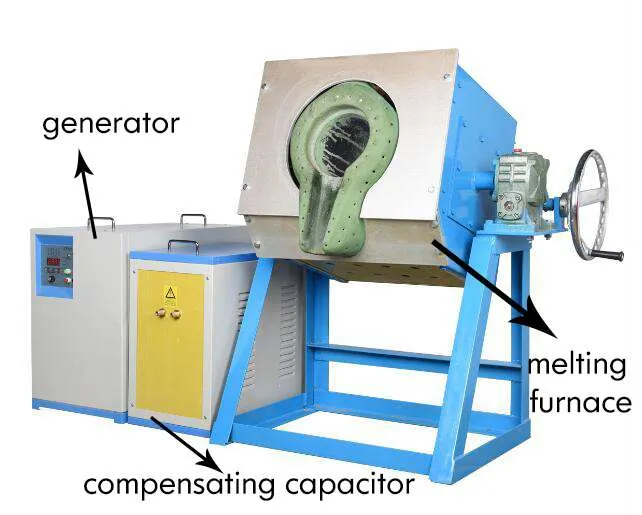
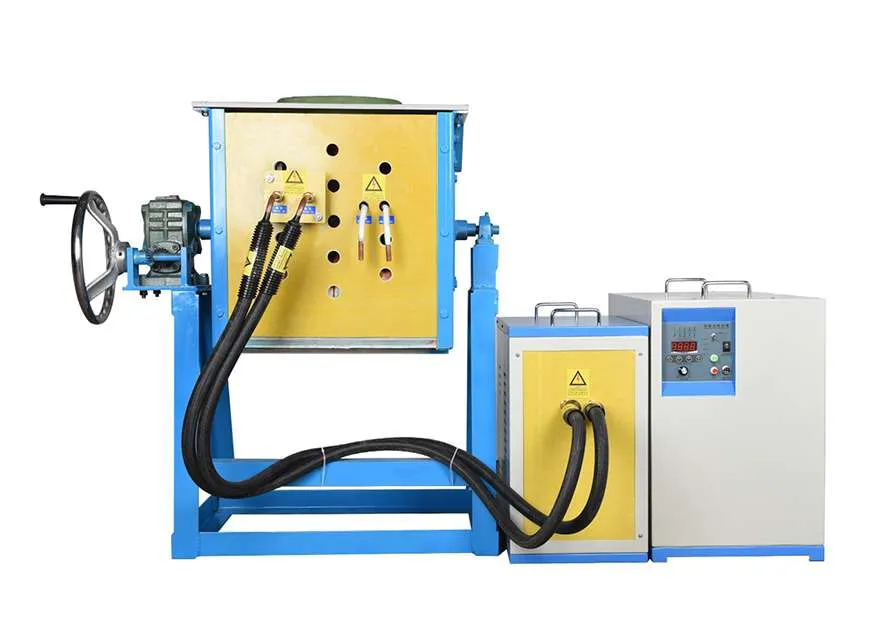
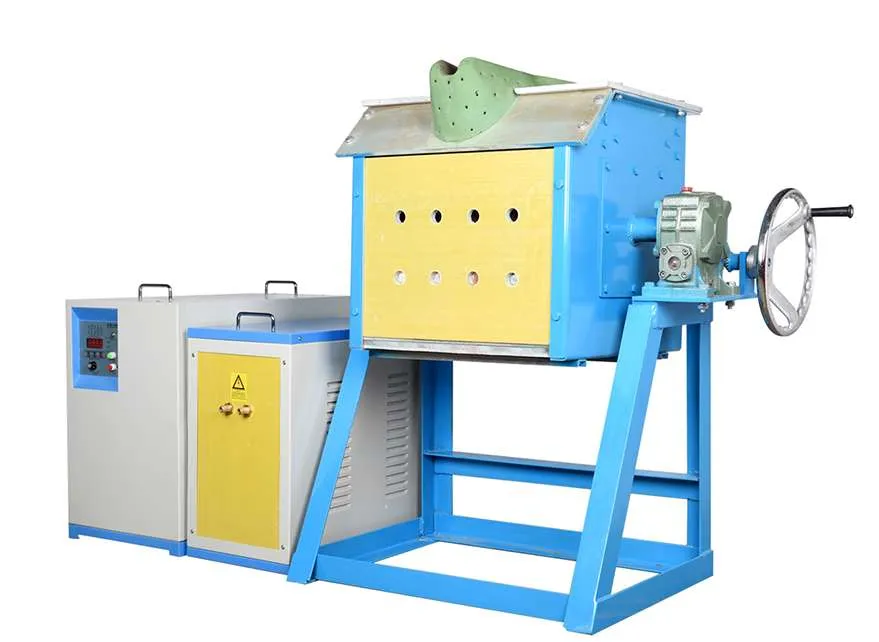
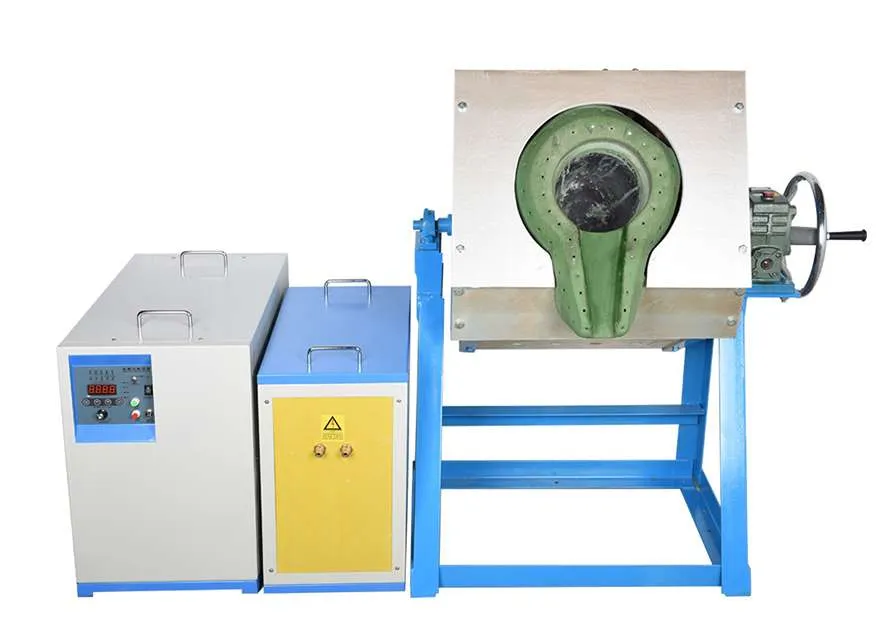
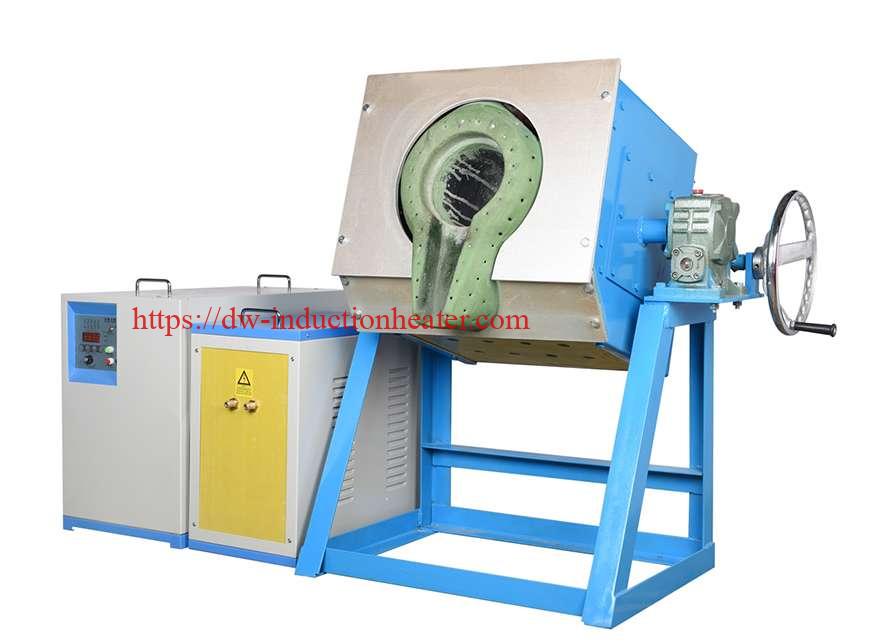
Applications Full Solid IGBT Medium frequency induction melting furnaces are mainly used for the melting of steel, stainless steel, copper, brass, silver, gold, and  aluminum materials, etc.  Melting capacity can be from 3KG to 600KG. Structure of the M. F.induction melting furnace 10-600kg Induction melting furnace for melting brass,copper,iron steel The furnace set includes medium frequency generator, compensating capacitor and melting furnace, infrared temperature sensor and temperature controller can also be included if ordered. Three types of induction melting furnaces can be ed according to the way of pouring out, They are tilting furnace, push-up furnace and stationary furnace. According to the method of tilting, tilting furnace is divided into three kinds:  manual tilting furnace, electrical tilting furnace and hydraulic tilting furnace.
Model DW-MF-15 DW-MF-25 DW-MF-35 DW-MF-45 DW-MF-70 DW-MF-90 DW-MF-110 DW-MF-160
Max Input power 15KW 25KW 35KW 45KW 70KW 90KW 110KW 160KW
Max Input current 23A 36A 51A 68A 105A 135A 170A 240A
Output current 3-22A 5-45A 10-70A 15-95A 20-130A 25-170A 30-200A 30-320A
Output voltage 70-550A
Input voltage 3phase 380V 50 or 60HZ or according customer’s requirement.
Frequency 1KHZ – 20KHZ
Duty cycle 100% 24hours continuous working
Generator net weight 26 28 35 47 75 82 95 125
Generator size LxWx H cm 47x27x45 52x27x45 65x35x55 75x40x87 82x50x87
Timer Heating time: 0.1-99.9seconds retaining time: 0.1-99.9seconds
Front panel LCD, display frequency, power, time etc.
Whole systems water flow ≥0.2Mpa ≥6L/Min ≥0.3Mpa ≥10L/Min ≥0.3Mpa ≥20L/Min ≥0.3Mpa ≥30L/Min
Power supply water flow ≥0.2Mpa ≥3L/Min ≥0.2Mpa ≥4L/Min ≥0.2Mpa ≥6L/Min ≥0.2Mpa ≥15L/Min
Water way 1 water inlet, 1 water outlet 1 water inlet, 3 water outlet
Max water temp. ≤40℃
Auxiliary Function 1.model DW-MF-XXA has timer function, heating time and retaining time can be preset and controlled independently from 0.1-99.9second. 2.model DW-MF-XXB is used together with transformer.
  • tilting induction brass melting furnace for melting copper,iron steel and other metalsinduction melting furnaceSpecifications
  • Main models and melting abilities of induction melting furnace
  • The table below lists the main models and recommended maximum melting abilities. First time About 50 to 60 minutes are needed to finish one melting process at cool status of the induction furnace, at hot status of the induction furnace, about 30-40 minutes are needed.
Model Max input power Maximum melting capacity
Iron, steel, stainless steel Brass, copper, silver, gold, etc. Aluminum
DW-MF-15 induction melting furnace 15KW 3KG 10KG 3KG
DW-MF-25 induction melting furnace 25KW 5KG 20KG 5KG
DW-MF-35 induction melting furnace 35KW 10KG 30KG 10KG
DW-MF-45 induction melting furnace 45KW 18KG 50KG 18KG
DW-MF-70 induction melting furnace 70KW 25KG 100KG 25KG
DW-MF-90 induction melting furnace 90KW 40KG 120KG 40KG
DW-MF-110 induction melting furnace 110KW 50KG 150KG 50KG
DW-MF-160 induction melting furnace 160KW 100KG 250KG 100KG
  • Description
Medium frequency induction melting furnace are mainly used for the melting of gold, silver, platinum, copper, brass, bronze, zinc, steel, stainless steel, iron, aluminum and alloy materials, etc. melting capacity can be from 0.1-250kg Induction Melting Furnace for melting copper,aluminum,brass and iron steel The composing of the Medium frequency induction melting furnace Medium Frequency induction heating generator. Compensating capacitor. Melting furnace. Infrared temperature sensor, temperature controller and water cooling system can also optional. Three types of induction melting furnaces can be selected according to the way of pouring out, they are tilting furnace, push-up furnace and stationary furnace. According to the method of tilting, tilting furnace is divided into three kinds: Manual tilting furnace, Electrical tilting furnace and Hydraulic tilting furnace. Main Features of DW-MF induction melting furnace Medium frequency induction melting furnace can be used for the melting of steel, stainless steel, iron, brass, copper, aluminum, gold, silver, platinum , zinc, metal alloys and so on. Because of the stirring effect which caused by the magnetic force, the melting pool can be stirred during the melting course to ease the floating of the flux and oxides to produce high quality casting parts. Wide frequency range from 1KHZ to 20KHZ, working frequency can be designed by changing the coil and compensating capacitor according to the melting material, quantity, stirring effect desire, working noise, melting efficiency and other factors. Compared with SCR medium frequency induction furnace, it can save energy at least 20% and up. Small and light weight, a lot of modes can be selected to melt different amount of metals. Not only it is suitable for the factory, but also suitable for the college and researching companies to use. 24hours non-stop melting ability. It’s easy to change melting furnace for different capacity, different material, different way of pouring out, to suitable for all kinds of requirements. 10-600kg induction metals melting furnace for copper,brass,iron steel,gold and metals https://dw-inductionheater.com/induction-furnace-for-melting-copper-brass-and-iron-steel.html?feed_id=232672&_unique_id=65adeaecb295a
2023年11月12日星期日

Induction Heating PDF

Induction Heating

Works like a transformer (Step down transformer –low voltage and high current ) – electromagnetic induction principle

Induction Heating Advantages

No contact is required between the work piece and the induction coil as the heat source Heat is restricted to localized areas or surface zones immediately adjacent to the coil. Alternating current (ac) in an induction coil has an invisible force field (electromagnetic, or flux) around it

Induction Heating Rate

The rate of heating of the work piece is dependent on the : Frequency of the induced current, The intensity of the induced current, The specific heat of the material (ability to absorb heat), The magnetic permeability of the material, The resistance of the material to the flow of current. induction_heating

2023年11月11日星期六

induction heating system technology PDF

Induction Heating Technology Review

1. Introduction All IH (induction heating) applied systems are developed using electromagnetic induction which was first discovered by Michael Faraday in 1831. Electromagnetic induction heating refers to the phenom- enon by which electric current is generated in a closed circuit by the fluctuation of current in another circuit placed next to it. The basic principle of induction heating, which is an applied form of Faraday’s discovery, is the fact that AC current flowing through a circuit affects the magnetic movement of a secondary circuit located near it. The fluctuation of current inside the primary circuit provided the answer as to how the mysterious current is generated in the neighboring secondary circuit. Faraday’s discovery led to the development of electric motors, generators, transformers, and wireless communications devices. Its application, however, has not been flawless. Heat loss, which occurs during the induction heating process, was a major headache undermining the overall functionality of a system. Researchers sought to minimize heat loss by laminating the magnetic frames placed inside the motor or transformer. Faraday’s Law was followed by a series of more advanced discoveries such as Lentz’s Law. This law explains the fact that inductive current flows inverse to the direction of changes in induction magnetic movement. Heat loss, occurring in the process of electromagnetic induction, could be turned into productive heat energy in an electric induction heating system by applying this law. Many industries have benefited from this new breakthrough by implementing induction heating for furnacing, induction quenching, and weld- ing. In these applications, induction heating has made it easier to set the heating parameters with- out the need of an additional external power source. This substantially reduces heat loss while maintaining a more convenient working environment. Absence of any physical contact to heating devices precludes unpleasant electrical accidents. High energy density is achieved by generating sufficient heat energy within a relatively short period of time...... Induction_Heating_System_Technology.pdf [wpforms id="3947"]  

2023年11月6日星期一

PDF of Induction Heating Principle and Applicatons

Induction Heating Principle and Applications PDF download for Research

Electromagnetic induction, simply induction, is a heating technique for electrical conductive materials (metals). Induction heating is frequently applied in several thermal processes such as the melting and the heating of metals. Induction heating has the important characteristic that the heat is generated in the material to be heated itself. Because of this, induction has a number of intrinsic trumps, such as a very quickheated itself. Because of this, induction has a number of intrinsic trumps, such as a very quick response and a good efficiency. Induction heating also allows heating very locally. Tare extremely high because of the high power density..... [caption id="attachment_5482" align="alignnone" width="1024"] induction heating principle and applications[/caption]   induction_heating_principle_and_applications

2023年10月27日星期五

Induction Heating fundamentals PDF

Induction heating fundamentals physical principles

Characteristics of induction heating • High temperature in the workpiece (in most cases). • High power density for a short heating time (in many applications). • High frequency (in many applications). • Thermal sources are inside the workpiece. Induction Heating fundamentals Induction-Heating-fundamentals.pdf

关注者

我的简介

我的照片
HLQ induction heating machine manufacturer provides the service of induction brazing,melting,hot forming,hardening surface,annealing,shrink fitting,PWHT,etc.