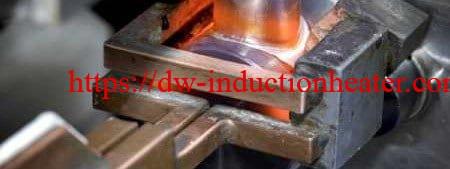
Why choose Induction Brazing?
Induction heating technology is steadily displacing open flames and ovens as the preferred heat source in brazing. Seven key reasons explain this growing popularity:
1. Speedier solution
Induction heating transfers more energy per square millimeter than an open flame. Put simply, induction can braze more parts per hour than alternative processes.
2. Quicker throughput
Induction is ideal for in-line integration. Batches of parts no longer have to be taken aside or sent out for brazing. Electronic controls and customized coils let us integrate the brazing process into seamless production processes.
3. Consistent performance
Induction heating is controllable and repeatable. Enter your desired process parameters into the induction equipment, and it will repeat heating cycles with only negligible deviations.
4.
Unique controllability
Induction lets operators view the brazing process, something that is difficult with flames. This and precise heating minimize the risk of overheating, which causes weak joints.
5. More productive environment
Open flames create uncomfortable working environments. Operator morale and productivity suffer as a result. Induction is silent. And there is virtually no increase in ambient temperature.
6. Put your space to work
DAWEI Induction brazing equipment has a small footprint. Induction stations slot easily into production cells and existing layouts. And our compact, mobile systems let you work on hard-to-access parts.
7. No-contact process
Induction produces heat within the base metals — and nowhere else. It’s a no-contact process; the base metals never come into contact with flames. This protects the base metals from warping, which in turn increases yield and product quality.
 https://dw-inductionheater.com/why-choose-induction-brazing.html?feed_id=243896&_unique_id=663207553ec6a
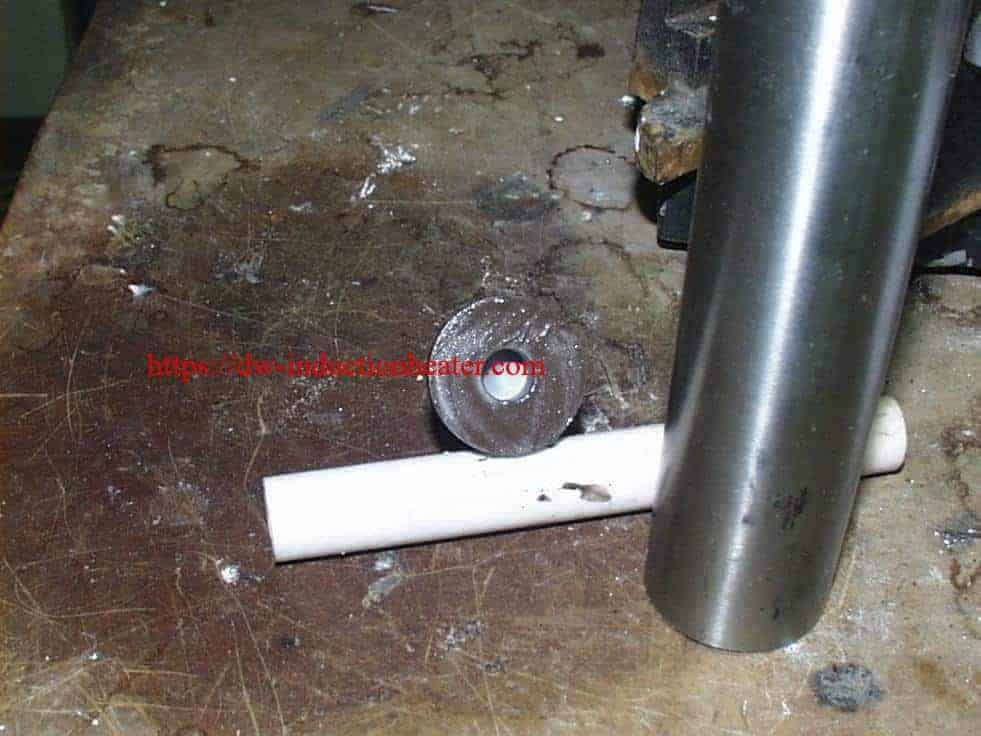 Induction Brazing Carbide To Stainless Steel Shaft With IGBT Heating Units
Objective Brazing a cone shaped carbide to a stainless steel shaft for a digger
Material Cone shaped carbide 1.12” (28.4mm) dia, 1.5”(38.1mm) tall, stainless steel shaft 1.12” (28.4mm) dia and various length, black brazing flux and braze shims
Temperature 1500 ºF (815 ºC)
Frequency 277 kHz
Equipment • DW-UHF-10 kW induction heating system, equipped with a remote workhead containing two 1.0μF capacitors for a total of 0.5μF
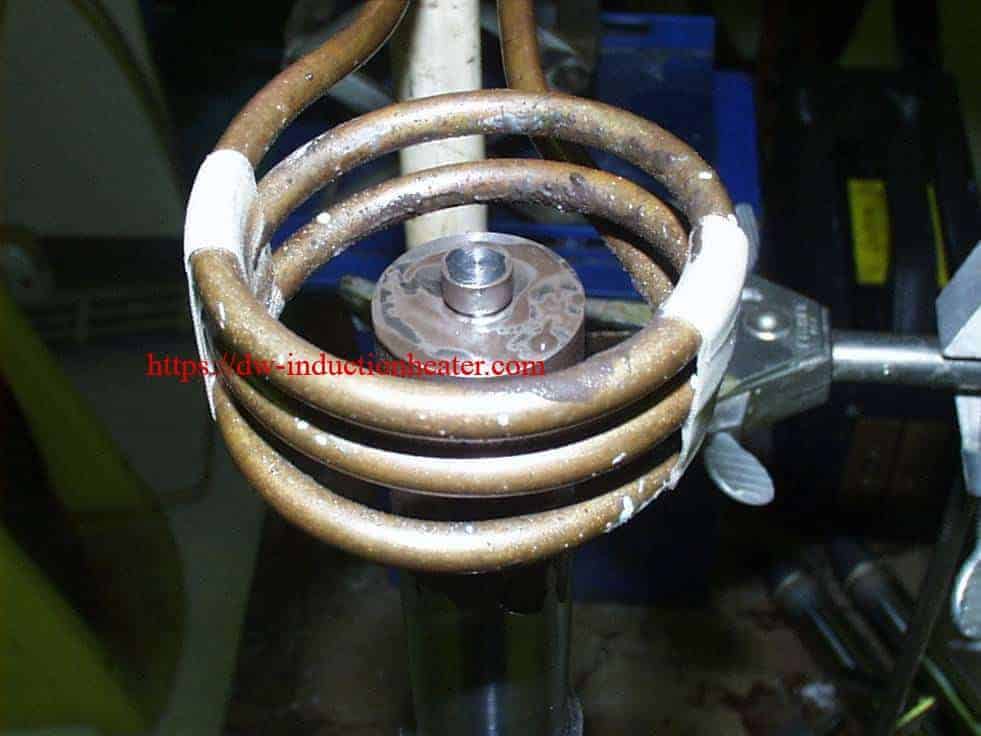
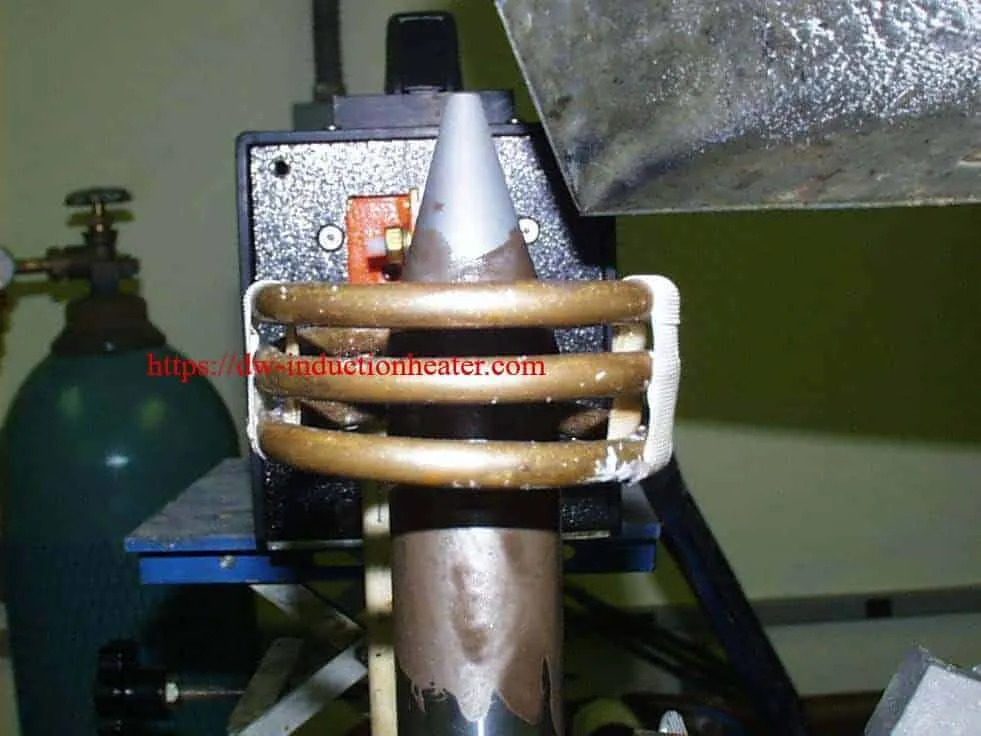
• An induction heating coil designed and developed specifically for this application.
Process A three turn helical coil is used to braze the carbide to the shaft. The steel shaft is fluxed and the braze shim placed on top. The carbide tip is fluxed and placed on top of the shim, lining up the countersunk hole in the carbide. The hole is not fluxed because the flux outgases and causes the carbide to build up pressure and attempt to repel from the shaft. Power is applied for 85 seconds for the braze shim to flow and make a good joint.
DAWEI’s customer has a customer who is unhappy with the braze quality of their digger so our customer is looking for a better quality brazing process. DAWEI’s customer is very happy with the sample brazed diggers and the help he received from the Ameritherm lab in developing his brazing process.
Results/Benefits Induction heating provides:
• Rapid localized heating only where needed
• Creates clean, controllable joints
• Hands-free heating that involves no operator skill for manufacturing
• Even distribution of heating
Induction Brazing Carbide To Stainless Steel Shaft With IGBT Heating Units
Objective Brazing a cone shaped carbide to a stainless steel shaft for a digger
Material Cone shaped carbide 1.12” (28.4mm) dia, 1.5”(38.1mm) tall, stainless steel shaft 1.12” (28.4mm) dia and various length, black brazing flux and braze shims
Temperature 1500 ºF (815 ºC)
Frequency 277 kHz
Equipment • DW-UHF-10 kW induction heating system, equipped with a remote workhead containing two 1.0μF capacitors for a total of 0.5μF
• An induction heating coil designed and developed specifically for this application.
Process A three turn helical coil is used to braze the carbide to the shaft. The steel shaft is fluxed and the braze shim placed on top. The carbide tip is fluxed and placed on top of the shim, lining up the countersunk hole in the carbide. The hole is not fluxed because the flux outgases and causes the carbide to build up pressure and attempt to repel from the shaft. Power is applied for 85 seconds for the braze shim to flow and make a good joint.
DAWEI’s customer has a customer who is unhappy with the braze quality of their digger so our customer is looking for a better quality brazing process. DAWEI’s customer is very happy with the sample brazed diggers and the help he received from the Ameritherm lab in developing his brazing process.
Results/Benefits Induction heating provides:
• Rapid localized heating only where needed
• Creates clean, controllable joints
• Hands-free heating that involves no operator skill for manufacturing
• Even distribution of heating
 https://dw-inductionheater.com/induction-brazing-carbide-to-stainless-steel.html?feed_id=244304&_unique_id=6636501477c8b


 What is induction tempering?
Induction tempering is a heating process that optimizes mechanical properties such as toughness and ductility
in workpieces that have already been hardened.
What are the benefits?
The main advantage of induction over furnace tempering is speed. Induction can temper workpieces in minutes, sometimes even seconds. Furnaces typically take hours. And as induction tempering is perfect for inline integration, it minimizes the number of components in process. Induction tempering facilitates quality control of individual workpieces. Integrated induction temper stations also save valuable floor space.
Where is it used?
Induction tempering is widely employed in the automotive industry to temper surface-hardened components such as shafts, bars and joints. The process is also used in the tube and pipe industry to temper throughhardened workpieces. Induction tempering is sometimes performed in the hardening station, sometimes in one or several separate temper stations.
What equipment is available?
Complete HardLine systems are ideal for many tempering applications. The chief benefit of such systems is that hardening and tempering are performed by one machine. This delivers significant time and cost savings in a small footprint compared to alternative technologies. With furnaces, for example, one furnace often first hardens the workpieces, with a separate furnace
then being used for tempering. Solid state DAWEI Induction Heating Systems are also used for tempering applications.
What is induction tempering?
Induction tempering is a heating process that optimizes mechanical properties such as toughness and ductility
in workpieces that have already been hardened.
What are the benefits?
The main advantage of induction over furnace tempering is speed. Induction can temper workpieces in minutes, sometimes even seconds. Furnaces typically take hours. And as induction tempering is perfect for inline integration, it minimizes the number of components in process. Induction tempering facilitates quality control of individual workpieces. Integrated induction temper stations also save valuable floor space.
Where is it used?
Induction tempering is widely employed in the automotive industry to temper surface-hardened components such as shafts, bars and joints. The process is also used in the tube and pipe industry to temper throughhardened workpieces. Induction tempering is sometimes performed in the hardening station, sometimes in one or several separate temper stations.
What equipment is available?
Complete HardLine systems are ideal for many tempering applications. The chief benefit of such systems is that hardening and tempering are performed by one machine. This delivers significant time and cost savings in a small footprint compared to alternative technologies. With furnaces, for example, one furnace often first hardens the workpieces, with a separate furnace
then being used for tempering. Solid state DAWEI Induction Heating Systems are also used for tempering applications.
 What is induction bonding?
Induction bonding uses induction heating to cure bonding adhesives. Induction is the main method for curing adhesives and sealants for car components such as doors, hoods, fenders, rearview mirrors and magnets. Induction also cures the adhesives in composite- to-metal and carbon fiber-to-carbon fiber joints. There are two main types of automotive bonding: spotbonding,
which heats small segments of the materials to be joined; full-ring bonding, which heats complete joints.
What are the benefits?
DAWEI Induction spot bonding systems ensure precise energy inputs for each panel. Small heat affected zones minimize total panel elongation. Clamping is not needed when bonding steel panels, which reduces stresses and distortion. Each panel is electronically monitored to ensure that energy input deviations are within tolerances. With full-ring bonding, a one-sizefits-
all coil reduces the need for spare coils.
Where is it used?
Induction is the preferred bonding method in the automotive industry. Widely used to bond steel and aluminum sheet metal, induction is increasingly employed to bond new lightweight composite and carbon fiber materials. Induction is used to bond curved strands, brake shoes and magnets in the electrotechnical industry.
It is also used for guides, rails, shelves and panels in the white goods sector.
What equipment is available?
DAWEI Induction is the professional induction curing specialist. In fact, we invented induction spot curing.
The equipment we deliver ranges from individual system elements such as power sources and coils, to complete and fully supported turn-key solutions.
What is induction bonding?
Induction bonding uses induction heating to cure bonding adhesives. Induction is the main method for curing adhesives and sealants for car components such as doors, hoods, fenders, rearview mirrors and magnets. Induction also cures the adhesives in composite- to-metal and carbon fiber-to-carbon fiber joints. There are two main types of automotive bonding: spotbonding,
which heats small segments of the materials to be joined; full-ring bonding, which heats complete joints.
What are the benefits?
DAWEI Induction spot bonding systems ensure precise energy inputs for each panel. Small heat affected zones minimize total panel elongation. Clamping is not needed when bonding steel panels, which reduces stresses and distortion. Each panel is electronically monitored to ensure that energy input deviations are within tolerances. With full-ring bonding, a one-sizefits-
all coil reduces the need for spare coils.
Where is it used?
Induction is the preferred bonding method in the automotive industry. Widely used to bond steel and aluminum sheet metal, induction is increasingly employed to bond new lightweight composite and carbon fiber materials. Induction is used to bond curved strands, brake shoes and magnets in the electrotechnical industry.
It is also used for guides, rails, shelves and panels in the white goods sector.
What equipment is available?
DAWEI Induction is the professional induction curing specialist. In fact, we invented induction spot curing.
The equipment we deliver ranges from individual system elements such as power sources and coils, to complete and fully supported turn-key solutions.
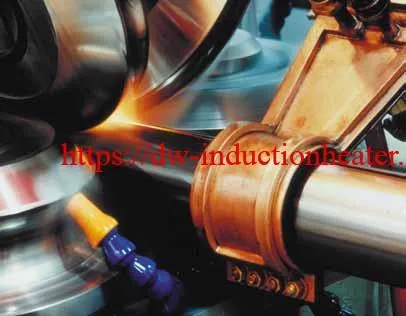 What is induction welding?
With induction welding the heat is electromagnetically induced in the workpiece. The speed and accuracy
of induction welding make it ideal for edge welding of tubes and pipes. In this process, pipes pass an induction coil at high speed. As they do so, their edges are heated then squeezed together to form a longitudinal weld seam. Induction welding is particularly suitable for high-volume production. Induction welders can also be fitted with contact heads, turning them into
dual purpose welding systems.
What are the benefits?
Automated induction longitudinal welding is a reliable, high-throughput process. The low power consumption and high efficiency of DAWEI Induction welding systems reduce costs. Their controllability and repeatability minimize scrap. Our systems are also flexible—automatic load matching ensures full output power across a wide range of tube sizes. And their small footprints make them easy to integrate or retrofit into production lines.
Where is it used?
Induction welding is used in the tube and pipe industry for the longitudinal welding of stainless steel (magnetic and non-magnetic), aluminum, low-carbon and highstrength low-alloy (HSLA) steels and many other conductive
materials.
What is induction welding?
With induction welding the heat is electromagnetically induced in the workpiece. The speed and accuracy
of induction welding make it ideal for edge welding of tubes and pipes. In this process, pipes pass an induction coil at high speed. As they do so, their edges are heated then squeezed together to form a longitudinal weld seam. Induction welding is particularly suitable for high-volume production. Induction welders can also be fitted with contact heads, turning them into
dual purpose welding systems.
What are the benefits?
Automated induction longitudinal welding is a reliable, high-throughput process. The low power consumption and high efficiency of DAWEI Induction welding systems reduce costs. Their controllability and repeatability minimize scrap. Our systems are also flexible—automatic load matching ensures full output power across a wide range of tube sizes. And their small footprints make them easy to integrate or retrofit into production lines.
Where is it used?
Induction welding is used in the tube and pipe industry for the longitudinal welding of stainless steel (magnetic and non-magnetic), aluminum, low-carbon and highstrength low-alloy (HSLA) steels and many other conductive
materials.
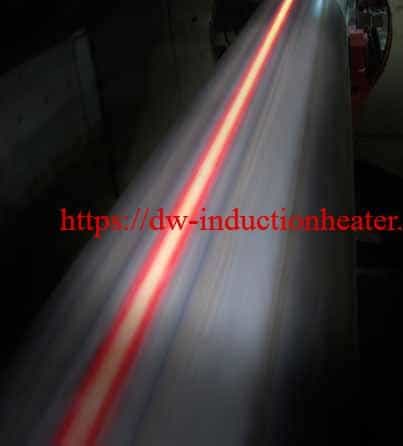 What is induction annealing?
This process heats metals that have already undergone significant processing. Induction annealing reduces hardness, improves ductility and relieves internal stresses. Full-body annealing is a process where the complete workpiece is annealed. With seam annealing (more accurately known as seam normalizing), only the heat-affected zone produced by the welding process is treated.
What are the benefits?
Induction annealing and normalizing delivers fast, reliable and localized heat, precise temperature control, and easy in-line integration. Induction treats individual workpieces to exact specifications, with control systems continuously monitoring and recording the entire process.
Where is it used?
Induction annealing and normalizing is widely used in the tube and pipe industry. It also anneals wire, steel strips, knife blades and copper tubing. In fact, induction is ideal for virtually any annealing task.
What equipment is available?
Each DAWEI Induction annealing system is built to satisfy specific requirements. At the heart of each system is
an DAWEI Induction Heating generator that features automatic load matching and a constant power factor at all power levels. Most of our delivered systems also feature custom-built handling and control solutions.
What is induction annealing?
This process heats metals that have already undergone significant processing. Induction annealing reduces hardness, improves ductility and relieves internal stresses. Full-body annealing is a process where the complete workpiece is annealed. With seam annealing (more accurately known as seam normalizing), only the heat-affected zone produced by the welding process is treated.
What are the benefits?
Induction annealing and normalizing delivers fast, reliable and localized heat, precise temperature control, and easy in-line integration. Induction treats individual workpieces to exact specifications, with control systems continuously monitoring and recording the entire process.
Where is it used?
Induction annealing and normalizing is widely used in the tube and pipe industry. It also anneals wire, steel strips, knife blades and copper tubing. In fact, induction is ideal for virtually any annealing task.
What equipment is available?
Each DAWEI Induction annealing system is built to satisfy specific requirements. At the heart of each system is
an DAWEI Induction Heating generator that features automatic load matching and a constant power factor at all power levels. Most of our delivered systems also feature custom-built handling and control solutions.