 https://dw-inductionheater.com/what-is-induction-welding.html?feed_id=273519&_unique_id=67e0c3f26ea9c
2025年3月23日星期日
What is induction welding?
What is induction welding?
https://dw-inductionheater.com/what-is-induction-welding.html?feed_id=273519&_unique_id=67e0c3f26ea9c
https://dw-inductionheater.com/what-is-induction-welding.html?feed_id=273519&_unique_id=67e0c3f26ea9c

2024年5月2日星期四
What is induction welding?
What is induction welding?
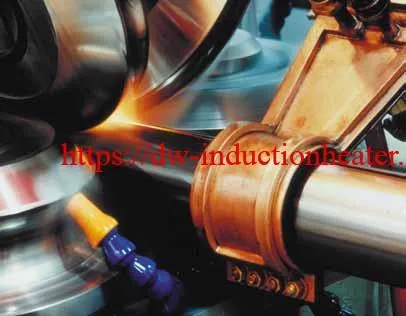
With induction welding the heat is electromagnetically induced in the workpiece. The speed and accuracy
of induction welding make it ideal for edge welding of tubes and pipes. In this process, pipes pass an induction coil at high speed. As they do so, their edges are heated then squeezed together to form a longitudinal weld seam. Induction welding is particularly suitable for high-volume production. Induction welders can also be fitted with contact heads, turning them into
dual purpose welding systems.
What are the benefits?
Automated induction longitudinal welding is a reliable, high-throughput process. The low power consumption and high efficiency of DAWEI Induction welding systems reduce costs. Their controllability and repeatability minimize scrap. Our systems are also flexible—automatic load matching ensures full output power across a wide range of tube sizes. And their small footprints make them easy to integrate or retrofit into production lines.
Where is it used?
Induction welding is used in the tube and pipe industry for the longitudinal welding of stainless steel (magnetic and non-magnetic), aluminum, low-carbon and highstrength low-alloy (HSLA) steels and many other conductive
materials.
https://dw-inductionheater.com/what-is-induction-welding.html?feed_id=244032&_unique_id=663374ddc2889
2023年9月9日星期六
What is induction welding?
What is induction welding?
With induction welding the heat is electromagnetically induced in the workpiece. The speed and accuracy
of induction welding make it ideal for edge welding of tubes and pipes. In this process, pipes pass an induction coil at high speed. As they do so, their edges are heated then squeezed together to form a longitudinal weld seam. Induction welding is particularly suitable for high-volume production. Induction welders can also be fitted with contact heads, turning them into
dual purpose welding systems.
What are the benefits?
Automated induction longitudinal welding is a reliable, high-throughput process. The low power consumption and high efficiency of DAWEI Induction welding systems reduce costs. Their controllability and repeatability minimize scrap. Our systems are also flexible—automatic load matching ensures full output power across a wide range of tube sizes. And their small footprints make them easy to integrate or retrofit into production lines.
Where is it used?
Induction welding is used in the tube and pipe industry for the longitudinal welding of stainless steel (magnetic and non-magnetic), aluminum, low-carbon and highstrength low-alloy (HSLA) steels and many other conductive
materials.
https://dw-inductionheater.com/what-is-induction-welding.html?feed_id=226936&_unique_id=64fccfb94fe49
What is induction welding?
What is induction welding?
With induction welding the heat is electromagnetically induced in the workpiece. The speed and accuracy
of induction welding make it ideal for edge welding of tubes and pipes. In this process, pipes pass an induction coil at high speed. As they do so, their edges are heated then squeezed together to form a longitudinal weld seam. Induction welding is particularly suitable for high-volume production. Induction welders can also be fitted with contact heads, turning them into
dual purpose welding systems.
What are the benefits?
Automated induction longitudinal welding is a reliable, high-throughput process. The low power consumption and high efficiency of DAWEI Induction welding systems reduce costs. Their controllability and repeatability minimize scrap. Our systems are also flexible—automatic load matching ensures full output power across a wide range of tube sizes. And their small footprints make them easy to integrate or retrofit into production lines.
Where is it used?
Induction welding is used in the tube and pipe industry for the longitudinal welding of stainless steel (magnetic and non-magnetic), aluminum, low-carbon and highstrength low-alloy (HSLA) steels and many other conductive
materials.
2023年7月24日星期一
What is induction welding?
What is induction welding?
With induction welding the heat is electromagnetically induced in the workpiece. The speed and accuracy
of induction welding make it ideal for edge welding of tubes and pipes. In this process, pipes pass an induction coil at high speed. As they do so, their edges are heated then squeezed together to form a longitudinal weld seam. Induction welding is particularly suitable for high-volume production. Induction welders can also be fitted with contact heads, turning them into
dual purpose welding systems.
What are the benefits?
Automated induction longitudinal welding is a reliable, high-throughput process. The low power consumption and high efficiency of DAWEI Induction welding systems reduce costs. Their controllability and repeatability minimize scrap. Our systems are also flexible—automatic load matching ensures full output power across a wide range of tube sizes. And their small footprints make them easy to integrate or retrofit into production lines.
Where is it used?
Induction welding is used in the tube and pipe industry for the longitudinal welding of stainless steel (magnetic and non-magnetic), aluminum, low-carbon and highstrength low-alloy (HSLA) steels and many other conductive
materials.
2023年2月19日星期日
What is induction welding?
What is induction welding?
With induction welding the heat is electromagnetically induced in the workpiece. The speed and accuracy
of induction welding make it ideal for edge welding of tubes and pipes. In this process, pipes pass an induction coil at high speed. As they do so, their edges are heated then squeezed together to form a longitudinal weld seam. Induction welding is particularly suitable for high-volume production. Induction welders can also be fitted with contact heads, turning them into
dual purpose welding systems.
What are the benefits?
Automated induction longitudinal welding is a reliable, high-throughput process. The low power consumption and high efficiency of DAWEI Induction welding systems reduce costs. Their controllability and repeatability minimize scrap. Our systems are also flexible—automatic load matching ensures full output power across a wide range of tube sizes. And their small footprints make them easy to integrate or retrofit into production lines.
Where is it used?
Induction welding is used in the tube and pipe industry for the longitudinal welding of stainless steel (magnetic and non-magnetic), aluminum, low-carbon and highstrength low-alloy (HSLA) steels and many other conductive
materials.
2022年11月18日星期五
What is induction welding?
What is induction welding?
With induction welding the heat is electromagnetically induced in the workpiece. The speed and accuracy
of induction welding make it ideal for edge welding of tubes and pipes. In this process, pipes pass an induction coil at high speed. As they do so, their edges are heated then squeezed together to form a longitudinal weld seam. Induction welding is particularly suitable for high-volume production. Induction welders can also be fitted with contact heads, turning them into
dual purpose welding systems.
What are the benefits?
Automated induction longitudinal welding is a reliable, high-throughput process. The low power consumption and high efficiency of DAWEI Induction welding systems reduce costs. Their controllability and repeatability minimize scrap. Our systems are also flexible—automatic load matching ensures full output power across a wide range of tube sizes. And their small footprints make them easy to integrate or retrofit into production lines.
Where is it used?
Induction welding is used in the tube and pipe industry for the longitudinal welding of stainless steel (magnetic and non-magnetic), aluminum, low-carbon and highstrength low-alloy (HSLA) steels and many other conductive
materials.
2022年11月15日星期二
What is induction welding?
What is induction welding?
With induction welding the heat is electromagnetically induced in the workpiece. The speed and accuracy
of induction welding make it ideal for edge welding of tubes and pipes. In this process, pipes pass an induction coil at high speed. As they do so, their edges are heated then squeezed together to form a longitudinal weld seam. Induction welding is particularly suitable for high-volume production. Induction welders can also be fitted with contact heads, turning them into
dual purpose welding systems.
What are the benefits?
Automated induction longitudinal welding is a reliable, high-throughput process. The low power consumption and high efficiency of DAWEI Induction welding systems reduce costs. Their controllability and repeatability minimize scrap. Our systems are also flexible—automatic load matching ensures full output power across a wide range of tube sizes. And their small footprints make them easy to integrate or retrofit into production lines.
Where is it used?
Induction welding is used in the tube and pipe industry for the longitudinal welding of stainless steel (magnetic and non-magnetic), aluminum, low-carbon and highstrength low-alloy (HSLA) steels and many other conductive
materials.
2022年8月25日星期四
What is induction welding?
What is induction welding?
With induction welding the heat is electromagnetically induced in the workpiece. The speed and accuracy
of induction welding make it ideal for edge welding of tubes and pipes. In this process, pipes pass an induction coil at high speed. As they do so, their edges are heated then squeezed together to form a longitudinal weld seam. Induction welding is particularly suitable for high-volume production. Induction welders can also be fitted with contact heads, turning them into
dual purpose welding systems.
What are the benefits?
Automated induction longitudinal welding is a reliable, high-throughput process. The low power consumption and high efficiency of DAWEI Induction welding systems reduce costs. Their controllability and repeatability minimize scrap. Our systems are also flexible—automatic load matching ensures full output power across a wide range of tube sizes. And their small footprints make them easy to integrate or retrofit into production lines.
Where is it used?
Induction welding is used in the tube and pipe industry for the longitudinal welding of stainless steel (magnetic and non-magnetic), aluminum, low-carbon and highstrength low-alloy (HSLA) steels and many other conductive
materials.
2022年8月13日星期六
What is induction welding?
What is induction welding?
With induction welding the heat is electromagnetically induced in the workpiece. The speed and accuracy
of induction welding make it ideal for edge welding of tubes and pipes. In this process, pipes pass an induction coil at high speed. As they do so, their edges are heated then squeezed together to form a longitudinal weld seam. Induction welding is particularly suitable for high-volume production. Induction welders can also be fitted with contact heads, turning them into
dual purpose welding systems.
What are the benefits?
Automated induction longitudinal welding is a reliable, high-throughput process. The low power consumption and high efficiency of DAWEI Induction welding systems reduce costs. Their controllability and repeatability minimize scrap. Our systems are also flexible—automatic load matching ensures full output power across a wide range of tube sizes. And their small footprints make them easy to integrate or retrofit into production lines.
Where is it used?
Induction welding is used in the tube and pipe industry for the longitudinal welding of stainless steel (magnetic and non-magnetic), aluminum, low-carbon and highstrength low-alloy (HSLA) steels and many other conductive
materials.
2022年7月20日星期三
What is induction welding?
What is induction welding?
With induction welding the heat is electromagnetically induced in the workpiece. The speed and accuracy
of induction welding make it ideal for edge welding of tubes and pipes. In this process, pipes pass an induction coil at high speed. As they do so, their edges are heated then squeezed together to form a longitudinal weld seam. Induction welding is particularly suitable for high-volume production. Induction welders can also be fitted with contact heads, turning them into
dual purpose welding systems.
What are the benefits?
Automated induction longitudinal welding is a reliable, high-throughput process. The low power consumption and high efficiency of DAWEI Induction welding systems reduce costs. Their controllability and repeatability minimize scrap. Our systems are also flexible—automatic load matching ensures full output power across a wide range of tube sizes. And their small footprints make them easy to integrate or retrofit into production lines.
Where is it used?
Induction welding is used in the tube and pipe industry for the longitudinal welding of stainless steel (magnetic and non-magnetic), aluminum, low-carbon and highstrength low-alloy (HSLA) steels and many other conductive
materials.
2022年7月16日星期六
What is induction welding?
What is induction welding?
With induction welding the heat is electromagnetically induced in the workpiece. The speed and accuracy
of induction welding make it ideal for edge welding of tubes and pipes. In this process, pipes pass an induction coil at high speed. As they do so, their edges are heated then squeezed together to form a longitudinal weld seam. Induction welding is particularly suitable for high-volume production. Induction welders can also be fitted with contact heads, turning them into
dual purpose welding systems.
What are the benefits?
Automated induction longitudinal welding is a reliable, high-throughput process. The low power consumption and high efficiency of DAWEI Induction welding systems reduce costs. Their controllability and repeatability minimize scrap. Our systems are also flexible—automatic load matching ensures full output power across a wide range of tube sizes. And their small footprints make them easy to integrate or retrofit into production lines.
Where is it used?
Induction welding is used in the tube and pipe industry for the longitudinal welding of stainless steel (magnetic and non-magnetic), aluminum, low-carbon and highstrength low-alloy (HSLA) steels and many other conductive
materials.
订阅:
博文 (Atom)
我的简介

- HLQ induction heating machine
- HLQ induction heating machine manufacturer provides the service of induction brazing,melting,hot forming,hardening surface,annealing,shrink fitting,PWHT,etc.