 https://dw-inductionheater.com/what-is-induction-annealing.html?feed_id=273432&_unique_id=67dfc6d447939
2025年3月23日星期日
What is induction annealing?
What is induction annealing?
https://dw-inductionheater.com/what-is-induction-annealing.html?feed_id=273432&_unique_id=67dfc6d447939
https://dw-inductionheater.com/what-is-induction-annealing.html?feed_id=273432&_unique_id=67dfc6d447939

2024年12月22日星期日
Induction Annealing Brass Bullet Shells
Induction Annealing Brass Bullet Shells
 https://dw-inductionheater.com/induction-annealing-brass-bullet-shells.html?feed_id=264268&_unique_id=676822eec3f8f
https://dw-inductionheater.com/induction-annealing-brass-bullet-shells.html?feed_id=264268&_unique_id=676822eec3f8f
2024年11月22日星期五
2024年11月20日星期三

2024年11月18日星期一
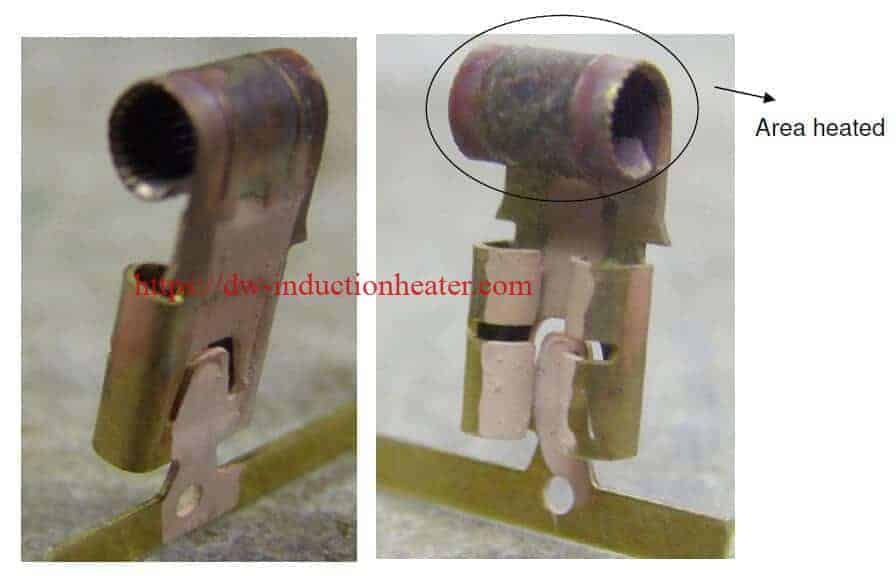
Induction Annealing Brass Contact
Induction Annealing Brass Contact
 https://dw-inductionheater.com/product/induction-annealing-brass?feed_id=261136&_unique_id=673bb1f1332d2
https://dw-inductionheater.com/product/induction-annealing-brass?feed_id=261136&_unique_id=673bb1f1332d2
2024年11月16日星期六
2024年11月15日星期五
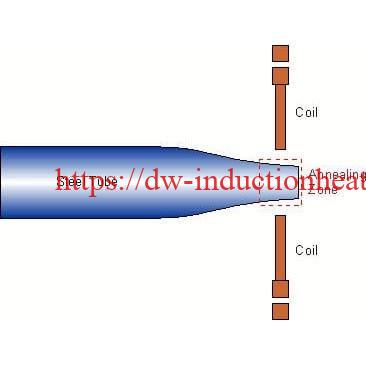
Induction Annealing Steel Pipe and Tube
Induction Annealing Steel Pipe and Tube
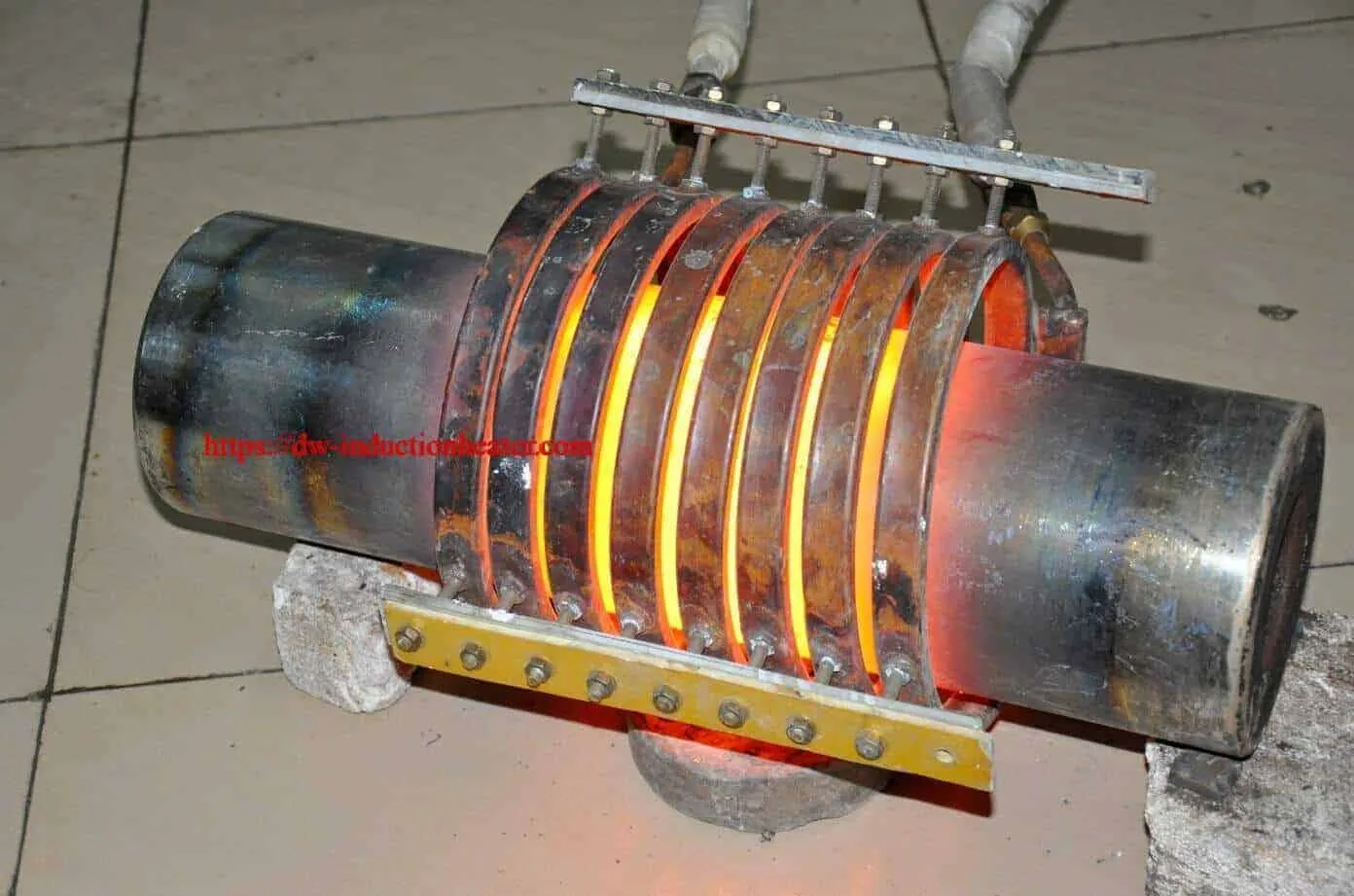 https://dw-inductionheater.com/product/induction-annealing-steel-pipe-and-tube?feed_id=260846&_unique_id=6737bd74e7af6
https://dw-inductionheater.com/product/induction-annealing-steel-pipe-and-tube?feed_id=260846&_unique_id=6737bd74e7af6
2024年5月1日星期三
What is induction annealing?
What is induction annealing?
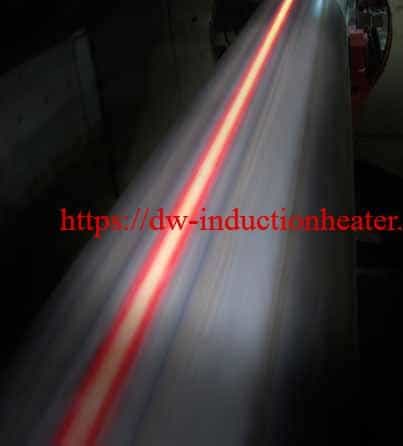
This process heats metals that have already undergone significant processing. Induction annealing reduces hardness, improves ductility and relieves internal stresses. Full-body annealing is a process where the complete workpiece is annealed. With seam annealing (more accurately known as seam normalizing), only the heat-affected zone produced by the welding process is treated.
What are the benefits?
Induction annealing and normalizing delivers fast, reliable and localized heat, precise temperature control, and easy in-line integration. Induction treats individual workpieces to exact specifications, with control systems continuously monitoring and recording the entire process.
Where is it used?
Induction annealing and normalizing is widely used in the tube and pipe industry. It also anneals wire, steel strips, knife blades and copper tubing. In fact, induction is ideal for virtually any annealing task.
What equipment is available?
Each DAWEI Induction annealing system is built to satisfy specific requirements. At the heart of each system is
an DAWEI Induction Heating generator that features automatic load matching and a constant power factor at all power levels. Most of our delivered systems also feature custom-built handling and control solutions.
https://dw-inductionheater.com/what-is-induction-annealing.html?feed_id=243964&_unique_id=6632bde462b0b
2024年2月26日星期一
Induction Annealing Brass Bullet Shells
Induction Annealing Brass Bullet Shells Heating Treatment UHF Series With Induction Heating System
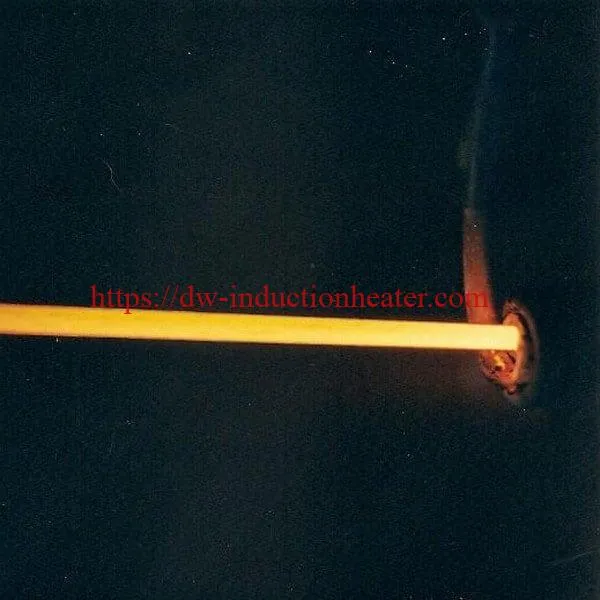
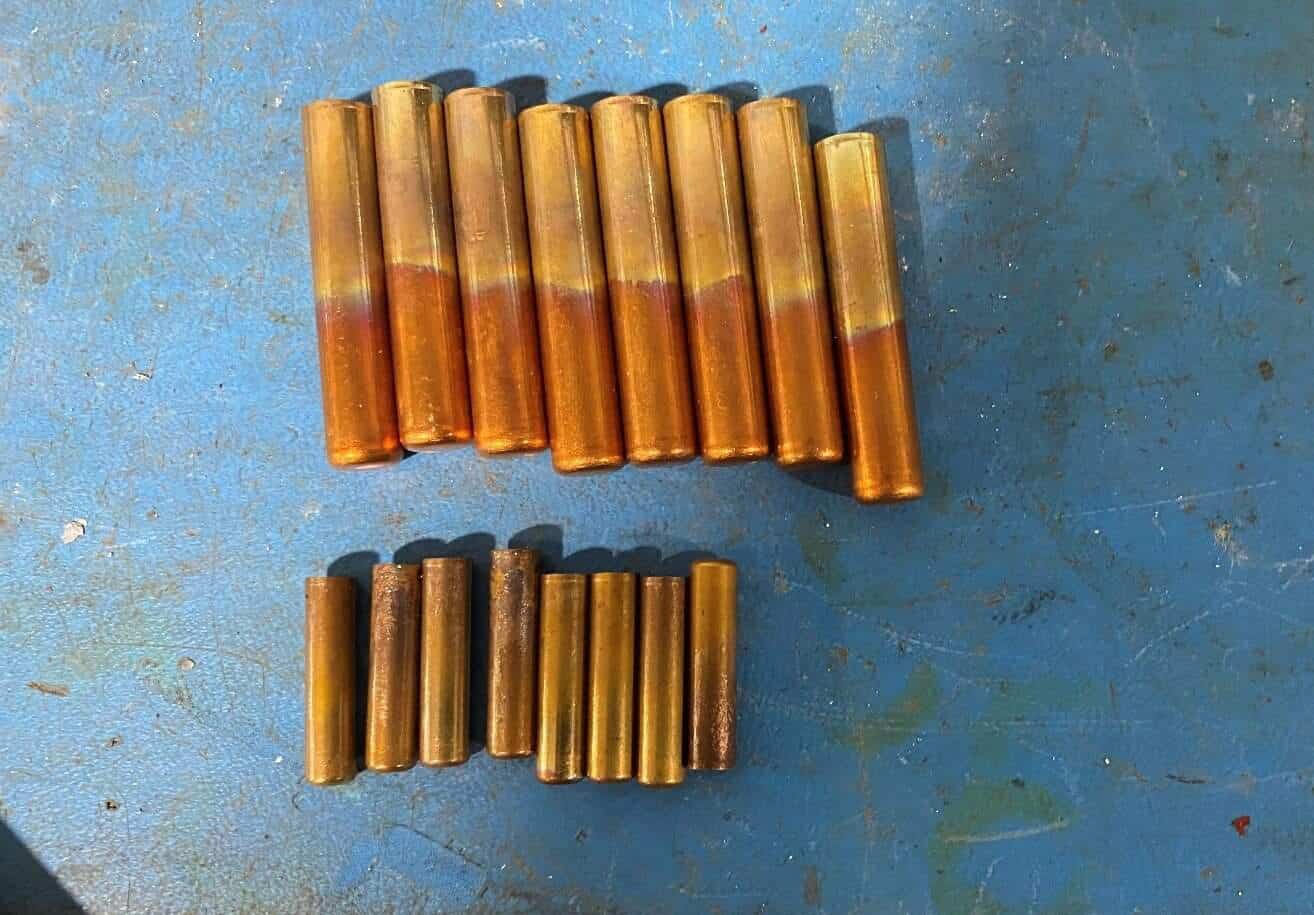
Application Note Objective: A manufacturer of brass bullet shells wants to upgrade their existing induction heating equipment and is looking for improved efficiency. The goal of this application test is to demonstrate that the DW-UHF-6KW-III induction system will meet and exceed its requirements for achieving improved heating times and maintaining heat uniformity within the targeted area. Two sizes of brass ammunition shells were used for the test – bullet casings with 1.682” (42.7 mm) length and 0.929” (23.5 mm) length. The targeted annealing time is 0.6 seconds for both parts using a single induction heating coil.Equipment:
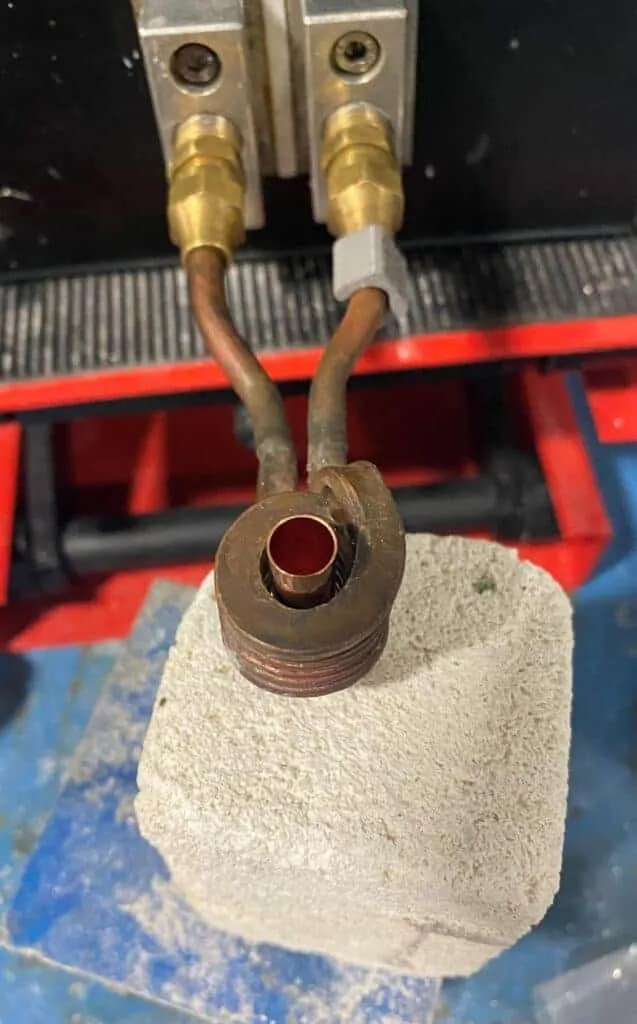
HLQ DW-UHF-6kW-III air-cooled induction heating system was utilized in the annealing process. Tempilaq paint was used to determine if the desired temperature in the annealed area is reached.
Process:
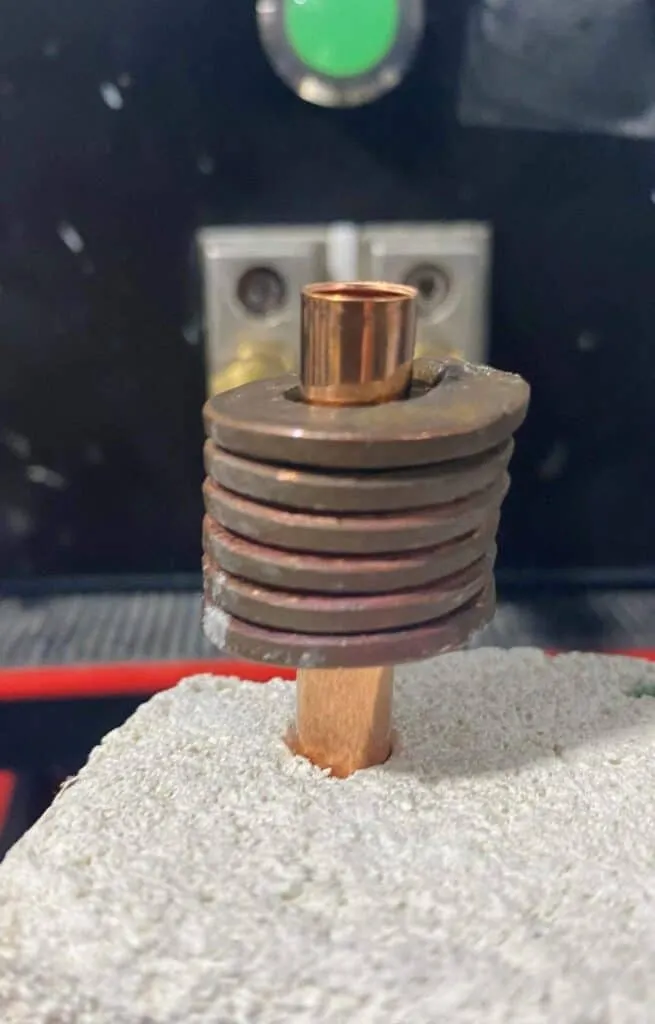
The brass bullet shells were positioned in the induction heating coil. The area to be annealed took about 60% of the part’s length counting from the open end. The heated area was painted with Tempilaq which helped us evaluate the temperature distribution. Both parts successfully reached the target temperature of 750°F (398°C) in 0.6sec. For the smaller part, the power supply power was reduced to 45% to prevent the part’s overheating.
 Induction heating provides improved control of the annealing process. Repeatable heating profiles can easily be obtained by precise regulation of the heating power. Since the workpiece is directly heated by the magnetic field, a faster response can be achieved. Moreover, the high overall efficiency of the induction heating process is crucial for such lengthy treatment.
Compared to most of the standard methods, induction annealing is a clean and easy to automate, contactless approach providing a high quality of the treated workpieces.
Induction heating provides improved control of the annealing process. Repeatable heating profiles can easily be obtained by precise regulation of the heating power. Since the workpiece is directly heated by the magnetic field, a faster response can be achieved. Moreover, the high overall efficiency of the induction heating process is crucial for such lengthy treatment.
Compared to most of the standard methods, induction annealing is a clean and easy to automate, contactless approach providing a high quality of the treated workpieces.

Induction Annealing
In general, the main purpose of induction annealing heat treatment is to soften the steel, regenerate overheated steel structures or just remove internal tensions. It basically consists of heating to austenitizing temperature (800ºC and 950ºC depending on the type of steel), followed by slow cooling. Induction Annealing is a heat treatment process which involves heating of material above its recrystallization temperature. The aim is to reach and maintain a suitable temperature for enough time followed by proper cooling. It is often used in metallurgy and material science to make the treated sample more workable by reducing its hardness and increasing its ductility (ability to undergo a change of form without breaking). Annealing alters the physical and sometimes the chemical properties of the material as recrystallization is obtained during the process of cooling. Therefore, the outcoming structures of many alloys, including carbon steel, are both dependent on the heating and on the cooling rate. Ferrous metals, such as steel, require slow cooling to anneal. Other materials (e.g. copper, silver) can be either cooled slowly in air or quickly quenched in water.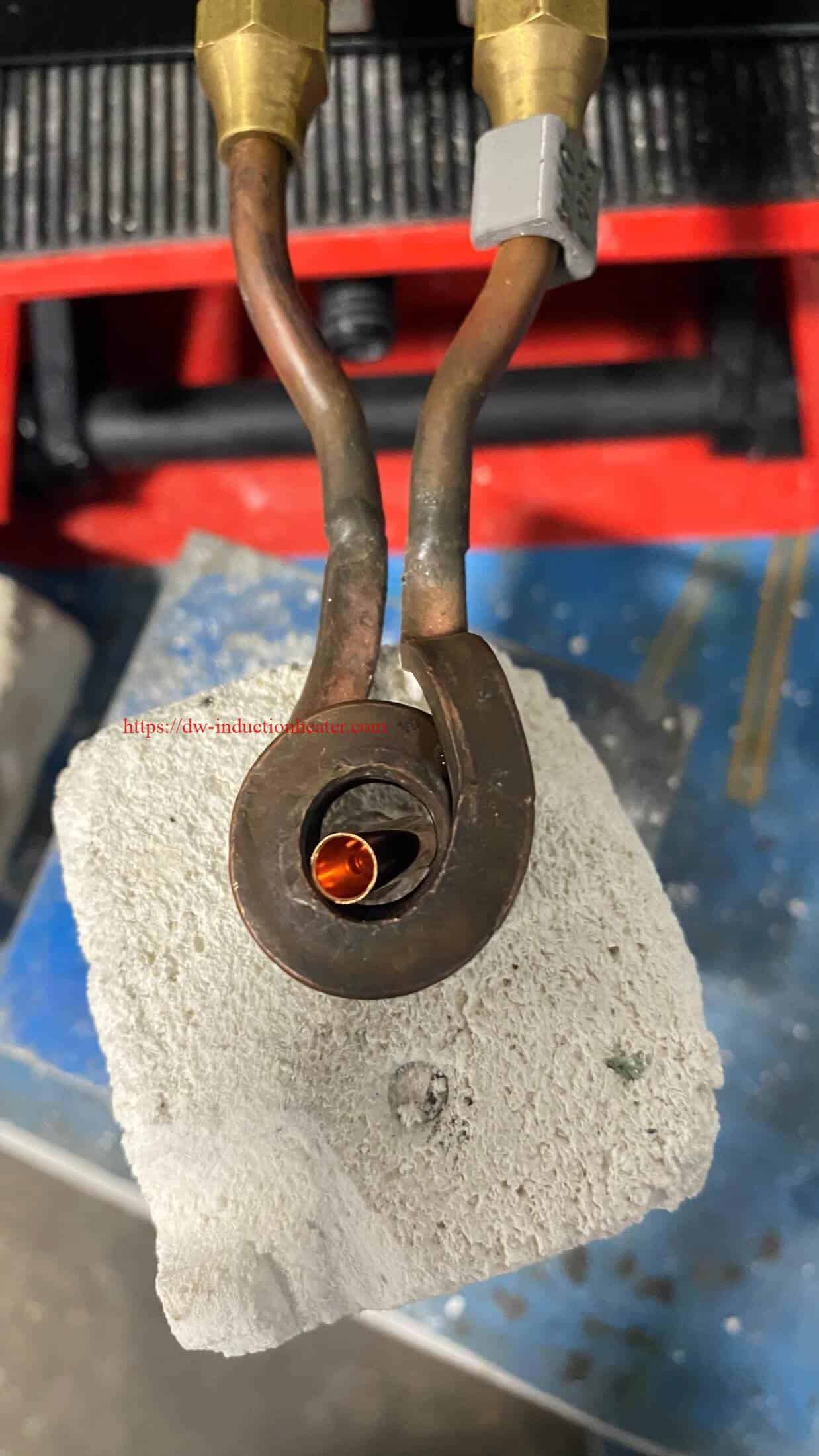 Induction heating provides improved control of the annealing process. Repeatable heating profiles can easily be obtained by precise regulation of the heating power. Since the workpiece is directly heated by the magnetic field, a faster response can be achieved. Moreover, the high overall efficiency of the induction heating process is crucial for such lengthy treatment.
Compared to most of the standard methods, induction annealing is a clean and easy to automate, contactless approach providing a high quality of the treated workpieces.
Induction heating provides improved control of the annealing process. Repeatable heating profiles can easily be obtained by precise regulation of the heating power. Since the workpiece is directly heated by the magnetic field, a faster response can be achieved. Moreover, the high overall efficiency of the induction heating process is crucial for such lengthy treatment.
Compared to most of the standard methods, induction annealing is a clean and easy to automate, contactless approach providing a high quality of the treated workpieces.
Induction annealing heating advantages:
- Processed in line with control of parameters in real time
- Metallurgical results similar to those obtained in conventional ovens
- Less environmental pollution
- Increase energy efficiency
- Reduced processing time
- Ability to control the heat, temperature accuracy
- Ability to heat small areas without changing the characteristics of the rest of the part
- Cycle accurate and repetitive heat
- Reduction of surface oxidation
- Improved job environment

2023年9月13日星期三
Induction Annealing Brass Bullet Shells
Induction Annealing Brass Bullet Shells Heating Treatment UHF Series With Induction Heating System
Application Note Objective: A manufacturer of brass bullet shells wants to upgrade their existing induction heating equipment and is looking for improved efficiency. The goal of this application test is to demonstrate that the DW-UHF-6KW-III induction system will meet and exceed its requirements for achieving improved heating times and maintaining heat uniformity within the targeted area. Two sizes of brass ammunition shells were used for the test – bullet casings with 1.682” (42.7 mm) length and 0.929” (23.5 mm) length. The targeted annealing time is 0.6 seconds for both parts using a single induction heating coil.Equipment:
HLQ DW-UHF-6kW-III air-cooled induction heating system was utilized in the annealing process. Tempilaq paint was used to determine if the desired temperature in the annealed area is reached.
Process:
The brass bullet shells were positioned in the induction heating coil. The area to be annealed took about 60% of the part’s length counting from the open end. The heated area was painted with Tempilaq which helped us evaluate the temperature distribution. Both parts successfully reached the target temperature of 750°F (398°C) in 0.6sec. For the smaller part, the power supply power was reduced to 45% to prevent the part’s overheating.
Induction heating provides improved control of the annealing process. Repeatable heating profiles can easily be obtained by precise regulation of the heating power. Since the workpiece is directly heated by the magnetic field, a faster response can be achieved. Moreover, the high overall efficiency of the induction heating process is crucial for such lengthy treatment.
Compared to most of the standard methods, induction annealing is a clean and easy to automate, contactless approach providing a high quality of the treated workpieces.
Induction Annealing
In general, the main purpose of induction annealing heat treatment is to soften the steel, regenerate overheated steel structures or just remove internal tensions. It basically consists of heating to austenitizing temperature (800ºC and 950ºC depending on the type of steel), followed by slow cooling. Induction Annealing is a heat treatment process which involves heating of material above its recrystallization temperature. The aim is to reach and maintain a suitable temperature for enough time followed by proper cooling. It is often used in metallurgy and material science to make the treated sample more workable by reducing its hardness and increasing its ductility (ability to undergo a change of form without breaking). Annealing alters the physical and sometimes the chemical properties of the material as recrystallization is obtained during the process of cooling. Therefore, the outcoming structures of many alloys, including carbon steel, are both dependent on the heating and on the cooling rate. Ferrous metals, such as steel, require slow cooling to anneal. Other materials (e.g. copper, silver) can be either cooled slowly in air or quickly quenched in water.
Induction heating provides improved control of the annealing process. Repeatable heating profiles can easily be obtained by precise regulation of the heating power. Since the workpiece is directly heated by the magnetic field, a faster response can be achieved. Moreover, the high overall efficiency of the induction heating process is crucial for such lengthy treatment.
Compared to most of the standard methods, induction annealing is a clean and easy to automate, contactless approach providing a high quality of the treated workpieces.
Induction annealing heating advantages:
- Processed in line with control of parameters in real time
- Metallurgical results similar to those obtained in conventional ovens
- Less environmental pollution
- Increase energy efficiency
- Reduced processing time
- Ability to control the heat, temperature accuracy
- Ability to heat small areas without changing the characteristics of the rest of the part
- Cycle accurate and repetitive heat
- Reduction of surface oxidation
- Improved job environment
2023年9月9日星期六
What is induction annealing?
What is induction annealing?
This process heats metals that have already undergone significant processing. Induction annealing reduces hardness, improves ductility and relieves internal stresses. Full-body annealing is a process where the complete workpiece is annealed. With seam annealing (more accurately known as seam normalizing), only the heat-affected zone produced by the welding process is treated.
What are the benefits?
Induction annealing and normalizing delivers fast, reliable and localized heat, precise temperature control, and easy in-line integration. Induction treats individual workpieces to exact specifications, with control systems continuously monitoring and recording the entire process.
Where is it used?
Induction annealing and normalizing is widely used in the tube and pipe industry. It also anneals wire, steel strips, knife blades and copper tubing. In fact, induction is ideal for virtually any annealing task.
What equipment is available?
Each DAWEI Induction annealing system is built to satisfy specific requirements. At the heart of each system is
an DAWEI Induction Heating generator that features automatic load matching and a constant power factor at all power levels. Most of our delivered systems also feature custom-built handling and control solutions.
https://dw-inductionheater.com/what-is-induction-annealing.html?feed_id=226861&_unique_id=64fc18df99b5c
2023年7月29日星期六
What is induction annealing?
What is induction annealing?
This process heats metals that have already undergone significant processing. Induction annealing reduces hardness, improves ductility and relieves internal stresses. Full-body annealing is a process where the complete workpiece is annealed. With seam annealing (more accurately known as seam normalizing), only the heat-affected zone produced by the welding process is treated.
What are the benefits?
Induction annealing and normalizing delivers fast, reliable and localized heat, precise temperature control, and easy in-line integration. Induction treats individual workpieces to exact specifications, with control systems continuously monitoring and recording the entire process.
Where is it used?
Induction annealing and normalizing is widely used in the tube and pipe industry. It also anneals wire, steel strips, knife blades and copper tubing. In fact, induction is ideal for virtually any annealing task.
What equipment is available?
Each DAWEI Induction annealing system is built to satisfy specific requirements. At the heart of each system is
an DAWEI Induction Heating generator that features automatic load matching and a constant power factor at all power levels. Most of our delivered systems also feature custom-built handling and control solutions.
2023年7月23日星期日
Induction Annealing Brass Bullet Shells
Induction Annealing Brass Bullet Shells Heating Treatment UHF Series With Induction Heating System
Application Note Objective: A manufacturer of brass bullet shells wants to upgrade their existing induction heating equipment and is looking for improved efficiency. The goal of this application test is to demonstrate that the DW-UHF-6KW-III induction system will meet and exceed its requirements for achieving improved heating times and maintaining heat uniformity within the targeted area. Two sizes of brass ammunition shells were used for the test – bullet casings with 1.682” (42.7 mm) length and 0.929” (23.5 mm) length. The targeted annealing time is 0.6 seconds for both parts using a single induction heating coil.Equipment:
HLQ DW-UHF-6kW-III air-cooled induction heating system was utilized in the annealing process. Tempilaq paint was used to determine if the desired temperature in the annealed area is reached.
Process:
The brass bullet shells were positioned in the induction heating coil. The area to be annealed took about 60% of the part’s length counting from the open end. The heated area was painted with Tempilaq which helped us evaluate the temperature distribution. Both parts successfully reached the target temperature of 750°F (398°C) in 0.6sec. For the smaller part, the power supply power was reduced to 45% to prevent the part’s overheating.
Induction heating provides improved control of the annealing process. Repeatable heating profiles can easily be obtained by precise regulation of the heating power. Since the workpiece is directly heated by the magnetic field, a faster response can be achieved. Moreover, the high overall efficiency of the induction heating process is crucial for such lengthy treatment.
Compared to most of the standard methods, induction annealing is a clean and easy to automate, contactless approach providing a high quality of the treated workpieces.
Induction Annealing
In general, the main purpose of induction annealing heat treatment is to soften the steel, regenerate overheated steel structures or just remove internal tensions. It basically consists of heating to austenitizing temperature (800ºC and 950ºC depending on the type of steel), followed by slow cooling. Induction Annealing is a heat treatment process which involves heating of material above its recrystallization temperature. The aim is to reach and maintain a suitable temperature for enough time followed by proper cooling. It is often used in metallurgy and material science to make the treated sample more workable by reducing its hardness and increasing its ductility (ability to undergo a change of form without breaking). Annealing alters the physical and sometimes the chemical properties of the material as recrystallization is obtained during the process of cooling. Therefore, the outcoming structures of many alloys, including carbon steel, are both dependent on the heating and on the cooling rate. Ferrous metals, such as steel, require slow cooling to anneal. Other materials (e.g. copper, silver) can be either cooled slowly in air or quickly quenched in water.
Induction heating provides improved control of the annealing process. Repeatable heating profiles can easily be obtained by precise regulation of the heating power. Since the workpiece is directly heated by the magnetic field, a faster response can be achieved. Moreover, the high overall efficiency of the induction heating process is crucial for such lengthy treatment.
Compared to most of the standard methods, induction annealing is a clean and easy to automate, contactless approach providing a high quality of the treated workpieces.
Induction annealing heating advantages:
- Processed in line with control of parameters in real time
- Metallurgical results similar to those obtained in conventional ovens
- Less environmental pollution
- Increase energy efficiency
- Reduced processing time
- Ability to control the heat, temperature accuracy
- Ability to heat small areas without changing the characteristics of the rest of the part
- Cycle accurate and repetitive heat
- Reduction of surface oxidation
- Improved job environment
2023年7月22日星期六
What is induction annealing?
What is induction annealing?
This process heats metals that have already undergone significant processing. Induction annealing reduces hardness, improves ductility and relieves internal stresses. Full-body annealing is a process where the complete workpiece is annealed. With seam annealing (more accurately known as seam normalizing), only the heat-affected zone produced by the welding process is treated.
What are the benefits?
Induction annealing and normalizing delivers fast, reliable and localized heat, precise temperature control, and easy in-line integration. Induction treats individual workpieces to exact specifications, with control systems continuously monitoring and recording the entire process.
Where is it used?
Induction annealing and normalizing is widely used in the tube and pipe industry. It also anneals wire, steel strips, knife blades and copper tubing. In fact, induction is ideal for virtually any annealing task.
What equipment is available?
Each DAWEI Induction annealing system is built to satisfy specific requirements. At the heart of each system is
an DAWEI Induction Heating generator that features automatic load matching and a constant power factor at all power levels. Most of our delivered systems also feature custom-built handling and control solutions.
2023年7月4日星期二
Induction Annealing Brass Bullet Shells
Induction Annealing Brass Bullet Shells Heating Treatment UHF Series With Induction Heating System
Application Note Objective: A manufacturer of brass bullet shells wants to upgrade their existing induction heating equipment and is looking for improved efficiency. The goal of this application test is to demonstrate that the DW-UHF-6KW-III induction system will meet and exceed its requirements for achieving improved heating times and maintaining heat uniformity within the targeted area. Two sizes of brass ammunition shells were used for the test – bullet casings with 1.682” (42.7 mm) length and 0.929” (23.5 mm) length. The targeted annealing time is 0.6 seconds for both parts using a single induction heating coil.Equipment:
HLQ DW-UHF-6kW-III air-cooled induction heating system was utilized in the annealing process. Tempilaq paint was used to determine if the desired temperature in the annealed area is reached.
Process:
The brass bullet shells were positioned in the induction heating coil. The area to be annealed took about 60% of the part’s length counting from the open end. The heated area was painted with Tempilaq which helped us evaluate the temperature distribution. Both parts successfully reached the target temperature of 750°F (398°C) in 0.6sec. For the smaller part, the power supply power was reduced to 45% to prevent the part’s overheating.
Induction heating provides improved control of the annealing process. Repeatable heating profiles can easily be obtained by precise regulation of the heating power. Since the workpiece is directly heated by the magnetic field, a faster response can be achieved. Moreover, the high overall efficiency of the induction heating process is crucial for such lengthy treatment.
Compared to most of the standard methods, induction annealing is a clean and easy to automate, contactless approach providing a high quality of the treated workpieces.
Induction Annealing
In general, the main purpose of induction annealing heat treatment is to soften the steel, regenerate overheated steel structures or just remove internal tensions. It basically consists of heating to austenitizing temperature (800ºC and 950ºC depending on the type of steel), followed by slow cooling. Induction Annealing is a heat treatment process which involves heating of material above its recrystallization temperature. The aim is to reach and maintain a suitable temperature for enough time followed by proper cooling. It is often used in metallurgy and material science to make the treated sample more workable by reducing its hardness and increasing its ductility (ability to undergo a change of form without breaking). Annealing alters the physical and sometimes the chemical properties of the material as recrystallization is obtained during the process of cooling. Therefore, the outcoming structures of many alloys, including carbon steel, are both dependent on the heating and on the cooling rate. Ferrous metals, such as steel, require slow cooling to anneal. Other materials (e.g. copper, silver) can be either cooled slowly in air or quickly quenched in water.
Induction heating provides improved control of the annealing process. Repeatable heating profiles can easily be obtained by precise regulation of the heating power. Since the workpiece is directly heated by the magnetic field, a faster response can be achieved. Moreover, the high overall efficiency of the induction heating process is crucial for such lengthy treatment.
Compared to most of the standard methods, induction annealing is a clean and easy to automate, contactless approach providing a high quality of the treated workpieces.
Induction annealing heating advantages:
- Processed in line with control of parameters in real time
- Metallurgical results similar to those obtained in conventional ovens
- Less environmental pollution
- Increase energy efficiency
- Reduced processing time
- Ability to control the heat, temperature accuracy
- Ability to heat small areas without changing the characteristics of the rest of the part
- Cycle accurate and repetitive heat
- Reduction of surface oxidation
- Improved job environment
2023年6月18日星期日
Induction Annealing Brass Bullet Shells
Induction Annealing Brass Bullet Shells Heating Treatment UHF Series With Induction Heating System
Application Note Objective: A manufacturer of brass bullet shells wants to upgrade their existing induction heating equipment and is looking for improved efficiency. The goal of this application test is to demonstrate that the DW-UHF-6KW-III induction system will meet and exceed its requirements for achieving improved heating times and maintaining heat uniformity within the targeted area. Two sizes of brass ammunition shells were used for the test – bullet casings with 1.682” (42.7 mm) length and 0.929” (23.5 mm) length. The targeted annealing time is 0.6 seconds for both parts using a single induction heating coil.Equipment:
HLQ DW-UHF-6kW-III air-cooled induction heating system was utilized in the annealing process. Tempilaq paint was used to determine if the desired temperature in the annealed area is reached.
Process:
The brass bullet shells were positioned in the induction heating coil. The area to be annealed took about 60% of the part’s length counting from the open end. The heated area was painted with Tempilaq which helped us evaluate the temperature distribution. Both parts successfully reached the target temperature of 750°F (398°C) in 0.6sec. For the smaller part, the power supply power was reduced to 45% to prevent the part’s overheating.
Induction heating provides improved control of the annealing process. Repeatable heating profiles can easily be obtained by precise regulation of the heating power. Since the workpiece is directly heated by the magnetic field, a faster response can be achieved. Moreover, the high overall efficiency of the induction heating process is crucial for such lengthy treatment.
Compared to most of the standard methods, induction annealing is a clean and easy to automate, contactless approach providing a high quality of the treated workpieces.
Induction Annealing
In general, the main purpose of induction annealing heat treatment is to soften the steel, regenerate overheated steel structures or just remove internal tensions. It basically consists of heating to austenitizing temperature (800ºC and 950ºC depending on the type of steel), followed by slow cooling. Induction Annealing is a heat treatment process which involves heating of material above its recrystallization temperature. The aim is to reach and maintain a suitable temperature for enough time followed by proper cooling. It is often used in metallurgy and material science to make the treated sample more workable by reducing its hardness and increasing its ductility (ability to undergo a change of form without breaking). Annealing alters the physical and sometimes the chemical properties of the material as recrystallization is obtained during the process of cooling. Therefore, the outcoming structures of many alloys, including carbon steel, are both dependent on the heating and on the cooling rate. Ferrous metals, such as steel, require slow cooling to anneal. Other materials (e.g. copper, silver) can be either cooled slowly in air or quickly quenched in water.
Induction heating provides improved control of the annealing process. Repeatable heating profiles can easily be obtained by precise regulation of the heating power. Since the workpiece is directly heated by the magnetic field, a faster response can be achieved. Moreover, the high overall efficiency of the induction heating process is crucial for such lengthy treatment.
Compared to most of the standard methods, induction annealing is a clean and easy to automate, contactless approach providing a high quality of the treated workpieces.
Induction annealing heating advantages:
- Processed in line with control of parameters in real time
- Metallurgical results similar to those obtained in conventional ovens
- Less environmental pollution
- Increase energy efficiency
- Reduced processing time
- Ability to control the heat, temperature accuracy
- Ability to heat small areas without changing the characteristics of the rest of the part
- Cycle accurate and repetitive heat
- Reduction of surface oxidation
- Improved job environment
2023年5月2日星期二
Induction Annealing Brass Bullet Shells
Induction Annealing Brass Bullet Shells Heating Treatment UHF Series With Induction Heating System
Application Note Objective: A manufacturer of brass bullet shells wants to upgrade their existing induction heating equipment and is looking for improved efficiency. The goal of this application test is to demonstrate that the DW-UHF-6KW-III induction system will meet and exceed its requirements for achieving improved heating times and maintaining heat uniformity within the targeted area. Two sizes of brass ammunition shells were used for the test – bullet casings with 1.682” (42.7 mm) length and 0.929” (23.5 mm) length. The targeted annealing time is 0.6 seconds for both parts using a single induction heating coil.Equipment:
HLQ DW-UHF-6kW-III air-cooled induction heating system was utilized in the annealing process. Tempilaq paint was used to determine if the desired temperature in the annealed area is reached.
Process:
The brass bullet shells were positioned in the induction heating coil. The area to be annealed took about 60% of the part’s length counting from the open end. The heated area was painted with Tempilaq which helped us evaluate the temperature distribution. Both parts successfully reached the target temperature of 750°F (398°C) in 0.6sec. For the smaller part, the power supply power was reduced to 45% to prevent the part’s overheating.
Induction heating provides improved control of the annealing process. Repeatable heating profiles can easily be obtained by precise regulation of the heating power. Since the workpiece is directly heated by the magnetic field, a faster response can be achieved. Moreover, the high overall efficiency of the induction heating process is crucial for such lengthy treatment.
Compared to most of the standard methods, induction annealing is a clean and easy to automate, contactless approach providing a high quality of the treated workpieces.
Induction Annealing
In general, the main purpose of induction annealing heat treatment is to soften the steel, regenerate overheated steel structures or just remove internal tensions. It basically consists of heating to austenitizing temperature (800ºC and 950ºC depending on the type of steel), followed by slow cooling. Induction Annealing is a heat treatment process which involves heating of material above its recrystallization temperature. The aim is to reach and maintain a suitable temperature for enough time followed by proper cooling. It is often used in metallurgy and material science to make the treated sample more workable by reducing its hardness and increasing its ductility (ability to undergo a change of form without breaking). Annealing alters the physical and sometimes the chemical properties of the material as recrystallization is obtained during the process of cooling. Therefore, the outcoming structures of many alloys, including carbon steel, are both dependent on the heating and on the cooling rate. Ferrous metals, such as steel, require slow cooling to anneal. Other materials (e.g. copper, silver) can be either cooled slowly in air or quickly quenched in water.
Induction heating provides improved control of the annealing process. Repeatable heating profiles can easily be obtained by precise regulation of the heating power. Since the workpiece is directly heated by the magnetic field, a faster response can be achieved. Moreover, the high overall efficiency of the induction heating process is crucial for such lengthy treatment.
Compared to most of the standard methods, induction annealing is a clean and easy to automate, contactless approach providing a high quality of the treated workpieces.
Induction annealing heating advantages:
- Processed in line with control of parameters in real time
- Metallurgical results similar to those obtained in conventional ovens
- Less environmental pollution
- Increase energy efficiency
- Reduced processing time
- Ability to control the heat, temperature accuracy
- Ability to heat small areas without changing the characteristics of the rest of the part
- Cycle accurate and repetitive heat
- Reduction of surface oxidation
- Improved job environment
订阅:
博文 (Atom)
我的简介

- HLQ induction heating machine
- HLQ induction heating machine manufacturer provides the service of induction brazing,melting,hot forming,hardening surface,annealing,shrink fitting,PWHT,etc.