显示标签为“RFbrazingcarbideshaft”的博文。显示所有博文

2024年5月4日星期六

Induction Brazing Carbide To Stainless Steel

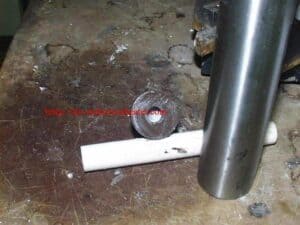
Induction Brazing Carbide To Stainless Steel Shaft With IGBT Heating Units Objective Brazing a cone shaped carbide to a stainless steel shaft for a digger Material Cone shaped carbide 1.12” (28.4mm) dia, 1.5”(38.1mm) tall, stainless steel shaft 1.12” (28.4mm) dia and various length, black brazing flux and braze shims Temperature 1500 ºF (815 ºC) Frequency 277 kHz Equipment • DW-UHF-10 kW induction heating system, equipped with a remote workhead containing two 1.0μF capacitors for a total of 0.5μF • An induction heating coil designed and developed specifically for this application. Process A three turn helical coil is used to braze the carbide to the shaft. The steel shaft is fluxed and the braze shim placed on top. The carbide tip is fluxed and placed on top of the shim, lining up the countersunk hole in the carbide. The hole is not fluxed because the flux outgases and causes the carbide to build up pressure and attempt to repel from the shaft. Power is applied for 85 seconds for the braze shim to flow and make a good joint. DAWEI’s customer has a customer who is unhappy with the braze quality of their digger so our customer is looking for a better quality brazing process. DAWEI’s customer is very happy with the sample brazed diggers and the help he received from the Ameritherm lab in developing his brazing process. Results/Benefits Induction heating provides: • Rapid localized heating only where needed • Creates clean, controllable joints • Hands-free heating that involves no operator skill for manufacturing • Even distribution of heating brazing carbide to shaft             induction brazing carbide to shaft               brazing carbide to stainless steel shaft https://dw-inductionheater.com/induction-brazing-carbide-to-stainless-steel.html?feed_id=244304&_unique_id=6636501477c8b
2023年11月9日星期四

Brazing carbide shaft with induction

Brazing carbide shaft with induction Objective: Braze a carbide shaft to a steel tube Material: Carbide shaft 1/8" to 1" diameter (varying sizes) Steel tube 3/8" to 1 ¼" OD Silver solder braze Temperature: indicating paint Temperature: 1400 °F for 60 seconds Frequency300 kHz Equipment: DW-UHF-6KW-III, 150-400 kHz solid state induction heating system equipped with a remote heat station containing two 0.66 μF capacitors (total 1.32 μF) A multi-turn helical coil Process: Silver solder is applied to where the carbide shaft and steel tube meet. The clearance between the two parts is approximately .0005". A small piece of solder braze is placed on the part and then the part is heated. It takes about 60 seconds to flow the braze with the best heat migration and solder flow. Even though the part can be heated faster, optimal results are obtained at 60 seconds. Results/Benefits: Induction heating provides even, precise heat. Precise directed heat is required for the solder braze to flow evenly around the part to assure a good joint. https://dw-inductionheater.com/brazing-carbide-shaft-with-induction.html?feed_id=230466&_unique_id=654d8320ad50f

2023年8月5日星期六

Brazing carbide shaft with induction

Brazing carbide shaft with induction Objective: Braze a carbide shaft to a steel tube Material: Carbide shaft 1/8" to 1" diameter (varying sizes) Steel tube 3/8" to 1 ¼" OD Silver solder braze Temperature: indicating paint Temperature: 1400 °F for 60 seconds Frequency300 kHz Equipment: DW-UHF-6KW-III, 150-400 kHz solid state induction heating system equipped with a remote heat station containing two 0.66 μF capacitors (total 1.32 μF) A multi-turn helical coil Process: Silver solder is applied to where the carbide shaft and steel tube meet. The clearance between the two parts is approximately .0005". A small piece of solder braze is placed on the part and then the part is heated. It takes about 60 seconds to flow the braze with the best heat migration and solder flow. Even though the part can be heated faster, optimal results are obtained at 60 seconds. Results/Benefits: Induction heating provides even, precise heat. Precise directed heat is required for the solder braze to flow evenly around the part to assure a good joint.

2023年4月1日星期六

Induction Brazing Carbide To Stainless Steel

Induction Brazing Carbide To Stainless Steel Shaft With IGBT Heating Units Objective Brazing a cone shaped carbide to a stainless steel shaft for a digger Material Cone shaped carbide 1.12” (28.4mm) dia, 1.5”(38.1mm) tall, stainless steel shaft 1.12” (28.4mm) dia and various length, black brazing flux and braze shims Temperature 1500 ºF (815 ºC) Frequency 277 kHz Equipment • DW-UHF-10 kW induction heating system, equipped with a remote workhead containing two 1.0μF capacitors for a total of 0.5μF • An induction heating coil designed and developed specifically for this application. Process A three turn helical coil is used to braze the carbide to the shaft. The steel shaft is fluxed and the braze shim placed on top. The carbide tip is fluxed and placed on top of the shim, lining up the countersunk hole in the carbide. The hole is not fluxed because the flux outgases and causes the carbide to build up pressure and attempt to repel from the shaft. Power is applied for 85 seconds for the braze shim to flow and make a good joint. DAWEI’s customer has a customer who is unhappy with the braze quality of their digger so our customer is looking for a better quality brazing process. DAWEI’s customer is very happy with the sample brazed diggers and the help he received from the Ameritherm lab in developing his brazing process. Results/Benefits Induction heating provides: • Rapid localized heating only where needed • Creates clean, controllable joints • Hands-free heating that involves no operator skill for manufacturing • Even distribution of heating brazing carbide to shaft             induction brazing carbide to shaft               brazing carbide to stainless steel shaft
2023年3月15日星期三

Brazing carbide shaft with induction

Brazing carbide shaft with induction

Objective: Braze a carbide shaft to a steel tube

Material: Carbide shaft 1/8" to 1" diameter (varying sizes) Steel tube 3/8" to 1 ¼" OD Silver solder braze

Temperature: indicating paint

Temperature: 1400 °F for 60 seconds Frequency300 kHz

Equipment: DW-UHF-6KW-III, 150-400 kHz solid state induction heating system equipped with a remote heat station containing two 0.66 μF capacitors (total 1.32 μF) A multi-turn helical coil

Process: Silver solder is applied to where the carbide shaft and steel tube meet. The clearance between the two parts is approximately .0005". A small piece of solder braze is placed on the part and then the part is heated. It takes about 60 seconds to flow the braze with the best heat migration and solder flow. Even though the part can be heated faster, optimal results are obtained at 60 seconds.

Results/Benefits: Induction heating provides even, precise heat. Precise directed heat is required for the solder braze to flow evenly around the part to assure a good joint.

2023年2月22日星期三

Induction Brazing Carbide To Stainless Steel

Induction Brazing Carbide To Stainless Steel Shaft With IGBT Heating Units

Objective Brazing a cone shaped carbide to a stainless steel shaft for a digger
Material Cone shaped carbide 1.12” (28.4mm) dia, 1.5”(38.1mm) tall, stainless steel shaft 1.12” (28.4mm) dia and various length, black brazing flux and braze shims
Temperature 1500 ºF (815 ºC)
Frequency 277 kHz
Equipment • DW-UHF-10 kW induction heating system, equipped with a remote workhead containing two 1.0μF capacitors for a total of 0.5μF
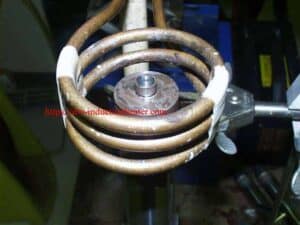
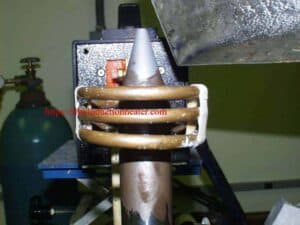
• An induction heating coil designed and developed specifically for this application.
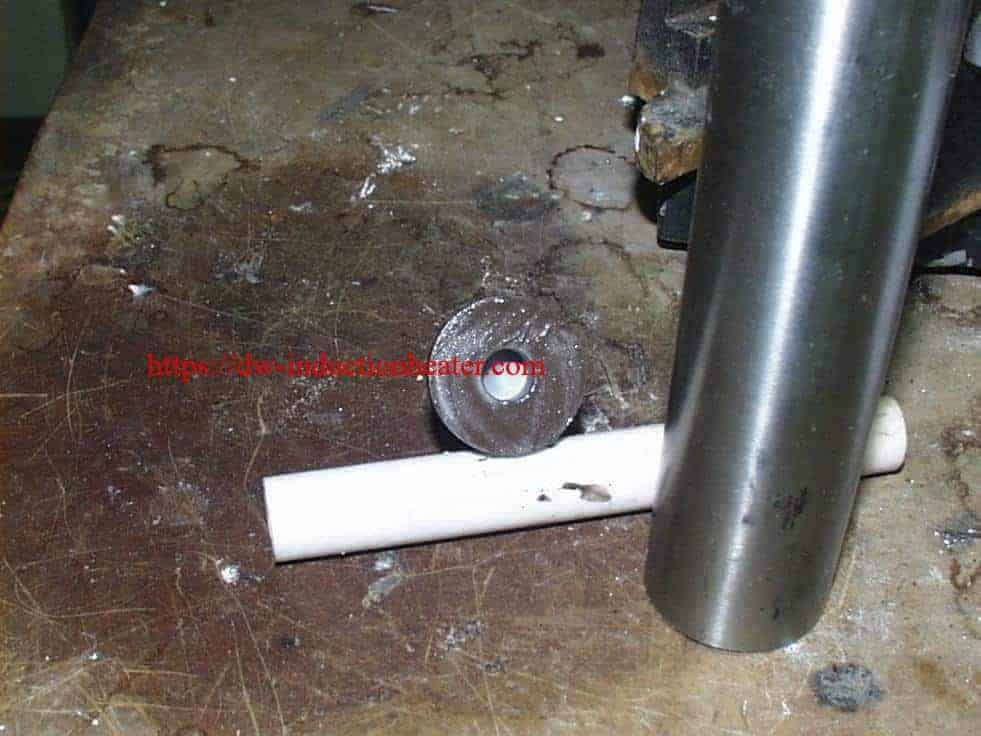
Process A three turn helical coil is used to braze the carbide to the shaft. The steel shaft is fluxed and the braze shim placed on top. The carbide tip is fluxed and placed on top of the shim, lining up the countersunk hole in the carbide. The hole is not fluxed because the flux outgases and causes the carbide to build up pressure and attempt to repel from the shaft. Power is applied for 85 seconds for the braze shim to flow and make a good joint.
DAWEI’s customer has a customer who is unhappy with the braze quality of their digger so our customer is looking for a better quality brazing process. DAWEI’s customer is very happy with the sample brazed diggers and the help he received from the Ameritherm lab in developing his brazing process.
Results/Benefits Induction heating provides:
• Rapid localized heating only where needed
• Creates clean, controllable joints
• Hands-free heating that involves no operator skill for manufacturing
• Even distribution of heating
brazing carbide to shaft


induction brazing carbide to shaft


brazing carbide to stainless steel shaft

2023年2月8日星期三

Brazing carbide shaft with induction

Brazing carbide shaft with induction Objective: Braze a carbide shaft to a steel tube Material: Carbide shaft 1/8" to 1" diameter (varying sizes) Steel tube 3/8" to 1 ¼" OD Silver solder braze Temperature: indicating paint Temperature: 1400 °F for 60 seconds Frequency300 kHz Equipment: DW-UHF-6KW-III, 150-400 kHz solid state induction heating system equipped with a remote heat station containing two 0.66 μF capacitors (total 1.32 μF) A multi-turn helical coil Process: Silver solder is applied to where the carbide shaft and steel tube meet. The clearance between the two parts is approximately .0005". A small piece of solder braze is placed on the part and then the part is heated. It takes about 60 seconds to flow the braze with the best heat migration and solder flow. Even though the part can be heated faster, optimal results are obtained at 60 seconds. Results/Benefits: Induction heating provides even, precise heat. Precise directed heat is required for the solder braze to flow evenly around the part to assure a good joint.

2022年12月28日星期三

Brazing carbide shaft with induction

Brazing carbide shaft with induction Objective: Braze a carbide shaft to a steel tube Material: Carbide shaft 1/8" to 1" diameter (varying sizes) Steel tube 3/8" to 1 ¼" OD Silver solder braze Temperature: indicating paint Temperature: 1400 °F for 60 seconds Frequency300 kHz Equipment: DW-UHF-6KW-III, 150-400 kHz solid state induction heating system equipped with a remote heat station containing two 0.66 μF capacitors (total 1.32 μF) A multi-turn helical coil Process: Silver solder is applied to where the carbide shaft and steel tube meet. The clearance between the two parts is approximately .0005". A small piece of solder braze is placed on the part and then the part is heated. It takes about 60 seconds to flow the braze with the best heat migration and solder flow. Even though the part can be heated faster, optimal results are obtained at 60 seconds. Results/Benefits: Induction heating provides even, precise heat. Precise directed heat is required for the solder braze to flow evenly around the part to assure a good joint.

2022年9月23日星期五

Induction Brazing Carbide To Stainless Steel

Induction Brazing Carbide To Stainless Steel Shaft With IGBT Heating Units Objective Brazing a cone shaped carbide to a stainless steel shaft for a digger Material Cone shaped carbide 1.12” (28.4mm) dia, 1.5”(38.1mm) tall, stainless steel shaft 1.12” (28.4mm) dia and various length, black brazing flux and braze shims Temperature 1500 ºF (815 ºC) Frequency 277 kHz Equipment • DW-UHF-10 kW induction heating system, equipped with a remote workhead containing two 1.0μF capacitors for a total of 0.5μF • An induction heating coil designed and developed specifically for this application. Process A three turn helical coil is used to braze the carbide to the shaft. The steel shaft is fluxed and the braze shim placed on top. The carbide tip is fluxed and placed on top of the shim, lining up the countersunk hole in the carbide. The hole is not fluxed because the flux outgases and causes the carbide to build up pressure and attempt to repel from the shaft. Power is applied for 85 seconds for the braze shim to flow and make a good joint. DAWEI’s customer has a customer who is unhappy with the braze quality of their digger so our customer is looking for a better quality brazing process. DAWEI’s customer is very happy with the sample brazed diggers and the help he received from the Ameritherm lab in developing his brazing process. Results/Benefits Induction heating provides: • Rapid localized heating only where needed • Creates clean, controllable joints • Hands-free heating that involves no operator skill for manufacturing • Even distribution of heating brazing carbide to shaft             induction brazing carbide to shaft               brazing carbide to stainless steel shaft
2022年9月1日星期四

Brazing carbide shaft with induction

Brazing carbide shaft with induction Objective: Braze a carbide shaft to a steel tube Material: Carbide shaft 1/8" to 1" diameter (varying sizes) Steel tube 3/8" to 1 ¼" OD Silver solder braze Temperature: indicating paint Temperature: 1400 °F for 60 seconds Frequency300 kHz Equipment: DW-UHF-6KW-III, 150-400 kHz solid state induction heating system equipped with a remote heat station containing two 0.66 μF capacitors (total 1.32 μF) A multi-turn helical coil Process: Silver solder is applied to where the carbide shaft and steel tube meet. The clearance between the two parts is approximately .0005". A small piece of solder braze is placed on the part and then the part is heated. It takes about 60 seconds to flow the braze with the best heat migration and solder flow. Even though the part can be heated faster, optimal results are obtained at 60 seconds. Results/Benefits: Induction heating provides even, precise heat. Precise directed heat is required for the solder braze to flow evenly around the part to assure a good joint.

2022年5月26日星期四

Induction Brazing Carbide To Stainless Steel

Induction Brazing Carbide To Stainless Steel Shaft With IGBT Heating Units Objective Brazing a cone shaped carbide to a stainless steel shaft for a digger Material Cone shaped carbide 1.12” (28.4mm) dia, 1.5”(38.1mm) tall, stainless steel shaft 1.12” (28.4mm) dia and various length, black brazing flux and braze shims Temperature 1500 ºF (815 ºC) Frequency 277 kHz Equipment • DW-UHF-10 kW induction heating system, equipped with a remote workhead containing two 1.0μF capacitors for a total of 0.5μF • An induction heating coil designed and developed specifically for this application. Process A three turn helical coil is used to braze the carbide to the shaft. The steel shaft is fluxed and the braze shim placed on top. The carbide tip is fluxed and placed on top of the shim, lining up the countersunk hole in the carbide. The hole is not fluxed because the flux outgases and causes the carbide to build up pressure and attempt to repel from the shaft. Power is applied for 85 seconds for the braze shim to flow and make a good joint. DAWEI’s customer has a customer who is unhappy with the braze quality of their digger so our customer is looking for a better quality brazing process. DAWEI’s customer is very happy with the sample brazed diggers and the help he received from the Ameritherm lab in developing his brazing process. Results/Benefits Induction heating provides: • Rapid localized heating only where needed • Creates clean, controllable joints • Hands-free heating that involves no operator skill for manufacturing • Even distribution of heating brazing carbide to shaft             induction brazing carbide to shaft               brazing carbide to stainless steel shaft
2022年5月23日星期一

Induction Brazing Carbide To Stainless Steel

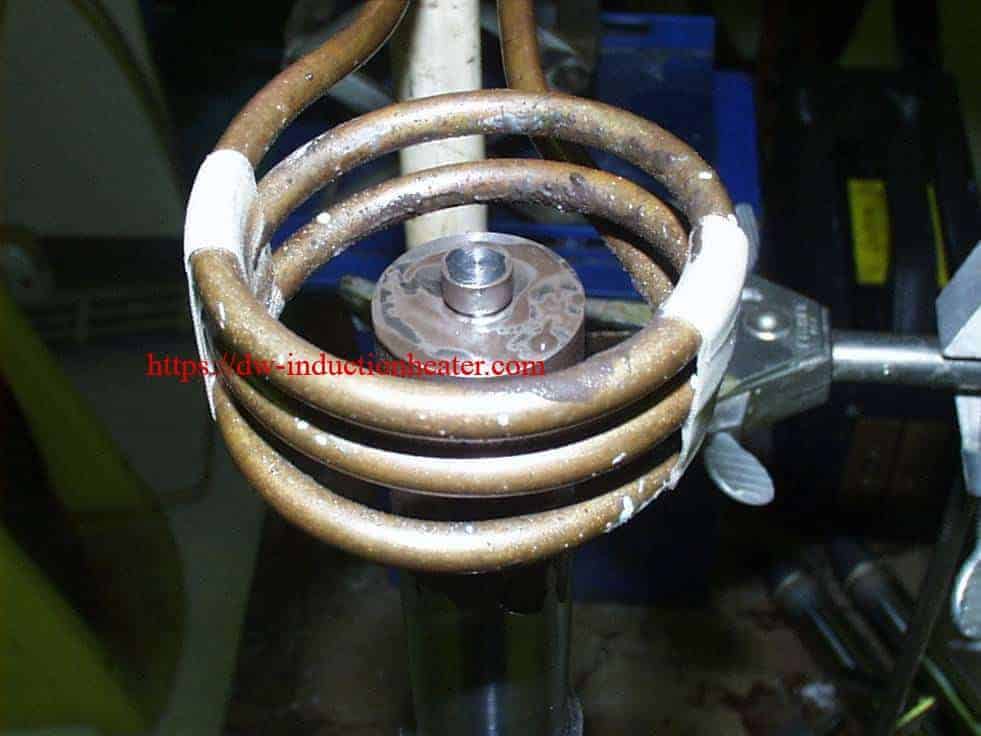
Induction Brazing Carbide To Stainless Steel Shaft With IGBT Heating Units Objective Brazing a cone shaped carbide to a stainless steel shaft for a digger Material Cone shaped carbide 1.12” (28.4mm) dia, 1.5”(38.1mm) tall, stainless steel shaft 1.12” (28.4mm) dia and various length, black brazing flux and braze shims Temperature 1500 ºF (815 ºC) Frequency 277 kHz Equipment • DW-UHF-10 kW induction heating system, equipped with a remote workhead containing two 1.0μF capacitors for a total of 0.5μF • An induction heating coil designed and developed specifically for this application. Process A three turn helical coil is used to braze the carbide to the shaft. The steel shaft is fluxed and the braze shim placed on top. The carbide tip is fluxed and placed on top of the shim, lining up the countersunk hole in the carbide. The hole is not fluxed because the flux outgases and causes the carbide to build up pressure and attempt to repel from the shaft. Power is applied for 85 seconds for the braze shim to flow and make a good joint. DAWEI’s customer has a customer who is unhappy with the braze quality of their digger so our customer is looking for a better quality brazing process. DAWEI’s customer is very happy with the sample brazed diggers and the help he received from the Ameritherm lab in developing his brazing process. Results/Benefits Induction heating provides: • Rapid localized heating only where needed • Creates clean, controllable joints • Hands-free heating that involves no operator skill for manufacturing • Even distribution of heating brazing carbide to shaft             induction brazing carbide to shaft               brazing carbide to stainless steel shaft
2022年5月22日星期日

Brazing carbide shaft with induction

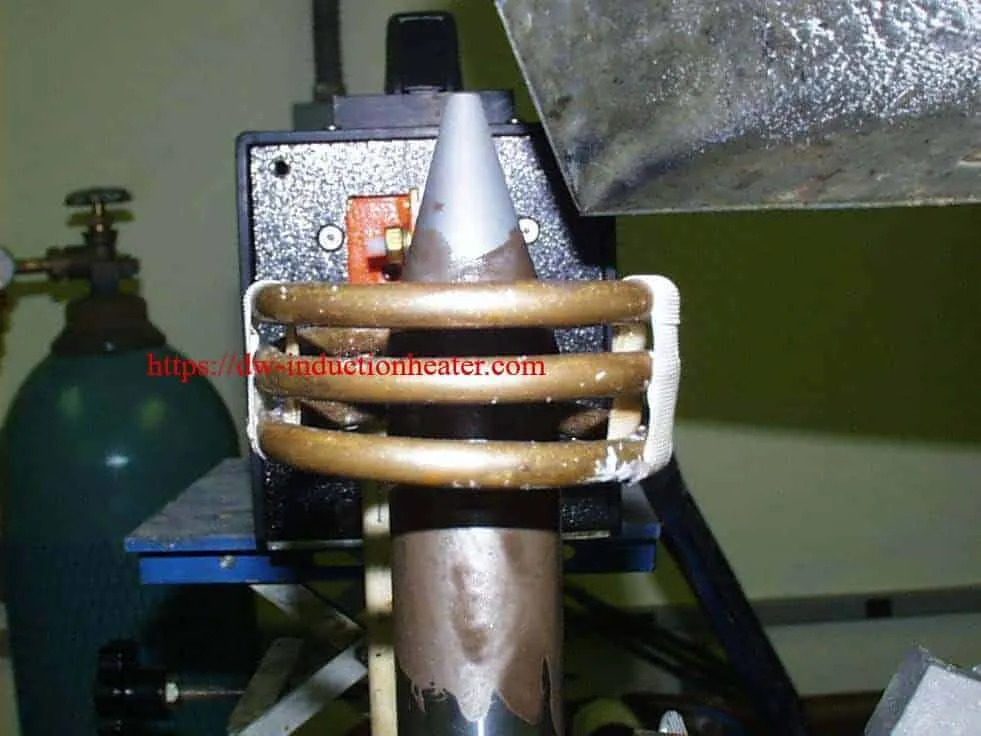
Brazing carbide shaft with induction Objective: Braze a carbide shaft to a steel tube Material: Carbide shaft 1/8" to 1" diameter (varying sizes) Steel tube 3/8" to 1 ¼" OD Silver solder braze Temperature: indicating paint Temperature: 1400 °F for 60 seconds Frequency300 kHz Equipment: DW-UHF-6KW-III, 150-400 kHz solid state induction heating system equipped with a remote heat station containing two 0.66 μF capacitors (total 1.32 μF) A multi-turn helical coil Process: Silver solder is applied to where the carbide shaft and steel tube meet. The clearance between the two parts is approximately .0005". A small piece of solder braze is placed on the part and then the part is heated. It takes about 60 seconds to flow the braze with the best heat migration and solder flow. Even though the part can be heated faster, optimal results are obtained at 60 seconds. Results/Benefits: Induction heating provides even, precise heat. Precise directed heat is required for the solder braze to flow evenly around the part to assure a good joint.

2022年3月23日星期三

Brazing carbide shaft with induction

Brazing carbide shaft with induction Objective: Braze a carbide shaft to a steel tube Material: Carbide shaft 1/8" to 1" diameter (varying sizes) Steel tube 3/8" to 1 ¼" OD Silver solder braze Temperature: indicating paint Temperature: 1400 °F for 60 seconds Frequency300 kHz Equipment: DW-UHF-6KW-III, 150-400 kHz solid state induction heating system equipped with a remote heat station containing two 0.66 μF capacitors (total 1.32 μF) A multi-turn helical coil Process: Silver solder is applied to where the carbide shaft and steel tube meet. The clearance between the two parts is approximately .0005". A small piece of solder braze is placed on the part and then the part is heated. It takes about 60 seconds to flow the braze with the best heat migration and solder flow. Even though the part can be heated faster, optimal results are obtained at 60 seconds. Results/Benefits: Induction heating provides even, precise heat. Precise directed heat is required for the solder braze to flow evenly around the part to assure a good joint.

Brazing carbide shaft with induction

Brazing carbide shaft with induction Objective: Braze a carbide shaft to a steel tube Material: Carbide shaft 1/8" to 1" diameter (varying sizes) Steel tube 3/8" to 1 ¼" OD Silver solder braze Temperature: indicating paint Temperature: 1400 °F for 60 seconds Frequency300 kHz Equipment: DW-UHF-6KW-III, 150-400 kHz solid state induction heating system equipped with a remote heat station containing two 0.66 μF capacitors (total 1.32 μF) A multi-turn helical coil Process: Silver solder is applied to where the carbide shaft and steel tube meet. The clearance between the two parts is approximately .0005". A small piece of solder braze is placed on the part and then the part is heated. It takes about 60 seconds to flow the braze with the best heat migration and solder flow. Even though the part can be heated faster, optimal results are obtained at 60 seconds. Results/Benefits: Induction heating provides even, precise heat. Precise directed heat is required for the solder braze to flow evenly around the part to assure a good joint.

2022年2月19日星期六

Brazing carbide shaft with induction

Brazing carbide shaft with induction Objective: Braze a carbide shaft to a steel tube Material: Carbide shaft 1/8" to 1" diameter (varying sizes) Steel tube 3/8" to 1 ¼" OD Silver solder braze Temperature: indicating paint Temperature: 1400 °F for 60 seconds Frequency300 kHz Equipment: DW-UHF-6KW-III, 150-400 kHz solid state induction heating system equipped with a remote heat station containing two 0.66 μF capacitors (total 1.32 μF) A multi-turn helical coil Process: Silver solder is applied to where the carbide shaft and steel tube meet. The clearance between the two parts is approximately .0005". A small piece of solder braze is placed on the part and then the part is heated. It takes about 60 seconds to flow the braze with the best heat migration and solder flow. Even though the part can be heated faster, optimal results are obtained at 60 seconds. Results/Benefits: Induction heating provides even, precise heat. Precise directed heat is required for the solder braze to flow evenly around the part to assure a good joint.

2022年2月14日星期一

Brazing carbide shaft with induction

Brazing carbide shaft with induction Objective: Braze a carbide shaft to a steel tube Material: Carbide shaft 1/8" to 1" diameter (varying sizes) Steel tube 3/8" to 1 ¼" OD Silver solder braze Temperature: indicating paint Temperature: 1400 °F for 60 seconds Frequency300 kHz Equipment: DW-UHF-6KW-III, 150-400 kHz solid state induction heating system equipped with a remote heat station containing two 0.66 μF capacitors (total 1.32 μF) A multi-turn helical coil Process: Silver solder is applied to where the carbide shaft and steel tube meet. The clearance between the two parts is approximately .0005". A small piece of solder braze is placed on the part and then the part is heated. It takes about 60 seconds to flow the braze with the best heat migration and solder flow. Even though the part can be heated faster, optimal results are obtained at 60 seconds. Results/Benefits: Induction heating provides even, precise heat. Precise directed heat is required for the solder braze to flow evenly around the part to assure a good joint.

2021年11月25日星期四

Induction Brazing Carbide To Stainless Steel

Induction Brazing Carbide To Stainless Steel Shaft With IGBT Heating Units Objective Brazing a cone shaped carbide to a stainless steel shaft for a digger Material Cone shaped carbide 1.12” (28.4mm) dia, 1.5”(38.1mm) tall, stainless steel shaft 1.12” (28.4mm) dia and various length, black brazing flux and braze shims Temperature 1500 ºF (815 ºC) Frequency 277 kHz Equipment • DW-UHF-10 kW induction heating system, equipped with a remote workhead containing two 1.0μF capacitors for a total of 0.5μF • An induction heating coil designed and developed specifically for this application. Process A three turn helical coil is used to braze the carbide to the shaft. The steel shaft is fluxed and the braze shim placed on top. The carbide tip is fluxed and placed on top of the shim, lining up the countersunk hole in the carbide. The hole is not fluxed because the flux outgases and causes the carbide to build up pressure and attempt to repel from the shaft. Power is applied for 85 seconds for the braze shim to flow and make a good joint. DAWEI’s customer has a customer who is unhappy with the braze quality of their digger so our customer is looking for a better quality brazing process. DAWEI’s customer is very happy with the sample brazed diggers and the help he received from the Ameritherm lab in developing his brazing process. Results/Benefits Induction heating provides: • Rapid localized heating only where needed • Creates clean, controllable joints • Hands-free heating that involves no operator skill for manufacturing • Even distribution of heating brazing carbide to shaft             induction brazing carbide to shaft               brazing carbide to stainless steel shaft

关注者

我的简介

我的照片
HLQ induction heating machine manufacturer provides the service of induction brazing,melting,hot forming,hardening surface,annealing,shrink fitting,PWHT,etc.