2023年3月1日星期三

Induction forging and induction hot forming

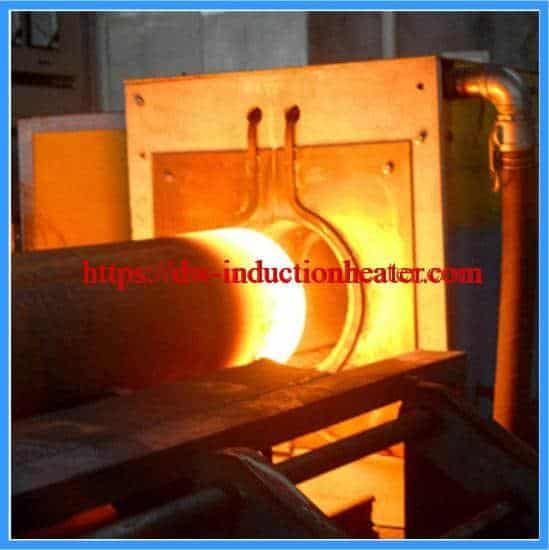
Induction forging machine Induction forging and induction hot forming refer to the use of an induction heating machine to pre-heat metals prior to deformation using a press or hammer. Typically metals are heated to between 1,100 and 1,200 °C (2,010 and 2,190 °F) to increase their malleability and aid flow in the forging die. Metal induction forging and induction hot forming are excellent induction heating applications. Industrial forging and hot forming processes involve bending or shaping a metal billet or bloom after it has been heated to a temperature at which its resistance to deformation is weak. Blocks of non-ferrous materials can also be used. Induction heating machines or conventional furnaces are used for the initial heating process. Billets can be transported through the inductor via a pneumatic or hydraulic pusher; pinch roller drive; tractor drive; or walking beam. Non-contact pyrometers are used to measure the billet temperature. Other machines such as mechanical impact presses, bending machines, and hydraulic extrusion presses are used to bend or shape the metal. The approximate hot forming temperatures of the most commonly used industrial materials are: • Steel 1200º C • Brass 750º C • Aluminium 550º C

Total Forming Applications

Induction heating machines are commonly used to heat steel billets, bars, brass blocks, and titanium blocks to the proper temperature for forging and hot forming.

Partial Forming Applications

Induction heating is also used to heat parts such as pipe ends, axle ends, automotive parts, and bar ends for partial forming and forging processes.Induction hot forming machine

The Induction Heating Advantage

When compared to conventional furnaces, induction heating machines for forging offer significant process and quality advantages:
  • Much shorter heating times, minimizing scaling and oxidation
  • Easy and accurate temperature temperature control. Parts at temperatures outside specifications can be detected and removed
  • No time lost waiting for the furnace to ramp up to the required temperature
  • Automated induction heating machines require minimal manual labor
  • Heat can be directed to one specific point, which is highly important for parts with only one forming area.
  • Greater thermal efficiency - heat is generated in the part itself and does not need to be heated in a large chamber.
  • Better working conditions. The only heat present in the air is that of the parts themselves. The working conditions are much more pleasant than with a fuel furnace.

Induction Brazing Carbide

Induction Brazing Carbide File

Objective: Induction Brazing carbide rotary file assemblies with uniform concentricity in an aerospace application

Material • Carbide blank • High speed steel shank • Temperature indicating paint • Braze shim and black flux

Temperature 1400°F (760°C)

Frequency 550 kHz

Equipment: DW-UHF-4.5kw induction heating system, equipped with a remote heat station containing two 0.33 μF capacitors (total 0.66 μF) An induction heating coil designed and developed specifically for this application.

Process A multi-turn helical coil is used. The part is heated to determine the time required to reach the desired temperature and required heat pattern. It takes approximately 30 - 45 seconds to reach 1400°F (760°C) depending on the various part sizes. Flux is applied to the entire part. A braze shim is sandwiched between the steel shank and carbide. Induction heating power is applied until the braze flows. With proper fixturing, concentricity of the part can be achieved.

Results/Benefits • Repeatable, consistent precise heat.


Induction Brazing Steel Parts to Tungsten Carbide Plate

Induction Brazing Steel Parts to Tungsten Carbide Plate

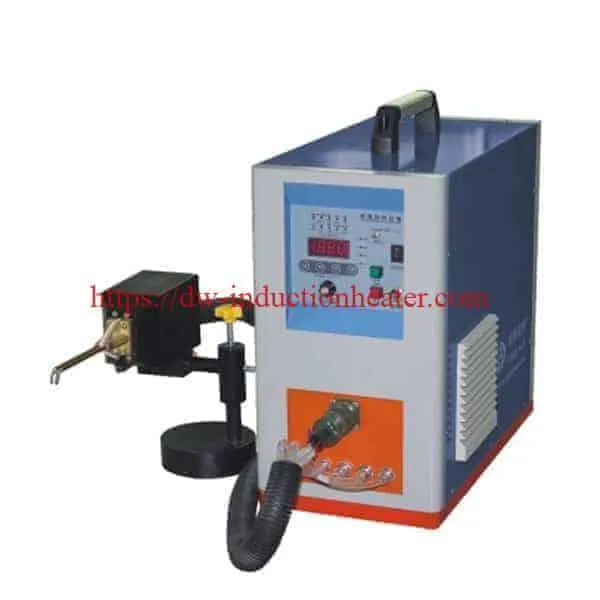
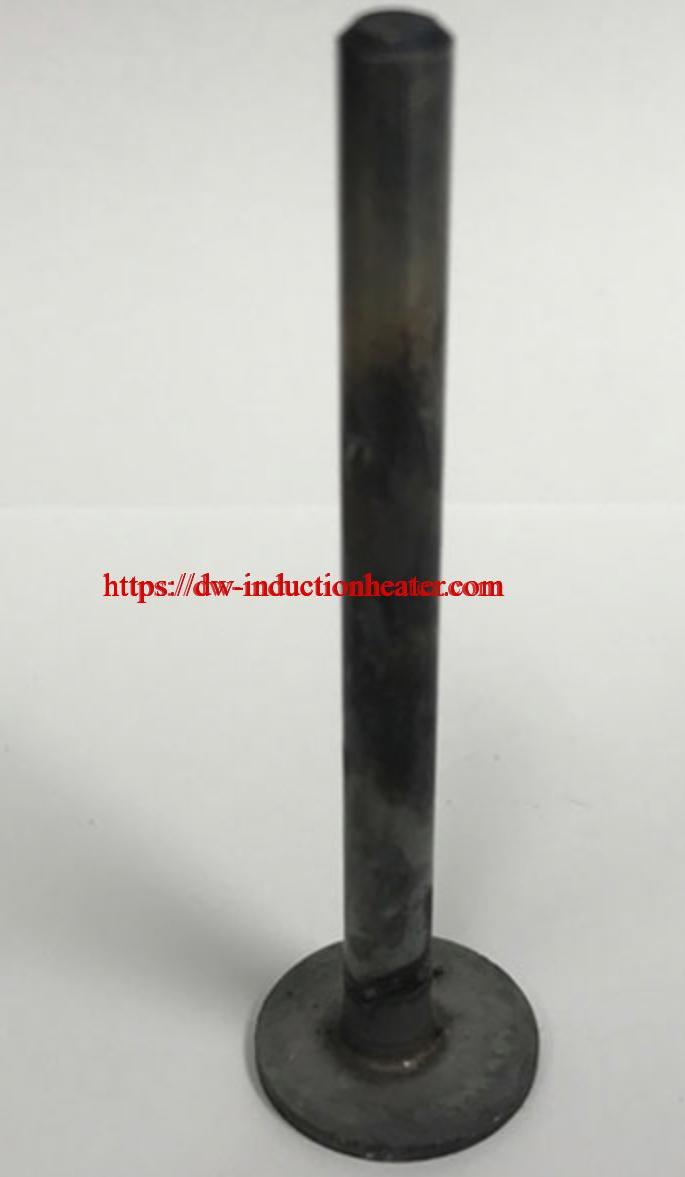
Objective Induction Brazing of Steel Parts to a Tungsten Carbide Plate Equipment DW-UHF-6KW-III handheld induction brazing machine Induction brazing steel parts
Test 1 Materials • Steel rod: 19.05 mm (0.75″) OD, 82.55 mm (3.25″) Length • Tungsten Carbide Plate: 38.1 mm (1.5″) OD, 10.16 mm (0.4″) Thickness • Alloy: 19.05 mm (0.75″) Brazing discs Power: 4.0 kW Temperature: Approximately 760° C (1400° F) Time: 40 sec
Test 2 Materials • Steel rod: 12.7 mm (0.50″) OD, 76.2 mm (3″) Length • Tungsten Carbide Plate: 19.05 mm (0.75″) OD, 6.35 mm (0.25″) Thickness • Alloy: 12.7 mm (0.50″) Brazing discs Power: 2.36 kW Temperature: Approximately 760° C (1400° F) Time: 23 sec
Test 3 Materials • Steel rod: 12.7 mm (0.50″) OD, 76.2 mm (3″) Length • Tungsten Carbide Plate: 1″ OD, 1.39mm (0.055″) Thickness • Alloy: 12.7 mm (0.50″) Brazing discs Power: 2.36 kW Temperature: Approximately 760° C (1400° F) Time: 20-25 sec (Pulsing on/off)
Test 4 Materials • Steel rod: 6.35 mm (0.25″) OD, 76.2 mm (3″) Length • Tungsten Carbide Plate: 21.08mm (0.83″) OD, 1.65mm (0.065″) thicknes • Alloy: 6.35 mm (0.25″) Brazing discs Power: 1.96 kW Temperature: Approximately 760° C (1400° F)Induction brazing steel carbideInduction brazing steel partsInduction brazing steel parts Time: 20 sec (Pulsing on/off)
Results and Conclusions: Brazing of different steel parts to carbide disks is possible with one induction coil. Power was regulated by turning the heat on and off using a foot switch to prevent overheating of the carbide parts.
  [wpforms id="3947"]

Aluminium Scraps Recycling Melting and Process

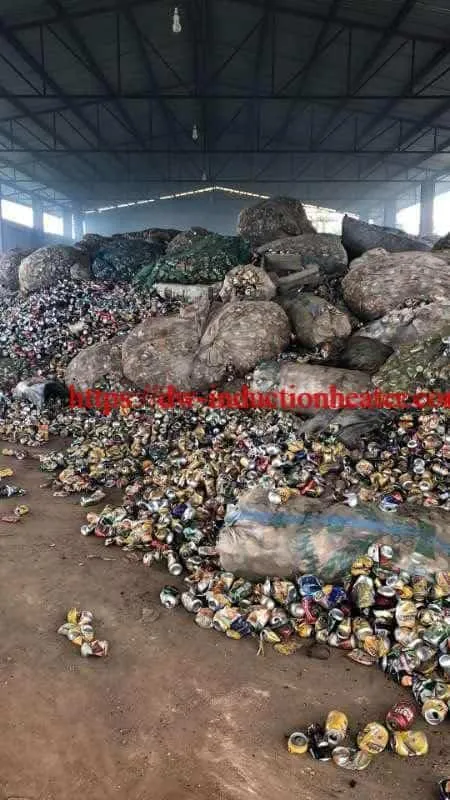
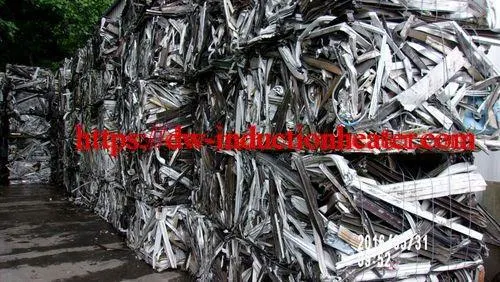
Aluminium Scraps Recycling Melting is the process by which scraps aluminium can be reused in products after its initial production. The process involves simply re-melting the metal, which is far less expensive and energy-intensive than creating new aluminium through the electrolysis of aluminium oxide (Al2O3), which must first be mined from bauxite ore and then refined using the Bayer process. Recycling scraps aluminium requires only 5% of the energy used to make new aluminium from the raw ore. For this reason, approximately 36% of all aluminium produced in the United States comes from old recycled scrap. Used beverage containers are the largest component of processed aluminum scraps, and most of it is manufactured back into aluminium cans.

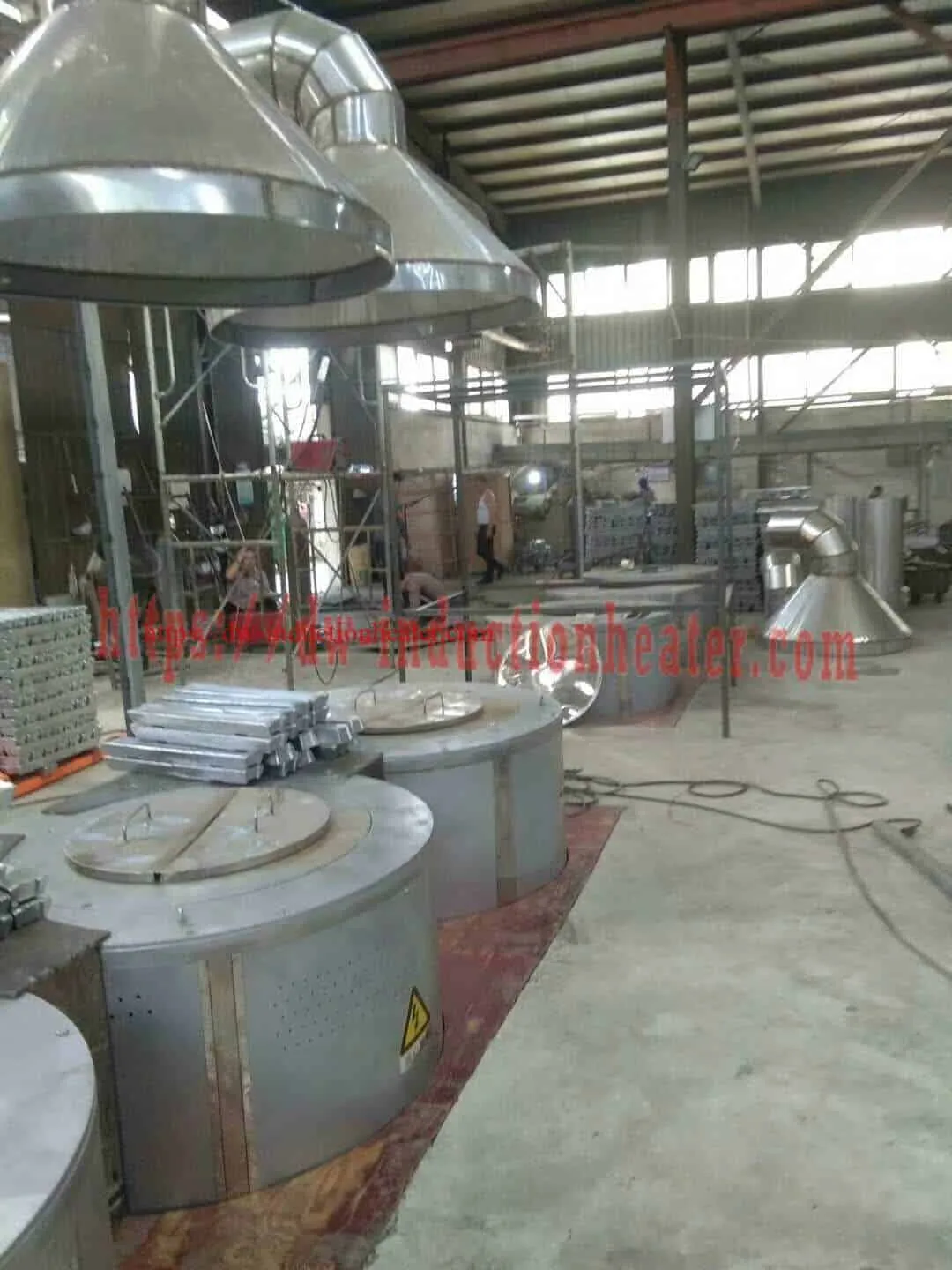
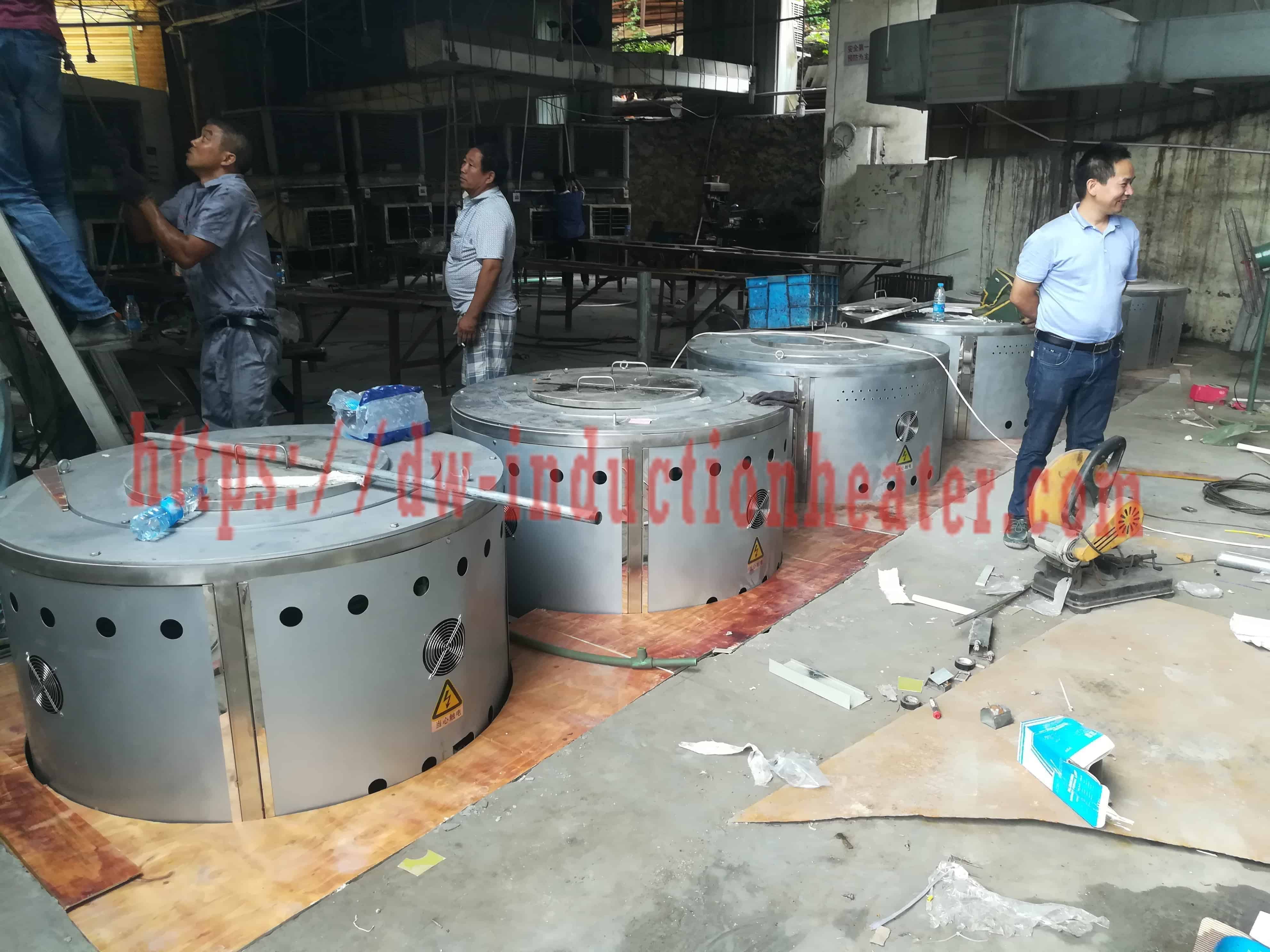
HLQ Induction Equipment Co provides the leading Aluminium Scraps Recycling Melting Furnace for recycling aluminium Scraps/cans/ingots and dross for industry aluminum recycling filed.

Operation Steps:

  • A Aluminum scraps/ingots/cans recycling furnace operator will place aluminum parts or aluminum ingot/scrap as a charge in the induction melting aluminum recycling furnace and start the furnace to begin the melting process. Adding more aluminum charge this process is advisable as molten aluminum transmits the heat better.

  • When temperature of the aluminum reaches 1220.66°F it turns to liquid. Any residue from the coating and paint from the cans will float on the surface. This byproduct is called dross and can be skimmed by a steel ladle. This needs to cool before it can be disposed off safely.

  • Next, the crucible (furnace) will pour out pure aluminum. Usually, Hydraulic tilting mechanism provided to pour large quantities of liquid metals.

  • Finally, with care, the molten aluminum will be poured into mould to cool down and then slide out for use.


Advantages of induction aluminum scraps recycling furnace:


1, save energy and reduce the environmental temperature

Original diesel furnace workshop on pollution, but also the auxiliary exhaust pipeline, inside and outside the furnace heat has a large number of distribution in the workshop, resulting in high temperature workshop. So is the original furnace condition, most escapes to the air, there is heat conduction loss, the production of large power consumption, increase the cost of production. At the same time, the ambient temperature increases. The electromagnetic induction heating process, the heating element is through magnetic field heating, in order to reduce the loss of heat conduction, fast heating, melting rapidly, thus reducing energy consumption. Reduce electricity consumption. After the comparison of the experimental test and modification, the power saving effect is 20%-40%.

2, rapid heating, temperature control accurate real-time

Electromagnetic induction heating method is through the magnetic field lines make heating rapid heating, the rapid melting Aluminum Alloy. The temperature control is real-time and accurate, which improves the quality of the product and improves the production efficiency!

3 and long service life, simple maintenance

The traditional electric melting induction furnace heating method is to use resistance wire heating, resistance wire in the high temperature environment for a long time in the use of oxidation will result in reducing its service life, high maintenance costs. The electromagnetic heating coil is made of insulating material and high temperature wire, so the service life is long and without any maintenance.

4, power

Electromagnetic induction heating with the development and maturity of the technology, the production process and technology of components, software, such as reliable protection of the current power can be 2-200KW.

5, safe

The utility model adopts the electromagnetic induction heating, which can reduce the surface temperature of the machine, and the human body can be safely touched, so as to avoid the occurrence of burn and scald accidents caused by the traditional heating mode and protect the production safety of the employees.

Features

1 energy saving and environmental protection, Germany's IGBT power devices, high reliability, stable operation and low maintenance costs.

2) the frequency of the digital phase locked loop tracking, automatic load impedance matching.

3 power closed-loop control, to avoid the temperature change caused by the power down.

4) over voltage, under voltage, lack of phase, over current, over heat protection, real-time display of the parameters, fault diagnosis and alarm; leakage automatic alarm, cut off the power supply and the working state of real-time display.

5) PID heating control system, uniform heating temperature, prevent molten aluminum temperature drift, burning less, homogeneous metal components to improve the product qualification rate.

6 (LED) digital temperature controller, measuring and controlling the temperature accuracy of up to 3 degrees centigrade, the quality of aluminum soup is good, the melting temperature rises quickly, the furnace temperature is easy to control, the production efficiency is high;

7) the integral structure of polycrystalline mullite fibers of furnace, small volume, good insulation property, low energy consumption, high efficiency, temperature above 1200 degrees, long service life;

8. The operation is simple and the power can be adjusted with the work;

9 (100%) load duration, maximum power, to ensure the operation of 24 hours.

Melting capacity of SMJD series electric aluminum scraps recycling melting furnace:


Type Input Power Melting Capacity Max Temperature
steel, stainless steel copper, gold, silver (scrap, Slag) aluminum, aluminum alloy,

Aluminum scrap, Aluminum slag, pop can
1800℃
SMJD-463 60 KW 200 KG 500 KG 200 KG
SMJD-480 60 KW 150 KG 500 KG 150 KG
SMJD-580 80 KW 200 KG 600 KG 200 KG
SMJD-600 60 KW 230 KG 560 KG 230 KG
SMJD-900 120 KW 300 KG 900 KG 300 KG
SMJD-905 80 KW 300 KG 900 KG 300 KG
SMJD-1250 80 KW 400 KG 1200 KG 400 KG
SMJD-1250 120 KW 450 KG 1350 KG 450 KG
SMJD-1500 120 KW 500 KG 1500 KG 500 KG
SMJD-1550 120 KW 520 KG 1560 KG 520 KG
SMJD-1700 160KW 600 KG 1700 KG 600 KG
SMJD-2300 160KW 800 KG 2000 KG 800 KG
SMJD-3100 200KW 1200 KG 3000 KG 1200 KG

[pdf-embedder url="https://dw-inductionheater.com/wp-content/uploads/2018/10/SMJD-melting-aluminum-furnace-parameter.pdf" title="SMJD melting aluminum furnace parameter"]

Induction Aluminum smelter

Aluminum melting furnace with induction

Aluminum melting furnace

Aluminium Melting furnace

aluminum cans melting recycling

aluminum scraps recycling melting process[pdf-embedder url="https://dw-inductionheater.com/wp-content/uploads/2019/03/Aluminium-Scraps-Recycling-Melting-Process.pdf" title="Aluminium Scraps Recycling Melting Process"]

Drum Dryer and Rotary Drum Dryer with Induction Heater for Drying Ore

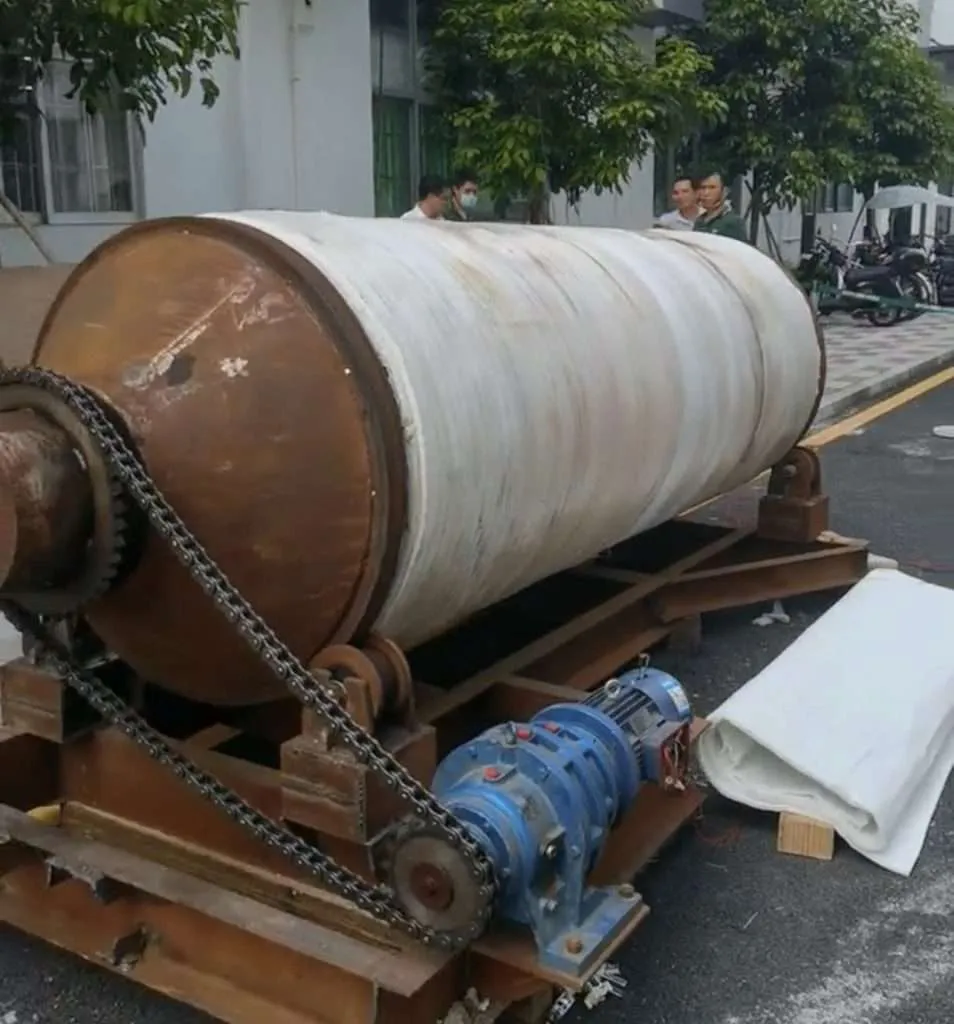
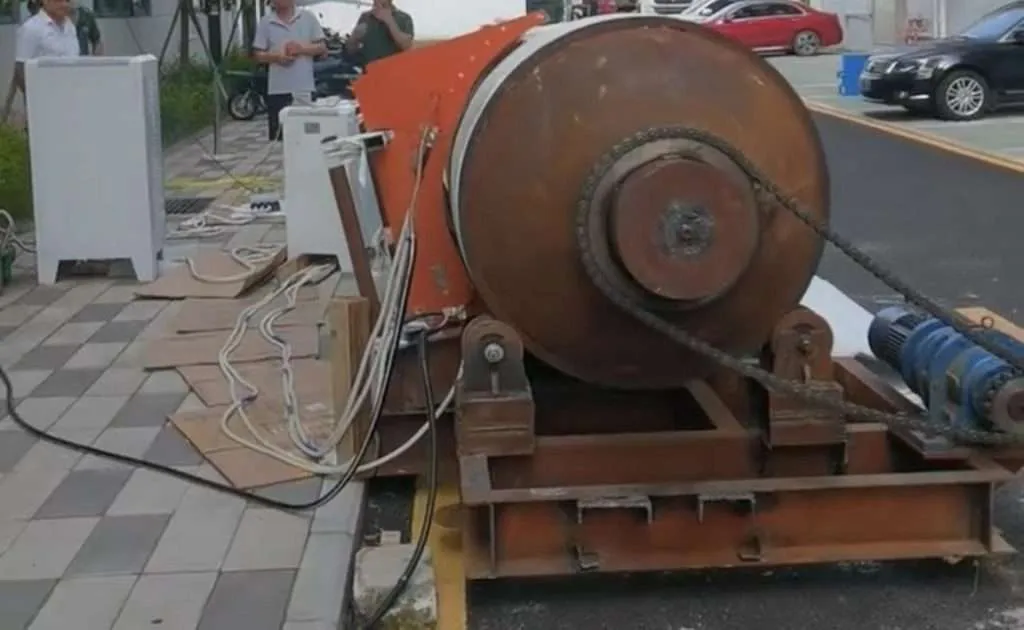
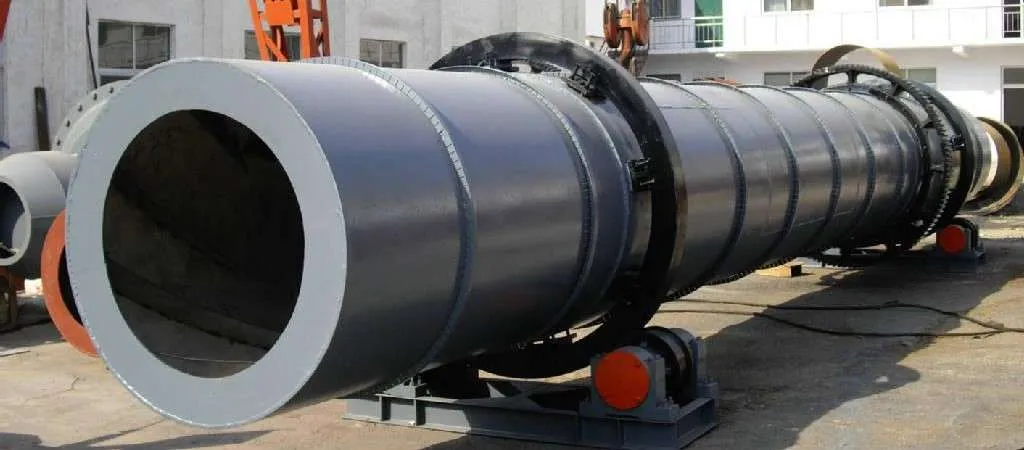
Drum Dryer and Rotary Drum Dryer with Induction Heater for drying Coal Slime-River Sand-Gypsum-Slag-Grain-Sawdust is the better heating solution with Energy saving and pollution-free.


The advantages of rotary drum dryer-drum dryer.

♦ High throughput
♦ Forgiving Operation
♦ Low cost
♦ Gentle handling
♦ Very intimate product contact for louvre dryer
♦ Robust
♦ Can handle variations in feed although the product may be inconsistent
♦ High temperature operation - can be refractory lined.
♦ Unit can have integral cooling section.
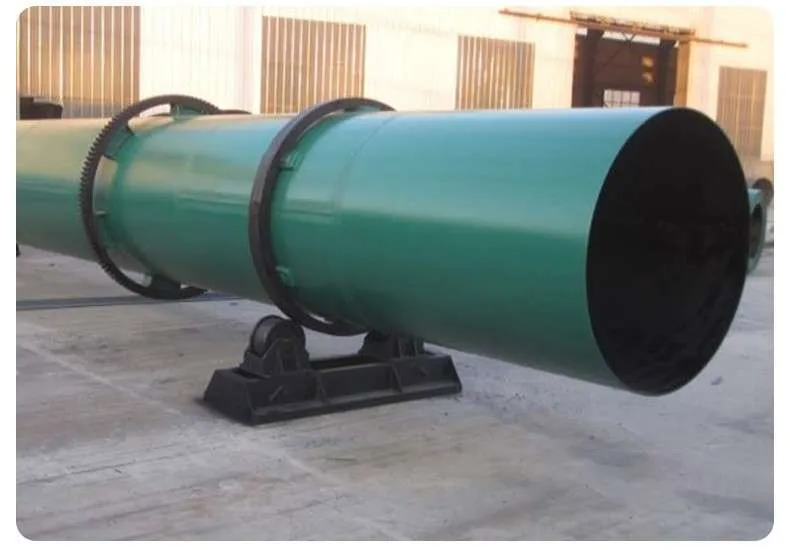
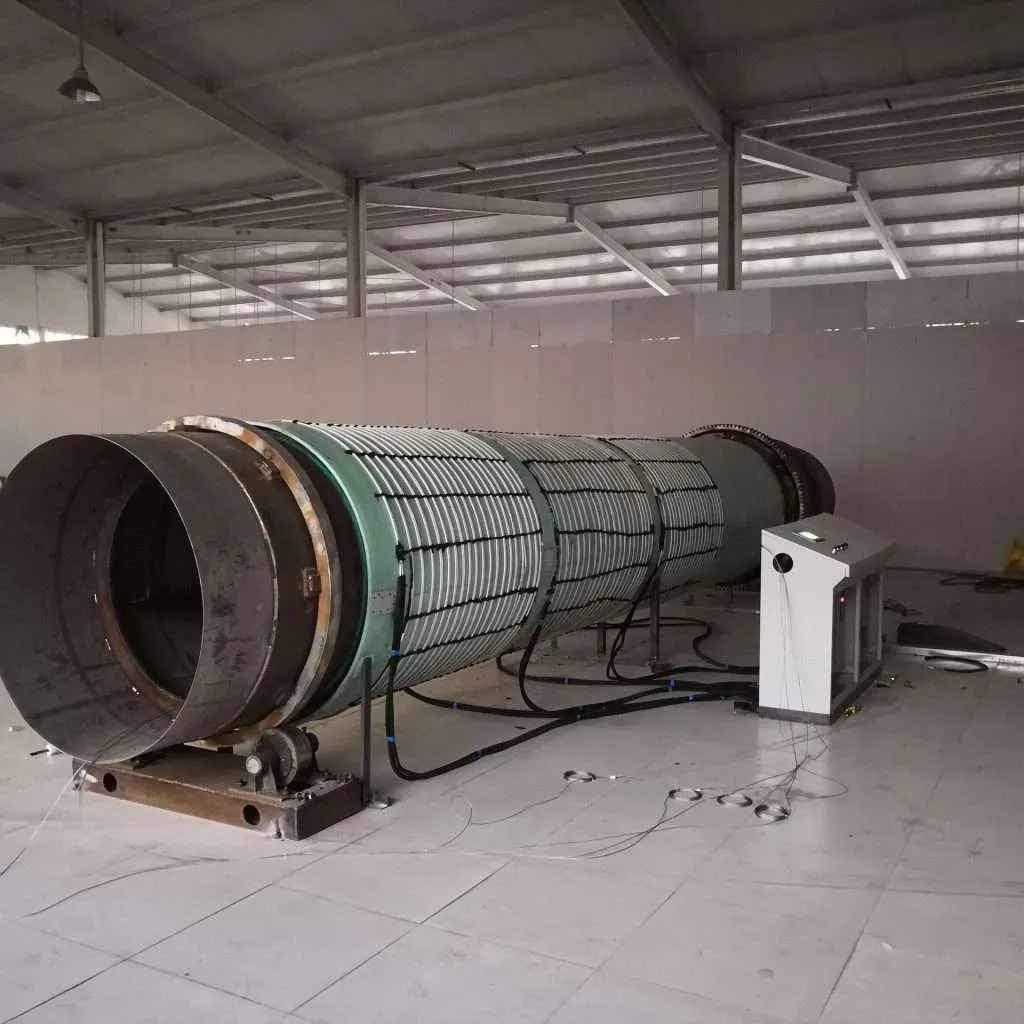
Electromagnetic induction heating drum dryer is a kind of equipment widely used for drying food, coffee, soybeans, grains, nuts, peanuts, oil, dry goods and other agricultural and sideline products or food. The heating devices of traditional drum-type frying pans are mostly coal stoves, vaporization furnaces or electric heating devices. The above three heating devices are all indirect heating methods, that is, heat is transferred to the frying pan by means of heat transfer.


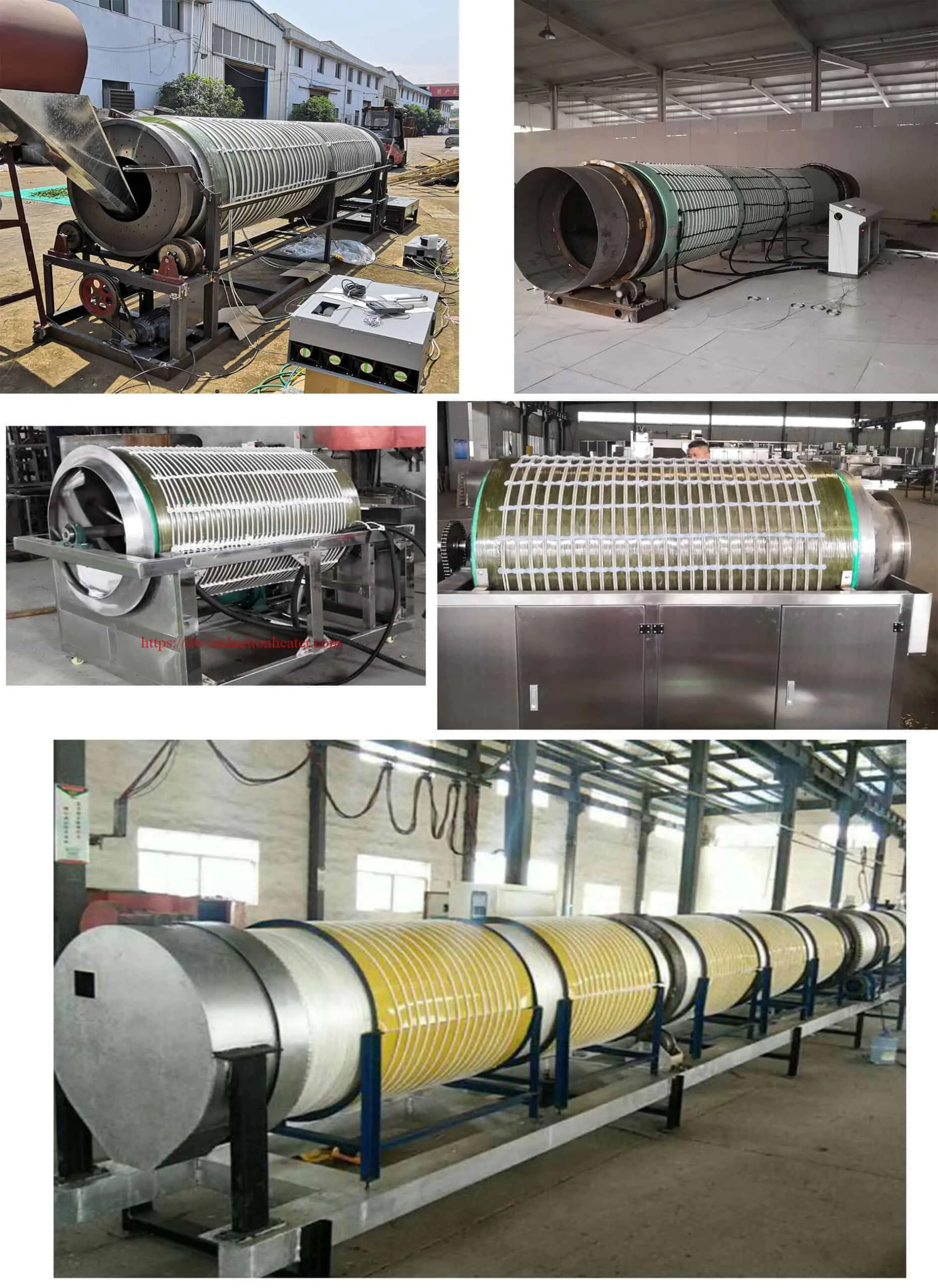
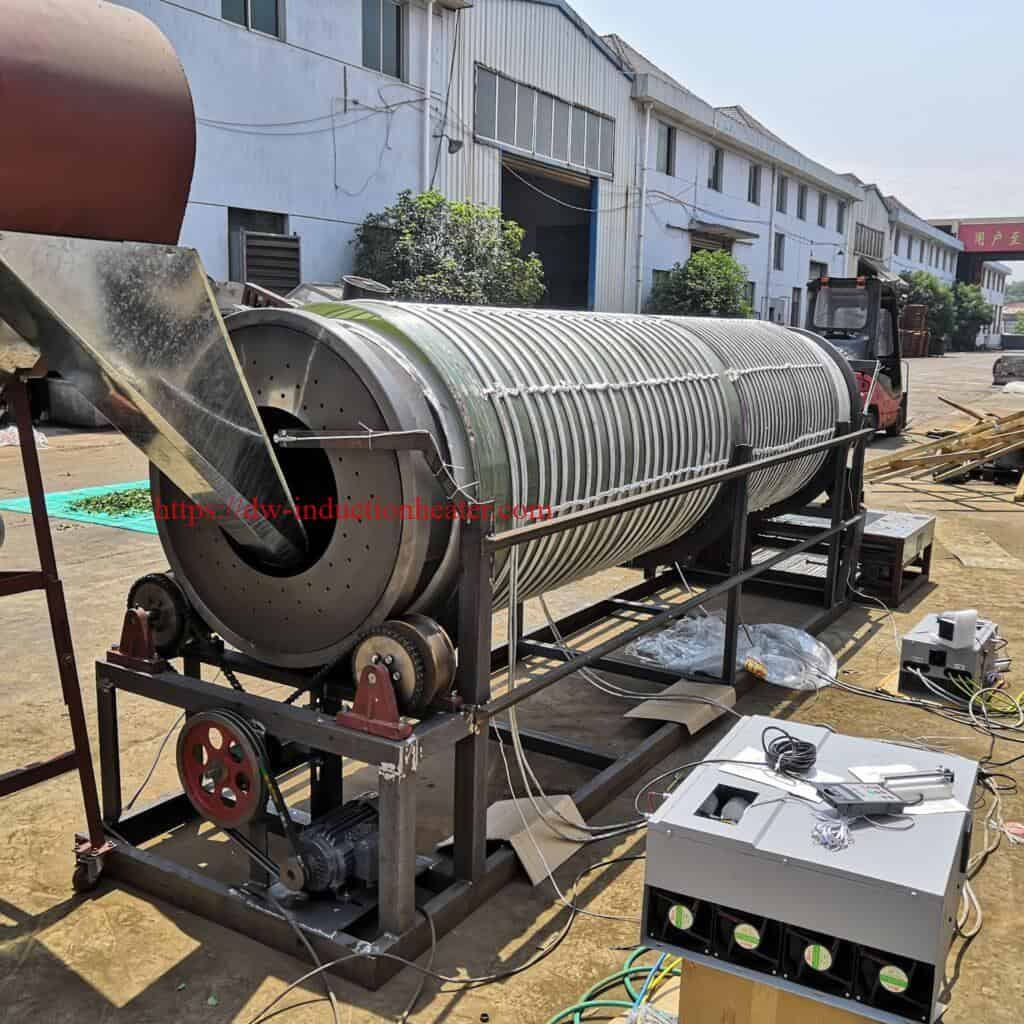
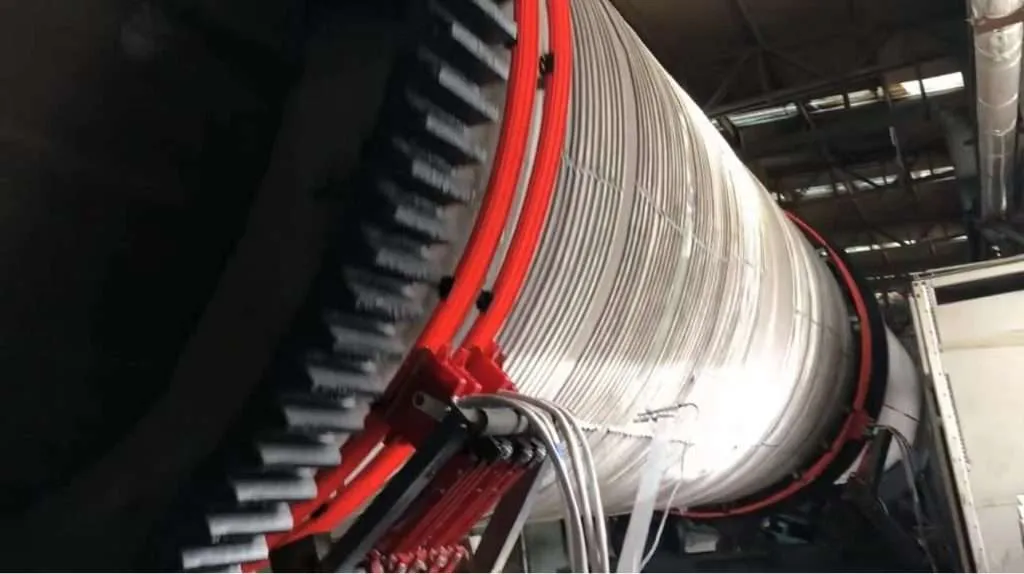
Due to the problems of low thermal efficiency and high energy consumption in the traditional drum frying pan, electromagnetic induction heating drum dryers have appeared on the market, that is, the drum dryer is heated through the principle of electromagnetic induction heating. Its working principle is: drum dryer There are multiple sets of electromagnetic coils on the outside, and the multiple sets of electromagnetic coils generate alternating magnetic fields after passing through the alternating current. Since the drum dryer performs the motion of cutting magnetic field lines in the alternating magnetic field, an alternating current is generated inside the drum dryer. That is, eddy current, which collides and rubs with atoms inside the frying pan at high speed, thereby generating Joule heat for heating. Because the heating source of the electromagnetic drum dryer is the drum dryer itself, it can effectively solve the problem of low thermal efficiency of coal furnaces, vaporization furnaces and electric heating devices.

However, due to the existence of multiple sets of electromagnetic coils, there is a strong alternating magnetic field around the electromagnetic induction heating drum dryer, and the alternating magnetic field will emit electromagnetic radiation. When multiple electromagnetic drum dryers in the industry work at the same time, the electromagnetic radiation It will damage the internal instruments of the mechanical equipment, thereby affecting the service life of the mechanical equipment. In addition, it is also unfavorable for the operators to work in the electromagnetic radiation environment for a long time. Therefore, it is necessary to reduce the electromagnetic radiation generated by the electromagnetic drum dryer.

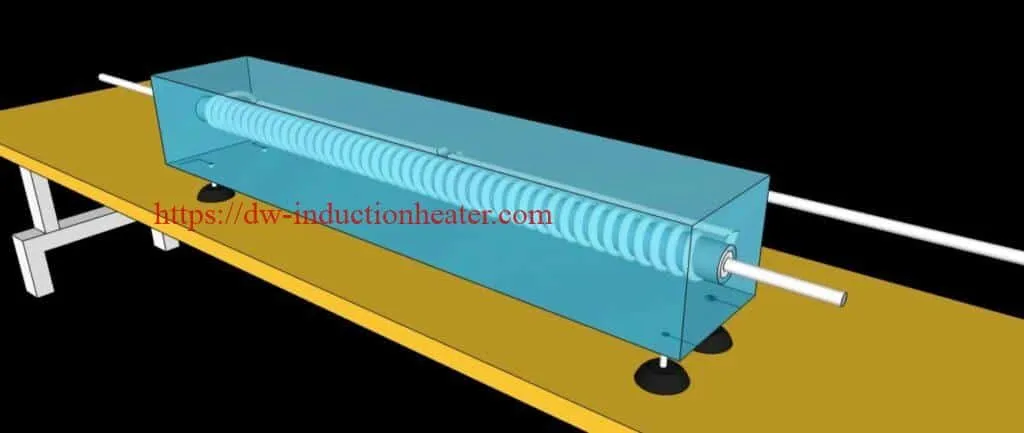
Induction Heating Schematic for Rotary Drum Dryer


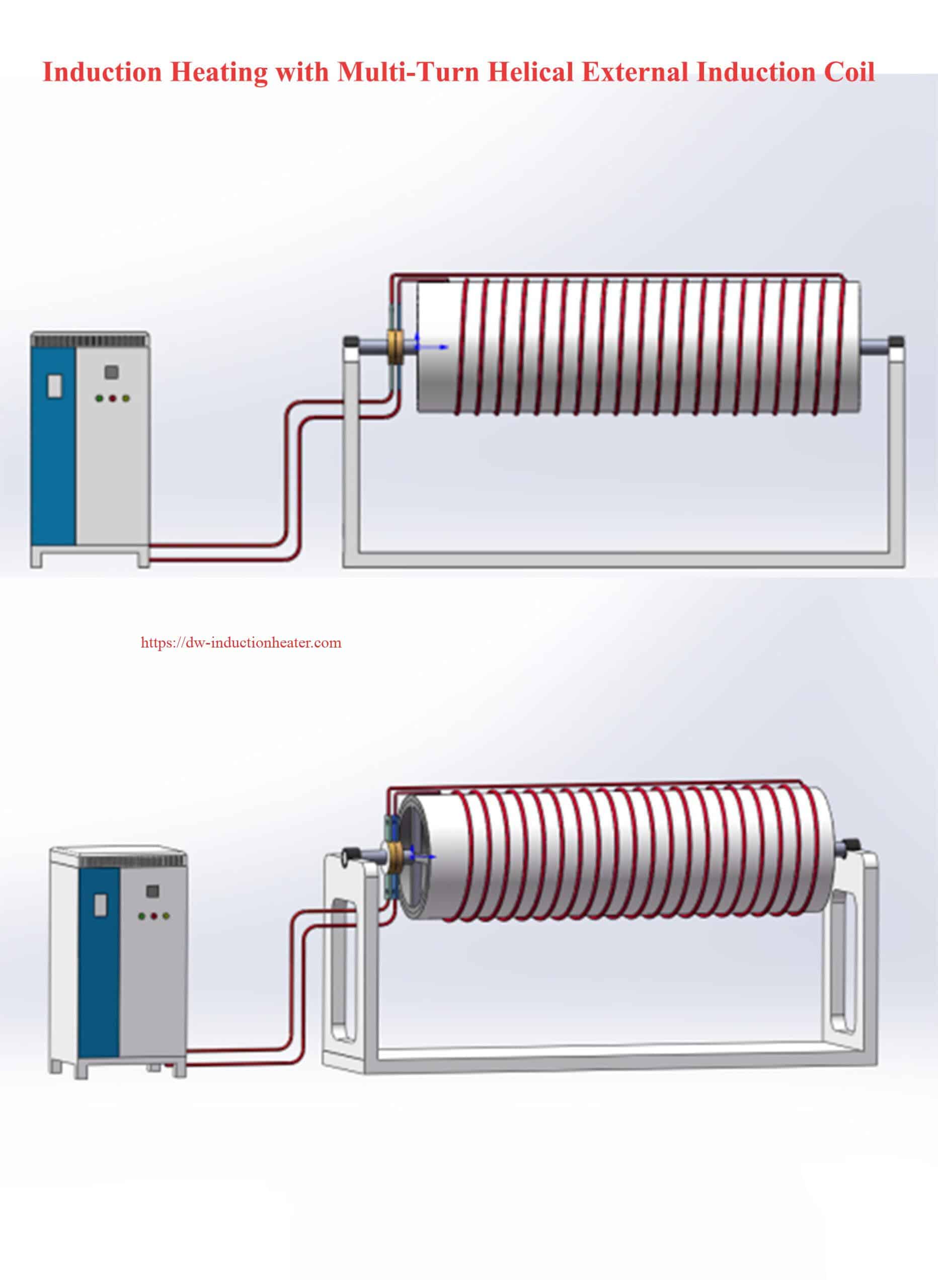
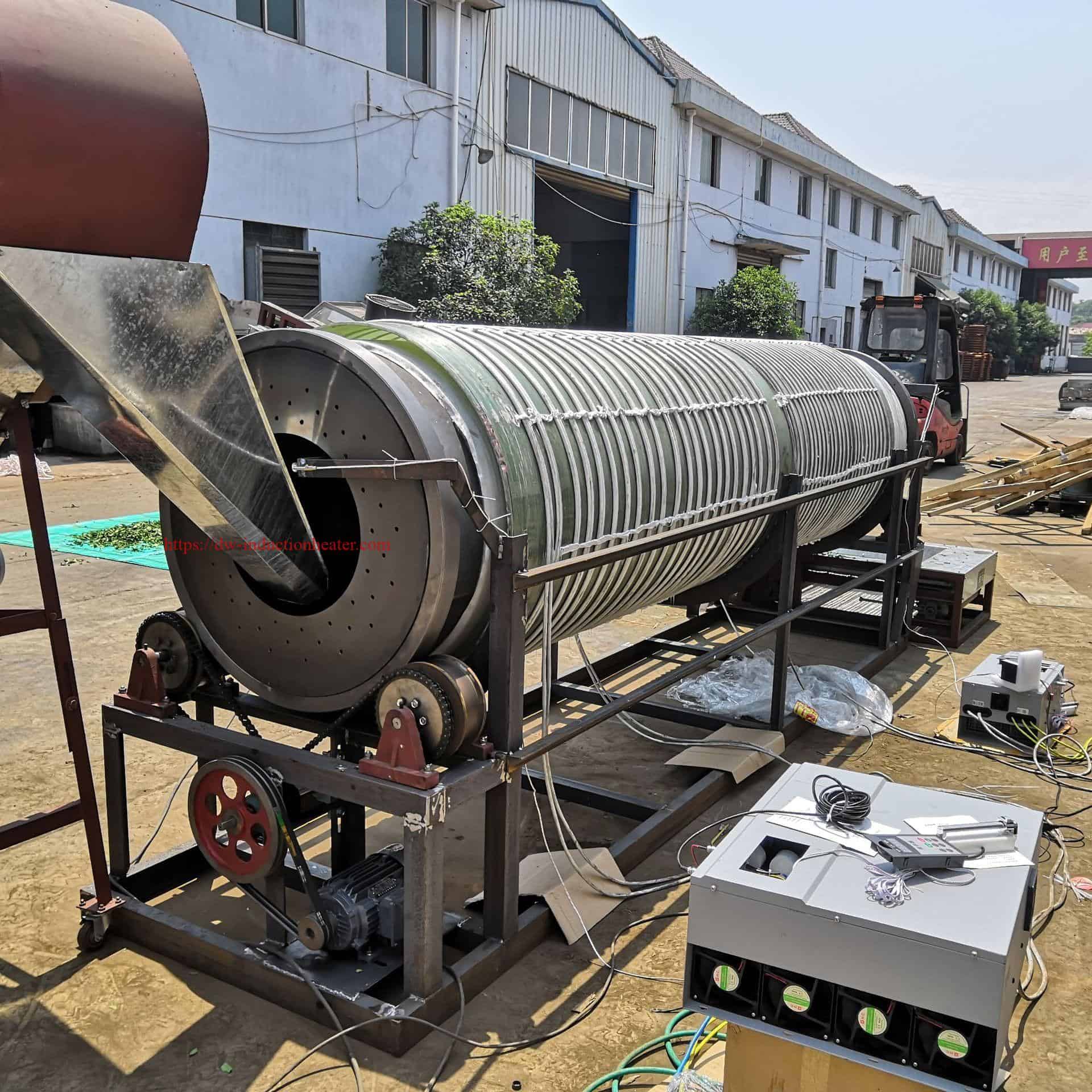
1.Induction Heating with Multi-Turn Helical External Induction Coil


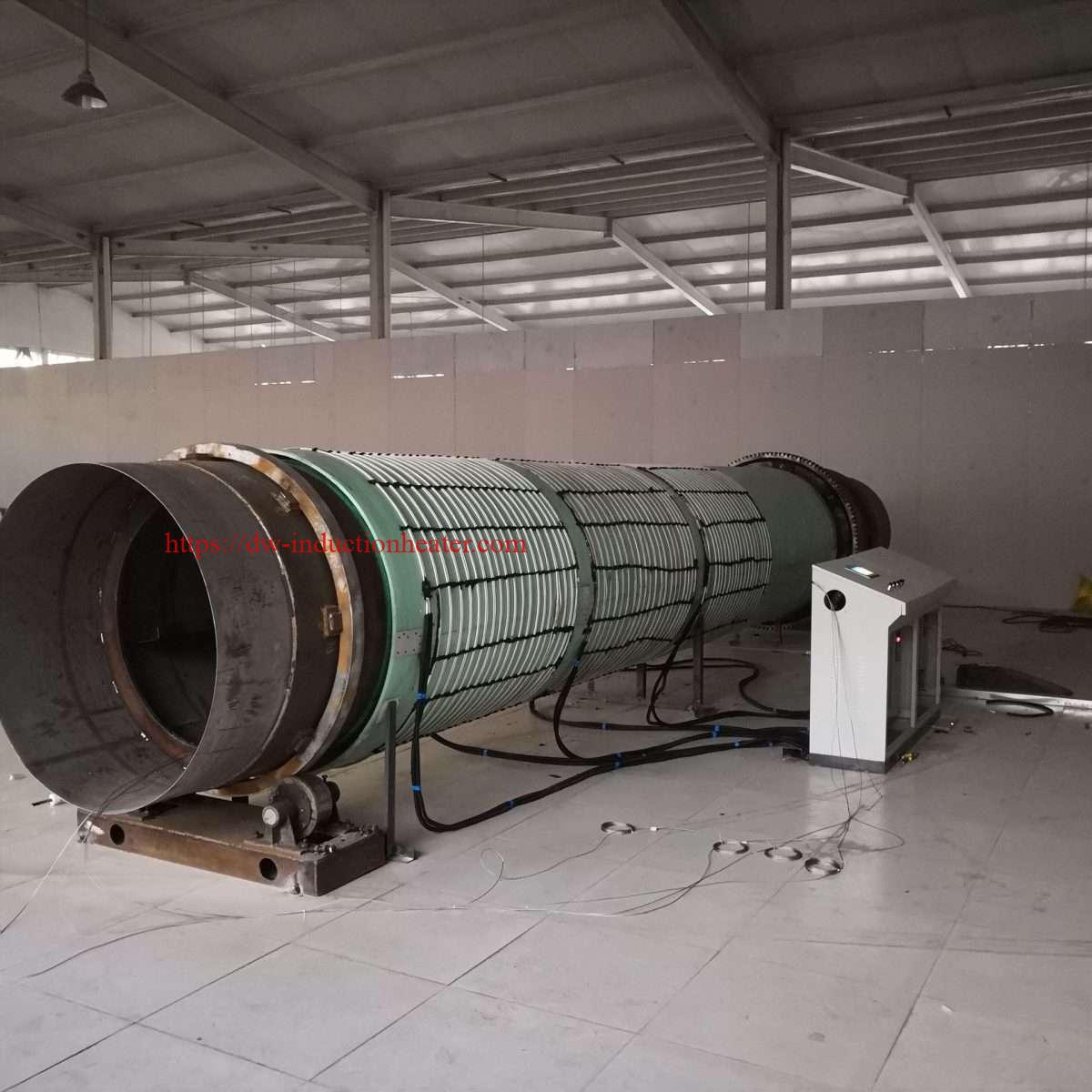
Induction heating coils are wound around the insulation cotton which is wrapped around the drying drum. The multi-turn helical wound coils and drying drum are rotated simultaneously. The induction heating system runs to heat the drying drum in a rapid and efficient manner.


2.Induction Heating with Multi-Turn Helical Internal Induction Coil

Induction heating coils are wound inside the drying drum, the multi-turn helical wound coils and drying drum are rotated simultaneously. The induction heating system runs to heat inner temperature of the drying drum.


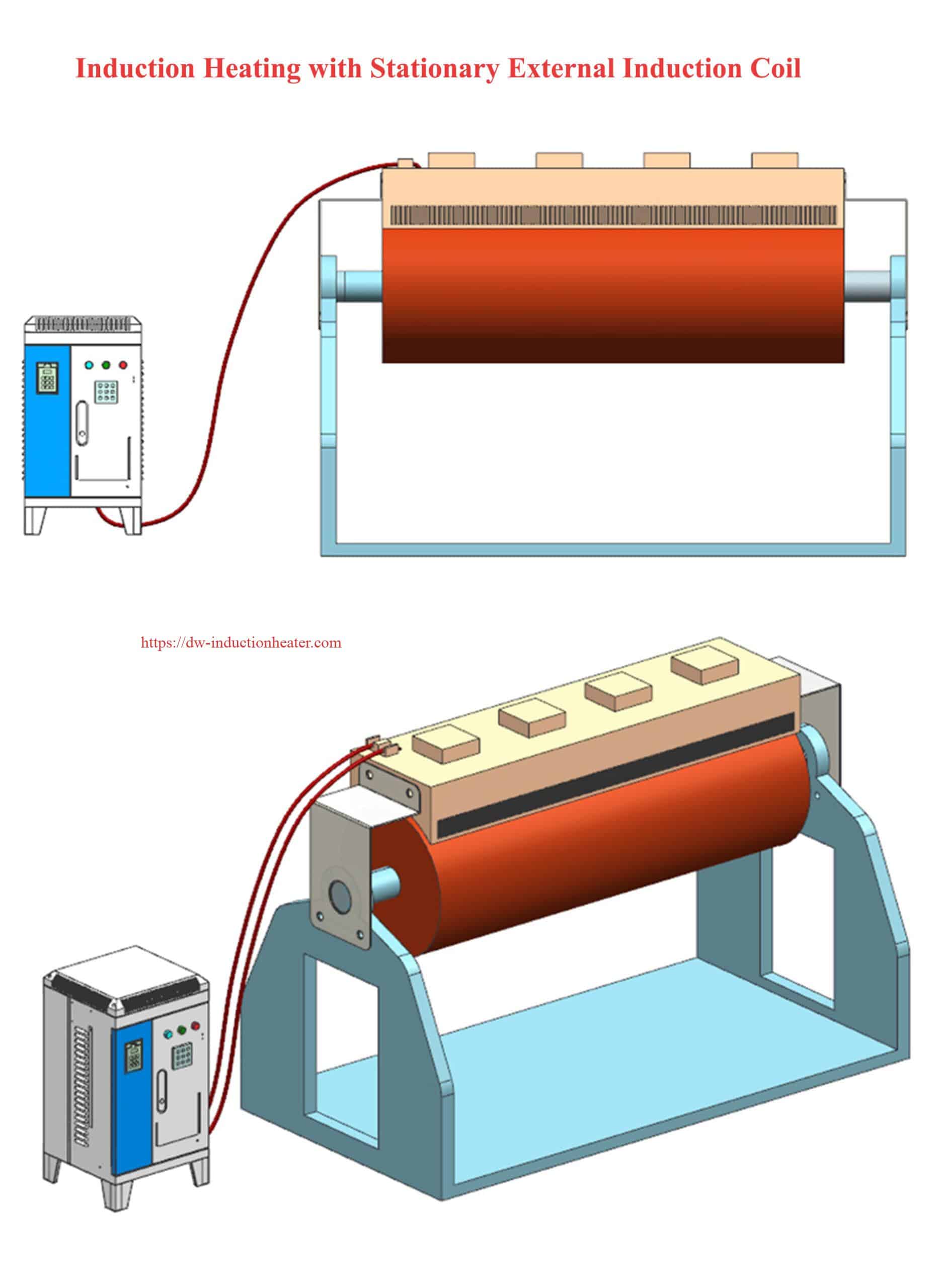
3. Induction Heating with Stationary External Induction Coil

Induction heating coils are curved external coils fixed on the support above the drying drum. When the drying drum is rotating, the induction heating coil remains stationary. The induction heating system runs to heat the drying drum in a rapid and efficient manner.

4. Induction Heating with Stationary Internal Induction Coil

Induction heating coils are produced in accordance with the size of drying drum, and placed inside the drum. When the rotary drum dryer is rotating, the induction heating coil remains stationary. The induction heating system runs to heat inner temperature of the drying drum.

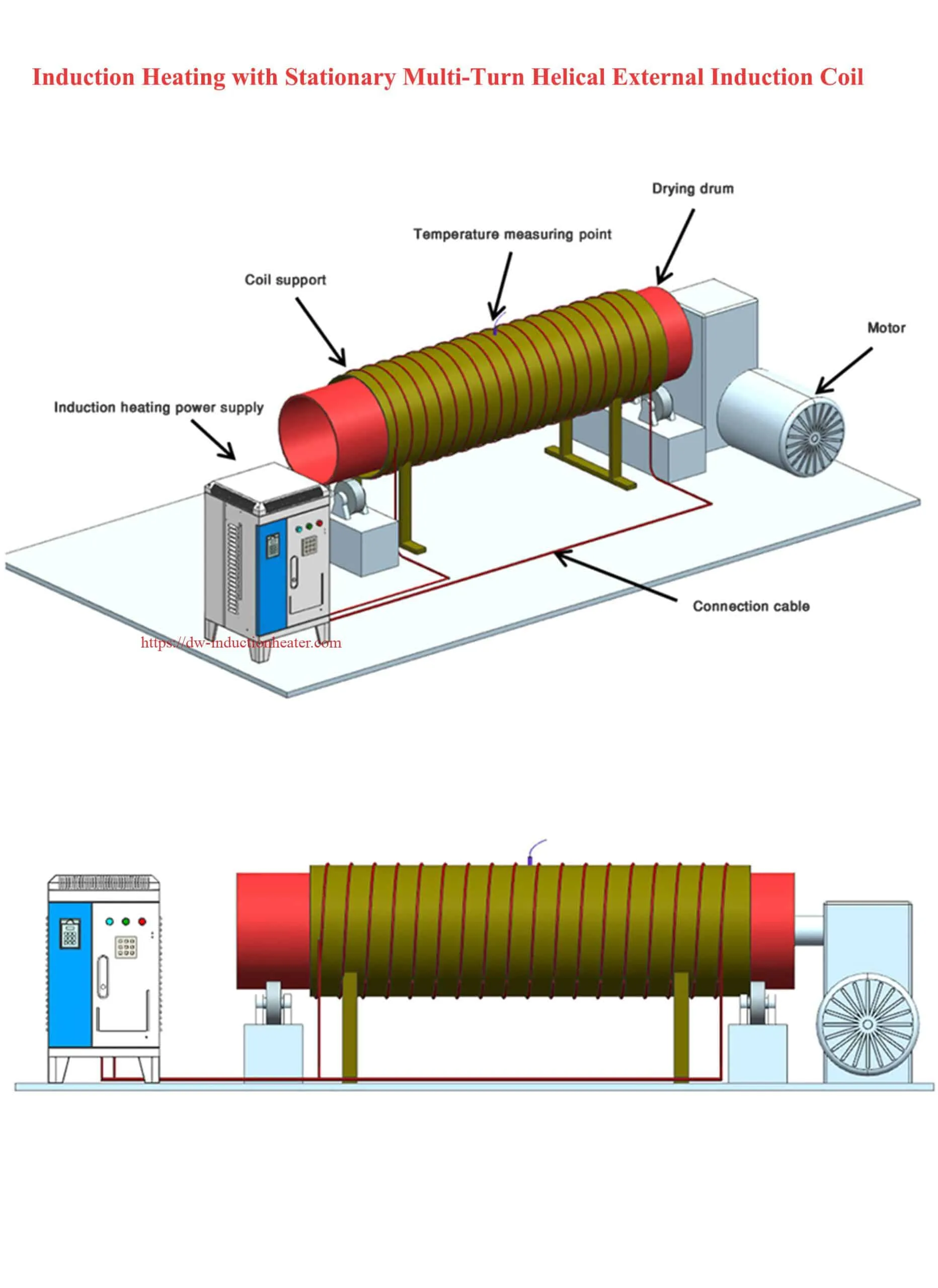
5.Induction Heating with Stationary Multi-Turn Helical External Induction Coil

Induction heating coils are wound closely around the support, and there is certain spacing between the coil support and drying drum. When the drying drum is rotating, the induction heating coil remains stationary. The induction heating system runs to heat the drying drum in a rapid and efficient manner.

Electromagnetic induction heating


Electromagnetic heating is also called electromagnetic induction heating, that is, electromagnetic heating (foreign language: Electromagnetic heating abbreviation: EH) technology. The principle of electromagnetic heating is to generate an alternating magnetic field through the components of the electronic circuit board. That is to say, cutting alternating magnetic lines of force generates alternating current (ie eddy current ) in the metal part of the bottom of the container. The eddy current makes the carriers at the bottom of the container move at high speed and irregularly, and the carriers and atoms collide and rub against each other to generate heat energy. So as to have the effect of heating the item. Because the iron container generates heat by itself, the heat conversion rate is particularly high, up to 95%. It is a direct heating method. Induction cooker , induction cooktop and electromagnetic heating rice cooker are all using electromagnetic heating technology.

Disadvantages of traditional resistance heating

Large heat loss: The heating method specially used by the existing enterprises is made of resistance wire, and the inner and outer sides of the circle generate heat. In the air, it will cause direct loss and waste of electric energy.

Ambient temperature rise: Due to a large amount of heat loss, the surrounding environment temperature rises, especially in summer, which has a great impact on the production environment. Some on-site working temperatures have exceeded 45 degrees. secondary waste.

Short service life and large maintenance: the heating temperature of the electric heating tube is as high as 300 degrees due to the use of resistance wire, the thermal lag is large, it is not easy to accurately control the temperature, and the resistance wire is easily blown due to high temperature aging. The service life of the commonly used electric heating coil is about half a year, so the maintenance workload is relatively large.

Advantages of electromagnetic induction heating products

Long service life: The electromagnetic heating coil itself basically does not generate heat, so it has a long service life, no maintenance, and no maintenance and replacement costs; the heating part adopts a ring-shaped cable structure, the cable itself does not generate heat, and can withstand high temperatures above 500 °C, with a service life of up to 10 years. No maintenance is required, and there is basically no maintenance cost in the later period.

Safe and reliable: The outer wall of the barrel is heated by high-frequency electromagnetic action , the heat is fully utilized, and there is basically no loss. The heat is accumulated inside the heating body, and the surface temperature of the electromagnetic coil is slightly higher than the room temperature, which can be touched safely without high temperature protection, which is safe and reliable.

High efficiency and energy saving: The internal heat heating method is adopted, and the molecules in the heating body directly induce magnetic energy to generate heat. The hot start is very fast, and the average preheating time is shortened by more than 60% compared with the resistance coil heating method . Compared with resistance coil heating, it saves 30-70% of electricity, which greatly improves production efficiency.

Accurate temperature control: The coil itself does not generate heat, the thermal retardation is small, the thermal inertia is low, the temperature of the inner and outer walls of the barrel is consistent, the temperature control is accurate in real time, the product quality is significantly improved, and the production efficiency is high.

Good insulation : The electromagnetic coil is made of customized special high-temperature and high-voltage special cables , with good insulation performance, no direct contact with the outer wall of the tank, no leakage, short-circuit failure, and no worries.

Improve the working environment: The injection molding machine that has been transformed by electromagnetic heating equipment adopts the internal heating method, the heat is concentrated inside the heating body, and the external heat dissipation is almost non-existent. The surface temperature of the equipment can be improved to the point where the human body can touch it, and the ambient temperature is reduced from above 100°C when the resistance coil is heated to normal temperature, which greatly improves the working environment of the production site, effectively increases the enthusiasm of production workers, and reduces the cost of ventilation and cooling in the summer plant area. In line with the concept of "people-oriented", we will create an environmentally friendly, safe and comfortable production environment for factories and front-line production personnel.

Applications of induction heating:

Industrial electromagnetic energy-saving transformation is widely used in energy-saving transformation of plastic machinery heating, wood, construction, food, medical, chemical industry, such as plastic injection molding machine , extruder , film blowing machine , wire drawing machine , plastic film, pipe, wire and other machines , food processing, textile, printing and dyeing, metallurgy, light industry, machinery, surface heat treatment and welding, boilers, water boilers and other industries, can replace resistance heating , as well as fuel open fire traditional energy.

Textile printing and dyeing: the use of electromagnetic heating for raw materials can improve energy efficiency , increase heating speed, and improve temperature control accuracy;

Light industry: sealing of cans and other plastic packaging, etc.

Boiler industry: Taking advantage of its fast heating speed, the electromagnetic boiler can abandon the overall heating method of the traditional boiler, and only heat the water outlet of the boiler, so that the water flow completes the heating in the flow, the heating speed is fast, and the space is saved.

Machinery industry: high-frequency electromagnetic heating can be applied to heat treatment with metals, and its effect is significantly improved compared with traditional treatment methods . diathermy before pressure working ;

The application of electromagnetic heating technology is not only conducive to the improvement of product quality, production efficiency, energy saving and cost reduction, but also to improve the technical level of equipment manufacturing enterprises. It is more and more widely accepted and used in traditional industries.


Drum Dryer and Rotary Drum Dryer with Induction Heater for Drying Ore


Drum Dryer and Rotary Drum Dryer with Induction Heater for drying Coal Slime-River Sand-Gypsum-Slag-Grain-Sawdust is the better heating solution with Energy saving and pollution-free.


The advantages of rotary drum dryer-drum dryer.

♦ High throughput
♦ Forgiving Operation
♦ Low cost
♦ Gentle handling
♦ Very intimate product contact for louvre dryer
♦ Robust
♦ Can handle variations in feed although the product may be inconsistent
♦ High temperature operation - can be refractory lined.
♦ Unit can have integral cooling section.

Electromagnetic induction heating drum dryer is a kind of equipment widely used for drying food, coffee, soybeans, grains, nuts, peanuts, oil, dry goods and other agricultural and sideline products or food. The heating devices of traditional drum-type frying pans are mostly coal stoves, vaporization furnaces or electric heating devices. The above three heating devices are all indirect heating methods, that is, heat is transferred to the frying pan by means of heat transfer.
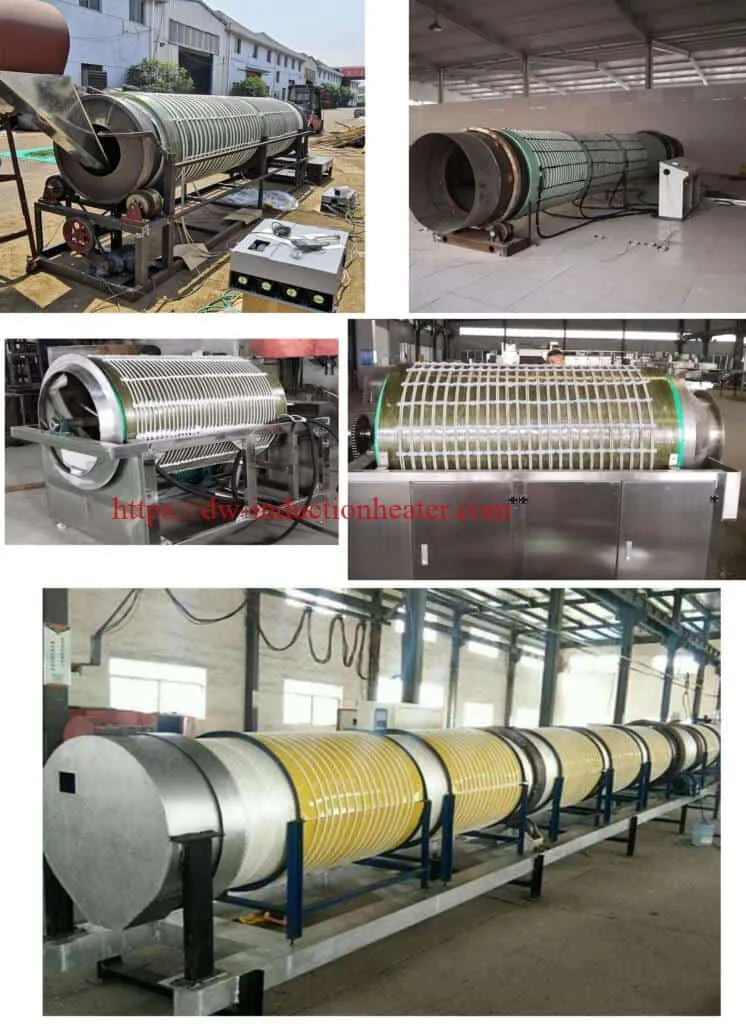


Due to the problems of low thermal efficiency and high energy consumption in the traditional drum frying pan, electromagnetic induction heating drum dryers have appeared on the market, that is, the drum dryer is heated through the principle of electromagnetic induction heating. Its working principle is: drum dryer There are multiple sets of electromagnetic coils on the outside, and the multiple sets of electromagnetic coils generate alternating magnetic fields after passing through the alternating current. Since the drum dryer performs the motion of cutting magnetic field lines in the alternating magnetic field, an alternating current is generated inside the drum dryer. That is, eddy current, which collides and rubs with atoms inside the frying pan at high speed, thereby generating Joule heat for heating. Because the heating source of the electromagnetic drum dryer is the drum dryer itself, it can effectively solve the problem of low thermal efficiency of coal furnaces, vaporization furnaces and electric heating devices.

However, due to the existence of multiple sets of electromagnetic coils, there is a strong alternating magnetic field around the electromagnetic induction heating drum dryer, and the alternating magnetic field will emit electromagnetic radiation. When multiple electromagnetic drum dryers in the industry work at the same time, the electromagnetic radiation It will damage the internal instruments of the mechanical equipment, thereby affecting the service life of the mechanical equipment. In addition, it is also unfavorable for the operators to work in the electromagnetic radiation environment for a long time. Therefore, it is necessary to reduce the electromagnetic radiation generated by the electromagnetic drum dryer.

Induction Heating Schematic for Rotary Drum Dryer


1.Induction Heating with Multi-Turn Helical External Induction Coil
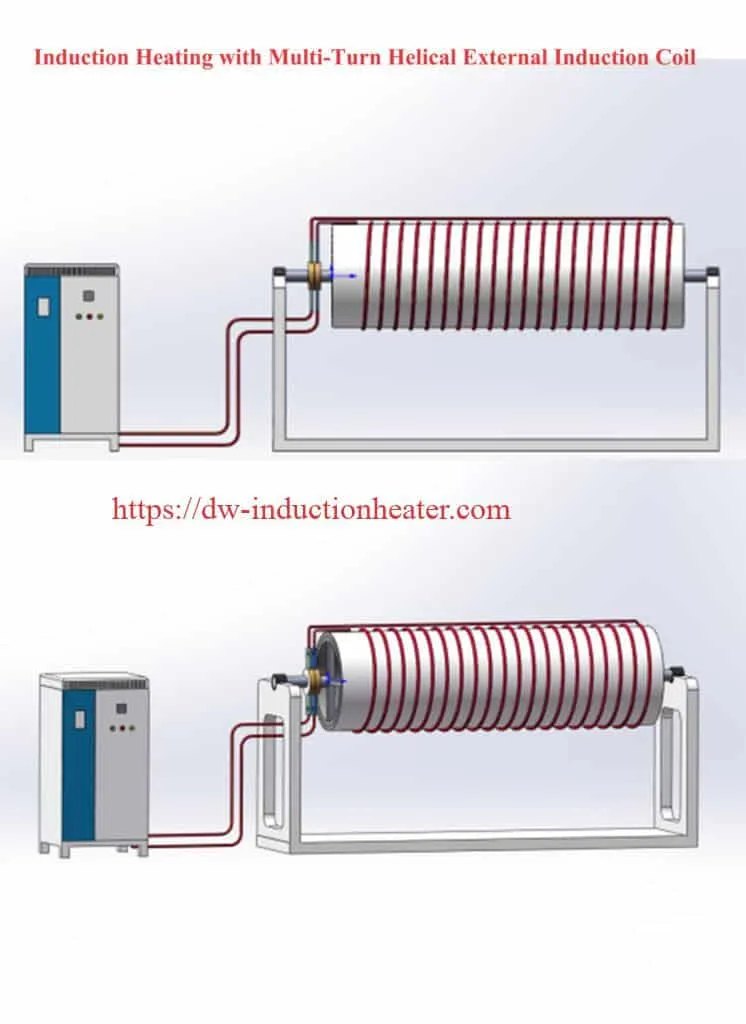

Induction heating coils are wound around the insulation cotton which is wrapped around the drying drum. The multi-turn helical wound coils and drying drum are rotated simultaneously. The induction heating system runs to heat the drying drum in a rapid and efficient manner.


2.Induction Heating with Multi-Turn Helical Internal Induction Coil
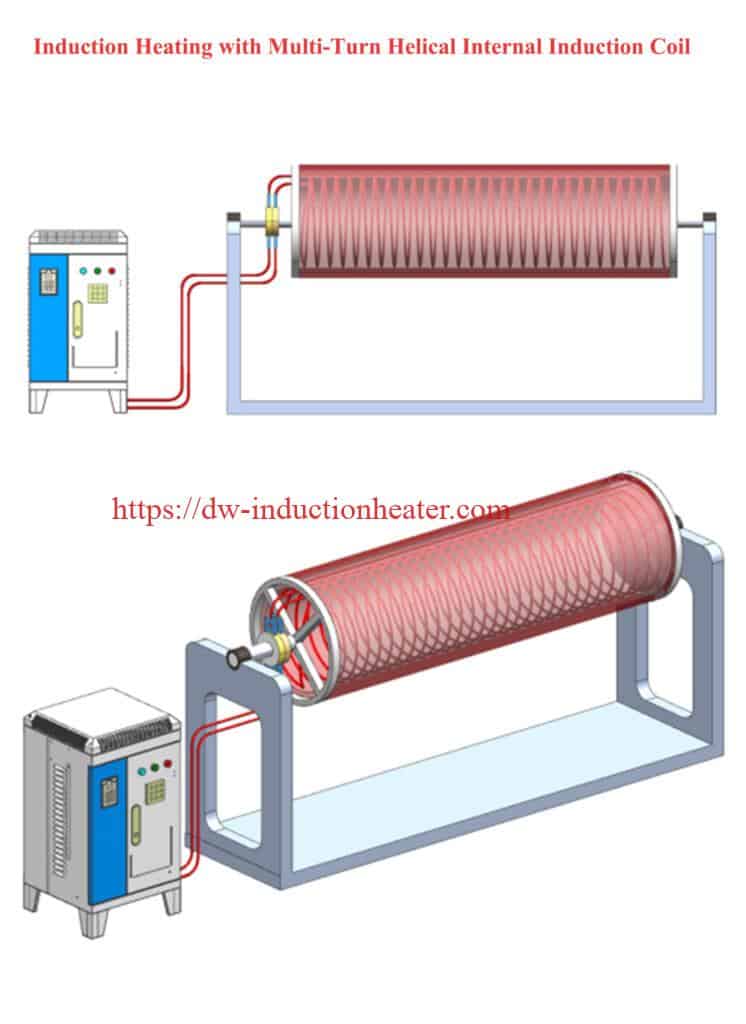
Induction heating coils are wound inside the drying drum, the multi-turn helical wound coils and drying drum are rotated simultaneously. The induction heating system runs to heat inner temperature of the drying drum.


3. Induction Heating with Stationary External Induction Coil
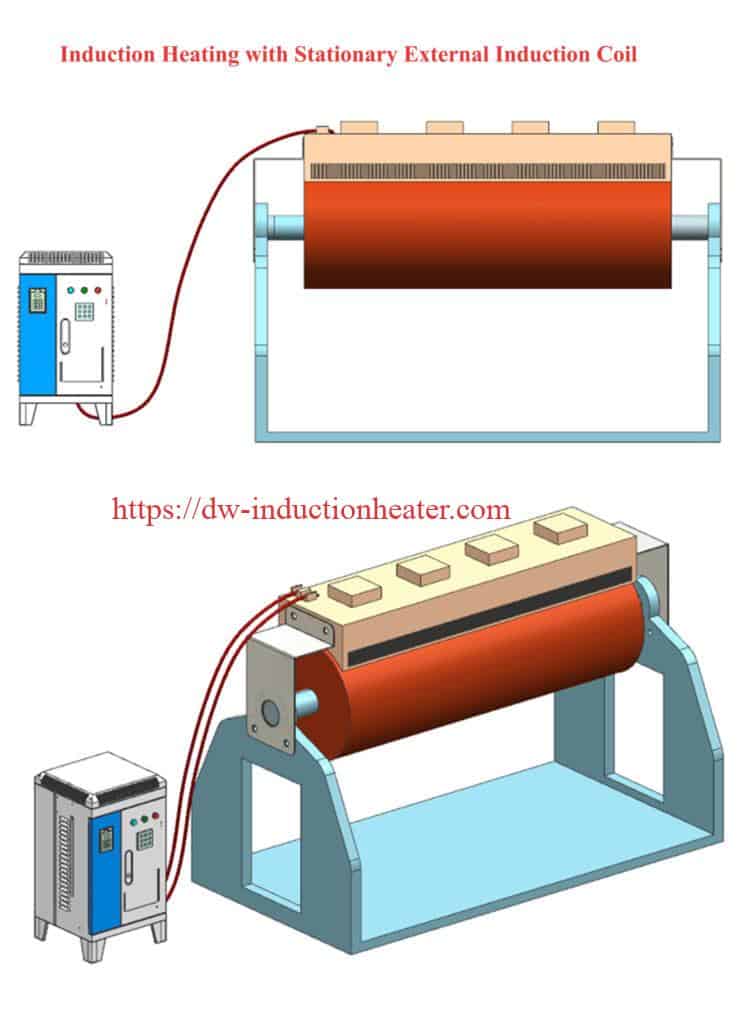
Induction heating coils are curved external coils fixed on the support above the drying drum. When the drying drum is rotating, the induction heating coil remains stationary. The induction heating system runs to heat the drying drum in a rapid and efficient manner.

4. Induction Heating with Stationary Internal Induction Coil
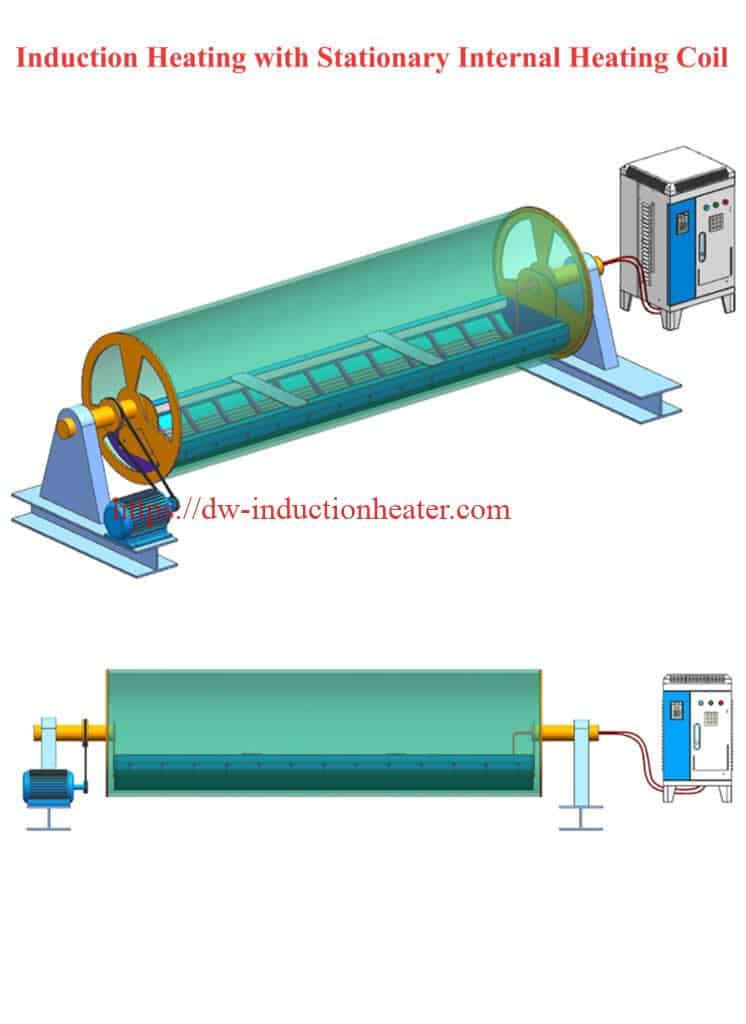
Induction heating coils are produced in accordance with the size of drying drum, and placed inside the drum. When the rotary drum dryer is rotating, the induction heating coil remains stationary. The induction heating system runs to heat inner temperature of the drying drum.

5.Induction Heating with Stationary Multi-Turn Helical External Induction Coil
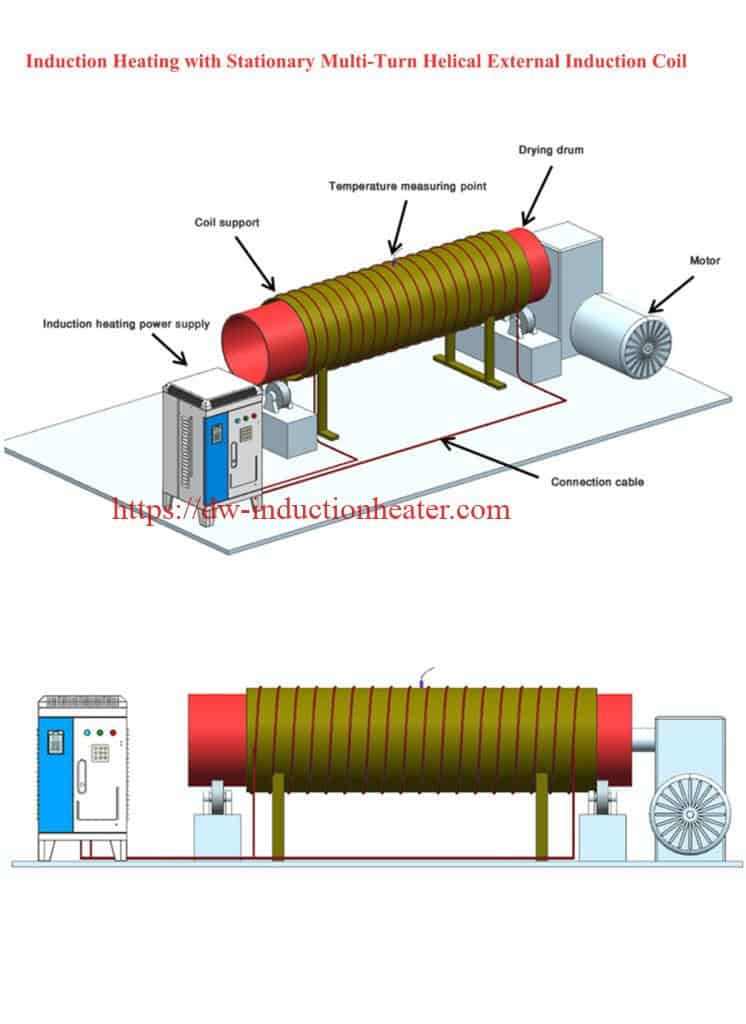
Induction heating coils are wound closely around the support, and there is certain spacing between the coil support and drying drum. When the drying drum is rotating, the induction heating coil remains stationary. The induction heating system runs to heat the drying drum in a rapid and efficient manner.

Electromagnetic induction heating


Electromagnetic heating is also called electromagnetic induction heating, that is, electromagnetic heating (foreign language: Electromagnetic heating abbreviation: EH) technology. The principle of electromagnetic heating is to generate an alternating magnetic field through the components of the electronic circuit board. That is to say, cutting alternating magnetic lines of force generates alternating current (ie eddy current ) in the metal part of the bottom of the container. The eddy current makes the carriers at the bottom of the container move at high speed and irregularly, and the carriers and atoms collide and rub against each other to generate heat energy. So as to have the effect of heating the item. Because the iron container generates heat by itself, the heat conversion rate is particularly high, up to 95%. It is a direct heating method. Induction cooker , induction cooktop and electromagnetic heating rice cooker are all using electromagnetic heating technology.
Disadvantages of traditional resistance heating

Large heat loss: The heating method specially used by the existing enterprises is made of resistance wire, and the inner and outer sides of the circle generate heat. In the air, it will cause direct loss and waste of electric energy.

Ambient temperature rise: Due to a large amount of heat loss, the surrounding environment temperature rises, especially in summer, which has a great impact on the production environment. Some on-site working temperatures have exceeded 45 degrees. secondary waste.

Short service life and large maintenance: the heating temperature of the electric heating tube is as high as 300 degrees due to the use of resistance wire, the thermal lag is large, it is not easy to accurately control the temperature, and the resistance wire is easily blown due to high temperature aging. The service life of the commonly used electric heating coil is about half a year, so the maintenance workload is relatively large.
Advantages of electromagnetic induction heating products

Long service life: The electromagnetic heating coil itself basically does not generate heat, so it has a long service life, no maintenance, and no maintenance and replacement costs; the heating part adopts a ring-shaped cable structure, the cable itself does not generate heat, and can withstand high temperatures above 500 °C, with a service life of up to 10 years. No maintenance is required, and there is basically no maintenance cost in the later period.

Safe and reliable: The outer wall of the barrel is heated by high-frequency electromagnetic action , the heat is fully utilized, and there is basically no loss. The heat is accumulated inside the heating body, and the surface temperature of the electromagnetic coil is slightly higher than the room temperature, which can be touched safely without high temperature protection, which is safe and reliable.

High efficiency and energy saving: The internal heat heating method is adopted, and the molecules in the heating body directly induce magnetic energy to generate heat. The hot start is very fast, and the average preheating time is shortened by more than 60% compared with the resistance coil heating method . Compared with resistance coil heating, it saves 30-70% of electricity, which greatly improves production efficiency.

Accurate temperature control: The coil itself does not generate heat, the thermal retardation is small, the thermal inertia is low, the temperature of the inner and outer walls of the barrel is consistent, the temperature control is accurate in real time, the product quality is significantly improved, and the production efficiency is high.

Good insulation : The electromagnetic coil is made of customized special high-temperature and high-voltage special cables , with good insulation performance, no direct contact with the outer wall of the tank, no leakage, short-circuit failure, and no worries.

Improve the working environment: The injection molding machine that has been transformed by electromagnetic heating equipment adopts the internal heating method, the heat is concentrated inside the heating body, and the external heat dissipation is almost non-existent. The surface temperature of the equipment can be improved to the point where the human body can touch it, and the ambient temperature is reduced from above 100°C when the resistance coil is heated to normal temperature, which greatly improves the working environment of the production site, effectively increases the enthusiasm of production workers, and reduces the cost of ventilation and cooling in the summer plant area. In line with the concept of "people-oriented", we will create an environmentally friendly, safe and comfortable production environment for factories and front-line production personnel.

Applications of induction heating:

Industrial electromagnetic energy-saving transformation is widely used in energy-saving transformation of plastic machinery heating, wood, construction, food, medical, chemical industry, such as plastic injection molding machine , extruder , film blowing machine , wire drawing machine , plastic film, pipe, wire and other machines , food processing, textile, printing and dyeing, metallurgy, light industry, machinery, surface heat treatment and welding, boilers, water boilers and other industries, can replace resistance heating , as well as fuel open fire traditional energy.

Textile printing and dyeing: the use of electromagnetic heating for raw materials can improve energy efficiency , increase heating speed, and improve temperature control accuracy;

Light industry: sealing of cans and other plastic packaging, etc.

Boiler industry: Taking advantage of its fast heating speed, the electromagnetic boiler can abandon the overall heating method of the traditional boiler, and only heat the water outlet of the boiler, so that the water flow completes the heating in the flow, the heating speed is fast, and the space is saved.

Machinery industry: high-frequency electromagnetic heating can be applied to heat treatment with metals, and its effect is significantly improved compared with traditional treatment methods . diathermy before pressure working ;

The application of electromagnetic heating technology is not only conducive to the improvement of product quality, production efficiency, energy saving and cost reduction, but also to improve the technical level of equipment manufacturing enterprises. It is more and more widely accepted and used in traditional industries.


https://dw-inductionheater.com/product/drum-dryer-and-rotary-drum-dryer-with-induction-heater-for-drying-ore?feed_id=185681&_unique_id=63ff2eae97d84

Magnetic Induction Heater Manufacturer

Magnetic Induction Heater  is a process equipment which is used to melt,braze,forge,bond,heat treating,harden or soften metals or other conductive materials. For many modern manufacturing processes, Magnetic induction heating equipment offers an attractive combination of speed, consistency and control.The basic principles of magnetic induction heating have been understood and applied to manufacturing since the 1920s. During World War II, the technology developed rapidly to meet urgent wartime requirements for a fast, reliable process to harden metal engine parts. More recently, the focus on lean manufacturing techniques and emphasis on improved quality control have led to a rediscovery of induction technology, along with the development of precisely controlled, all solid state induction power supplies.

Magnetic Induction Heater relies on the unique characteristics of induction heating radio frequency (RF) energy - that portion of the electromagnetic spectrum below infrared and microwave energy. Since heat is transferred to the product via electromagnetic waves, the part never comes into direct contact with any flame, the inductor itself does not get hot, and there is no product contamination. When properly set up, the process becomes very repeatable and controllable.

Main Characteristics:
   1.IGBT module and soft switiching inverting technologies are as in the production of the generator,higher reliability can be do. 
   2. Small and portable ,compared with SCR controlled machine only 1/10 working space is needed. 3.  High efficiency to save energy,high efficiency and power far can be maintained
   4.  The generator is adatable in a large frequency range from 1KHZ to 1100KHZ,installation can be done very easily according to our manual.  
     5. 100%duty cycle ,continuous working ability at maximum power.  
     6. Constant power or constant voltage control mode.
     7. Display of output power,output frequency,and output voltage.
Series
Model
Input power Max
Input current Max
Oscillate frequency
Input Voltage
Duty cycle
M
.
F
.
DW-MF-15 Induction Generator
15KW
23A
1K-20KHZ According to the application
3*380V
380V±20%
100%
DW-MF-25 Induction Generator
25KW
36A
DW-MF-35Induction Generator
35KW
51A
DW-MF-45 Induction Generator
45KW
68A
DW-MF-70 Induction Generator
70KW
105A
DW-MF-90 Induction Generator
90KW
135A
DW-MF-110 Induction Generator
110KW
170A
DW-MF-160 Induction Generator
160KW
240A
DW-MF-45 Induction Heating Rod Forging Furnace
45KW
68A
1K-20KHZ
3*380V
380V±20%
100%
DW-MF-70 Induction Heating Rod Forging Furnace
70KW
105A
DW-MF-90 Induction Heating Rod Forging Furnace
90KW
135A
DW-MF-110 Induction Heating Rod Forging Furnace
110KW
170A
DW-MF-160 Induction Heating Rod Forging Furnace
160KW
240A
DW-MF-15   Induction Melting Furnace
15KW
23A
1K-20KHZ
3*380V
380V±20%
100%
DW-MF-25   Induction Melting Furnace
25KW
36A
DW-MF-35   Induction Melting Furnace
35KW
51A
DW-MF-45   Induction Melting Furnace
45KW
68A
DW-MF-70   Induction Melting Furnace
70KW
105A
DW-MF-90   Induction Melting Furnace
90KW
135A
DW-MF-110 Induction Melting Furnace
110KW
170A
DW-MF-160 Induction Melting Furnace
160KW
240A
DW-MF-110 Induction Hardening Equipment
110KW
170A
1K-8KHZ
3*380V
380V±20%
100%
DW-MF-160Induction Hardening Equipment
160KW
240A
H
.
F
.
DW-HF-04 Series
DW-HF-4KW-A
4KVA
15A
100-250KHZ
Single phase 220V
80%
DW-HF-15 Series
DW-HF-15KW-A
DW-HF-15KW-B
15KVA
32A
30-100KHZ
Single phase 220V
80%
DW-HF-25 Series
DW-HF-25KW-A
DW-HF-25KW-B
25KVA
23A
20-80KHZ
3*380V
380V±20%
100%
DW-HF-35 Series
DW-HF-35KW-B
35KVA
51A
DW-HF-45 Series
DW-HF-45KW-B
45KVA
68A
DW-HF-60 Series
DW-HF-60KW-B
60KVA
105A
DW-HF-80 Series
DW-HF-80KW-B
80KVA
130A
DW-HF-90 Series
DW-HF-90KW-B
90KVA
160A
DW-HF-120 Series
DW-HF-120KW-B
120KVA
200A
U
.
H
.
F
.
DW-UHF-3.2KW
3.2KW
13A
1.1-2.0MHZ
Single phase220V ±10%
100%
DW-UHF-4.5KW
4.5KW
20A
DW-UHF-045T
4.5KW
20A
DW-UHF-045L
4.5KW
20A
DW-UHF-6KW-I
6.0KW
28A
DW-UHF-6KW-II
6.0KW
28A
DW-UHF-6KW-III
6.0KW
28A
DW-UHF-10KW
10KW
15A
100-500KHZ
3*380V
380V±10%
100%
DW-UHF-20KW
20KW
30A
50-250KHZ
DW-UHF-30KW
30KW
45A
50-200KHZ
DW-UHF-40KW
40KW
60A
50-200KHZ
DW-UHF-6, 0KW
60KW
90A
50-150KHZ
Induction_heating_catalogue.pdf

关注者

我的简介

我的照片
HLQ induction heating machine manufacturer provides the service of induction brazing,melting,hot forming,hardening surface,annealing,shrink fitting,PWHT,etc.