显示标签为“HighFrequencyBrazingbrass”的博文。显示所有博文

2024年1月4日星期四

Induction Brazing Copper Lap Joints: A Reliable and Efficient Joining Method

Induction Brazing Copper Lap Joints: A Reliable and Efficient Joining Method

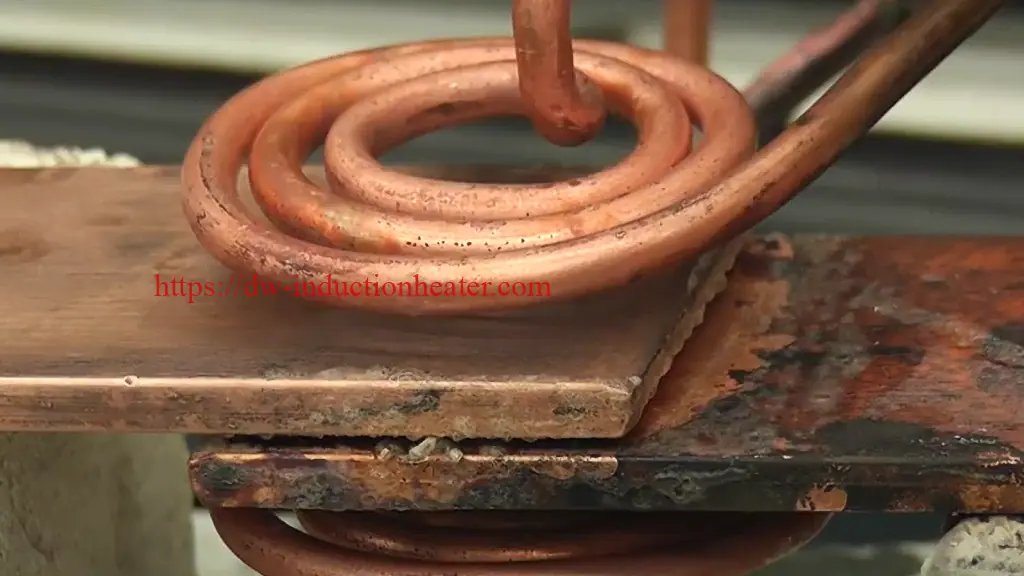
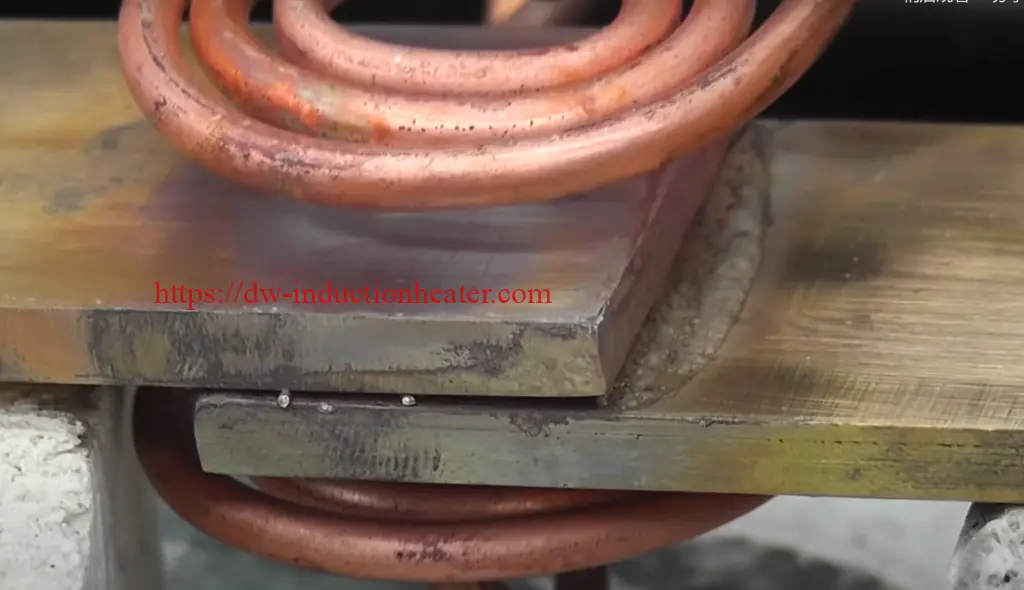
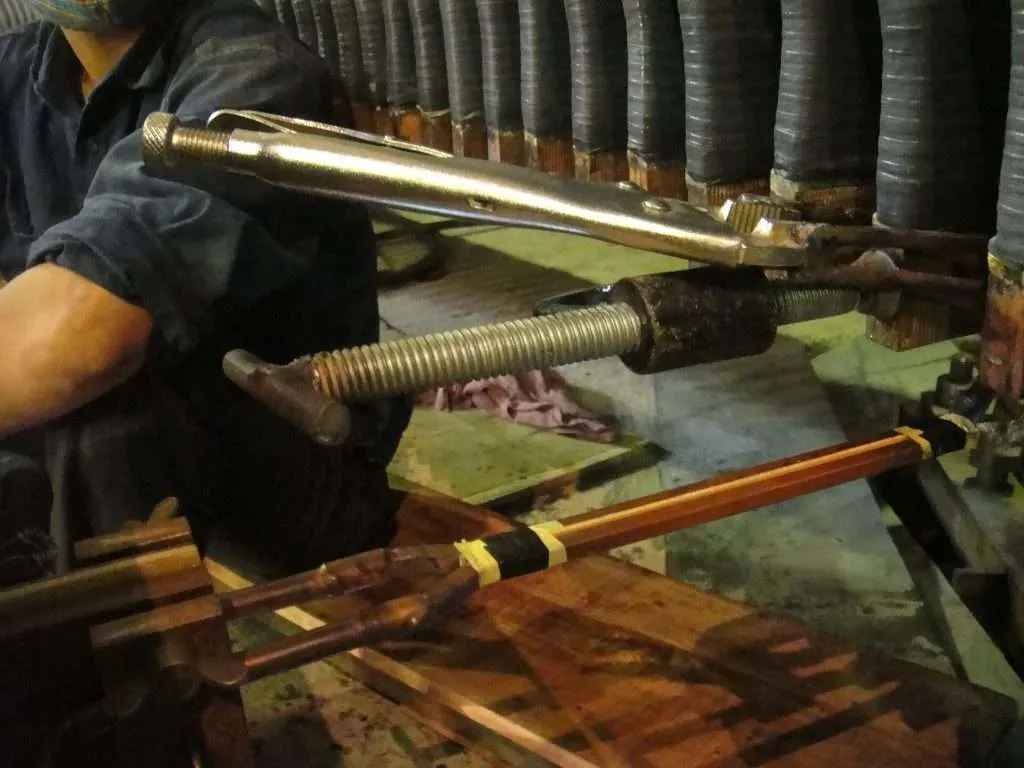
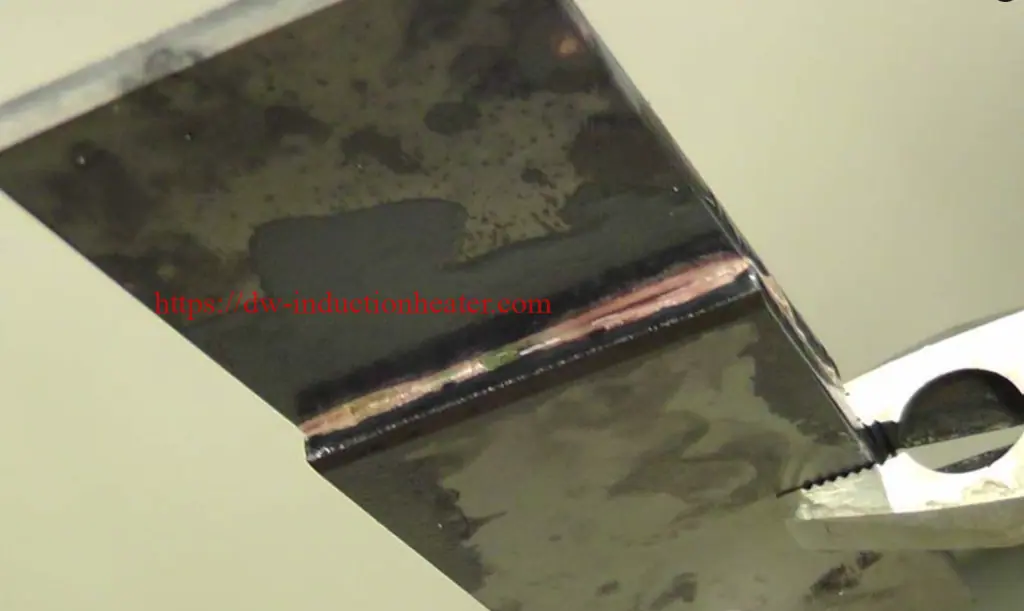
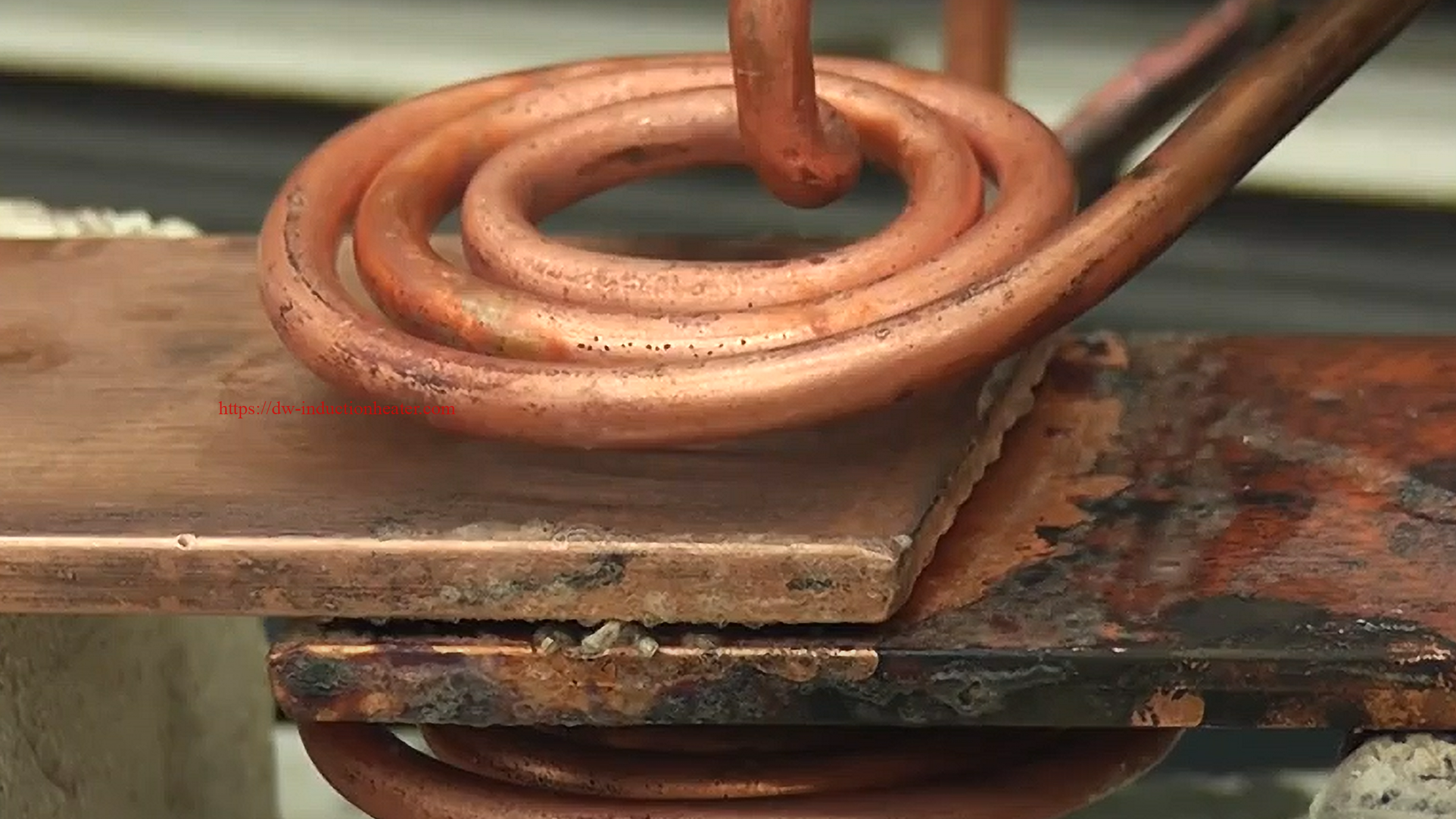
Induction brazing copper lap joints is a highly effective method for joining copper components with precision and strength. The process involves using an induction heating system to generate heat directly within the copper material, allowing for a localized and controlled heating of the joint area. The brazing filler metal, typically a copper-based alloy, is then introduced to the heated joint, melting and flowing into the gap to create a strong, durable bond. Induction brazing offers several benefits including rapid heating, minimal distortion, and the ability to join dissimilar metals. If you are looking for a reliable and efficient method to braze copper lap joints, induction brazing is the way to go. 1. The Advantages of Induction Brazing Copper Lap Joints 1.1. Precise Heat Control: Induction brazing allows for precise and localized heating, minimizing the risk of thermal damage to the surrounding areas. This is especially important when working with sensitive copper components or assemblies with complex geometries. 1.2. Increased Efficiency: Induction heating is fast and efficient, as it directly heats the workpiece without the need for preheating the entire assembly. This results in reduced energy consumption, shorter cycle times, and increased productivity. 1.3. Stronger Joints: Induction brazing produces high-quality joints with excellent bond strength. The controlled heating process ensures uniform heating and proper filler metal flow, resulting in robust and reliable connections. 1.4. Clean and Environmentally Friendly: Induction brazing eliminates the need for open flames or torches, minimizing the risk of contamination and creating a safer working environment. Additionally, it reduces the generation of harmful fumes and pollutants, making it an eco-friendly choice. 2. The Induction Brazing Process for Copper Lap Joints 2.1. Preparation: Thoroughly clean the copper surfaces to remove any contaminants, such as dirt, grease, or oxide layers. This ensures optimal bonding and prevents defects in the joint. 2.2. Filler Metal Selection: Choose a brazing filler metal that is compatible with copper and suitable for your specific application. Silver-based alloys, such as silver-copper-phosphorus, or copper-phosphorus alloys are commonly used for copper brazing. 2.3. Joint Assembly: Position the copper parts in a lap joint configuration, ensuring a close fit. Fixtures or clamps can be used to secure the parts during the brazing process. 2.4. Flux Application: Apply a suitable flux to the joint area. The flux removes oxide layers, promotes wetting of the filler metal, and prevents oxidation during heating. Select a flux specifically formulated for brazing copper. 2.5. Induction Heating: Position the copper assembly within the induction coil, ensuring the joint area is within the heating zone. Adjust the induction heating system's power, frequency, and parameters based on manufacturer guidelines and the size/thickness of the copper parts. 2.6. Filler Metal Introduction: Once the joint area reaches the brazing temperature, introduce the filler metal. It can be in the form of a pre-placed filler wire or applied directly as a brazing paste or powder. The heat from the induction process melts the filler metal, allowing it to flow into the joint. 2.7. Cooling and Cleaning: After the filler metal has completely filled the joint, switch off the power and allow the joint to cool naturally. Once cooled, remove any residual flux or oxide from the brazed joint using appropriate cleaning methods. 3. Applications of Induction Brazing Copper Lap Joints 3.1. Electrical and Electronics Industry: Induction brazing is widely used in manufacturing electrical connectors, motor windings, transformers, and various electronic components that require reliable electrical conductivity and mechanical strength. 3.2. HVAC and Refrigeration: Copper tube connections in air conditioning, refrigeration, and heat exchanger systems often employ induction brazing for its efficiency, accuracy, and consistent quality. 3.3. Automotive and Aerospace: Induction brazing is utilized in the production of automotive heat exchangers, fuel systems, and aerospace components, ensuring reliable performance under demanding conditions. 3.4. Plumbing and Pipe Fittings: Copper plumbing fittings, valves, and pipe joints can be efficiently and effectively brazed using induction, providing leak-free connections and extended service life. Conclusion Induction brazing copper lap joints is a highly efficient and effective method of joining two copper pieces together. The process involves using an induction heating system to heat the joint area, melting a filler metal, and creating a strong bond between the copper pieces. This technique offers several advantages, including precise and localized heating, minimal distortion, and faster heating cycles. Induction brazing also ensures a clean and contamination-free joint, resulting in superior quality and strength. Whether you require brazing for plumbing, electronics, or any other copper applications, our skilled technicians are ready to provide reliable and durable solutions. Trust our expertise in induction brazing copper lap joints for a seamless and robust joining process that meets your specific needs. https://dw-inductionheater.com/induction-brazing-copper-lap-joints-a-reliable-and-efficient-joining-method.html?feed_id=231466&_unique_id=65967e5a9fb68
2024年1月3日星期三

Induction Brazing Copper Lap Joints: A Reliable and Efficient Joining Method

Induction Brazing Copper Lap Joints: A Reliable and Efficient Joining Method

Induction brazing copper lap joints is a highly effective method for joining copper components with precision and strength. The process involves using an induction heating system to generate heat directly within the copper material, allowing for a localized and controlled heating of the joint area. The brazing filler metal, typically a copper-based alloy, is then introduced to the heated joint, melting and flowing into the gap to create a strong, durable bond. Induction brazing offers several benefits including rapid heating, minimal distortion, and the ability to join dissimilar metals. If you are looking for a reliable and efficient method to braze copper lap joints, induction brazing is the way to go. 1. The Advantages of Induction Brazing Copper Lap Joints 1.1. Precise Heat Control: Induction brazing allows for precise and localized heating, minimizing the risk of thermal damage to the surrounding areas. This is especially important when working with sensitive copper components or assemblies with complex geometries. 1.2. Increased Efficiency: Induction heating is fast and efficient, as it directly heats the workpiece without the need for preheating the entire assembly. This results in reduced energy consumption, shorter cycle times, and increased productivity. 1.3. Stronger Joints: Induction brazing produces high-quality joints with excellent bond strength. The controlled heating process ensures uniform heating and proper filler metal flow, resulting in robust and reliable connections. 1.4. Clean and Environmentally Friendly: Induction brazing eliminates the need for open flames or torches, minimizing the risk of contamination and creating a safer working environment. Additionally, it reduces the generation of harmful fumes and pollutants, making it an eco-friendly choice. 2. The Induction Brazing Process for Copper Lap Joints 2.1. Preparation: Thoroughly clean the copper surfaces to remove any contaminants, such as dirt, grease, or oxide layers. This ensures optimal bonding and prevents defects in the joint. 2.2. Filler Metal Selection: Choose a brazing filler metal that is compatible with copper and suitable for your specific application. Silver-based alloys, such as silver-copper-phosphorus, or copper-phosphorus alloys are commonly used for copper brazing. 2.3. Joint Assembly: Position the copper parts in a lap joint configuration, ensuring a close fit. Fixtures or clamps can be used to secure the parts during the brazing process. 2.4. Flux Application: Apply a suitable flux to the joint area. The flux removes oxide layers, promotes wetting of the filler metal, and prevents oxidation during heating. Select a flux specifically formulated for brazing copper. 2.5. Induction Heating: Position the copper assembly within the induction coil, ensuring the joint area is within the heating zone. Adjust the induction heating system's power, frequency, and parameters based on manufacturer guidelines and the size/thickness of the copper parts. 2.6. Filler Metal Introduction: Once the joint area reaches the brazing temperature, introduce the filler metal. It can be in the form of a pre-placed filler wire or applied directly as a brazing paste or powder. The heat from the induction process melts the filler metal, allowing it to flow into the joint. 2.7. Cooling and Cleaning: After the filler metal has completely filled the joint, switch off the power and allow the joint to cool naturally. Once cooled, remove any residual flux or oxide from the brazed joint using appropriate cleaning methods. 3. Applications of Induction Brazing Copper Lap Joints 3.1. Electrical and Electronics Industry: Induction brazing is widely used in manufacturing electrical connectors, motor windings, transformers, and various electronic components that require reliable electrical conductivity and mechanical strength. 3.2. HVAC and Refrigeration: Copper tube connections in air conditioning, refrigeration, and heat exchanger systems often employ induction brazing for its efficiency, accuracy, and consistent quality. 3.3. Automotive and Aerospace: Induction brazing is utilized in the production of automotive heat exchangers, fuel systems, and aerospace components, ensuring reliable performance under demanding conditions. 3.4. Plumbing and Pipe Fittings: Copper plumbing fittings, valves, and pipe joints can be efficiently and effectively brazed using induction, providing leak-free connections and extended service life. Conclusion Induction brazing copper lap joints is a highly efficient and effective method of joining two copper pieces together. The process involves using an induction heating system to heat the joint area, melting a filler metal, and creating a strong bond between the copper pieces. This technique offers several advantages, including precise and localized heating, minimal distortion, and faster heating cycles. Induction brazing also ensures a clean and contamination-free joint, resulting in superior quality and strength. Whether you require brazing for plumbing, electronics, or any other copper applications, our skilled technicians are ready to provide reliable and durable solutions. Trust our expertise in induction brazing copper lap joints for a seamless and robust joining process that meets your specific needs. https://dw-inductionheater.com/induction-brazing-copper-lap-joints-a-reliable-and-efficient-joining-method.html?feed_id=231466&_unique_id=65965a2acdca1

2023年11月11日星期六

Brazing Copper Tube to Brass Fitting With Induction

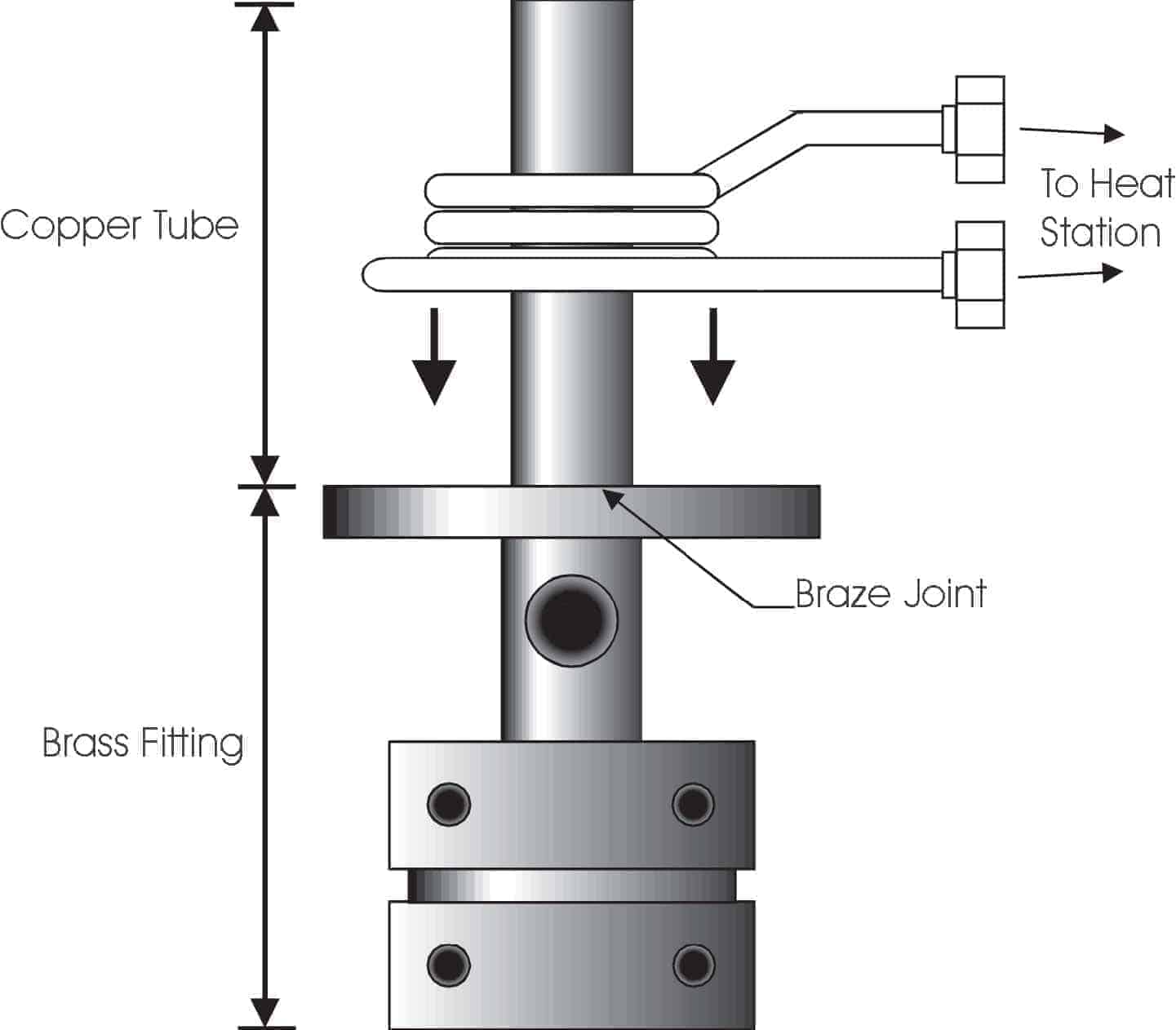
Brazing Copper Tube to Brass Fitting With Induction  Objective: To use induction heating to braze a copper tube to a brass fitting using a preform braze wire. Processing is to occur under an atmosphere of Nitrogen and 4% Hydrogen gas. The braze preforms melt at 1190°F, but the parts need to be kept below 1300°F. The parts need to be processed at a rate of 175 to 200 per hour which translates into 18 seconds of heating time per part. Material Copper Tubing Measuring 0.5" OD and 2" Long, Brass fitting, Braze Preform, No Flux. Temperature Above 1190°F but not to exceed 1300°F Frequency :300 kHz Equipment: DW-UHF-10KW output solid state induction heating power supply with three (3) busses, eight (8) capacitors totaling 0.66 μF, and a unique four turn helical coil. Process The DW-UHF-10KW output solid state power supply along with a unique four turn helical coil were used to achieve the following results. Results • The requested atmosphere was provided under a bell jar by supplying 95% Nitrogen/5%Hydrogen at a rate of 25-30 cfh. • A heating cycle of only 10 seconds was necessary to attain sufficient braze flow which surpasses the required limit of 18 seconds. https://dw-inductionheater.com/brazing-copper-tube-to-brass-fitting-with-induction.html?feed_id=230586&_unique_id=65505e7426754

2023年11月10日星期五

Brazing Brass Fittings With Induction

Brazing Brass Fittings With Induction Objective :To heat brass tubing assemblies to 750°C for a brazing application. The tubing diameter varies from 3 to 8 inches (76.2 to 203.2 mm) Material: Brass tubing Brass flange Braze rings Braze flux Temperature :1382°F (750°C) Frequency 200 kHz Equipment DW-UHF-20KW, 150-500 kHz induction heating power supply, equipped with a remote heat station containing eight 1.0 μF capacitors (total 2.0 μF). A multi-turn helical coil induction heating coil designed and developed specifically for this application. Process The parts are disassembled. All connections are cleaned and braze flux is applied to the entire surface of the assembly. Before assembling the parts an induction coil is slipped over the tube. The brass coupling is placed over the brass tubes. The flux on the parts is allowed to dry before heating. The induction heating power is applied until the braze flows well at the joint. The assembly heats well to 1382°F (750°C) and melts the braze alloy all around the tube. Heating time is several minutes depending on flange diameter. Results/Benefits The coil allows heating at the best possible efficiency which reduces the cycle time and the conducted heat along the brass tubes. https://dw-inductionheater.com/brazing-brass-fittings-with-induction.html?feed_id=230496&_unique_id=654e39f56072c

2023年11月2日星期四

Brazing Brass To Copper With Induction

Brazing Brass To Copper With Induction Objective: To braze brass end-connectors to copper tubes used in aircraft assembly air lines Material brass end connectors, copper tubes of different diameters Temperature 1400 ºF 750°C Frequency 350 kHz Equipment DW-UHF-4.5KW induction heating system, including a three turn helical induction coil using two 0.33μF capacitors (total 0.66μF) Process For smaller diameter parts, flux is applied to the entire part and the copper tube to brass joint is assembled using brazing preforms (allowing for the same amount of braze in each joint). The assembly is placed in the coil and heated for 20-30 seconds reaching a temperature of 1400°F. For larger copper tube assemblies, the same process is used, but the braze alloy is stick-fed to the joint to prevent the alloy from flowing out of the joint. A foot switch control is recommended to enable better control of the process. Results/Benefits Economy: Power is consumed during the heating only Consistency: the results of braze joints are repeatable and uniform https://dw-inductionheater.com/brazing-brass-to-copper-with-induction.html?feed_id=230076&_unique_id=65443a9c69e74

2023年10月21日星期六

Induction Brazing Brass Faucet

Induction Brazing Brass Faucet Objective Brazing two joints on a brass bathroom faucet assembly Material Brass bathroom fittings 1” OD, brazing rings, flux Temperature 1148 ºF (620 ºC) Frequency 90 kHz Equipment • DW-UHF-30 kW induction heating system, equipped with a remote workhead containing eight 1.0 μF capacitors for a total of 8.0 μF • An induction heating coil designed and developed specifically for this application. Process A two turn C shaped coil is used to braze the faucet assembly. The braze rings are placed at the joint, the parts assembled and fluxed. The first braze joint is heated for 30 seconds and the braze ring flows. The assembly is rotated & the second joint is heated for 30 seconds to flow the braze ring. The two brazes are completed in 60 seconds. Results/Benefits Induction heating provides: • Faster, repeatable and consistent results • Localized heat produces neat and clean joints • Hands-free heating that involves no operator skill for manufacturing • Even distribution of heating https://dw-inductionheater.com/induction-brazing-brass.html?feed_id=229416&_unique_id=653484c35006d

2023年8月31日星期四

Induction Brazing Brass Faucet

Induction Brazing Brass Faucet Objective Brazing two joints on a brass bathroom faucet assembly Material Brass bathroom fittings 1” OD, brazing rings, flux Temperature 1148 ºF (620 ºC) Frequency 90 kHz Equipment • DW-UHF-30 kW induction heating system, equipped with a remote workhead containing eight 1.0 μF capacitors for a total of 8.0 μF • An induction heating coil designed and developed specifically for this application. Process A two turn C shaped coil is used to braze the faucet assembly. The braze rings are placed at the joint, the parts assembled and fluxed. The first braze joint is heated for 30 seconds and the braze ring flows. The assembly is rotated & the second joint is heated for 30 seconds to flow the braze ring. The two brazes are completed in 60 seconds. Results/Benefits Induction heating provides: • Faster, repeatable and consistent results • Localized heat produces neat and clean joints • Hands-free heating that involves no operator skill for manufacturing • Even distribution of heating

2023年8月1日星期二

Brazing Brass To Copper With Induction

Brazing Brass To Copper With Induction Objective: To braze brass end-connectors to copper tubes used in aircraft assembly air lines Material brass end connectors, copper tubes of different diameters Temperature 1400 ºF 750°C Frequency 350 kHz Equipment DW-UHF-4.5KW induction heating system, including a three turn helical induction coil using two 0.33μF capacitors (total 0.66μF) Process For smaller diameter parts, flux is applied to the entire part and the copper tube to brass joint is assembled using brazing preforms (allowing for the same amount of braze in each joint). The assembly is placed in the coil and heated for 20-30 seconds reaching a temperature of 1400°F. For larger copper tube assemblies, the same process is used, but the braze alloy is stick-fed to the joint to prevent the alloy from flowing out of the joint. A foot switch control is recommended to enable better control of the process. Results/Benefits Economy: Power is consumed during the heating only Consistency: the results of braze joints are repeatable and uniform

Brazing Copper Tube to Brass Fitting With Induction

Brazing Copper Tube to Brass Fitting With Induction  Objective: To use induction heating to braze a copper tube to a brass fitting using a preform braze wire. Processing is to occur under an atmosphere of Nitrogen and 4% Hydrogen gas. The braze preforms melt at 1190°F, but the parts need to be kept below 1300°F. The parts need to be processed at a rate of 175 to 200 per hour which translates into 18 seconds of heating time per part. Material Copper Tubing Measuring 0.5" OD and 2" Long, Brass fitting, Braze Preform, No Flux. Temperature Above 1190°F but not to exceed 1300°F Frequency :300 kHz Equipment: DW-UHF-10KW output solid state induction heating power supply with three (3) busses, eight (8) capacitors totaling 0.66 μF, and a unique four turn helical coil. Process The DW-UHF-10KW output solid state power supply along with a unique four turn helical coil were used to achieve the following results. Results • The requested atmosphere was provided under a bell jar by supplying 95% Nitrogen/5%Hydrogen at a rate of 25-30 cfh. • A heating cycle of only 10 seconds was necessary to attain sufficient braze flow which surpasses the required limit of 18 seconds.

2023年7月29日星期六

Induction Brazing Brass Studs to Copper Pipes

Induction Brazing Brass Studs to Copper Pipes
Objective:

Induction brazing brass studs to copper pipes

The Client:

A manufacturer of coils for industrial heating applications.

Equipment:

DW-UHF-40KW Induction Brazing Systems – two modules.

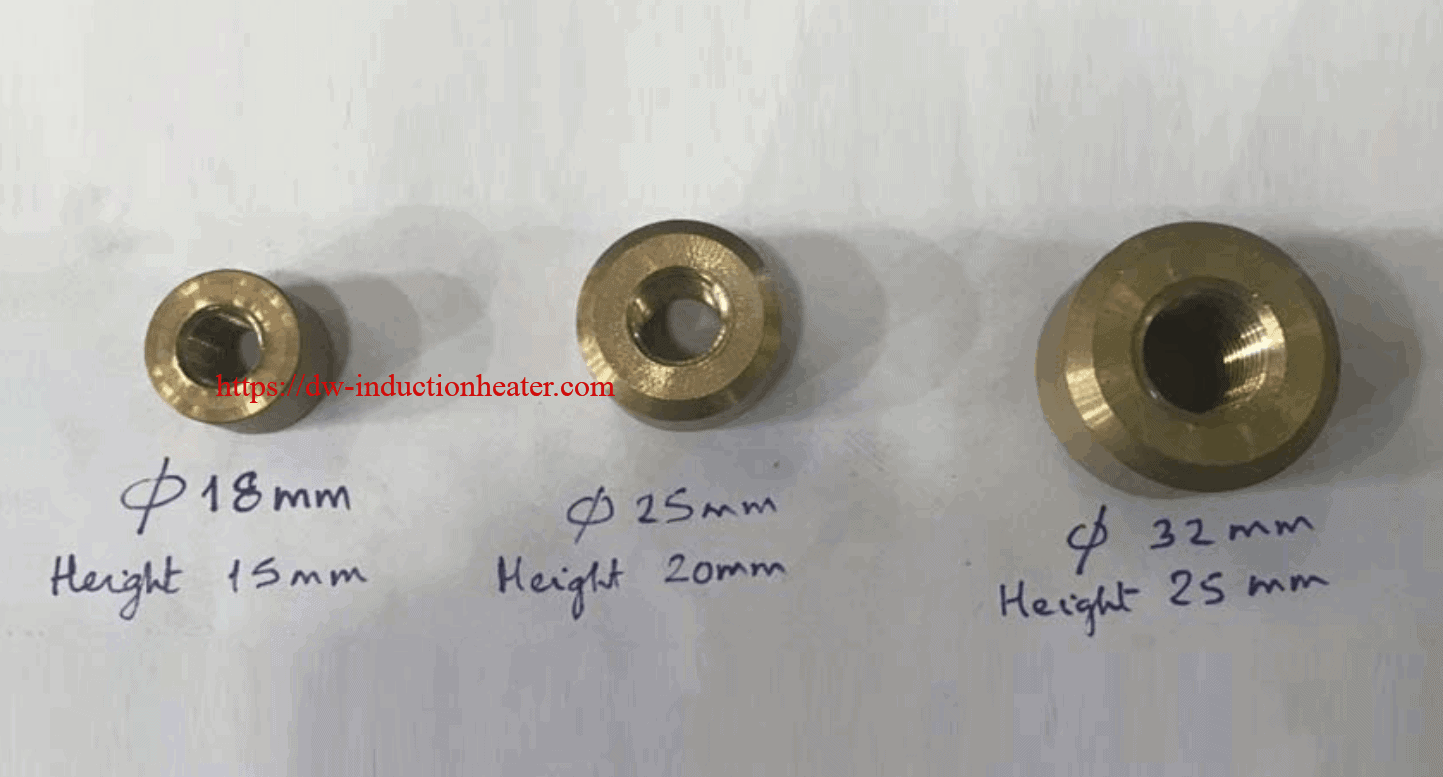
Materials: Brass stud ( size:  25mm diameter, 20 mm height ) Power: 30 kW
The Process:  The main challenge during this induction brazing process is to ensure that the design of the coil is one that eases the technician to position it in the most convenient way. The induction coil should allow for the second stud to be pre-heated without melting the first one. First, the electrolytic copper section is wound on a steel former by a gas torch while an equal spacing between the turns is maintained. Then, the copper turn is heated close to the required temperature and while the power is ON, the technician should make sure to manually position the brass stud with the brazing ring at the designated centre. During the process of brazing, the induction coil is moving at a speed of 58 mm per minute – 33 kW. If the power is increased, the speed changes accordingly. Results and Conclusions:
  • A fast, clean and safe induction brazing process
  • Guaranteed repeatability
  • Precise control of time and temperature
https://dw-inductionheater.com/induction-brazing-brass-studs-to-copper-pipes.html?feed_id=221086&_unique_id=64c5bde9f35f8

2023年7月15日星期六

Brazing Brass Fittings With Induction

Brazing Brass Fittings With Induction Objective :To heat brass tubing assemblies to 750°C for a brazing application. The tubing diameter varies from 3 to 8 inches (76.2 to 203.2 mm) Material: Brass tubing Brass flange Braze rings Braze flux Temperature :1382°F (750°C) Frequency 200 kHz Equipment DW-UHF-20KW, 150-500 kHz induction heating power supply, equipped with a remote heat station containing eight 1.0 μF capacitors (total 2.0 μF). A multi-turn helical coil induction heating coil designed and developed specifically for this application. Process The parts are disassembled. All connections are cleaned and braze flux is applied to the entire surface of the assembly. Before assembling the parts an induction coil is slipped over the tube. The brass coupling is placed over the brass tubes. The flux on the parts is allowed to dry before heating. The induction heating power is applied until the braze flows well at the joint. The assembly heats well to 1382°F (750°C) and melts the braze alloy all around the tube. Heating time is several minutes depending on flange diameter. Results/Benefits The coil allows heating at the best possible efficiency which reduces the cycle time and the conducted heat along the brass tubes.

2023年6月30日星期五

Induction Brazing Copper Lap Joints: A Reliable and Efficient Joining Method

Induction Brazing Copper Lap Joints: A Reliable and Efficient Joining Method

Induction brazing copper lap joints is a highly effective method for joining copper components with precision and strength. The process involves using an induction heating system to generate heat directly within the copper material, allowing for a localized and controlled heating of the joint area. The brazing filler metal, typically a copper-based alloy, is then introduced to the heated joint, melting and flowing into the gap to create a strong, durable bond. Induction brazing offers several benefits including rapid heating, minimal distortion, and the ability to join dissimilar metals. If you are looking for a reliable and efficient method to braze copper lap joints, induction brazing is the way to go. 1. The Advantages of Induction Brazing Copper Lap Joints 1.1. Precise Heat Control: Induction brazing allows for precise and localized heating, minimizing the risk of thermal damage to the surrounding areas. This is especially important when working with sensitive copper components or assemblies with complex geometries. 1.2. Increased Efficiency: Induction heating is fast and efficient, as it directly heats the workpiece without the need for preheating the entire assembly. This results in reduced energy consumption, shorter cycle times, and increased productivity. 1.3. Stronger Joints: Induction brazing produces high-quality joints with excellent bond strength. The controlled heating process ensures uniform heating and proper filler metal flow, resulting in robust and reliable connections. 1.4. Clean and Environmentally Friendly: Induction brazing eliminates the need for open flames or torches, minimizing the risk of contamination and creating a safer working environment. Additionally, it reduces the generation of harmful fumes and pollutants, making it an eco-friendly choice. 2. The Induction Brazing Process for Copper Lap Joints 2.1. Preparation: Thoroughly clean the copper surfaces to remove any contaminants, such as dirt, grease, or oxide layers. This ensures optimal bonding and prevents defects in the joint. 2.2. Filler Metal Selection: Choose a brazing filler metal that is compatible with copper and suitable for your specific application. Silver-based alloys, such as silver-copper-phosphorus, or copper-phosphorus alloys are commonly used for copper brazing. 2.3. Joint Assembly: Position the copper parts in a lap joint configuration, ensuring a close fit. Fixtures or clamps can be used to secure the parts during the brazing process. 2.4. Flux Application: Apply a suitable flux to the joint area. The flux removes oxide layers, promotes wetting of the filler metal, and prevents oxidation during heating. Select a flux specifically formulated for brazing copper. 2.5. Induction Heating: Position the copper assembly within the induction coil, ensuring the joint area is within the heating zone. Adjust the induction heating system's power, frequency, and parameters based on manufacturer guidelines and the size/thickness of the copper parts. 2.6. Filler Metal Introduction: Once the joint area reaches the brazing temperature, introduce the filler metal. It can be in the form of a pre-placed filler wire or applied directly as a brazing paste or powder. The heat from the induction process melts the filler metal, allowing it to flow into the joint. 2.7. Cooling and Cleaning: After the filler metal has completely filled the joint, switch off the power and allow the joint to cool naturally. Once cooled, remove any residual flux or oxide from the brazed joint using appropriate cleaning methods. 3. Applications of Induction Brazing Copper Lap Joints 3.1. Electrical and Electronics Industry: Induction brazing is widely used in manufacturing electrical connectors, motor windings, transformers, and various electronic components that require reliable electrical conductivity and mechanical strength. 3.2. HVAC and Refrigeration: Copper tube connections in air conditioning, refrigeration, and heat exchanger systems often employ induction brazing for its efficiency, accuracy, and consistent quality. 3.3. Automotive and Aerospace: Induction brazing is utilized in the production of automotive heat exchangers, fuel systems, and aerospace components, ensuring reliable performance under demanding conditions. 3.4. Plumbing and Pipe Fittings: Copper plumbing fittings, valves, and pipe joints can be efficiently and effectively brazed using induction, providing leak-free connections and extended service life. Conclusion Induction brazing copper lap joints is a highly efficient and effective method of joining two copper pieces together. The process involves using an induction heating system to heat the joint area, melting a filler metal, and creating a strong bond between the copper pieces. This technique offers several advantages, including precise and localized heating, minimal distortion, and faster heating cycles. Induction brazing also ensures a clean and contamination-free joint, resulting in superior quality and strength. Whether you require brazing for plumbing, electronics, or any other copper applications, our skilled technicians are ready to provide reliable and durable solutions. Trust our expertise in induction brazing copper lap joints for a seamless and robust joining process that meets your specific needs. https://dw-inductionheater.com/induction-brazing-copper-lap-joints-a-reliable-and-efficient-joining-method.html?feed_id=216886&_unique_id=649eeca9c814e

Induction Brazing Copper Lap Joints: A Reliable and Efficient Joining Method

Induction Brazing Copper Lap Joints: A Reliable and Efficient Joining Method

Induction brazing copper lap joints is a highly effective method for joining copper components with precision and strength. The process involves using an induction heating system to generate heat directly within the copper material, allowing for a localized and controlled heating of the joint area. The brazing filler metal, typically a copper-based alloy, is then introduced to the heated joint, melting and flowing into the gap to create a strong, durable bond. Induction brazing offers several benefits including rapid heating, minimal distortion, and the ability to join dissimilar metals. If you are looking for a reliable and efficient method to braze copper lap joints, induction brazing is the way to go. 1. The Advantages of Induction Brazing Copper Lap Joints 1.1. Precise Heat Control: Induction brazing allows for precise and localized heating, minimizing the risk of thermal damage to the surrounding areas. This is especially important when working with sensitive copper components or assemblies with complex geometries. 1.2. Increased Efficiency: Induction heating is fast and efficient, as it directly heats the workpiece without the need for preheating the entire assembly. This results in reduced energy consumption, shorter cycle times, and increased productivity. 1.3. Stronger Joints: Induction brazing produces high-quality joints with excellent bond strength. The controlled heating process ensures uniform heating and proper filler metal flow, resulting in robust and reliable connections. 1.4. Clean and Environmentally Friendly: Induction brazing eliminates the need for open flames or torches, minimizing the risk of contamination and creating a safer working environment. Additionally, it reduces the generation of harmful fumes and pollutants, making it an eco-friendly choice. 2. The Induction Brazing Process for Copper Lap Joints 2.1. Preparation: Thoroughly clean the copper surfaces to remove any contaminants, such as dirt, grease, or oxide layers. This ensures optimal bonding and prevents defects in the joint. 2.2. Filler Metal Selection: Choose a brazing filler metal that is compatible with copper and suitable for your specific application. Silver-based alloys, such as silver-copper-phosphorus, or copper-phosphorus alloys are commonly used for copper brazing. 2.3. Joint Assembly: Position the copper parts in a lap joint configuration, ensuring a close fit. Fixtures or clamps can be used to secure the parts during the brazing process. 2.4. Flux Application: Apply a suitable flux to the joint area. The flux removes oxide layers, promotes wetting of the filler metal, and prevents oxidation during heating. Select a flux specifically formulated for brazing copper. 2.5. Induction Heating: Position the copper assembly within the induction coil, ensuring the joint area is within the heating zone. Adjust the induction heating system's power, frequency, and parameters based on manufacturer guidelines and the size/thickness of the copper parts. 2.6. Filler Metal Introduction: Once the joint area reaches the brazing temperature, introduce the filler metal. It can be in the form of a pre-placed filler wire or applied directly as a brazing paste or powder. The heat from the induction process melts the filler metal, allowing it to flow into the joint. 2.7. Cooling and Cleaning: After the filler metal has completely filled the joint, switch off the power and allow the joint to cool naturally. Once cooled, remove any residual flux or oxide from the brazed joint using appropriate cleaning methods. 3. Applications of Induction Brazing Copper Lap Joints 3.1. Electrical and Electronics Industry: Induction brazing is widely used in manufacturing electrical connectors, motor windings, transformers, and various electronic components that require reliable electrical conductivity and mechanical strength. 3.2. HVAC and Refrigeration: Copper tube connections in air conditioning, refrigeration, and heat exchanger systems often employ induction brazing for its efficiency, accuracy, and consistent quality. 3.3. Automotive and Aerospace: Induction brazing is utilized in the production of automotive heat exchangers, fuel systems, and aerospace components, ensuring reliable performance under demanding conditions. 3.4. Plumbing and Pipe Fittings: Copper plumbing fittings, valves, and pipe joints can be efficiently and effectively brazed using induction, providing leak-free connections and extended service life. Conclusion Induction brazing copper lap joints is a highly efficient and effective method of joining two copper pieces together. The process involves using an induction heating system to heat the joint area, melting a filler metal, and creating a strong bond between the copper pieces. This technique offers several advantages, including precise and localized heating, minimal distortion, and faster heating cycles. Induction brazing also ensures a clean and contamination-free joint, resulting in superior quality and strength. Whether you require brazing for plumbing, electronics, or any other copper applications, our skilled technicians are ready to provide reliable and durable solutions. Trust our expertise in induction brazing copper lap joints for a seamless and robust joining process that meets your specific needs. https://dw-inductionheater.com/induction-brazing-copper-lap-joints-a-reliable-and-efficient-joining-method.html?feed_id=216806&_unique_id=649ed3958717b

Induction Brazing Copper Lap Joints: A Reliable and Efficient Joining Method

Induction Brazing Copper Lap Joints: A Reliable and Efficient Joining Method

Induction brazing copper lap joints is a highly effective method for joining copper components with precision and strength. The process involves using an induction heating system to generate heat directly within the copper material, allowing for a localized and controlled heating of the joint area. The brazing filler metal, typically a copper-based alloy, is then introduced to the heated joint, melting and flowing into the gap to create a strong, durable bond. Induction brazing offers several benefits including rapid heating, minimal distortion, and the ability to join dissimilar metals. If you are looking for a reliable and efficient method to braze copper lap joints, induction brazing is the way to go. 1. The Advantages of Induction Brazing Copper Lap Joints 1.1. Precise Heat Control: Induction brazing allows for precise and localized heating, minimizing the risk of thermal damage to the surrounding areas. This is especially important when working with sensitive copper components or assemblies with complex geometries. 1.2. Increased Efficiency: Induction heating is fast and efficient, as it directly heats the workpiece without the need for preheating the entire assembly. This results in reduced energy consumption, shorter cycle times, and increased productivity. 1.3. Stronger Joints: Induction brazing produces high-quality joints with excellent bond strength. The controlled heating process ensures uniform heating and proper filler metal flow, resulting in robust and reliable connections. 1.4. Clean and Environmentally Friendly: Induction brazing eliminates the need for open flames or torches, minimizing the risk of contamination and creating a safer working environment. Additionally, it reduces the generation of harmful fumes and pollutants, making it an eco-friendly choice. 2. The Induction Brazing Process for Copper Lap Joints 2.1. Preparation: Thoroughly clean the copper surfaces to remove any contaminants, such as dirt, grease, or oxide layers. This ensures optimal bonding and prevents defects in the joint. 2.2. Filler Metal Selection: Choose a brazing filler metal that is compatible with copper and suitable for your specific application. Silver-based alloys, such as silver-copper-phosphorus, or copper-phosphorus alloys are commonly used for copper brazing. 2.3. Joint Assembly: Position the copper parts in a lap joint configuration, ensuring a close fit. Fixtures or clamps can be used to secure the parts during the brazing process. 2.4. Flux Application: Apply a suitable flux to the joint area. The flux removes oxide layers, promotes wetting of the filler metal, and prevents oxidation during heating. Select a flux specifically formulated for brazing copper. 2.5. Induction Heating: Position the copper assembly within the induction coil, ensuring the joint area is within the heating zone. Adjust the induction heating system's power, frequency, and parameters based on manufacturer guidelines and the size/thickness of the copper parts. 2.6. Filler Metal Introduction: Once the joint area reaches the brazing temperature, introduce the filler metal. It can be in the form of a pre-placed filler wire or applied directly as a brazing paste or powder. The heat from the induction process melts the filler metal, allowing it to flow into the joint. 2.7. Cooling and Cleaning: After the filler metal has completely filled the joint, switch off the power and allow the joint to cool naturally. Once cooled, remove any residual flux or oxide from the brazed joint using appropriate cleaning methods. 3. Applications of Induction Brazing Copper Lap Joints 3.1. Electrical and Electronics Industry: Induction brazing is widely used in manufacturing electrical connectors, motor windings, transformers, and various electronic components that require reliable electrical conductivity and mechanical strength. 3.2. HVAC and Refrigeration: Copper tube connections in air conditioning, refrigeration, and heat exchanger systems often employ induction brazing for its efficiency, accuracy, and consistent quality. 3.3. Automotive and Aerospace: Induction brazing is utilized in the production of automotive heat exchangers, fuel systems, and aerospace components, ensuring reliable performance under demanding conditions. 3.4. Plumbing and Pipe Fittings: Copper plumbing fittings, valves, and pipe joints can be efficiently and effectively brazed using induction, providing leak-free connections and extended service life. Conclusion Induction brazing copper lap joints is a highly efficient and effective method of joining two copper pieces together. The process involves using an induction heating system to heat the joint area, melting a filler metal, and creating a strong bond between the copper pieces. This technique offers several advantages, including precise and localized heating, minimal distortion, and faster heating cycles. Induction brazing also ensures a clean and contamination-free joint, resulting in superior quality and strength. Whether you require brazing for plumbing, electronics, or any other copper applications, our skilled technicians are ready to provide reliable and durable solutions. Trust our expertise in induction brazing copper lap joints for a seamless and robust joining process that meets your specific needs. https://dw-inductionheater.com/induction-brazing-copper-lap-joints-a-reliable-and-efficient-joining-method.html?feed_id=216806&_unique_id=649ed3961c70e

Induction Brazing Copper Lap Joints: A Reliable and Efficient Joining Method

Induction Brazing Copper Lap Joints: A Reliable and Efficient Joining Method

Induction brazing copper lap joints is a highly effective method for joining copper components with precision and strength. The process involves using an induction heating system to generate heat directly within the copper material, allowing for a localized and controlled heating of the joint area. The brazing filler metal, typically a copper-based alloy, is then introduced to the heated joint, melting and flowing into the gap to create a strong, durable bond. Induction brazing offers several benefits including rapid heating, minimal distortion, and the ability to join dissimilar metals. If you are looking for a reliable and efficient method to braze copper lap joints, induction brazing is the way to go. 1. The Advantages of Induction Brazing Copper Lap Joints 1.1. Precise Heat Control: Induction brazing allows for precise and localized heating, minimizing the risk of thermal damage to the surrounding areas. This is especially important when working with sensitive copper components or assemblies with complex geometries. 1.2. Increased Efficiency: Induction heating is fast and efficient, as it directly heats the workpiece without the need for preheating the entire assembly. This results in reduced energy consumption, shorter cycle times, and increased productivity. 1.3. Stronger Joints: Induction brazing produces high-quality joints with excellent bond strength. The controlled heating process ensures uniform heating and proper filler metal flow, resulting in robust and reliable connections. 1.4. Clean and Environmentally Friendly: Induction brazing eliminates the need for open flames or torches, minimizing the risk of contamination and creating a safer working environment. Additionally, it reduces the generation of harmful fumes and pollutants, making it an eco-friendly choice. 2. The Induction Brazing Process for Copper Lap Joints 2.1. Preparation: Thoroughly clean the copper surfaces to remove any contaminants, such as dirt, grease, or oxide layers. This ensures optimal bonding and prevents defects in the joint. 2.2. Filler Metal Selection: Choose a brazing filler metal that is compatible with copper and suitable for your specific application. Silver-based alloys, such as silver-copper-phosphorus, or copper-phosphorus alloys are commonly used for copper brazing. 2.3. Joint Assembly: Position the copper parts in a lap joint configuration, ensuring a close fit. Fixtures or clamps can be used to secure the parts during the brazing process. 2.4. Flux Application: Apply a suitable flux to the joint area. The flux removes oxide layers, promotes wetting of the filler metal, and prevents oxidation during heating. Select a flux specifically formulated for brazing copper. 2.5. Induction Heating: Position the copper assembly within the induction coil, ensuring the joint area is within the heating zone. Adjust the induction heating system's power, frequency, and parameters based on manufacturer guidelines and the size/thickness of the copper parts. 2.6. Filler Metal Introduction: Once the joint area reaches the brazing temperature, introduce the filler metal. It can be in the form of a pre-placed filler wire or applied directly as a brazing paste or powder. The heat from the induction process melts the filler metal, allowing it to flow into the joint. 2.7. Cooling and Cleaning: After the filler metal has completely filled the joint, switch off the power and allow the joint to cool naturally. Once cooled, remove any residual flux or oxide from the brazed joint using appropriate cleaning methods. 3. Applications of Induction Brazing Copper Lap Joints 3.1. Electrical and Electronics Industry: Induction brazing is widely used in manufacturing electrical connectors, motor windings, transformers, and various electronic components that require reliable electrical conductivity and mechanical strength. 3.2. HVAC and Refrigeration: Copper tube connections in air conditioning, refrigeration, and heat exchanger systems often employ induction brazing for its efficiency, accuracy, and consistent quality. 3.3. Automotive and Aerospace: Induction brazing is utilized in the production of automotive heat exchangers, fuel systems, and aerospace components, ensuring reliable performance under demanding conditions. 3.4. Plumbing and Pipe Fittings: Copper plumbing fittings, valves, and pipe joints can be efficiently and effectively brazed using induction, providing leak-free connections and extended service life. Conclusion Induction brazing copper lap joints is a highly efficient and effective method of joining two copper pieces together. The process involves using an induction heating system to heat the joint area, melting a filler metal, and creating a strong bond between the copper pieces. This technique offers several advantages, including precise and localized heating, minimal distortion, and faster heating cycles. Induction brazing also ensures a clean and contamination-free joint, resulting in superior quality and strength. Whether you require brazing for plumbing, electronics, or any other copper applications, our skilled technicians are ready to provide reliable and durable solutions. Trust our expertise in induction brazing copper lap joints for a seamless and robust joining process that meets your specific needs. https://dw-inductionheater.com/induction-brazing-copper-lap-joints-a-reliable-and-efficient-joining-method.html?feed_id=216806&_unique_id=649ed39573de9

2023年5月13日星期六

Induction Brazing Brass Faucet

Induction Brazing Brass Faucet Objective Brazing two joints on a brass bathroom faucet assembly Material Brass bathroom fittings 1” OD, brazing rings, flux Temperature 1148 ºF (620 ºC) Frequency 90 kHz Equipment • DW-UHF-30 kW induction heating system, equipped with a remote workhead containing eight 1.0 μF capacitors for a total of 8.0 μF • An induction heating coil designed and developed specifically for this application. Process A two turn C shaped coil is used to braze the faucet assembly. The braze rings are placed at the joint, the parts assembled and fluxed. The first braze joint is heated for 30 seconds and the braze ring flows. The assembly is rotated & the second joint is heated for 30 seconds to flow the braze ring. The two brazes are completed in 60 seconds. Results/Benefits Induction heating provides: • Faster, repeatable and consistent results • Localized heat produces neat and clean joints • Hands-free heating that involves no operator skill for manufacturing • Even distribution of heating

2023年4月26日星期三

Brazing Brass To Copper With Induction

Brazing Brass To Copper With Induction Objective: To braze brass end-connectors to copper tubes used in aircraft assembly air lines Material brass end connectors, copper tubes of different diameters Temperature 1400 ºF 750°C Frequency 350 kHz Equipment DW-UHF-4.5KW induction heating system, including a three turn helical induction coil using two 0.33μF capacitors (total 0.66μF) Process For smaller diameter parts, flux is applied to the entire part and the copper tube to brass joint is assembled using brazing preforms (allowing for the same amount of braze in each joint). The assembly is placed in the coil and heated for 20-30 seconds reaching a temperature of 1400°F. For larger copper tube assemblies, the same process is used, but the braze alloy is stick-fed to the joint to prevent the alloy from flowing out of the joint. A foot switch control is recommended to enable better control of the process. Results/Benefits Economy: Power is consumed during the heating only Consistency: the results of braze joints are repeatable and uniform

2023年4月13日星期四

Brazing Brass To Copper With Induction

Brazing Brass To Copper With Induction Objective: To braze brass end-connectors to copper tubes used in aircraft assembly air lines Material brass end connectors, copper tubes of different diameters Temperature 1400 ºF 750°C Frequency 350 kHz Equipment DW-UHF-4.5KW induction heating system, including a three turn helical induction coil using two 0.33μF capacitors (total 0.66μF) Process For smaller diameter parts, flux is applied to the entire part and the copper tube to brass joint is assembled using brazing preforms (allowing for the same amount of braze in each joint). The assembly is placed in the coil and heated for 20-30 seconds reaching a temperature of 1400°F. For larger copper tube assemblies, the same process is used, but the braze alloy is stick-fed to the joint to prevent the alloy from flowing out of the joint. A foot switch control is recommended to enable better control of the process. Results/Benefits Economy: Power is consumed during the heating only Consistency: the results of braze joints are repeatable and uniform

2023年3月29日星期三

Brazing Copper Tube to Brass Fitting With Induction

Brazing Copper Tube to Brass Fitting With Induction  Objective: To use induction heating to braze a copper tube to a brass fitting using a preform braze wire. Processing is to occur under an atmosphere of Nitrogen and 4% Hydrogen gas. The braze preforms melt at 1190°F, but the parts need to be kept below 1300°F. The parts need to be processed at a rate of 175 to 200 per hour which translates into 18 seconds of heating time per part. Material Copper Tubing Measuring 0.5" OD and 2" Long, Brass fitting, Braze Preform, No Flux. Temperature Above 1190°F but not to exceed 1300°F Frequency :300 kHz Equipment: DW-UHF-10KW output solid state induction heating power supply with three (3) busses, eight (8) capacitors totaling 0.66 μF, and a unique four turn helical coil. Process The DW-UHF-10KW output solid state power supply along with a unique four turn helical coil were used to achieve the following results. Results • The requested atmosphere was provided under a bell jar by supplying 95% Nitrogen/5%Hydrogen at a rate of 25-30 cfh. • A heating cycle of only 10 seconds was necessary to attain sufficient braze flow which surpasses the required limit of 18 seconds.

2023年3月17日星期五

Brazing Brass To Copper With Induction

Brazing Brass To Copper With Induction Objective: To braze brass end-connectors to copper tubes used in aircraft assembly air lines Material brass end connectors, copper tubes of different diameters Temperature 1400 ºF 750°C Frequency 350 kHz Equipment DW-UHF-4.5KW induction heating system, including a three turn helical induction coil using two 0.33μF capacitors (total 0.66μF) Process For smaller diameter parts, flux is applied to the entire part and the copper tube to brass joint is assembled using brazing preforms (allowing for the same amount of braze in each joint). The assembly is placed in the coil and heated for 20-30 seconds reaching a temperature of 1400°F. For larger copper tube assemblies, the same process is used, but the braze alloy is stick-fed to the joint to prevent the alloy from flowing out of the joint. A foot switch control is recommended to enable better control of the process. Results/Benefits Economy: Power is consumed during the heating only Consistency: the results of braze joints are repeatable and uniform

关注者

我的简介

我的照片
HLQ induction heating machine manufacturer provides the service of induction brazing,melting,hot forming,hardening surface,annealing,shrink fitting,PWHT,etc.