2024年1月7日星期日

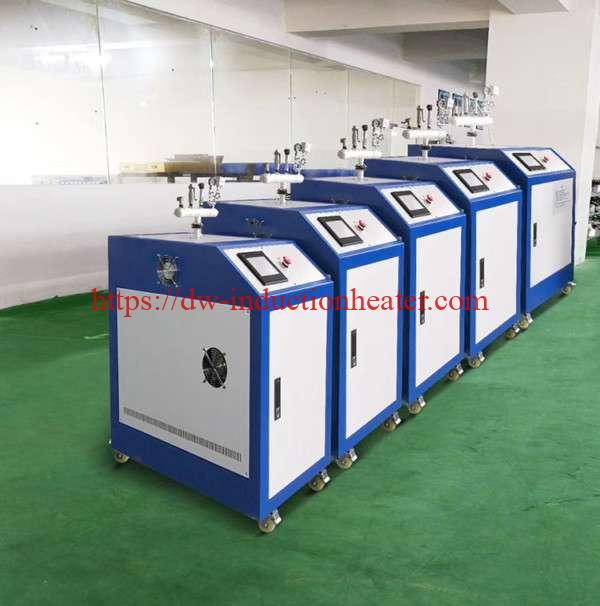
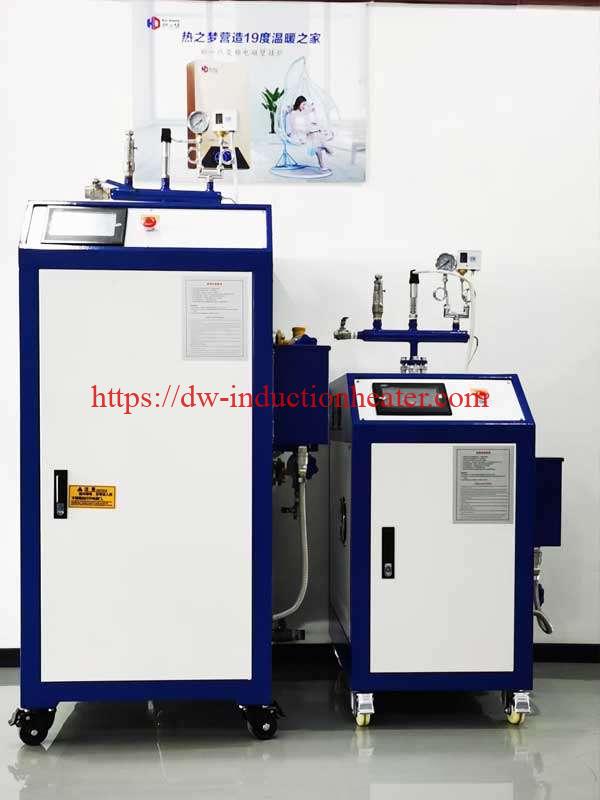
What is an Electromagnetic Induction Steam Generator?

How Electromagnetic Induction Steam Generators are Revolutionizing the Manufacturing Industry.

The manufacturing industry is constantly evolving, with new technologies emerging every day. One such technology that is revolutionizing the industry is the Electromagnetic Induction Steam Generator. This innovative steam generator uses the principles of electromagnetic induction to create steam, which can be used in a variety of manufacturing processes. Unlike traditional steam generators, which rely on fossil fuels or other non-renewable resources, electromagnetic induction steam generators are more eco-friendly and cost-effective. In this post, we'll explore how electromagnetic induction steam generators work, their benefits to the manufacturing industry, and how they're changing the game for manufacturers around the world.

What is an Electromagnetic Induction Steam Generator?

An Electromagnetic Induction Steam Generator is a type of steam generator that uses electromagnetic induction to heat water and create steam. This technology has revolutionized the manufacturing industry by providing a more efficient and cost-effective way to produce steam. Unlike traditional steam generators, which use fuel to heat water and create steam, the Electromagnetic Induction Steam Generator uses a series of coils to create an electromagnetic field that heats the water and turns it into steam. This process is much more energy-efficient than traditional steam generation methods, as it requires less fuel and produces less waste. Additionally, the Electromagnetic Induction Steam Generator is much smaller and more compact than traditional steam generators, making it a popular choice for manufacturing companies with limited space. Overall, the Electromagnetic Induction Steam Generator is a game-changer in the manufacturing industry and is helping to push the industry towards a more sustainable and efficient future.

How Electromagnetic Induction Steam Generators Work

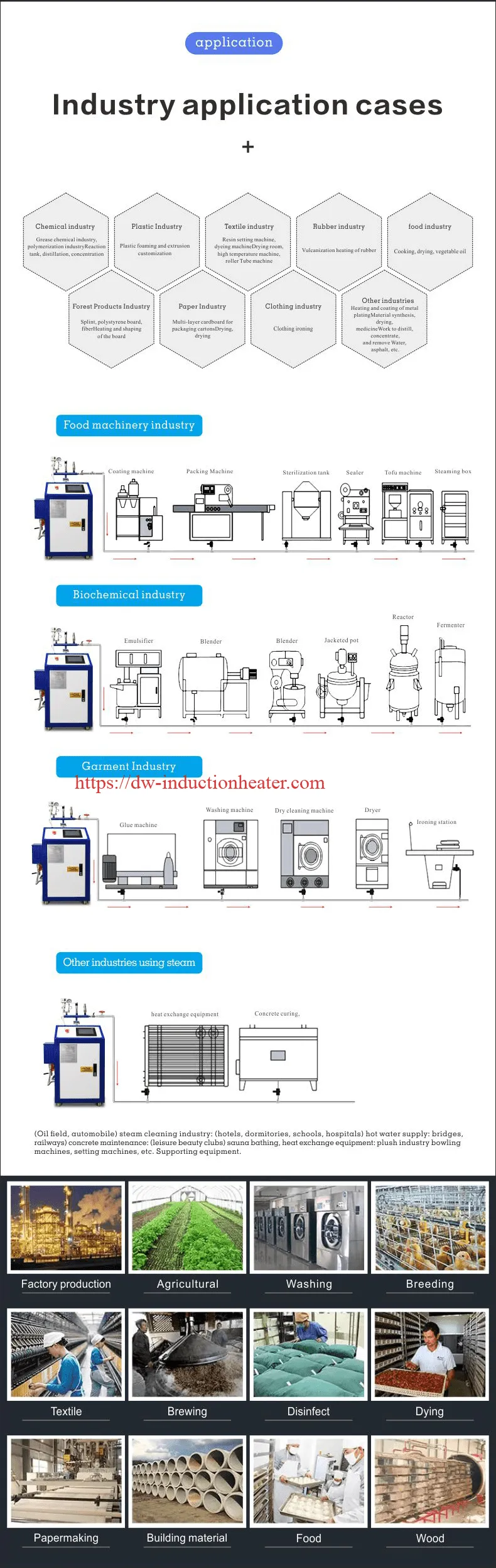
Electromagnetic induction steam generators are a fascinating new development in the manufacturing industry. Unlike traditional steam generators that use a fuel source to heat water and create steam, electromagnetic induction steam generators utilize electromagnetic induction technology to heat water without the need for any fuel source. The process works by passing an electrical current through a coil, which creates a magnetic field.This magnetic field then heats up a metal plate, which is in contact with the water, and this causes the water to heat up and turn into steam. This process is incredibly efficient because it doesn't waste any energy on heating elements that are not in contact with the water. The benefits of using electromagnetic induction steam generators are numerous. They are incredibly energy-efficient, have a small footprint, and are easy to operate. Plus, they are environmentally friendly because they don't use any fossil fuels. In addition to being used in the manufacturing industry, these generators are also being used in hospitals, hotels, and other commercial settings where a reliable and efficient source of steam is required. Overall, electromagnetic induction steam generators are a revolutionary new technology that has the potential to change the way we think about steam generation. By using electromagnetic induction technology, these generators offer an energy-efficient and environmentally friendly alternative to traditional steam generators.

Benefits of Electromagnetic Induction Steam Generators in the Manufacturing Industry

Electromagnetic Induction Steam Generators are a revolutionary technology that is transforming the manufacturing industry. These generators operate on the principles of electromagnetic induction to produce steam for industrial purposes. They are highly efficient and provide a host of benefits to manufacturing companies. One of the most significant benefits of electromagnetic induction steam generators is that they are very energy-efficient. They consume much less energy than traditional steam boilers, making them an eco-friendly option. Additionally, they are much safer to operate than traditional steam boilers, as they do not produce hazardous emissions. Electromagnetic Induction Steam Generators are also incredibly reliable, with very little downtime. This means that manufacturing companies can enjoy increased productivity and efficiency. Another benefit is that they are easy to install and require very little maintenance. They are also very versatile and can be used for a wide range of applications. With so many benefits, it is no wonder that these generators are becoming increasingly popular in the manufacturing industry.

The Future of Electromagnetic Induction Steam Generators.

The future of electromagnetic induction steam generators is very bright. These generators are already revolutionizing the manufacturing industry by providing an efficient and cost-effective solution to steam generation. As technology continues to advance, we can expect to see even more improvements in electromagnetic induction steam generators. One of the biggest advantages of these generators is their ability to produce steam quickly and efficiently, which is critical for many manufacturing processes. They are also much more sustainable than traditional steam generators, as they require less energy to operate. This means that they are not only more environmentally friendly, but they can also help businesses save money on their energy bills. Another area where we are likely to see further innovation is in the size and portability of electromagnetic induction steam generators. Smaller, more portable generators would open up new opportunities for their use in a wider range of industries, including agriculture and construction. Overall, the future of electromagnetic induction steam generators is very promising, and we can expect to see continued improvements in efficiency, sustainability, and versatility. In conclusion, Electromagnetic induction steam generator is a type of generator that uses electromagnetic induction to heat water and produce steam. It works by passing an electric current through a coil, which creates a magnetic field. This magnetic field then induces a current in a nearby conductor, which in this case is a water-filled tube. As a result, the water is heated and turned into steam, which can be used for a variety of purposes such as powering turbines, heating buildings, or even sterilizing equipment. Electromagnetic induction steam generators are highly efficient and have a number of advantages over traditional steam generators, such as faster start-up times, lower maintenance costs, and improved safety. https://dw-inductionheater.com/what-is-an-electromagnetic-induction-steam-generator.html?feed_id=231646&_unique_id=659aa2e076c5b

2024年1月6日星期六

Why Induction Heating is the Green Technology of the Future

Why Induction Heating is the Green Technology of the Future?

As the world continues to focus on sustainable energy and reducing carbon emissions, industries are seeking new ways to make their processes more environmentally friendly. One promising technology is induction heating, which uses magnetic fields to produce heat without the need for fossil fuels or other harmful energy sources. Induction heating is not only energy-efficient, but it is also safe, precise, and fast. Induction heating has emerged as a sustainable and energy-efficient solution in various applications, including metal processing, automotive, aerospace, and electronics industries. This advanced technology utilizes the principle of electromagnetic induction to generate heat, providing numerous environmental and economic benefits compared to traditional heating methods. This article delves into the various aspects of induction heating as a green technology, examining its advantages, applications, and future potential.

What is Induction Heating?

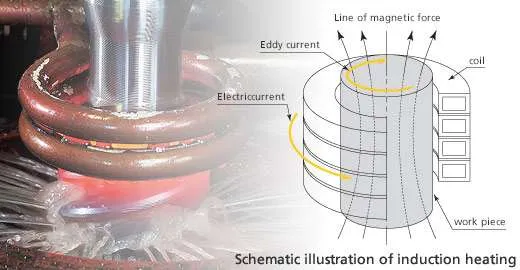
Induction heating is a non-contact process that uses electromagnetic fields to produce heat in a conductive material. It functions by passing an alternating current (AC) through a coil, generating an electromagnetic field around the coil. When a metal object, such as a steel rod or copper tube, is placed within this field, eddy currents are induced in the material, generating heat due to the material's electrical resistance. This targeted heating offers numerous advantages over traditional heating methods, making it an attractive option for various industries.
Principles of Electromagnetic Induction

The underlying principle of induction heating is Faraday's law of electromagnetic induction, which states that a changing magnetic field will induce an electromotive force (EMF) in a nearby conductor. This induced EMF generates eddy currents within the material, causing it to heat up. The intensity of the induced currents and the resulting heat depends on several factors, including the frequency of the alternating current, the material's electrical conductivity and magnetic permeability, and the distance between the coil and the material.

Induction Heating Coils

The induction heating coil, also known as the inductor, is a crucial component of the induction heating system. The coil's design and shape directly affect the efficiency and effectiveness of the heating process. Coils are typically made from materials with high electrical conductivity, such as copper or brass, and are often cooled with water or air to prevent overheating. Various coil designs are available to suit different applications, including solenoid coils, pancake coils, and multiturn coils.

Advantages of Induction Heating as a Green Technology

Induction heating offers several environmental and economic benefits compared to traditional heating methods, such as resistance heating, gas heating, and flame heating. These advantages make induction heating a green and sustainable technology for various industries.

Energy Efficiency

Induction heating is highly energy-efficient, with energy conversion efficiencies of up to 90% or more. This high efficiency is achieved by directly heating the material without any intermediate steps or heat transfer media, minimizing energy losses. In contrast, conventional heating methods often suffer from energy losses due to radiation, convection, and conduction, resulting in lower overall efficiencies.

Reduced Greenhouse Gas Emissions

By utilizing electricity as the energy source, induction heating eliminates the need for fossil fuels, which are associated with greenhouse gas emissions and air pollution. Consequently, the technology significantly reduces the overall carbon footprint of heating processes, contributing to a cleaner environment.

Precise and Controlled Heating

Induction heating allows for precise and uniform heating of materials, enabling better control over the process parameters and resulting in higher-quality products. This precision helps reduce material wastage and rework, further enhancing the technology's environmental benefits.

Improved Working Conditions

The non-contact nature of induction heating eliminates the need for open flames, reducing the risk of accidents and improving overall safety in the workplace. Additionally, the technology produces less noise and air pollution compared to traditional heating methods, contributing to a healthier working environment.

Applications of Induction Heating in Various Industries

Induction heating's versatility, efficiency, and environmental benefits make it an attractive option for numerous industrial applications.

Metal Processing

Induction heating is widely used in metal processing for tasks such as forging, hardening, annealing, and tempering. The technology's precise control and rapid heating capabilities enable improved product quality and reduced energy consumption.

Automotive Industry

In the automotive industry, induction heating is employed for processes such as brazing, curing adhesives, and shrink fitting. The technology enables faster production cycles and improved energy efficiency, contributing to greener manufacturing practices.

Aerospace Industry

The aerospace industry relies on induction heating for applications such as brazing, heat treatment, and curing composites. The technology's precise control and uniform heating capabilities are essential for producing high-quality components with tight tolerances.

Electronics Industry

Induction heating is used in the electronics industry for processes such as soldering, bonding, and curing adhesives. The technology's rapid heating and precise temperature control contribute to improved product quality and reduced energy consumption.

Induction Heating Systems

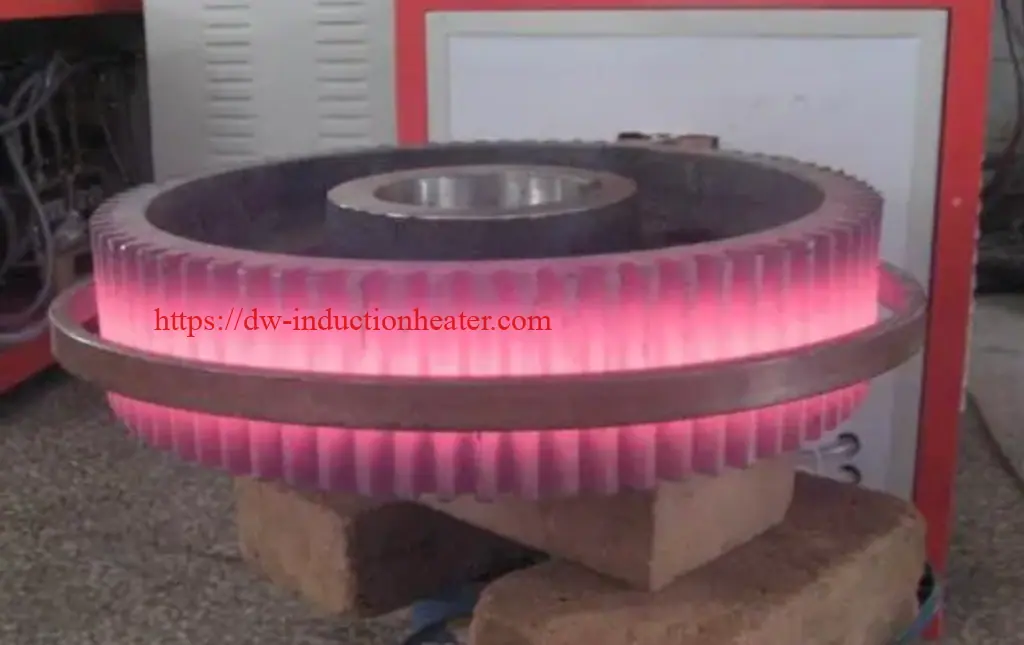
Induction heating systems consist of several key components, including an induction heating power supply, a coil, and a workpiece. The power supply generates the alternating current, which is then passed through the coil to create the electromagnetic field. The workpiece, typically a metal object, is placed within this field, where it absorbs the energy and heats up.
Induction Heating Power Supplies

Induction heating power supplies, also known as inverters or converters, are responsible for converting the incoming electrical power into the desired frequency and voltage for the induction heating process. Modern power supplies are designed to be energy-efficient and offer advanced features such as precise temperature control, multiple heating zones, and programmable process parameters.

Induction Heating Process Control

Accurate and reliable process control is essential for achieving the desired heating results in induction heating applications. Modern induction heating systems often use advanced temperature sensors, such as infrared pyrometers or thermocouples, to monitor and control the workpiece temperature in real-time. These sensors enable precise temperature control, ensuring consistent heating results and improved product quality.

Future Potential of Induction Heating as a Green Technology

The growing emphasis on sustainability and energy conservation across various industries has created a favorable environment for the adoption of green technologies such as induction heating. Advancements in power electronics, control systems, and coil design are expected to further enhance the performance and efficiency of induction heating systems, making them an increasingly attractive option for a wide range of applications.

Integration with Renewable Energy Sources

The electricity-based nature of induction heating makes it an ideal technology for integration with renewable energy sources such as solar and wind power. By using clean, renewable energy to power induction heating systems, industries can further reduce their carbon footprint and contribute to a more sustainable future.

Potential in New Applications

As induction heating technology continues to advance, new applications may emerge in areas such as food processing, medical equipment sterilization, and waste treatment. These applications can further expand the technology's positive environmental impact and contribute to a greener future.

Conclusion

Induction heating is a green technology that offers numerous environmental and economic benefits compared to traditional heating methods. Its energy-efficient, precise, and controlled heating capabilities make it an ideal solution for various industries, including metal processing, automotive, aerospace, and electronics. As the demand for sustainable and eco-friendly technologies continues to grow, induction heating is well-positioned to play a significant role in shaping a greener future.     https://dw-inductionheater.com/why-induction-heating-is-the-green-technology-of-the-future.html?feed_id=231616&_unique_id=6599ec0170e04
How Induction Hardening Machines Can Benefit Your Manufacturing Business

What is Induction Hardening and How Does it Work?

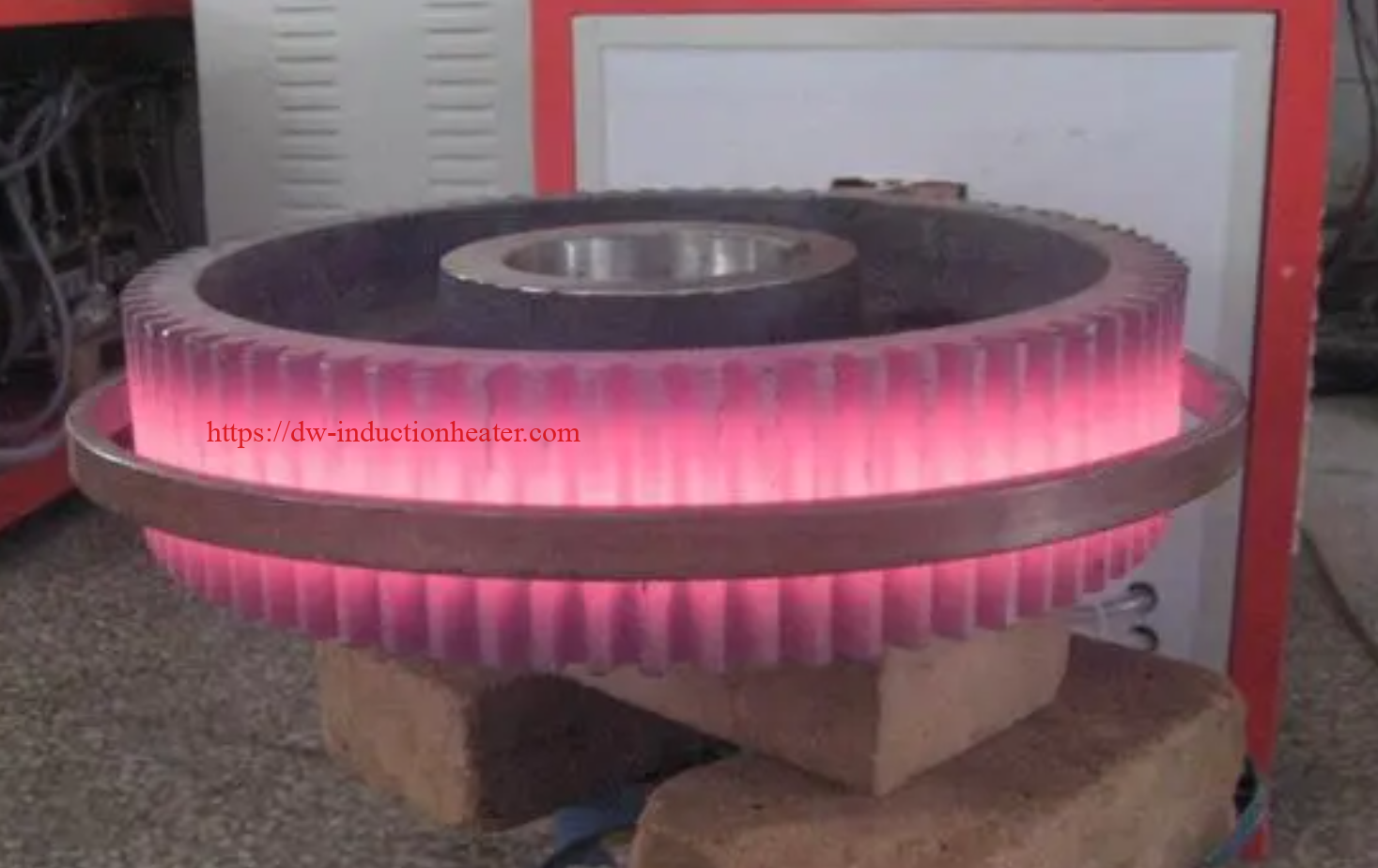
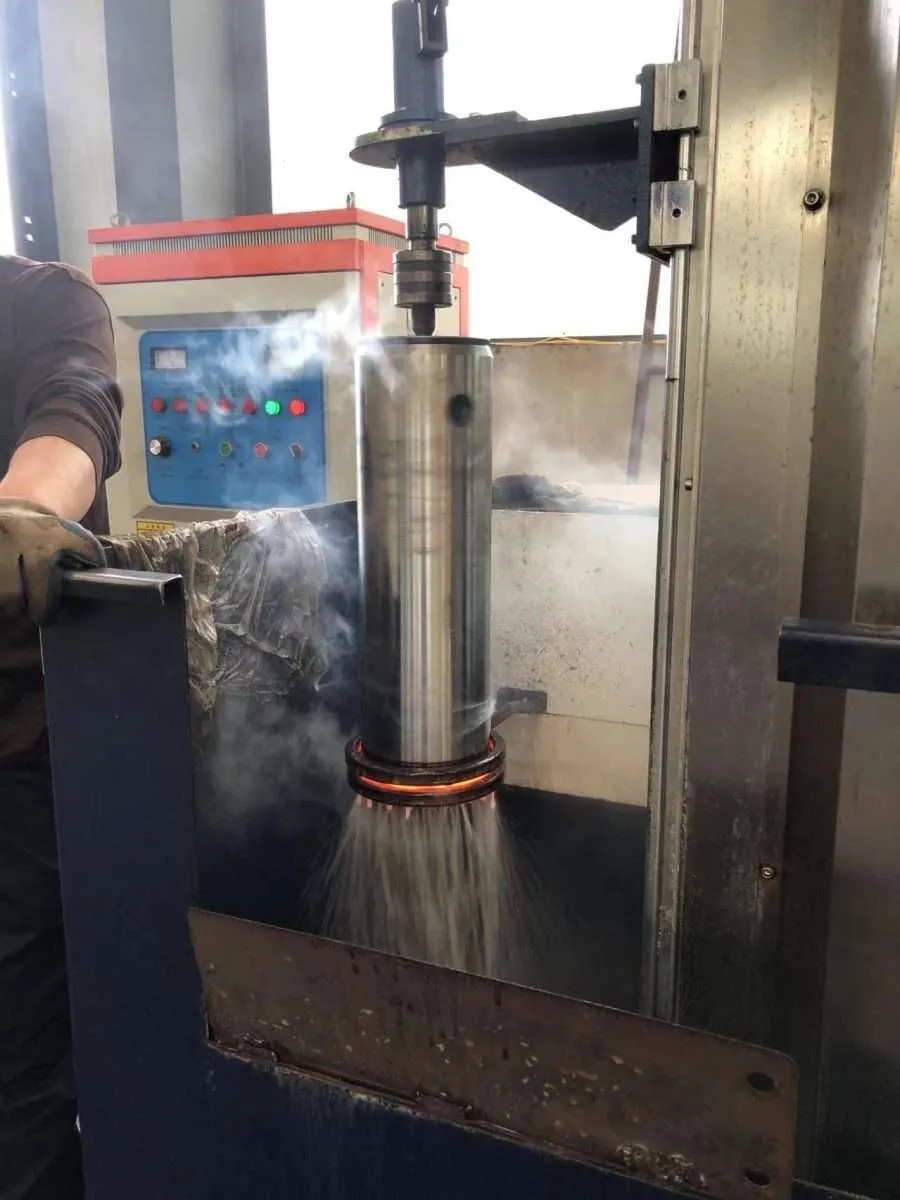
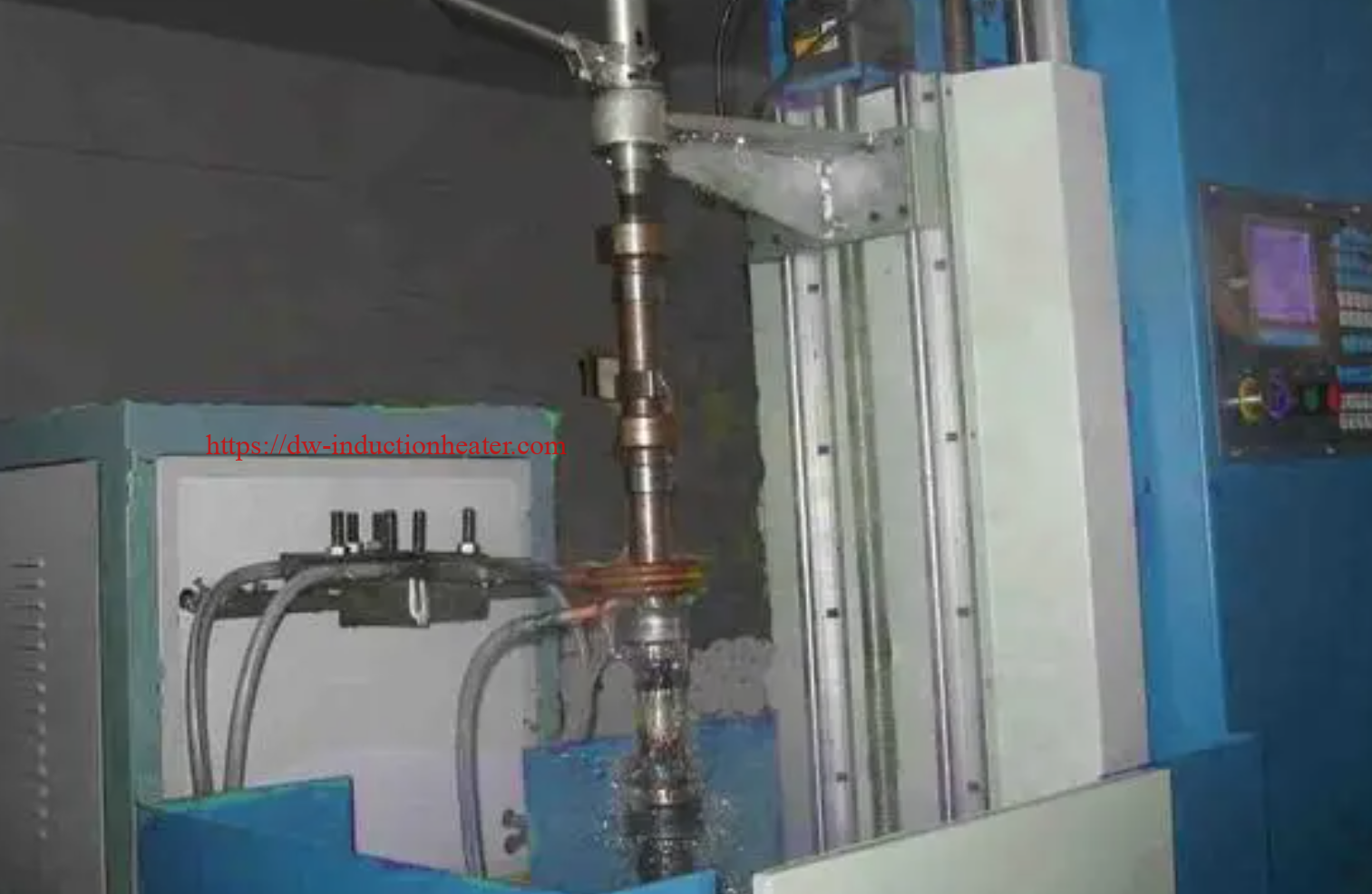
Induction hardening is a process used to strengthen the surface of metal parts. It involves heating the metal part through electromagnetic induction and then immediately quenching it in water or oil. This process can be used to increase the wear resistance and durability of metal components. The induction hardening process works through the use of an induction hardening machine. This machine generates a high-frequency electromagnetic field that quickly heats the metal part to a desired temperature. The heat generated is concentrated on the surface of the metal part, which allows for a rapid heating and cooling process. This process effectively hardens the outer layer of the metal part, which can improve its strength and durability. One of the primary benefits of using induction hardening machines is that it can save time and money in the manufacturing process. The process is much quicker than traditional methods of hardening, which involves heating the entire part and then cooling it slowly. Induction hardening is also more precise than other methods, as it can be controlled with accuracy, resulting in more consistent product quality. Additionally, induction hardening machines can be used to harden localized areas of a part, which allows for more flexibility in the manufacturing process. This means that manufacturers can focus on specific areas of a part that require hardening rather than hardening the entire part. This can result in significant cost savings, as well as increased efficiency in the production process. In summary, induction hardening is a process that can benefit manufacturing businesses by improving the wear resistance and durability of metal parts. The use of induction hardening machines can save time and money in the manufacturing process, as well as improve product quality and consistency. Benefits of Induction Hardening Machines for Your Manufacturing Business Induction hardening machines have become a popular choice for many manufacturing businesses due to their numerous benefits. One of the primary benefits of induction hardening machines is their ability to increase the wear resistance of metal components. This is achieved by rapidly heating and cooling the surface of the metal, which results in a hardened layer. This hardened layer can greatly increase the lifespan of the component and ultimately reduce the need for replacement parts. In addition to increasing wear resistance, induction hardening machines also offer increased accuracy and efficiency. These machines are capable of precisely controlling the amount of heat applied to the metal, which ensures consistent results every time. This level of accuracy can ultimately lead to a reduction in waste and an increase in productivity. Another benefit of induction hardening machines is their ability to work with a wide range of metals, including steel, aluminum, and copper. This versatility allows manufacturers to use the same machine for multiple components, further increasing efficiency and reducing costs. Finally, induction hardening machines are also environmentally friendly. Unlike traditional hardening methods, such as flame hardening, induction hardening does not produce harmful emissions or waste. This makes it a great choice for manufacturers who are looking to reduce their environmental impact. Overall, induction hardening machines offer a wide range of benefits for manufacturing businesses. From increased wear resistance to improved accuracy and efficiency, these machines can help businesses become more productive, reduce waste, and ultimately save money. An Induction Hardening Machine is a piece of industrial equipment used to harden metal parts. The process involves heating the metal using an electromagnetic field and then quenching it with water or oil. This results in a surface layer that is harder than the rest of the part, which can improve its durability and performance. Induction hardening machines can be used on a variety of metal parts, including gears, shafts, and bearings. They're commonly used in automotive and aerospace industries, as well as in the manufacturing of industrial machinery and equipment. If you're in need of an induction hardening machine, there are many reputable manufacturers and suppliers that can help you find the right equipment for your needs. The Ultimate Guide to Roller Shaft Induction Hardening Machine Roller shaft induction hardening machine is an essential tool in the manufacturing industry that is used to harden roller shafts. The process of induction hardening is the most efficient way to strengthen the surface of metal parts, including roller shafts. It provides improved wear resistance, durability, and better performance of the finished product. If you are in the manufacturing business, you need to understand how to use this machine to improve the quality of your products. In this article, we will provide you with an ultimate guide to roller shaft induction hardening machines. We will go over everything you need to know about the machine, how it works, its benefits, and how to maintain it so that it lasts longer. Let's dive in and learn more about this powerful tool. 1. What is a Roller Shaft Induction Hardening Machine? A roller shaft induction hardening machine is a piece of industrial equipment that is specifically designed to harden the surface of roller shafts. Induction hardening is a process that uses an electromagnetic field to heat the surface of a material, typically steel, to a very high temperature. This heat treatment process is used to create a hard, wear-resistant surface on the material. A roller shaft induction hardening machine does this by using an induction coil to produce a high frequency electromagnetic field that rapidly heats the surface of the roller shaft. The heat generated by the electromagnetic field causes the surface of the roller shaft to reach a high temperature, which in turn causes the surface to harden. This process is often used in the manufacturing of roller shafts that are used in a variety of industrial applications, such as in conveyor systems or printing presses. A roller shaft induction hardening machine is an essential tool for many industrial manufacturers who require strong and durable roller shafts for their machinery. 2. How Does Roller Shaft Induction Hardening Machine Work? The roller shaft induction hardening machine is an innovative technology that is used to produce high-quality roller shafts. This machine uses an induction heating process that heats the surface of the roller shaft to a high temperature, hardening the surface of the material while leaving the core of the roller shaft untouched. This process is known as induction hardening, and it is a popular method for producing durable and long-lasting roller shafts. The roller shaft induction hardening machine works by using an electromagnetic field to generate heat, which is applied to the surface of the roller shaft. The heat generated causes the surface of the roller shaft to reach a specific temperature, which then hardens the material. This process is achieved through a combination of the electromagnetic field and the material's properties, which allows for precise control over the heating process. The roller shaft induction hardening machine is an efficient and cost-effective way to produce high-quality roller shafts. It is widely used in the manufacturing industry, particularly in the production of conveyor belts, printing presses, and other industrial equipment that requires durable and reliable roller shafts. With the ability to produce roller shafts that can withstand heavy loads and harsh environments, the roller shaft induction hardening machine is a valuable asset for any manufacturing company looking to produce high-quality products. 3. Benefits of Using Roller Shaft Induction Hardening Machine Roller shaft induction hardening machines have become increasingly popular due to their many benefits. One of the most notable benefits is that they provide a quick and efficient hardening process for roller shafts. With this technology, roller shafts can be hardened in a matter of seconds, which greatly reduces production time and increases efficiency. Additionally, the machines are very versatile and can accommodate a variety of roller shaft sizes. This means that businesses can adapt and customize their production processes to meet their specific needs. Another benefit of using a roller shaft induction hardening machine is that it provides a uniform hardening pattern across the entire roller shaft surface. This ensures that the quality of the hardened surface is consistent and reliable throughout the entire production process. Additionally, the process of induction hardening is environmentally friendly, as it only requires a minimal amount of energy to operate. It also produces less waste and pollution compared to other traditional hardening processes. Furthermore, using a roller shaft induction hardening machine can also help to extend the lifespan of the roller shafts, reducing the need for frequent repairs and replacements. This ultimately saves businesses money and increases their overall productivity. Finally, the machine provides a safe and reliable hardening process, with minimal risk of injury to operators. Overall, the benefits of using a roller shaft induction hardening machine make it a valuable investment for businesses looking to improve their production processes and reduce their environmental impact. 4. How to Maintain Your Roller Shaft Induction Hardening Machine? Maintaining your roller shaft induction hardening machine is crucial to ensure its longevity and continued performance. Here are some tips to keep your machine running smoothly: 1. Regular cleaning: Dust and debris can accumulate on your machine, which can cause damage over time. It's essential to clean your machine regularly to prevent any build-up. Use a soft cloth to wipe down the machine and remove any dirt or debris. 2. Lubrication: Proper lubrication is essential to keep your machine functioning correctly. Make sure to use the recommended lubricant and apply it regularly to the appropriate parts of the machine. 3. Regular inspection: Inspecting your machine regularly can help you identify any potential issues before they become bigger problems. Look for signs of wear and tear, such as cracks or deformation in the rollers. 4. Proper storage: When not in use, it's essential to store your machine properly. Keep it in a dry, cool place that is free from any exposure to moisture or extreme temperatures. 5. Professional maintenance: While regular cleaning and inspection can help prevent issues, it's also crucial to have your machine professionally serviced regularly. A professional technician can identify any potential problems and provide the necessary repairs and maintenance to keep your machine running smoothly. By following these tips, you can ensure that your roller shaft induction hardening machine remains in top condition, providing you with reliable and efficient performance for years to come.

Hardening Machine Tools-Quenching Machine Tools

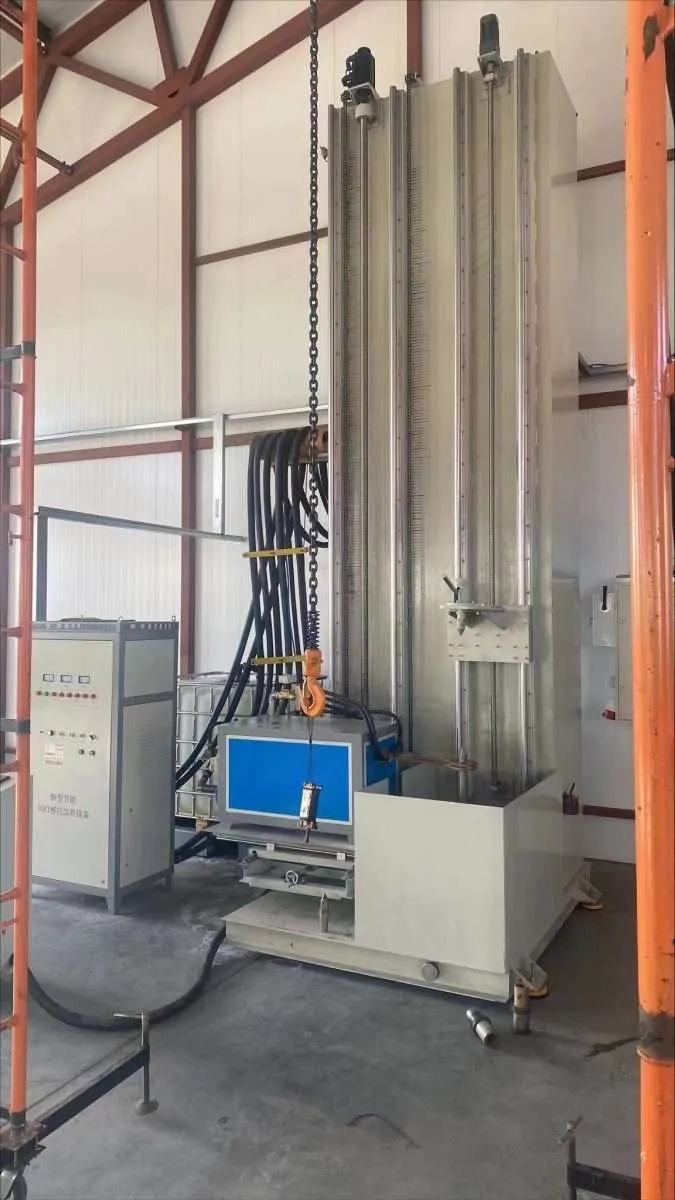
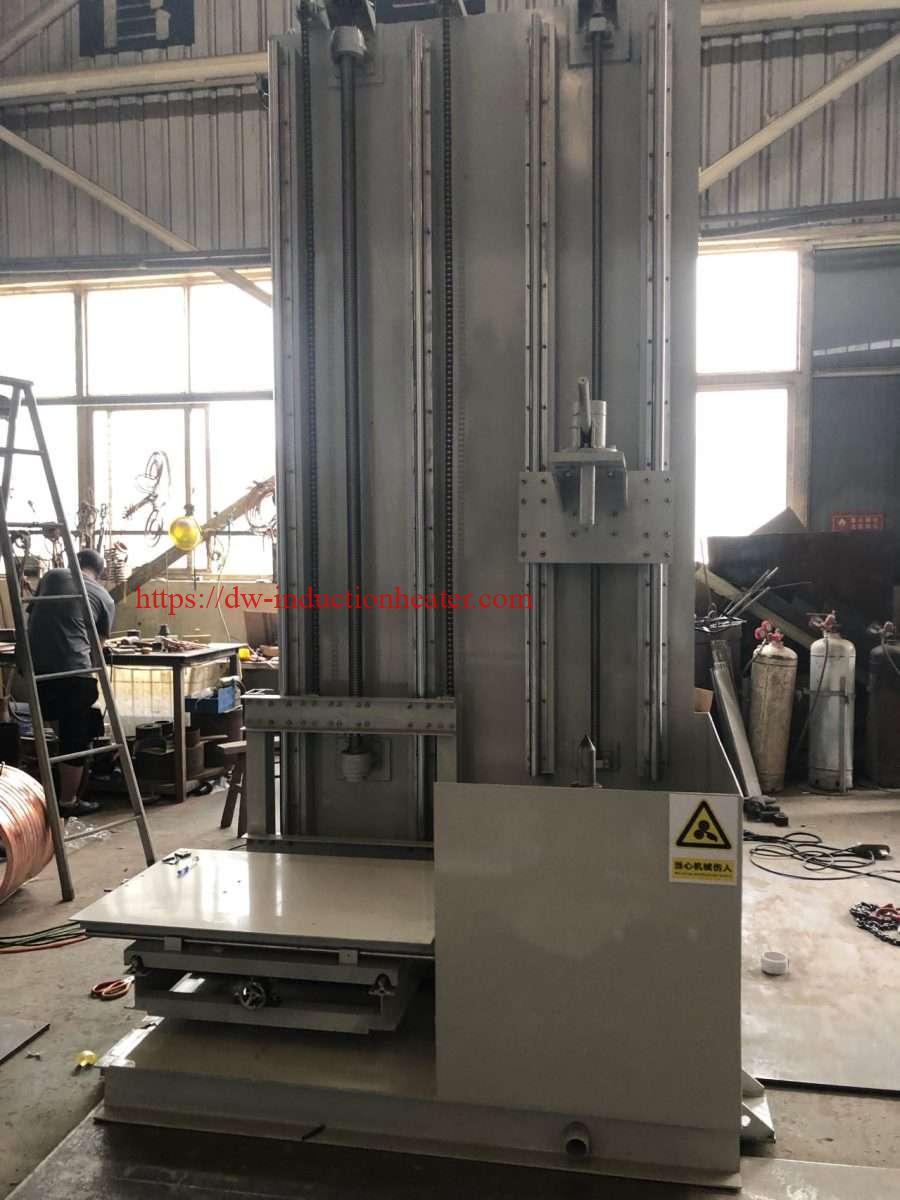
According to the different of workpiece, there are vertical type, horizontal typeclosed type, customized type, etc. 1.Standard SK-500/1000/1200/1500 workpiece moving type For shafts, discs, pins and gears hardening 2.SK-2000/2500/3000/4000 Transformer moving type , Used for heating length more than 1500mm shaft 3.Closed type : Customized for big shaft ,More clean work environment. 4.Horizontal hardening machine tool SK-500/1000/1200/1500/2000/2500/3000/4000  Used for smooth shaft 5.Customized type Technical Parameter
Model SK-500 SK-1000 SK-1200 SK-1500
Max heating length(mm) 500 1000 1200 1500
Max heating diameter(mm) 500 500 600 600
Max holding length(mm) 600 1100 1300 1600
Max weight of workpiece(Kg) 100 100 100 100
Workpiece rotation speed(r/min) 0-300 0-300 0-300 0-300
workpiece moving speed(mm/min) 6-3000 6-3000 6-3000 6-3000
Cooling method Hydrojet cooling Hydrojet cooling Hydrojet cooling Hydrojet cooling
Input voltage 3P 380V 50Hz 3P 380V 50Hz 3P 380V 50Hz 3P 380V 50Hz
Motor power 1.1KW 1.1KW 1.2KW 1.5KW
Dimension LxWxH (mm) 1600 x800 x2000 1600 x800 x2400 1900 x900 x2900 1900 x900 x3200
weight(Kg) 800 900 1100 1200
 
Model SK-2000 SK-2500 SK-3000 SK-4000
Max heating length(mm) 2000 2500 3000 4000
Max heating diameter(mm) 600 600 600 600
Max holding length(mm) 2000 2500 3000 4000
Max weight of workpiece(Kg) 800 1000 1200 1500
workpiece rotation speed(r/min) 0-300 0-300 0-300 0-300
workpiece moving speed(mm/min) 6-3000 6-3000 6-3000 6-3000
Cooling method Hydrojet cooling Hydrojet cooling Hydrojet cooling Hydrojet cooling
Input voltage 3P 380V 50Hz 3P 380V 50Hz 3P 380V 50Hz 3P 380V 50Hz
Motor power 2KW 2.2KW 2.5KW 3KW
Dimension LxWxH (mm) 1900 x900 x2400 1900 x900 x2900 1900 x900 x3400 1900 x900 x4300
weight(Kg) 1200 1300 1400 1500
 

Induction Heating System for Hardening Surface Process

Specifications
Models Rated output power Frequency rage Input current Input voltage Duty cycle Water flow weight Dimension
MFS-100 100KW 0.5-10KHz 160A 3phase 380V 50Hz 100% 10-20m³/h 175KG 800x650x1800mm
MFS-160 160KW 0.5-10KHz 250A 10-20m³/h 180KG 800x 650 x 1800mm
MFS-200 200KW 0.5-10KHz 310A 10-20m³/h 180KG 800x 650 x 1800mm
MFS-250 250KW 0.5-10KHz 380A 10-20m³/h 192KG 800x 650 x 1800mm
MFS-300 300KW 0.5-8KHz 460A 25-35m³/h 198KG 800x 650 x 1800mm
MFS-400 400KW 0.5-8KHz 610A 25-35m³/h 225KG 800x 650 x 1800mm
MFS-500 500KW 0.5-8KHz 760A 25-35m³/h 350KG 1500 x 800 x 2000mm
MFS-600 600KW 0.5-8KHz 920A 25-35m³/h 360KG 1500 x 800 x 2000mm
MFS-750 750KW 0.5-6KHz 1150A 50-60m³/h 380KG 1500 x 800 x 2000mm
MFS-800 800KW 0.5-6KHz 1300A 50-60m³/h 390KG 1500 x 800 x 2000mm
Applications of Roller Shaft Induction Hardening Machines: Roller shaft induction hardening machines are used in various industrial applications, including: 1. Steel mills: Roller shafts are used in steel mills to transport steel coils. Induction hardening increases the lifespan of these shafts, reducing the need for frequent replacements. 2. Paper mills: Roller shafts are used in paper mills to transport paper rolls. Induction hardening increases the lifespan of these shafts, reducing the need for frequent replacements. 3. Printing presses: Roller shafts are used in printing presses to transport paper. Induction hardening increases the lifespan of these shafts, reducing the need for frequent replacements. 4. Automotive industry: Roller shafts are used in various automotive applications, including engine components and transmission systems. Induction hardening increases the lifespan of these shafts, reducing the need for frequent replacements. Conclusion: An induction hardening machine is a specialized equipment used in the manufacturing industry for hardening metal parts. It utilizes induction heating technology to heat the surface of a metal part to a high temperature before quickly cooling it off. This process enhances the surface hardness of the metal, making it more durable and resistant to wear and tear. Induction hardening machines come in different sizes, shapes, and power outputs, depending on the specific needs of the application. They can also be customized to suit the unique requirements of a particular manufacturing process. https://dw-inductionheater.com/how-induction-hardening-machines-can-benefit-your-manufacturing-business.html?feed_id=231586&_unique_id=6599356c087e2

2024年1月5日星期五

CNC vertical induction quenching machines for hardening shafts rollers pins and gears

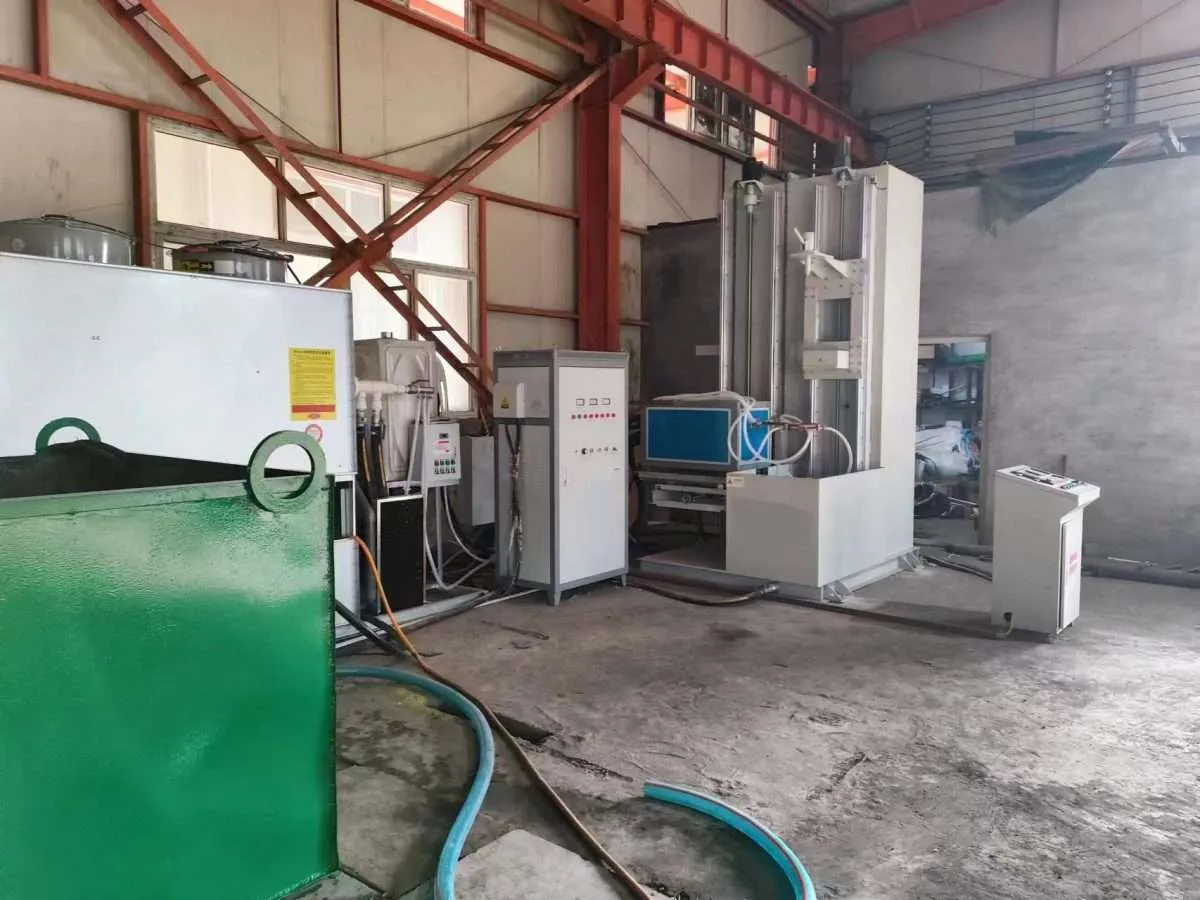
CNC vertical induction quenching machines are becoming increasingly popular in the manufacturing industry due to their ability to quickly and efficiently heat-treat metal parts. These machines use induction heating technology to heat up metal parts to high temperatures, followed by a quenching process to rapidly cool the metal, resulting in a hardened surface. In this article, we will dive deeper into the features, benefits, and applications of CNC vertical induction quenching machines. CNC vertical induction quenching machines for hardening shafts,rollers,pins and gearsWhat is CNC Vertical Induction Quenching Machine? CNC vertical induction quenching machine is a type of machine used in the heat treatment process. It is designed to harden various metals and alloys using electromagnetic induction, which requires the use of a high-frequency electric current to generate heat. CNC Induction Quenching Machine- CNC induction hardening machineThe CNC vertical induction quenching machine is constructed with an induction coil that surrounds the workpiece, and the coil is powered by an induction generator, which creates the high-frequency current. This current flows through the coil, which induces an electric current in the workpiece, generating heat that is used to harden the metal. Features of CNC Vertical Induction Quenching Machines: 1. Precision Control: CNC vertical induction quenching machines are equipped with advanced control systems that allow for precise temperature and heating time control. This ensures that the metal parts are heated and cooled uniformly, resulting in consistent hardness levels across all parts. 2. Automated Processes: CNC vertical induction quenching machines are fully automated, which means that they can be programmed to perform a sequence of heating and cooling processes without human intervention. This not only saves time but also reduces the risk of errors. 3. High Efficiency: CNC vertical induction quenching machines use induction heating, which is a highly efficient heating method. This means that the machines consume less energy compared to other heating methods, resulting in cost savings for the manufacturer. 4. Compact Design: CNC vertical induction quenching machines have a compact design, which means that they occupy less floor space compared to other heat-treating equipment. This makes them ideal for small manufacturing facilities with limited space. Benefits of CNC Vertical Induction Quenching Machines: 1. Improved Product Quality: CNC vertical induction quenching machines produce parts with consistent hardness levels, which translates into improved product quality. This is especially important for manufacturers who produce critical components that require high precision and reliability. 2. Reduced Manufacturing Time: CNC vertical induction quenching machines are faster than other heat-treating equipment, which means that they can process more parts in less time. This results in increased productivity and shorter lead times. 3. Lower Operating Costs: CNC vertical induction quenching machines consume less energy compared to other heating methods, resulting in lower operating costs. This is especially important for manufacturers who are looking to reduce their energy consumption and carbon footprint. 4. Increased Flexibility: CNC vertical induction quenching machines can be programmed to perform a variety of heating and cooling processes, making them ideal for a wide range of applications. This means that manufacturers can use the same machine to heat-treat different types of parts, resulting in increased flexibility. Applications of CNC Vertical Induction Quenching Machines: 1. Automotive Industry: CNC vertical induction quenching machines are widely used in the automotive industry to heat-treat various components such as gears, shafts, and springs. These components require high precision and reliability, making CNC vertical induction quenching machines an ideal choice. 2. Aerospace Industry: The aerospace industry also uses CNC vertical induction quenching machines to heat-treat critical components such as turbine blades, engine parts, and landing gear. These components require high precision and reliability, making CNC vertical induction quenching machines an ideal choice. 3. Medical Industry: CNC vertical induction quenching machines are also used in the medical industry to heat-treat various surgical instruments and implants. These components require high precision and reliability, making CNC vertical induction quenching machines an ideal choice. The Ultimate Guide to CNC Vertical Induction Hardening Machine CNC Vertical induction hardening machine is an essential tool in the manufacturing industry that is used to harden roller shafts. The process of induction hardening is the most efficient way to strengthen the surface of metal parts, including roller shafts. It provides improved wear resistance, durability, and better performance of the finished product. If you are in the manufacturing business, you need to understand how to use this machine to improve the quality of your products. In this article, we will provide you with an ultimate guide to roller shaft induction hardening machines. We will go over everything you need to know about the machine, how it works, its benefits, and how to maintain it so that it lasts longer. Let's dive in and learn more about this powerful tool. 3. Benefits of Using CNC Vertical Induction Hardening Machine CNC Vertical induction hardening machines have become increasingly popular due to their many benefits. One of the most notable benefits is that they provide a quick and efficient hardening process for roller shafts. With this technology, roller shafts can be hardened in a matter of seconds, which greatly reduces production time and increases efficiency. Additionally, the machines are very versatile and can accommodate a variety of roller shaft sizes. This means that businesses can adapt and customize their production processes to meet their specific needs. Another benefit of using a roller shaft induction hardening machine is that it provides a uniform hardening pattern across the entire roller shaft surface. This ensures that the quality of the hardened surface is consistent and reliable throughout the entire production process. Additionally, the process of induction hardening is environmentally friendly, as it only requires a minimal amount of energy to operate. It also produces less waste and pollution compared to other traditional hardening processes. Furthermore, using a roller shaft induction hardening machine can also help to extend the lifespan of the roller shafts, reducing the need for frequent repairs and replacements. This ultimately saves businesses money and increases their overall productivity. Finally, the machine provides a safe and reliable hardening process, with minimal risk of injury to operators. Overall, the benefits of using a roller shaft induction hardening machine make it a valuable investment for businesses looking to improve their production processes and reduce their environmental impact. 4. How to Maintain CNC Vertical Induction Hardening Machine? Maintaining your roller shaft induction hardening machine is crucial to ensure its longevity and continued performance. Here are some tips to keep your machine running smoothly: 1. Regular cleaning: Dust and debris can accumulate on your machine, which can cause damage over time. It's essential to clean your machine regularly to prevent any build-up. Use a soft cloth to wipe down the machine and remove any dirt or debris. 2. Lubrication: Proper lubrication is essential to keep your machine functioning correctly. Make sure to use the recommended lubricant and apply it regularly to the appropriate parts of the machine. 3. Regular inspection: Inspecting your machine regularly can help you identify any potential issues before they become bigger problems. Look for signs of wear and tear, such as cracks or deformation in the rollers. 4. Proper storage: When not in use, it's essential to store your machine properly. Keep it in a dry, cool place that is free from any exposure to moisture or extreme temperatures. 5. Professional maintenance: While regular cleaning and inspection can help prevent issues, it's also crucial to have your machine professionally serviced regularly. A professional technician can identify any potential problems and provide the necessary repairs and maintenance to keep your machine running smoothly. By following these tips, you can ensure that your roller shaft induction hardening machine remains in top condition, providing you with reliable and efficient performance for years to come.

Hardening Machine Tools-Quenching Machine Tools

According to the different of workpiece, there are vertical type, horizontal typeclosed type, customized type, etc. 1.Standard SK-500/1000/1200/1500 workpiece moving type For shafts, discs, pins and gears hardening 2.SK-2000/2500/3000/4000 Transformer moving type , Used for heating length more than 1500mm shaft 3.Closed type : Customized for big shaft ,More clean work environment. 4.Horizontal hardening machine tool SK-500/1000/1200/1500/2000/2500/3000/4000  Used for smooth shaft 5.Customized type Technical Parameter
Model SK-500 SK-1000 SK-1200 SK-1500
Max heating length(mm) 500 1000 1200 1500
Max heating diameter(mm) 500 500 600 600
Max holding length(mm) 600 1100 1300 1600
Max weight of workpiece(Kg) 100 100 100 100
Workpiece rotation speed(r/min) 0-300 0-300 0-300 0-300
workpiece moving speed(mm/min) 6-3000 6-3000 6-3000 6-3000
Cooling method Hydrojet cooling Hydrojet cooling Hydrojet cooling Hydrojet cooling
Input voltage 3P 380V 50Hz 3P 380V 50Hz 3P 380V 50Hz 3P 380V 50Hz
Motor power 1.1KW 1.1KW 1.2KW 1.5KW
Dimension LxWxH (mm) 1600 x800 x2000 1600 x800 x2400 1900 x900 x2900 1900 x900 x3200
weight(Kg) 800 900 1100 1200
 
Model SK-2000 SK-2500 SK-3000 SK-4000
Max heating length(mm) 2000 2500 3000 4000
Max heating diameter(mm) 600 600 600 600
Max holding length(mm) 2000 2500 3000 4000
Max weight of workpiece(Kg) 800 1000 1200 1500
workpiece rotation speed(r/min) 0-300 0-300 0-300 0-300
workpiece moving speed(mm/min) 6-3000 6-3000 6-3000 6-3000
Cooling method Hydrojet cooling Hydrojet cooling Hydrojet cooling Hydrojet cooling
Input voltage 3P 380V 50Hz 3P 380V 50Hz 3P 380V 50Hz 3P 380V 50Hz
Motor power 2KW 2.2KW 2.5KW 3KW
Dimension LxWxH (mm) 1900 x900 x2400 1900 x900 x2900 1900 x900 x3400 1900 x900 x4300
weight(Kg) 1200 1300 1400 1500
 

Induction Heating System for Hardening Surface Process

Specifications
Models Rated output power Frequency rage Input current Input voltage Duty cycle Water flow weight Dimension
MFS-100 100KW 0.5-10KHz 160A 3phase 380V 50Hz 100% 10-20m³/h 175KG 800x650x1800mm
MFS-160 160KW 0.5-10KHz 250A 10-20m³/h 180KG 800x 650 x 1800mm
MFS-200 200KW 0.5-10KHz 310A 10-20m³/h 180KG 800x 650 x 1800mm
MFS-250 250KW 0.5-10KHz 380A 10-20m³/h 192KG 800x 650 x 1800mm
MFS-300 300KW 0.5-8KHz 460A 25-35m³/h 198KG 800x 650 x 1800mm
MFS-400 400KW 0.5-8KHz 610A 25-35m³/h 225KG 800x 650 x 1800mm
MFS-500 500KW 0.5-8KHz 760A 25-35m³/h 350KG 1500 x 800 x 2000mm
MFS-600 600KW 0.5-8KHz 920A 25-35m³/h 360KG 1500 x 800 x 2000mm
MFS-750 750KW 0.5-6KHz 1150A 50-60m³/h 380KG 1500 x 800 x 2000mm
MFS-800 800KW 0.5-6KHz 1300A 50-60m³/h 390KG 1500 x 800 x 2000mm
Applications of CNC Vertical Induction Hardening Machines: CNC Vertical induction hardening machines are used in various industrial applications, including: 1. Steel mills: Roller shafts are used in steel mills to transport steel coils. Induction hardening increases the lifespan of these shafts, reducing the need for frequent replacements. 2. Paper mills: Roller shafts are used in paper mills to transport paper rolls. Induction hardening increases the lifespan of these shafts, reducing the need for frequent replacements. 3. Printing presses: Roller shafts are used in printing presses to transport paper. Induction hardening increases the lifespan of these shafts, reducing the need for frequent replacements. 4. Automotive industry: Roller shafts are used in various automotive applications, including engine components and transmission systems. Induction hardening increases the lifespan of these shafts, reducing the need for frequent replacements. Conclusion: CNC vertical induction quenching machines are a highly efficient and cost-effective way of heat-treating metal parts. They offer precision control, automated processes, high efficiency, and a compact design, making them an ideal choice for manufacturers who are looking to improve product quality, reduce manufacturing time, and lower operating costs. With their wide range of applications in the automotive, aerospace, and medical industries, CNC vertical induction quenching machines are a valuable addition to any manufacturing facility. https://dw-inductionheater.com/cnc-vertical-induction-quenching-machines-for-hardening-shafts-rollers-pins-and-gears.html?feed_id=231556&_unique_id=65987e79dc3b7

induction brazing copper busbars heating machine

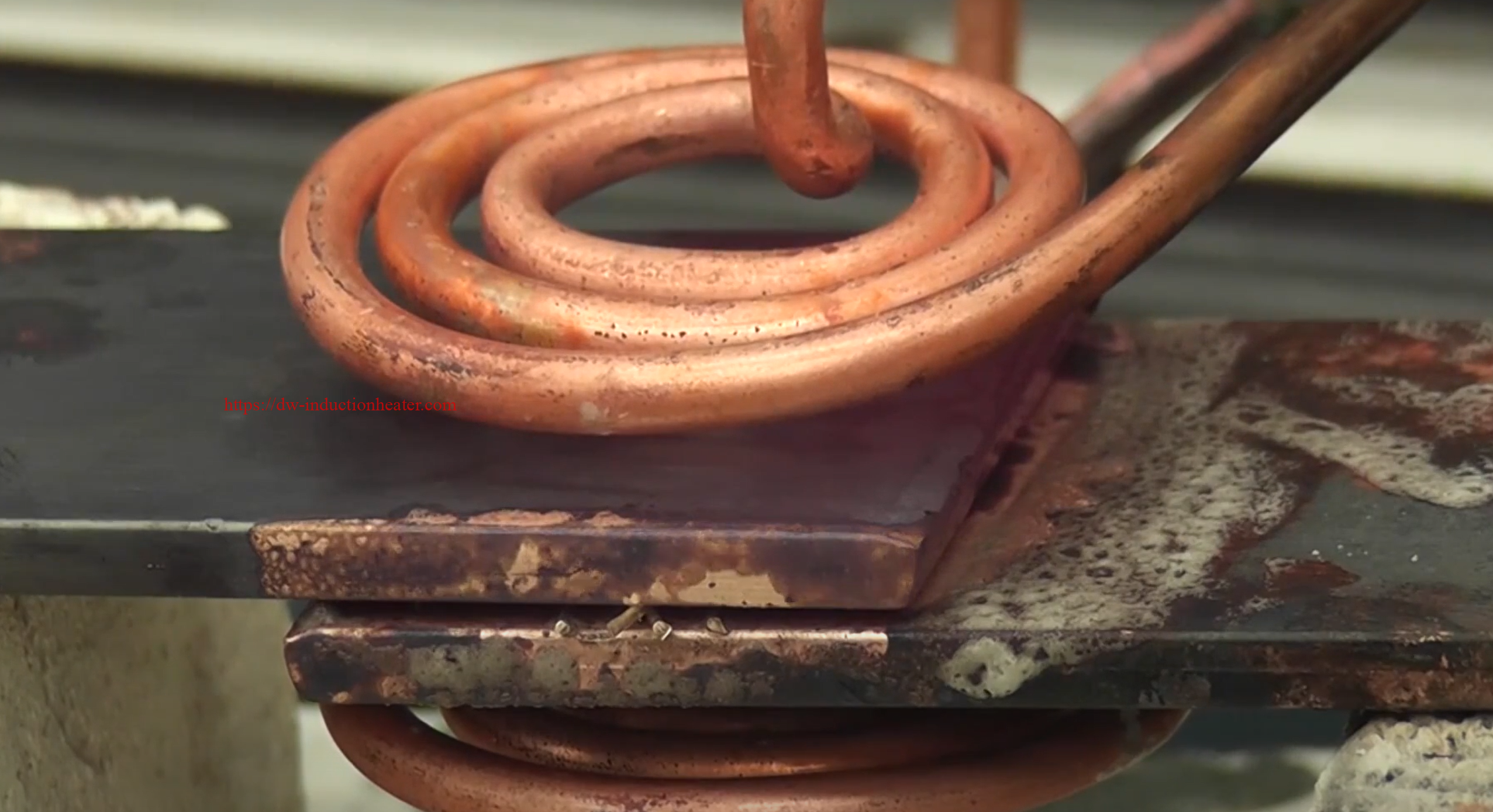
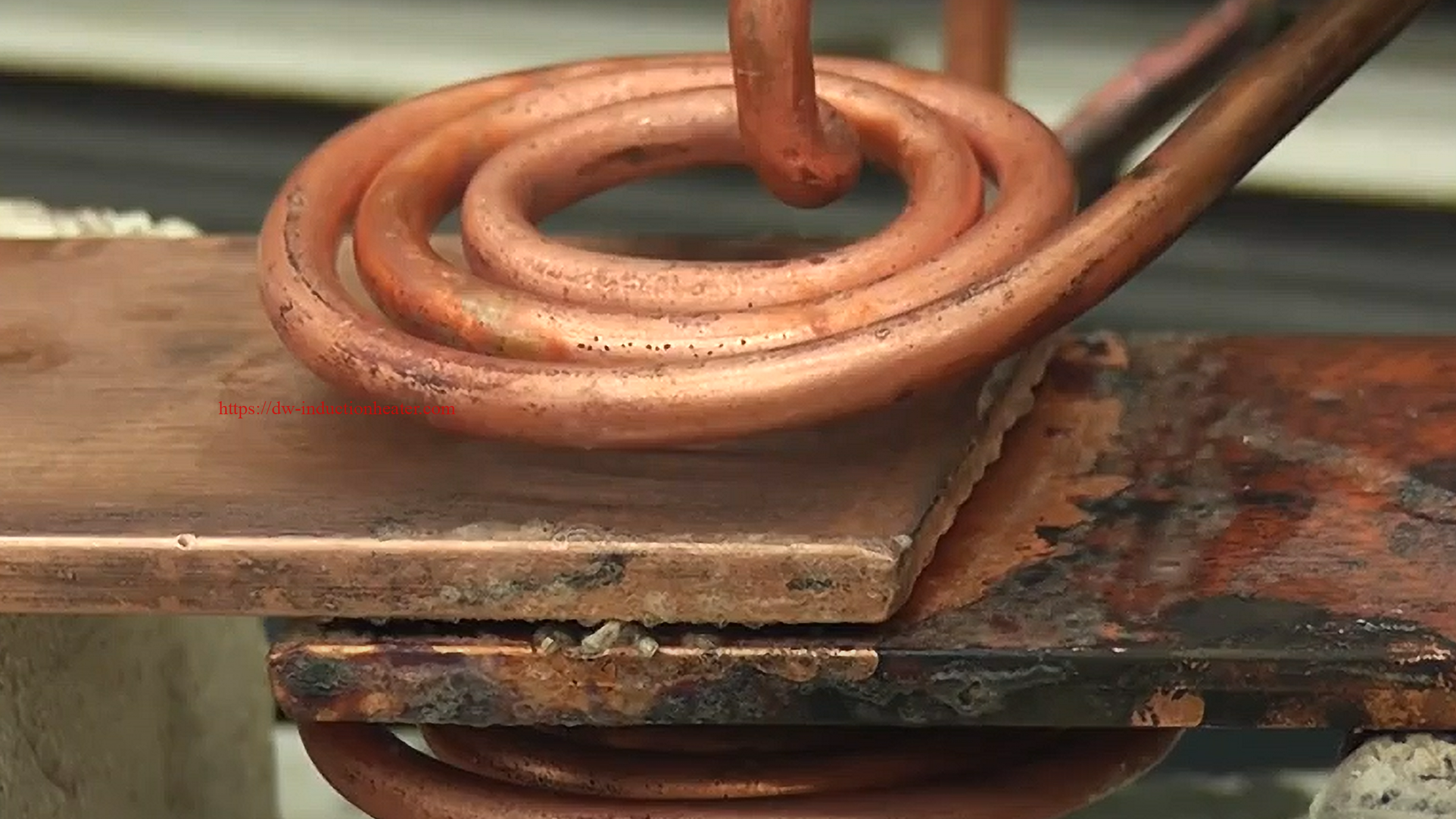
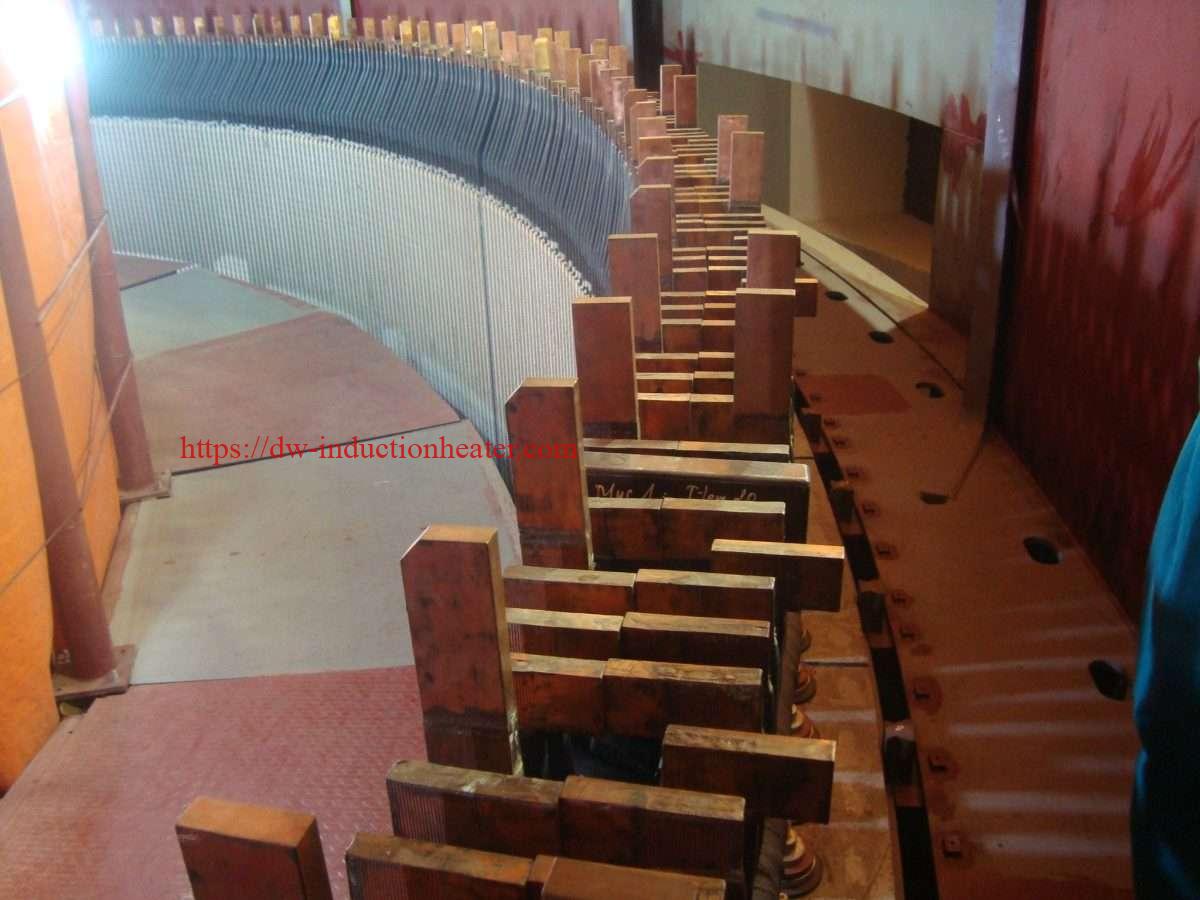
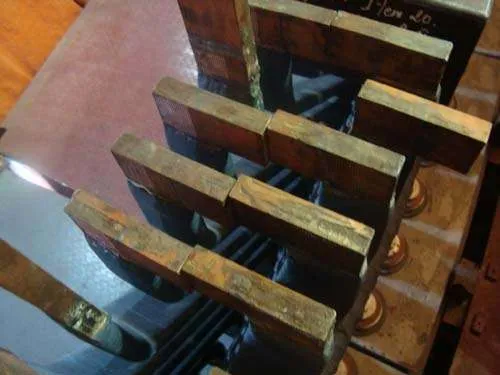
Induction brazing copper busbars is a process that involves the joining of two or more copper busbars using a heated filler metal. This process is used extensively in industries such as electrical, automotive, and aerospace industries. Copper busbars are commonly used in these industries because of their high conductivity, thermal stability, and corrosion resistance. Induction brazing is a process that uses an induction coil to generate heat in the copper busbars and the filler metal. The heat generated is used to melt the filler metal, which is then used to join the copper busbars. This process is fast, efficient, and produces high-quality brazed joints. In this article, we will discuss the process of induction brazing copper busbars in detail. We will cover the equipment required, the brazing process, the advantages of induction brazing, and the applications of induction brazing copper busbars. Equipment Required for Induction Brazing Copper Busbars The equipment required for induction brazing copper busbars includes an induction brazing machine, an induction coil, a power source, a filler metal, and a flux. Induction brazing machines are available in different sizes and configurations. These machines generate a high-frequency magnetic field that induces an electric current in the copper busbars and the filler metal. This current generates heat in the material, which is used to melt the filler metal and join the copper busbars. The induction coil is a critical component of the induction brazing machine. The coil is designed to generate a high-frequency magnetic field that induces an electric current in the copper busbars and the filler metal. The shape and size of the coil determine the distribution of the magnetic field and the heat generated. The power source is used to supply the induction brazing machine with the required electrical power. The power source is typically a high-frequency power supply that is designed to deliver a stable and consistent output. The filler metal is the material used to join the copper busbars. The filler metal is typically a silver-based alloy that has a melting point lower than that of the copper busbars. The filler metal is available in different forms, such as rods, wires, and powders. The flux is a material used to clean the surfaces of the copper busbars and the filler metal. The flux removes any oxide layers that may be present on the surfaces and promotes wetting of the solder. The flux also helps to reduce the formation of voids and defects in the brazed joint. Induction Brazing Process The induction brazing process involves several steps. These steps include surface preparation, flux application, filler metal placement, and induction brazing. Surface Preparation Surface preparation is a critical step in the induction brazing process. The surfaces of the copper busbars and the filler metal must be clean and free of any contaminants such as oils, grease, and oxide layers. This is because any contaminants on the surfaces can affect the quality of the brazed joint. The surfaces of the copper busbars and the filler metal can be cleaned using a variety of methods such as mechanical cleaning, chemical cleaning, or abrasive blasting. Mechanical cleaning involves using abrasives such as sandpaper or wire brushes to remove any contaminants from the surfaces. Chemical cleaning involves using solvents or acids to remove any contaminants from the surfaces. Abrasive blasting involves using compressed air to propel abrasive particles onto the surfaces to remove any contaminants. Flux Application Once the surfaces are clean, the flux is applied to the surfaces of the copper busbars and the filler metal. The flux helps to remove any remaining oxide layers on the surfaces and promotes wetting of the filler metal. The flux is typically applied to the surfaces of the copper busbars and the filler metal using a brush or spray applicator. The flux is allowed to dry before the filler metal is placed on the surfaces. Filler Metal Placement The filler metal is then placed on the surfaces of the copper busbars. The filler metal can be in the form of wires, rods, or powders. The filler metal is placed on the surfaces using a variety of methods such as hand placement or automated placement. Induction Brazing Once the filler metal is in place, the copper busbars and the filler metal are heated using the induction brazing machine. The induction coil generates a high-frequency magnetic field that induces an electric current in the copper busbars and the filler metal. This current generates heat in the material, which is used to melt the filler metal and join the copper busbars. The induction brazing process is fast, efficient, and produces high-quality brazed joints. The process is also environmentally friendly because it does not produce any harmful emissions. Advantages of Induction Brazing Copper Busbars Induction brazing copper busbars offers several advantages over other brazing methods. These advantages include: 1. Fast and Efficient - Induction brazing is a fast and efficient process that can join multiple copper busbars in a short amount of time. This process is ideal for high-volume production. 2. High Quality - Induction brazing produces high-quality brazed joints that are strong, durable, and resistant to corrosion. 3. Precise Control - Induction brazing allows for precise control of the heating process, which helps to ensure consistent brazed joints. 4. Environmentally Friendly - Induction brazing is an environmentally friendly process because it does not produce any harmful emissions. Applications of Induction Brazing Copper Busbars Induction brazing copper busbars is used extensively in industries such as electrical, automotive, and aerospace industries. Copper busbars are commonly used in these industries because of their high conductivity, thermal stability, and corrosion resistance. Induction brazing copper busbars is used in applications such as: 1. Electrical Equipment - Copper busbars are used extensively in electrical equipment such as transformers, switchgear, and power distribution systems. 2. Automotive Industry - Copper busbars are used in automotive applications such as battery packs, charging systems, and electric motors. 3. Aerospace Industry - Copper busbars are used in aerospace applications such as satellites, communication systems, and avionics. Conclusion Induction brazing copper busbars is a fast, efficient, and environmentally friendly process that produces high-quality brazed joints. This process is used extensively in industries such as electrical, automotive, and aerospace industries. Copper busbars are commonly used in these industries because of their high conductivity, thermal stability, and corrosion resistance. The equipment required for induction brazing copper busbars includes an induction brazing machine, an induction coil, a power source, a filler metal, and a flux. The induction brazing process involves several steps, including surface preparation, flux application, filler metal placement, and induction brazing. Induction brazing copper busbars offers several advantages over other brazing methods. These advantages include fast and efficient, high quality, precise control, and environmentally friendly. Overall, induction brazing copper busbars is an effective and reliable method for joining copper busbars in a variety of applications. https://dw-inductionheater.com/induction-brazing-copper-busbars-heating-machine.html?feed_id=231526&_unique_id=6597c7dec2dd8

2024年1月4日星期四

The Benefits of Induction Brazing Copper Plates and copper busbars for Your Business

The Benefits of Induction Brazing Copper Plates and copper busbars for Your Business

Induction brazing copper plates and busbars is a process that involves joining two or more copper plates using a filler metal that has a lower melting point. Induction brazing is a highly efficient and cost-effective way of joining copper plates, as it uses electromagnetic induction to heat the copper plates and the filler metal to their melting point. In this article, we will explore the benefits, applications, and process of induction brazing copper plates. Benefits of Induction Brazing Copper Plates: 1. High Strength Joints: Induction brazing copper plates produces high-strength joints that are capable of withstanding high temperatures, pressures, and vibrations. This makes it an ideal choice for applications that require high mechanical strength. 2. Cost-Effective: Induction brazing copper plates is a highly efficient and cost-effective way of joining copper plates. It uses electromagnetic induction to heat the copper plates and the filler metal, which reduces the time and energy required for the process. 3. Precise Control: Induction brazing copper plates offers precise control over the heating process, which allows for consistent and repeatable results. This is especially important for applications that require high precision and accuracy. 4. Clean Process: Induction brazing copper plates is a clean process that does not require any flux or chemicals. This results in a clean and environmentally friendly process. Applications of Induction Brazing Copper Plates: 1. Heat Exchangers: Induction brazing copper plates is commonly used in the manufacturing of heat exchangers. Copper plates are brazed together to form a stack, which is then used to transfer heat between two fluids. 2. Electrical Conductors: Induction brazing copper plates is also used in the manufacturing of electrical conductors. Copper plates are brazed together to form a conductor, which is then used to transmit electrical currents. 3. Automotive Industry: Induction brazing copper plates is used in the manufacturing of automotive radiators, oil coolers, and air conditioning systems. Copper plates are brazed together to form a heat exchanger, which is then used to transfer heat between fluids. 4. Aerospace Industry: Induction brazing copper plates is used in the manufacturing of aerospace heat exchangers, which are used to regulate the temperature of aircraft engines. Copper plates are brazed together to form a heat exchanger, which is then used to transfer heat between fluids. Process of Induction Brazing Copper Plates: 1. Preparation: The first step in induction brazing copper plates is to prepare the copper plates and the filler metal. The copper plates must be cleaned and degreased, and the filler metal must be cut to the required size. 2. Assembly: The copper plates and the filler metal are then assembled in a jig or fixture. The jig or fixture holds the copper plates and the filler metal in the correct position for brazing. 3. Heating: The assembly is then placed in an induction heating coil, which generates an electromagnetic field that heats the copper plates and the filler metal to their melting point. The filler metal melts and flows into the joint between the copper plates, creating a bond. 4. Cooling: The assembly is then allowed to cool naturally or is quenched in water or oil. The cooling process solidifies the filler metal, creating a strong bond between the copper plates. Advantages of Induction Brazing Copper Plates: 1. High Productivity: Induction brazing copper plates is a highly productive process that can join multiple copper plates simultaneously. This results in a high production rate, which reduces the time and cost required for the process. 2. Reduced Energy Consumption: Induction brazing copper plates uses electromagnetic induction to heat the copper plates and the filler metal, which reduces the energy consumption of the process. This results in lower operating costs and a more environmentally friendly process. 3. Consistent Quality: Induction brazing copper plates offers consistent and repeatable results, which ensures the quality of the finished product. This is especially important for applications that require high precision and accuracy. 4. Reduced Material Waste: Induction brazing copper plates produces a minimal amount of material waste, which reduces the cost and environmental impact of the process. 5. Safe Process: Induction brazing copper plates is a safe process that does not require any open flames or hazardous chemicals. This results in a safer working environment for operators and reduces the risk of accidents. Challenges of Induction Brazing Copper Plates: 1. Equipment Cost: Induction brazing copper plates requires specialized equipment, which can be expensive to purchase and maintain. This can be a barrier to entry for small businesses or those with limited budgets. 2. Material Compatibility: Not all copper alloys are compatible with induction brazing, which can limit the range of applications for the process. 3. Joint Strength: The joint strength of induction brazed copper plates can be affected by the quality of the filler metal and the brazing process. This can result in weaker joints that are not suitable for certain applications. 4. Process Control: Induction brazing copper plates requires precise control over the heating process, which can be challenging to achieve. Any variation in the heating process can affect the quality of the finished product. Conclusion: Induction brazing copper plates and busbars is a highly efficient and cost-effective way of joining copper plates. It offers high-strength joints, precise control, and a clean process. Induction brazing copper plates is used in a wide range of applications, including heat exchangers, electrical conductors, and the aerospace andautomotive industries. The process of induction brazing copper plates involves preparation, assembly, heating, and cooling. With its many benefits and applications, induction brazing copper plates is a valuable addition to any manufacturing process. However, it also presents challenges such as equipment cost, material compatibility, joint strength, and process control. By understanding these challenges and implementing best practices, manufacturers can optimize the induction brazing process for their specific applications and achieve high-quality results.   https://dw-inductionheater.com/the-benefits-of-induction-brazing-copper-plates-and-copper-busbars-for-your-business.html?feed_id=231496&_unique_id=659710f8ac9d2

Induction Brazing Copper Lap Joints: A Reliable and Efficient Joining Method

Induction Brazing Copper Lap Joints: A Reliable and Efficient Joining Method

Induction brazing copper lap joints is a highly effective method for joining copper components with precision and strength. The process involves using an induction heating system to generate heat directly within the copper material, allowing for a localized and controlled heating of the joint area. The brazing filler metal, typically a copper-based alloy, is then introduced to the heated joint, melting and flowing into the gap to create a strong, durable bond. Induction brazing offers several benefits including rapid heating, minimal distortion, and the ability to join dissimilar metals. If you are looking for a reliable and efficient method to braze copper lap joints, induction brazing is the way to go. 1. The Advantages of Induction Brazing Copper Lap Joints 1.1. Precise Heat Control: Induction brazing allows for precise and localized heating, minimizing the risk of thermal damage to the surrounding areas. This is especially important when working with sensitive copper components or assemblies with complex geometries. 1.2. Increased Efficiency: Induction heating is fast and efficient, as it directly heats the workpiece without the need for preheating the entire assembly. This results in reduced energy consumption, shorter cycle times, and increased productivity. 1.3. Stronger Joints: Induction brazing produces high-quality joints with excellent bond strength. The controlled heating process ensures uniform heating and proper filler metal flow, resulting in robust and reliable connections. 1.4. Clean and Environmentally Friendly: Induction brazing eliminates the need for open flames or torches, minimizing the risk of contamination and creating a safer working environment. Additionally, it reduces the generation of harmful fumes and pollutants, making it an eco-friendly choice. 2. The Induction Brazing Process for Copper Lap Joints 2.1. Preparation: Thoroughly clean the copper surfaces to remove any contaminants, such as dirt, grease, or oxide layers. This ensures optimal bonding and prevents defects in the joint. 2.2. Filler Metal Selection: Choose a brazing filler metal that is compatible with copper and suitable for your specific application. Silver-based alloys, such as silver-copper-phosphorus, or copper-phosphorus alloys are commonly used for copper brazing. 2.3. Joint Assembly: Position the copper parts in a lap joint configuration, ensuring a close fit. Fixtures or clamps can be used to secure the parts during the brazing process. 2.4. Flux Application: Apply a suitable flux to the joint area. The flux removes oxide layers, promotes wetting of the filler metal, and prevents oxidation during heating. Select a flux specifically formulated for brazing copper. 2.5. Induction Heating: Position the copper assembly within the induction coil, ensuring the joint area is within the heating zone. Adjust the induction heating system's power, frequency, and parameters based on manufacturer guidelines and the size/thickness of the copper parts. 2.6. Filler Metal Introduction: Once the joint area reaches the brazing temperature, introduce the filler metal. It can be in the form of a pre-placed filler wire or applied directly as a brazing paste or powder. The heat from the induction process melts the filler metal, allowing it to flow into the joint. 2.7. Cooling and Cleaning: After the filler metal has completely filled the joint, switch off the power and allow the joint to cool naturally. Once cooled, remove any residual flux or oxide from the brazed joint using appropriate cleaning methods. 3. Applications of Induction Brazing Copper Lap Joints 3.1. Electrical and Electronics Industry: Induction brazing is widely used in manufacturing electrical connectors, motor windings, transformers, and various electronic components that require reliable electrical conductivity and mechanical strength. 3.2. HVAC and Refrigeration: Copper tube connections in air conditioning, refrigeration, and heat exchanger systems often employ induction brazing for its efficiency, accuracy, and consistent quality. 3.3. Automotive and Aerospace: Induction brazing is utilized in the production of automotive heat exchangers, fuel systems, and aerospace components, ensuring reliable performance under demanding conditions. 3.4. Plumbing and Pipe Fittings: Copper plumbing fittings, valves, and pipe joints can be efficiently and effectively brazed using induction, providing leak-free connections and extended service life. Conclusion Induction brazing copper lap joints is a highly efficient and effective method of joining two copper pieces together. The process involves using an induction heating system to heat the joint area, melting a filler metal, and creating a strong bond between the copper pieces. This technique offers several advantages, including precise and localized heating, minimal distortion, and faster heating cycles. Induction brazing also ensures a clean and contamination-free joint, resulting in superior quality and strength. Whether you require brazing for plumbing, electronics, or any other copper applications, our skilled technicians are ready to provide reliable and durable solutions. Trust our expertise in induction brazing copper lap joints for a seamless and robust joining process that meets your specific needs. https://dw-inductionheater.com/induction-brazing-copper-lap-joints-a-reliable-and-efficient-joining-method.html?feed_id=231466&_unique_id=65967e5a9fb68

关注者

我的简介

我的照片
HLQ induction heating machine manufacturer provides the service of induction brazing,melting,hot forming,hardening surface,annealing,shrink fitting,PWHT,etc.