显示标签为“buyinductionhardeningmachine”的博文。显示所有博文

2024年2月21日星期三

Induction Hardening Surface Process

Induction Hardening Surface Process Applicatons

What is induction hardening ?

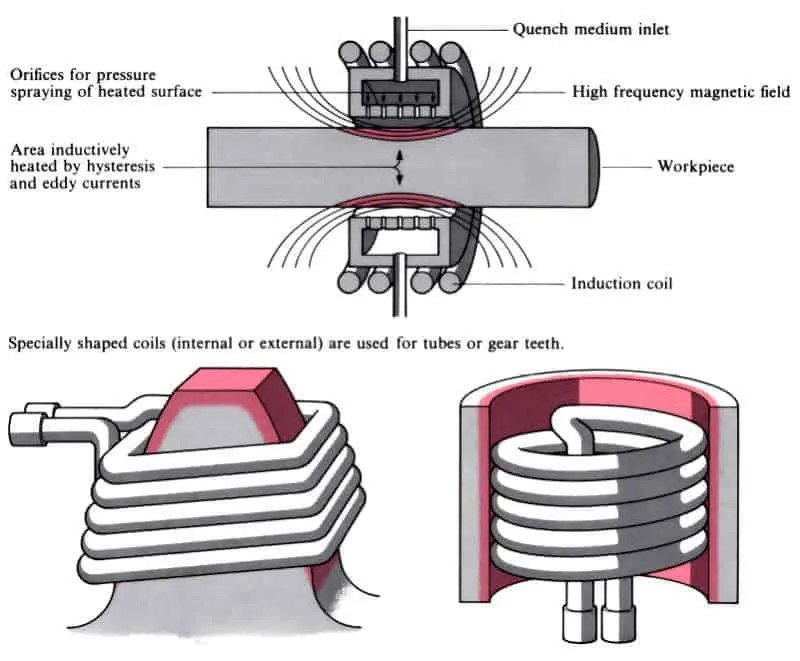
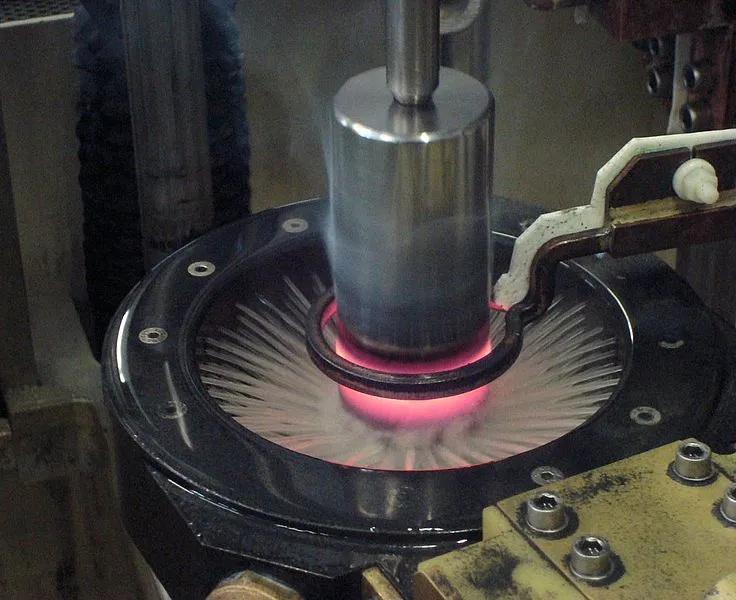
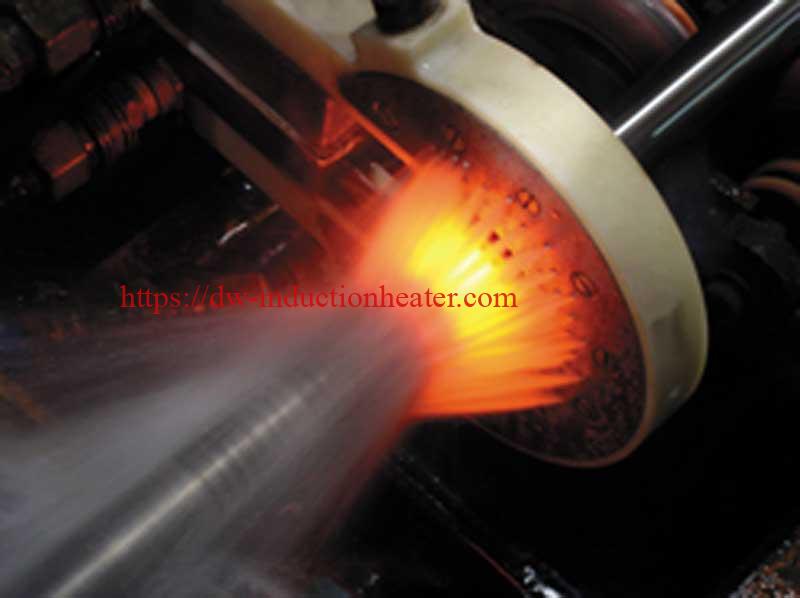
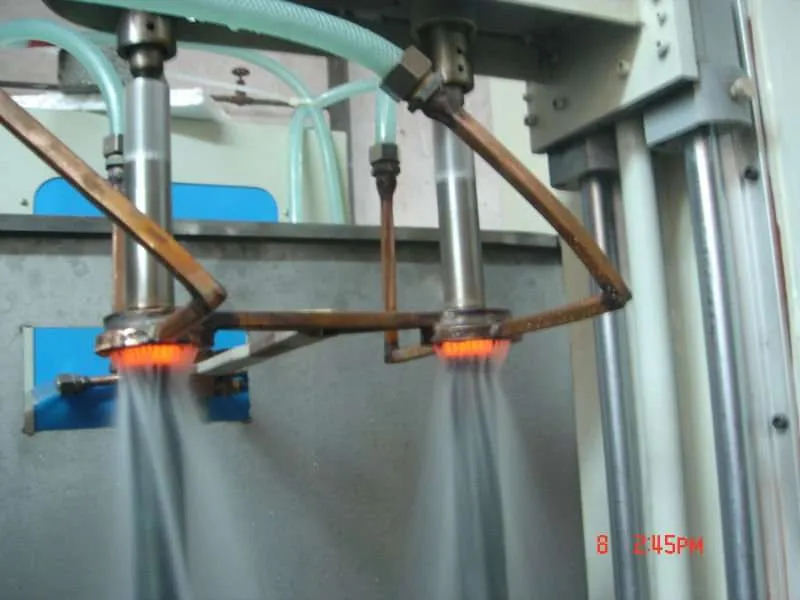
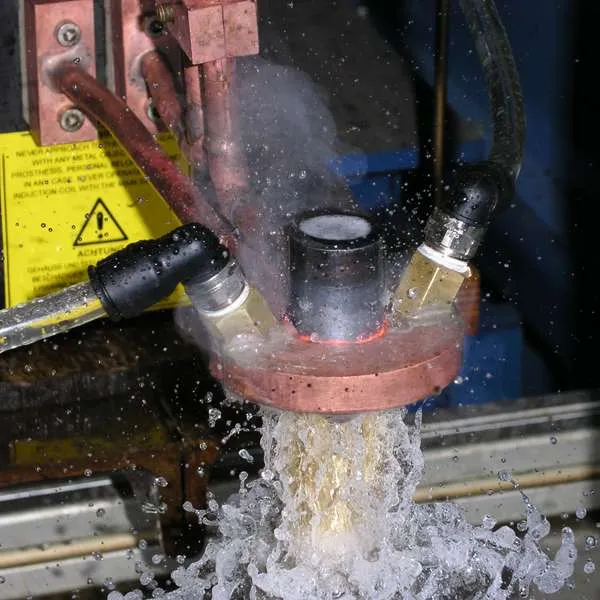
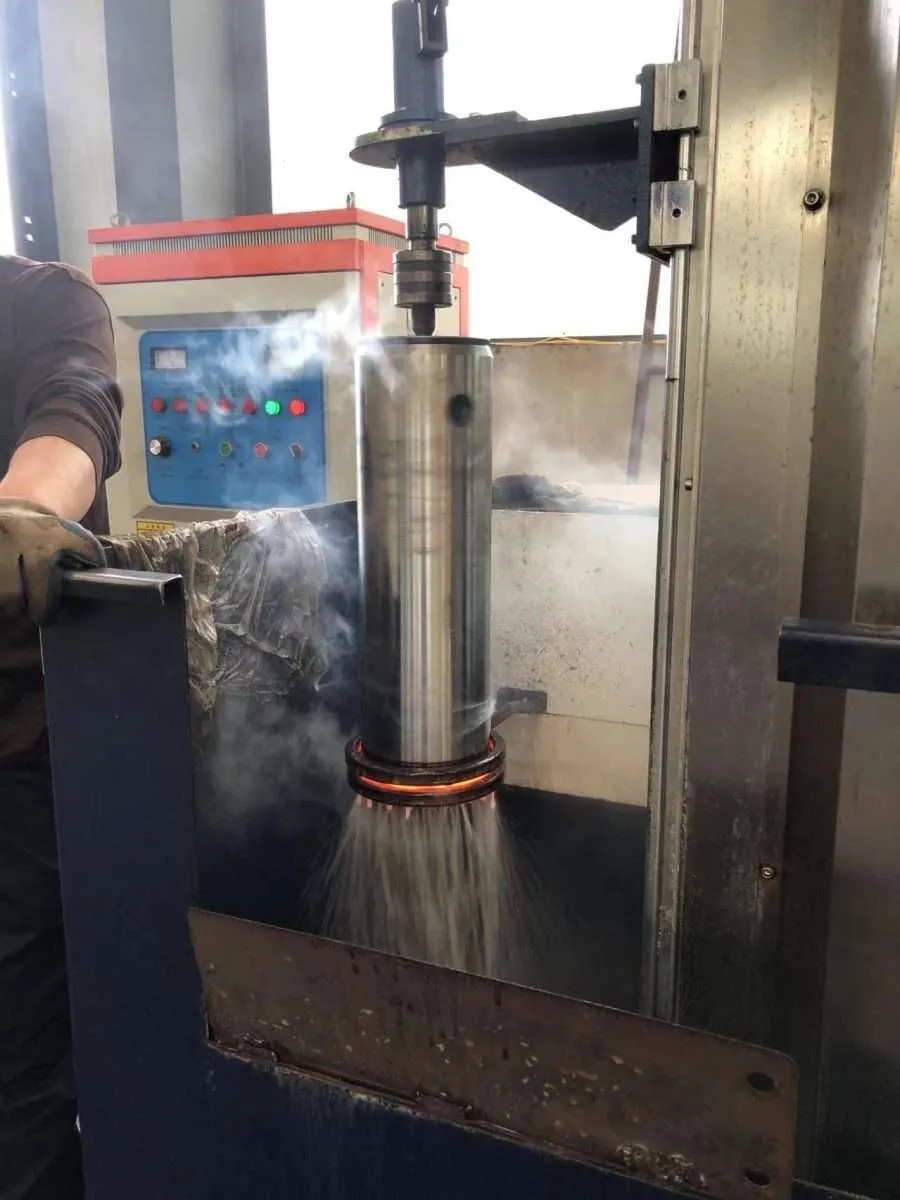
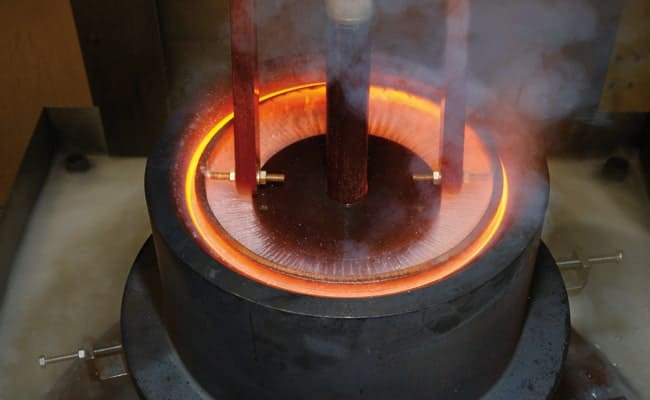
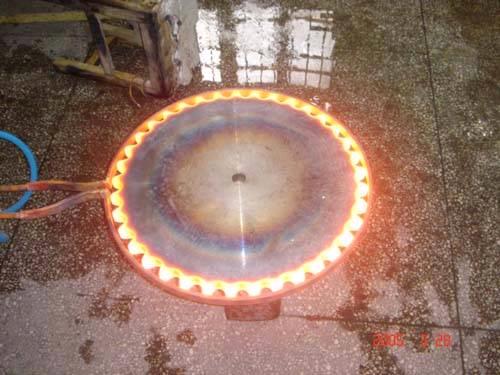
Induction hardening is a form of heat treatment in which a metal part with sufficient carbon content is heated in the induction field and then rapidly cooled. This increases both the hardness and brittleness of the part. Induction heating allows you to have localized heating to a pre-determined temperature and enables you to precisely control the hardening process. Process repeatability is thus guaranteed. Usually, induction hardening is applied to metal parts which need to have great surface wear resistance, while at the same time retaining their mechanical properties. After the induction hardening process is achieved, the metal workpiece needs to be quenched in water, oil or air inorder to obtain specific properties of the surface layer. induction hardening surface process Induction hardening is a method of quickly and selectively hardening the surface of a metal part. A copper coil carrying a significant level of alternating current is placed near (not touching) the part. Heat is generated at, and near the surface by eddy current and hysteresis losses. Quench, usually water-based with an addition such as a polymer, is directed at the part or it is submerged. This transforms the structure to martensite, which is much harder than the prior structure. A popular, modern type of induction hardening equipment is called a scanner. The part is held between centers, rotated, and passed through a progressive coil which provides both heat and quench. The quench is directed below the coil, so any given area of the part is rapidly cooled immediately following heating. Power level, dwell time, scan (feed) rate and other process variables are precisely controlled by a computer. Case hardening process used to increase wear resistance, surface hardness and fatigue life through creation of a hardened surface layer while maintaining an unaffected core microstructure.
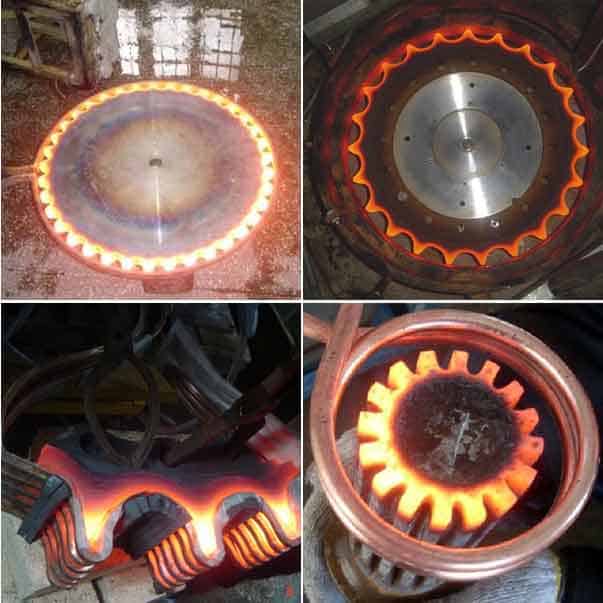
Induction hardening is used to increase the mechanical properties of ferrous components in a specific area. Typical applications are powertrain, suspension, engine components and stampings. Induction hardening is excellent at repairing warranty claims / field failures. The primary benefits are improvements in strength, fatigue and wear resistance in a localised area without having to redesign the component.

Processes and Industries that can benefit from induction hardening:

  • Heat-treatment
  • Chain hardening
  • Tube & Pipe Hardening
  • Shipbuilding
  • Aerospace
  • Railway
  • Automotive
  • Renewable energies

Benefits of Induction Hardening:

Favoured for components that are subjected to heavy loading. Induction imparts a high surface hardness with a deep case capable of handling extremely high loads. Fatigue strength is increased by the development of a soft core surrounded by an extremely tough outer layer. These properties are desirable for parts that experience torsional loading and surfaces that experience impact forces. Induction processing is performed one part at a time allowing for very predictable dimensional movement from part to part.
  • Precise control over temperature and hardening depth
  • Controlled and localized heating
  • Easily integrated into production lines
  • Fast and repeatable process
  • Each workpiece can be hardened by precise optimized parameters
  • Energy-efficient process
Steel and stainless-steel components that can be hardened with induction: Fasteners, flanges, gears, bearings, tube, inner and outer races, crankshafts, camshafts, yokes, drive shafts, output shafts, spindles, torsion bars, slewing rings, wire, valves, rock drills, etc.

Increased Wear Resistance

There is a direct correlation between hardness and wear resistance. The wear resistance of a part increases significantly with induction hardening, assuming the initial state of the material was either annealed, or treated to a softer condition.

Increased Strength & Fatigue Life due to the Soft Core & Residual Compressive Stress at the Surface

The compressive stress (usually considered a positive attribute) is a result of the hardened structure near the surface occupying slightly more volume than the core and prior structure.

Parts may be Tempered after Induction Hardening to Adjust Hardness Level, as desired

As with any process producing a martensitic structure, tempering will lower hardness while decreasing brittleness.

Deep Case with Tough Core

Typical case depth is .030” - .120” which is deeper on average than processes such as carburizing, carbonitriding, and various forms of nitriding performed at sub-critical temperatures. For certain projects such as axels, or parts which are still useful even after much material has worn away, case depth may be up to ½ inch or greater.

Selective Hardening Process with No Masking Required

Areas with post-welding or post-machining stay soft - very few other heat treat processes are able to achieve this.

Relatively Minimal Distortion

Example: a shaft 1” Ø x 40” long, which has two evenly spaced journals, each 2” long requiring support of a load and wear resistance. Induction hardening is performed on just these surfaces, a total of 4” length. With a conventional method (or if we induction hardened the entire length for that matter), there would be significantly more warpage.

Allows use of Low Cost Steels such as 1045

The most popular steel utilized for parts to be induction hardened is 1045. It is readily machinable, low cost, and due to a carbon content of 0.45% nominal, it may be induction hardened to 58 HRC +. It also has a relatively low risk of cracking during treatment. Other popular materials for this process are 1141/1144, 4140, 4340, ETD150, and various cast irons.
Limitations of Induction Hardening

Requires an Induction Coil and Tooling which relates to the Part’s Geometry

Since the part-to-coil coupling distance is critical to heating efficiency, the coil’s size and contour must be carefully selected. While most treaters have an arsenal of basic coils to heat round shapes such as shafts, pins, rollers etc., some projects may require a custom coil, sometimes costing thousands of dollars. On medium to high volume projects, the benefit of reduced treatment cost per part may easily offset coil cost. In other cases, the engineering benefits of the process may outweigh cost concerns. Otherwise, for low volume projects the coil and tooling cost usually makes the process impractical if a new coil must be built. The part must also be supported in some manner during the treatment. Running between centers is a popular method for shaft type parts, but in many other cases custom tooling must be utilized.

Greater Likelihood of Cracking Compared to most Heat Treatment Processes

This is due to the rapid heating and quenching, also the tendency to create hot spots at features/edges such as: keyways, grooves, cross holes, threads.

Distortion with Induction Hardening

Distortion levels do tend to be greater than processes such as ion or gas nitriding, due to the rapid heat/quench and resultant martensitic transformation. That being said, induction hardening may produce less distortion than conventional heat treat, particularly when it’s only applied to a selected area.

Material Limitations with Induction Hardening

Since the induction hardening process does not normally involve diffusion of carbon or other elements, the material must contain enough carbon along with other elements to provide hardenability supporting martensitic transformation to the level of hardness desired. This typically means carbon is in the 0.40%+ range, producing hardness of 56 – 65 HRC. Lower carbon materials such as 8620 may be used with a resultant reduction in achievable hardness (40-45 HRC in this case). Steels such as 1008, 1010, 12L14, 1117 are typically not used due to the limited increase in hardness achievable.

Induction Hardening Surface Process details

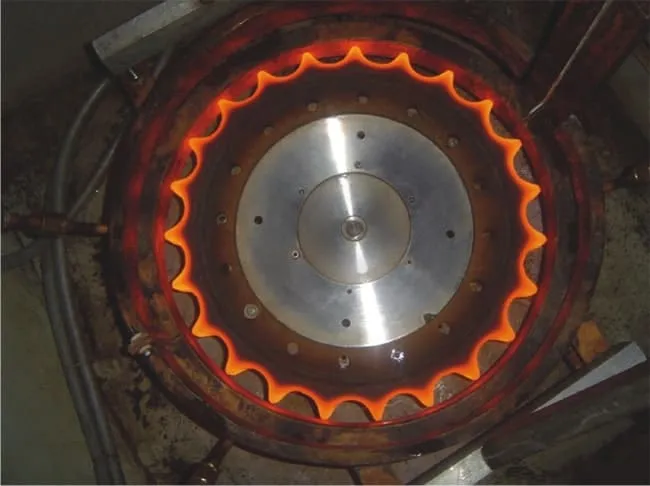
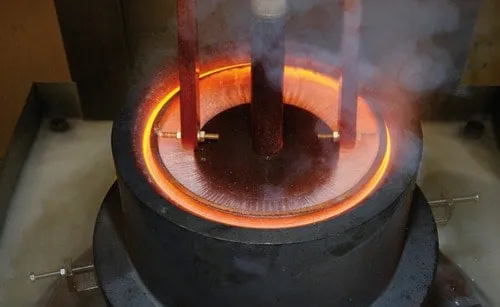
Induction hardening is a process used for the surface hardening of steel and other alloy components. The parts to be heat treated are placed inside a copper coil and then heated above their transformation temperature by applying an alternating current to the coil. The alternating current in the coil induces an alternating magnetic field within the work piece which causes the outer surface of the part to heat to a temperature above the transformation range. The components are heated by means of an alternating magnetic field to a temperature within or above the transformation range followed by immediate quenching. It is an electromagnetic process using a copper inductor coil, which is fed a current at a specific frequency and power level.   https://dw-inductionheater.com/induction-hardening-surface-process.html?feed_id=234490&_unique_id=65d69f3639d3d
2024年2月10日星期六

Induction Hardening and tempering

Induction Hardening and tempering Surface Process

Induction Hardening

Induction Hardening is a process of heating followed by cooling generally fast for increase hardness and mechanical strength of steel. To this end, the steel is heated to a temperature slightly higher than the upper critical (between 850-900ºC) and then cooled more or less quickly (depending on the characteristics of steel) in a medium such as oil, air, water, water mixed with soluble polymers, etc. There are different methods for heating such as electric oven, gas cooker, salt, flame, induction, etc. The steels that are normally used in induction hardening contain from 0.3% to 0.7% carbon (hypoeutectic steels).

Induction heating advantages:

  • It treats a specific part of the piece (hardening profile)
  • Frequency Control and heating times
  • Cooling control
  • Energy saving
  • No physical contact
  • Control and located heat
  • Can be integrated in production lines
  • Increase performance and saves space
Induction hardening can be done in two different ways:
  • Static: consists of setting the part in front of the inductor and carrying out the operation without moving either the part or the inductor. This type of operation is very fast, requires only simple mechanics and enables a very accurate localisation of the treated area, even with parts with complicated geometry.
  • Progressive (by scanning): consists of going over the part with a continuous operation, moving either the part or the inductor. This kind of operation means that parts with large surfaces and large sizes can be treated.
For the same kind of part the scanning treatment requires less power with longer treatment time in compare to static treatment.

Induction Tempering

Induction Tempering is a process able to decrease the hardness, strength and increases the toughness of hardened steels, while removes the tensions created in the temple, leaving the steel with the required hardness. The traditional tempering system consists of heating the parts at relatively low temperatures (from 150ºC to 500°C, always below the lineAC1) for a while and then let them cool slowly.

Induction heating advantages:

  • Shorter times in the process
  • Temperature control
  • Integration in production lines
  • Energy saving
  • Immediate availability of parts
  • Saves floor space
  • Improved environmental conditions
The process of hardening and tempering is a treatment for various components in many industrial sectors.  
https://dw-inductionheater.com/induction-hardening-and-tempering.html?feed_id=233836&_unique_id=65c856f96ed5b

2024年1月12日星期五

The Complete Guide to Induction Hardening of Process Benefits and Applications

The Complete Guide to Induction Hardening: Process, Benefits, and Applications

Induction hardening is a heat treatment process that is used to increase the hardness and durability of metal parts.It is a highly effective method for improving the wear resistance of various components, making them suitable for use in demanding applications. Induction hardening is widely used in the automotive, aerospace, and manufacturing industries, among others. If you're looking to learn more about induction hardening, this is the article for you. In this comprehensive guide, we will explore the induction hardening process, its benefits, and its applications in various industries. Whether you're a manufacturing engineer or just someone who's interested in the science of metalworking, you'll find everything you need to know about induction hardening in this guide.

1. What is Induction Hardening?

Induction hardening is a heat treatment process that is used to strengthen the surface of metal parts. It involves the use of an induction heating system to quickly heat up the surface of the metal to a high temperature, followed by a rapid cooling process. This creates a hardened surface layer on the metal, while leaving the core of the metal unchanged. The process of induction hardening starts with the placement of the part to be hardened in an induction heating coil. The coil is then energized, creating a strong electromagnetic field around the part that rapidly heats the surface layer of the metal. Once the desired temperature is reached, the part is rapidly cooled using a quenching medium such as water or oil. The benefits of induction hardening are numerous. The process creates a surface layer that is much harder and more wear-resistant than the core of the metal. This results in longer part life and reduced maintenance costs. Induction hardening can also be used to selectively harden specific areas of a part, resulting in improved performance and reduced weight. Induction hardening is used in a wide range of applications, including automotive, aerospace, and industrial manufacturing. Parts commonly treated with induction hardening include gears, shafts, bearings, and other components that require high strength and wear resistance. Overall, induction hardening is a highly effective process for improving the properties of metal parts. It offers numerous benefits and can be applied to a wide range of applications, making it a valuable tool in the manufacturing industry.

2. The Induction Hardening Process

Induction hardening is a process of heat treatment that involves heating a metal object and then rapidly cooling it to harden its surface. The process works by using an electromagnetic field to create heat in the surface layer of the metal. The heat is then quickly removed by cooling the metal with a spray of water or oil. This rapid cooling process causes the metal to harden, resulting in increased resistance to wear and tear. The induction hardening process is ideal for parts that require a hard and wear-resistant surface, such as gears, shafts, and bearings. The process is also used for products that require a high level of precision and repeatable results. The induction hardening process has several advantages over other methods of heat treatment. One of the main advantages is the speed of the process. Induction hardening is a fast and efficient process that can be completed in a matter of seconds. This makes it ideal for high-volume production environments. Another advantage of induction hardening is the precise control that can be achieved over the hardening process. The process can be controlled to produce a specific depth and hardness level, ensuring that the part meets the required specifications. Overall, the induction hardening process is a highly efficient and effective method of heat treatment. Its ability to produce hard and wear-resistant surfaces quickly and precisely makes it an ideal choice for a wide range of applications.

3. Benefits of Induction Hardening

Induction hardening is a popular heat treatment process that has many benefits. One of the significant benefits of induction hardening is that it can increase the hardness and durability of the material being treated. This is achieved by heating the material to a high temperature and then rapidly cooling it. Induction hardening can help to make the material stronger and more resistant to wear and tear. Another benefit of induction hardening is that it is a highly precise process. This means that it can be used to selectively harden certain areas of a material while leaving other areas unaffected. This level of precision is essential in industries where accuracy is critical, such as aerospace and automotive manufacturing. Induction hardening is also a very efficient process. It is faster and more energy-efficient than other forms of heat treatment, such as gas or furnace heat treatment. This means that it is a cost-effective way to improve the properties of a material. Finally, induction hardening is a very versatile process. It can be used to harden a wide range of materials, including steel, aluminum, brass, and copper. Additionally, it can be used to harden a variety of different shapes and sizes of parts, from small screws to large gears. This versatility makes induction hardening an attractive option for many different industries.

4. Applications of Induction Hardening in Various Industries

Induction hardening is a popular surface hardening process that is used in various industries: 1. Automotive components: Induction hardening is widely used in the automotive industry for the hardening of various parts like gears, shafts, and crankshafts. This helps in enhancing their strength, durability, and wear resistance. 2. Aerospace components: Induction hardening is used to harden aerospace components such as turbine blades, jet engine components, and gearbox components. This helps in improving their performance and longevity. 3. Industrial machinery: Induction hardening is also used to harden various industrial equipment and machinery parts that are exposed to high levels of wear and tear such as gears, shafts, and bearings. 4. Tooling and cutting tools: Induction hardening is used to harden various tooling and cutting tools such as drills, saw blades, and milling cutters. 5. Agricultural equipment: Induction hardening is also used to harden various agricultural equipment parts such as plowshares, tines, and blades. 6. Medical equipment: Induction hardening is used in the medical industry to harden various equipment parts such as surgical instruments and implants. 7. Construction equipment: Induction hardening is also used to harden various construction equipment parts such as hydraulic cylinders, connecting rods, and crane components. 8. Power generation equipment: Induction hardening is used to harden various parts of power generation equipment such as turbine blades and shafts. Induction hardening is a surface hardening process used to increase the hardness and durability of metal components. It involves heating the surface of a metal component using an induction heating system, which generates an alternating electromagnetic field. The heat generated by the electromagnetic field causes the surface of the metal to reach a temperature above its critical point, after which the component is quenched to rapidly cool the surface. This process hardens the surface of the metal, while leaving the interior of the component relatively unaffected. Induction hardening is commonly used in applications where high wear resistance is required, such as in the automotive, aerospace, and manufacturing industries.     https://dw-inductionheater.com/the-complete-guide-to-induction-hardening-of-process-benefits-and-applications.html?feed_id=232078&_unique_id=65a1103a25806

2024年1月6日星期六

How Induction Hardening Machines Can Benefit Your Manufacturing Business

What is Induction Hardening and How Does it Work?

Induction hardening is a process used to strengthen the surface of metal parts. It involves heating the metal part through electromagnetic induction and then immediately quenching it in water or oil. This process can be used to increase the wear resistance and durability of metal components. The induction hardening process works through the use of an induction hardening machine. This machine generates a high-frequency electromagnetic field that quickly heats the metal part to a desired temperature. The heat generated is concentrated on the surface of the metal part, which allows for a rapid heating and cooling process. This process effectively hardens the outer layer of the metal part, which can improve its strength and durability. One of the primary benefits of using induction hardening machines is that it can save time and money in the manufacturing process. The process is much quicker than traditional methods of hardening, which involves heating the entire part and then cooling it slowly. Induction hardening is also more precise than other methods, as it can be controlled with accuracy, resulting in more consistent product quality. Additionally, induction hardening machines can be used to harden localized areas of a part, which allows for more flexibility in the manufacturing process. This means that manufacturers can focus on specific areas of a part that require hardening rather than hardening the entire part. This can result in significant cost savings, as well as increased efficiency in the production process. In summary, induction hardening is a process that can benefit manufacturing businesses by improving the wear resistance and durability of metal parts. The use of induction hardening machines can save time and money in the manufacturing process, as well as improve product quality and consistency. Benefits of Induction Hardening Machines for Your Manufacturing Business Induction hardening machines have become a popular choice for many manufacturing businesses due to their numerous benefits. One of the primary benefits of induction hardening machines is their ability to increase the wear resistance of metal components. This is achieved by rapidly heating and cooling the surface of the metal, which results in a hardened layer. This hardened layer can greatly increase the lifespan of the component and ultimately reduce the need for replacement parts. In addition to increasing wear resistance, induction hardening machines also offer increased accuracy and efficiency. These machines are capable of precisely controlling the amount of heat applied to the metal, which ensures consistent results every time. This level of accuracy can ultimately lead to a reduction in waste and an increase in productivity. Another benefit of induction hardening machines is their ability to work with a wide range of metals, including steel, aluminum, and copper. This versatility allows manufacturers to use the same machine for multiple components, further increasing efficiency and reducing costs. Finally, induction hardening machines are also environmentally friendly. Unlike traditional hardening methods, such as flame hardening, induction hardening does not produce harmful emissions or waste. This makes it a great choice for manufacturers who are looking to reduce their environmental impact. Overall, induction hardening machines offer a wide range of benefits for manufacturing businesses. From increased wear resistance to improved accuracy and efficiency, these machines can help businesses become more productive, reduce waste, and ultimately save money. An Induction Hardening Machine is a piece of industrial equipment used to harden metal parts. The process involves heating the metal using an electromagnetic field and then quenching it with water or oil. This results in a surface layer that is harder than the rest of the part, which can improve its durability and performance. Induction hardening machines can be used on a variety of metal parts, including gears, shafts, and bearings. They're commonly used in automotive and aerospace industries, as well as in the manufacturing of industrial machinery and equipment. If you're in need of an induction hardening machine, there are many reputable manufacturers and suppliers that can help you find the right equipment for your needs. The Ultimate Guide to Roller Shaft Induction Hardening Machine Roller shaft induction hardening machine is an essential tool in the manufacturing industry that is used to harden roller shafts. The process of induction hardening is the most efficient way to strengthen the surface of metal parts, including roller shafts. It provides improved wear resistance, durability, and better performance of the finished product. If you are in the manufacturing business, you need to understand how to use this machine to improve the quality of your products. In this article, we will provide you with an ultimate guide to roller shaft induction hardening machines. We will go over everything you need to know about the machine, how it works, its benefits, and how to maintain it so that it lasts longer. Let's dive in and learn more about this powerful tool. 1. What is a Roller Shaft Induction Hardening Machine? A roller shaft induction hardening machine is a piece of industrial equipment that is specifically designed to harden the surface of roller shafts. Induction hardening is a process that uses an electromagnetic field to heat the surface of a material, typically steel, to a very high temperature. This heat treatment process is used to create a hard, wear-resistant surface on the material. A roller shaft induction hardening machine does this by using an induction coil to produce a high frequency electromagnetic field that rapidly heats the surface of the roller shaft. The heat generated by the electromagnetic field causes the surface of the roller shaft to reach a high temperature, which in turn causes the surface to harden. This process is often used in the manufacturing of roller shafts that are used in a variety of industrial applications, such as in conveyor systems or printing presses. A roller shaft induction hardening machine is an essential tool for many industrial manufacturers who require strong and durable roller shafts for their machinery. 2. How Does Roller Shaft Induction Hardening Machine Work? The roller shaft induction hardening machine is an innovative technology that is used to produce high-quality roller shafts. This machine uses an induction heating process that heats the surface of the roller shaft to a high temperature, hardening the surface of the material while leaving the core of the roller shaft untouched. This process is known as induction hardening, and it is a popular method for producing durable and long-lasting roller shafts. The roller shaft induction hardening machine works by using an electromagnetic field to generate heat, which is applied to the surface of the roller shaft. The heat generated causes the surface of the roller shaft to reach a specific temperature, which then hardens the material. This process is achieved through a combination of the electromagnetic field and the material's properties, which allows for precise control over the heating process. The roller shaft induction hardening machine is an efficient and cost-effective way to produce high-quality roller shafts. It is widely used in the manufacturing industry, particularly in the production of conveyor belts, printing presses, and other industrial equipment that requires durable and reliable roller shafts. With the ability to produce roller shafts that can withstand heavy loads and harsh environments, the roller shaft induction hardening machine is a valuable asset for any manufacturing company looking to produce high-quality products. 3. Benefits of Using Roller Shaft Induction Hardening Machine Roller shaft induction hardening machines have become increasingly popular due to their many benefits. One of the most notable benefits is that they provide a quick and efficient hardening process for roller shafts. With this technology, roller shafts can be hardened in a matter of seconds, which greatly reduces production time and increases efficiency. Additionally, the machines are very versatile and can accommodate a variety of roller shaft sizes. This means that businesses can adapt and customize their production processes to meet their specific needs. Another benefit of using a roller shaft induction hardening machine is that it provides a uniform hardening pattern across the entire roller shaft surface. This ensures that the quality of the hardened surface is consistent and reliable throughout the entire production process. Additionally, the process of induction hardening is environmentally friendly, as it only requires a minimal amount of energy to operate. It also produces less waste and pollution compared to other traditional hardening processes. Furthermore, using a roller shaft induction hardening machine can also help to extend the lifespan of the roller shafts, reducing the need for frequent repairs and replacements. This ultimately saves businesses money and increases their overall productivity. Finally, the machine provides a safe and reliable hardening process, with minimal risk of injury to operators. Overall, the benefits of using a roller shaft induction hardening machine make it a valuable investment for businesses looking to improve their production processes and reduce their environmental impact. 4. How to Maintain Your Roller Shaft Induction Hardening Machine? Maintaining your roller shaft induction hardening machine is crucial to ensure its longevity and continued performance. Here are some tips to keep your machine running smoothly: 1. Regular cleaning: Dust and debris can accumulate on your machine, which can cause damage over time. It's essential to clean your machine regularly to prevent any build-up. Use a soft cloth to wipe down the machine and remove any dirt or debris. 2. Lubrication: Proper lubrication is essential to keep your machine functioning correctly. Make sure to use the recommended lubricant and apply it regularly to the appropriate parts of the machine. 3. Regular inspection: Inspecting your machine regularly can help you identify any potential issues before they become bigger problems. Look for signs of wear and tear, such as cracks or deformation in the rollers. 4. Proper storage: When not in use, it's essential to store your machine properly. Keep it in a dry, cool place that is free from any exposure to moisture or extreme temperatures. 5. Professional maintenance: While regular cleaning and inspection can help prevent issues, it's also crucial to have your machine professionally serviced regularly. A professional technician can identify any potential problems and provide the necessary repairs and maintenance to keep your machine running smoothly. By following these tips, you can ensure that your roller shaft induction hardening machine remains in top condition, providing you with reliable and efficient performance for years to come.

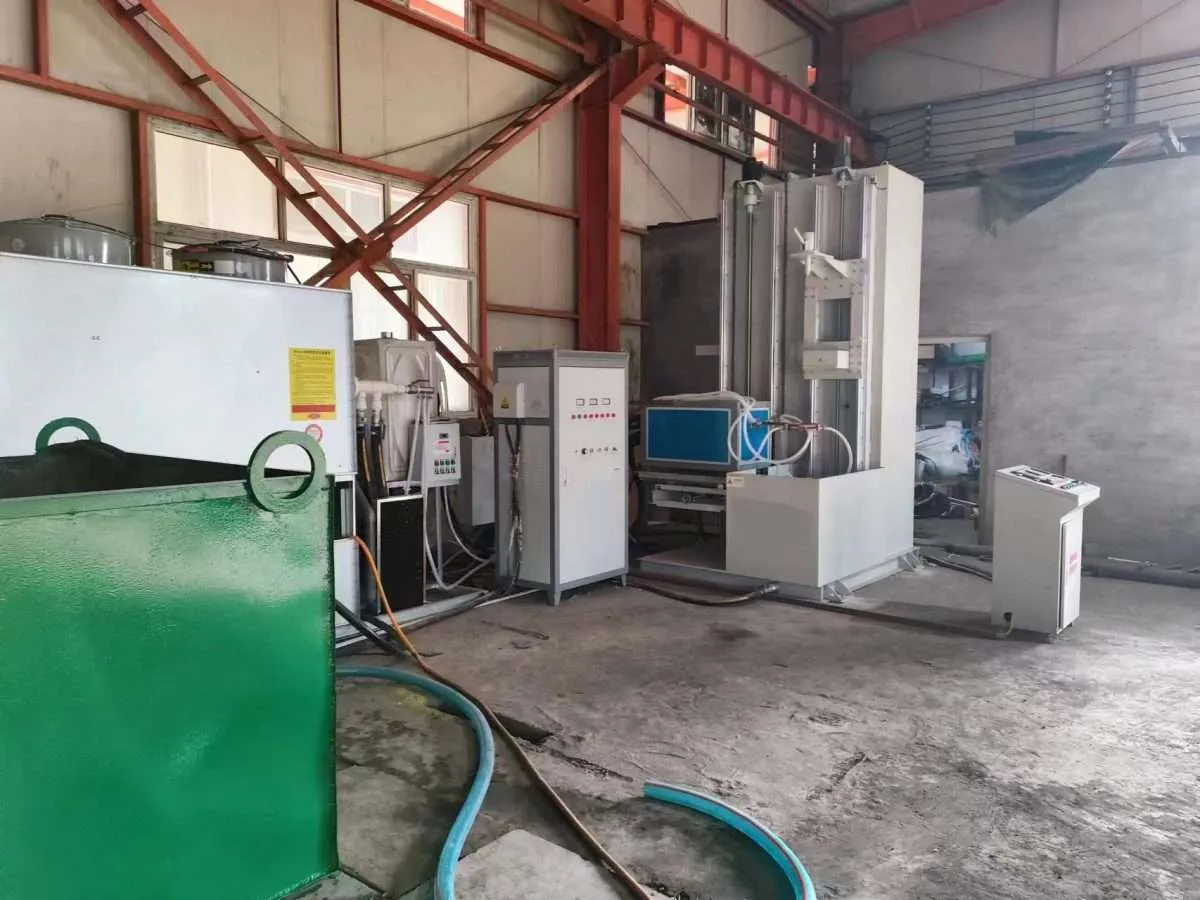
Hardening Machine Tools-Quenching Machine Tools

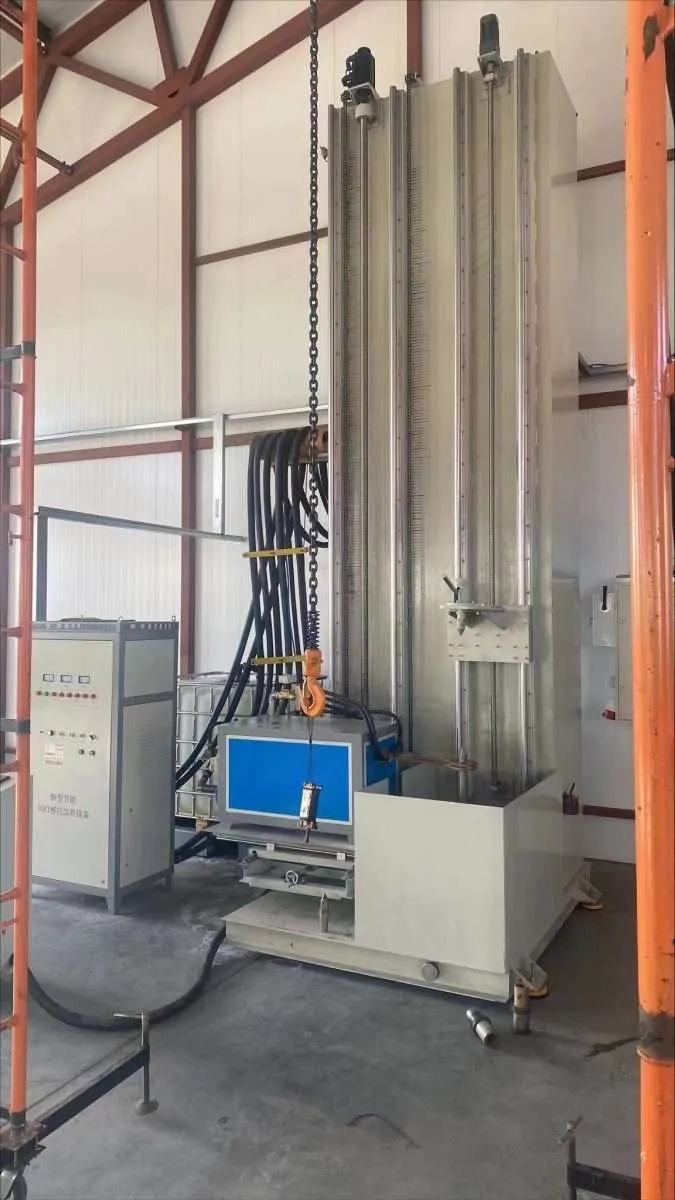
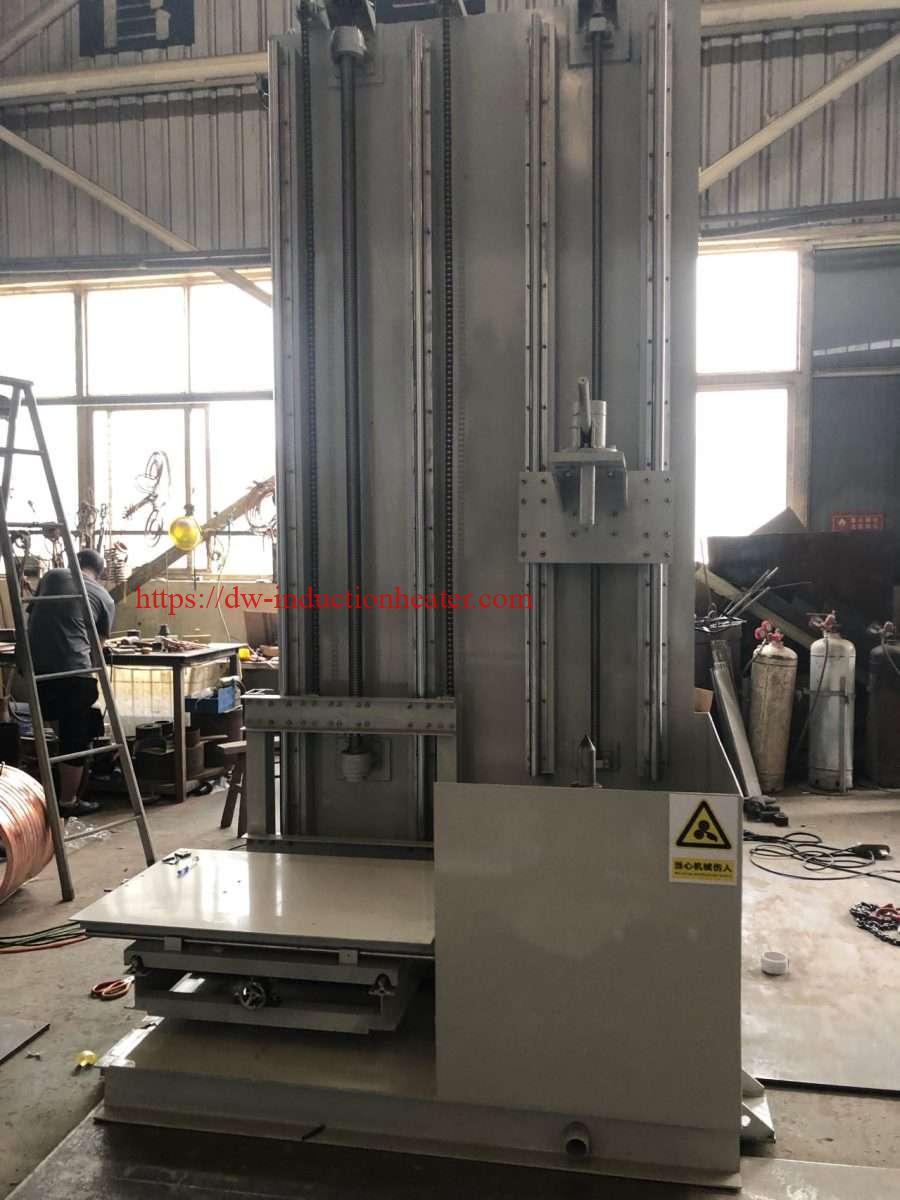
According to the different of workpiece, there are vertical type, horizontal typeclosed type, customized type, etc. 1.Standard SK-500/1000/1200/1500 workpiece moving type For shafts, discs, pins and gears hardening 2.SK-2000/2500/3000/4000 Transformer moving type , Used for heating length more than 1500mm shaft 3.Closed type : Customized for big shaft ,More clean work environment. 4.Horizontal hardening machine tool SK-500/1000/1200/1500/2000/2500/3000/4000  Used for smooth shaft 5.Customized type Technical Parameter
Model SK-500 SK-1000 SK-1200 SK-1500
Max heating length(mm) 500 1000 1200 1500
Max heating diameter(mm) 500 500 600 600
Max holding length(mm) 600 1100 1300 1600
Max weight of workpiece(Kg) 100 100 100 100
Workpiece rotation speed(r/min) 0-300 0-300 0-300 0-300
workpiece moving speed(mm/min) 6-3000 6-3000 6-3000 6-3000
Cooling method Hydrojet cooling Hydrojet cooling Hydrojet cooling Hydrojet cooling
Input voltage 3P 380V 50Hz 3P 380V 50Hz 3P 380V 50Hz 3P 380V 50Hz
Motor power 1.1KW 1.1KW 1.2KW 1.5KW
Dimension LxWxH (mm) 1600 x800 x2000 1600 x800 x2400 1900 x900 x2900 1900 x900 x3200
weight(Kg) 800 900 1100 1200
 
Model SK-2000 SK-2500 SK-3000 SK-4000
Max heating length(mm) 2000 2500 3000 4000
Max heating diameter(mm) 600 600 600 600
Max holding length(mm) 2000 2500 3000 4000
Max weight of workpiece(Kg) 800 1000 1200 1500
workpiece rotation speed(r/min) 0-300 0-300 0-300 0-300
workpiece moving speed(mm/min) 6-3000 6-3000 6-3000 6-3000
Cooling method Hydrojet cooling Hydrojet cooling Hydrojet cooling Hydrojet cooling
Input voltage 3P 380V 50Hz 3P 380V 50Hz 3P 380V 50Hz 3P 380V 50Hz
Motor power 2KW 2.2KW 2.5KW 3KW
Dimension LxWxH (mm) 1900 x900 x2400 1900 x900 x2900 1900 x900 x3400 1900 x900 x4300
weight(Kg) 1200 1300 1400 1500
 

Induction Heating System for Hardening Surface Process

Specifications
Models Rated output power Frequency rage Input current Input voltage Duty cycle Water flow weight Dimension
MFS-100 100KW 0.5-10KHz 160A 3phase 380V 50Hz 100% 10-20m³/h 175KG 800x650x1800mm
MFS-160 160KW 0.5-10KHz 250A 10-20m³/h 180KG 800x 650 x 1800mm
MFS-200 200KW 0.5-10KHz 310A 10-20m³/h 180KG 800x 650 x 1800mm
MFS-250 250KW 0.5-10KHz 380A 10-20m³/h 192KG 800x 650 x 1800mm
MFS-300 300KW 0.5-8KHz 460A 25-35m³/h 198KG 800x 650 x 1800mm
MFS-400 400KW 0.5-8KHz 610A 25-35m³/h 225KG 800x 650 x 1800mm
MFS-500 500KW 0.5-8KHz 760A 25-35m³/h 350KG 1500 x 800 x 2000mm
MFS-600 600KW 0.5-8KHz 920A 25-35m³/h 360KG 1500 x 800 x 2000mm
MFS-750 750KW 0.5-6KHz 1150A 50-60m³/h 380KG 1500 x 800 x 2000mm
MFS-800 800KW 0.5-6KHz 1300A 50-60m³/h 390KG 1500 x 800 x 2000mm
Applications of Roller Shaft Induction Hardening Machines: Roller shaft induction hardening machines are used in various industrial applications, including: 1. Steel mills: Roller shafts are used in steel mills to transport steel coils. Induction hardening increases the lifespan of these shafts, reducing the need for frequent replacements. 2. Paper mills: Roller shafts are used in paper mills to transport paper rolls. Induction hardening increases the lifespan of these shafts, reducing the need for frequent replacements. 3. Printing presses: Roller shafts are used in printing presses to transport paper. Induction hardening increases the lifespan of these shafts, reducing the need for frequent replacements. 4. Automotive industry: Roller shafts are used in various automotive applications, including engine components and transmission systems. Induction hardening increases the lifespan of these shafts, reducing the need for frequent replacements. Conclusion: An induction hardening machine is a specialized equipment used in the manufacturing industry for hardening metal parts. It utilizes induction heating technology to heat the surface of a metal part to a high temperature before quickly cooling it off. This process enhances the surface hardness of the metal, making it more durable and resistant to wear and tear. Induction hardening machines come in different sizes, shapes, and power outputs, depending on the specific needs of the application. They can also be customized to suit the unique requirements of a particular manufacturing process. https://dw-inductionheater.com/how-induction-hardening-machines-can-benefit-your-manufacturing-business.html?feed_id=231586&_unique_id=6599356c087e2

2023年9月30日星期六

Induction Hardening and tempering

Induction Hardening and tempering Surface Process

Induction Hardening

Induction Hardening is a process of heating followed by cooling generally fast for increase hardness and mechanical strength of steel. To this end, the steel is heated to a temperature slightly higher than the upper critical (between 850-900ºC) and then cooled more or less quickly (depending on the characteristics of steel) in a medium such as oil, air, water, water mixed with soluble polymers, etc. There are different methods for heating such as electric oven, gas cooker, salt, flame, induction, etc. The steels that are normally used in induction hardening contain from 0.3% to 0.7% carbon (hypoeutectic steels).

Induction heating advantages:

  • It treats a specific part of the piece (hardening profile)
  • Frequency Control and heating times
  • Cooling control
  • Energy saving
  • No physical contact
  • Control and located heat
  • Can be integrated in production lines
  • Increase performance and saves space
Induction hardening can be done in two different ways:
  • Static: consists of setting the part in front of the inductor and carrying out the operation without moving either the part or the inductor. This type of operation is very fast, requires only simple mechanics and enables a very accurate localisation of the treated area, even with parts with complicated geometry.
  • Progressive (by scanning): consists of going over the part with a continuous operation, moving either the part or the inductor. This kind of operation means that parts with large surfaces and large sizes can be treated.
For the same kind of part the scanning treatment requires less power with longer treatment time in compare to static treatment.

Induction Tempering

Induction Tempering is a process able to decrease the hardness, strength and increases the toughness of hardened steels, while removes the tensions created in the temple, leaving the steel with the required hardness. The traditional tempering system consists of heating the parts at relatively low temperatures (from 150ºC to 500°C, always below the lineAC1) for a while and then let them cool slowly.

Induction heating advantages:

  • Shorter times in the process
  • Temperature control
  • Integration in production lines
  • Energy saving
  • Immediate availability of parts
  • Saves floor space
  • Improved environmental conditions
The process of hardening and tempering is a treatment for various components in many industrial sectors.  

2023年8月26日星期六

Induction Hardening Surface Process

Induction Hardening Surface Process Applicatons

What is induction hardening ?

Induction hardening is a form of heat treatment in which a metal part with sufficient carbon content is heated in the induction field and then rapidly cooled. This increases both the hardness and brittleness of the part. Induction heating allows you to have localized heating to a pre-determined temperature and enables you to precisely control the hardening process. Process repeatability is thus guaranteed. Usually, induction hardening is applied to metal parts which need to have great surface wear resistance, while at the same time retaining their mechanical properties. After the induction hardening process is achieved, the metal workpiece needs to be quenched in water, oil or air inorder to obtain specific properties of the surface layer. induction hardening surface process Induction hardening is a method of quickly and selectively hardening the surface of a metal part. A copper coil carrying a significant level of alternating current is placed near (not touching) the part. Heat is generated at, and near the surface by eddy current and hysteresis losses. Quench, usually water-based with an addition such as a polymer, is directed at the part or it is submerged. This transforms the structure to martensite, which is much harder than the prior structure. A popular, modern type of induction hardening equipment is called a scanner. The part is held between centers, rotated, and passed through a progressive coil which provides both heat and quench. The quench is directed below the coil, so any given area of the part is rapidly cooled immediately following heating. Power level, dwell time, scan (feed) rate and other process variables are precisely controlled by a computer. Case hardening process used to increase wear resistance, surface hardness and fatigue life through creation of a hardened surface layer while maintaining an unaffected core microstructure.

Induction hardening is used to increase the mechanical properties of ferrous components in a specific area. Typical applications are powertrain, suspension, engine components and stampings. Induction hardening is excellent at repairing warranty claims / field failures. The primary benefits are improvements in strength, fatigue and wear resistance in a localised area without having to redesign the component.

Processes and Industries that can benefit from induction hardening:

  • Heat-treatment
  • Chain hardening
  • Tube & Pipe Hardening
  • Shipbuilding
  • Aerospace
  • Railway
  • Automotive
  • Renewable energies

Benefits of Induction Hardening:

Favoured for components that are subjected to heavy loading. Induction imparts a high surface hardness with a deep case capable of handling extremely high loads. Fatigue strength is increased by the development of a soft core surrounded by an extremely tough outer layer. These properties are desirable for parts that experience torsional loading and surfaces that experience impact forces. Induction processing is performed one part at a time allowing for very predictable dimensional movement from part to part.
  • Precise control over temperature and hardening depth
  • Controlled and localized heating
  • Easily integrated into production lines
  • Fast and repeatable process
  • Each workpiece can be hardened by precise optimized parameters
  • Energy-efficient process
Steel and stainless-steel components that can be hardened with induction: Fasteners, flanges, gears, bearings, tube, inner and outer races, crankshafts, camshafts, yokes, drive shafts, output shafts, spindles, torsion bars, slewing rings, wire, valves, rock drills, etc.

Increased Wear Resistance

There is a direct correlation between hardness and wear resistance. The wear resistance of a part increases significantly with induction hardening, assuming the initial state of the material was either annealed, or treated to a softer condition.

Increased Strength & Fatigue Life due to the Soft Core & Residual Compressive Stress at the Surface

The compressive stress (usually considered a positive attribute) is a result of the hardened structure near the surface occupying slightly more volume than the core and prior structure.

Parts may be Tempered after Induction Hardening to Adjust Hardness Level, as desired

As with any process producing a martensitic structure, tempering will lower hardness while decreasing brittleness.

Deep Case with Tough Core

Typical case depth is .030” - .120” which is deeper on average than processes such as carburizing, carbonitriding, and various forms of nitriding performed at sub-critical temperatures. For certain projects such as axels, or parts which are still useful even after much material has worn away, case depth may be up to ½ inch or greater.

Selective Hardening Process with No Masking Required

Areas with post-welding or post-machining stay soft - very few other heat treat processes are able to achieve this.

Relatively Minimal Distortion

Example: a shaft 1” Ø x 40” long, which has two evenly spaced journals, each 2” long requiring support of a load and wear resistance. Induction hardening is performed on just these surfaces, a total of 4” length. With a conventional method (or if we induction hardened the entire length for that matter), there would be significantly more warpage.

Allows use of Low Cost Steels such as 1045

The most popular steel utilized for parts to be induction hardened is 1045. It is readily machinable, low cost, and due to a carbon content of 0.45% nominal, it may be induction hardened to 58 HRC +. It also has a relatively low risk of cracking during treatment. Other popular materials for this process are 1141/1144, 4140, 4340, ETD150, and various cast irons.

Limitations of Induction Hardening

Requires an Induction Coil and Tooling which relates to the Part’s Geometry

Since the part-to-coil coupling distance is critical to heating efficiency, the coil’s size and contour must be carefully selected. While most treaters have an arsenal of basic coils to heat round shapes such as shafts, pins, rollers etc., some projects may require a custom coil, sometimes costing thousands of dollars. On medium to high volume projects, the benefit of reduced treatment cost per part may easily offset coil cost. In other cases, the engineering benefits of the process may outweigh cost concerns. Otherwise, for low volume projects the coil and tooling cost usually makes the process impractical if a new coil must be built. The part must also be supported in some manner during the treatment. Running between centers is a popular method for shaft type parts, but in many other cases custom tooling must be utilized.

Greater Likelihood of Cracking Compared to most Heat Treatment Processes

This is due to the rapid heating and quenching, also the tendency to create hot spots at features/edges such as: keyways, grooves, cross holes, threads.

Distortion with Induction Hardening

Distortion levels do tend to be greater than processes such as ion or gas nitriding, due to the rapid heat/quench and resultant martensitic transformation. That being said, induction hardening may produce less distortion than conventional heat treat, particularly when it’s only applied to a selected area.

Material Limitations with Induction Hardening

Since the induction hardening process does not normally involve diffusion of carbon or other elements, the material must contain enough carbon along with other elements to provide hardenability supporting martensitic transformation to the level of hardness desired. This typically means carbon is in the 0.40%+ range, producing hardness of 56 – 65 HRC. Lower carbon materials such as 8620 may be used with a resultant reduction in achievable hardness (40-45 HRC in this case). Steels such as 1008, 1010, 12L14, 1117 are typically not used due to the limited increase in hardness achievable.

Induction Hardening Surface Process details

Induction hardening is a process used for the surface hardening of steel and other alloy components. The parts to be heat treated are placed inside a copper coil and then heated above their transformation temperature by applying an alternating current to the coil. The alternating current in the coil induces an alternating magnetic field within the work piece which causes the outer surface of the part to heat to a temperature above the transformation range. The components are heated by means of an alternating magnetic field to a temperature within or above the transformation range followed by immediate quenching. It is an electromagnetic process using a copper inductor coil, which is fed a current at a specific frequency and power level.  

2023年7月16日星期日

Induction Hardening and tempering

Induction Hardening and tempering Surface Process

Induction Hardening

Induction Hardening is a process of heating followed by cooling generally fast for increase hardness and mechanical strength of steel. To this end, the steel is heated to a temperature slightly higher than the upper critical (between 850-900ºC) and then cooled more or less quickly (depending on the characteristics of steel) in a medium such as oil, air, water, water mixed with soluble polymers, etc. There are different methods for heating such as electric oven, gas cooker, salt, flame, induction, etc. The steels that are normally used in induction hardening contain from 0.3% to 0.7% carbon (hypoeutectic steels).

Induction heating advantages:

  • It treats a specific part of the piece (hardening profile)
  • Frequency Control and heating times
  • Cooling control
  • Energy saving
  • No physical contact
  • Control and located heat
  • Can be integrated in production lines
  • Increase performance and saves space
Induction hardening can be done in two different ways:
  • Static: consists of setting the part in front of the inductor and carrying out the operation without moving either the part or the inductor. This type of operation is very fast, requires only simple mechanics and enables a very accurate localisation of the treated area, even with parts with complicated geometry.
  • Progressive (by scanning): consists of going over the part with a continuous operation, moving either the part or the inductor. This kind of operation means that parts with large surfaces and large sizes can be treated.
For the same kind of part the scanning treatment requires less power with longer treatment time in compare to static treatment.

Induction Tempering

Induction Tempering is a process able to decrease the hardness, strength and increases the toughness of hardened steels, while removes the tensions created in the temple, leaving the steel with the required hardness. The traditional tempering system consists of heating the parts at relatively low temperatures (from 150ºC to 500°C, always below the lineAC1) for a while and then let them cool slowly.

Induction heating advantages:

  • Shorter times in the process
  • Temperature control
  • Integration in production lines
  • Energy saving
  • Immediate availability of parts
  • Saves floor space
  • Improved environmental conditions
The process of hardening and tempering is a treatment for various components in many industrial sectors.  

2023年6月30日星期五

Induction Hardening Surface Process

Induction Hardening Surface Process Applicatons

What is induction hardening ?

Induction hardening is a form of heat treatment in which a metal part with sufficient carbon content is heated in the induction field and then rapidly cooled. This increases both the hardness and brittleness of the part. Induction heating allows you to have localized heating to a pre-determined temperature and enables you to precisely control the hardening process. Process repeatability is thus guaranteed. Usually, induction hardening is applied to metal parts which need to have great surface wear resistance, while at the same time retaining their mechanical properties. After the induction hardening process is achieved, the metal workpiece needs to be quenched in water, oil or air inorder to obtain specific properties of the surface layer. induction hardening surface process Induction hardening is a method of quickly and selectively hardening the surface of a metal part. A copper coil carrying a significant level of alternating current is placed near (not touching) the part. Heat is generated at, and near the surface by eddy current and hysteresis losses. Quench, usually water-based with an addition such as a polymer, is directed at the part or it is submerged. This transforms the structure to martensite, which is much harder than the prior structure. A popular, modern type of induction hardening equipment is called a scanner. The part is held between centers, rotated, and passed through a progressive coil which provides both heat and quench. The quench is directed below the coil, so any given area of the part is rapidly cooled immediately following heating. Power level, dwell time, scan (feed) rate and other process variables are precisely controlled by a computer. Case hardening process used to increase wear resistance, surface hardness and fatigue life through creation of a hardened surface layer while maintaining an unaffected core microstructure.

Induction hardening is used to increase the mechanical properties of ferrous components in a specific area. Typical applications are powertrain, suspension, engine components and stampings. Induction hardening is excellent at repairing warranty claims / field failures. The primary benefits are improvements in strength, fatigue and wear resistance in a localised area without having to redesign the component.

Processes and Industries that can benefit from induction hardening:

  • Heat-treatment
  • Chain hardening
  • Tube & Pipe Hardening
  • Shipbuilding
  • Aerospace
  • Railway
  • Automotive
  • Renewable energies

Benefits of Induction Hardening:

Favoured for components that are subjected to heavy loading. Induction imparts a high surface hardness with a deep case capable of handling extremely high loads. Fatigue strength is increased by the development of a soft core surrounded by an extremely tough outer layer. These properties are desirable for parts that experience torsional loading and surfaces that experience impact forces. Induction processing is performed one part at a time allowing for very predictable dimensional movement from part to part.
  • Precise control over temperature and hardening depth
  • Controlled and localized heating
  • Easily integrated into production lines
  • Fast and repeatable process
  • Each workpiece can be hardened by precise optimized parameters
  • Energy-efficient process
Steel and stainless-steel components that can be hardened with induction: Fasteners, flanges, gears, bearings, tube, inner and outer races, crankshafts, camshafts, yokes, drive shafts, output shafts, spindles, torsion bars, slewing rings, wire, valves, rock drills, etc.

Increased Wear Resistance

There is a direct correlation between hardness and wear resistance. The wear resistance of a part increases significantly with induction hardening, assuming the initial state of the material was either annealed, or treated to a softer condition.

Increased Strength & Fatigue Life due to the Soft Core & Residual Compressive Stress at the Surface

The compressive stress (usually considered a positive attribute) is a result of the hardened structure near the surface occupying slightly more volume than the core and prior structure.

Parts may be Tempered after Induction Hardening to Adjust Hardness Level, as desired

As with any process producing a martensitic structure, tempering will lower hardness while decreasing brittleness.

Deep Case with Tough Core

Typical case depth is .030” - .120” which is deeper on average than processes such as carburizing, carbonitriding, and various forms of nitriding performed at sub-critical temperatures. For certain projects such as axels, or parts which are still useful even after much material has worn away, case depth may be up to ½ inch or greater.

Selective Hardening Process with No Masking Required

Areas with post-welding or post-machining stay soft - very few other heat treat processes are able to achieve this.

Relatively Minimal Distortion

Example: a shaft 1” Ø x 40” long, which has two evenly spaced journals, each 2” long requiring support of a load and wear resistance. Induction hardening is performed on just these surfaces, a total of 4” length. With a conventional method (or if we induction hardened the entire length for that matter), there would be significantly more warpage.

Allows use of Low Cost Steels such as 1045

The most popular steel utilized for parts to be induction hardened is 1045. It is readily machinable, low cost, and due to a carbon content of 0.45% nominal, it may be induction hardened to 58 HRC +. It also has a relatively low risk of cracking during treatment. Other popular materials for this process are 1141/1144, 4140, 4340, ETD150, and various cast irons.

Limitations of Induction Hardening

Requires an Induction Coil and Tooling which relates to the Part’s Geometry

Since the part-to-coil coupling distance is critical to heating efficiency, the coil’s size and contour must be carefully selected. While most treaters have an arsenal of basic coils to heat round shapes such as shafts, pins, rollers etc., some projects may require a custom coil, sometimes costing thousands of dollars. On medium to high volume projects, the benefit of reduced treatment cost per part may easily offset coil cost. In other cases, the engineering benefits of the process may outweigh cost concerns. Otherwise, for low volume projects the coil and tooling cost usually makes the process impractical if a new coil must be built. The part must also be supported in some manner during the treatment. Running between centers is a popular method for shaft type parts, but in many other cases custom tooling must be utilized.

Greater Likelihood of Cracking Compared to most Heat Treatment Processes

This is due to the rapid heating and quenching, also the tendency to create hot spots at features/edges such as: keyways, grooves, cross holes, threads.

Distortion with Induction Hardening

Distortion levels do tend to be greater than processes such as ion or gas nitriding, due to the rapid heat/quench and resultant martensitic transformation. That being said, induction hardening may produce less distortion than conventional heat treat, particularly when it’s only applied to a selected area.

Material Limitations with Induction Hardening

Since the induction hardening process does not normally involve diffusion of carbon or other elements, the material must contain enough carbon along with other elements to provide hardenability supporting martensitic transformation to the level of hardness desired. This typically means carbon is in the 0.40%+ range, producing hardness of 56 – 65 HRC. Lower carbon materials such as 8620 may be used with a resultant reduction in achievable hardness (40-45 HRC in this case). Steels such as 1008, 1010, 12L14, 1117 are typically not used due to the limited increase in hardness achievable.

Induction Hardening Surface Process details

Induction hardening is a process used for the surface hardening of steel and other alloy components. The parts to be heat treated are placed inside a copper coil and then heated above their transformation temperature by applying an alternating current to the coil. The alternating current in the coil induces an alternating magnetic field within the work piece which causes the outer surface of the part to heat to a temperature above the transformation range. The components are heated by means of an alternating magnetic field to a temperature within or above the transformation range followed by immediate quenching. It is an electromagnetic process using a copper inductor coil, which is fed a current at a specific frequency and power level.   https://dw-inductionheater.com/induction-hardening-surface-process.html?feed_id=216961&_unique_id=649f2767a826c

2023年6月22日星期四

How Induction Hardening Machines Can Benefit Your Manufacturing Business

What is Induction Hardening and How Does it Work?

Induction hardening is a process used to strengthen the surface of metal parts. It involves heating the metal part through electromagnetic induction and then immediately quenching it in water or oil. This process can be used to increase the wear resistance and durability of metal components. The induction hardening process works through the use of an induction hardening machine. This machine generates a high-frequency electromagnetic field that quickly heats the metal part to a desired temperature. The heat generated is concentrated on the surface of the metal part, which allows for a rapid heating and cooling process. This process effectively hardens the outer layer of the metal part, which can improve its strength and durability. One of the primary benefits of using induction hardening machines is that it can save time and money in the manufacturing process. The process is much quicker than traditional methods of hardening, which involves heating the entire part and then cooling it slowly. Induction hardening is also more precise than other methods, as it can be controlled with accuracy, resulting in more consistent product quality. Additionally, induction hardening machines can be used to harden localized areas of a part, which allows for more flexibility in the manufacturing process. This means that manufacturers can focus on specific areas of a part that require hardening rather than hardening the entire part. This can result in significant cost savings, as well as increased efficiency in the production process. In summary, induction hardening is a process that can benefit manufacturing businesses by improving the wear resistance and durability of metal parts. The use of induction hardening machines can save time and money in the manufacturing process, as well as improve product quality and consistency. Benefits of Induction Hardening Machines for Your Manufacturing Business Induction hardening machines have become a popular choice for many manufacturing businesses due to their numerous benefits. One of the primary benefits of induction hardening machines is their ability to increase the wear resistance of metal components. This is achieved by rapidly heating and cooling the surface of the metal, which results in a hardened layer. This hardened layer can greatly increase the lifespan of the component and ultimately reduce the need for replacement parts. In addition to increasing wear resistance, induction hardening machines also offer increased accuracy and efficiency. These machines are capable of precisely controlling the amount of heat applied to the metal, which ensures consistent results every time. This level of accuracy can ultimately lead to a reduction in waste and an increase in productivity. Another benefit of induction hardening machines is their ability to work with a wide range of metals, including steel, aluminum, and copper. This versatility allows manufacturers to use the same machine for multiple components, further increasing efficiency and reducing costs. Finally, induction hardening machines are also environmentally friendly. Unlike traditional hardening methods, such as flame hardening, induction hardening does not produce harmful emissions or waste. This makes it a great choice for manufacturers who are looking to reduce their environmental impact. Overall, induction hardening machines offer a wide range of benefits for manufacturing businesses. From increased wear resistance to improved accuracy and efficiency, these machines can help businesses become more productive, reduce waste, and ultimately save money. An Induction Hardening Machine is a piece of industrial equipment used to harden metal parts. The process involves heating the metal using an electromagnetic field and then quenching it with water or oil. This results in a surface layer that is harder than the rest of the part, which can improve its durability and performance. Induction hardening machines can be used on a variety of metal parts, including gears, shafts, and bearings. They're commonly used in automotive and aerospace industries, as well as in the manufacturing of industrial machinery and equipment. If you're in need of an induction hardening machine, there are many reputable manufacturers and suppliers that can help you find the right equipment for your needs. The Ultimate Guide to Roller Shaft Induction Hardening Machine Roller shaft induction hardening machine is an essential tool in the manufacturing industry that is used to harden roller shafts. The process of induction hardening is the most efficient way to strengthen the surface of metal parts, including roller shafts. It provides improved wear resistance, durability, and better performance of the finished product. If you are in the manufacturing business, you need to understand how to use this machine to improve the quality of your products. In this article, we will provide you with an ultimate guide to roller shaft induction hardening machines. We will go over everything you need to know about the machine, how it works, its benefits, and how to maintain it so that it lasts longer. Let's dive in and learn more about this powerful tool. 1. What is a Roller Shaft Induction Hardening Machine? A roller shaft induction hardening machine is a piece of industrial equipment that is specifically designed to harden the surface of roller shafts. Induction hardening is a process that uses an electromagnetic field to heat the surface of a material, typically steel, to a very high temperature. This heat treatment process is used to create a hard, wear-resistant surface on the material. A roller shaft induction hardening machine does this by using an induction coil to produce a high frequency electromagnetic field that rapidly heats the surface of the roller shaft. The heat generated by the electromagnetic field causes the surface of the roller shaft to reach a high temperature, which in turn causes the surface to harden. This process is often used in the manufacturing of roller shafts that are used in a variety of industrial applications, such as in conveyor systems or printing presses. A roller shaft induction hardening machine is an essential tool for many industrial manufacturers who require strong and durable roller shafts for their machinery. 2. How Does Roller Shaft Induction Hardening Machine Work? The roller shaft induction hardening machine is an innovative technology that is used to produce high-quality roller shafts. This machine uses an induction heating process that heats the surface of the roller shaft to a high temperature, hardening the surface of the material while leaving the core of the roller shaft untouched. This process is known as induction hardening, and it is a popular method for producing durable and long-lasting roller shafts. The roller shaft induction hardening machine works by using an electromagnetic field to generate heat, which is applied to the surface of the roller shaft. The heat generated causes the surface of the roller shaft to reach a specific temperature, which then hardens the material. This process is achieved through a combination of the electromagnetic field and the material's properties, which allows for precise control over the heating process. The roller shaft induction hardening machine is an efficient and cost-effective way to produce high-quality roller shafts. It is widely used in the manufacturing industry, particularly in the production of conveyor belts, printing presses, and other industrial equipment that requires durable and reliable roller shafts. With the ability to produce roller shafts that can withstand heavy loads and harsh environments, the roller shaft induction hardening machine is a valuable asset for any manufacturing company looking to produce high-quality products. 3. Benefits of Using Roller Shaft Induction Hardening Machine Roller shaft induction hardening machines have become increasingly popular due to their many benefits. One of the most notable benefits is that they provide a quick and efficient hardening process for roller shafts. With this technology, roller shafts can be hardened in a matter of seconds, which greatly reduces production time and increases efficiency. Additionally, the machines are very versatile and can accommodate a variety of roller shaft sizes. This means that businesses can adapt and customize their production processes to meet their specific needs. Another benefit of using a roller shaft induction hardening machine is that it provides a uniform hardening pattern across the entire roller shaft surface. This ensures that the quality of the hardened surface is consistent and reliable throughout the entire production process. Additionally, the process of induction hardening is environmentally friendly, as it only requires a minimal amount of energy to operate. It also produces less waste and pollution compared to other traditional hardening processes. Furthermore, using a roller shaft induction hardening machine can also help to extend the lifespan of the roller shafts, reducing the need for frequent repairs and replacements. This ultimately saves businesses money and increases their overall productivity. Finally, the machine provides a safe and reliable hardening process, with minimal risk of injury to operators. Overall, the benefits of using a roller shaft induction hardening machine make it a valuable investment for businesses looking to improve their production processes and reduce their environmental impact. 4. How to Maintain Your Roller Shaft Induction Hardening Machine? Maintaining your roller shaft induction hardening machine is crucial to ensure its longevity and continued performance. Here are some tips to keep your machine running smoothly: 1. Regular cleaning: Dust and debris can accumulate on your machine, which can cause damage over time. It's essential to clean your machine regularly to prevent any build-up. Use a soft cloth to wipe down the machine and remove any dirt or debris. 2. Lubrication: Proper lubrication is essential to keep your machine functioning correctly. Make sure to use the recommended lubricant and apply it regularly to the appropriate parts of the machine. 3. Regular inspection: Inspecting your machine regularly can help you identify any potential issues before they become bigger problems. Look for signs of wear and tear, such as cracks or deformation in the rollers. 4. Proper storage: When not in use, it's essential to store your machine properly. Keep it in a dry, cool place that is free from any exposure to moisture or extreme temperatures. 5. Professional maintenance: While regular cleaning and inspection can help prevent issues, it's also crucial to have your machine professionally serviced regularly. A professional technician can identify any potential problems and provide the necessary repairs and maintenance to keep your machine running smoothly. By following these tips, you can ensure that your roller shaft induction hardening machine remains in top condition, providing you with reliable and efficient performance for years to come.

Hardening Machine Tools-Quenching Machine Tools

According to the different of workpiece, there are vertical type, horizontal typeclosed type, customized type, etc. 1.Standard SK-500/1000/1200/1500 workpiece moving type For shafts, discs, pins and gears hardening 2.SK-2000/2500/3000/4000 Transformer moving type , Used for heating length more than 1500mm shaft 3.Closed type : Customized for big shaft ,More clean work environment. 4.Horizontal hardening machine tool SK-500/1000/1200/1500/2000/2500/3000/4000  Used for smooth shaft 5.Customized type Technical Parameter
Model SK-500 SK-1000 SK-1200 SK-1500
Max heating length(mm) 500 1000 1200 1500
Max heating diameter(mm) 500 500 600 600
Max holding length(mm) 600 1100 1300 1600
Max weight of workpiece(Kg) 100 100 100 100
Workpiece rotation speed(r/min) 0-300 0-300 0-300 0-300
workpiece moving speed(mm/min) 6-3000 6-3000 6-3000 6-3000
Cooling method Hydrojet cooling Hydrojet cooling Hydrojet cooling Hydrojet cooling
Input voltage 3P 380V 50Hz 3P 380V 50Hz 3P 380V 50Hz 3P 380V 50Hz
Motor power 1.1KW 1.1KW 1.2KW 1.5KW
Dimension LxWxH (mm) 1600 x800 x2000 1600 x800 x2400 1900 x900 x2900 1900 x900 x3200
weight(Kg) 800 900 1100 1200
 
Model SK-2000 SK-2500 SK-3000 SK-4000
Max heating length(mm) 2000 2500 3000 4000
Max heating diameter(mm) 600 600 600 600
Max holding length(mm) 2000 2500 3000 4000
Max weight of workpiece(Kg) 800 1000 1200 1500
workpiece rotation speed(r/min) 0-300 0-300 0-300 0-300
workpiece moving speed(mm/min) 6-3000 6-3000 6-3000 6-3000
Cooling method Hydrojet cooling Hydrojet cooling Hydrojet cooling Hydrojet cooling
Input voltage 3P 380V 50Hz 3P 380V 50Hz 3P 380V 50Hz 3P 380V 50Hz
Motor power 2KW 2.2KW 2.5KW 3KW
Dimension LxWxH (mm) 1900 x900 x2400 1900 x900 x2900 1900 x900 x3400 1900 x900 x4300
weight(Kg) 1200 1300 1400 1500
 

Induction Heating System for Hardening Surface Process

Specifications
Models Rated output power Frequency rage Input current Input voltage Duty cycle Water flow weight Dimension
MFS-100 100KW 0.5-10KHz 160A 3phase 380V 50Hz 100% 10-20m³/h 175KG 800x650x1800mm
MFS-160 160KW 0.5-10KHz 250A 10-20m³/h 180KG 800x 650 x 1800mm
MFS-200 200KW 0.5-10KHz 310A 10-20m³/h 180KG 800x 650 x 1800mm
MFS-250 250KW 0.5-10KHz 380A 10-20m³/h 192KG 800x 650 x 1800mm
MFS-300 300KW 0.5-8KHz 460A 25-35m³/h 198KG 800x 650 x 1800mm
MFS-400 400KW 0.5-8KHz 610A 25-35m³/h 225KG 800x 650 x 1800mm
MFS-500 500KW 0.5-8KHz 760A 25-35m³/h 350KG 1500 x 800 x 2000mm
MFS-600 600KW 0.5-8KHz 920A 25-35m³/h 360KG 1500 x 800 x 2000mm
MFS-750 750KW 0.5-6KHz 1150A 50-60m³/h 380KG 1500 x 800 x 2000mm
MFS-800 800KW 0.5-6KHz 1300A 50-60m³/h 390KG 1500 x 800 x 2000mm
Applications of Roller Shaft Induction Hardening Machines: Roller shaft induction hardening machines are used in various industrial applications, including: 1. Steel mills: Roller shafts are used in steel mills to transport steel coils. Induction hardening increases the lifespan of these shafts, reducing the need for frequent replacements. 2. Paper mills: Roller shafts are used in paper mills to transport paper rolls. Induction hardening increases the lifespan of these shafts, reducing the need for frequent replacements. 3. Printing presses: Roller shafts are used in printing presses to transport paper. Induction hardening increases the lifespan of these shafts, reducing the need for frequent replacements. 4. Automotive industry: Roller shafts are used in various automotive applications, including engine components and transmission systems. Induction hardening increases the lifespan of these shafts, reducing the need for frequent replacements. Conclusion: An induction hardening machine is a specialized equipment used in the manufacturing industry for hardening metal parts. It utilizes induction heating technology to heat the surface of a metal part to a high temperature before quickly cooling it off. This process enhances the surface hardness of the metal, making it more durable and resistant to wear and tear. Induction hardening machines come in different sizes, shapes, and power outputs, depending on the specific needs of the application. They can also be customized to suit the unique requirements of a particular manufacturing process. https://dw-inductionheater.com/how-induction-hardening-machines-can-benefit-your-manufacturing-business.html?feed_id=215461&_unique_id=6495404c63204

关注者

我的简介

我的照片
HLQ induction heating machine manufacturer provides the service of induction brazing,melting,hot forming,hardening surface,annealing,shrink fitting,PWHT,etc.