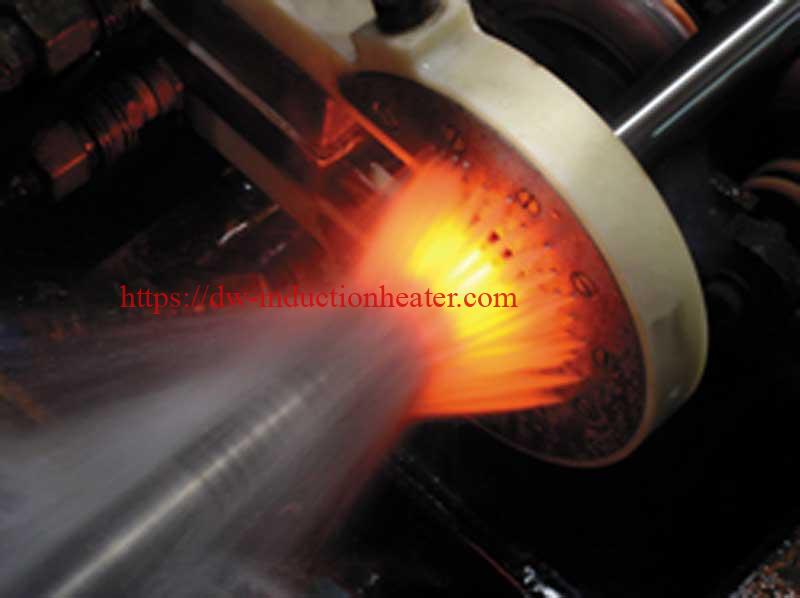
显示标签为“inductionhardeningprocess”的博文。显示所有博文

2024年4月4日星期四

Induction Hardening Steel Part with High Frequency Hardening Machine

Induction Hardening Steel Part with High Frequency Hardening Machine

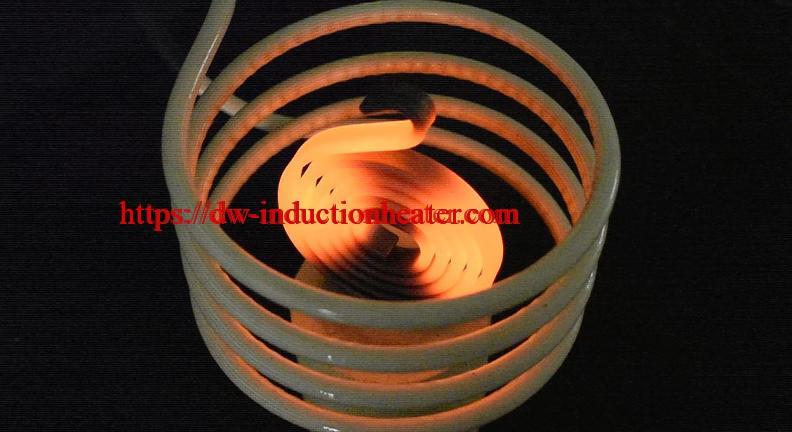
The goal of this induction heating application is to heat complex shape steel tools for hardening and integrate the process on a conveyor line to increase productivity. induction hardening steel partIndustry: Manufacturing Equipment: DW-UHF-10KW induction hardening machine Materials: Steel tool parts Power: 9.71kW Time: 17 secs Coil: Custom designed 4 turn helical coil. The Process: The induction coil is designed to provide uniform heat to the entire part. The induction heat is applied to the entire part. The sample is then quenched into water. The exact time and power of the induction heat have to be determined based on the specific hardening and production requirements. The benefits of induction hardening for tools parts include fast heating, increased production rates, increased energy efficiency, automation and repeatability. DW-UHF induction heating systems are widely used for similar induction hardening applications. induction hardening steel part induction hardening steel part [wpforms id="3947"]
https://dw-inductionheater.com/induction-hardening-steel-part-with-high-frequency-hardening-machine.html?feed_id=240031&_unique_id=660f097968e6a

2024年2月29日星期四

Induction hardening steel screw threads

Induction hardening steel screw threads

Objective Heat steel roofing screw to 1650 ºF to harden the threads Material : Steel roofing screws of varying diameters less than 1.25” (31.75mm) diameter, 5” (127mm) long Temperature: 1650 ºF (899 ºC) Frequency: 291 kHz Equipment • DW-UHF-6kW-I handheld induction heating system, equipped with a remote workhead containing two 0.33µF capacitors for a total of 0.66µF portable induction heating units • An induction heating coil designed and developed specifically for this application. Induction Hardening Process A five turn helical coil is used heat the screw threads. The screw is placed in the coil, heat is applied for 8 seconds to achieve a 2” long zone at the required hardness. Results/Benefits Induction heating provides: • Very rapid heating, faster production rates, efficient • Ability to incorporate into existing production lines • Repeatable, consistent results • Even distribution of heating https://dw-inductionheater.com/induction-hardening-steel-screw-threads.html?feed_id=235362&_unique_id=65e155646c705

2024年2月10日星期六

Induction Hardening and tempering

Induction Hardening and tempering Surface Process

Induction Hardening

Induction Hardening is a process of heating followed by cooling generally fast for increase hardness and mechanical strength of steel. To this end, the steel is heated to a temperature slightly higher than the upper critical (between 850-900ºC) and then cooled more or less quickly (depending on the characteristics of steel) in a medium such as oil, air, water, water mixed with soluble polymers, etc. There are different methods for heating such as electric oven, gas cooker, salt, flame, induction, etc. The steels that are normally used in induction hardening contain from 0.3% to 0.7% carbon (hypoeutectic steels).

Induction heating advantages:

  • It treats a specific part of the piece (hardening profile)
  • Frequency Control and heating times
  • Cooling control
  • Energy saving
  • No physical contact
  • Control and located heat
  • Can be integrated in production lines
  • Increase performance and saves space
Induction hardening can be done in two different ways:
  • Static: consists of setting the part in front of the inductor and carrying out the operation without moving either the part or the inductor. This type of operation is very fast, requires only simple mechanics and enables a very accurate localisation of the treated area, even with parts with complicated geometry.
  • Progressive (by scanning): consists of going over the part with a continuous operation, moving either the part or the inductor. This kind of operation means that parts with large surfaces and large sizes can be treated.
For the same kind of part the scanning treatment requires less power with longer treatment time in compare to static treatment.

Induction Tempering

Induction Tempering is a process able to decrease the hardness, strength and increases the toughness of hardened steels, while removes the tensions created in the temple, leaving the steel with the required hardness. The traditional tempering system consists of heating the parts at relatively low temperatures (from 150ºC to 500°C, always below the lineAC1) for a while and then let them cool slowly.

Induction heating advantages:

  • Shorter times in the process
  • Temperature control
  • Integration in production lines
  • Energy saving
  • Immediate availability of parts
  • Saves floor space
  • Improved environmental conditions
The process of hardening and tempering is a treatment for various components in many industrial sectors.  
https://dw-inductionheater.com/induction-hardening-and-tempering.html?feed_id=233836&_unique_id=65c856f96ed5b

2024年1月12日星期五

The Complete Guide to Induction Hardening of Process Benefits and Applications

The Complete Guide to Induction Hardening: Process, Benefits, and Applications
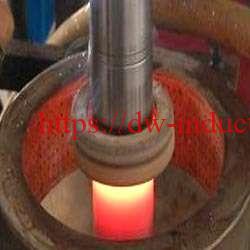
Induction hardening is a heat treatment process that is used to increase the hardness and durability of metal parts.It is a highly effective method for improving the wear resistance of various components, making them suitable for use in demanding applications. Induction hardening is widely used in the automotive, aerospace, and manufacturing industries, among others. If you're looking to learn more about induction hardening, this is the article for you. In this comprehensive guide, we will explore the induction hardening process, its benefits, and its applications in various industries. Whether you're a manufacturing engineer or just someone who's interested in the science of metalworking, you'll find everything you need to know about induction hardening in this guide.

1. What is Induction Hardening?

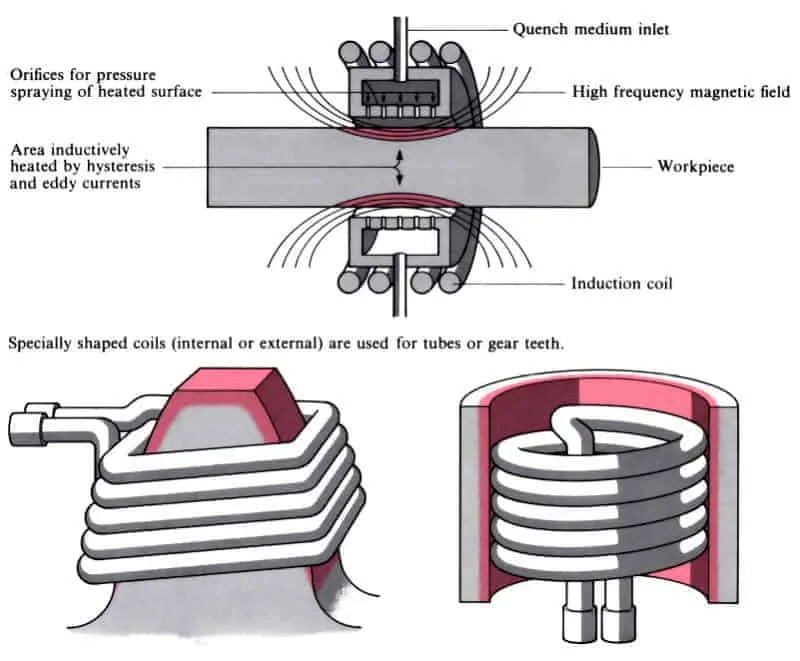
Induction hardening is a heat treatment process that is used to strengthen the surface of metal parts. It involves the use of an induction heating system to quickly heat up the surface of the metal to a high temperature, followed by a rapid cooling process. This creates a hardened surface layer on the metal, while leaving the core of the metal unchanged. The process of induction hardening starts with the placement of the part to be hardened in an induction heating coil. The coil is then energized, creating a strong electromagnetic field around the part that rapidly heats the surface layer of the metal. Once the desired temperature is reached, the part is rapidly cooled using a quenching medium such as water or oil. The benefits of induction hardening are numerous. The process creates a surface layer that is much harder and more wear-resistant than the core of the metal. This results in longer part life and reduced maintenance costs. Induction hardening can also be used to selectively harden specific areas of a part, resulting in improved performance and reduced weight. Induction hardening is used in a wide range of applications, including automotive, aerospace, and industrial manufacturing. Parts commonly treated with induction hardening include gears, shafts, bearings, and other components that require high strength and wear resistance. Overall, induction hardening is a highly effective process for improving the properties of metal parts. It offers numerous benefits and can be applied to a wide range of applications, making it a valuable tool in the manufacturing industry.
2. The Induction Hardening Process

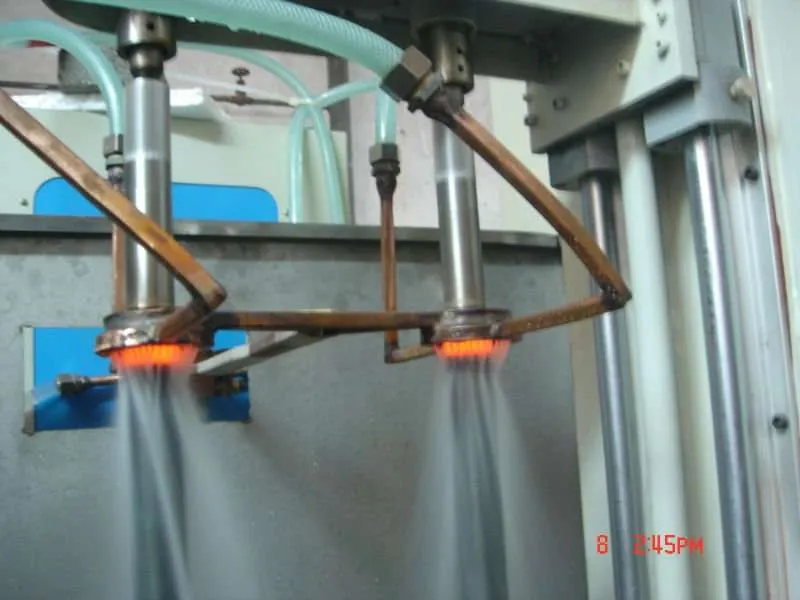
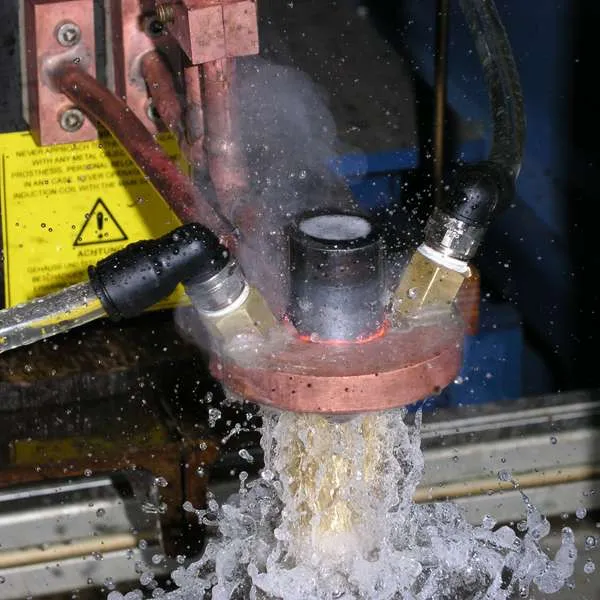
Induction hardening is a process of heat treatment that involves heating a metal object and then rapidly cooling it to harden its surface. The process works by using an electromagnetic field to create heat in the surface layer of the metal. The heat is then quickly removed by cooling the metal with a spray of water or oil. This rapid cooling process causes the metal to harden, resulting in increased resistance to wear and tear. The induction hardening process is ideal for parts that require a hard and wear-resistant surface, such as gears, shafts, and bearings. The process is also used for products that require a high level of precision and repeatable results. The induction hardening process has several advantages over other methods of heat treatment. One of the main advantages is the speed of the process. Induction hardening is a fast and efficient process that can be completed in a matter of seconds. This makes it ideal for high-volume production environments. Another advantage of induction hardening is the precise control that can be achieved over the hardening process. The process can be controlled to produce a specific depth and hardness level, ensuring that the part meets the required specifications. Overall, the induction hardening process is a highly efficient and effective method of heat treatment. Its ability to produce hard and wear-resistant surfaces quickly and precisely makes it an ideal choice for a wide range of applications.

3. Benefits of Induction Hardening

Induction hardening is a popular heat treatment process that has many benefits. One of the significant benefits of induction hardening is that it can increase the hardness and durability of the material being treated. This is achieved by heating the material to a high temperature and then rapidly cooling it. Induction hardening can help to make the material stronger and more resistant to wear and tear. Another benefit of induction hardening is that it is a highly precise process. This means that it can be used to selectively harden certain areas of a material while leaving other areas unaffected. This level of precision is essential in industries where accuracy is critical, such as aerospace and automotive manufacturing. Induction hardening is also a very efficient process. It is faster and more energy-efficient than other forms of heat treatment, such as gas or furnace heat treatment. This means that it is a cost-effective way to improve the properties of a material. Finally, induction hardening is a very versatile process. It can be used to harden a wide range of materials, including steel, aluminum, brass, and copper. Additionally, it can be used to harden a variety of different shapes and sizes of parts, from small screws to large gears. This versatility makes induction hardening an attractive option for many different industries.

4. Applications of Induction Hardening in Various Industries

Induction hardening is a popular surface hardening process that is used in various industries: 1. Automotive components: Induction hardening is widely used in the automotive industry for the hardening of various parts like gears, shafts, and crankshafts. This helps in enhancing their strength, durability, and wear resistance. 2. Aerospace components: Induction hardening is used to harden aerospace components such as turbine blades, jet engine components, and gearbox components. This helps in improving their performance and longevity. 3. Industrial machinery: Induction hardening is also used to harden various industrial equipment and machinery parts that are exposed to high levels of wear and tear such as gears, shafts, and bearings. 4. Tooling and cutting tools: Induction hardening is used to harden various tooling and cutting tools such as drills, saw blades, and milling cutters. 5. Agricultural equipment: Induction hardening is also used to harden various agricultural equipment parts such as plowshares, tines, and blades. 6. Medical equipment: Induction hardening is used in the medical industry to harden various equipment parts such as surgical instruments and implants. 7. Construction equipment: Induction hardening is also used to harden various construction equipment parts such as hydraulic cylinders, connecting rods, and crane components. 8. Power generation equipment: Induction hardening is used to harden various parts of power generation equipment such as turbine blades and shafts. Induction hardening is a surface hardening process used to increase the hardness and durability of metal components. It involves heating the surface of a metal component using an induction heating system, which generates an alternating electromagnetic field. The heat generated by the electromagnetic field causes the surface of the metal to reach a temperature above its critical point, after which the component is quenched to rapidly cool the surface. This process hardens the surface of the metal, while leaving the interior of the component relatively unaffected. Induction hardening is commonly used in applications where high wear resistance is required, such as in the automotive, aerospace, and manufacturing industries.     https://dw-inductionheater.com/the-complete-guide-to-induction-hardening-of-process-benefits-and-applications.html?feed_id=232078&_unique_id=65a1103a25806
2023年11月9日星期四

Induction hardening steel screw threads

Induction hardening steel screw threads

Objective Heat steel roofing screw to 1650 ºF to harden the threads Material : Steel roofing screws of varying diameters less than 1.25” (31.75mm) diameter, 5” (127mm) long Temperature: 1650 ºF (899 ºC) Frequency: 291 kHz Equipment • DW-UHF-6kW-I handheld induction heating system, equipped with a remote workhead containing two 0.33µF capacitors for a total of 0.66µF portable induction heating units • An induction heating coil designed and developed specifically for this application. Induction Hardening Process A five turn helical coil is used heat the screw threads. The screw is placed in the coil, heat is applied for 8 seconds to achieve a 2” long zone at the required hardness. Results/Benefits Induction heating provides: • Very rapid heating, faster production rates, efficient • Ability to incorporate into existing production lines • Repeatable, consistent results • Even distribution of heating

2023年9月30日星期六

Induction Hardening and tempering

Induction Hardening and tempering Surface Process

Induction Hardening

Induction Hardening is a process of heating followed by cooling generally fast for increase hardness and mechanical strength of steel. To this end, the steel is heated to a temperature slightly higher than the upper critical (between 850-900ºC) and then cooled more or less quickly (depending on the characteristics of steel) in a medium such as oil, air, water, water mixed with soluble polymers, etc. There are different methods for heating such as electric oven, gas cooker, salt, flame, induction, etc. The steels that are normally used in induction hardening contain from 0.3% to 0.7% carbon (hypoeutectic steels).

Induction heating advantages:

  • It treats a specific part of the piece (hardening profile)
  • Frequency Control and heating times
  • Cooling control
  • Energy saving
  • No physical contact
  • Control and located heat
  • Can be integrated in production lines
  • Increase performance and saves space
Induction hardening can be done in two different ways:
  • Static: consists of setting the part in front of the inductor and carrying out the operation without moving either the part or the inductor. This type of operation is very fast, requires only simple mechanics and enables a very accurate localisation of the treated area, even with parts with complicated geometry.
  • Progressive (by scanning): consists of going over the part with a continuous operation, moving either the part or the inductor. This kind of operation means that parts with large surfaces and large sizes can be treated.
For the same kind of part the scanning treatment requires less power with longer treatment time in compare to static treatment.

Induction Tempering

Induction Tempering is a process able to decrease the hardness, strength and increases the toughness of hardened steels, while removes the tensions created in the temple, leaving the steel with the required hardness. The traditional tempering system consists of heating the parts at relatively low temperatures (from 150ºC to 500°C, always below the lineAC1) for a while and then let them cool slowly.

Induction heating advantages:

  • Shorter times in the process
  • Temperature control
  • Integration in production lines
  • Energy saving
  • Immediate availability of parts
  • Saves floor space
  • Improved environmental conditions
The process of hardening and tempering is a treatment for various components in many industrial sectors.  

2023年8月12日星期六

Induction Hardening Steel Part with High Frequency Hardening Machine

Induction Hardening Steel Part with High Frequency Hardening Machine

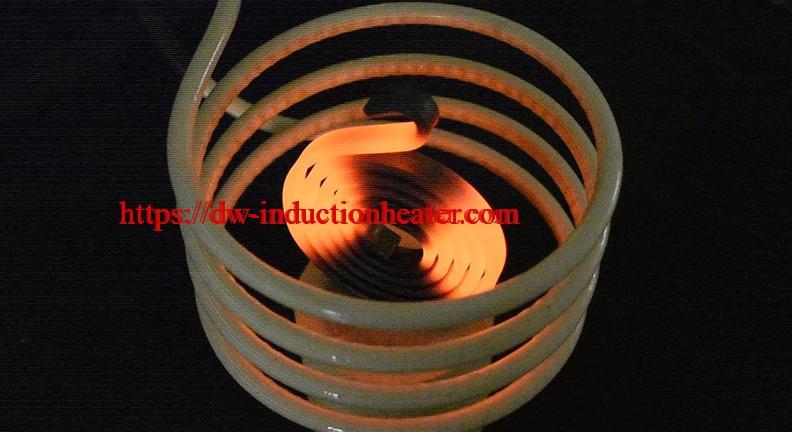
The goal of this induction heating application is to heat complex shape steel tools for hardening and integrate the process on a conveyor line to increase productivity. induction hardening steel partIndustry: Manufacturing Equipment: DW-UHF-10KW induction hardening machine Materials: Steel tool parts Power: 9.71kW Time: 17 secs Coil: Custom designed 4 turn helical coil. The Process: The induction coil is designed to provide uniform heat to the entire part. The induction heat is applied to the entire part. The sample is then quenched into water. The exact time and power of the induction heat have to be determined based on the specific hardening and production requirements. The benefits of induction hardening for tools parts include fast heating, increased production rates, increased energy efficiency, automation and repeatability. DW-UHF induction heating systems are widely used for similar induction hardening applications. induction hardening steel part induction hardening steel part [wpforms id="3947"]
https://dw-inductionheater.com/induction-hardening-steel-part-with-high-frequency-hardening-machine.html?feed_id=222961&_unique_id=64d85ea8cbb5d

2023年7月21日星期五

Induction hardening steel screw threads

Induction hardening steel screw threads

Objective Heat steel roofing screw to 1650 ºF to harden the threads Material : Steel roofing screws of varying diameters less than 1.25” (31.75mm) diameter, 5” (127mm) long Temperature: 1650 ºF (899 ºC) Frequency: 291 kHz Equipment • DW-UHF-6kW-I handheld induction heating system, equipped with a remote workhead containing two 0.33µF capacitors for a total of 0.66µF portable induction heating units • An induction heating coil designed and developed specifically for this application. Induction Hardening Process A five turn helical coil is used heat the screw threads. The screw is placed in the coil, heat is applied for 8 seconds to achieve a 2” long zone at the required hardness. Results/Benefits Induction heating provides: • Very rapid heating, faster production rates, efficient • Ability to incorporate into existing production lines • Repeatable, consistent results • Even distribution of heating

2023年7月16日星期日

Induction Hardening and tempering

Induction Hardening and tempering Surface Process

Induction Hardening

Induction Hardening is a process of heating followed by cooling generally fast for increase hardness and mechanical strength of steel. To this end, the steel is heated to a temperature slightly higher than the upper critical (between 850-900ºC) and then cooled more or less quickly (depending on the characteristics of steel) in a medium such as oil, air, water, water mixed with soluble polymers, etc. There are different methods for heating such as electric oven, gas cooker, salt, flame, induction, etc. The steels that are normally used in induction hardening contain from 0.3% to 0.7% carbon (hypoeutectic steels).

Induction heating advantages:

  • It treats a specific part of the piece (hardening profile)
  • Frequency Control and heating times
  • Cooling control
  • Energy saving
  • No physical contact
  • Control and located heat
  • Can be integrated in production lines
  • Increase performance and saves space
Induction hardening can be done in two different ways:
  • Static: consists of setting the part in front of the inductor and carrying out the operation without moving either the part or the inductor. This type of operation is very fast, requires only simple mechanics and enables a very accurate localisation of the treated area, even with parts with complicated geometry.
  • Progressive (by scanning): consists of going over the part with a continuous operation, moving either the part or the inductor. This kind of operation means that parts with large surfaces and large sizes can be treated.
For the same kind of part the scanning treatment requires less power with longer treatment time in compare to static treatment.

Induction Tempering

Induction Tempering is a process able to decrease the hardness, strength and increases the toughness of hardened steels, while removes the tensions created in the temple, leaving the steel with the required hardness. The traditional tempering system consists of heating the parts at relatively low temperatures (from 150ºC to 500°C, always below the lineAC1) for a while and then let them cool slowly.

Induction heating advantages:

  • Shorter times in the process
  • Temperature control
  • Integration in production lines
  • Energy saving
  • Immediate availability of parts
  • Saves floor space
  • Improved environmental conditions
The process of hardening and tempering is a treatment for various components in many industrial sectors.  

2023年7月8日星期六

Induction hardening steel screw threads

Induction hardening steel screw threads

Objective Heat steel roofing screw to 1650 ºF to harden the threads Material : Steel roofing screws of varying diameters less than 1.25” (31.75mm) diameter, 5” (127mm) long Temperature: 1650 ºF (899 ºC) Frequency: 291 kHz Equipment • DW-UHF-6kW-I handheld induction heating system, equipped with a remote workhead containing two 0.33µF capacitors for a total of 0.66µF portable induction heating units • An induction heating coil designed and developed specifically for this application. Induction Hardening Process A five turn helical coil is used heat the screw threads. The screw is placed in the coil, heat is applied for 8 seconds to achieve a 2” long zone at the required hardness. Results/Benefits Induction heating provides: • Very rapid heating, faster production rates, efficient • Ability to incorporate into existing production lines • Repeatable, consistent results • Even distribution of heating https://dw-inductionheater.com/induction-hardening-steel-screw-threads.html?feed_id=218086&_unique_id=64a9df53eea55

2023年6月19日星期一

Induction Hardening and tempering

Induction Hardening and tempering Surface Process

Induction Hardening

Induction Hardening is a process of heating followed by cooling generally fast for increase hardness and mechanical strength of steel. To this end, the steel is heated to a temperature slightly higher than the upper critical (between 850-900ºC) and then cooled more or less quickly (depending on the characteristics of steel) in a medium such as oil, air, water, water mixed with soluble polymers, etc. There are different methods for heating such as electric oven, gas cooker, salt, flame, induction, etc. The steels that are normally used in induction hardening contain from 0.3% to 0.7% carbon (hypoeutectic steels).

Induction heating advantages:

  • It treats a specific part of the piece (hardening profile)
  • Frequency Control and heating times
  • Cooling control
  • Energy saving
  • No physical contact
  • Control and located heat
  • Can be integrated in production lines
  • Increase performance and saves space
Induction hardening can be done in two different ways:
  • Static: consists of setting the part in front of the inductor and carrying out the operation without moving either the part or the inductor. This type of operation is very fast, requires only simple mechanics and enables a very accurate localisation of the treated area, even with parts with complicated geometry.
  • Progressive (by scanning): consists of going over the part with a continuous operation, moving either the part or the inductor. This kind of operation means that parts with large surfaces and large sizes can be treated.
For the same kind of part the scanning treatment requires less power with longer treatment time in compare to static treatment.

Induction Tempering

Induction Tempering is a process able to decrease the hardness, strength and increases the toughness of hardened steels, while removes the tensions created in the temple, leaving the steel with the required hardness. The traditional tempering system consists of heating the parts at relatively low temperatures (from 150ºC to 500°C, always below the lineAC1) for a while and then let them cool slowly.

Induction heating advantages:

  • Shorter times in the process
  • Temperature control
  • Integration in production lines
  • Energy saving
  • Immediate availability of parts
  • Saves floor space
  • Improved environmental conditions
The process of hardening and tempering is a treatment for various components in many industrial sectors.  
https://dw-inductionheater.com/induction-hardening-and-tempering.html?feed_id=214561&_unique_id=6490dd0e137d3

2023年6月15日星期四

The Complete Guide to Induction Hardening of Process Benefits and Applications

The Complete Guide to Induction Hardening: Process, Benefits, and Applications

Induction hardening is a heat treatment process that is used to increase the hardness and durability of metal parts.It is a highly effective method for improving the wear resistance of various components, making them suitable for use in demanding applications. Induction hardening is widely used in the automotive, aerospace, and manufacturing industries, among others. If you're looking to learn more about induction hardening, this is the article for you. In this comprehensive guide, we will explore the induction hardening process, its benefits, and its applications in various industries. Whether you're a manufacturing engineer or just someone who's interested in the science of metalworking, you'll find everything you need to know about induction hardening in this guide.

1. What is Induction Hardening?

Induction hardening is a heat treatment process that is used to strengthen the surface of metal parts. It involves the use of an induction heating system to quickly heat up the surface of the metal to a high temperature, followed by a rapid cooling process. This creates a hardened surface layer on the metal, while leaving the core of the metal unchanged. The process of induction hardening starts with the placement of the part to be hardened in an induction heating coil. The coil is then energized, creating a strong electromagnetic field around the part that rapidly heats the surface layer of the metal. Once the desired temperature is reached, the part is rapidly cooled using a quenching medium such as water or oil. The benefits of induction hardening are numerous. The process creates a surface layer that is much harder and more wear-resistant than the core of the metal. This results in longer part life and reduced maintenance costs. Induction hardening can also be used to selectively harden specific areas of a part, resulting in improved performance and reduced weight. Induction hardening is used in a wide range of applications, including automotive, aerospace, and industrial manufacturing. Parts commonly treated with induction hardening include gears, shafts, bearings, and other components that require high strength and wear resistance. Overall, induction hardening is a highly effective process for improving the properties of metal parts. It offers numerous benefits and can be applied to a wide range of applications, making it a valuable tool in the manufacturing industry.

2. The Induction Hardening Process

Induction hardening is a process of heat treatment that involves heating a metal object and then rapidly cooling it to harden its surface. The process works by using an electromagnetic field to create heat in the surface layer of the metal. The heat is then quickly removed by cooling the metal with a spray of water or oil. This rapid cooling process causes the metal to harden, resulting in increased resistance to wear and tear. The induction hardening process is ideal for parts that require a hard and wear-resistant surface, such as gears, shafts, and bearings. The process is also used for products that require a high level of precision and repeatable results. The induction hardening process has several advantages over other methods of heat treatment. One of the main advantages is the speed of the process. Induction hardening is a fast and efficient process that can be completed in a matter of seconds. This makes it ideal for high-volume production environments. Another advantage of induction hardening is the precise control that can be achieved over the hardening process. The process can be controlled to produce a specific depth and hardness level, ensuring that the part meets the required specifications. Overall, the induction hardening process is a highly efficient and effective method of heat treatment. Its ability to produce hard and wear-resistant surfaces quickly and precisely makes it an ideal choice for a wide range of applications.

3. Benefits of Induction Hardening

Induction hardening is a popular heat treatment process that has many benefits. One of the significant benefits of induction hardening is that it can increase the hardness and durability of the material being treated. This is achieved by heating the material to a high temperature and then rapidly cooling it. Induction hardening can help to make the material stronger and more resistant to wear and tear. Another benefit of induction hardening is that it is a highly precise process. This means that it can be used to selectively harden certain areas of a material while leaving other areas unaffected. This level of precision is essential in industries where accuracy is critical, such as aerospace and automotive manufacturing. Induction hardening is also a very efficient process. It is faster and more energy-efficient than other forms of heat treatment, such as gas or furnace heat treatment. This means that it is a cost-effective way to improve the properties of a material. Finally, induction hardening is a very versatile process. It can be used to harden a wide range of materials, including steel, aluminum, brass, and copper. Additionally, it can be used to harden a variety of different shapes and sizes of parts, from small screws to large gears. This versatility makes induction hardening an attractive option for many different industries.

4. Applications of Induction Hardening in Various Industries

Induction hardening is a popular surface hardening process that is used in various industries: 1. Automotive components: Induction hardening is widely used in the automotive industry for the hardening of various parts like gears, shafts, and crankshafts. This helps in enhancing their strength, durability, and wear resistance. 2. Aerospace components: Induction hardening is used to harden aerospace components such as turbine blades, jet engine components, and gearbox components. This helps in improving their performance and longevity. 3. Industrial machinery: Induction hardening is also used to harden various industrial equipment and machinery parts that are exposed to high levels of wear and tear such as gears, shafts, and bearings. 4. Tooling and cutting tools: Induction hardening is used to harden various tooling and cutting tools such as drills, saw blades, and milling cutters. 5. Agricultural equipment: Induction hardening is also used to harden various agricultural equipment parts such as plowshares, tines, and blades. 6. Medical equipment: Induction hardening is used in the medical industry to harden various equipment parts such as surgical instruments and implants. 7. Construction equipment: Induction hardening is also used to harden various construction equipment parts such as hydraulic cylinders, connecting rods, and crane components. 8. Power generation equipment: Induction hardening is used to harden various parts of power generation equipment such as turbine blades and shafts. Induction hardening is a surface hardening process used to increase the hardness and durability of metal components. It involves heating the surface of a metal component using an induction heating system, which generates an alternating electromagnetic field. The heat generated by the electromagnetic field causes the surface of the metal to reach a temperature above its critical point, after which the component is quenched to rapidly cool the surface. This process hardens the surface of the metal, while leaving the interior of the component relatively unaffected. Induction hardening is commonly used in applications where high wear resistance is required, such as in the automotive, aerospace, and manufacturing industries.     https://dw-inductionheater.com/the-complete-guide-to-induction-hardening-of-process-benefits-and-applications.html?feed_id=213436&_unique_id=648b93d5dc50f

Induction Hardening and tempering

Induction Hardening and tempering Surface Process

Induction Hardening

Induction Hardening is a process of heating followed by cooling generally fast for increase hardness and mechanical strength of steel. To this end, the steel is heated to a temperature slightly higher than the upper critical (between 850-900ºC) and then cooled more or less quickly (depending on the characteristics of steel) in a medium such as oil, air, water, water mixed with soluble polymers, etc. There are different methods for heating such as electric oven, gas cooker, salt, flame, induction, etc. The steels that are normally used in induction hardening contain from 0.3% to 0.7% carbon (hypoeutectic steels).

Induction heating advantages:

  • It treats a specific part of the piece (hardening profile)
  • Frequency Control and heating times
  • Cooling control
  • Energy saving
  • No physical contact
  • Control and located heat
  • Can be integrated in production lines
  • Increase performance and saves space
Induction hardening can be done in two different ways:
  • Static: consists of setting the part in front of the inductor and carrying out the operation without moving either the part or the inductor. This type of operation is very fast, requires only simple mechanics and enables a very accurate localisation of the treated area, even with parts with complicated geometry.
  • Progressive (by scanning): consists of going over the part with a continuous operation, moving either the part or the inductor. This kind of operation means that parts with large surfaces and large sizes can be treated.
For the same kind of part the scanning treatment requires less power with longer treatment time in compare to static treatment.

Induction Tempering

Induction Tempering is a process able to decrease the hardness, strength and increases the toughness of hardened steels, while removes the tensions created in the temple, leaving the steel with the required hardness. The traditional tempering system consists of heating the parts at relatively low temperatures (from 150ºC to 500°C, always below the lineAC1) for a while and then let them cool slowly.

Induction heating advantages:

  • Shorter times in the process
  • Temperature control
  • Integration in production lines
  • Energy saving
  • Immediate availability of parts
  • Saves floor space
  • Improved environmental conditions
The process of hardening and tempering is a treatment for various components in many industrial sectors.  

关注者

我的简介

我的照片
HLQ induction heating machine manufacturer provides the service of induction brazing,melting,hot forming,hardening surface,annealing,shrink fitting,PWHT,etc.