显示标签为“highfrequencyhardening”的博文。显示所有博文

2024年4月4日星期四

Induction Hardening Steel Part with High Frequency Hardening Machine

Induction Hardening Steel Part with High Frequency Hardening Machine

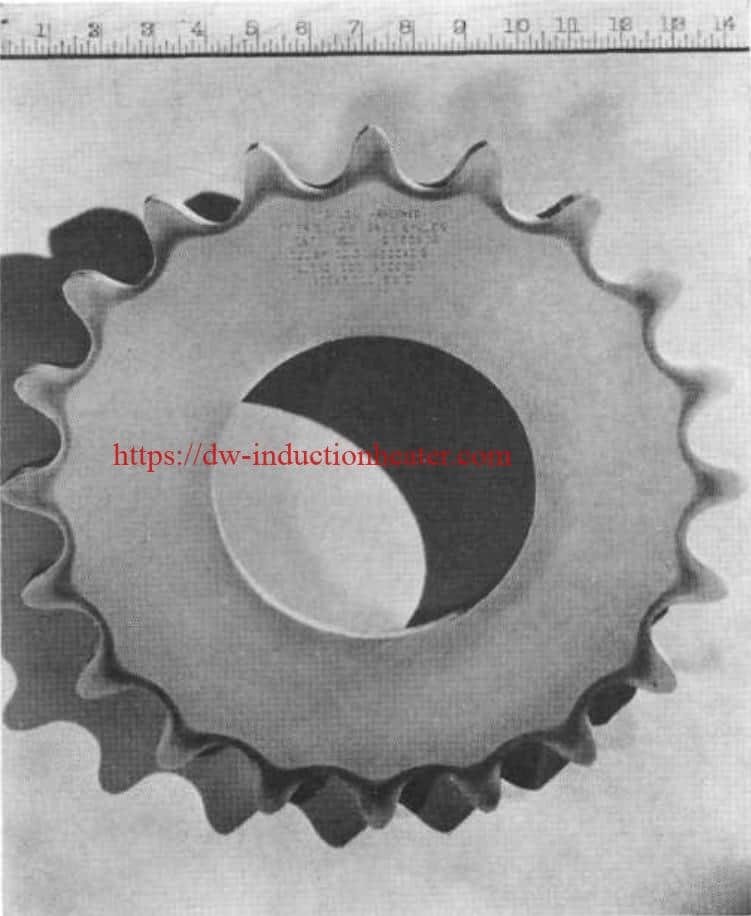
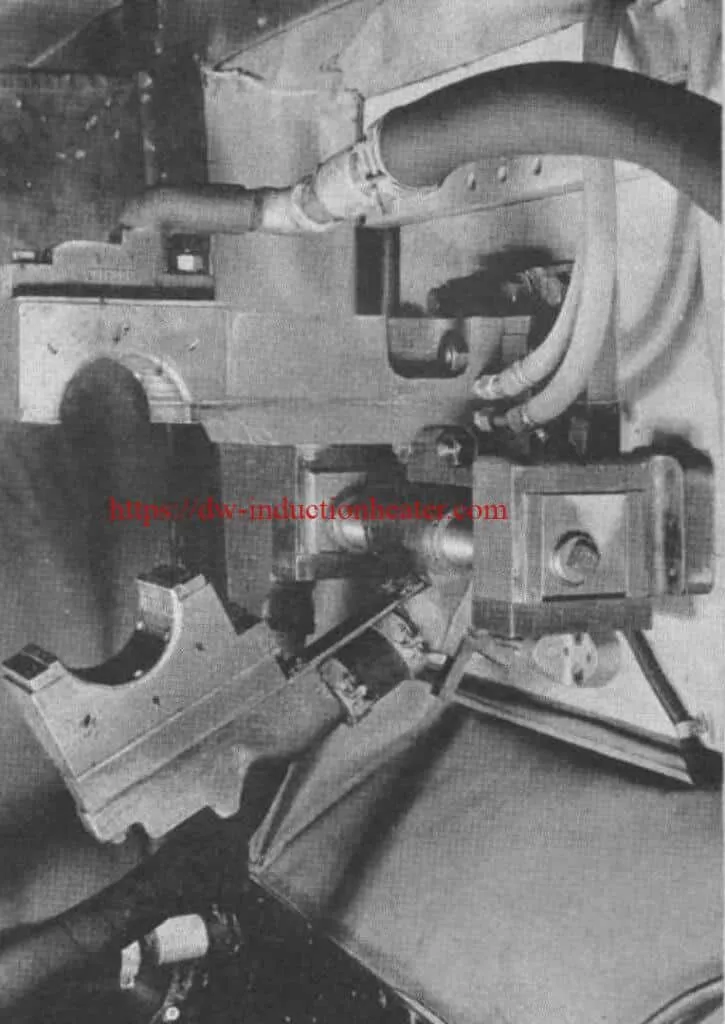
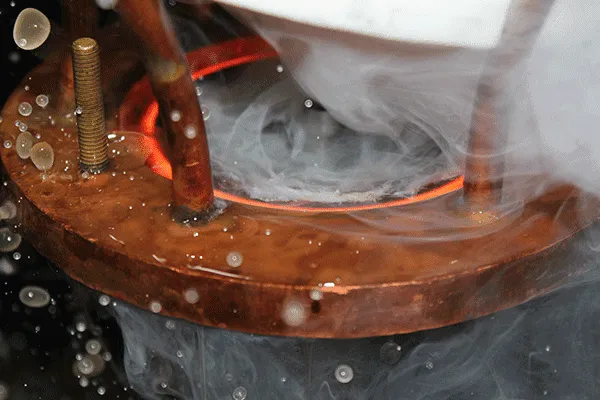
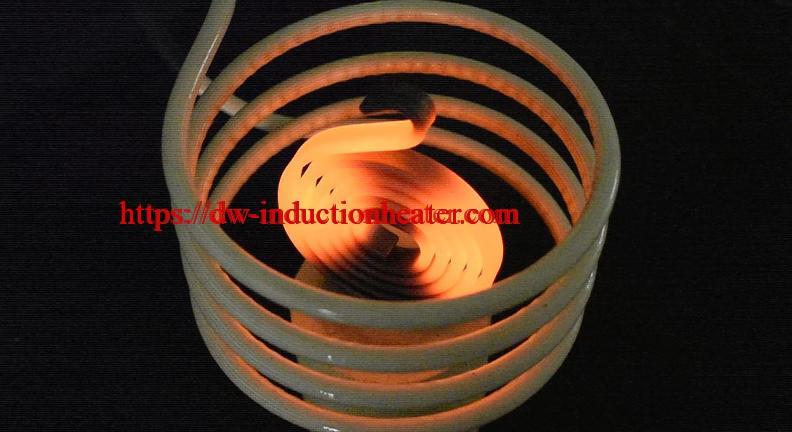
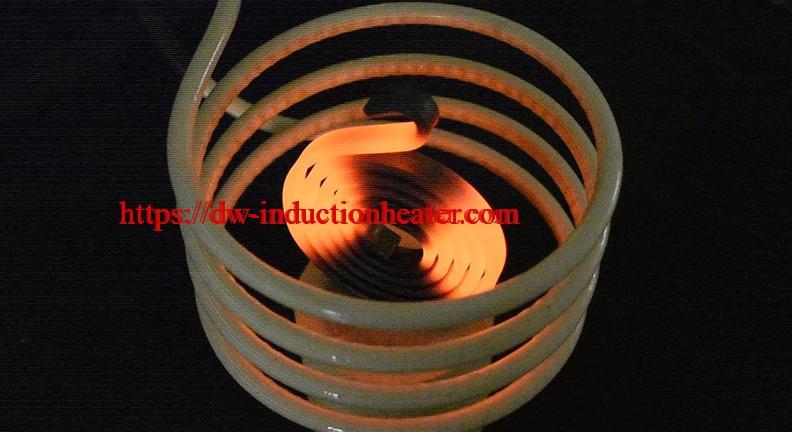
The goal of this induction heating application is to heat complex shape steel tools for hardening and integrate the process on a conveyor line to increase productivity. induction hardening steel partIndustry: Manufacturing Equipment: DW-UHF-10KW induction hardening machine Materials: Steel tool parts Power: 9.71kW Time: 17 secs Coil: Custom designed 4 turn helical coil. The Process: The induction coil is designed to provide uniform heat to the entire part. The induction heat is applied to the entire part. The sample is then quenched into water. The exact time and power of the induction heat have to be determined based on the specific hardening and production requirements. The benefits of induction hardening for tools parts include fast heating, increased production rates, increased energy efficiency, automation and repeatability. DW-UHF induction heating systems are widely used for similar induction hardening applications. induction hardening steel part induction hardening steel part [wpforms id="3947"]
https://dw-inductionheater.com/induction-hardening-steel-part-with-high-frequency-hardening-machine.html?feed_id=240031&_unique_id=660f097968e6a

2024年2月16日星期五

induction hardening process

High Frequency Induction Hardening  Process
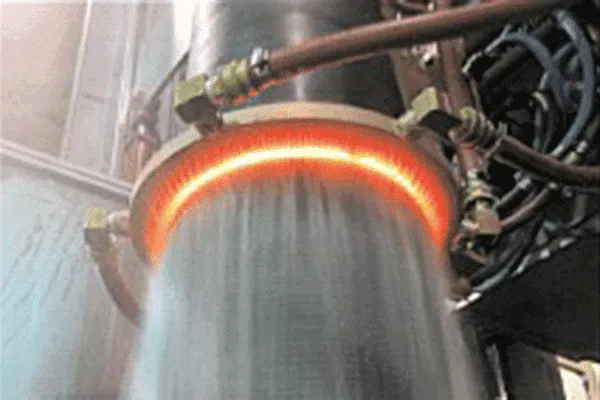
Induction hardening is used in particular for the hardening/quenching of bearing surfaces and shafts as well as intricately shaped parts where only a specific area needs to be heated. Through the choice of the operating frequency of the induction heating system, the resulting depth of penetration is defined. Additionally, it can be decided if the area is to be hardened in the air, with water or with a special hardening emulsion. Depending on the cooling medium, different degrees of hardness are achieved. Induction hardening can be realized as a manual or automated solution. There is also the possibility to harden in a continuous process.
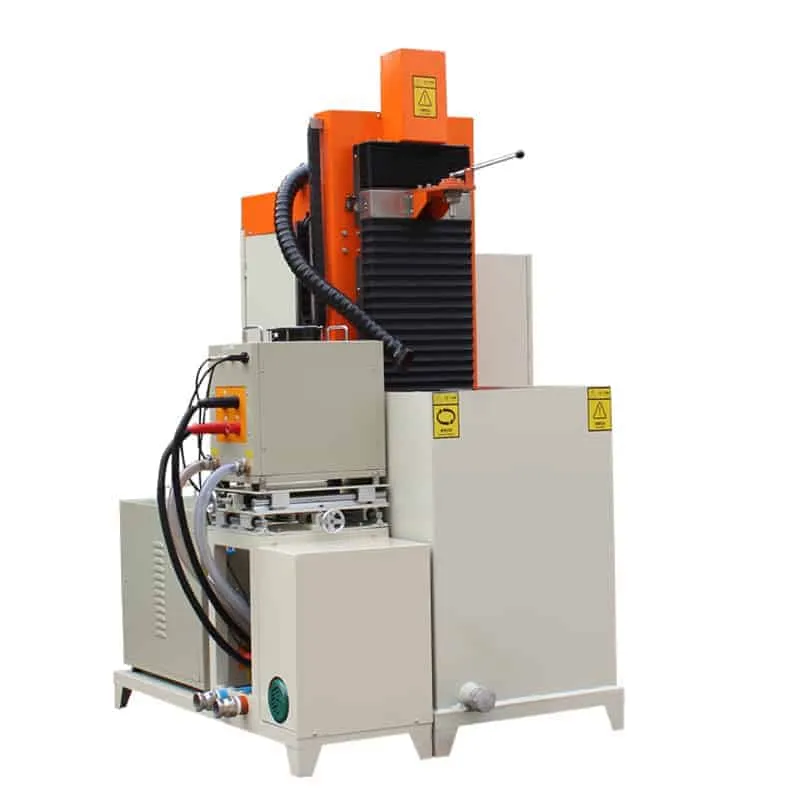
  • Suitable for hardening and tempering of various workpieces, such as induction hardening of shafts, gears, guide rails, discs, pins, and other parts;
  • It has the functions of continuous hardening, simultaneous hardening, segmented continuous hardening, and segmented simultaneous hardening;
  • Use numerical control system or PLC and frequency conversion speed regulation system to realize workpiece positioning and scanning, and connect PLC and induction heating power supply to realize fully automated production.
  • Vertical (hardening of shaft parts) + horizontal (hardening of gear ring parts)
Hardening is one of HLQ induction heating power systems's main application areas. Hundreds of our hardening solutions are at work around the world—many of them within the automotive industry. The main benefit of induction heating for hardening is that it takes just a few seconds. In a furnace, the same process can take hours or even days. How is that possible? The answer is that induction is phenomenal at generating heat fast. This, in turn, means you can integrate hardening in the production process. Hardening in a furnace, on the other hand, is more time-consuming (greater heat loss) and requires moving the components either to your own furnace or to that of a subcontractor. In-line integration of hardening reduces your lead times considerably. You get full control over quality, delivery times and costs. There's no need to transport kilos of components back and forward, which saves energy and the environment.And last but not least, you cut down the amount of administration to a minimum. HLQ Induction Heating Power Systems has many years of experience in inductive hardening and tempering of diverse workpieces. At the heart of each Hardening system is HLQ Induction Heating Power Systems Induction Heat Power Source, the industry's most advanced induction frequency converter. These acclaimed converters help ensure optimum hardening results—day in day out, year after year The induction hardening machine includes Vertical Scanning , Horizontal (centerless) Scanning and customized machines—and serial and/or parallel compensated induction power sources with a wide range of output power and frequencies.
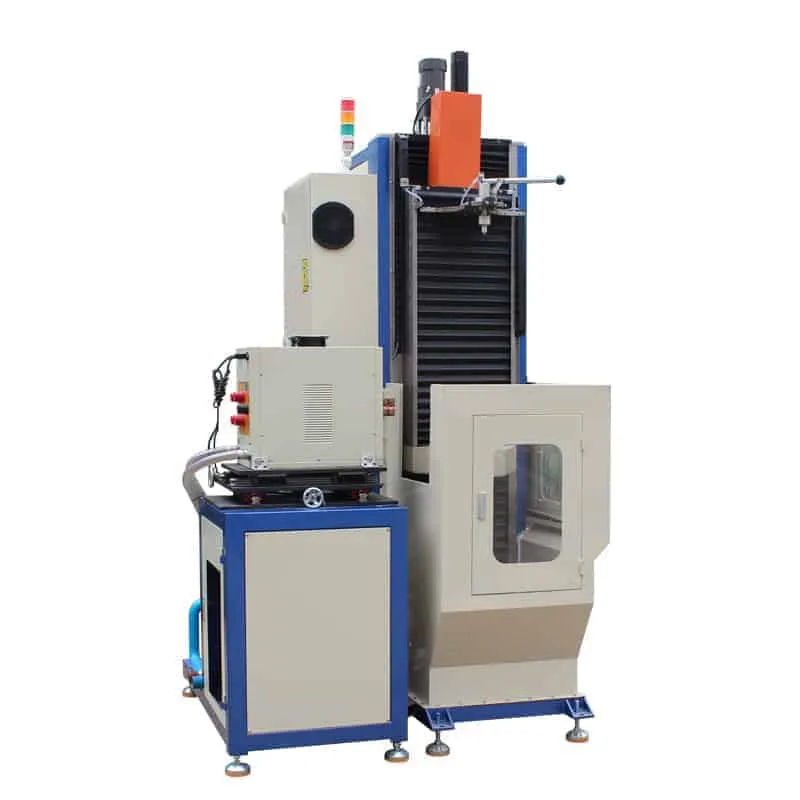
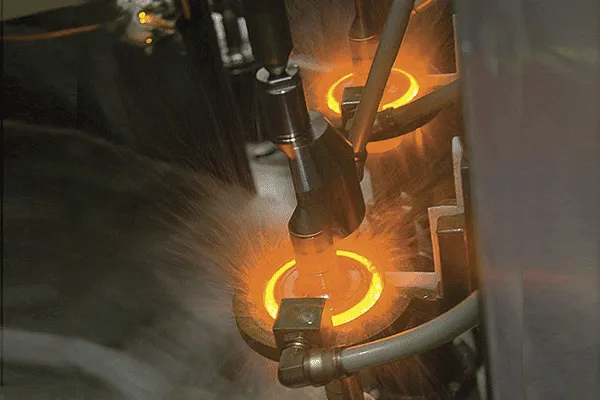
  • This series hardening machine tool uses numberic control technology, has continuous, simultaneous, sectionally-continuous and sectionally-silultaneous quenching functions, it is mainly used for induction quenching of shafts, discs, pins and gears, and featured by high quenching precision. hardening machine tool used by connecting with medium frequency, superaudio frequency, high frequency and ultrahigh frequency induction heating machine.
  • CNC quenching/hardening machine tool feature:
  • CNC system:The high-frequency quenching machine CNC system can compile and store a variety of quenching process programs according to different workpiece requirements.
  • HMI: programming type and human machine interface displays in English and Chinese.
  • Control adjust: it can control the heating power to start, stop, parts heating and cooling time, rotation speed and movement speed.
  • Lathe: adopt welded structure with good rust-proof functions.
  • Top adjustment parts: adopt electric adjustment, to realize clamping of different length work piece.
  • Work table system: adopt ball screw and servo motor to drive, driving light, high guide precision and accurate positioning.
  • Main shaft rotation system: adopt variable frequency regulating to realize parts rotation speed continuous adjusted.
  • Electric control part: the machine tool has power-loosing protection function, has high safety and reliability.
  • Frame: made by thick steel plates, with window and sliding doors, prevent water splash, easy to load parts and monitor hardening process.
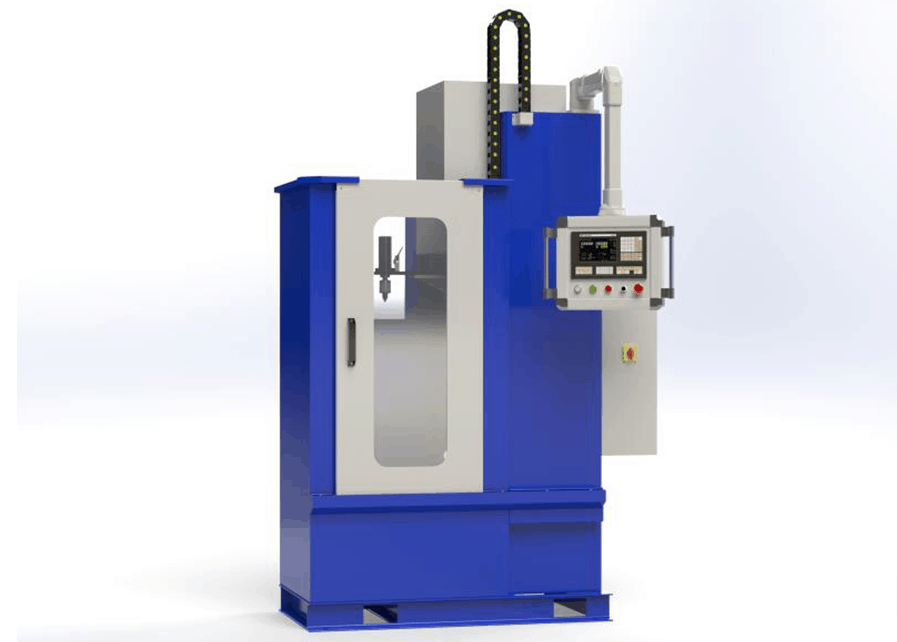
CNC vertical hardening/quenching machine tool This series hardening machine tool uses numberic control technology, has continuous, simultaneous, sectionally-continuous and sectionally-silultaneous quenching functions, it is mainly used for induction quenching of shafts, discs, pins and gears, and featured by high quenching precision. hardening machine tool used by connecting with medium frequency, superaudio frequency, high frequency and ultrahigh frequency induction heating machine. According to the different of workpiece, there are vertical type, horizontal type,closed type, customized type, etc. 1.Standard SK-500/1000/1200/1500 workpiece moving type For shafts, discs, pins and gears hardening 2.SK-2000/2500/3000/4000 Transformer moving type , Used for heating length more than 1500mm shaft 3.Closed type : Customized for big shaft ,More clean work environment. 4.Horizontal hardening machine tool SK-500/1000/1200/1500/2000/2500/3000/4000  Used for smooth shaft 5.Customized type Technical Parameter
Model SK-500 SK-1000 SK-1200 SK-1500
Max heating length(mm) 500 1000 1200 1500
Max heating diameter(mm) 500 500 600 600
Max holding length(mm) 600 1100 1300 1600
Max weight of workpiece(Kg) 100 100 100 100
Workpiece rotation speed(r/min) 0-300 0-300 0-300 0-300
workpiece moving speed(mm/min) 6-3000 6-3000 6-3000 6-3000
Cooling method Hydrojet cooling Hydrojet cooling Hydrojet cooling Hydrojet cooling
Input voltage 3P 380V 50Hz 3P 380V 50Hz 3P 380V 50Hz 3P 380V 50Hz
Motor power 1.1KW 1.1KW 1.2KW 1.5KW
Dimension LxWxH (mm) 1600 x800 x2000 1600 x800 x2400 1900 x900 x2900 1900 x900 x3200
weight(Kg) 800 900 1100 1200
 
Model SK-2000 SK-2500 SK-3000 SK-4000
Max heating length(mm) 2000 2500 3000 4000
Max heating diameter(mm) 600 600 600 600
Max holding length(mm) 2000 2500 3000 4000
Max weight of workpiece(Kg) 800 1000 1200 1500
workpiece rotation speed(r/min) 0-300 0-300 0-300 0-300
workpiece moving speed(mm/min) 6-3000 6-3000 6-3000 6-3000
Cooling method Hydrojet cooling Hydrojet cooling Hydrojet cooling Hydrojet cooling
Input voltage 3P 380V 50Hz 3P 380V 50Hz 3P 380V 50Hz 3P 380V 50Hz
Motor power 2KW 2.2KW 2.5KW 3KW
Dimension LxWxH (mm) 1900 x900 x2400 1900 x900 x2900 1900 x900 x3400 1900 x900 x4300
weight(Kg) 1200 1300 1400 1500
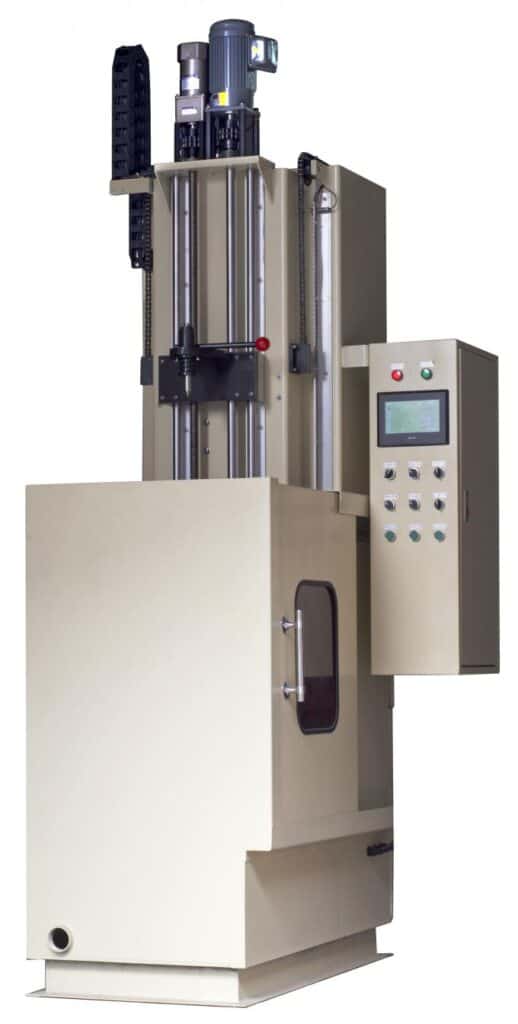
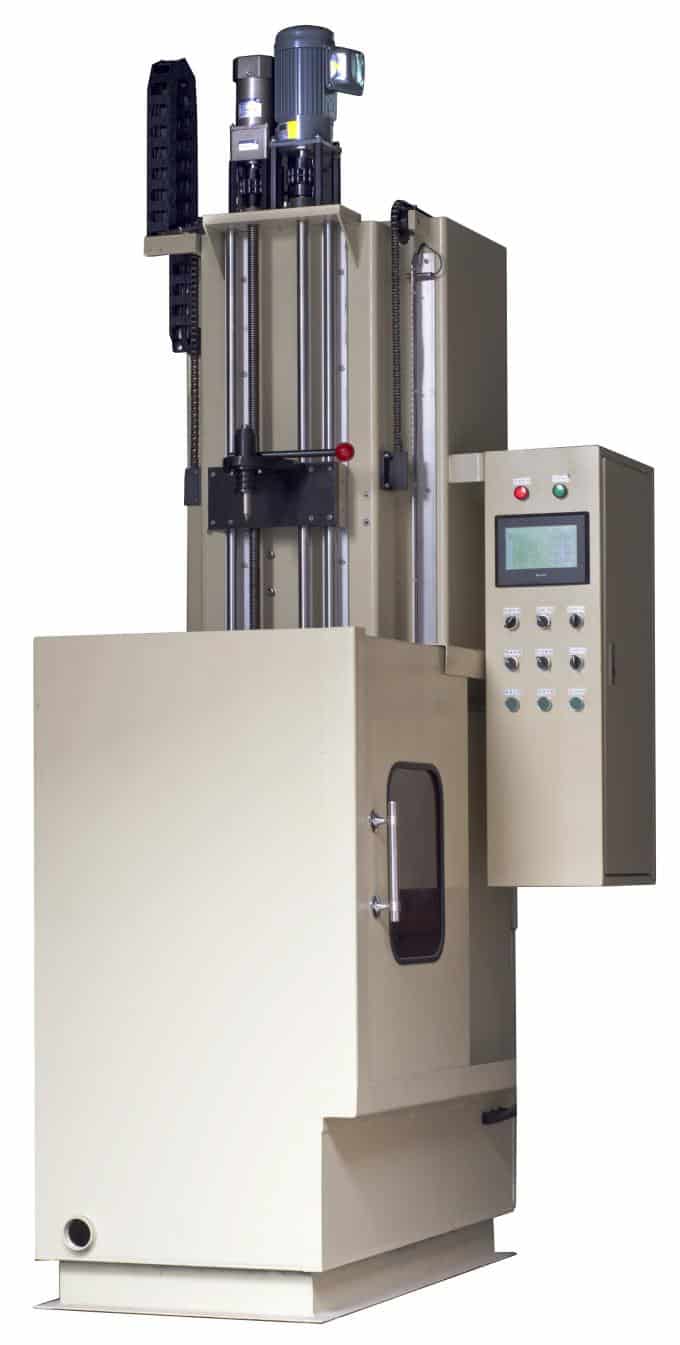
CNC hardening/quenching machine tool feature: 1.CNC system:The high-frequency hardening machine CNC system can compile and store a variety of quenching process programs according to different workpiece requirements. 2.HMI: programming type and human machine interface displays in English and Chinese. 3.Control adjust: it can control the heating power to start, stop, parts heating and cooling time, rotation speed and movement speed. 4.Lathe: adopt welded structure with good rust-proof functions. 5.Top adjustment parts: adopt electric adjustment, to realize clamping of different length work piece. 6.Work table system: adopt ball screw and servo motor to drive, driving light, high guide precision and accurate positioning. 7.Main shaft rotation system: adopt variable frequency regulating to realize parts rotation speed continuous adjusted. 8.Electric control part: the machine tool has power-loosing protection function, has high safety and reliability. 9.Frame: made by thick steel plates, with window and sliding doors, prevent water splash, easy to load parts and monitor induction hardening process.     [caption id="attachment_6788" align="alignnone" width="600"]  [/caption] https://dw-inductionheater.com/induction-hardening-process.html?feed_id=234193&_unique_id=65d032023f48a

2024年2月7日星期三

High Speed Heating by Induction Heating System

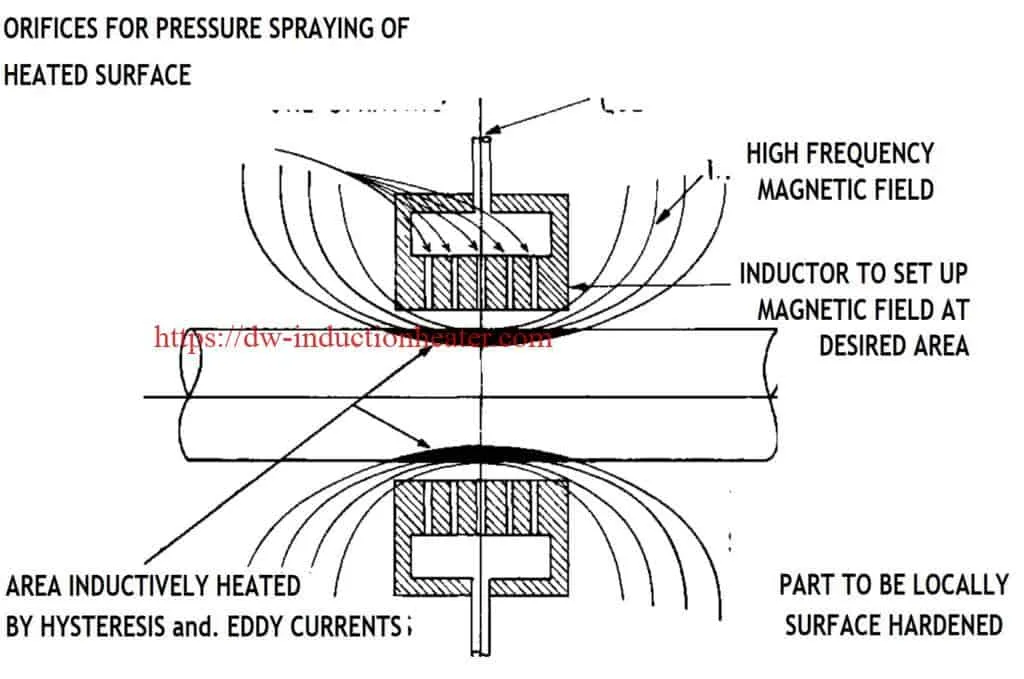
One of the recent outstanding developments in the heat treating field has been the application of induction heating to localized surface hardening. The advances made contingent with the applica­tion of high frequency current have been nothing short of phenomenal. Starting a comparatively short time ago as a long-sought-after method of hardening bearing surfaces on crankshafts (sev­eral million of these are in use setting all time service records), today finds this very selective surfacing hardening method producing hardened areas on a multiplicity of parts. Yet, in spite of its present day breadth of application, induction hardening is still in its infant stage. Its probable utilization for the heat treating and hardening of metals, heating for forging or brazing, or solder­ing of similar and dissimilar metals, is unpre­dictable. Induction hardening results in the production of locally hardened steel objects with the desired degree of depth and hardness, essential metal­lurgical structure of core, demarcation zone, and hardened case, with a practical lack of distortion and no scale formation. It permits equipment de­sign which warrants mechanization of the whole operation to fulfill production line requirements. Time cycles of only a few seconds are maintained by automatic regulation of power and split second heating and quenching intervals indispensable to the creation of facsimile results of exacting special fixations. Induction hardening equipment permits the user to surface harden only the requisite por­tion of most any steel object and thus maintain the original ductility and strength; to harden articles of intricate design which cannot be feas­ibly treated in any other way; to eliminate usual expensive pretreatment such as copper plating and carburizing, and costly subsequent straight­ening and cleaning operations; to cut down on material cost by having a wide selection of steels from which to choose; and to harden a fully-ma­chined item without the necessity of any finishing operations. To the casual observer it would appear that in­duction hardening is possible as a result of some energy transformation occurring within an induc­tive region of copper. The copper carries an elec­trical current of high frequency and, within an interval of a few seconds, the surface of a piece of steel placed within this energized region is heated to its critical range and quenched to opti­mum hardness. To the manufacturer of equipment for this method of hardening it means the appli­cation of the phenomena of hysteresis, eddy cur­rents, and skin effect to the effective production of localized surface hardening. The heating is accomplished by use of high frequency currents. Specifically chosen frequencies from 2,000 to 10,000 cycles and upwards of 100,­000 cycles are being used extensively at the pres­ent time. Current of this nature in flowing through an inductor produces a high-frequency magnetic field within the region of the inductor. When a magnetic material such as steel is placed within this field, there is a dissipation of energy in the steel which produces heat. The molecules within the steel attempt to align themselves with the polarity of this field, and with this changing thousands of times per second, an enormous amount of internal molecular friction is developed as a result of the natural tendency for the steel to resist changes. In this manner the electrical energy is transformed, through the medium of friction, into heat. However, since another inherent characteristic of high frequency current is to concentrate on the surface of its conductor, only the surface layers become heated. This tendency, called “skin effect”, is a function of the frequency and, other things being equal, higher frequencies are effec­tive at shallower depths. The frictional action producing the heat is called hysteresis and is obviously dependent upon the magnetic qualities of the steel. Thus, when the temperature has passed the critical point at which the steel be­comes non-magnetic, all hysteretic heating ceases. There is an additional source of heat due to eddy currents which flow in the steel as a result of the rapidly changing flux in the field. With resistance of the steel increasing with tempera­ture, the intensity of this action is decreased as the steel becomes heated, and is only a fraction of its “cold” original value when the proper quenching temperature is reached. When the temperature of an inductively heated steel bar arrives at the critical point, heating due to eddy currents continues at a greatly reduced rate. Since the entire action goes on in the sur­face layers, only that portion is affected. The original core properties are maintained, the sur­face hardening being accomplished by quench­ing when complete carbide solution has been at­tained in the surface areas. Continued applica­tion of power causes an increase in depth of hardness, for as each layer of steel is brought to temperature, the current density shifts to the layer beneath which offers a lower resistance. It is obvious that the selection of the proper fre­quency, and control of power and heating time will make fulfillment of any desired specifica­tions of surface hardening possible. Metallurgy of Induction Heating The unusual behavior of steel when heated in­ductively and the results obtained merit a discus­sion of the metallurgy involved. Carbide solution rates of less than a second, higher hardness than that produced by furnace treatment, and a nodu­lar type of martensite are points of consideration that classify the metallurgy of induction harden­ing as “different”. Further, surface decarburiza­tion and grain growth do not occur because of the short heating cycle. Induction heating produces a hardness that is maintained through 80 percent of its depth, and from there on, a gradual decrease through a transition zone to the original hardness of the steel as found in the core which has not been affected. The bond is thus ideal, eliminating any chance of spalling or checking. Complete carbide solution and homogeneity as evidenced by maximum hardness can be accom­plished with a total heating time of 0.6 second. Of this time, only 0.2 to 0.3 second is actually above the lower critical. It is interesting to note that induction hardening equipment is in every day operation on a production basis with complete carbide solution, resulting from a heating and quenching cycle, the total time of which is less than 0.2 second. The fine nodular and more homogeneous mar­tensite which results from the induction harden­ing is more readily apparent with carbon steels than with alloy steel because of the nodular ap­pearance of most alloy martensite. This fine struc­ture must have for its origin an austenite which is the result of a more thorough carbide diffusion than is obtained with thermal heating. Practically instantaneous development of critical tempera­tures throughout the entire microstructure of the alpha iron and iron carbide is particularly con­ducive to rapid carbide solution and a distribution of constituents which has as its inevitable product a thoroughly homogeneous austentite. Further, the conversion of this structure to martensite will produce a martensite which possesses similar characteristics and a corresponding resistance to wear or penetrating instruments.

high speed heating by induction   https://dw-inductionheater.com/high-speed-heating-by-induction-heating-system.html?feed_id=233626&_unique_id=65c3575ae63ce

2023年8月12日星期六

Induction Hardening Steel Part with High Frequency Hardening Machine

Induction Hardening Steel Part with High Frequency Hardening Machine

The goal of this induction heating application is to heat complex shape steel tools for hardening and integrate the process on a conveyor line to increase productivity. induction hardening steel partIndustry: Manufacturing Equipment: DW-UHF-10KW induction hardening machine Materials: Steel tool parts Power: 9.71kW Time: 17 secs Coil: Custom designed 4 turn helical coil. The Process: The induction coil is designed to provide uniform heat to the entire part. The induction heat is applied to the entire part. The sample is then quenched into water. The exact time and power of the induction heat have to be determined based on the specific hardening and production requirements. The benefits of induction hardening for tools parts include fast heating, increased production rates, increased energy efficiency, automation and repeatability. DW-UHF induction heating systems are widely used for similar induction hardening applications. induction hardening steel part induction hardening steel part [wpforms id="3947"]
https://dw-inductionheater.com/induction-hardening-steel-part-with-high-frequency-hardening-machine.html?feed_id=222961&_unique_id=64d85ea8cbb5d

2023年6月25日星期日

induction hardening process

High Frequency Induction Hardening  Process

Induction hardening is used in particular for the hardening/quenching of bearing surfaces and shafts as well as intricately shaped parts where only a specific area needs to be heated. Through the choice of the operating frequency of the induction heating system, the resulting depth of penetration is defined. Additionally, it can be decided if the area is to be hardened in the air, with water or with a special hardening emulsion. Depending on the cooling medium, different degrees of hardness are achieved. Induction hardening can be realized as a manual or automated solution. There is also the possibility to harden in a continuous process.
  • Suitable for hardening and tempering of various workpieces, such as induction hardening of shafts, gears, guide rails, discs, pins, and other parts;
  • It has the functions of continuous hardening, simultaneous hardening, segmented continuous hardening, and segmented simultaneous hardening;
  • Use numerical control system or PLC and frequency conversion speed regulation system to realize workpiece positioning and scanning, and connect PLC and induction heating power supply to realize fully automated production.
  • Vertical (hardening of shaft parts) + horizontal (hardening of gear ring parts)
Hardening is one of HLQ induction heating power systems's main application areas. Hundreds of our hardening solutions are at work around the world—many of them within the automotive industry. The main benefit of induction heating for hardening is that it takes just a few seconds. In a furnace, the same process can take hours or even days. How is that possible? The answer is that induction is phenomenal at generating heat fast. This, in turn, means you can integrate hardening in the production process. Hardening in a furnace, on the other hand, is more time-consuming (greater heat loss) and requires moving the components either to your own furnace or to that of a subcontractor. In-line integration of hardening reduces your lead times considerably. You get full control over quality, delivery times and costs. There's no need to transport kilos of components back and forward, which saves energy and the environment.And last but not least, you cut down the amount of administration to a minimum. HLQ Induction Heating Power Systems has many years of experience in inductive hardening and tempering of diverse workpieces. At the heart of each Hardening system is HLQ Induction Heating Power Systems Induction Heat Power Source, the industry's most advanced induction frequency converter. These acclaimed converters help ensure optimum hardening results—day in day out, year after year The induction hardening machine includes Vertical Scanning , Horizontal (centerless) Scanning and customized machines—and serial and/or parallel compensated induction power sources with a wide range of output power and frequencies.
  • This series hardening machine tool uses numberic control technology, has continuous, simultaneous, sectionally-continuous and sectionally-silultaneous quenching functions, it is mainly used for induction quenching of shafts, discs, pins and gears, and featured by high quenching precision. hardening machine tool used by connecting with medium frequency, superaudio frequency, high frequency and ultrahigh frequency induction heating machine.
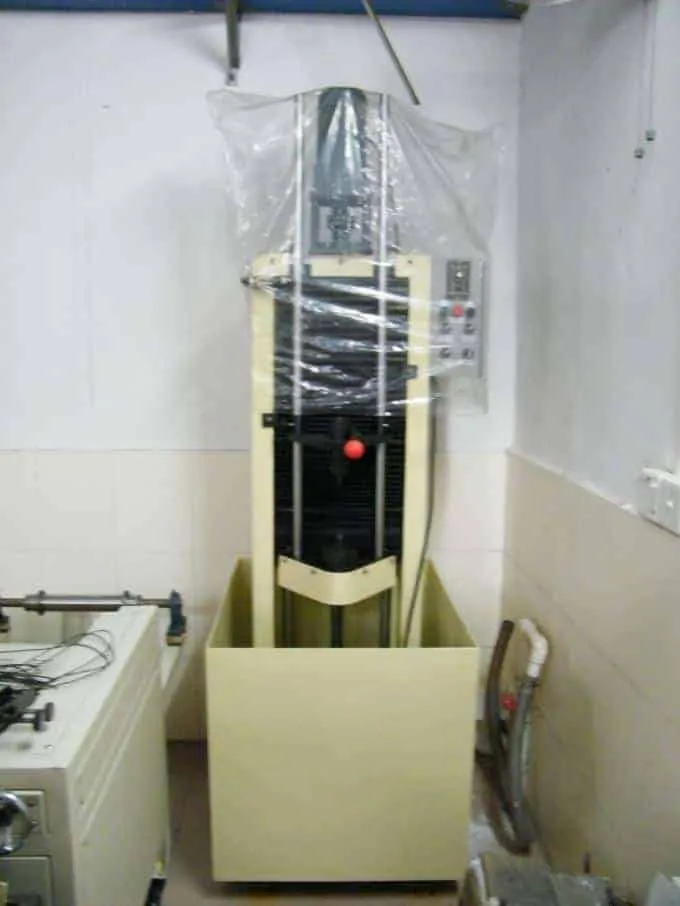
  • CNC quenching/hardening machine tool feature:
  • CNC system:The high-frequency quenching machine CNC system can compile and store a variety of quenching process programs according to different workpiece requirements.
  • HMI: programming type and human machine interface displays in English and Chinese.
  • Control adjust: it can control the heating power to start, stop, parts heating and cooling time, rotation speed and movement speed.
  • Lathe: adopt welded structure with good rust-proof functions.
  • Top adjustment parts: adopt electric adjustment, to realize clamping of different length work piece.
  • Work table system: adopt ball screw and servo motor to drive, driving light, high guide precision and accurate positioning.
  • Main shaft rotation system: adopt variable frequency regulating to realize parts rotation speed continuous adjusted.
  • Electric control part: the machine tool has power-loosing protection function, has high safety and reliability.
  • Frame: made by thick steel plates, with window and sliding doors, prevent water splash, easy to load parts and monitor hardening process.
CNC vertical hardening/quenching machine tool This series hardening machine tool uses numberic control technology, has continuous, simultaneous, sectionally-continuous and sectionally-silultaneous quenching functions, it is mainly used for induction quenching of shafts, discs, pins and gears, and featured by high quenching precision. hardening machine tool used by connecting with medium frequency, superaudio frequency, high frequency and ultrahigh frequency induction heating machine. According to the different of workpiece, there are vertical type, horizontal type,closed type, customized type, etc. 1.Standard SK-500/1000/1200/1500 workpiece moving type For shafts, discs, pins and gears hardening 2.SK-2000/2500/3000/4000 Transformer moving type , Used for heating length more than 1500mm shaft 3.Closed type : Customized for big shaft ,More clean work environment. 4.Horizontal hardening machine tool SK-500/1000/1200/1500/2000/2500/3000/4000  Used for smooth shaft 5.Customized type Technical Parameter
Model SK-500 SK-1000 SK-1200 SK-1500
Max heating length(mm) 500 1000 1200 1500
Max heating diameter(mm) 500 500 600 600
Max holding length(mm) 600 1100 1300 1600
Max weight of workpiece(Kg) 100 100 100 100
Workpiece rotation speed(r/min) 0-300 0-300 0-300 0-300
workpiece moving speed(mm/min) 6-3000 6-3000 6-3000 6-3000
Cooling method Hydrojet cooling Hydrojet cooling Hydrojet cooling Hydrojet cooling
Input voltage 3P 380V 50Hz 3P 380V 50Hz 3P 380V 50Hz 3P 380V 50Hz
Motor power 1.1KW 1.1KW 1.2KW 1.5KW
Dimension LxWxH (mm) 1600 x800 x2000 1600 x800 x2400 1900 x900 x2900 1900 x900 x3200
weight(Kg) 800 900 1100 1200
 
Model SK-2000 SK-2500 SK-3000 SK-4000
Max heating length(mm) 2000 2500 3000 4000
Max heating diameter(mm) 600 600 600 600
Max holding length(mm) 2000 2500 3000 4000
Max weight of workpiece(Kg) 800 1000 1200 1500
workpiece rotation speed(r/min) 0-300 0-300 0-300 0-300
workpiece moving speed(mm/min) 6-3000 6-3000 6-3000 6-3000
Cooling method Hydrojet cooling Hydrojet cooling Hydrojet cooling Hydrojet cooling
Input voltage 3P 380V 50Hz 3P 380V 50Hz 3P 380V 50Hz 3P 380V 50Hz
Motor power 2KW 2.2KW 2.5KW 3KW
Dimension LxWxH (mm) 1900 x900 x2400 1900 x900 x2900 1900 x900 x3400 1900 x900 x4300
weight(Kg) 1200 1300 1400 1500
CNC hardening/quenching machine tool feature: 1.CNC system:The high-frequency hardening machine CNC system can compile and store a variety of quenching process programs according to different workpiece requirements. 2.HMI: programming type and human machine interface displays in English and Chinese. 3.Control adjust: it can control the heating power to start, stop, parts heating and cooling time, rotation speed and movement speed. 4.Lathe: adopt welded structure with good rust-proof functions. 5.Top adjustment parts: adopt electric adjustment, to realize clamping of different length work piece. 6.Work table system: adopt ball screw and servo motor to drive, driving light, high guide precision and accurate positioning. 7.Main shaft rotation system: adopt variable frequency regulating to realize parts rotation speed continuous adjusted. 8.Electric control part: the machine tool has power-loosing protection function, has high safety and reliability. 9.Frame: made by thick steel plates, with window and sliding doors, prevent water splash, easy to load parts and monitor induction hardening process.     [caption id="attachment_6788" align="alignnone" width="600"]  [/caption] https://dw-inductionheater.com/induction-hardening-process.html?feed_id=216136&_unique_id=6498b93607922
2023年6月19日星期一

High Speed Heating by Induction Heating System

One of the recent outstanding developments in the heat treating field has been the application of induction heating to localized surface hardening. The advances made contingent with the applica­tion of high frequency current have been nothing short of phenomenal. Starting a comparatively short time ago as a long-sought-after method of hardening bearing surfaces on crankshafts (sev­eral million of these are in use setting all time service records), today finds this very selective surfacing hardening method producing hardened areas on a multiplicity of parts. Yet, in spite of its present day breadth of application, induction hardening is still in its infant stage. Its probable utilization for the heat treating and hardening of metals, heating for forging or brazing, or solder­ing of similar and dissimilar metals, is unpre­dictable. Induction hardening results in the production of locally hardened steel objects with the desired degree of depth and hardness, essential metal­lurgical structure of core, demarcation zone, and hardened case, with a practical lack of distortion and no scale formation. It permits equipment de­sign which warrants mechanization of the whole operation to fulfill production line requirements. Time cycles of only a few seconds are maintained by automatic regulation of power and split second heating and quenching intervals indispensable to the creation of facsimile results of exacting special fixations. Induction hardening equipment permits the user to surface harden only the requisite por­tion of most any steel object and thus maintain the original ductility and strength; to harden articles of intricate design which cannot be feas­ibly treated in any other way; to eliminate usual expensive pretreatment such as copper plating and carburizing, and costly subsequent straight­ening and cleaning operations; to cut down on material cost by having a wide selection of steels from which to choose; and to harden a fully-ma­chined item without the necessity of any finishing operations. To the casual observer it would appear that in­duction hardening is possible as a result of some energy transformation occurring within an induc­tive region of copper. The copper carries an elec­trical current of high frequency and, within an interval of a few seconds, the surface of a piece of steel placed within this energized region is heated to its critical range and quenched to opti­mum hardness. To the manufacturer of equipment for this method of hardening it means the appli­cation of the phenomena of hysteresis, eddy cur­rents, and skin effect to the effective production of localized surface hardening. The heating is accomplished by use of high frequency currents. Specifically chosen frequencies from 2,000 to 10,000 cycles and upwards of 100,­000 cycles are being used extensively at the pres­ent time. Current of this nature in flowing through an inductor produces a high-frequency magnetic field within the region of the inductor. When a magnetic material such as steel is placed within this field, there is a dissipation of energy in the steel which produces heat. The molecules within the steel attempt to align themselves with the polarity of this field, and with this changing thousands of times per second, an enormous amount of internal molecular friction is developed as a result of the natural tendency for the steel to resist changes. In this manner the electrical energy is transformed, through the medium of friction, into heat. However, since another inherent characteristic of high frequency current is to concentrate on the surface of its conductor, only the surface layers become heated. This tendency, called “skin effect”, is a function of the frequency and, other things being equal, higher frequencies are effec­tive at shallower depths. The frictional action producing the heat is called hysteresis and is obviously dependent upon the magnetic qualities of the steel. Thus, when the temperature has passed the critical point at which the steel be­comes non-magnetic, all hysteretic heating ceases. There is an additional source of heat due to eddy currents which flow in the steel as a result of the rapidly changing flux in the field. With resistance of the steel increasing with tempera­ture, the intensity of this action is decreased as the steel becomes heated, and is only a fraction of its “cold” original value when the proper quenching temperature is reached. When the temperature of an inductively heated steel bar arrives at the critical point, heating due to eddy currents continues at a greatly reduced rate. Since the entire action goes on in the sur­face layers, only that portion is affected. The original core properties are maintained, the sur­face hardening being accomplished by quench­ing when complete carbide solution has been at­tained in the surface areas. Continued applica­tion of power causes an increase in depth of hardness, for as each layer of steel is brought to temperature, the current density shifts to the layer beneath which offers a lower resistance. It is obvious that the selection of the proper fre­quency, and control of power and heating time will make fulfillment of any desired specifica­tions of surface hardening possible. Metallurgy of Induction Heating The unusual behavior of steel when heated in­ductively and the results obtained merit a discus­sion of the metallurgy involved. Carbide solution rates of less than a second, higher hardness than that produced by furnace treatment, and a nodu­lar type of martensite are points of consideration that classify the metallurgy of induction harden­ing as “different”. Further, surface decarburiza­tion and grain growth do not occur because of the short heating cycle. Induction heating produces a hardness that is maintained through 80 percent of its depth, and from there on, a gradual decrease through a transition zone to the original hardness of the steel as found in the core which has not been affected. The bond is thus ideal, eliminating any chance of spalling or checking. Complete carbide solution and homogeneity as evidenced by maximum hardness can be accom­plished with a total heating time of 0.6 second. Of this time, only 0.2 to 0.3 second is actually above the lower critical. It is interesting to note that induction hardening equipment is in every day operation on a production basis with complete carbide solution, resulting from a heating and quenching cycle, the total time of which is less than 0.2 second. The fine nodular and more homogeneous mar­tensite which results from the induction harden­ing is more readily apparent with carbon steels than with alloy steel because of the nodular ap­pearance of most alloy martensite. This fine struc­ture must have for its origin an austenite which is the result of a more thorough carbide diffusion than is obtained with thermal heating. Practically instantaneous development of critical tempera­tures throughout the entire microstructure of the alpha iron and iron carbide is particularly con­ducive to rapid carbide solution and a distribution of constituents which has as its inevitable product a thoroughly homogeneous austentite. Further, the conversion of this structure to martensite will produce a martensite which possesses similar characteristics and a corresponding resistance to wear or penetrating instruments.

high speed heating by induction  

2023年6月15日星期四

High Speed Heating by Induction Heating System

One of the recent outstanding developments in the heat treating field has been the application of induction heating to localized surface hardening. The advances made contingent with the applica­tion of high frequency current have been nothing short of phenomenal. Starting a comparatively short time ago as a long-sought-after method of hardening bearing surfaces on crankshafts (sev­eral million of these are in use setting all time service records), today finds this very selective surfacing hardening method producing hardened areas on a multiplicity of parts. Yet, in spite of its present day breadth of application, induction hardening is still in its infant stage. Its probable utilization for the heat treating and hardening of metals, heating for forging or brazing, or solder­ing of similar and dissimilar metals, is unpre­dictable. Induction hardening results in the production of locally hardened steel objects with the desired degree of depth and hardness, essential metal­lurgical structure of core, demarcation zone, and hardened case, with a practical lack of distortion and no scale formation. It permits equipment de­sign which warrants mechanization of the whole operation to fulfill production line requirements. Time cycles of only a few seconds are maintained by automatic regulation of power and split second heating and quenching intervals indispensable to the creation of facsimile results of exacting special fixations. Induction hardening equipment permits the user to surface harden only the requisite por­tion of most any steel object and thus maintain the original ductility and strength; to harden articles of intricate design which cannot be feas­ibly treated in any other way; to eliminate usual expensive pretreatment such as copper plating and carburizing, and costly subsequent straight­ening and cleaning operations; to cut down on material cost by having a wide selection of steels from which to choose; and to harden a fully-ma­chined item without the necessity of any finishing operations. To the casual observer it would appear that in­duction hardening is possible as a result of some energy transformation occurring within an induc­tive region of copper. The copper carries an elec­trical current of high frequency and, within an interval of a few seconds, the surface of a piece of steel placed within this energized region is heated to its critical range and quenched to opti­mum hardness. To the manufacturer of equipment for this method of hardening it means the appli­cation of the phenomena of hysteresis, eddy cur­rents, and skin effect to the effective production of localized surface hardening. The heating is accomplished by use of high frequency currents. Specifically chosen frequencies from 2,000 to 10,000 cycles and upwards of 100,­000 cycles are being used extensively at the pres­ent time. Current of this nature in flowing through an inductor produces a high-frequency magnetic field within the region of the inductor. When a magnetic material such as steel is placed within this field, there is a dissipation of energy in the steel which produces heat. The molecules within the steel attempt to align themselves with the polarity of this field, and with this changing thousands of times per second, an enormous amount of internal molecular friction is developed as a result of the natural tendency for the steel to resist changes. In this manner the electrical energy is transformed, through the medium of friction, into heat. However, since another inherent characteristic of high frequency current is to concentrate on the surface of its conductor, only the surface layers become heated. This tendency, called “skin effect”, is a function of the frequency and, other things being equal, higher frequencies are effec­tive at shallower depths. The frictional action producing the heat is called hysteresis and is obviously dependent upon the magnetic qualities of the steel. Thus, when the temperature has passed the critical point at which the steel be­comes non-magnetic, all hysteretic heating ceases. There is an additional source of heat due to eddy currents which flow in the steel as a result of the rapidly changing flux in the field. With resistance of the steel increasing with tempera­ture, the intensity of this action is decreased as the steel becomes heated, and is only a fraction of its “cold” original value when the proper quenching temperature is reached. When the temperature of an inductively heated steel bar arrives at the critical point, heating due to eddy currents continues at a greatly reduced rate. Since the entire action goes on in the sur­face layers, only that portion is affected. The original core properties are maintained, the sur­face hardening being accomplished by quench­ing when complete carbide solution has been at­tained in the surface areas. Continued applica­tion of power causes an increase in depth of hardness, for as each layer of steel is brought to temperature, the current density shifts to the layer beneath which offers a lower resistance. It is obvious that the selection of the proper fre­quency, and control of power and heating time will make fulfillment of any desired specifica­tions of surface hardening possible. Metallurgy of Induction Heating The unusual behavior of steel when heated in­ductively and the results obtained merit a discus­sion of the metallurgy involved. Carbide solution rates of less than a second, higher hardness than that produced by furnace treatment, and a nodu­lar type of martensite are points of consideration that classify the metallurgy of induction harden­ing as “different”. Further, surface decarburiza­tion and grain growth do not occur because of the short heating cycle. Induction heating produces a hardness that is maintained through 80 percent of its depth, and from there on, a gradual decrease through a transition zone to the original hardness of the steel as found in the core which has not been affected. The bond is thus ideal, eliminating any chance of spalling or checking. Complete carbide solution and homogeneity as evidenced by maximum hardness can be accom­plished with a total heating time of 0.6 second. Of this time, only 0.2 to 0.3 second is actually above the lower critical. It is interesting to note that induction hardening equipment is in every day operation on a production basis with complete carbide solution, resulting from a heating and quenching cycle, the total time of which is less than 0.2 second. The fine nodular and more homogeneous mar­tensite which results from the induction harden­ing is more readily apparent with carbon steels than with alloy steel because of the nodular ap­pearance of most alloy martensite. This fine struc­ture must have for its origin an austenite which is the result of a more thorough carbide diffusion than is obtained with thermal heating. Practically instantaneous development of critical tempera­tures throughout the entire microstructure of the alpha iron and iron carbide is particularly con­ducive to rapid carbide solution and a distribution of constituents which has as its inevitable product a thoroughly homogeneous austentite. Further, the conversion of this structure to martensite will produce a martensite which possesses similar characteristics and a corresponding resistance to wear or penetrating instruments.

high speed heating by induction   https://dw-inductionheater.com/high-speed-heating-by-induction-heating-system.html?feed_id=213511&_unique_id=648bdbf93766b

2023年5月22日星期一

induction hardening process

High Frequency Induction Hardening  Process

Induction hardening is used in particular for the hardening/quenching of bearing surfaces and shafts as well as intricately shaped parts where only a specific area needs to be heated. Through the choice of the operating frequency of the induction heating system, the resulting depth of penetration is defined. Additionally, it can be decided if the area is to be hardened in the air, with water or with a special hardening emulsion. Depending on the cooling medium, different degrees of hardness are achieved. Induction hardening can be realized as a manual or automated solution. There is also the possibility to harden in a continuous process.
  • Suitable for hardening and tempering of various workpieces, such as induction hardening of shafts, gears, guide rails, discs, pins, and other parts;
  • It has the functions of continuous hardening, simultaneous hardening, segmented continuous hardening, and segmented simultaneous hardening;
  • Use numerical control system or PLC and frequency conversion speed regulation system to realize workpiece positioning and scanning, and connect PLC and induction heating power supply to realize fully automated production.
  • Vertical (hardening of shaft parts) + horizontal (hardening of gear ring parts)
Hardening is one of HLQ induction heating power systems's main application areas. Hundreds of our hardening solutions are at work around the world—many of them within the automotive industry. The main benefit of induction heating for hardening is that it takes just a few seconds. In a furnace, the same process can take hours or even days. How is that possible? The answer is that induction is phenomenal at generating heat fast. This, in turn, means you can integrate hardening in the production process. Hardening in a furnace, on the other hand, is more time-consuming (greater heat loss) and requires moving the components either to your own furnace or to that of a subcontractor. In-line integration of hardening reduces your lead times considerably. You get full control over quality, delivery times and costs. There's no need to transport kilos of components back and forward, which saves energy and the environment.And last but not least, you cut down the amount of administration to a minimum. HLQ Induction Heating Power Systems has many years of experience in inductive hardening and tempering of diverse workpieces. At the heart of each Hardening system is HLQ Induction Heating Power Systems Induction Heat Power Source, the industry's most advanced induction frequency converter. These acclaimed converters help ensure optimum hardening results—day in day out, year after year The induction hardening machine includes Vertical Scanning , Horizontal (centerless) Scanning and customized machines—and serial and/or parallel compensated induction power sources with a wide range of output power and frequencies.
  • This series hardening machine tool uses numberic control technology, has continuous, simultaneous, sectionally-continuous and sectionally-silultaneous quenching functions, it is mainly used for induction quenching of shafts, discs, pins and gears, and featured by high quenching precision. hardening machine tool used by connecting with medium frequency, superaudio frequency, high frequency and ultrahigh frequency induction heating machine.
  • CNC quenching/hardening machine tool feature:
  • CNC system:The high-frequency quenching machine CNC system can compile and store a variety of quenching process programs according to different workpiece requirements.
  • HMI: programming type and human machine interface displays in English and Chinese.
  • Control adjust: it can control the heating power to start, stop, parts heating and cooling time, rotation speed and movement speed.
  • Lathe: adopt welded structure with good rust-proof functions.
  • Top adjustment parts: adopt electric adjustment, to realize clamping of different length work piece.
  • Work table system: adopt ball screw and servo motor to drive, driving light, high guide precision and accurate positioning.
  • Main shaft rotation system: adopt variable frequency regulating to realize parts rotation speed continuous adjusted.
  • Electric control part: the machine tool has power-loosing protection function, has high safety and reliability.
  • Frame: made by thick steel plates, with window and sliding doors, prevent water splash, easy to load parts and monitor hardening process.
CNC vertical hardening/quenching machine tool This series hardening machine tool uses numberic control technology, has continuous, simultaneous, sectionally-continuous and sectionally-silultaneous quenching functions, it is mainly used for induction quenching of shafts, discs, pins and gears, and featured by high quenching precision. hardening machine tool used by connecting with medium frequency, superaudio frequency, high frequency and ultrahigh frequency induction heating machine. According to the different of workpiece, there are vertical type, horizontal type,closed type, customized type, etc. 1.Standard SK-500/1000/1200/1500 workpiece moving type For shafts, discs, pins and gears hardening 2.SK-2000/2500/3000/4000 Transformer moving type , Used for heating length more than 1500mm shaft 3.Closed type : Customized for big shaft ,More clean work environment. 4.Horizontal hardening machine tool SK-500/1000/1200/1500/2000/2500/3000/4000  Used for smooth shaft 5.Customized type Technical Parameter
Model SK-500 SK-1000 SK-1200 SK-1500
Max heating length(mm) 500 1000 1200 1500
Max heating diameter(mm) 500 500 600 600
Max holding length(mm) 600 1100 1300 1600
Max weight of workpiece(Kg) 100 100 100 100
Workpiece rotation speed(r/min) 0-300 0-300 0-300 0-300
workpiece moving speed(mm/min) 6-3000 6-3000 6-3000 6-3000
Cooling method Hydrojet cooling Hydrojet cooling Hydrojet cooling Hydrojet cooling
Input voltage 3P 380V 50Hz 3P 380V 50Hz 3P 380V 50Hz 3P 380V 50Hz
Motor power 1.1KW 1.1KW 1.2KW 1.5KW
Dimension LxWxH (mm) 1600 x800 x2000 1600 x800 x2400 1900 x900 x2900 1900 x900 x3200
weight(Kg) 800 900 1100 1200
 
Model SK-2000 SK-2500 SK-3000 SK-4000
Max heating length(mm) 2000 2500 3000 4000
Max heating diameter(mm) 600 600 600 600
Max holding length(mm) 2000 2500 3000 4000
Max weight of workpiece(Kg) 800 1000 1200 1500
workpiece rotation speed(r/min) 0-300 0-300 0-300 0-300
workpiece moving speed(mm/min) 6-3000 6-3000 6-3000 6-3000
Cooling method Hydrojet cooling Hydrojet cooling Hydrojet cooling Hydrojet cooling
Input voltage 3P 380V 50Hz 3P 380V 50Hz 3P 380V 50Hz 3P 380V 50Hz
Motor power 2KW 2.2KW 2.5KW 3KW
Dimension LxWxH (mm) 1900 x900 x2400 1900 x900 x2900 1900 x900 x3400 1900 x900 x4300
weight(Kg) 1200 1300 1400 1500
CNC hardening/quenching machine tool feature: 1.CNC system:The high-frequency hardening machine CNC system can compile and store a variety of quenching process programs according to different workpiece requirements. 2.HMI: programming type and human machine interface displays in English and Chinese. 3.Control adjust: it can control the heating power to start, stop, parts heating and cooling time, rotation speed and movement speed. 4.Lathe: adopt welded structure with good rust-proof functions. 5.Top adjustment parts: adopt electric adjustment, to realize clamping of different length work piece. 6.Work table system: adopt ball screw and servo motor to drive, driving light, high guide precision and accurate positioning. 7.Main shaft rotation system: adopt variable frequency regulating to realize parts rotation speed continuous adjusted. 8.Electric control part: the machine tool has power-loosing protection function, has high safety and reliability. 9.Frame: made by thick steel plates, with window and sliding doors, prevent water splash, easy to load parts and monitor induction hardening process.     [caption id="attachment_6788" align="alignnone" width="600"]  [/caption]

2023年5月19日星期五

Induction Hardening Steel Part with High Frequency Hardening Machine

Induction Hardening Steel Part with High Frequency Hardening Machine

The goal of this induction heating application is to heat complex shape steel tools for hardening and integrate the process on a conveyor line to increase productivity. induction hardening steel partIndustry: Manufacturing Equipment: DW-UHF-10KW induction hardening machine Materials: Steel tool parts Power: 9.71kW Time: 17 secs Coil: Custom designed 4 turn helical coil. The Process: The induction coil is designed to provide uniform heat to the entire part. The induction heat is applied to the entire part. The sample is then quenched into water. The exact time and power of the induction heat have to be determined based on the specific hardening and production requirements. The benefits of induction hardening for tools parts include fast heating, increased production rates, increased energy efficiency, automation and repeatability. DW-UHF induction heating systems are widely used for similar induction hardening applications. induction hardening steel part induction hardening steel part [wpforms id="3947"]
关注者

我的简介

我的照片
HLQ induction heating machine manufacturer provides the service of induction brazing,melting,hot forming,hardening surface,annealing,shrink fitting,PWHT,etc.