显示标签为“hardeningprocess”的博文。显示所有博文

2024年2月16日星期五

induction hardening process

High Frequency Induction Hardening  Process

Induction hardening is used in particular for the hardening/quenching of bearing surfaces and shafts as well as intricately shaped parts where only a specific area needs to be heated. Through the choice of the operating frequency of the induction heating system, the resulting depth of penetration is defined. Additionally, it can be decided if the area is to be hardened in the air, with water or with a special hardening emulsion. Depending on the cooling medium, different degrees of hardness are achieved. Induction hardening can be realized as a manual or automated solution. There is also the possibility to harden in a continuous process.
  • Suitable for hardening and tempering of various workpieces, such as induction hardening of shafts, gears, guide rails, discs, pins, and other parts;
  • It has the functions of continuous hardening, simultaneous hardening, segmented continuous hardening, and segmented simultaneous hardening;
  • Use numerical control system or PLC and frequency conversion speed regulation system to realize workpiece positioning and scanning, and connect PLC and induction heating power supply to realize fully automated production.
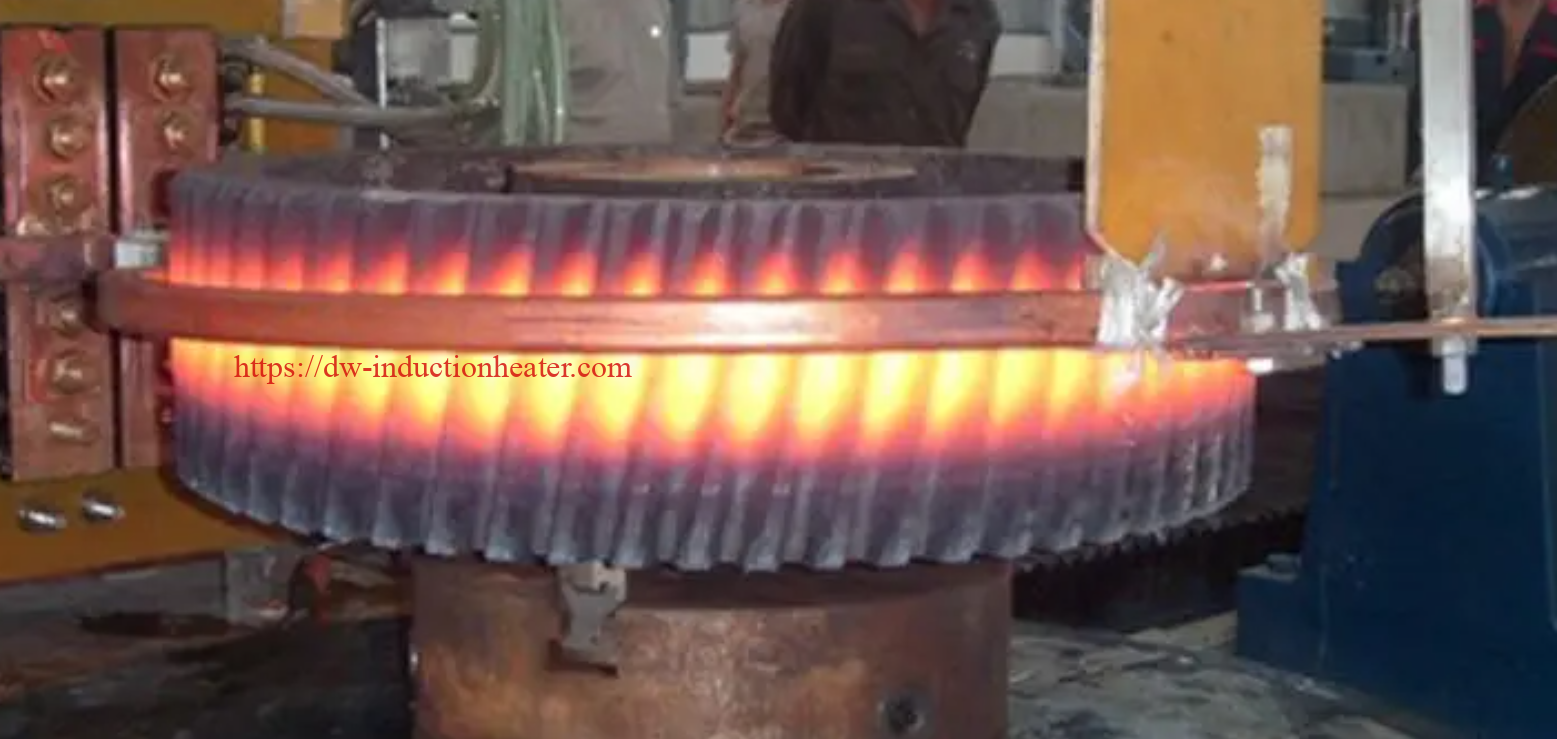
  • Vertical (hardening of shaft parts) + horizontal (hardening of gear ring parts)
Hardening is one of HLQ induction heating power systems's main application areas. Hundreds of our hardening solutions are at work around the world—many of them within the automotive industry. The main benefit of induction heating for hardening is that it takes just a few seconds. In a furnace, the same process can take hours or even days. How is that possible? The answer is that induction is phenomenal at generating heat fast. This, in turn, means you can integrate hardening in the production process. Hardening in a furnace, on the other hand, is more time-consuming (greater heat loss) and requires moving the components either to your own furnace or to that of a subcontractor. In-line integration of hardening reduces your lead times considerably. You get full control over quality, delivery times and costs. There's no need to transport kilos of components back and forward, which saves energy and the environment.And last but not least, you cut down the amount of administration to a minimum. HLQ Induction Heating Power Systems has many years of experience in inductive hardening and tempering of diverse workpieces. At the heart of each Hardening system is HLQ Induction Heating Power Systems Induction Heat Power Source, the industry's most advanced induction frequency converter. These acclaimed converters help ensure optimum hardening results—day in day out, year after year The induction hardening machine includes Vertical Scanning , Horizontal (centerless) Scanning and customized machines—and serial and/or parallel compensated induction power sources with a wide range of output power and frequencies.
  • This series hardening machine tool uses numberic control technology, has continuous, simultaneous, sectionally-continuous and sectionally-silultaneous quenching functions, it is mainly used for induction quenching of shafts, discs, pins and gears, and featured by high quenching precision. hardening machine tool used by connecting with medium frequency, superaudio frequency, high frequency and ultrahigh frequency induction heating machine.
  • CNC quenching/hardening machine tool feature:
  • CNC system:The high-frequency quenching machine CNC system can compile and store a variety of quenching process programs according to different workpiece requirements.
  • HMI: programming type and human machine interface displays in English and Chinese.
  • Control adjust: it can control the heating power to start, stop, parts heating and cooling time, rotation speed and movement speed.
  • Lathe: adopt welded structure with good rust-proof functions.
  • Top adjustment parts: adopt electric adjustment, to realize clamping of different length work piece.
  • Work table system: adopt ball screw and servo motor to drive, driving light, high guide precision and accurate positioning.
  • Main shaft rotation system: adopt variable frequency regulating to realize parts rotation speed continuous adjusted.
  • Electric control part: the machine tool has power-loosing protection function, has high safety and reliability.
  • Frame: made by thick steel plates, with window and sliding doors, prevent water splash, easy to load parts and monitor hardening process.
CNC vertical hardening/quenching machine tool This series hardening machine tool uses numberic control technology, has continuous, simultaneous, sectionally-continuous and sectionally-silultaneous quenching functions, it is mainly used for induction quenching of shafts, discs, pins and gears, and featured by high quenching precision. hardening machine tool used by connecting with medium frequency, superaudio frequency, high frequency and ultrahigh frequency induction heating machine. According to the different of workpiece, there are vertical type, horizontal typeclosed type, customized type, etc. 1.Standard SK-500/1000/1200/1500 workpiece moving type For shafts, discs, pins and gears hardening 2.SK-2000/2500/3000/4000 Transformer moving type , Used for heating length more than 1500mm shaft 3.Closed type : Customized for big shaft ,More clean work environment. 4.Horizontal hardening machine tool SK-500/1000/1200/1500/2000/2500/3000/4000  Used for smooth shaft 5.Customized type Technical Parameter
Model SK-500 SK-1000 SK-1200 SK-1500
Max heating length(mm) 500 1000 1200 1500
Max heating diameter(mm) 500 500 600 600
Max holding length(mm) 600 1100 1300 1600
Max weight of workpiece(Kg) 100 100 100 100
Workpiece rotation speed(r/min) 0-300 0-300 0-300 0-300
workpiece moving speed(mm/min) 6-3000 6-3000 6-3000 6-3000
Cooling method Hydrojet cooling Hydrojet cooling Hydrojet cooling Hydrojet cooling
Input voltage 3P 380V 50Hz 3P 380V 50Hz 3P 380V 50Hz 3P 380V 50Hz
Motor power 1.1KW 1.1KW 1.2KW 1.5KW
Dimension LxWxH (mm) 1600 x800 x2000 1600 x800 x2400 1900 x900 x2900 1900 x900 x3200
weight(Kg) 800 900 1100 1200
 
Model SK-2000 SK-2500 SK-3000 SK-4000
Max heating length(mm) 2000 2500 3000 4000
Max heating diameter(mm) 600 600 600 600
Max holding length(mm) 2000 2500 3000 4000
Max weight of workpiece(Kg) 800 1000 1200 1500
workpiece rotation speed(r/min) 0-300 0-300 0-300 0-300
workpiece moving speed(mm/min) 6-3000 6-3000 6-3000 6-3000
Cooling method Hydrojet cooling Hydrojet cooling Hydrojet cooling Hydrojet cooling
Input voltage 3P 380V 50Hz 3P 380V 50Hz 3P 380V 50Hz 3P 380V 50Hz
Motor power 2KW 2.2KW 2.5KW 3KW
Dimension LxWxH (mm) 1900 x900 x2400 1900 x900 x2900 1900 x900 x3400 1900 x900 x4300
weight(Kg) 1200 1300 1400 1500
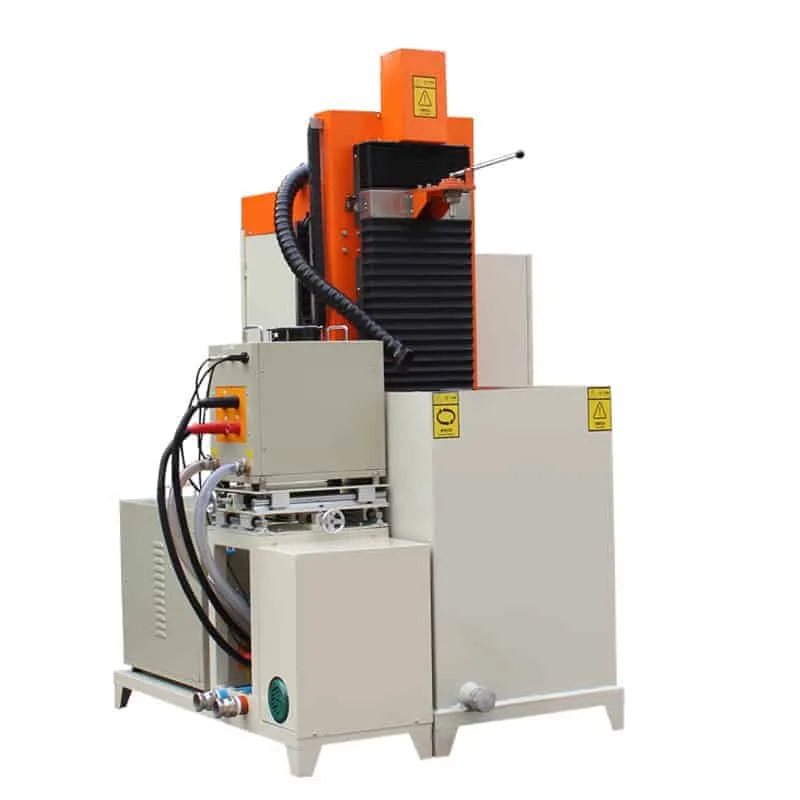
CNC hardening/quenching machine tool feature: 1.CNC system:The high-frequency hardening machine CNC system can compile and store a variety of quenching process programs according to different workpiece requirements. 2.HMI: programming type and human machine interface displays in English and Chinese. 3.Control adjust: it can control the heating power to start, stop, parts heating and cooling time, rotation speed and movement speed. 4.Lathe: adopt welded structure with good rust-proof functions. 5.Top adjustment parts: adopt electric adjustment, to realize clamping of different length work piece. 6.Work table system: adopt ball screw and servo motor to drive, driving light, high guide precision and accurate positioning. 7.Main shaft rotation system: adopt variable frequency regulating to realize parts rotation speed continuous adjusted. 8.Electric control part: the machine tool has power-loosing protection function, has high safety and reliability. 9.Frame: made by thick steel plates, with window and sliding doors, prevent water splash, easy to load parts and monitor induction hardening process.     [caption id="attachment_6788" align="alignnone" width="600"]  [/caption] https://dw-inductionheater.com/induction-hardening-process.html?feed_id=234193&_unique_id=65d032023f48a

2024年1月9日星期二

Improve Gear Performance with Induction Hardening of Gear Teeth

The Importance of Induction Hardening of Gear Teeth for Smooth and Efficient Machinery.

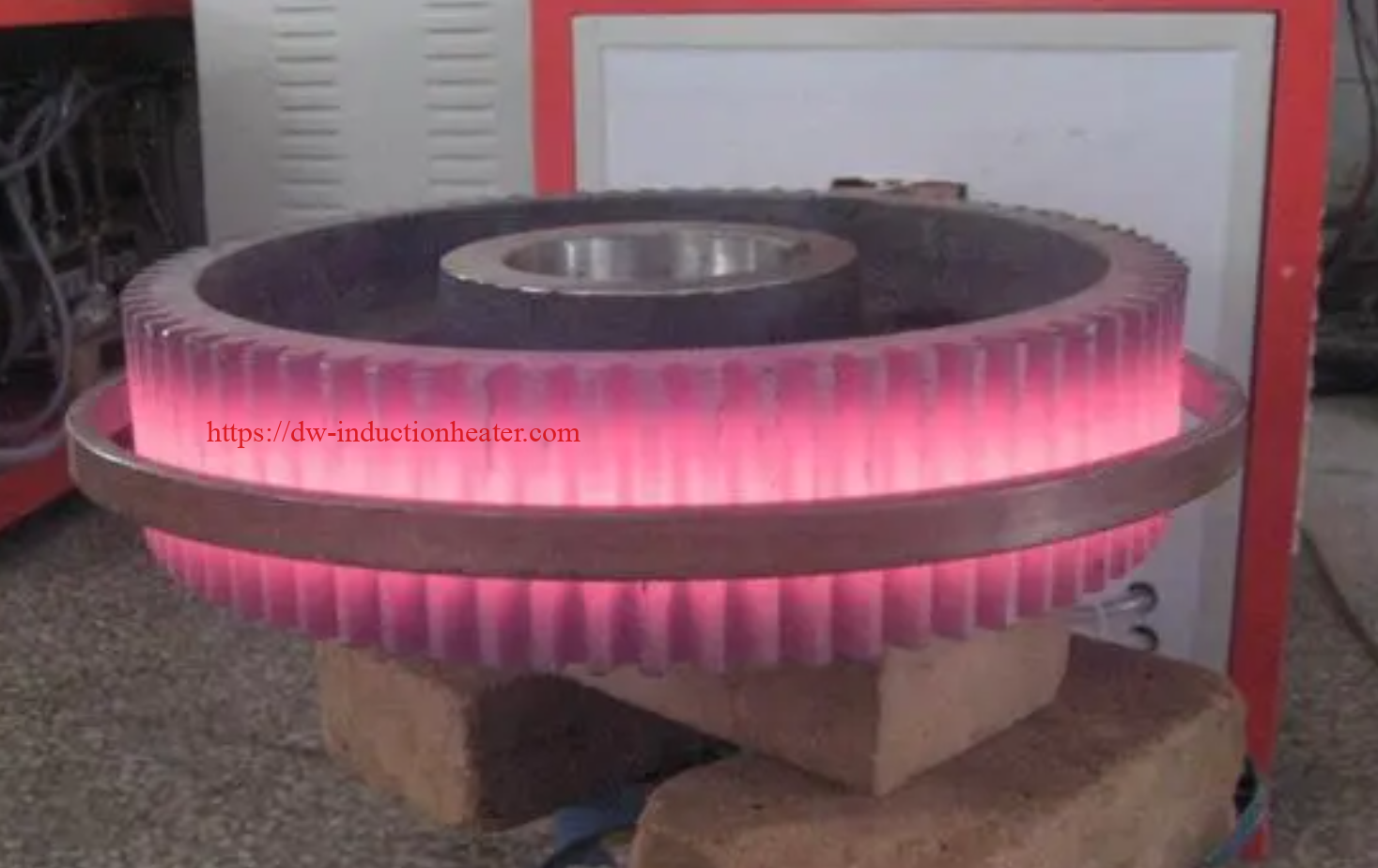
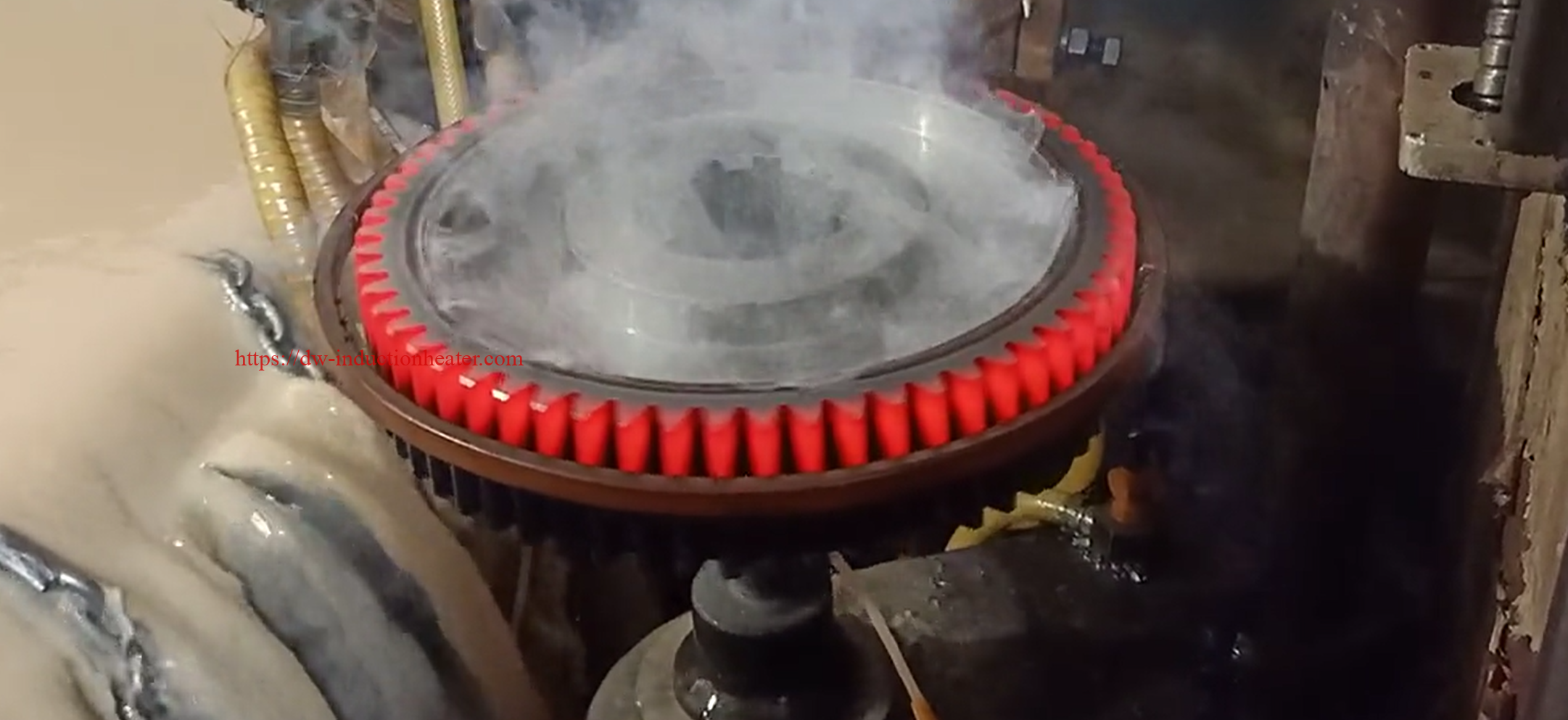
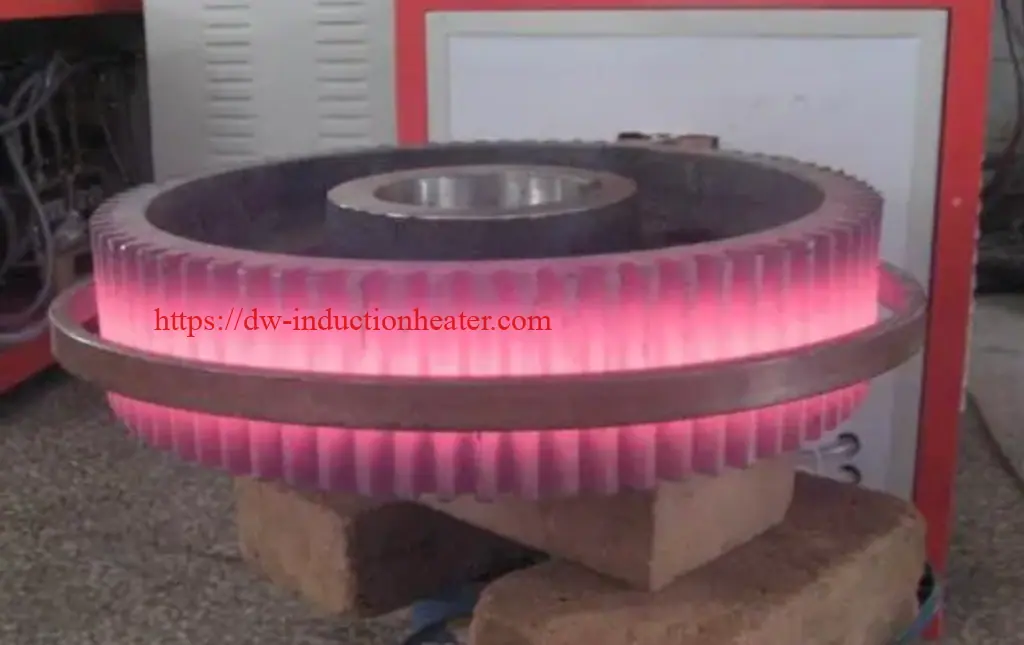
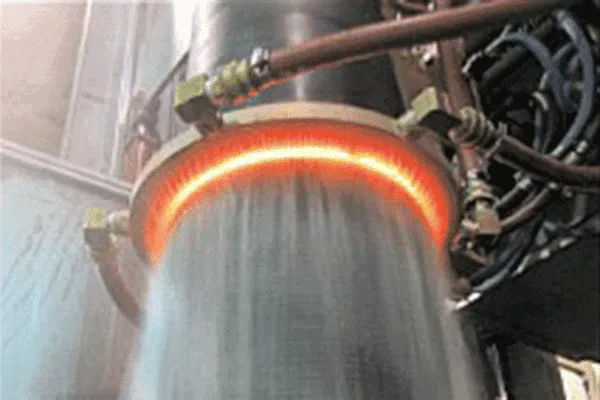
Induction Hardening of Gear Teeth is a process that is often overlooked by machinery users, but it is one of the most important aspects of ensuring the smooth and efficient operation of any machinery. Induction hardening is a process of heat treatment that is used to selectively harden the surface of a gear. This process is essential for ensuring that the gear teeth can withstand the high loads and stresses that are placed upon them during operation. By hardening the gear teeth in this way, machinery users can ensure that their equipment runs smoothly, efficiently, and with minimal wear and tear on the gears. In this blog post, we will explore the importance of induction gear teeth hardening, how it works, and why it is essential for the proper functioning of industrial machinery. 1. Introduction to Induction Hardening of Gear Teeth Induction Hardening of Gear Teeth is an important process for ensuring that gears are smooth and efficient in their operation. Gears are a fundamental part of many machines, and they require precise engineering and attention to detail to work correctly. One crucial component of this precision is the hardness of the gear teeth. By using induction hardening, the teeth of a gear can be made much harder and more durable, allowing them to operate more smoothly and with greater efficiency. This process involves using an electrical current to heat the gear teeth to a specific temperature, followed by rapid cooling. This causes a change in the molecular structure of the metal, making it much harder and more resistant to wear and tear. The result is a gear that is better able to withstand the stresses of operation, providing a smoother and more efficient performance. 2. The Importance of Induction Hardening of Gear Teeth Induction Hardening of Gear Teeth is a critical process that ensures the smooth and efficient functioning of machinery. This process involves heating the gear teeth with high-frequency alternating currents and then rapidly cooling them. This results in the formation of a hardened layer that is more wear-resistant and has a longer lifespan than the original gear teeth. Induction hardening is especially important for gears because they are constantly under high stress and friction during operation. If the gear teeth are not hardened properly, they can wear out quickly, leading to machinery breakdowns and decreased efficiency. Induction gear teeth hardening can also improve the load-carrying capacity of the gears, making them more durable and reliable in operation. By increasing the lifespan of the gears, the need for maintenance and replacements is reduced, saving time and money. Therefore, it is crucial to ensure that gear teeth are properly hardened through induction hardening to ensure the smooth and efficient operation of machinery. 3. How Induction Hardening of Gear TeethWorks Induction gear teeth hardening is a process that involves heating the surface of the gear tooth with an induction coil to harden it. This process is important because it ensures that the gear teeth will remain strong and durable even after years of use. Induction gear teeth hardening works by heating the surface of the gear tooth to a specific temperature. This temperature is high enough to cause the surface of the gear tooth to change its crystal structure, which in turn hardens it. The process is quick and efficient, and the result is a gear tooth that is much harder and more resistant to wear and tear than it was before. Induction gear teeth hardening is often used in industries where machinery is subject to constant use and wear, such as in manufacturing or transportation. By ensuring that the gear teeth are strong and durable, the machinery can continue to operate smoothly and efficiently for longer periods of time. 4. Benefits of Induction Gear Teeth Hardening for Machinery Induction Hardening of Gear Teeth is a process that is crucial to the smooth and efficient operation of machinery. The benefits of induction gear teeth hardening are many and include increased strength, durability, and wear resistance. Induction hardening is a heat treatment process that uses high-frequency current to heat the surface of the gear teeth and then rapidly cools them. This creates a hard outer layer while maintaining the ductility and toughness of the core of the gear. One of the most significant benefits of induction gear teeth hardening is that it makes the gear more resistant to wear and tear. This, in turn, can help to extend the life of the gear and reduce the need for frequent replacements. Induction hardening also helps to improve the gear's strength, making it less likely to warp or break under heavy loads. Another advantage of induction hardening is that it makes the gear more resistant to fatigue failure. This is important in machinery that is subjected to repeated loading and unloading. Fatigue failure occurs when a material is subjected to cyclic loading and unloading, causing micro-cracks to form. Induction hardening helps to prevent these micro-cracks from forming, making the gear less susceptible to fatigue failure. Finally, induction hardening can also improve the efficiency of the machinery. By reducing the amount of friction between the gear and other moving parts, the gear can operate more smoothly and with less energy. This can lead to a reduction in energy consumption, resulting in cost savings for the operator. Overall, induction gear teeth hardening is a process that is essential for the smooth and efficient operation of machinery. Its benefits include increased strength, durability, wear resistance, and improved efficiency, making it an important consideration for anyone looking to maintain and improve the performance of their machinery. Induction hardening of gear teeth is a process that involves heating the teeth of a gear with an induction coil and then rapidly cooling them with a spray of water or other cooling medium. This process is used to improve the wear resistance and durability of gear teeth, making them less likely to wear down or break over time. Induction gear teeth hardening is a popular choice for many industrial applications where gears are subjected to heavy use and need to last a long time. If you're interested in learning more about induction gear teeth hardening and how it can benefit your business, contact a reputable induction heating company today. https://dw-inductionheater.com/improve-gear-performance-with-induction-hardening-of-gear-teeth.html?feed_id=231793&_unique_id=659d7e41049f3
2023年11月17日星期五

What is induction hardening?

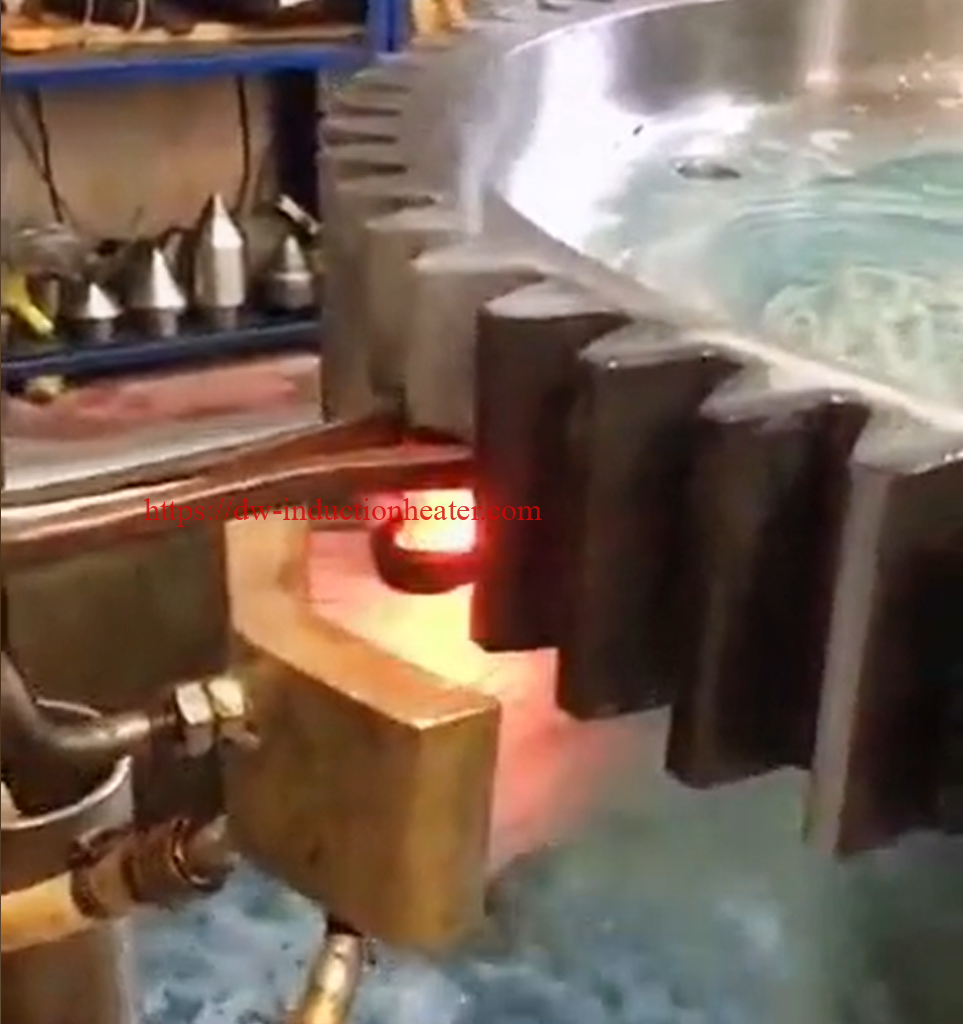
What is induction hardening? Induction hardening uses induced heat and rapid cooling (quenching) to increase the hardness and durability of steel.Induction heating is a no-contact process that quickly produces intense, localized and controllable heat. With induction, only the part to be hardened is heated. Optimizing process parameters such as heating cycles, frequencies and coil and quench design results in the best possible outcomes. What are the benefits? Induction hardening boosts throughput. It is an extremely fast and repeatable process that integrates easily into production lines. With induction it is usual to treat individual workpieces. This ensures each separate workpiece is hardened to its own precise specifications. The optimized process parameters for each workpiece can be stored on your servers. Induction hardening is clean, safe and typically has a small footprint. And because only the part of the component to be hardened is heated, it is extremely energy-efficient. Where is it used? Induction heating is used to harden numerous components. Here are just a few of them: gears, crankshafts, camshafts, drive shafts, output shafts, torsion bars, rocker arms, CV joints, tulips, valves, rock drills, slewing rings, inner and outer races. https://dw-inductionheater.com/what-is-induction-hardening.html?feed_id=230916&_unique_id=6558395735bac

2023年6月25日星期日

induction hardening process

High Frequency Induction Hardening  Process

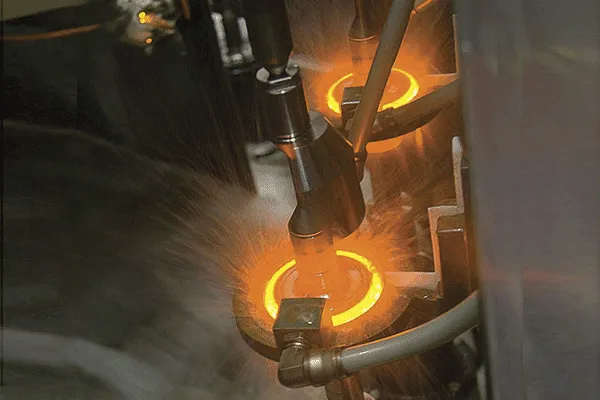
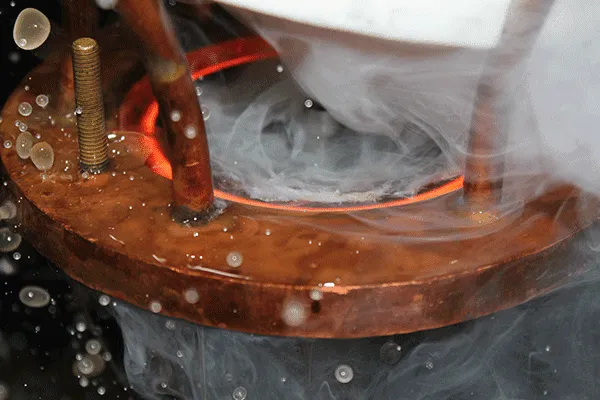
Induction hardening is used in particular for the hardening/quenching of bearing surfaces and shafts as well as intricately shaped parts where only a specific area needs to be heated. Through the choice of the operating frequency of the induction heating system, the resulting depth of penetration is defined. Additionally, it can be decided if the area is to be hardened in the air, with water or with a special hardening emulsion. Depending on the cooling medium, different degrees of hardness are achieved. Induction hardening can be realized as a manual or automated solution. There is also the possibility to harden in a continuous process.
  • Suitable for hardening and tempering of various workpieces, such as induction hardening of shafts, gears, guide rails, discs, pins, and other parts;
  • It has the functions of continuous hardening, simultaneous hardening, segmented continuous hardening, and segmented simultaneous hardening;
  • Use numerical control system or PLC and frequency conversion speed regulation system to realize workpiece positioning and scanning, and connect PLC and induction heating power supply to realize fully automated production.
  • Vertical (hardening of shaft parts) + horizontal (hardening of gear ring parts)
Hardening is one of HLQ induction heating power systems's main application areas. Hundreds of our hardening solutions are at work around the world—many of them within the automotive industry. The main benefit of induction heating for hardening is that it takes just a few seconds. In a furnace, the same process can take hours or even days. How is that possible? The answer is that induction is phenomenal at generating heat fast. This, in turn, means you can integrate hardening in the production process. Hardening in a furnace, on the other hand, is more time-consuming (greater heat loss) and requires moving the components either to your own furnace or to that of a subcontractor. In-line integration of hardening reduces your lead times considerably. You get full control over quality, delivery times and costs. There's no need to transport kilos of components back and forward, which saves energy and the environment.And last but not least, you cut down the amount of administration to a minimum. HLQ Induction Heating Power Systems has many years of experience in inductive hardening and tempering of diverse workpieces. At the heart of each Hardening system is HLQ Induction Heating Power Systems Induction Heat Power Source, the industry's most advanced induction frequency converter. These acclaimed converters help ensure optimum hardening results—day in day out, year after year The induction hardening machine includes Vertical Scanning , Horizontal (centerless) Scanning and customized machines—and serial and/or parallel compensated induction power sources with a wide range of output power and frequencies.
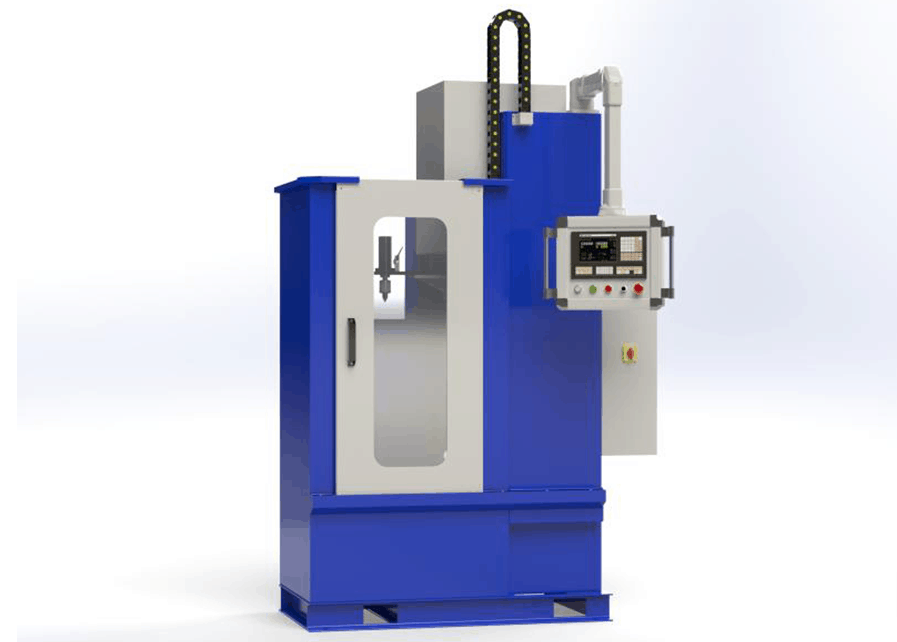
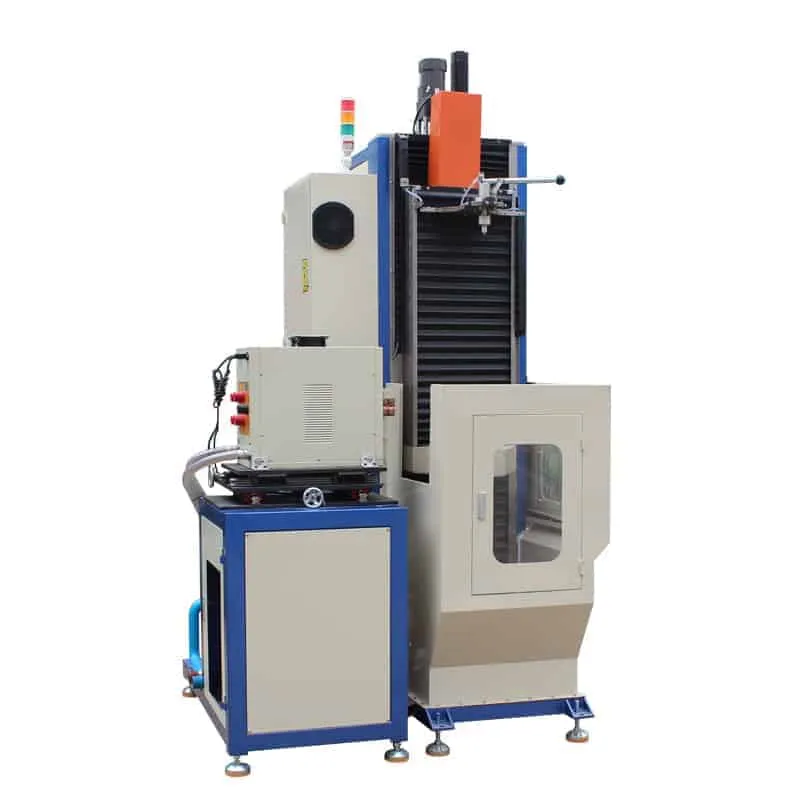
  • This series hardening machine tool uses numberic control technology, has continuous, simultaneous, sectionally-continuous and sectionally-silultaneous quenching functions, it is mainly used for induction quenching of shafts, discs, pins and gears, and featured by high quenching precision. hardening machine tool used by connecting with medium frequency, superaudio frequency, high frequency and ultrahigh frequency induction heating machine.
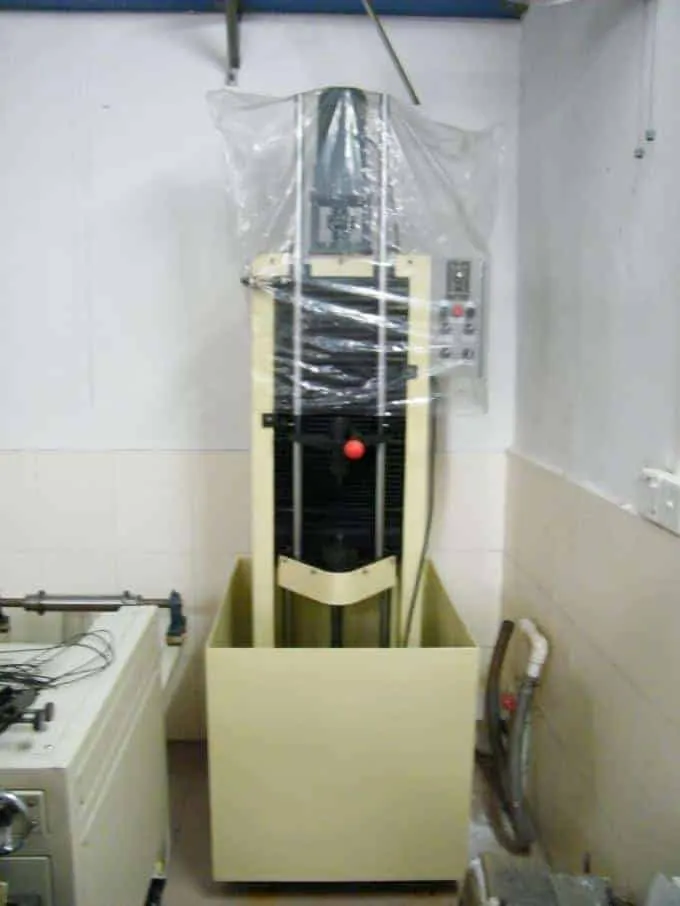
  • CNC quenching/hardening machine tool feature:
  • CNC system:The high-frequency quenching machine CNC system can compile and store a variety of quenching process programs according to different workpiece requirements.
  • HMI: programming type and human machine interface displays in English and Chinese.
  • Control adjust: it can control the heating power to start, stop, parts heating and cooling time, rotation speed and movement speed.
  • Lathe: adopt welded structure with good rust-proof functions.
  • Top adjustment parts: adopt electric adjustment, to realize clamping of different length work piece.
  • Work table system: adopt ball screw and servo motor to drive, driving light, high guide precision and accurate positioning.
  • Main shaft rotation system: adopt variable frequency regulating to realize parts rotation speed continuous adjusted.
  • Electric control part: the machine tool has power-loosing protection function, has high safety and reliability.
  • Frame: made by thick steel plates, with window and sliding doors, prevent water splash, easy to load parts and monitor hardening process.
CNC vertical hardening/quenching machine tool This series hardening machine tool uses numberic control technology, has continuous, simultaneous, sectionally-continuous and sectionally-silultaneous quenching functions, it is mainly used for induction quenching of shafts, discs, pins and gears, and featured by high quenching precision. hardening machine tool used by connecting with medium frequency, superaudio frequency, high frequency and ultrahigh frequency induction heating machine. According to the different of workpiece, there are vertical type, horizontal typeclosed type, customized type, etc. 1.Standard SK-500/1000/1200/1500 workpiece moving type For shafts, discs, pins and gears hardening 2.SK-2000/2500/3000/4000 Transformer moving type , Used for heating length more than 1500mm shaft 3.Closed type : Customized for big shaft ,More clean work environment. 4.Horizontal hardening machine tool SK-500/1000/1200/1500/2000/2500/3000/4000  Used for smooth shaft 5.Customized type Technical Parameter
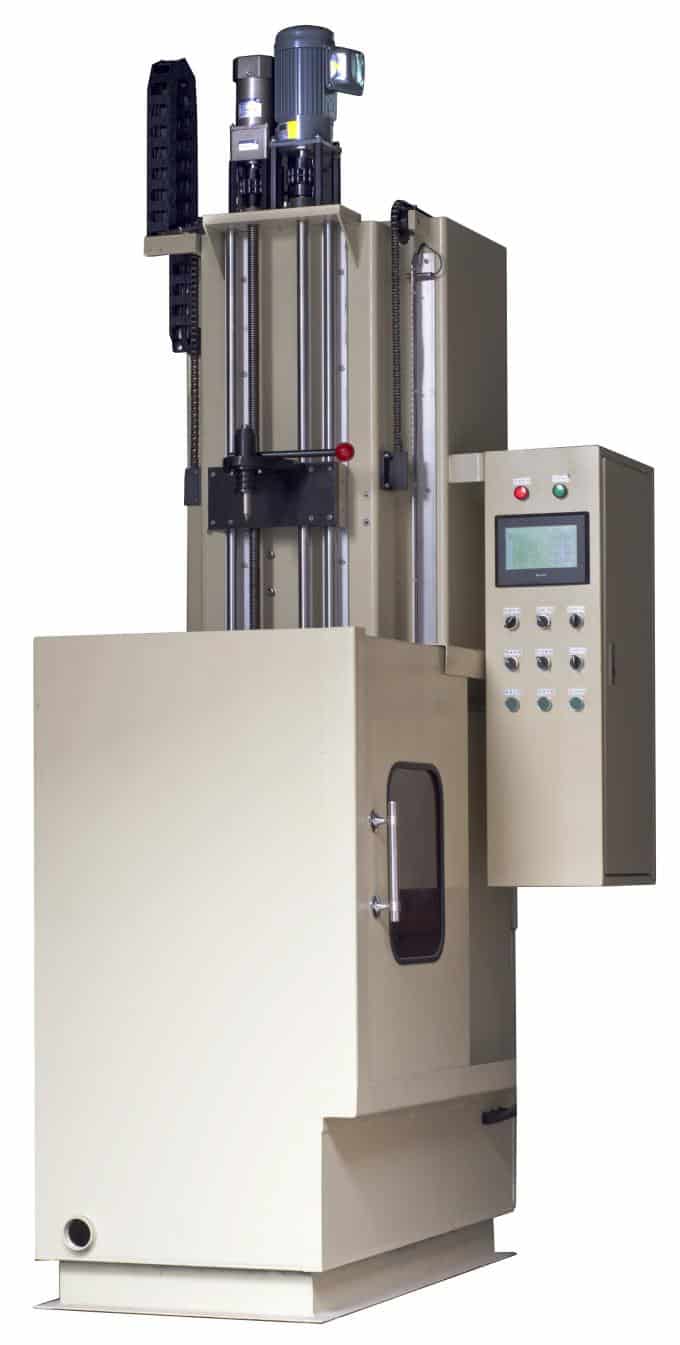
Model SK-500 SK-1000 SK-1200 SK-1500
Max heating length(mm) 500 1000 1200 1500
Max heating diameter(mm) 500 500 600 600
Max holding length(mm) 600 1100 1300 1600
Max weight of workpiece(Kg) 100 100 100 100
Workpiece rotation speed(r/min) 0-300 0-300 0-300 0-300
workpiece moving speed(mm/min) 6-3000 6-3000 6-3000 6-3000
Cooling method Hydrojet cooling Hydrojet cooling Hydrojet cooling Hydrojet cooling
Input voltage 3P 380V 50Hz 3P 380V 50Hz 3P 380V 50Hz 3P 380V 50Hz
Motor power 1.1KW 1.1KW 1.2KW 1.5KW
Dimension LxWxH (mm) 1600 x800 x2000 1600 x800 x2400 1900 x900 x2900 1900 x900 x3200
weight(Kg) 800 900 1100 1200
 
Model SK-2000 SK-2500 SK-3000 SK-4000
Max heating length(mm) 2000 2500 3000 4000
Max heating diameter(mm) 600 600 600 600
Max holding length(mm) 2000 2500 3000 4000
Max weight of workpiece(Kg) 800 1000 1200 1500
workpiece rotation speed(r/min) 0-300 0-300 0-300 0-300
workpiece moving speed(mm/min) 6-3000 6-3000 6-3000 6-3000
Cooling method Hydrojet cooling Hydrojet cooling Hydrojet cooling Hydrojet cooling
Input voltage 3P 380V 50Hz 3P 380V 50Hz 3P 380V 50Hz 3P 380V 50Hz
Motor power 2KW 2.2KW 2.5KW 3KW
Dimension LxWxH (mm) 1900 x900 x2400 1900 x900 x2900 1900 x900 x3400 1900 x900 x4300
weight(Kg) 1200 1300 1400 1500
CNC hardening/quenching machine tool feature: 1.CNC system:The high-frequency hardening machine CNC system can compile and store a variety of quenching process programs according to different workpiece requirements. 2.HMI: programming type and human machine interface displays in English and Chinese. 3.Control adjust: it can control the heating power to start, stop, parts heating and cooling time, rotation speed and movement speed. 4.Lathe: adopt welded structure with good rust-proof functions. 5.Top adjustment parts: adopt electric adjustment, to realize clamping of different length work piece. 6.Work table system: adopt ball screw and servo motor to drive, driving light, high guide precision and accurate positioning. 7.Main shaft rotation system: adopt variable frequency regulating to realize parts rotation speed continuous adjusted. 8.Electric control part: the machine tool has power-loosing protection function, has high safety and reliability. 9.Frame: made by thick steel plates, with window and sliding doors, prevent water splash, easy to load parts and monitor induction hardening process.     [caption id="attachment_6788" align="alignnone" width="600"]  [/caption] https://dw-inductionheater.com/induction-hardening-process.html?feed_id=216136&_unique_id=6498b93607922
2023年6月18日星期日

Improve Gear Performance with Induction Hardening of Gear Teeth

The Importance of Induction Hardening of Gear Teeth for Smooth and Efficient Machinery.

Induction Hardening of Gear Teeth is a process that is often overlooked by machinery users, but it is one of the most important aspects of ensuring the smooth and efficient operation of any machinery. Induction hardening is a process of heat treatment that is used to selectively harden the surface of a gear. This process is essential for ensuring that the gear teeth can withstand the high loads and stresses that are placed upon them during operation. By hardening the gear teeth in this way, machinery users can ensure that their equipment runs smoothly, efficiently, and with minimal wear and tear on the gears. In this blog post, we will explore the importance of induction gear teeth hardening, how it works, and why it is essential for the proper functioning of industrial machinery. 1. Introduction to Induction Hardening of Gear Teeth Induction Hardening of Gear Teeth is an important process for ensuring that gears are smooth and efficient in their operation. Gears are a fundamental part of many machines, and they require precise engineering and attention to detail to work correctly. One crucial component of this precision is the hardness of the gear teeth. By using induction hardening, the teeth of a gear can be made much harder and more durable, allowing them to operate more smoothly and with greater efficiency. This process involves using an electrical current to heat the gear teeth to a specific temperature, followed by rapid cooling. This causes a change in the molecular structure of the metal, making it much harder and more resistant to wear and tear. The result is a gear that is better able to withstand the stresses of operation, providing a smoother and more efficient performance. 2. The Importance of Induction Hardening of Gear Teeth Induction Hardening of Gear Teeth is a critical process that ensures the smooth and efficient functioning of machinery. This process involves heating the gear teeth with high-frequency alternating currents and then rapidly cooling them. This results in the formation of a hardened layer that is more wear-resistant and has a longer lifespan than the original gear teeth. Induction hardening is especially important for gears because they are constantly under high stress and friction during operation. If the gear teeth are not hardened properly, they can wear out quickly, leading to machinery breakdowns and decreased efficiency. Induction gear teeth hardening can also improve the load-carrying capacity of the gears, making them more durable and reliable in operation. By increasing the lifespan of the gears, the need for maintenance and replacements is reduced, saving time and money. Therefore, it is crucial to ensure that gear teeth are properly hardened through induction hardening to ensure the smooth and efficient operation of machinery. 3. How Induction Hardening of Gear TeethWorks Induction gear teeth hardening is a process that involves heating the surface of the gear tooth with an induction coil to harden it. This process is important because it ensures that the gear teeth will remain strong and durable even after years of use. Induction gear teeth hardening works by heating the surface of the gear tooth to a specific temperature. This temperature is high enough to cause the surface of the gear tooth to change its crystal structure, which in turn hardens it. The process is quick and efficient, and the result is a gear tooth that is much harder and more resistant to wear and tear than it was before. Induction gear teeth hardening is often used in industries where machinery is subject to constant use and wear, such as in manufacturing or transportation. By ensuring that the gear teeth are strong and durable, the machinery can continue to operate smoothly and efficiently for longer periods of time. 4. Benefits of Induction Gear Teeth Hardening for Machinery Induction Hardening of Gear Teeth is a process that is crucial to the smooth and efficient operation of machinery. The benefits of induction gear teeth hardening are many and include increased strength, durability, and wear resistance. Induction hardening is a heat treatment process that uses high-frequency current to heat the surface of the gear teeth and then rapidly cools them. This creates a hard outer layer while maintaining the ductility and toughness of the core of the gear. One of the most significant benefits of induction gear teeth hardening is that it makes the gear more resistant to wear and tear. This, in turn, can help to extend the life of the gear and reduce the need for frequent replacements. Induction hardening also helps to improve the gear's strength, making it less likely to warp or break under heavy loads. Another advantage of induction hardening is that it makes the gear more resistant to fatigue failure. This is important in machinery that is subjected to repeated loading and unloading. Fatigue failure occurs when a material is subjected to cyclic loading and unloading, causing micro-cracks to form. Induction hardening helps to prevent these micro-cracks from forming, making the gear less susceptible to fatigue failure. Finally, induction hardening can also improve the efficiency of the machinery. By reducing the amount of friction between the gear and other moving parts, the gear can operate more smoothly and with less energy. This can lead to a reduction in energy consumption, resulting in cost savings for the operator. Overall, induction gear teeth hardening is a process that is essential for the smooth and efficient operation of machinery. Its benefits include increased strength, durability, wear resistance, and improved efficiency, making it an important consideration for anyone looking to maintain and improve the performance of their machinery. Induction hardening of gear teeth is a process that involves heating the teeth of a gear with an induction coil and then rapidly cooling them with a spray of water or other cooling medium. This process is used to improve the wear resistance and durability of gear teeth, making them less likely to wear down or break over time. Induction gear teeth hardening is a popular choice for many industrial applications where gears are subjected to heavy use and need to last a long time. If you're interested in learning more about induction gear teeth hardening and how it can benefit your business, contact a reputable induction heating company today. https://dw-inductionheater.com/improve-gear-performance-with-induction-hardening-of-gear-teeth.html?feed_id=214261&_unique_id=648ff98478e27

2023年5月22日星期一

induction hardening process

High Frequency Induction Hardening  Process

Induction hardening is used in particular for the hardening/quenching of bearing surfaces and shafts as well as intricately shaped parts where only a specific area needs to be heated. Through the choice of the operating frequency of the induction heating system, the resulting depth of penetration is defined. Additionally, it can be decided if the area is to be hardened in the air, with water or with a special hardening emulsion. Depending on the cooling medium, different degrees of hardness are achieved. Induction hardening can be realized as a manual or automated solution. There is also the possibility to harden in a continuous process.
  • Suitable for hardening and tempering of various workpieces, such as induction hardening of shafts, gears, guide rails, discs, pins, and other parts;
  • It has the functions of continuous hardening, simultaneous hardening, segmented continuous hardening, and segmented simultaneous hardening;
  • Use numerical control system or PLC and frequency conversion speed regulation system to realize workpiece positioning and scanning, and connect PLC and induction heating power supply to realize fully automated production.
  • Vertical (hardening of shaft parts) + horizontal (hardening of gear ring parts)
Hardening is one of HLQ induction heating power systems's main application areas. Hundreds of our hardening solutions are at work around the world—many of them within the automotive industry. The main benefit of induction heating for hardening is that it takes just a few seconds. In a furnace, the same process can take hours or even days. How is that possible? The answer is that induction is phenomenal at generating heat fast. This, in turn, means you can integrate hardening in the production process. Hardening in a furnace, on the other hand, is more time-consuming (greater heat loss) and requires moving the components either to your own furnace or to that of a subcontractor. In-line integration of hardening reduces your lead times considerably. You get full control over quality, delivery times and costs. There's no need to transport kilos of components back and forward, which saves energy and the environment.And last but not least, you cut down the amount of administration to a minimum. HLQ Induction Heating Power Systems has many years of experience in inductive hardening and tempering of diverse workpieces. At the heart of each Hardening system is HLQ Induction Heating Power Systems Induction Heat Power Source, the industry's most advanced induction frequency converter. These acclaimed converters help ensure optimum hardening results—day in day out, year after year The induction hardening machine includes Vertical Scanning , Horizontal (centerless) Scanning and customized machines—and serial and/or parallel compensated induction power sources with a wide range of output power and frequencies.
  • This series hardening machine tool uses numberic control technology, has continuous, simultaneous, sectionally-continuous and sectionally-silultaneous quenching functions, it is mainly used for induction quenching of shafts, discs, pins and gears, and featured by high quenching precision. hardening machine tool used by connecting with medium frequency, superaudio frequency, high frequency and ultrahigh frequency induction heating machine.
  • CNC quenching/hardening machine tool feature:
  • CNC system:The high-frequency quenching machine CNC system can compile and store a variety of quenching process programs according to different workpiece requirements.
  • HMI: programming type and human machine interface displays in English and Chinese.
  • Control adjust: it can control the heating power to start, stop, parts heating and cooling time, rotation speed and movement speed.
  • Lathe: adopt welded structure with good rust-proof functions.
  • Top adjustment parts: adopt electric adjustment, to realize clamping of different length work piece.
  • Work table system: adopt ball screw and servo motor to drive, driving light, high guide precision and accurate positioning.
  • Main shaft rotation system: adopt variable frequency regulating to realize parts rotation speed continuous adjusted.
  • Electric control part: the machine tool has power-loosing protection function, has high safety and reliability.
  • Frame: made by thick steel plates, with window and sliding doors, prevent water splash, easy to load parts and monitor hardening process.
CNC vertical hardening/quenching machine tool This series hardening machine tool uses numberic control technology, has continuous, simultaneous, sectionally-continuous and sectionally-silultaneous quenching functions, it is mainly used for induction quenching of shafts, discs, pins and gears, and featured by high quenching precision. hardening machine tool used by connecting with medium frequency, superaudio frequency, high frequency and ultrahigh frequency induction heating machine. According to the different of workpiece, there are vertical type, horizontal typeclosed type, customized type, etc. 1.Standard SK-500/1000/1200/1500 workpiece moving type For shafts, discs, pins and gears hardening 2.SK-2000/2500/3000/4000 Transformer moving type , Used for heating length more than 1500mm shaft 3.Closed type : Customized for big shaft ,More clean work environment. 4.Horizontal hardening machine tool SK-500/1000/1200/1500/2000/2500/3000/4000  Used for smooth shaft 5.Customized type Technical Parameter
Model SK-500 SK-1000 SK-1200 SK-1500
Max heating length(mm) 500 1000 1200 1500
Max heating diameter(mm) 500 500 600 600
Max holding length(mm) 600 1100 1300 1600
Max weight of workpiece(Kg) 100 100 100 100
Workpiece rotation speed(r/min) 0-300 0-300 0-300 0-300
workpiece moving speed(mm/min) 6-3000 6-3000 6-3000 6-3000
Cooling method Hydrojet cooling Hydrojet cooling Hydrojet cooling Hydrojet cooling
Input voltage 3P 380V 50Hz 3P 380V 50Hz 3P 380V 50Hz 3P 380V 50Hz
Motor power 1.1KW 1.1KW 1.2KW 1.5KW
Dimension LxWxH (mm) 1600 x800 x2000 1600 x800 x2400 1900 x900 x2900 1900 x900 x3200
weight(Kg) 800 900 1100 1200
 
Model SK-2000 SK-2500 SK-3000 SK-4000
Max heating length(mm) 2000 2500 3000 4000
Max heating diameter(mm) 600 600 600 600
Max holding length(mm) 2000 2500 3000 4000
Max weight of workpiece(Kg) 800 1000 1200 1500
workpiece rotation speed(r/min) 0-300 0-300 0-300 0-300
workpiece moving speed(mm/min) 6-3000 6-3000 6-3000 6-3000
Cooling method Hydrojet cooling Hydrojet cooling Hydrojet cooling Hydrojet cooling
Input voltage 3P 380V 50Hz 3P 380V 50Hz 3P 380V 50Hz 3P 380V 50Hz
Motor power 2KW 2.2KW 2.5KW 3KW
Dimension LxWxH (mm) 1900 x900 x2400 1900 x900 x2900 1900 x900 x3400 1900 x900 x4300
weight(Kg) 1200 1300 1400 1500
CNC hardening/quenching machine tool feature: 1.CNC system:The high-frequency hardening machine CNC system can compile and store a variety of quenching process programs according to different workpiece requirements. 2.HMI: programming type and human machine interface displays in English and Chinese. 3.Control adjust: it can control the heating power to start, stop, parts heating and cooling time, rotation speed and movement speed. 4.Lathe: adopt welded structure with good rust-proof functions. 5.Top adjustment parts: adopt electric adjustment, to realize clamping of different length work piece. 6.Work table system: adopt ball screw and servo motor to drive, driving light, high guide precision and accurate positioning. 7.Main shaft rotation system: adopt variable frequency regulating to realize parts rotation speed continuous adjusted. 8.Electric control part: the machine tool has power-loosing protection function, has high safety and reliability. 9.Frame: made by thick steel plates, with window and sliding doors, prevent water splash, easy to load parts and monitor induction hardening process.     [caption id="attachment_6788" align="alignnone" width="600"]  [/caption]
2023年5月18日星期四

Improve Gear Performance with Induction Hardening of Gear Teeth

The Importance of Induction Hardening of Gear Teeth for Smooth and Efficient Machinery.

Induction Hardening of Gear Teeth is a process that is often overlooked by machinery users, but it is one of the most important aspects of ensuring the smooth and efficient operation of any machinery. Induction hardening is a process of heat treatment that is used to selectively harden the surface of a gear. This process is essential for ensuring that the gear teeth can withstand the high loads and stresses that are placed upon them during operation. By hardening the gear teeth in this way, machinery users can ensure that their equipment runs smoothly, efficiently, and with minimal wear and tear on the gears. In this blog post, we will explore the importance of induction gear teeth hardening, how it works, and why it is essential for the proper functioning of industrial machinery. 1. Introduction to Induction Hardening of Gear Teeth Induction Hardening of Gear Teeth is an important process for ensuring that gears are smooth and efficient in their operation. Gears are a fundamental part of many machines, and they require precise engineering and attention to detail to work correctly. One crucial component of this precision is the hardness of the gear teeth. By using induction hardening, the teeth of a gear can be made much harder and more durable, allowing them to operate more smoothly and with greater efficiency. This process involves using an electrical current to heat the gear teeth to a specific temperature, followed by rapid cooling. This causes a change in the molecular structure of the metal, making it much harder and more resistant to wear and tear. The result is a gear that is better able to withstand the stresses of operation, providing a smoother and more efficient performance. 2. The Importance of Induction Hardening of Gear Teeth Induction Hardening of Gear Teeth is a critical process that ensures the smooth and efficient functioning of machinery. This process involves heating the gear teeth with high-frequency alternating currents and then rapidly cooling them. This results in the formation of a hardened layer that is more wear-resistant and has a longer lifespan than the original gear teeth. Induction hardening is especially important for gears because they are constantly under high stress and friction during operation. If the gear teeth are not hardened properly, they can wear out quickly, leading to machinery breakdowns and decreased efficiency. Induction gear teeth hardening can also improve the load-carrying capacity of the gears, making them more durable and reliable in operation. By increasing the lifespan of the gears, the need for maintenance and replacements is reduced, saving time and money. Therefore, it is crucial to ensure that gear teeth are properly hardened through induction hardening to ensure the smooth and efficient operation of machinery. 3. How Induction Hardening of Gear TeethWorks Induction gear teeth hardening is a process that involves heating the surface of the gear tooth with an induction coil to harden it. This process is important because it ensures that the gear teeth will remain strong and durable even after years of use. Induction gear teeth hardening works by heating the surface of the gear tooth to a specific temperature. This temperature is high enough to cause the surface of the gear tooth to change its crystal structure, which in turn hardens it. The process is quick and efficient, and the result is a gear tooth that is much harder and more resistant to wear and tear than it was before. Induction gear teeth hardening is often used in industries where machinery is subject to constant use and wear, such as in manufacturing or transportation. By ensuring that the gear teeth are strong and durable, the machinery can continue to operate smoothly and efficiently for longer periods of time. 4. Benefits of Induction Gear Teeth Hardening for Machinery Induction Hardening of Gear Teeth is a process that is crucial to the smooth and efficient operation of machinery. The benefits of induction gear teeth hardening are many and include increased strength, durability, and wear resistance. Induction hardening is a heat treatment process that uses high-frequency current to heat the surface of the gear teeth and then rapidly cools them. This creates a hard outer layer while maintaining the ductility and toughness of the core of the gear. One of the most significant benefits of induction gear teeth hardening is that it makes the gear more resistant to wear and tear. This, in turn, can help to extend the life of the gear and reduce the need for frequent replacements. Induction hardening also helps to improve the gear's strength, making it less likely to warp or break under heavy loads. Another advantage of induction hardening is that it makes the gear more resistant to fatigue failure. This is important in machinery that is subjected to repeated loading and unloading. Fatigue failure occurs when a material is subjected to cyclic loading and unloading, causing micro-cracks to form. Induction hardening helps to prevent these micro-cracks from forming, making the gear less susceptible to fatigue failure. Finally, induction hardening can also improve the efficiency of the machinery. By reducing the amount of friction between the gear and other moving parts, the gear can operate more smoothly and with less energy. This can lead to a reduction in energy consumption, resulting in cost savings for the operator. Overall, induction gear teeth hardening is a process that is essential for the smooth and efficient operation of machinery. Its benefits include increased strength, durability, wear resistance, and improved efficiency, making it an important consideration for anyone looking to maintain and improve the performance of their machinery. Induction hardening of gear teeth is a process that involves heating the teeth of a gear with an induction coil and then rapidly cooling them with a spray of water or other cooling medium. This process is used to improve the wear resistance and durability of gear teeth, making them less likely to wear down or break over time. Induction gear teeth hardening is a popular choice for many industrial applications where gears are subjected to heavy use and need to last a long time. If you're interested in learning more about induction gear teeth hardening and how it can benefit your business, contact a reputable induction heating company today. https://dw-inductionheater.com/improve-gear-performance-with-induction-hardening-of-gear-teeth.html?feed_id=205786&_unique_id=6465fbb8e9883

2023年5月2日星期二

Improve Gear Performance with Induction Hardening of Gear Teeth

The Importance of Induction Hardening of Gear Teeth for Smooth and Efficient Machinery.

Induction Hardening of Gear Teeth is a process that is often overlooked by machinery users, but it is one of the most important aspects of ensuring the smooth and efficient operation of any machinery. Induction hardening is a process of heat treatment that is used to selectively harden the surface of a gear. This process is essential for ensuring that the gear teeth can withstand the high loads and stresses that are placed upon them during operation. By hardening the gear teeth in this way, machinery users can ensure that their equipment runs smoothly, efficiently, and with minimal wear and tear on the gears. In this blog post, we will explore the importance of induction gear teeth hardening, how it works, and why it is essential for the proper functioning of industrial machinery. 1. Introduction to Induction Hardening of Gear Teeth Induction Hardening of Gear Teeth is an important process for ensuring that gears are smooth and efficient in their operation. Gears are a fundamental part of many machines, and they require precise engineering and attention to detail to work correctly. One crucial component of this precision is the hardness of the gear teeth. By using induction hardening, the teeth of a gear can be made much harder and more durable, allowing them to operate more smoothly and with greater efficiency. This process involves using an electrical current to heat the gear teeth to a specific temperature, followed by rapid cooling. This causes a change in the molecular structure of the metal, making it much harder and more resistant to wear and tear. The result is a gear that is better able to withstand the stresses of operation, providing a smoother and more efficient performance. 2. The Importance of Induction Hardening of Gear Teeth Induction Hardening of Gear Teeth is a critical process that ensures the smooth and efficient functioning of machinery. This process involves heating the gear teeth with high-frequency alternating currents and then rapidly cooling them. This results in the formation of a hardened layer that is more wear-resistant and has a longer lifespan than the original gear teeth. Induction hardening is especially important for gears because they are constantly under high stress and friction during operation. If the gear teeth are not hardened properly, they can wear out quickly, leading to machinery breakdowns and decreased efficiency. Induction gear teeth hardening can also improve the load-carrying capacity of the gears, making them more durable and reliable in operation. By increasing the lifespan of the gears, the need for maintenance and replacements is reduced, saving time and money. Therefore, it is crucial to ensure that gear teeth are properly hardened through induction hardening to ensure the smooth and efficient operation of machinery. 3. How Induction Hardening of Gear TeethWorks Induction gear teeth hardening is a process that involves heating the surface of the gear tooth with an induction coil to harden it. This process is important because it ensures that the gear teeth will remain strong and durable even after years of use. Induction gear teeth hardening works by heating the surface of the gear tooth to a specific temperature. This temperature is high enough to cause the surface of the gear tooth to change its crystal structure, which in turn hardens it. The process is quick and efficient, and the result is a gear tooth that is much harder and more resistant to wear and tear than it was before. Induction gear teeth hardening is often used in industries where machinery is subject to constant use and wear, such as in manufacturing or transportation. By ensuring that the gear teeth are strong and durable, the machinery can continue to operate smoothly and efficiently for longer periods of time. 4. Benefits of Induction Gear Teeth Hardening for Machinery Induction Hardening of Gear Teeth is a process that is crucial to the smooth and efficient operation of machinery. The benefits of induction gear teeth hardening are many and include increased strength, durability, and wear resistance. Induction hardening is a heat treatment process that uses high-frequency current to heat the surface of the gear teeth and then rapidly cools them. This creates a hard outer layer while maintaining the ductility and toughness of the core of the gear. One of the most significant benefits of induction gear teeth hardening is that it makes the gear more resistant to wear and tear. This, in turn, can help to extend the life of the gear and reduce the need for frequent replacements. Induction hardening also helps to improve the gear's strength, making it less likely to warp or break under heavy loads. Another advantage of induction hardening is that it makes the gear more resistant to fatigue failure. This is important in machinery that is subjected to repeated loading and unloading. Fatigue failure occurs when a material is subjected to cyclic loading and unloading, causing micro-cracks to form. Induction hardening helps to prevent these micro-cracks from forming, making the gear less susceptible to fatigue failure. Finally, induction hardening can also improve the efficiency of the machinery. By reducing the amount of friction between the gear and other moving parts, the gear can operate more smoothly and with less energy. This can lead to a reduction in energy consumption, resulting in cost savings for the operator. Overall, induction gear teeth hardening is a process that is essential for the smooth and efficient operation of machinery. Its benefits include increased strength, durability, wear resistance, and improved efficiency, making it an important consideration for anyone looking to maintain and improve the performance of their machinery. Induction hardening of gear teeth is a process that involves heating the teeth of a gear with an induction coil and then rapidly cooling them with a spray of water or other cooling medium. This process is used to improve the wear resistance and durability of gear teeth, making them less likely to wear down or break over time. Induction gear teeth hardening is a popular choice for many industrial applications where gears are subjected to heavy use and need to last a long time. If you're interested in learning more about induction gear teeth hardening and how it can benefit your business, contact a reputable induction heating company today. https://dw-inductionheater.com/improve-gear-performance-with-induction-hardening-of-gear-teeth.html?feed_id=201523&_unique_id=6450ee7f3e631

关注者

我的简介

我的照片
HLQ induction heating machine manufacturer provides the service of induction brazing,melting,hot forming,hardening surface,annealing,shrink fitting,PWHT,etc.