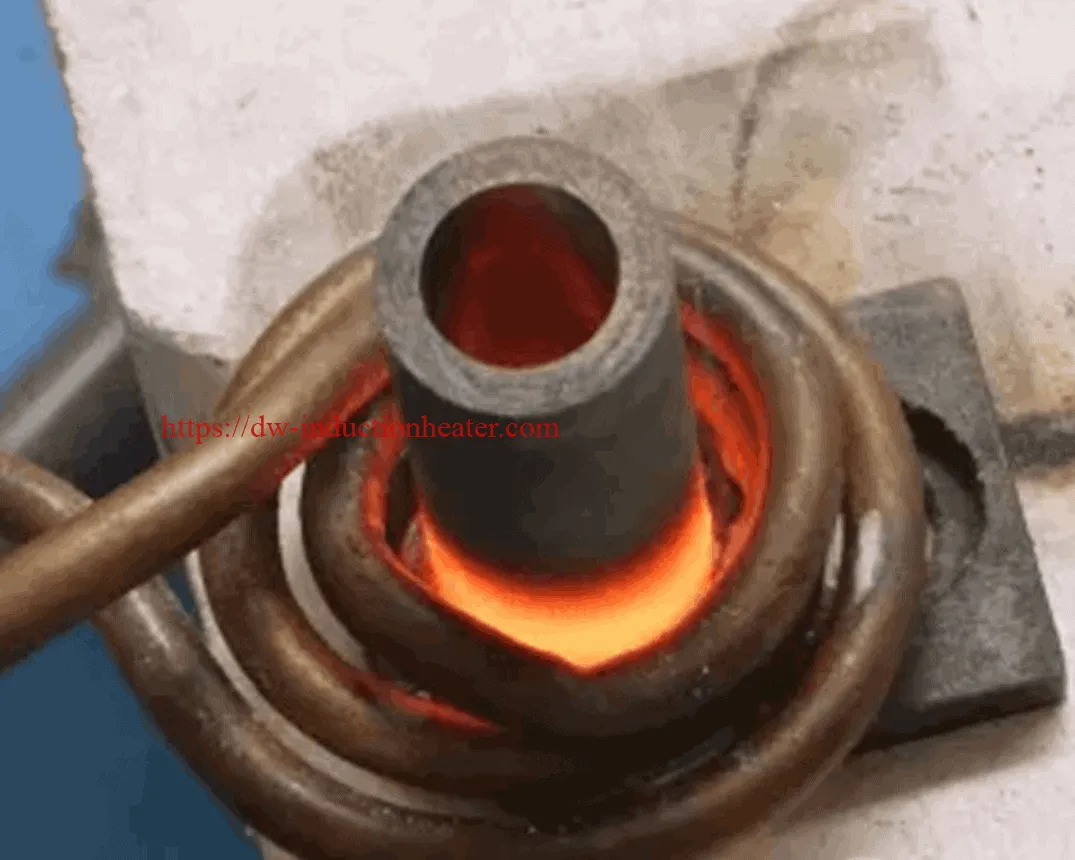
Objective
Induction Brazing carbide to steel parts
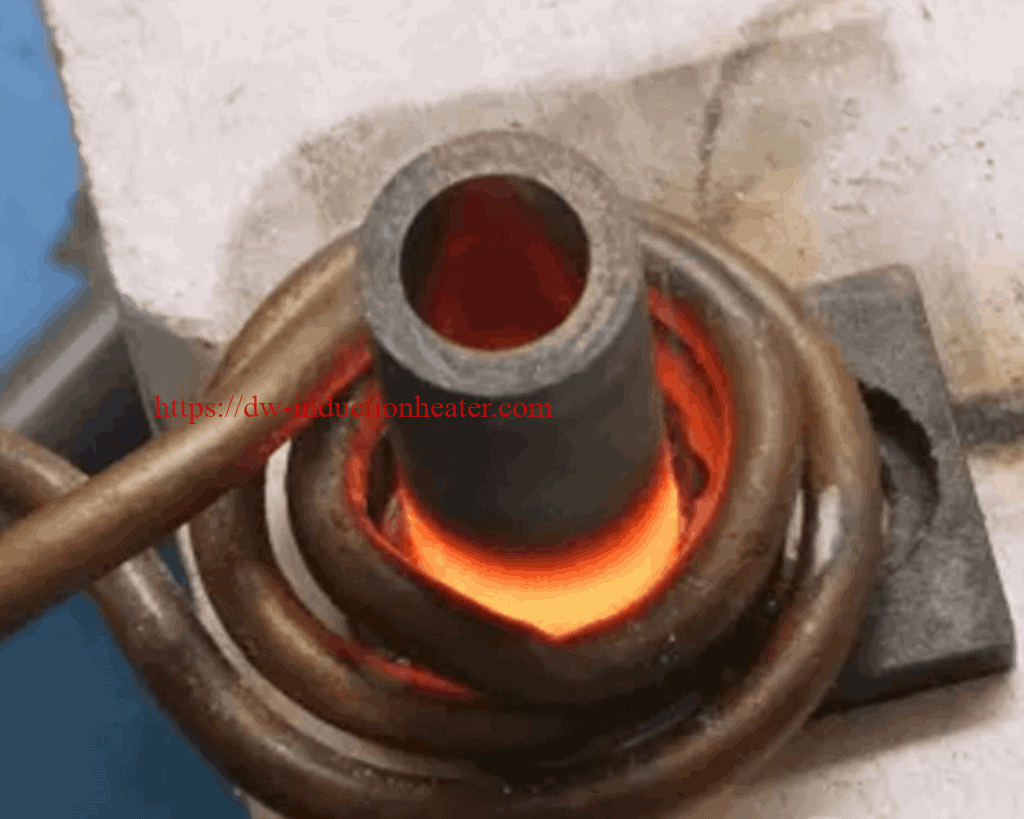 Equipment
DW-HF-15kw Induction Heating Power Supply
HLQ custom coil
Key Parameters
Power: 5.88 kW
Temperature: Approximately 1500°F (815°C)
Time: 10 sec
Equipment
DW-HF-15kw Induction Heating Power Supply
HLQ custom coil
Key Parameters
Power: 5.88 kW
Temperature: Approximately 1500°F (815°C)
Time: 10 sec
 Materials
Coil-
2 helical turns (20 mm ID)
1 planar turn (40 mm OD, 13 mm Height)
Materials
Coil-
2 helical turns (20 mm ID)
1 planar turn (40 mm OD, 13 mm Height)
 Carbide-
13 mm OD, 3 mm wall thickness
Steel piece–
20 mm OD, 13 mm ID
Carbide-
13 mm OD, 3 mm wall thickness
Steel piece–
20 mm OD, 13 mm ID
Equipment
DW-HF-15kw Induction Heating Power Supply
HLQ custom coil
Key Parameters
Power: 5.88 kW
Temperature: Approximately 1500°F (815°C)
Time: 10 sec
Materials
Coil-
2 helical turns (20 mm ID)
1 planar turn (40 mm OD, 13 mm Height)
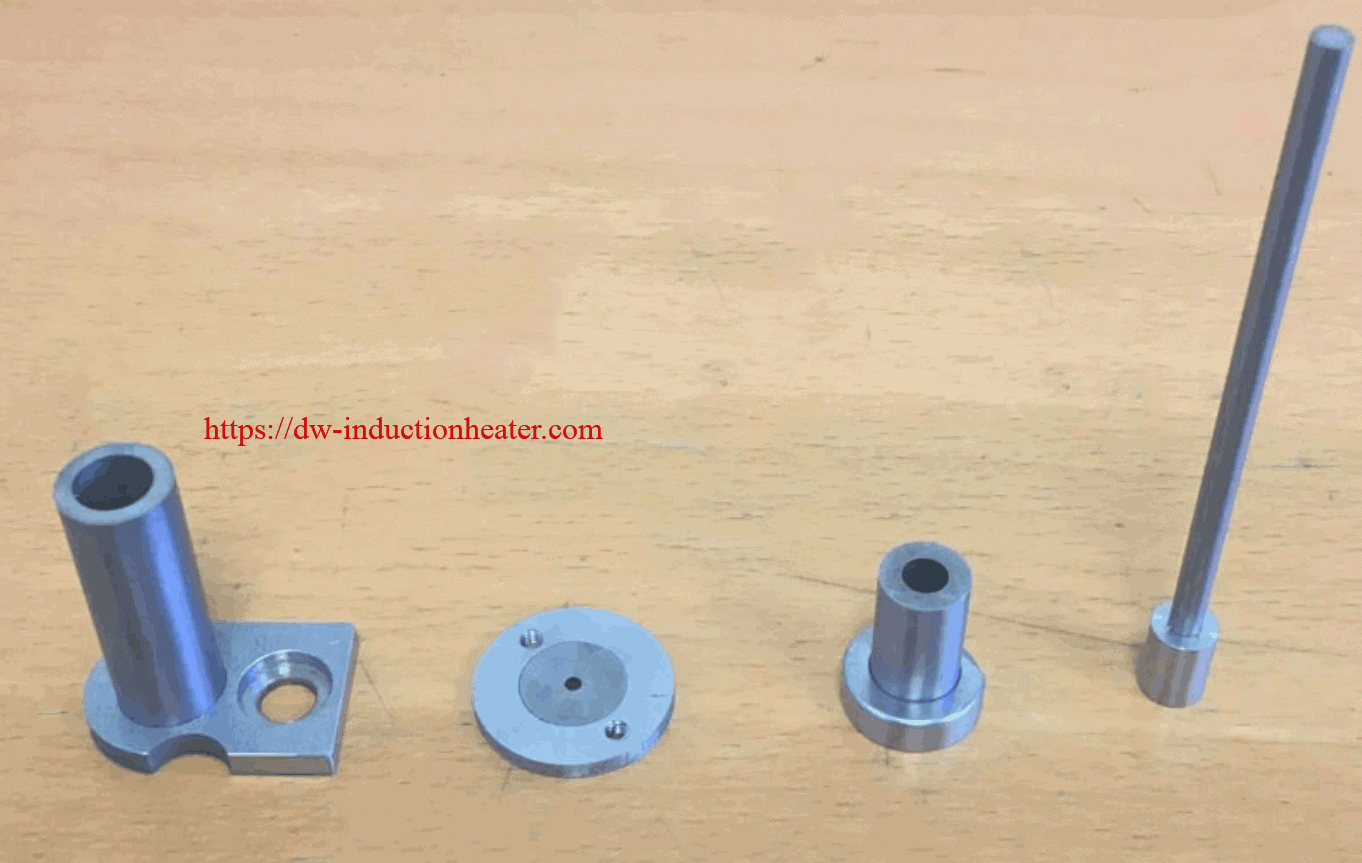
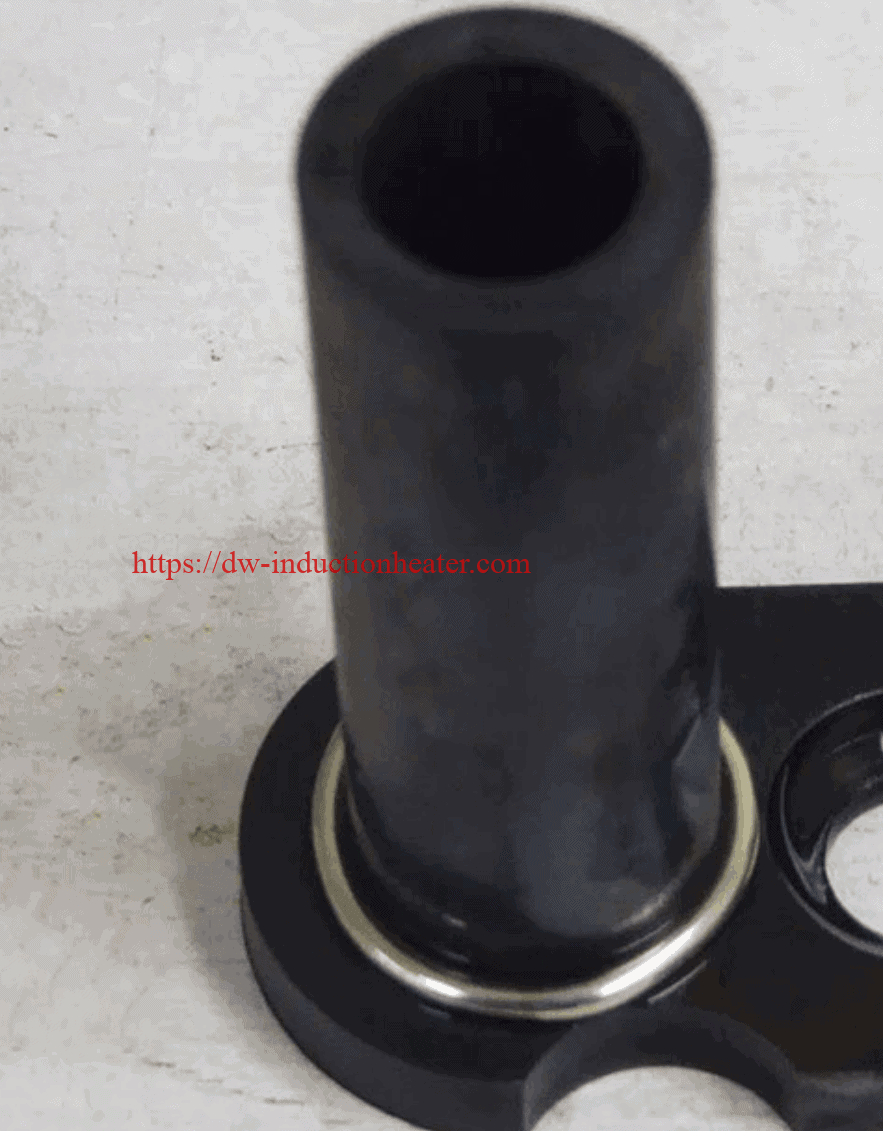 Carbide-
13 mm OD, 3 mm wall thickness
Steel piece–
20 mm OD, 13 mm ID
Carbide-
13 mm OD, 3 mm wall thickness
Steel piece–
20 mm OD, 13 mm ID
Process:
- To demonstrate elimination of “hand feeding” the alloy, we formed the alloy into a ring to tightly fit over the center post tube. This method provides a uniform amount for each cycle, resulting in uniform joints and wetting.
- The custom made coil was then placed over the steel piece, where is was set for 10 seconds to heat the alloy.
- The alloy was heated at approximately 1500°F (815)°C
- The whole piece is left alone and cooled with ambient air


Results/Benefits:

- Induction Brazing was successful all in under 15 seconds with 8kW
- High quality and repeatability of the brazed joints
- Increased productivity
- Rings will need to be developed for specific joints to prevent the use of too much alloy
- Precise control of the time and temperature


 Induction Brazing Carbide to Steel
Objective: Braze a carbide sleeve to a steel 'T' shank
Material :2.0" (51mm) OD carbide sleeve, 1.0" (25.5mm) high braze joint, 1.5 " (38 mm) steel 'T' , 50% silver braze ring
Temperature: 1292 ºF (700 ºC)
Frequency: 257 kHz
Equipment
• DW-UHF-6KW-I induction heating system, equipped with a remote workhead containing two 0.66μF capacitors for a total of 1.32 μF.
• An induction heating coil designed and developed specifically for this application.
Process A pancake/helical combination coil is used to heat the assembly. The coil design allows easy loading and unloading of the parts without having to rotate them. A few minutes after the start of the heat cycle the heat pattern
normalizes and becomes very uniform. For better joint quality a chamfered groove is machined in the steel shank to locate and seat the braze ring. The braze alloy flows into the joint creating a strong, aesthetic bond. The amount of braze alloy heated each cycle is controlled well by the braze ring.
Results/Benefits Induction heating provides:
• Hands-free brazing which requires no special operator skills for manufacturing
• Precise, even heat is applied and is divided equally between the shank and the carbide. This provides an even flow of the braze alloy as the parts reach brazing temperatures.
Induction Brazing Carbide to Steel
Objective: Braze a carbide sleeve to a steel 'T' shank
Material :2.0" (51mm) OD carbide sleeve, 1.0" (25.5mm) high braze joint, 1.5 " (38 mm) steel 'T' , 50% silver braze ring
Temperature: 1292 ºF (700 ºC)
Frequency: 257 kHz
Equipment
• DW-UHF-6KW-I induction heating system, equipped with a remote workhead containing two 0.66μF capacitors for a total of 1.32 μF.
• An induction heating coil designed and developed specifically for this application.
Process A pancake/helical combination coil is used to heat the assembly. The coil design allows easy loading and unloading of the parts without having to rotate them. A few minutes after the start of the heat cycle the heat pattern
normalizes and becomes very uniform. For better joint quality a chamfered groove is machined in the steel shank to locate and seat the braze ring. The braze alloy flows into the joint creating a strong, aesthetic bond. The amount of braze alloy heated each cycle is controlled well by the braze ring.
Results/Benefits Induction heating provides:
• Hands-free brazing which requires no special operator skills for manufacturing
• Precise, even heat is applied and is divided equally between the shank and the carbide. This provides an even flow of the braze alloy as the parts reach brazing temperatures.
 Induction Brazing Steel To Carbide Plate
Objective Brazing a steel piston valve assembly
Material Steel piston valve 4.5” dia (11.43cm), tungsten carbide plate and braze
Temperature 1350 ºF
Frequency 100 kHz
Equipment •DW-UHF-40kW induction heating system, equipped with a remote workhead containing six 1.0μF capacitors for a total of 1.5μF
• An induction heating coil designed and developed specifically for this application.
Process A five turn pancake coil is used to braze the piston valve and tungsten carbide plate. The assembly was heated for 10 minutes to flow the braze and join the two pieces.
Results/Benefits Induction heating provides:
• Rapid localized heat, which can minimize oxidation and reduce cleaning after joining
• Hands-free heating that involves no operator skill for manufacturing
• Clean and controllable joints
• Produces high quality repeatable parts
Induction Brazing Steel To Carbide Plate
Objective Brazing a steel piston valve assembly
Material Steel piston valve 4.5” dia (11.43cm), tungsten carbide plate and braze
Temperature 1350 ºF
Frequency 100 kHz
Equipment •DW-UHF-40kW induction heating system, equipped with a remote workhead containing six 1.0μF capacitors for a total of 1.5μF
• An induction heating coil designed and developed specifically for this application.
Process A five turn pancake coil is used to braze the piston valve and tungsten carbide plate. The assembly was heated for 10 minutes to flow the braze and join the two pieces.
Results/Benefits Induction heating provides:
• Rapid localized heat, which can minimize oxidation and reduce cleaning after joining
• Hands-free heating that involves no operator skill for manufacturing
• Clean and controllable joints
• Produces high quality repeatable parts
