 https://dw-inductionheater.com/induction-brazing-stainless-steel-tube-to-a-base.html?feed_id=271719&_unique_id=67c91029cb52d
2025年3月5日星期三
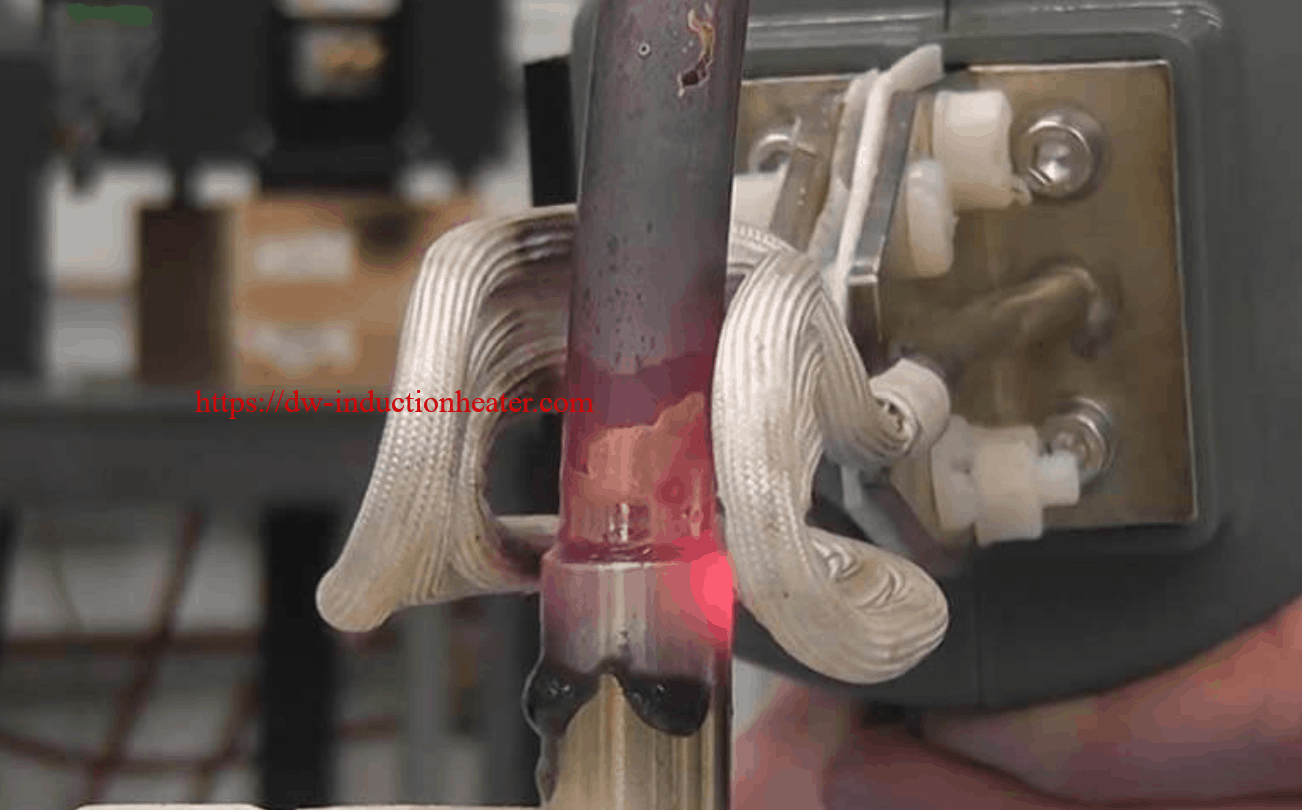
Induction Brazing Stainless Steel Tube to a Base
Induction Brazing Stainless Steel Tube to a Base
https://dw-inductionheater.com/induction-brazing-stainless-steel-tube-to-a-base.html?feed_id=271719&_unique_id=67c91029cb52d
https://dw-inductionheater.com/induction-brazing-stainless-steel-tube-to-a-base.html?feed_id=271719&_unique_id=67c91029cb52d

2025年1月25日星期六
Induction Brazing Brass Studs to Copper Pipes
Induction Brazing Brass Studs to Copper Pipes
 https://dw-inductionheater.com/induction-brazing-brass-studs-to-copper-pipes.html?feed_id=267748&_unique_id=67959eabde320
https://dw-inductionheater.com/induction-brazing-brass-studs-to-copper-pipes.html?feed_id=267748&_unique_id=67959eabde320
2025年1月20日星期一
induction brazing and soldering technology
induction brazing and soldering technology
 https://dw-inductionheater.com/induction-brazing-and-soldering-technology.html?feed_id=267226&_unique_id=678eb2eef02ec
https://dw-inductionheater.com/induction-brazing-and-soldering-technology.html?feed_id=267226&_unique_id=678eb2eef02ec
2020年5月10日星期日
induction brazing and soldering technology
HLQ Induction heating systems are value added systems that can fit directly into the manufacturing cell, reducing scrap, waste, and without the need for torches. The systems can be configured for manual control, semi-automated, and all the way up to fully automated systems. HLQ induction brazing and soldering systems repeatedly provide clean, leak-free joints for a wide range of parts including fuel lines, heat exchangers, gas distributors, manifolds, carbide tooling, and more.
Principles of Induction Brazing & Soldering
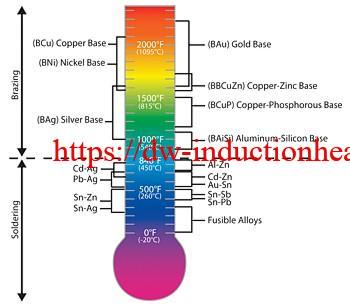
Brazing and soldering are processes of joining similar or dissimilar materials using a compatible a filler material. Filler metals include lead, tin, copper, silver, nickel and their alloys. Only the alloy melts and solidifies during these processes to join the work piece base materials. The filler metal is pulled into the joint by capillary action. Soldering processes are conducted below 840°F (450°C) while brazing applications are conducted at temperatures above 840°F (450°C) up to 2100°F (1150°C).
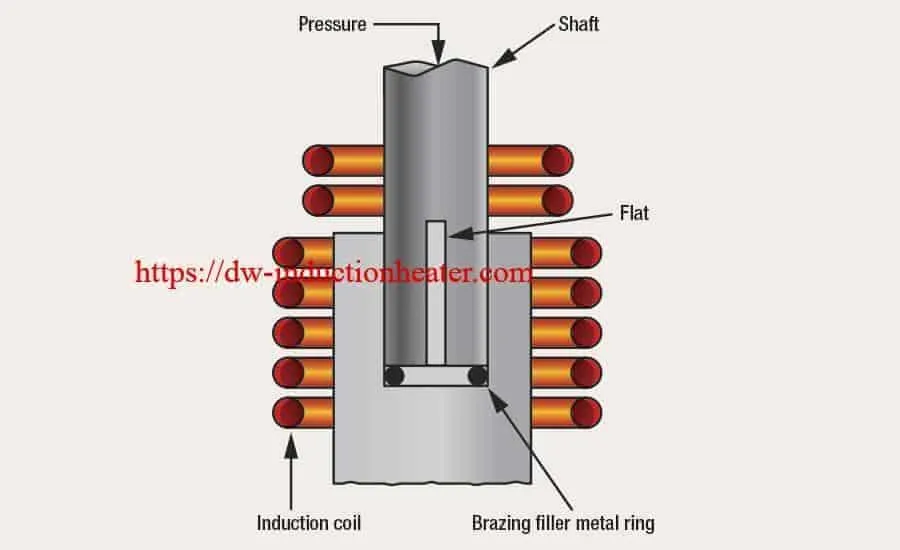 The success of these processes depends upon the assembly’s design, clearance between the surfaces to be joined, cleanliness, process control and the correct selection of equipment needed to perform a repeatable process.
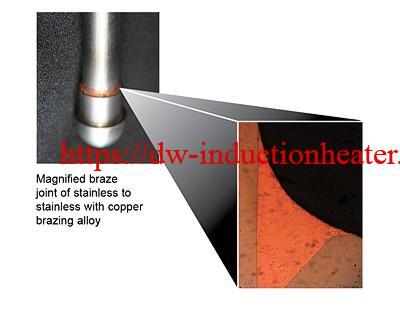
Cleanliness is ordinarily obtained by introducing a flux which covers and dissolves dirt or oxides displacing them from the braze joint.
Induction Brazing Filler Materials
Induction Brazing filler metals can come in a variety of forms, shapes, sizes and alloys depending on their intended use. Ribbon, preformed rings, paste, wire and preformed washers are just a few of the shapes and forms alloys that can be found.

The decision to use a particular alloy and/or shape is largely dependent on the parent materials to be joined, placement during processing and the service environment for which the final product is intended.
Many operations are now conducted in a controlled atmosphere with a blanket of inert gas or combination of inert / active gasses to shield the operation and eliminate the need for a flux. These methods have been proven on a wide variety of material and part configurations replacing or complimenting atmosphere furnace technology with a just in time – single piece flow process.
Clearance Affects Strength
Clearance between the faying surfaces to be joined determines the amount of braze alloy, capillary action / penetration of the alloy and subsequently the strength of the finished joint. The best fit up condition for conventional silver brazing applications are 0.002 inches (0.050 mm) to 0.005 inches (0.127 mm) total clearance. Aluminum is typically 0.004 inches (0.102 mm) to 0.006 inches (0.153 mm). Larger clearances up to 0.015 inches (0.380 mm) usually lack sufficient capillary action for a successful braze.
Brazing with copper (above 1650°F / 900°C) requires the joint tolerance kept to an absolute minimum and in some cases press fit at ambient temperatures to assure minimum joint tolerances while at the brazing temperature.
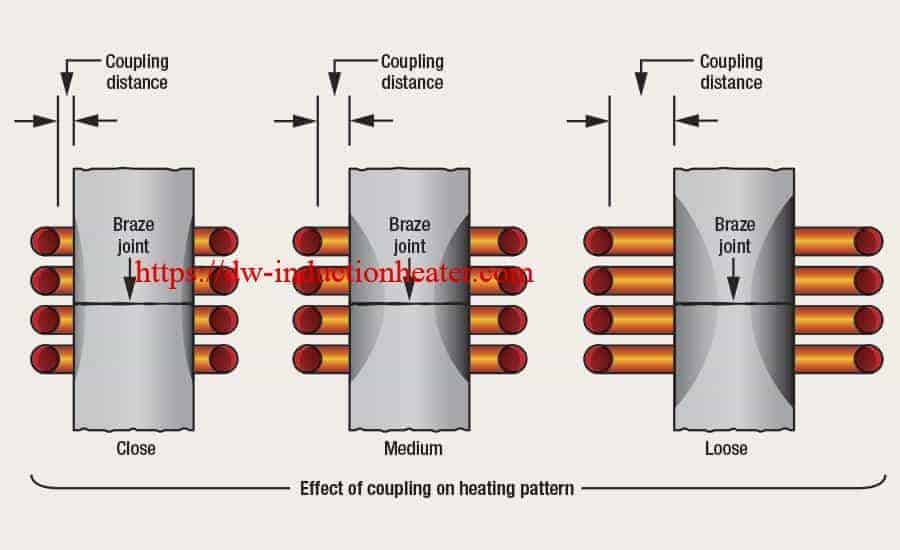
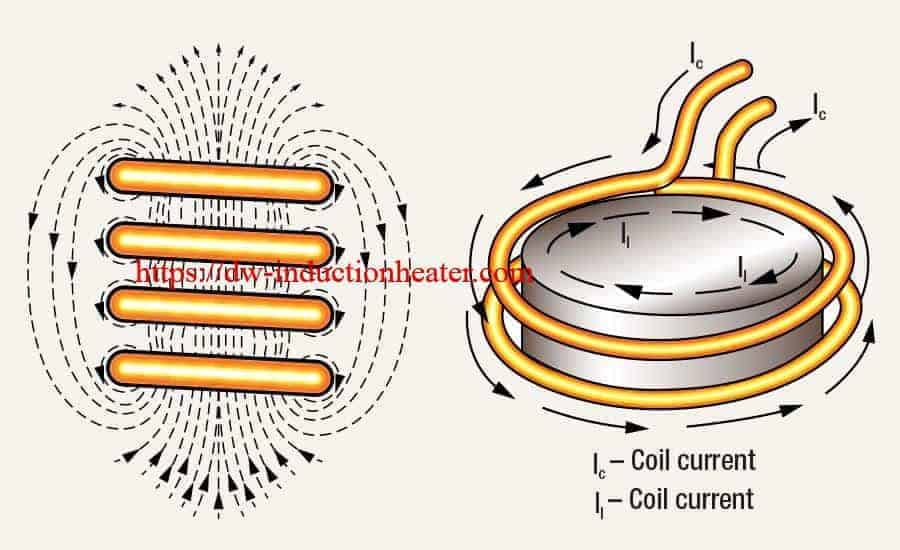
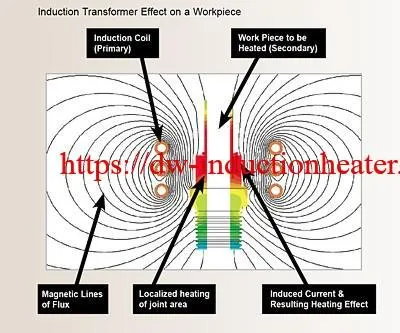
Induction heating has proven to be a valuable aid in the joining process for many reasons. Rapid heading and precise heat control offers the possibility of localized heating of high strength components without significantly changing the material properties. It also allows for the brazing of difficult materials such as aluminum and sequential, multi-alloy brazing and soldering of close proximity joints.
Induction heating in brazing and soldering applications is readily adaptable to production line methods, permitting strategic arrangement of the equipment in an assembly line, and if necessary, heating by remote control. Frequently, induction brazing and soldering permits a reduction in the require number of part fixtures, with the minimal heating of the fixtures increasing life span and maintaining accuracy in alignment of the components to be joined. Since operators need not guide the induction heating source, both hands are left free to prepare assemblies for joining.
 HLQ induction brazing equipment delivers quality, consistency, configurable throughput, and quick change-over tooling for various production needs. The Radyne induction brazing and soldering product line offers standard solutions for brazing:
Aluminum
Copper
Brass
Stainless steel
Carbide
And more…
https://dw-inductionheater.com/wp-content/uploads/2020/05/induction-brazing-soldering-technology.jpg?v=1589092485
https://dw-inductionheater.com/induction-brazing-and-soldering-technology.html
high frequency brazing, induction brazer, induction brazing, induction brazing copper system, induction brazing machine, induction brazing manufacturer, induction brazing system, induction brazing units, induction soldering, MF brazing, MF brazing machine, radio frequency brazing, radio frequency soldering, RF induction brazing
2020年4月23日星期四
Induction Brazing Brass Studs to Copper Pipes
Induction Brazing Brass Studs to Copper Pipes
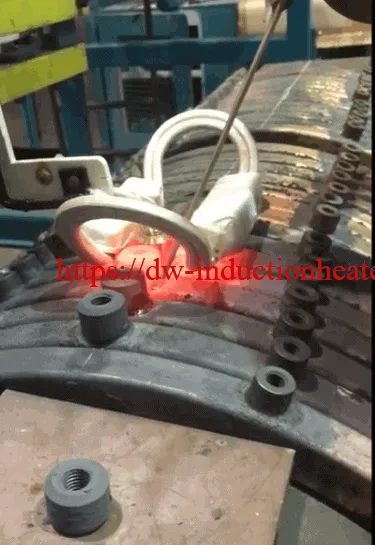
Objective:
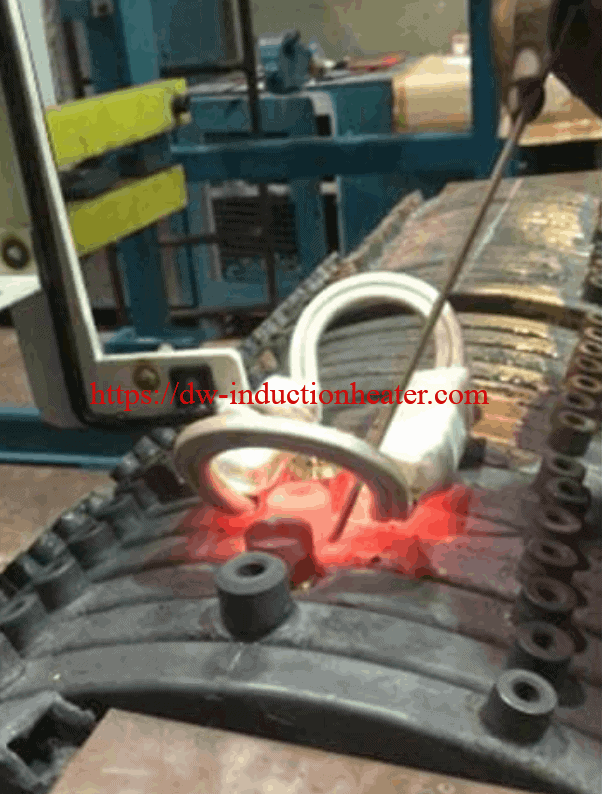
Induction brazing brass studs to copper pipes
The Client:
A manufacturer of coils for industrial heating applications.
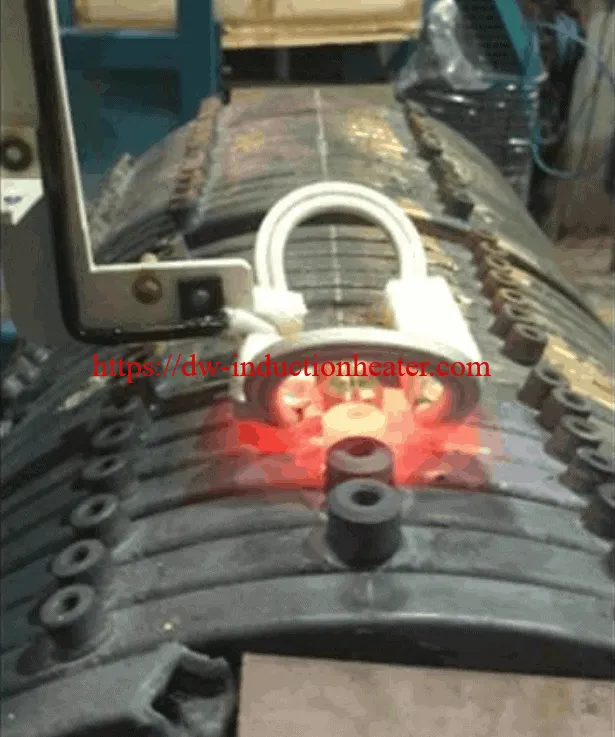
Equipment:
DW-UHF-40KW Induction Brazing Systems – two modules.
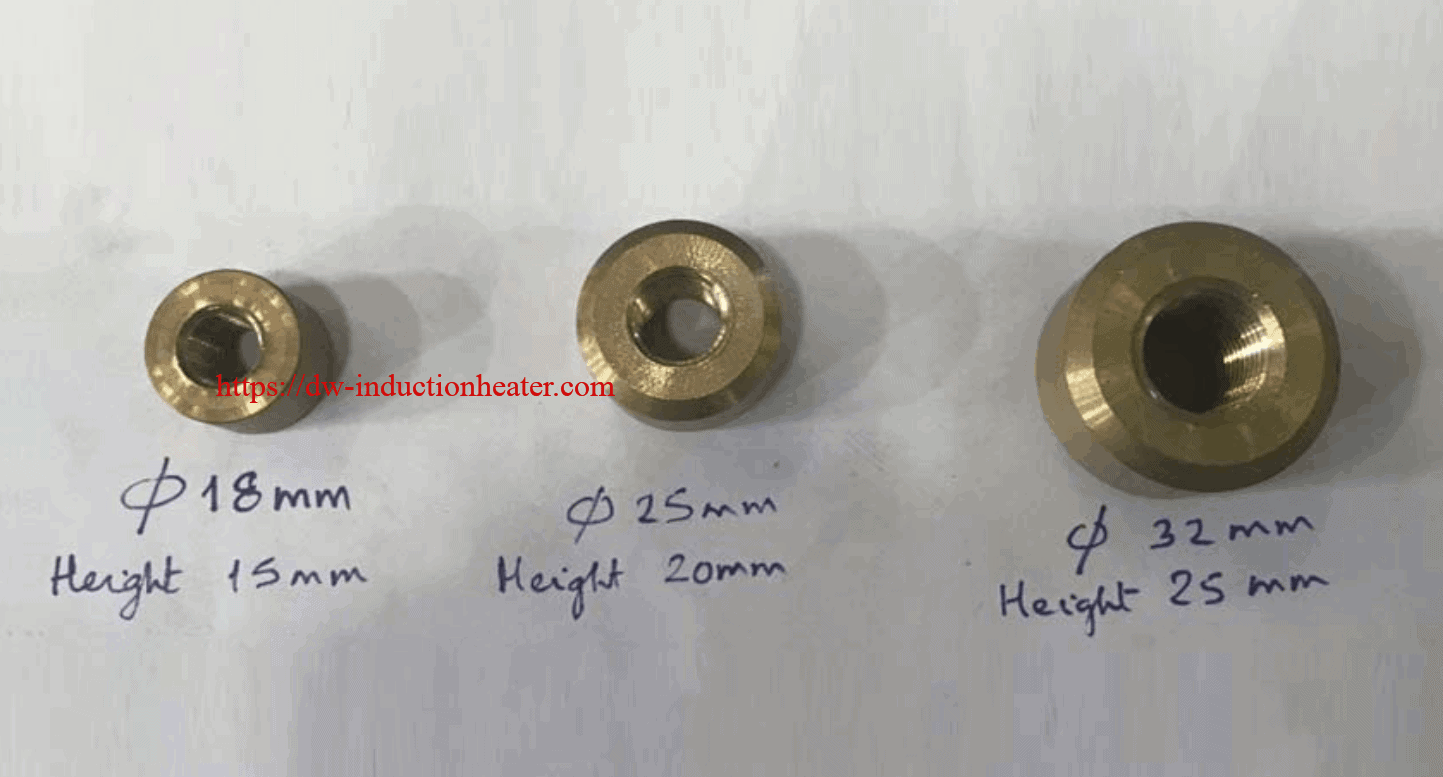
Materials: Brass stud ( size: 25mm diameter, 20 mm height )
Power: 30 kW
 The Process:
The main challenge during this induction brazing process is to ensure that the design of the coil is one that eases the technician to position it in the most convenient way. The induction coil should allow for the second stud to be pre-heated without melting the first one.
First, the electrolytic copper section is wound on a steel former by a gas torch while an equal spacing between the turns is maintained. Then, the copper turn is heated close to the required temperature and while the power is ON, the technician should make sure to manually position the brass stud with the brazing ring at the designated centre. During the process of brazing, the induction coil is moving at a speed of 58 mm per minute – 33 kW.
If the power is increased, the speed changes accordingly.
Results and Conclusions:
- A fast, clean and safe induction brazing process
- Guaranteed repeatability
- Precise control of time and temperature
https://dw-inductionheater.com/wp-content/uploads/2020/04/induction-brazing-brass-studs-to-copper.png?v=1587644202
https://dw-inductionheater.com/induction-brazing-brass-studs-to-copper-pipes.html
brass studs brazing, brazing brass, brazing brass studs, brazing brass to copper, High Frequency Brazing brass, induction brazer, induction brazing brass, induction brazing copper, induction brazing copper system, induction brazing equipment, induction brazing system, induction brazing units
订阅:
博文 (Atom)
我的简介

- HLQ induction heating machine
- HLQ induction heating machine manufacturer provides the service of induction brazing,melting,hot forming,hardening surface,annealing,shrink fitting,PWHT,etc.