2022年12月2日星期五

induction curing

What is induction curing?

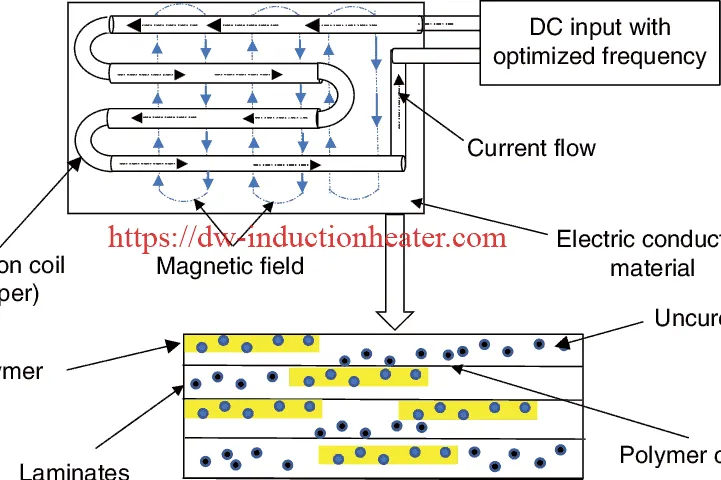
How does induction curing work? Simply put, line power is converted to alternating current and delivered to a work coil which creates an electromagnetic field within the coil. The piece with the epoxy on it can be metal or a semiconductor such as carbon or graphite. To cure epoxy on non-conductive substrates such as glass, an electrically conductive susceptor can be used to transfer the heat to the non-conductive material. [caption id="attachment_6981" align="alignnone" width="721"] induction curing principle-theory[/caption]
What are the benefits of induction curing?

Single component epoxy adhesives that are heat cured can use heat from various sources. The most typical is an oven but heat air guns, bake plates and induction curing are also used. Induction curing can greatly reduce the amount of time required to cure the epoxy and minimize the effects of heat on surrounding components as induction heating delivers heat precisely to the adhesive area.

Is induction curing a good option for my application?

Providing your induction heating equipment specialist and your epoxy adhesive manufacturer information on the following topics will help them to make the best recommendation. 1. Materials or substrates being bonded – Understanding what the substrates are will help determine the heating rate and power needed to cure the adhesive. For example iron heats with less power than is needed to heat aluminium. 2. Size of the components being bonded – Smaller parts require a higher frequency for efficient heating. Larger areas benefit from a lower frequency. 3. Epoxy requirements – There is a min/max threshold for curing epoxy. The minimum temperature required to effect cure and the maximum temperature allowed prior to the breakdown of the epoxy.

Induction Curing for Bonding of Quartz Chip to a Steel Cylinder

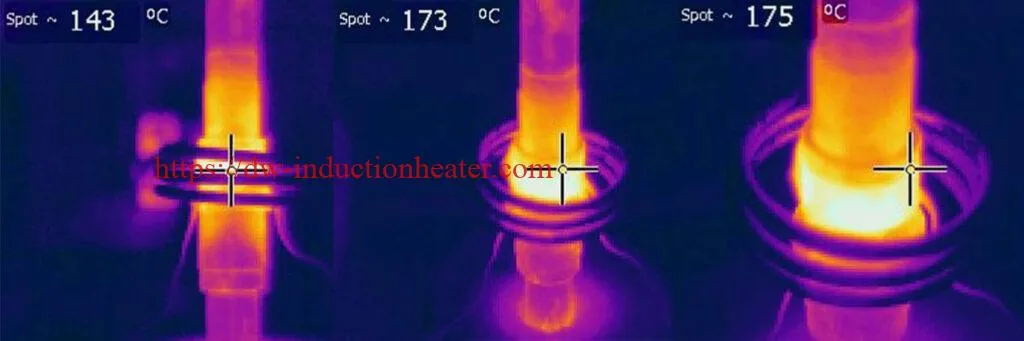
A company in the Automotive industry is looking for an induction heating system that can reach the temperature of 175° C (347°F) and hold it within the tight tolerance of +/- 3 C. Induction heating will heat a steel cylinder to cure an adhesive for bonding of a quartz chip. Induction heating is a preferred method because it provides faster, controlled and more uniform heating. Industry: Automotive Equipment: DW-UHF-10kW induction heating system is recommended for this curing application to ramp up and hold the desired temperature. Process: The goal of this induction curing application is to heat two sides of a steel cylinder which is 1.064” (2.70 cm) OD, 7.25” (18.41 cm) long with a 1” (2.54 cm) heat zone up to 175 C (347°F) and hold that temperature for 60 seconds in order to perform bonding application. The desired temperature was reached in 13 seconds. A K-type temperature controller was used to measure the temperature. [caption id="attachment_6979" align="alignnone" width="1024"] induction curing process[/caption] Induction Curing for Bonding of Quartz Chip to a Steel Cylinder
Induction Heating Stainless Steel

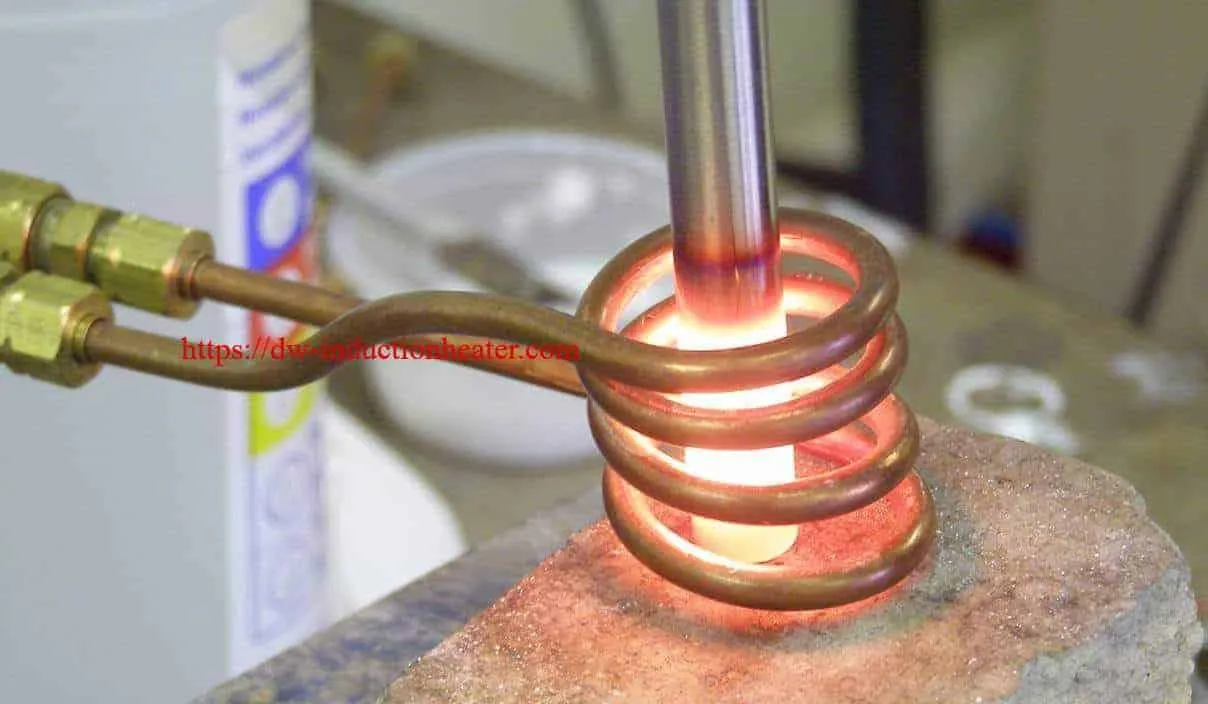
Induction Heating Stainless Steel Rod For Hot Forming With RF Induction Heating Units Objective Heating 300 series stainless steel rod to 1800ºF (982ºC) for forming application Material 1” (25.4mm) length of 300 series stainless steel rod ¾ “ (19mm) diameter Temperature 1800 ºF (982ºC) Frequency 52 kHz Equipment • DW-HF-25kW induction heating system, equipped with a remote workhead containing two 1.25μF capacitors for a total of .625μF • An induction heating coil designed and developed specifically for this application. Process A four turn helical coil is used to heat the stainless steel rod to 1800 ºF (982ºC) for 10 seconds. For manufacturing purposes a refractory shield should be used between the coil and rod to keep the heat directed on the rod. Refractory shield was not used during testing. Results/Benefits Induction heating provides: • Hands-free heating that involves no operator skill for manufacturing • Improved production rates with minimal defects • Low pressure and minimal residual part stress • Even distribution of heating induction heating stainless steel rod

2022年12月1日星期四

Induction Heating Sintering Copper Powder

Induction Heating Sintering Copper Powder With High Frequency Induction Sintering Heater Objective Sintering copper powder to a stainless steel shaft Material Steel shaft & shell assembly, approx 2” (50.8mm) diameter, 2” (50.8mm) tall, copper powder Temperature 1600 ºF (871 ºC) Frequency 54 kHz Equipment • DW-HF-45kW induction heating system, equipped with a remote workhead containing eight 1.0 μF capacitors for a total of 8.0 μF. • An induction heating coil designed and developed specifically for this application. Process A four-turn helical coil is used to heat the assembly for five minutes. This provides slow, even heat for good penetration through the shell into the powder. Results/Benefits Induction heating provides: • Even heat through the shell to sinter the powder. • A method that is easily integrated into an automated production line. The design may be adapted to accommodate the indexed heating of several assemblies at the same time. • Hand- free operation that involves no operator skill for manufacturing.

What is induction annealing?

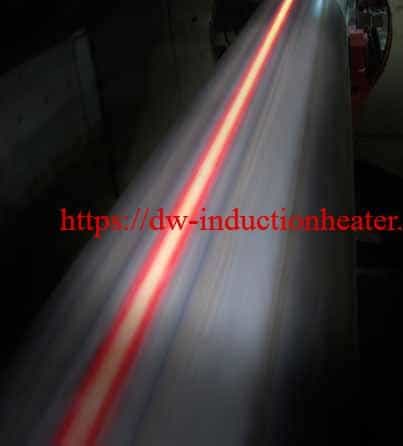
What is induction annealing? This process heats metals that have already undergone significant processing. Induction annealing reduces hardness, improves ductility and relieves internal stresses. Full-body annealing is a process where the complete workpiece is annealed. With seam annealing (more accurately known as seam normalizing), only the heat-affected zone produced by the welding process is treated. What are the benefits? Induction annealing and normalizing delivers fast, reliable and localized heat, precise temperature control, and easy in-line integration. Induction treats individual workpieces to exact specifications, with control systems continuously monitoring and recording the entire process. Where is it used? Induction annealing and normalizing is widely used in the tube and pipe industry. It also anneals wire, steel strips, knife blades and copper tubing. In fact, induction is ideal for virtually any annealing task. What equipment is available? Each DAWEI Induction annealing system is built to satisfy specific requirements. At the heart of each system is an DAWEI Induction Heating generator that features automatic load matching and a constant power factor at all power levels. Most of our delivered systems also feature custom-built handling and control solutions. induction annealing tube

What is induction annealing?

What is induction annealing? This process heats metals that have already undergone significant processing. Induction annealing reduces hardness, improves ductility and relieves internal stresses. Full-body annealing is a process where the complete workpiece is annealed. With seam annealing (more accurately known as seam normalizing), only the heat-affected zone produced by the welding process is treated. What are the benefits? Induction annealing and normalizing delivers fast, reliable and localized heat, precise temperature control, and easy in-line integration. Induction treats individual workpieces to exact specifications, with control systems continuously monitoring and recording the entire process. Where is it used? Induction annealing and normalizing is widely used in the tube and pipe industry. It also anneals wire, steel strips, knife blades and copper tubing. In fact, induction is ideal for virtually any annealing task. What equipment is available? Each DAWEI Induction annealing system is built to satisfy specific requirements. At the heart of each system is an DAWEI Induction Heating generator that features automatic load matching and a constant power factor at all power levels. Most of our delivered systems also feature custom-built handling and control solutions. induction annealing tube

Brazing Stainless Steel To Copper With Induction

Brazing Stainless Steel To Copper With Induction  Heater Objective Braze a stainless steel braided hose to copper elbows for a braided hose assembly. Material Stainless steel braided hose 3/8” (9.5mm) OD, copper elbow 1/4” (6.3mm) OD, braze preform rings and black flux Temperature 1400 ºF (760 ºC) Frequency 300 kHz Equipment • DW-UHF-6kW-III induction heating system, equipped with a remote workhead containing two 0.33μF capacitors for a total of 0.66μF • An induction heating coil designed and developed specifically for this application. Process: A two turn helical coil is used to heat the braided hose assembly. Braze rings are placed at the joint on the copper elbow and flux is applied to the entire surface of the assembly. The assembly is placed in the heating coil and the braze flows within 30-45 seconds. This creates a liquid and gas tight braze between the copper and stainless steel braided hose. Results/Benefits Induction heating provides: • Liquid and gas-tight braze • Energy efficient heat in a minimal amount of time • Controllable braze flow through the use of braze rings • Even distribution of heating

Induction Soldering Fuse Caps

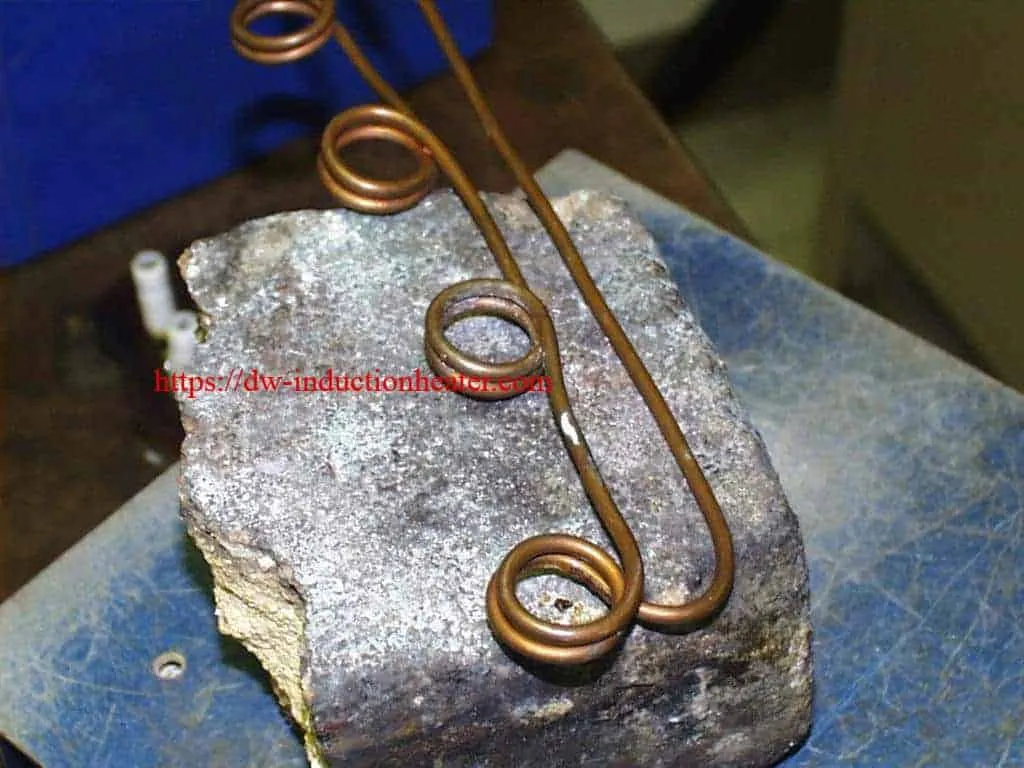
Induction Soldering Fuse Caps With IGBT Induction Heating Units Objective Soldering three fuse caps simultaneously to reflow lead free solder and make a joint between the fuse cap and fuse wire guide Material Plated copper end caps 0.375” (9.5mm) OD x 0.375” (9.5mm) height, ceramic fuse tube 1.5” tall (38.1mm) , lead free solder preforms Temperature 700 ºF (371 ºC) Frequency 286 kHz Equipment • DW-UHF-20 kW induction heating system, equipped with a remote workhead containing two 1.0μF capacitors for a total of 0.5μF • An induction heating coil designed and developed specifically for this application. Process A three position two turn helical coil is used to solder three fuse caps simultaneously. The fuse assemblies are placed in the coil and the heat is applied in three cycles at 3.5 seconds per cycle to reflow the solder. On the production line the bottom caps are soldered first. The fuses are filled with sand and without flipping the assembly the top cap is soldered. Results/Benefits Induction heating provides: • Consistent, repeatable results • Precise & accurate heat application • Hands-free heating that involves no operator skill for manufacturing • Even distribution of heating induction soldering coil             Soldering Fuse Caps

关注者

我的简介

我的照片
HLQ induction heating machine manufacturer provides the service of induction brazing,melting,hot forming,hardening surface,annealing,shrink fitting,PWHT,etc.