A
glass frit furnace | High frit furnace is a type of industrial furnace used for melting and fusing glass frit, which is a powdered form of glass used in various applications such as ceramics, electronics,

and decorative arts. The furnace typically operates at high temperatures to melt the glass frit into a liquid state, allowing it to be formed into various shapes and products. These furnaces are commonly used in glass manufacturing facilities and other industries that require the processing of glass materials.
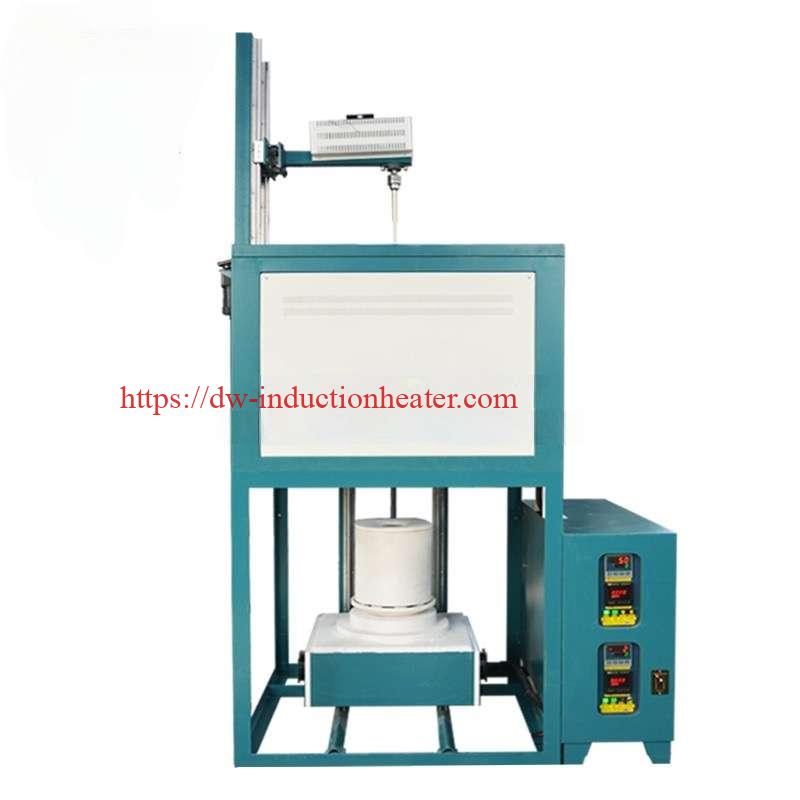
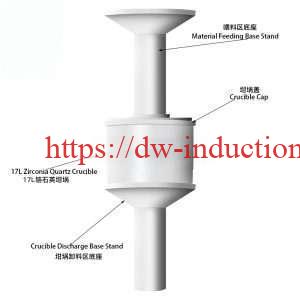
High Temperature glass frit furnace equip with Loading platform (for the easy place the crucible, more suitable for large cubage requirements) the lifting system chooses precision screw mandrel, more stable and reliable, the crucible chooses high purity zirconium quartz (99.9%) more durable to use.
Characteristic:
-Intelligent control,Electromechanical transmission.
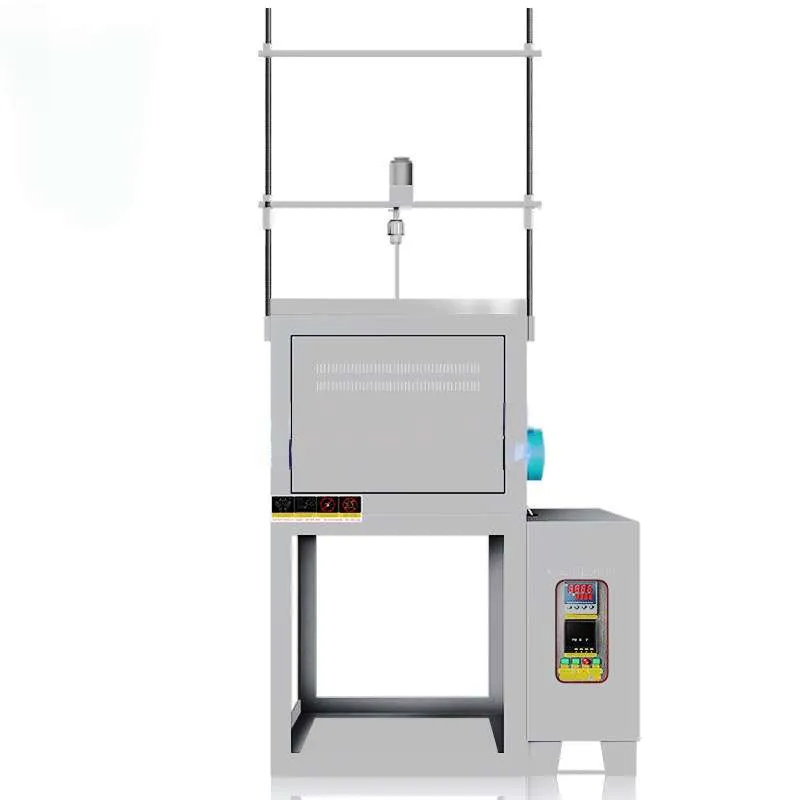
-The control panel equipped with the intelligent adjustment device, power control switch, main working/stop button,voltmeter、ammeter、Computer interface、Observe port /Air inlet port,for convenience to observe
the furnace working status, the product using reliable integrated circuit, excellent working environment, anti-interference, the highest temperature of furnace shell temperature is less than 45℃ can greatly improve the working environment,micro computer program control, programmable setting temperature rise curve,Fully automatic temperature rise / cooling,Temperature control parameters and programs can be modified during operation, which is flexible, convenient and simple in operation.
-Furnace hearth materials made up by vacuum forming high purity alumina light materials(Will be changing due to the temperature required), High temperature for use, Less heat storage amount,Tolerance the extremely heating and cold、no crack, No dregs, Excellent thermal insulation performance (the energy saving effect is over 60% of the traditional furnace).Reasonable structure, Double layer furnace cover,Air cooling,Greatly shortening the experimental period.
Features:
-1750 °C maximum operating temperature; normal operating,temperature range 800 °C - 1700 °C
-Maximum crucible cubage 17L (Can be customized)
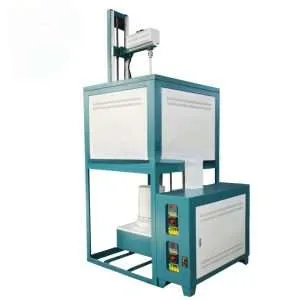
-Double Layer Furnace Shell, With Air Cooling
-Double heating system(Loading platform+Furnace chamber)
-Simplicity for operation, programmable, pid automatic modify, automatic temperature rise, automatic temperature retaining, automatic cooling, unattended operation;
-High speed temperature rise rate. (temperature rise rate 1℃/h to 30℃/min can be modified);
-Temperature Control Accuracy:± 1℃,
-Temperature Constant Accuracy:±1℃.
-Fast Temperature rise rate, Maximum heating rate≤30℃/min.
Options (specify these at time of order)
-Control software and system.
-Multi-face heating
-Anti-corrosion
-Multi-temperature control
-Touch screen control
-Agitation system
Applications:
The
glass frit furnace is designed for pyrolysis, melting, analysis and production ceramics, metallurgy, electronics, machinery, chemical, glass, refractories, for develop new material, special materials, construction materials, the equipment is suitable for institutions of higher learning and laboratory of scientific research institute and industrial and mining enterprises.
| Model |
GWL Glass Frit Furnace |
| Working Temperature |
1200℃ |
1400℃ |
1600℃ |
1700℃ |
1800℃ |
| Maximum Temperature |
1250℃ |
1450℃ |
1650℃ |
1750℃ |
1820℃ |
| Temperature Control Accuracy |
±1℃ |
| Temperature Uniformity |
±1℃ |
| Temperature Rise Rate |
Temperature Rise Rate Can Be Modify(30℃/min | 1℃/h),
Company Suggest: 1-20℃/min |
| Crucible Cubage |
1.6L/3L/5L/10L/17L |
| Heating Element |
Silicon Carbide Rod |
Silicon molybdenum rod |
| Placing Crucible Method |
Top side to placing crucible and remove |
| Material Passes in and out |
Top side to passes in and Bottom side pass out. |
| Crucible Material |
High purity zirconium quartz (99.9%) |
| Cooling Structure |
Double Layer Furnace Shell, With Air Cooling. |
| Standard Accessories |
Heating Elements, Specification Certificate, Heat Insulation Brick, Crucible Pliers, High Temperature Gloves. |
| Characteristic:
Can be adding material under high temperature environment, The High temperature solution can be timely outflow.
1. Temperature accuracy:±1℃ ; Constant temperature:±1℃(Base on Heating zone size ) 。
2. Simplicity for operation ,programable,PID automatic modify, automatic temperature rise, automatic temperature retaining , automatic cooling, unattended operation;
3. High Speed Temperature rise rate. (temperature rise rate 1℃/h to 30℃/min can be modify);
4. Energy- Saving (furnace hearth made up by import fiber material, excellent thermostability, Tolerance the extreme heat and cold)
5. Double layer loop protection. (over temperature protection, over pressure protection, over current protection, thermocouple protection, Power supply protection and so on)
6. Furnace surface after spraying plastics it will resistance acid and alkali and also having corrosion-proof, the furnace wall temperature approaching the indoor temperature.
7. Furnace hearth materials: 1200℃:High Purity Alumina Fiber Board; 1400℃:High purity alumina (Contain zirconium) fiberboard;1600℃:Import High Purity Alumina Fiber Board; 1700℃-1800℃:High Purity alumina polymer fiber board.
8. Crucible Cubage below 5L need to equip with an extension plug. |
| Furnace Hearth Dimension And Crucible Can Be Customized |
 https://dw-inductionheater.com/product/glass-frit-furnace-high-temperature-frit-furnace?feed_id=232962&_unique_id=65b3b1534a9f8
 and decorative arts. The furnace typically operates at high temperatures to melt the glass frit into a liquid state, allowing it to be formed into various shapes and products. These furnaces are commonly used in glass manufacturing facilities and other industries that require the processing of glass materials.
High Temperature glass frit furnace equip with Loading platform (for the easy place the crucible, more suitable for large cubage requirements) the lifting system chooses precision screw mandrel, more stable and reliable, the crucible chooses high purity zirconium quartz (99.9%) more durable to use.
Characteristic:
-Intelligent control,Electromechanical transmission.
-The control panel equipped with the intelligent adjustment device, power control switch, main working/stop button,voltmeter、ammeter、Computer interface、Observe port /Air inlet port,for convenience to observe
 -Double Layer Furnace Shell, With Air Cooling
-Double heating system(Loading platform+Furnace chamber)
-Simplicity for operation, programmable, pid automatic modify, automatic temperature rise, automatic temperature retaining, automatic cooling, unattended operation;
-High speed temperature rise rate. (temperature rise rate 1℃/h to 30℃/min can be modified);
-Temperature Control Accuracy:± 1℃,
-Temperature Constant Accuracy:±1℃.
-Fast Temperature rise rate, Maximum heating rate≤30℃/min.
Options (specify these at time of order)
-Control software and system.
 -Multi-face heating
-Anti-corrosion
-Multi-temperature control
-Touch screen control
-Agitation system
Applications:
The glass frit furnace is designed for pyrolysis, melting, analysis and production ceramics, metallurgy, electronics, machinery, chemical, glass, refractories, for develop new material, special materials, construction materials, the equipment is suitable for institutions of higher learning and laboratory of scientific research institute and industrial and mining enterprises.