显示标签为“electromagneticinduction”的博文。显示所有博文

2024年3月26日星期二

Induction Hardening: Maximizing Surface Hardness and Wear Resistance

Induction Hardening: Maximizing Surface Hardness and Wear Resistance

What is Induction Hardening?

The Principles Behind Induction Hardening

Electromagnetic Induction

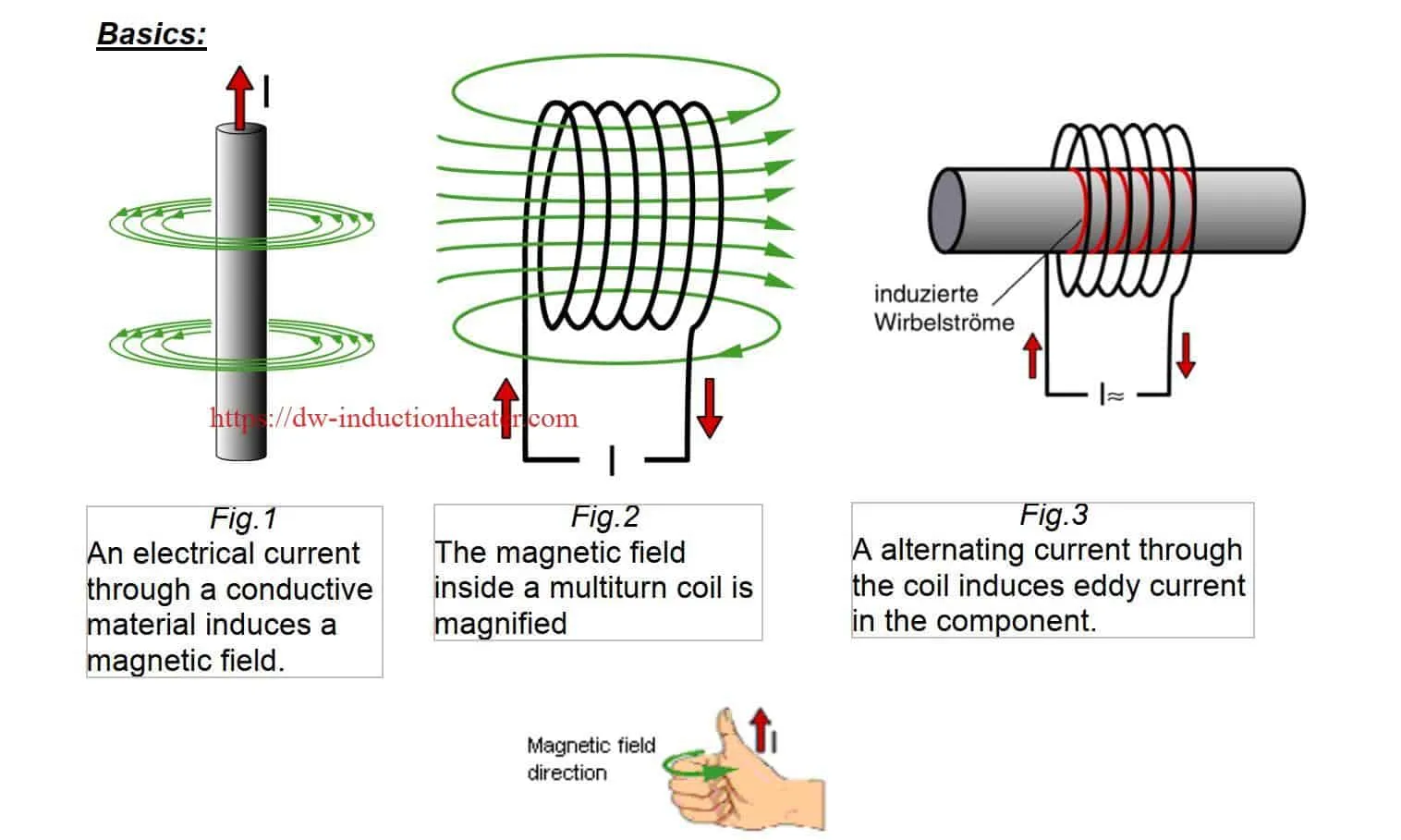
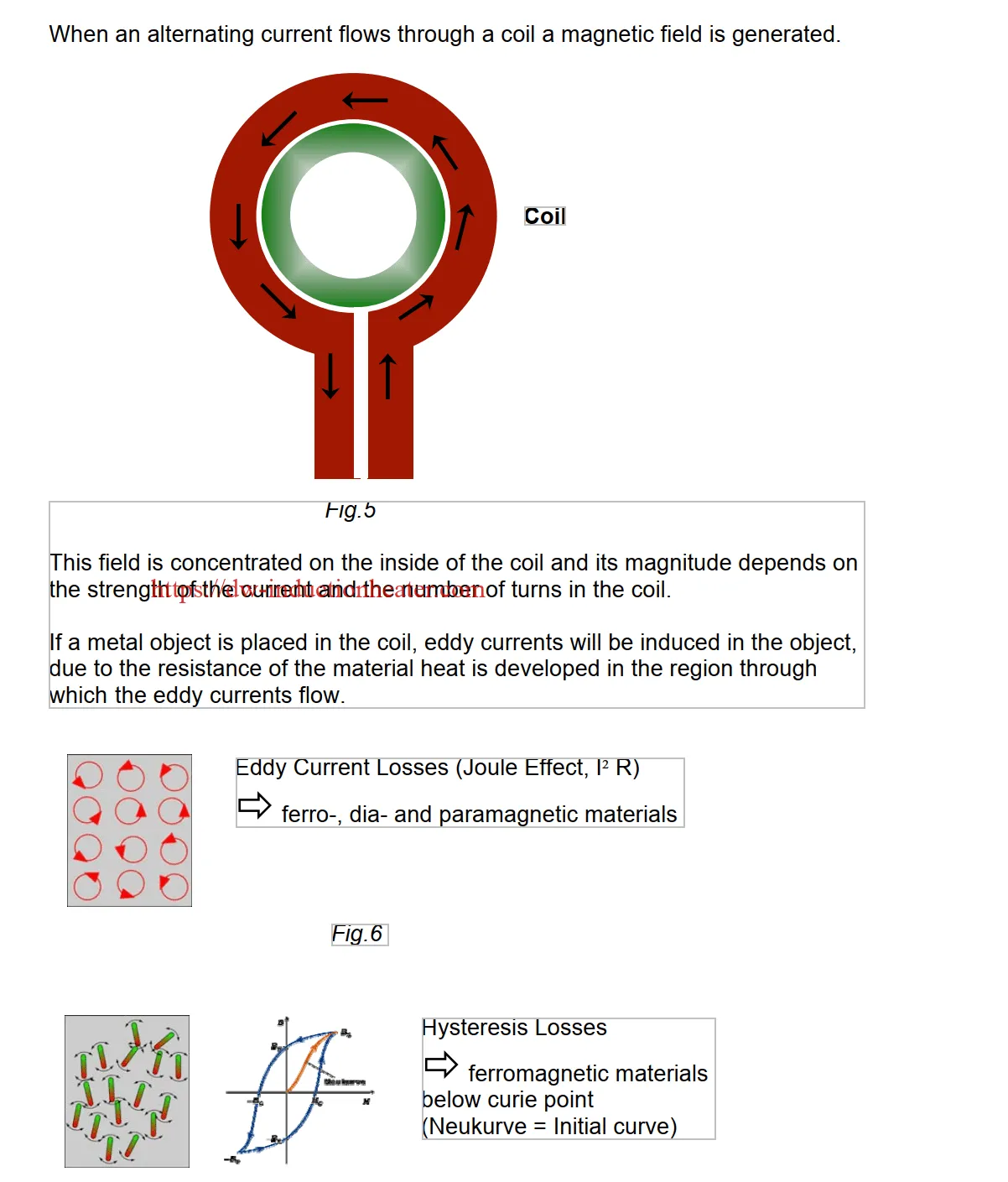
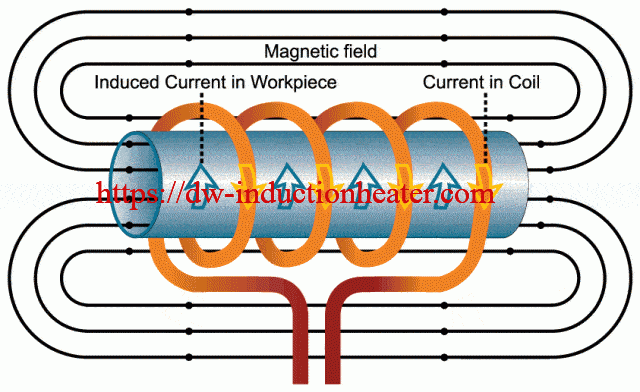
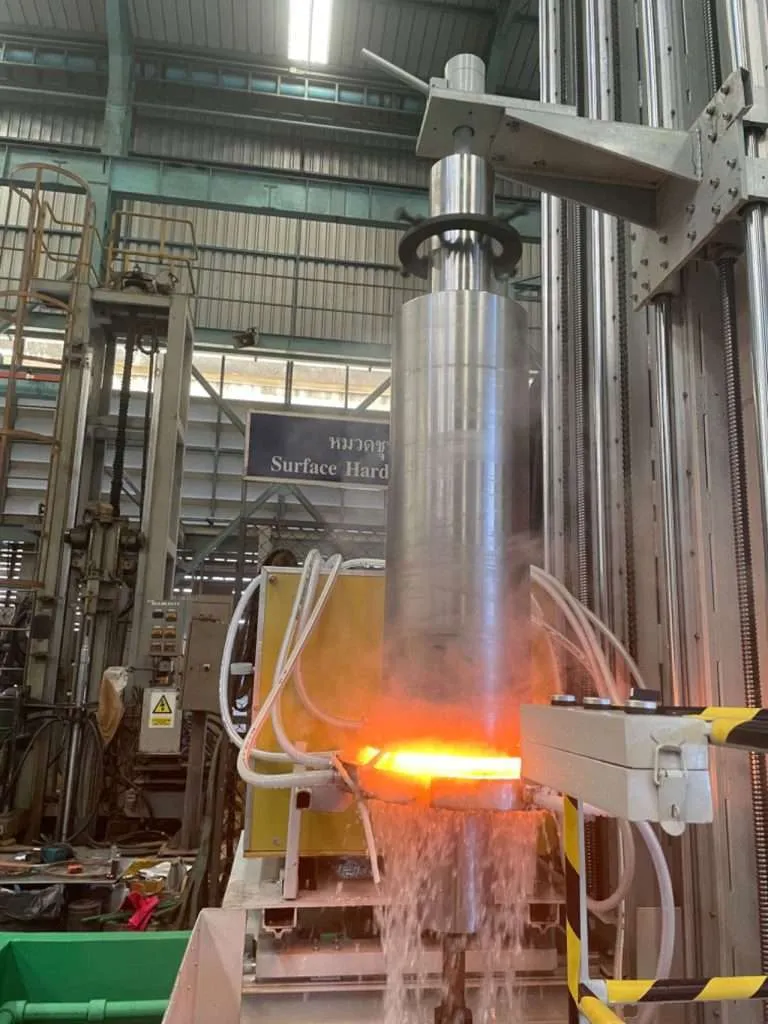
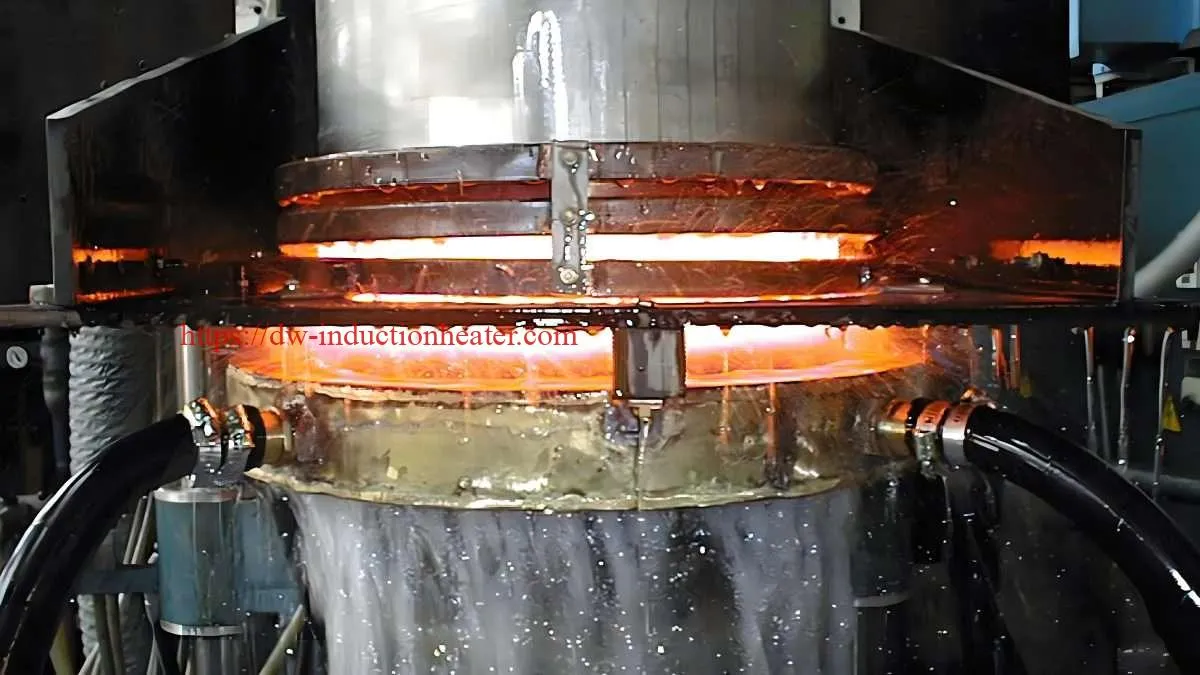
Induction hardening is a heat treatment process that selectively hardens the surface of metal components by utilizing the principles of electromagnetic induction. This process involves passing a high-frequency alternating current through an induction coil placed around the component, generating a powerful electromagnetic field. As the electromagnetic field interacts with the conductive material, it induces electrical currents within the component, causing rapid and localized heating of the surface.
Rapid Heating and Quenching

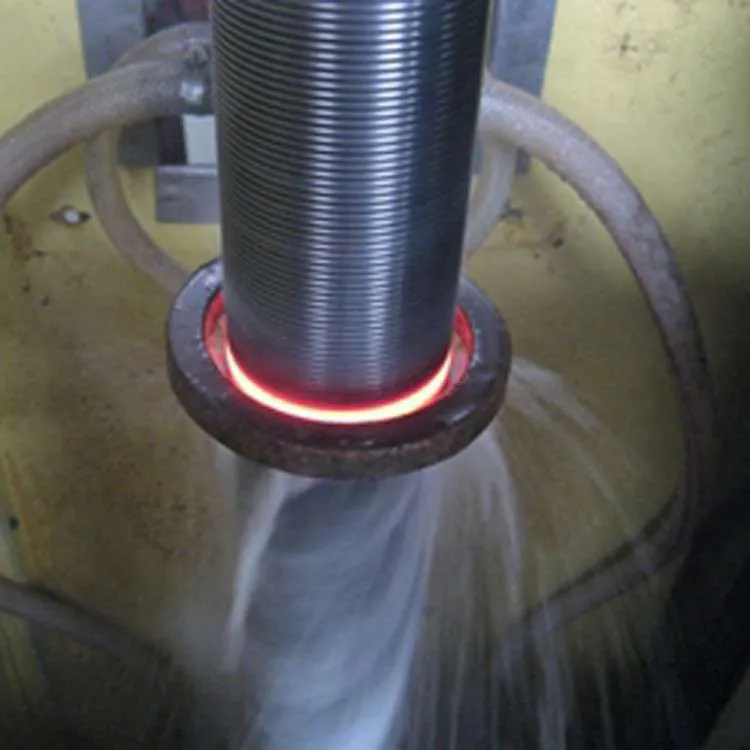
The induced currents generate heat within the component's surface, raising its temperature to the austenitic range (typically between 800°C and 950°C for steel). Once the desired temperature is reached, the component is immediately quenched, typically by spraying or immersing it in a quenching medium, such as water, oil, or a polymer solution. The rapid cooling causes the austenite to transform into martensite, a hard and wear-resistant microstructure, resulting in a hardened surface layer.

Advantages of Induction Hardening

Increased Surface Hardness and Wear Resistance

One of the primary advantages of induction hardening is the ability to achieve exceptional surface hardness and wear resistance. The martensitic microstructure formed during the quenching process can result in surface hardness values exceeding 60 HRC (Rockwell Hardness Scale C). This high hardness translates to improved wear resistance, making induction-hardened components ideal for applications involving sliding, rolling, or impact loads.
Precise and Localized Hardening

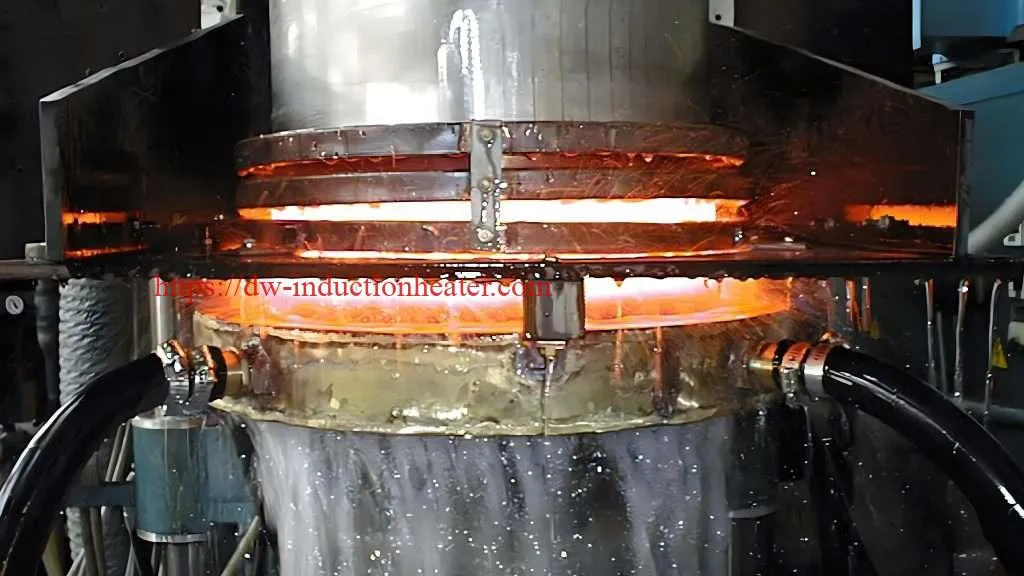
Induction hardening allows for precise and localized hardening of specific areas on a component. By carefully designing the induction coil and controlling the heating pattern, manufacturers can selectively harden critical regions while leaving other areas unaffected. This capability is particularly valuable in applications where only certain sections of a component require enhanced hardness and wear resistance, such as gear teeth, cam lobes, or bearing surfaces.

Energy Efficiency

Compared to other heat treatment processes, induction hardening is highly energy-efficient. The induction coil directly heats the component's surface, minimizing energy losses associated with heating the entire component or furnace. Additionally, the rapid heating and cooling cycles contribute to energy savings, making induction hardening an environmentally friendly and cost-effective process.

Versatility and Flexibility

Induction hardening is a versatile process that can be applied to a wide range of materials, including various grades of steel, cast iron, and certain non-ferrous alloys. It is also suitable for components of different shapes and sizes, from small gears and bearings to large shafts and cylinders. The flexibility of induction hardening allows manufacturers to tailor the process parameters to meet specific requirements, ensuring optimal hardness and performance.

Applications of Induction Hardening

Automotive Industry

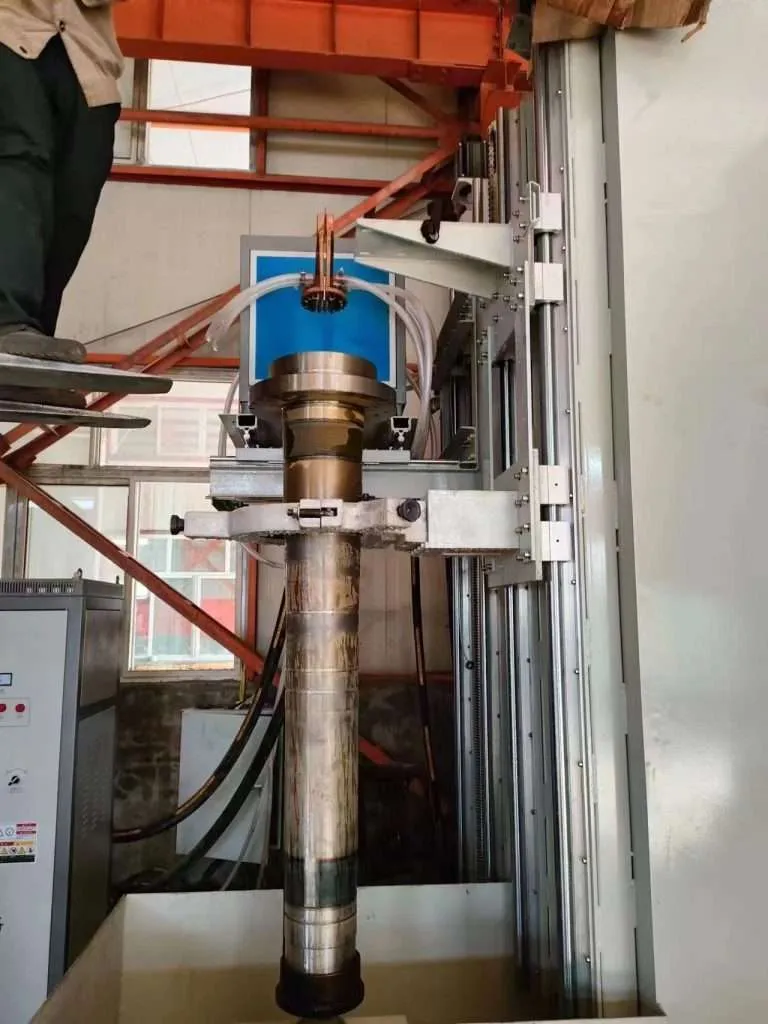
The automotive industry is a major consumer of induction-hardened components. Gears, crankshafts, camshafts, bearings, and other critical drivetrain components are commonly induction-hardened to withstand the high loads and wear encountered in automotive applications. Induction hardening plays a crucial role in enhancing the durability and reliability of these components, contributing to improved vehicle performance and longevity.
Aerospace Industry

In the aerospace industry, where safety and reliability are paramount, induction hardening is widely employed for critical components such as landing gear components, turbine blades, and bearings. The high hardness and wear resistance achieved through induction hardening ensure these components can withstand extreme operating conditions, including high temperatures, loads, and vibrations.

Manufacturing and Industrial Machinery

Induction hardening finds extensive applications in the manufacturing and industrial machinery sectors. Components such as gears, shafts, rollers, and cutting tools are often induction-hardened to improve their service life and performance. This process helps reduce downtime, maintenance costs, and replacement frequencies, ultimately enhancing productivity and efficiency in industrial operations.

Tooling and Mold Making

In the tooling and mold-making industries, induction hardening is crucial for producing durable and long-lasting tools and molds. Dies, punches, forming tools, and injection molds are commonly induction-hardened to resist wear, abrasion, and deformation during demanding manufacturing processes involving high pressures, temperatures, and repetitive cycles.
The Induction Hardening Process

Surface Preparation

Proper surface preparation is essential for successful induction hardening. The component's surface must be clean and free from contaminants, such as oil, grease, or scale, as these can interfere with the heating and quenching processes. Common surface preparation techniques include degreasing, shot blasting, or chemical cleaning methods.

Induction Coil Design and Selection

Coil Configuration

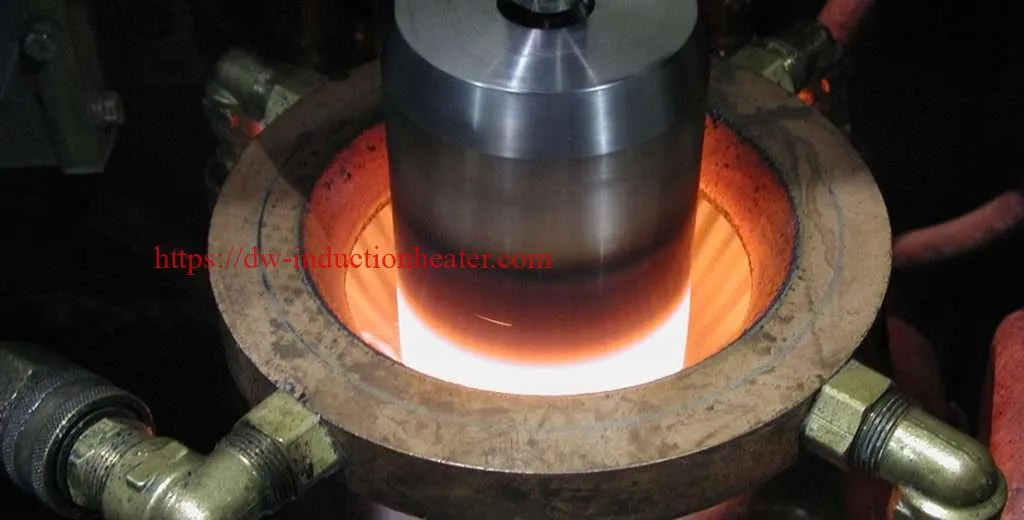
The design and configuration of the induction coil play a crucial role in achieving the desired heating pattern and hardness profile. Coils can be customized to match the shape and size of the component, ensuring efficient and uniform heating. Common coil configurations include helical coils for cylindrical components, pancake coils for flat surfaces, and customized coils for complex geometries.

Coil Material and Insulation

The coil material and insulation are carefully selected based on the operating temperatures and frequencies involved. Copper or copper alloys are commonly used for their high electrical conductivity, while insulating materials like ceramic or refractory materials protect the coil from high temperatures and prevent electrical breakdown.
Heating and Quenching

Temperature Control and Monitoring

Precise temperature control and monitoring are essential during the induction hardening process to ensure the desired hardness and microstructure are achieved. Temperature sensors, such as thermocouples or pyrometers, are used to monitor the component's surface temperature in real-time. Advanced control systems and feedback loops help maintain the desired temperature profile throughout the heating cycle.

Quenching Methods

After the component reaches the target temperature, it is rapidly quenched to form the martensitic microstructure. Quenching methods can vary depending on the component's size, shape, and material. Common quenching techniques include spray quenching, immersion quenching (in water, oil, or polymer solutions), and specialized quenching systems like high-pressure or cryogenic quenching.

Quality Control and Inspection

Hardness Testing

Hardness testing is a crucial step in verifying the effectiveness of the induction hardening process. Various hardness testing methods, such as Rockwell, Vickers, or Brinell tests, are employed to measure the surface hardness of the component and ensure it meets the specified requirements.
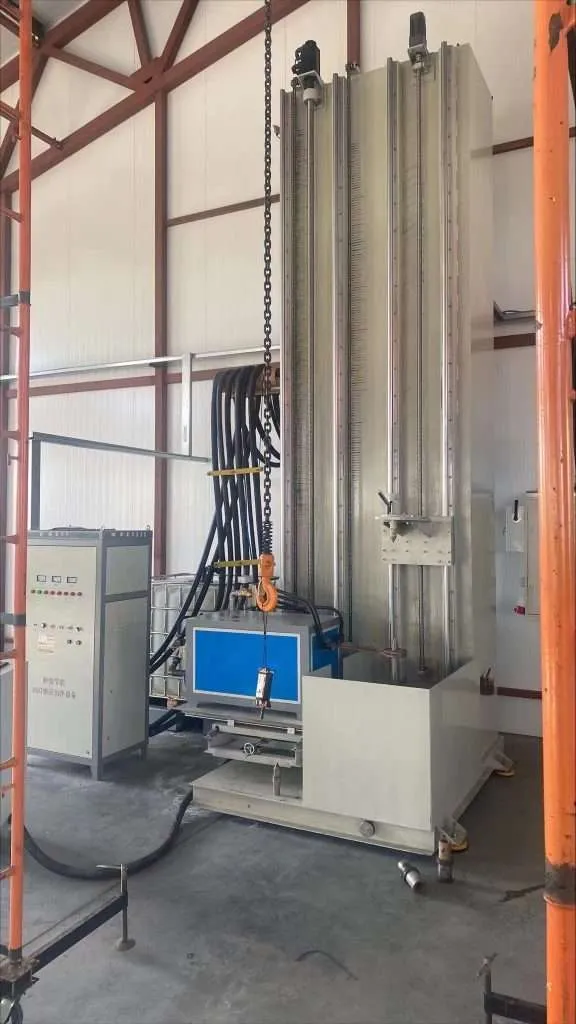
Microstructural Examination

Microstructural examination involves analyzing the component's surface and subsurface microstructure using techniques like optical microscopy or scanning electron microscopy (SEM). This analysis helps confirm the presence of the desired martensitic microstructure and identify any potential issues, such as incomplete transformation or non-uniform hardening.

Non-Destructive Testing

Non-destructive testing (NDT) methods, such as ultrasonic testing, magnetic particle inspection, or eddy current testing, are often employed to detect subsurface defects, cracks, or inconsistencies in the hardened layer. These techniques provide valuable information about the component's integrity and quality without causing any damage.

Conclusion

Induction hardening is a highly effective and efficient process for maximizing surface hardness and wear resistance in metal components. By leveraging the principles of electromagnetic induction and rapid heating and quenching, this process creates a hardened martensitic surface layer that offers exceptional durability and resistance to wear, abrasion, and impact. The versatility of induction hardening allows it to be applied across various industries, including automotive, aerospace, manufacturing, and tooling, where enhanced surface properties are crucial for component performance and longevity. With its precise and localized hardening capabilities, energy efficiency, and flexibility, induction hardening continues to be a preferred choice for manufacturers seeking to optimize the performance and reliability of their products. As technology advances, the induction hardening process continues to evolve, with improvements in coil design, temperature control, and quenching methods, ensuring even better hardness profiles and surface quality. By combining advanced materials, process control, and quality assurance techniques, induction hardening remains a vital tool in the pursuit of maximizing surface hardness and wear resistance for critical components across various industries. FAQ: Frequently Asked Questions
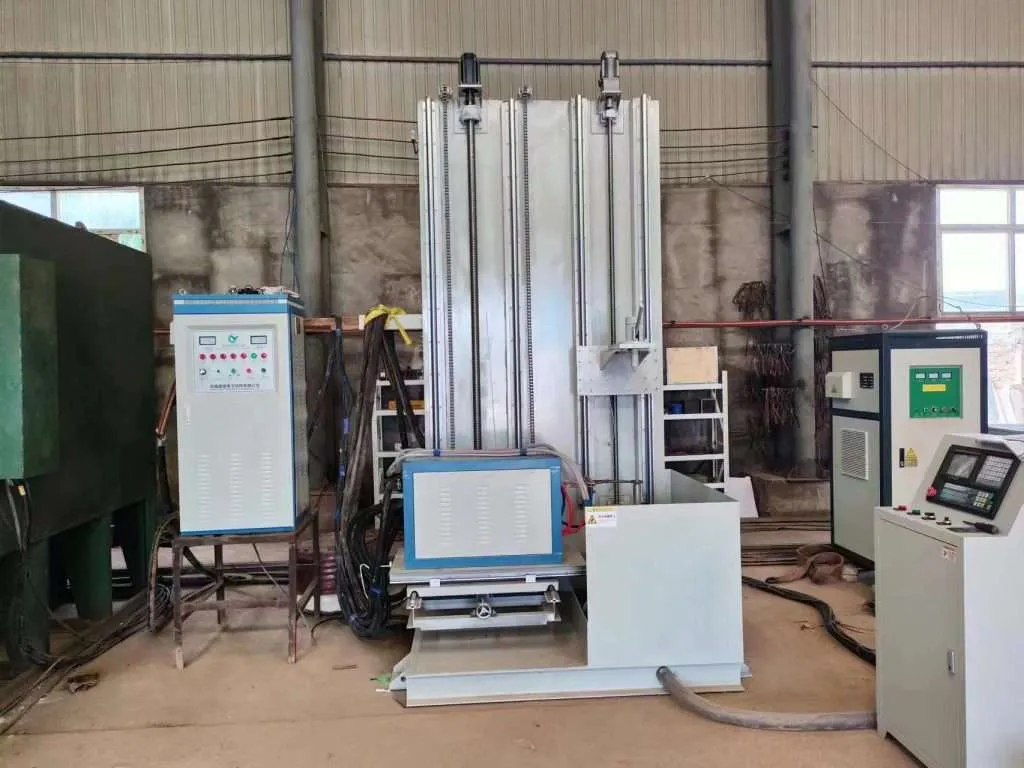
  1. What materials are suitable for induction hardening? Induction hardening is primarily used for ferrous materials, such as various grades of steel and cast iron. However, certain non-ferrous alloys, like nickel-based or cobalt-based alloys, can also be induction-hardened under specific conditions.
  2. How deep can the hardened layer be achieved through induction hardening? The depth of the hardened layer depends on several factors, including the component's material, the induction coil design, and the process parameters. Typically, induction hardening can achieve hardened case depths ranging from 0.5 mm to 10 mm, with deeper case depths possible in certain applications.
  3. Can induction hardening be applied to complex component geometries? Yes, induction hardening can be applied to components with complex geometries. Specialized induction coils can be designed and customized to accommodate intricate shapes, allowing for precise and localized hardening of specific areas.
  4. What are the typical quenching media used in induction hardening? Common quenching media used in induction hardening include water, oil, and polymer solutions. The choice of quenching medium depends on factors such as the component's material, size, and desired cooling rate. Specialized quenching systems, like high-pressure or cryogenic quenching, may also be employed for specific applications.
  5. How does induction hardening compare to other hardening processes in terms of environmental impact? Induction hardening is generally considered an environmentally friendly process due to its energy efficiency and minimal waste generation. Compared to traditional furnace-based hardening processes, induction hardening consumes less energy and produces lower emissions, making it a more sustainable choice for heat treatment operations.
https://dw-inductionheater.com/induction-hardening-maximizing-surface-hardness-and-wear-resistance.html?feed_id=238726&_unique_id=6603b8bd8bb71
Induction Hardening: Maximizing Surface Hardness and Wear Resistance

Induction Hardening: Maximizing Surface Hardness and Wear Resistance

What is Induction Hardening?

The Principles Behind Induction Hardening

Electromagnetic Induction

Induction hardening is a heat treatment process that selectively hardens the surface of metal components by utilizing the principles of electromagnetic induction. This process involves passing a high-frequency alternating current through an induction coil placed around the component, generating a powerful electromagnetic field. As the electromagnetic field interacts with the conductive material, it induces electrical currents within the component, causing rapid and localized heating of the surface.

Rapid Heating and Quenching

The induced currents generate heat within the component's surface, raising its temperature to the austenitic range (typically between 800°C and 950°C for steel). Once the desired temperature is reached, the component is immediately quenched, typically by spraying or immersing it in a quenching medium, such as water, oil, or a polymer solution. The rapid cooling causes the austenite to transform into martensite, a hard and wear-resistant microstructure, resulting in a hardened surface layer.

Advantages of Induction Hardening

Increased Surface Hardness and Wear Resistance

One of the primary advantages of induction hardening is the ability to achieve exceptional surface hardness and wear resistance. The martensitic microstructure formed during the quenching process can result in surface hardness values exceeding 60 HRC (Rockwell Hardness Scale C). This high hardness translates to improved wear resistance, making induction-hardened components ideal for applications involving sliding, rolling, or impact loads.

Precise and Localized Hardening

Induction hardening allows for precise and localized hardening of specific areas on a component. By carefully designing the induction coil and controlling the heating pattern, manufacturers can selectively harden critical regions while leaving other areas unaffected. This capability is particularly valuable in applications where only certain sections of a component require enhanced hardness and wear resistance, such as gear teeth, cam lobes, or bearing surfaces.

Energy Efficiency

Compared to other heat treatment processes, induction hardening is highly energy-efficient. The induction coil directly heats the component's surface, minimizing energy losses associated with heating the entire component or furnace. Additionally, the rapid heating and cooling cycles contribute to energy savings, making induction hardening an environmentally friendly and cost-effective process.

Versatility and Flexibility

Induction hardening is a versatile process that can be applied to a wide range of materials, including various grades of steel, cast iron, and certain non-ferrous alloys. It is also suitable for components of different shapes and sizes, from small gears and bearings to large shafts and cylinders. The flexibility of induction hardening allows manufacturers to tailor the process parameters to meet specific requirements, ensuring optimal hardness and performance.

Applications of Induction Hardening

Automotive Industry

The automotive industry is a major consumer of induction-hardened components. Gears, crankshafts, camshafts, bearings, and other critical drivetrain components are commonly induction-hardened to withstand the high loads and wear encountered in automotive applications. Induction hardening plays a crucial role in enhancing the durability and reliability of these components, contributing to improved vehicle performance and longevity.

Aerospace Industry

In the aerospace industry, where safety and reliability are paramount, induction hardening is widely employed for critical components such as landing gear components, turbine blades, and bearings. The high hardness and wear resistance achieved through induction hardening ensure these components can withstand extreme operating conditions, including high temperatures, loads, and vibrations.

Manufacturing and Industrial Machinery

Induction hardening finds extensive applications in the manufacturing and industrial machinery sectors. Components such as gears, shafts, rollers, and cutting tools are often induction-hardened to improve their service life and performance. This process helps reduce downtime, maintenance costs, and replacement frequencies, ultimately enhancing productivity and efficiency in industrial operations.

Tooling and Mold Making

In the tooling and mold-making industries, induction hardening is crucial for producing durable and long-lasting tools and molds. Dies, punches, forming tools, and injection molds are commonly induction-hardened to resist wear, abrasion, and deformation during demanding manufacturing processes involving high pressures, temperatures, and repetitive cycles.

The Induction Hardening Process

Surface Preparation

Proper surface preparation is essential for successful induction hardening. The component's surface must be clean and free from contaminants, such as oil, grease, or scale, as these can interfere with the heating and quenching processes. Common surface preparation techniques include degreasing, shot blasting, or chemical cleaning methods.

Induction Coil Design and Selection

Coil Configuration

The design and configuration of the induction coil play a crucial role in achieving the desired heating pattern and hardness profile. Coils can be customized to match the shape and size of the component, ensuring efficient and uniform heating. Common coil configurations include helical coils for cylindrical components, pancake coils for flat surfaces, and customized coils for complex geometries.

Coil Material and Insulation

The coil material and insulation are carefully selected based on the operating temperatures and frequencies involved. Copper or copper alloys are commonly used for their high electrical conductivity, while insulating materials like ceramic or refractory materials protect the coil from high temperatures and prevent electrical breakdown.

Heating and Quenching

Temperature Control and Monitoring

Precise temperature control and monitoring are essential during the induction hardening process to ensure the desired hardness and microstructure are achieved. Temperature sensors, such as thermocouples or pyrometers, are used to monitor the component's surface temperature in real-time. Advanced control systems and feedback loops help maintain the desired temperature profile throughout the heating cycle.

Quenching Methods

After the component reaches the target temperature, it is rapidly quenched to form the martensitic microstructure. Quenching methods can vary depending on the component's size, shape, and material. Common quenching techniques include spray quenching, immersion quenching (in water, oil, or polymer solutions), and specialized quenching systems like high-pressure or cryogenic quenching.

Quality Control and Inspection

Hardness Testing

Hardness testing is a crucial step in verifying the effectiveness of the induction hardening process. Various hardness testing methods, such as Rockwell, Vickers, or Brinell tests, are employed to measure the surface hardness of the component and ensure it meets the specified requirements.

Microstructural Examination

Microstructural examination involves analyzing the component's surface and subsurface microstructure using techniques like optical microscopy or scanning electron microscopy (SEM). This analysis helps confirm the presence of the desired martensitic microstructure and identify any potential issues, such as incomplete transformation or non-uniform hardening.

Non-Destructive Testing

Non-destructive testing (NDT) methods, such as ultrasonic testing, magnetic particle inspection, or eddy current testing, are often employed to detect subsurface defects, cracks, or inconsistencies in the hardened layer. These techniques provide valuable information about the component's integrity and quality without causing any damage.

Conclusion

Induction hardening is a highly effective and efficient process for maximizing surface hardness and wear resistance in metal components. By leveraging the principles of electromagnetic induction and rapid heating and quenching, this process creates a hardened martensitic surface layer that offers exceptional durability and resistance to wear, abrasion, and impact. The versatility of induction hardening allows it to be applied across various industries, including automotive, aerospace, manufacturing, and tooling, where enhanced surface properties are crucial for component performance and longevity. With its precise and localized hardening capabilities, energy efficiency, and flexibility, induction hardening continues to be a preferred choice for manufacturers seeking to optimize the performance and reliability of their products. As technology advances, the induction hardening process continues to evolve, with improvements in coil design, temperature control, and quenching methods, ensuring even better hardness profiles and surface quality. By combining advanced materials, process control, and quality assurance techniques, induction hardening remains a vital tool in the pursuit of maximizing surface hardness and wear resistance for critical components across various industries. FAQ: Frequently Asked Questions
  1. What materials are suitable for induction hardening? Induction hardening is primarily used for ferrous materials, such as various grades of steel and cast iron. However, certain non-ferrous alloys, like nickel-based or cobalt-based alloys, can also be induction-hardened under specific conditions.
  2. How deep can the hardened layer be achieved through induction hardening? The depth of the hardened layer depends on several factors, including the component's material, the induction coil design, and the process parameters. Typically, induction hardening can achieve hardened case depths ranging from 0.5 mm to 10 mm, with deeper case depths possible in certain applications.
  3. Can induction hardening be applied to complex component geometries? Yes, induction hardening can be applied to components with complex geometries. Specialized induction coils can be designed and customized to accommodate intricate shapes, allowing for precise and localized hardening of specific areas.
  4. What are the typical quenching media used in induction hardening? Common quenching media used in induction hardening include water, oil, and polymer solutions. The choice of quenching medium depends on factors such as the component's material, size, and desired cooling rate. Specialized quenching systems, like high-pressure or cryogenic quenching, may also be employed for specific applications.
  5. How does induction hardening compare to other hardening processes in terms of environmental impact? Induction hardening is generally considered an environmentally friendly process due to its energy efficiency and minimal waste generation. Compared to traditional furnace-based hardening processes, induction hardening consumes less energy and produces lower emissions, making it a more sustainable choice for heat treatment operations.
https://dw-inductionheater.com/induction-hardening-maximizing-surface-hardness-and-wear-resistance.html?feed_id=238624&_unique_id=660374442e7be

2024年2月2日星期五

principle of electromagnetic induction heating

principle of electromagnetic induction heating

In 1831 Michael Faraday discovered Electromagnetic induction heating. The basic principle of induction heating is an applied form of Faraday’s discovery. The fact is that, AC current flowing through a circuit affects the magnetic movement of a secondary circuit located near it. The fluctuation of current inside the primary circuit provided the answer as to how themysterious current is generated in the neighboring secondary circuit. Faraday’sdiscovery led to the development of electric motors, generators, transformers, and wireless communications devices.Its application, however, has not been flawless. Heat loss, which occurs during the induction heating process, was amajor headache undermining the overall functionality of a system. Researchers sought to minimize heat loss by laminating the magnetic frames placed insidethe motor ortransformer. Heat loss, occurring in the process ofelectromagnetic induction, could be turned into productive heat energy in an electricheating system by applying this law.Many industries have benefited from this new breakthrough by implementing induction heating. https://dw-inductionheater.com/principle-of-electromagnetic-induction-heating.html?feed_id=233356&_unique_id=65bce9f356c16

2023年6月10日星期六

principle of electromagnetic induction heating

principle of electromagnetic induction heating

In 1831 Michael Faraday discovered Electromagnetic induction heating. The basic principle of induction heating is an applied form of Faraday’s discovery. The fact is that, AC current flowing through a circuit affects the magnetic movement of a secondary circuit located near it. The fluctuation of current inside the primary circuit provided the answer as to how themysterious current is generated in the neighboring secondary circuit. Faraday’sdiscovery led to the development of electric motors, generators, transformers, and wireless communications devices.Its application, however, has not been flawless. Heat loss, which occurs during the induction heating process, was amajor headache undermining the overall functionality of a system. Researchers sought to minimize heat loss by laminating the magnetic frames placed insidethe motor ortransformer. Heat loss, occurring in the process ofelectromagnetic induction, could be turned into productive heat energy in an electricheating system by applying this law.Many industries have benefited from this new breakthrough by implementing induction heating. https://dw-inductionheater.com/principle-of-electromagnetic-induction-heating.html?feed_id=212311&_unique_id=64856da0cfde5

2023年6月2日星期五

principle of electromagnetic induction heating

principle of electromagnetic induction heating

In 1831 Michael Faraday discovered Electromagnetic induction heating. The basic principle of induction heating is an applied form of Faraday’s discovery. The fact is that, AC current flowing through a circuit affects the magnetic movement of a secondary circuit located near it. The fluctuation of current inside the primary circuit provided the answer as to how themysterious current is generated in the neighboring secondary circuit. Faraday’sdiscovery led to the development of electric motors, generators, transformers, and wireless communications devices.Its application, however, has not been flawless. Heat loss, which occurs during the induction heating process, was amajor headache undermining the overall functionality of a system. Researchers sought to minimize heat loss by laminating the magnetic frames placed insidethe motor ortransformer. Heat loss, occurring in the process ofelectromagnetic induction, could be turned into productive heat energy in an electricheating system by applying this law.Many industries have benefited from this new breakthrough by implementing induction heating.

2023年5月20日星期六

principle of electromagnetic induction heating

principle of electromagnetic induction heating

In 1831 Michael Faraday discovered Electromagnetic induction heating. The basic principle of induction heating is an applied form of Faraday’s discovery. The fact is that, AC current flowing through a circuit affects the magnetic movement of a secondary circuit located near it. The fluctuation of current inside the primary circuit provided the answer as to how themysterious current is generated in the neighboring secondary circuit. Faraday’sdiscovery led to the development of electric motors, generators, transformers, and wireless communications devices.Its application, however, has not been flawless. Heat loss, which occurs during the induction heating process, was amajor headache undermining the overall functionality of a system. Researchers sought to minimize heat loss by laminating the magnetic frames placed insidethe motor ortransformer. Heat loss, occurring in the process ofelectromagnetic induction, could be turned into productive heat energy in an electricheating system by applying this law.Many industries have benefited from this new breakthrough by implementing induction heating. https://dw-inductionheater.com/principle-of-electromagnetic-induction-heating.html?feed_id=206461&_unique_id=646947cb22444

2023年4月20日星期四

principle of electromagnetic induction heating

principle of electromagnetic induction heating

In 1831 Michael Faraday discovered Electromagnetic induction heating. The basic principle of induction heating is an applied form of Faraday’s discovery. The fact is that, AC current flowing through a circuit affects the magnetic movement of a secondary circuit located near it. The fluctuation of current inside the primary circuit provided the answer as to how themysterious current is generated in the neighboring secondary circuit. Faraday’sdiscovery led to the development of electric motors, generators, transformers, and wireless communications devices.Its application, however, has not been flawless. Heat loss, which occurs during the induction heating process, was amajor headache undermining the overall functionality of a system. Researchers sought to minimize heat loss by laminating the magnetic frames placed insidethe motor ortransformer. Heat loss, occurring in the process ofelectromagnetic induction, could be turned into productive heat energy in an electricheating system by applying this law.Many industries have benefited from this new breakthrough by implementing induction heating.

2023年4月7日星期五

principle of electromagnetic induction heating

principle of electromagnetic induction heating

In 1831 Michael Faraday discovered Electromagnetic induction heating. The basic principle of induction heating is an applied form of Faraday’s discovery. The fact is that, AC current flowing through a circuit affects the magnetic movement of a secondary circuit located near it. The fluctuation of current inside the primary circuit provided the answer as to how themysterious current is generated in the neighboring secondary circuit. Faraday’sdiscovery led to the development of electric motors, generators, transformers, and wireless communications devices.Its application, however, has not been flawless. Heat loss, which occurs during the induction heating process, was amajor headache undermining the overall functionality of a system. Researchers sought to minimize heat loss by laminating the magnetic frames placed insidethe motor ortransformer. Heat loss, occurring in the process ofelectromagnetic induction, could be turned into productive heat energy in an electricheating system by applying this law.Many industries have benefited from this new breakthrough by implementing induction heating.

2023年4月5日星期三

principle of electromagnetic induction heating

principle of electromagnetic induction heating

In 1831 Michael Faraday discovered Electromagnetic induction heating. The basic principle of induction heating is an applied form of Faraday’s discovery. The fact is that, AC current flowing through a circuit affects the magnetic movement of a secondary circuit located near it. The fluctuation of current inside the primary circuit provided the answer as to how themysterious current is generated in the neighboring secondary circuit. Faraday’sdiscovery led to the development of electric motors, generators, transformers, and wireless communications devices.Its application, however, has not been flawless. Heat loss, which occurs during the induction heating process, was amajor headache undermining the overall functionality of a system. Researchers sought to minimize heat loss by laminating the magnetic frames placed insidethe motor ortransformer. Heat loss, occurring in the process ofelectromagnetic induction, could be turned into productive heat energy in an electricheating system by applying this law.Many industries have benefited from this new breakthrough by implementing induction heating.

2023年4月3日星期一

principle of electromagnetic induction heating

principle of electromagnetic induction heating

In 1831 Michael Faraday discovered Electromagnetic induction heating. The basic principle of induction heating is an applied form of Faraday’s discovery. The fact is that, AC current flowing through a circuit affects the magnetic movement of a secondary circuit located near it. The fluctuation of current inside the primary circuit provided the answer as to how themysterious current is generated in the neighboring secondary circuit. Faraday’sdiscovery led to the development of electric motors, generators, transformers, and wireless communications devices.Its application, however, has not been flawless. Heat loss, which occurs during the induction heating process, was amajor headache undermining the overall functionality of a system. Researchers sought to minimize heat loss by laminating the magnetic frames placed insidethe motor ortransformer. Heat loss, occurring in the process ofelectromagnetic induction, could be turned into productive heat energy in an electricheating system by applying this law.Many industries have benefited from this new breakthrough by implementing induction heating.

2023年2月16日星期四

principle of electromagnetic induction heating

principle of electromagnetic induction heating

In 1831 Michael Faraday discovered Electromagnetic induction heating. The basic principle of induction heating is an applied form of Faraday’s discovery. The fact is that, AC current flowing through a circuit affects the magnetic movement of a secondary circuit located near it. The fluctuation of current inside the primary circuit provided the answer as to how themysterious current is generated in the neighboring secondary circuit. Faraday’sdiscovery led to the development of electric motors, generators, transformers, and wireless communications devices.Its application, however, has not been flawless. Heat loss, which occurs during the induction heating process, was amajor headache undermining the overall functionality of a system. Researchers sought to minimize heat loss by laminating the magnetic frames placed insidethe motor ortransformer. Heat loss, occurring in the process ofelectromagnetic induction, could be turned into productive heat energy in an electricheating system by applying this law.Many industries have benefited from this new breakthrough by implementing induction heating.

2022年7月12日星期二

principle of electromagnetic induction heating

principle of electromagnetic induction heating

In 1831 Michael Faraday discovered Electromagnetic induction heating. The basic principle of induction heating is an applied form of Faraday’s discovery. The fact is that, AC current flowing through a circuit affects the magnetic movement of a secondary circuit located near it. The fluctuation of current inside the primary circuit provided the answer as to how themysterious current is generated in the neighboring secondary circuit. Faraday’sdiscovery led to the development of electric motors, generators, transformers, and wireless communications devices.Its application, however, has not been flawless. Heat loss, which occurs during the induction heating process, was amajor headache undermining the overall functionality of a system. Researchers sought to minimize heat loss by laminating the magnetic frames placed insidethe motor ortransformer. Heat loss, occurring in the process ofelectromagnetic induction, could be turned into productive heat energy in an electricheating system by applying this law.Many industries have benefited from this new breakthrough by implementing induction heating.

2022年5月31日星期二

principle of electromagnetic induction heating

principle of electromagnetic induction heating

In 1831 Michael Faraday discovered Electromagnetic induction heating. The basic principle of induction heating is an applied form of Faraday’s discovery. The fact is that, AC current flowing through a circuit affects the magnetic movement of a secondary circuit located near it. The fluctuation of current inside the primary circuit provided the answer as to how themysterious current is generated in the neighboring secondary circuit. Faraday’sdiscovery led to the development of electric motors, generators, transformers, and wireless communications devices.Its application, however, has not been flawless. Heat loss, which occurs during the induction heating process, was amajor headache undermining the overall functionality of a system. Researchers sought to minimize heat loss by laminating the magnetic frames placed insidethe motor ortransformer. Heat loss, occurring in the process ofelectromagnetic induction, could be turned into productive heat energy in an electricheating system by applying this law.Many industries have benefited from this new breakthrough by implementing induction heating.

2022年5月15日星期日

principle of electromagnetic induction heating

principle of electromagnetic induction heating

In 1831 Michael Faraday discovered Electromagnetic induction heating. The basic principle of induction heating is an applied form of Faraday’s discovery. The fact is that, AC current flowing through a circuit affects the magnetic movement of a secondary circuit located near it. The fluctuation of current inside the primary circuit provided the answer as to how themysterious current is generated in the neighboring secondary circuit. Faraday’sdiscovery led to the development of electric motors, generators, transformers, and wireless communications devices.Its application, however, has not been flawless. Heat loss, which occurs during the induction heating process, was amajor headache undermining the overall functionality of a system. Researchers sought to minimize heat loss by laminating the magnetic frames placed insidethe motor ortransformer. Heat loss, occurring in the process ofelectromagnetic induction, could be turned into productive heat energy in an electricheating system by applying this law.Many industries have benefited from this new breakthrough by implementing induction heating.

2022年4月18日星期一

principle of electromagnetic induction heating

principle of electromagnetic induction heating

In 1831 Michael Faraday discovered Electromagnetic induction heating. The basic principle of induction heating is an applied form of Faraday’s discovery. The fact is that, AC current flowing through a circuit affects the magnetic movement of a secondary circuit located near it. The fluctuation of current inside the primary circuit provided the answer as to how themysterious current is generated in the neighboring secondary circuit. Faraday’sdiscovery led to the development of electric motors, generators, transformers, and wireless communications devices.Its application, however, has not been flawless. Heat loss, which occurs during the induction heating process, was amajor headache undermining the overall functionality of a system. Researchers sought to minimize heat loss by laminating the magnetic frames placed insidethe motor ortransformer. Heat loss, occurring in the process ofelectromagnetic induction, could be turned into productive heat energy in an electricheating system by applying this law.Many industries have benefited from this new breakthrough by implementing induction heating. https://dw-inductionheater.com/principle-of-electromagnetic-induction-heating.html?feed_id=113298&_unique_id=625e50c905874

2022年1月6日星期四

80KW Electromagnetic Induction Heater

80KW Electromagnetic Induction Heater for heating steel welding, coating, bending, fitting & unfitting,etc.

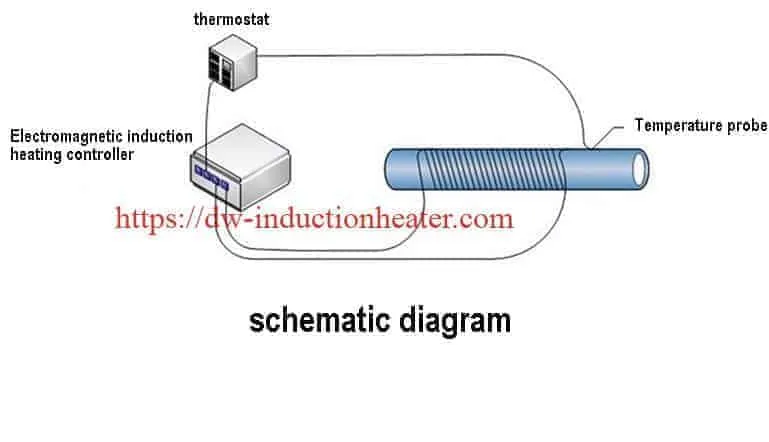
Principle of Electromagnetic Induction Heating: Most of the metal is heated by the high-frequency magnetic field and uses this principle to pass the high-frequency current through the coil, so that the coil generates a high-frequency magnetic field, so that the metal rod in the coil is induced to generate heat. The electrical energy can be converted into metal thermal energy by the above process. During the whole process, the metal rod does not have any physical contact with the coil, and the energy conversion is completed by the magnetic field eddy current and the metal induction.  Advantages of electromagnetic induction heater: 1.Energy saving and emission reduction (30-85%) 2.higher thermal efficiency 3.Reduced operating temperature 4.warm up fast 5'long service life 6.Maintenance is simple and convenient   What Advantages Does Electromagnetic Induction Heater Have Compared With Traditional Heaters?
Advantage Comparison
Electromagnetic Induction Heater Traditional Heater
Heating Principles Electromagnetic Induction Heating the  Resdistance Wire
Heated Part Charging barrel is heated directly to get higher efficiency ,but the induction coil itself is not heated to guaratte longer using life heater itself,then heat transfered to the charging barrel
Surface Temperature & Safety Max. 60 Degree Centigrade,safe to touch by hands. The same with your heating temperature, Dangerous to touch
Heating Rate High Efficiency:save 50%-70%warming -up time Low Efficiency:No time-saving
Energy Saving Save 30-80% Power Consumption No Saving
Temperature Control High precision Low Precision
Using life 4-5year 2-3year
Working Environment Normal temperature for workers,easy and comfortable Hot,especially for low latitude Area
Cost Cost-effective,with30-80% energy-saving rate,it takes 6-10 months to recover the cost. The higher the rate is,the less time it takes. Low
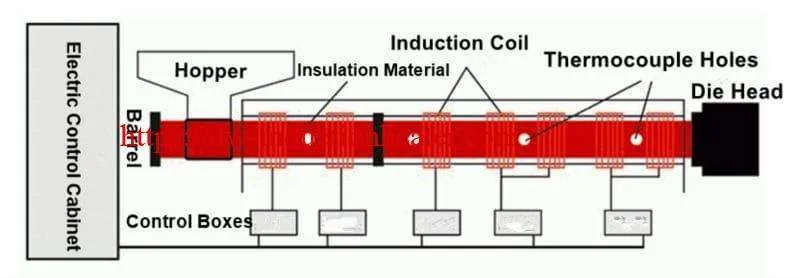
  Application of electromagnetic induction: 1.Plastic rubber industry: plastic film blowing machine, wire drawing machine, injection molding machine, granulator, rubber extruder, vulcanizing machine, cable production extruder, etc.; 2.Pharmaceutical and chemical industry: pharmaceutical infusion bags, plastic equipment production lines, liquid heating pipelines for the chemical industry; 3.Energy, food industry: heating of crude oil pipelines, food machinery, super freighters and other equipment that require electric heating; 4.Industrial high-power heating industry: machine for killing machine, reaction axe, steam generator (boiler); 5.Smelting heating industry: die casting furnace zinc alloy, aluminum alloy and other equipment; 6.Building materials industry: gas pipe production line, plastic pipe production line, PE plastic hard flat net, geonet net unit, automatic blow molding machine, PE honeycomb board production line, single and double wall corrugated pipe extrusion production line, composite air cushion film unit, PVC hard Tube, PP extrusion transparent sheet production line, extruded polystyrene foam tube, PE winding film unit; 7.high power commercial induction cooker movement; 8.Dry heating in printing equipment; 9.other similar industry heating;
Technical Parameters  

Item

Technical Parameters

rated power Three-phase 80KW
Rated input current 110-120(A)
Rated output current 180-200(A)
Rated voltage frequency

AC 380V/50Hz

Voltage adaptation range  constant power output at 300 ~ 400V
Adapt to ambient temperature -20ºC~50ºC

Adapt to environmental humidity

≤95%
Power adjustment range

20% ~ 100% stepless adjustment(That is: adjustment between 0.5 ~ 80KW)

Heat conversion efficiency ≥95%
Effective power

≥98%(Can be customized according to user needs)

working frequency 5~40KHz
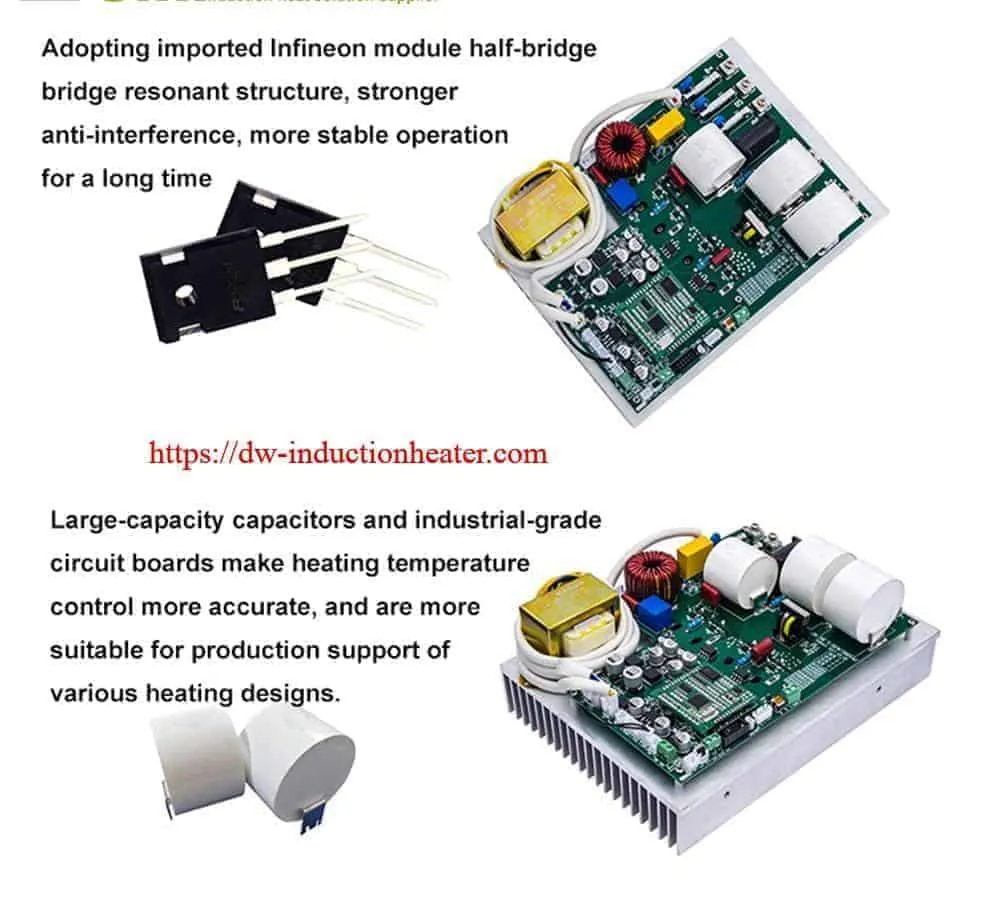
Main circuit structure Full bridge series resonance
Control System DSP-based high-speed automatic phase-locking tracking control system
Application mode Open application platform
monitor Programmable digital display
start time <1S
Instantaneous overcurrent protection time ≤2US
Power overload protection 130% instantaneous protection
Soft start mode Fully electrically isolated soft start heating / stop mode
RS485 communication Modbus RTU standard communication protocol
Support PID adjustment power Identify 0-5V input voltage
Support 0 ~ 1000 ºC load temperature detection Accuracy up to ± 1 ºC
Adaptive coil parameters  50 square line, length 50m, inductance 110 ~ 120uH
Coil to load distance(Thermal insulation thickness) 20-25mm for circle, 15-20mm for plane, 10-15mm for ellipse and within 10 mm for super ellipse


关注者

我的简介

我的照片
HLQ induction heating machine manufacturer provides the service of induction brazing,melting,hot forming,hardening surface,annealing,shrink fitting,PWHT,etc.