2022年11月29日星期二
Brazing Eyeglass Frames With Induction
Brazing Eyeglass Frames With Induction
Objective: Produce repeatable braze joints for the assembly of eyeglass frames. Induction heating is to be used to achieve quality braze joints on the nose bridge, brow bridge and nose piece. Brazing is to be done at 1300°F with approximately 3-5 seconds allowed for heating. Surface quality is of utmost importance since limited post-brazing cleanup is preferred.
Material: Monel Bridge With 18% Silver Braze
Temperature: 1300°F
Frequency: 600 kHz
Equipment:DW-UHF-4.5KW output solid state induction power supply.
Process The DW-UHF-4.5KW output solid state induction power supply was utilized to achieve the following results: • A temperature of 13000F was reached in 3 seconds through the use of a three turn, 0.2" ID, transverse helical coil. This coil design allows for the pinpoint application of heat to a specific area. • Surface flaws were kept to a minimum due to the use of a gas flood which was comprised of Hydrogen and an inert agent. The Hydrogen acts as a "fluxing" agent which eliminates the need for flux. The inert gas eliminates oxidation of the metal components when at brazing temperature. These two features produce a finished product without the need for post-brazing cleanup. • Present fixturing can be kept due to the use of transverse heating which allows for easy removal of the finished product. Results Overall, induction heating fulfilled all of the objectives established by the customer to produce quality braze joints for the manufacture of eyeglass frames.

KN95 mask ultrasonic mask welder for nonwoven fabric bonding process
KN95 mask ultrasonic mask welder-ultrasonic mask spot welding machine for bonding medical face mask & nonwoven fabric mask welding process
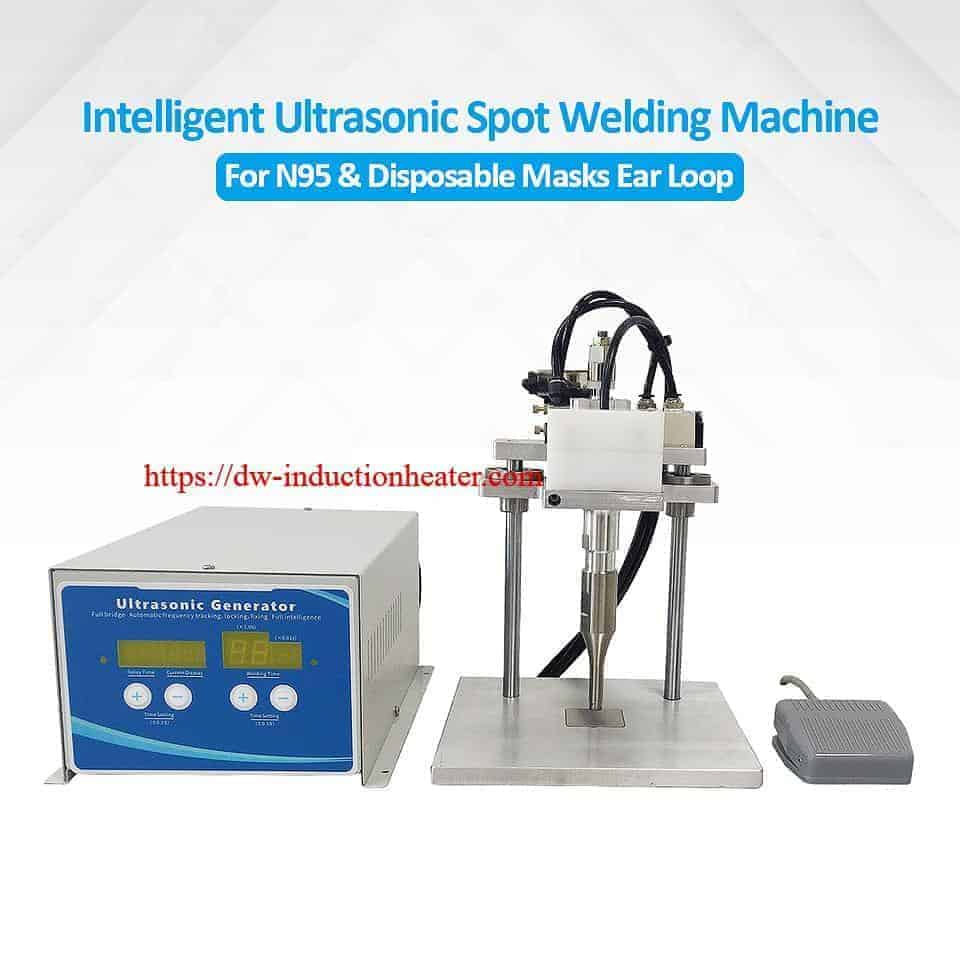
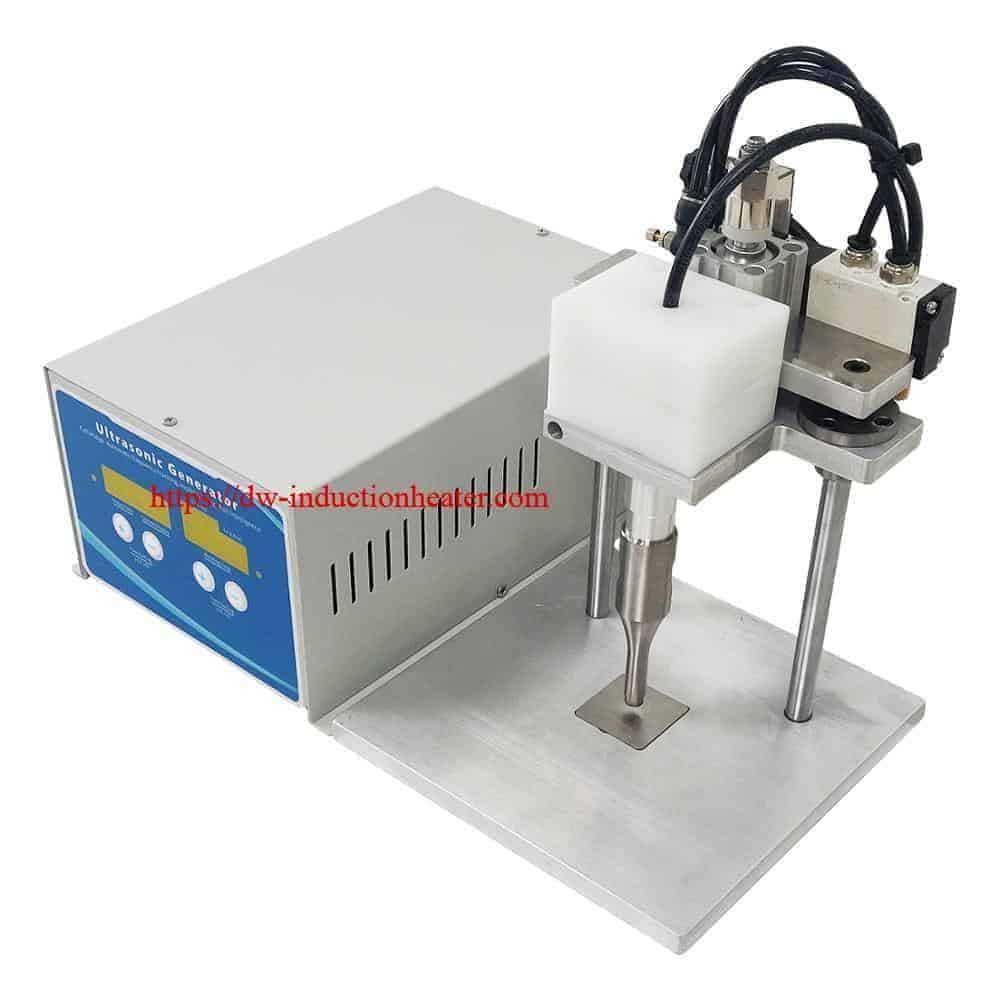
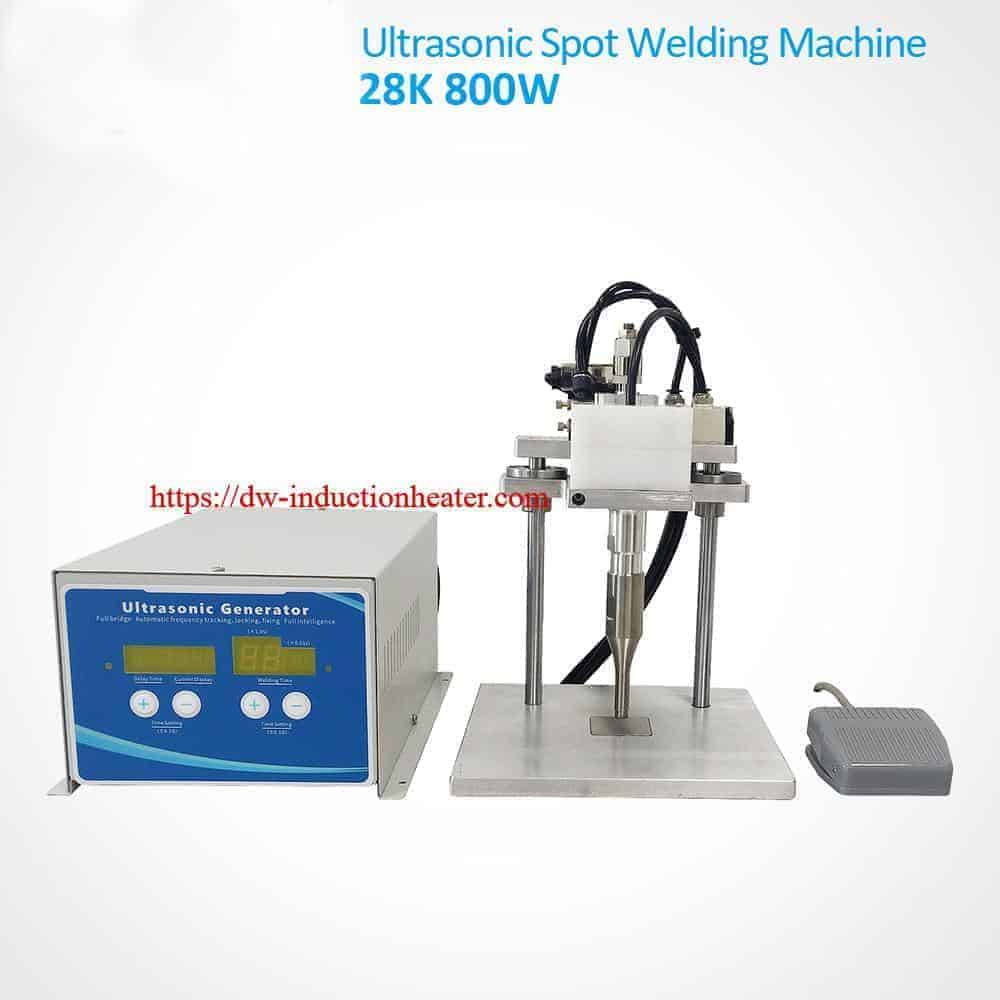
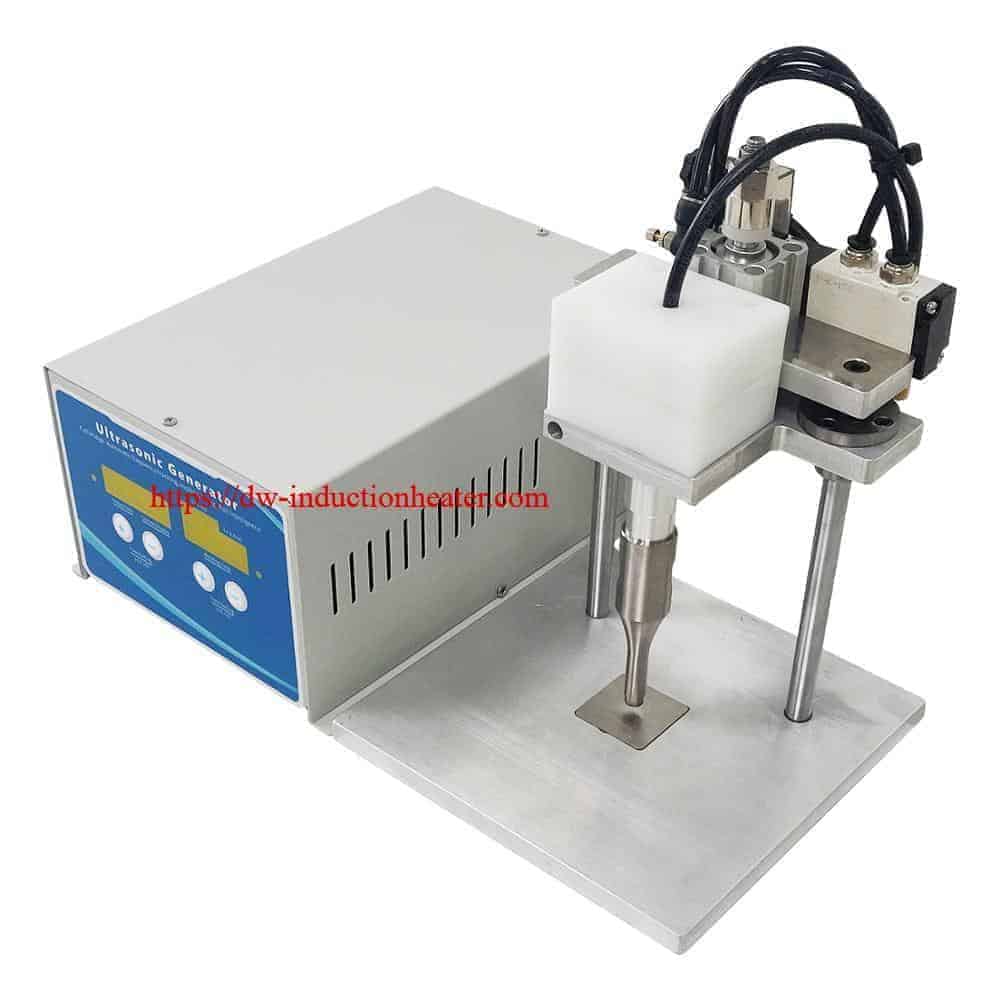
Intelligent Face Mask Ultrasonic Welding Machine
For N95 & Disposable Mask
Transducer Frequency: 28KHz
Transducer Material: Magnalium
Welding Head Material:Titanium Alloy
Working Voltage: AC220V±10%(50-60HZ)
Working Frequency: 28KHz
Whole set includes:
1) 28KHz Ultrasonic generator
2) Metal plate
3) Metal support
4) Pneumatic cylinder
5) 28KHz Ultrasonic transducer
6) Welding head
7) Foot switch
8) Connecting cables
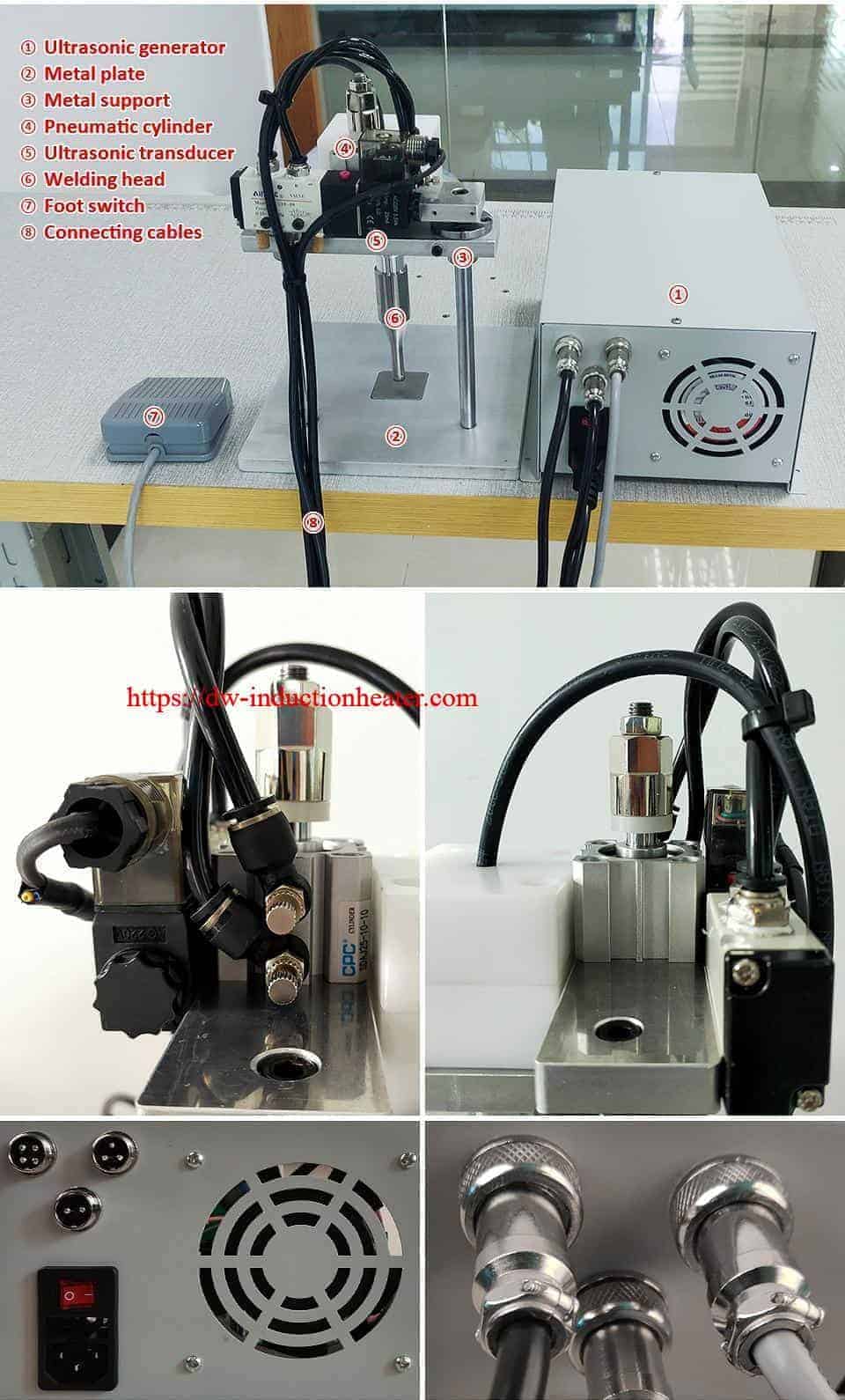


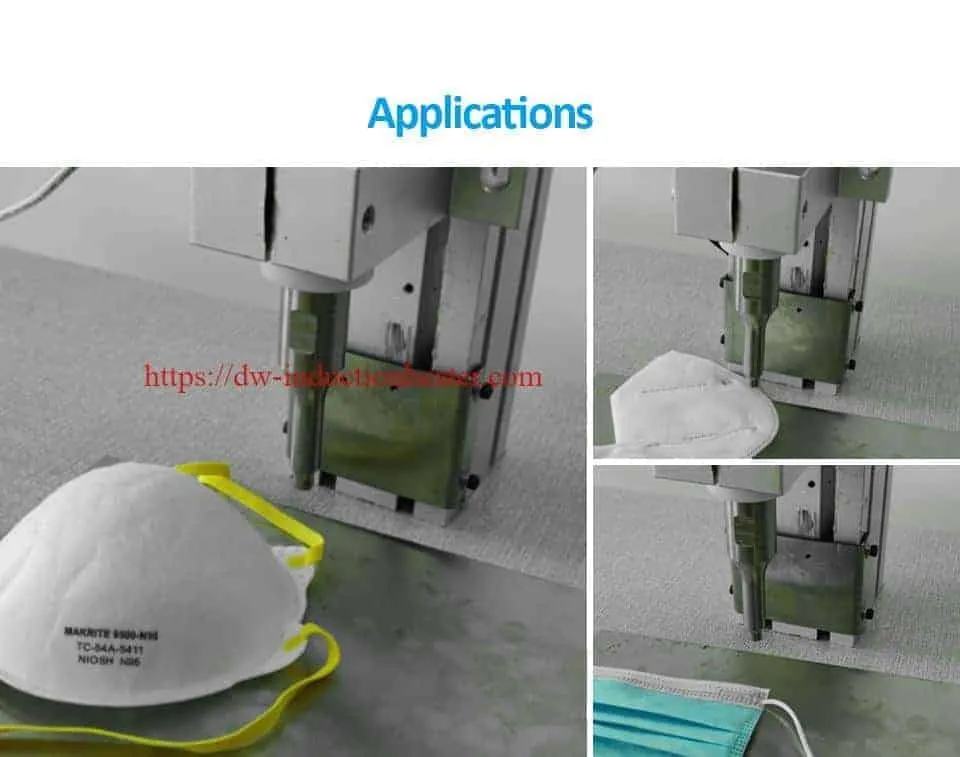
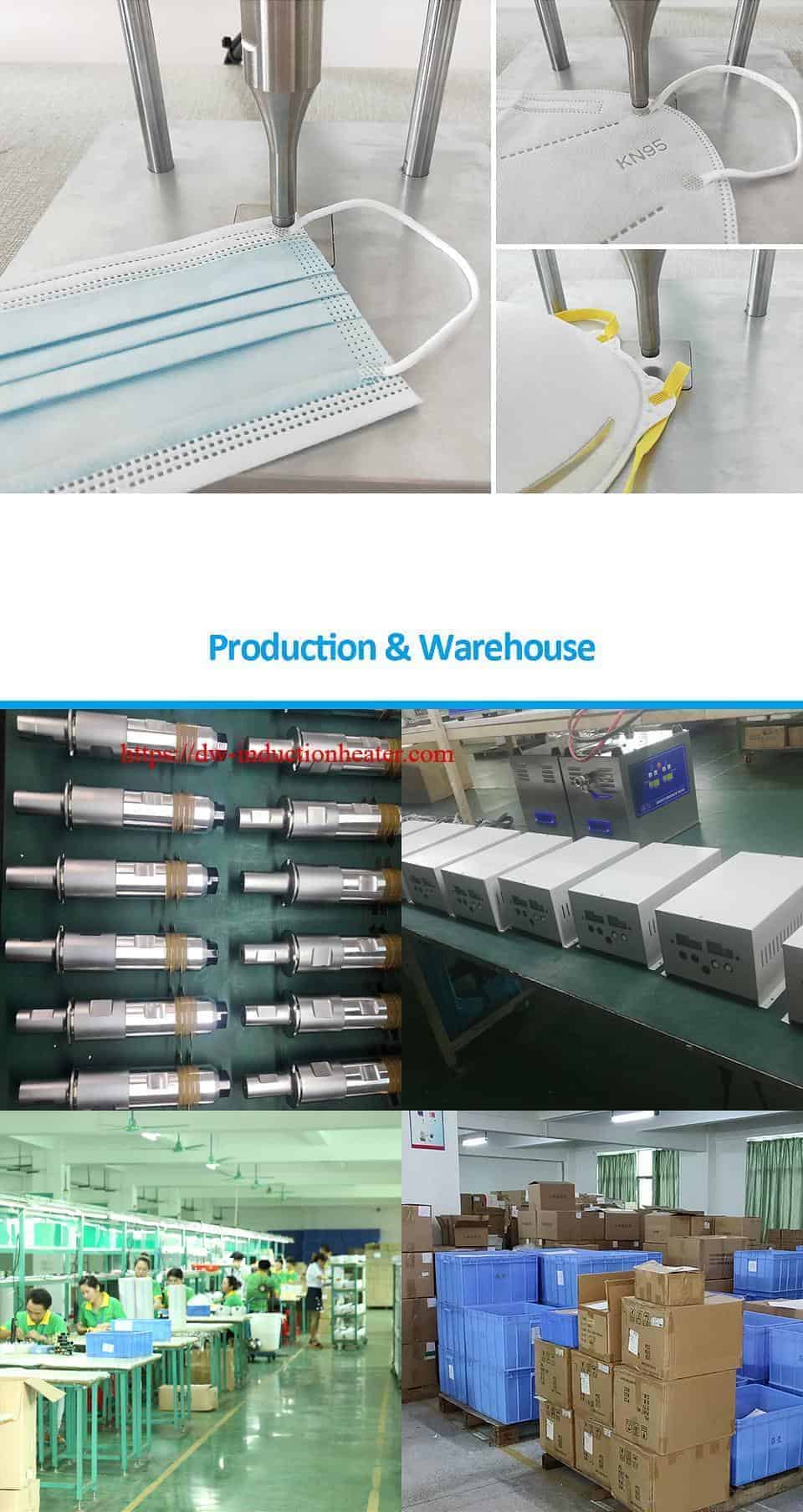
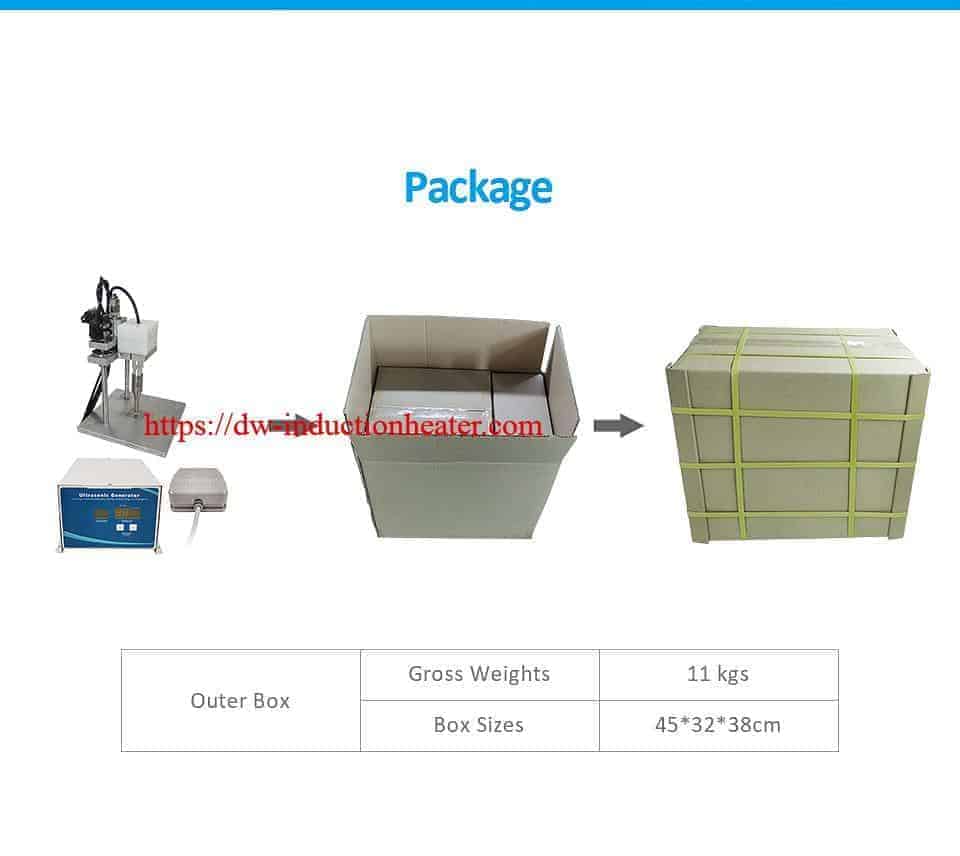
high frequency induction seam welder
High Frequency Induction Seam Welder Tube and Pipe Solutions
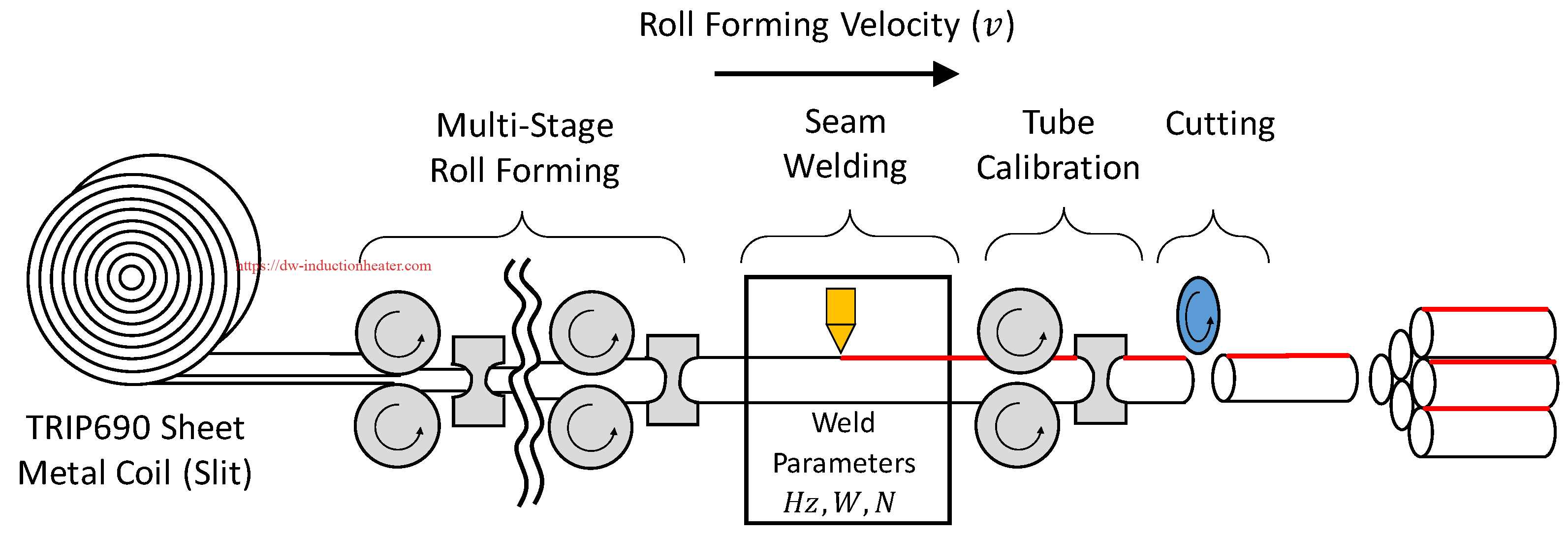
What is induction welding?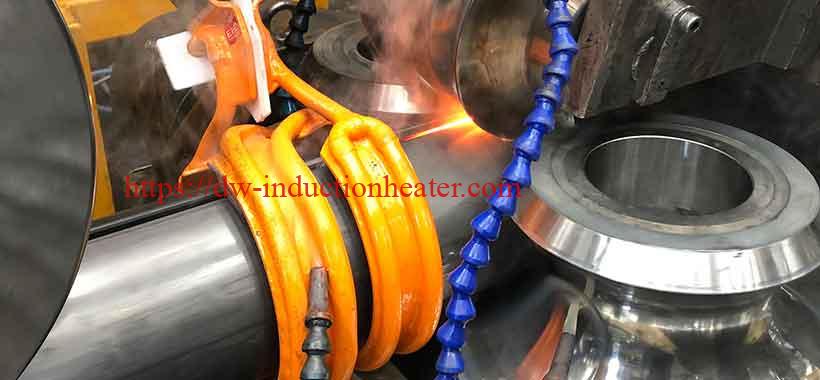 With induction welding, the heat is electromagnetically induced in the workpiece. The speed and accuracy of induction welding makes it ideal for edge welding of tubes and pipes. In this process, pipes pass an induction coil at high speed. As they do so, their edges are heated, then squeezed together to form a longitudinal weld seam. Induction welding is particularly suitable for high-volume production. Induction welders can also be fitted with contact heads, turning them into dual purpose welding systems.
What are the advantages of induction Seam welding?
With induction welding, the heat is electromagnetically induced in the workpiece. The speed and accuracy of induction welding makes it ideal for edge welding of tubes and pipes. In this process, pipes pass an induction coil at high speed. As they do so, their edges are heated, then squeezed together to form a longitudinal weld seam. Induction welding is particularly suitable for high-volume production. Induction welders can also be fitted with contact heads, turning them into dual purpose welding systems.
What are the advantages of induction Seam welding?
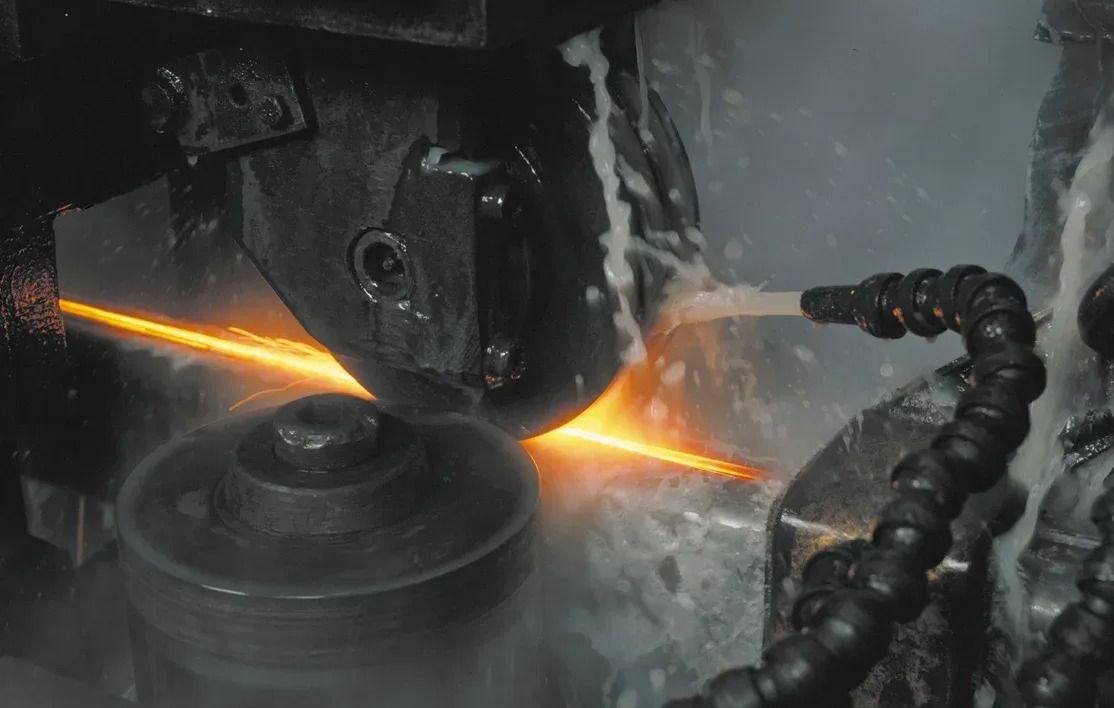 Automated induction longitudinal welding is a reliable, high-throughput process. The low power consumption and high efficiency of HLQ Induction welding systems reduce costs. Their controllability and repeatability minimize scrap. Our systems are also flexible—automatic load matching ensures full output power across a wide range of tube sizes. And their small footprint make them easy to integrate or retrofit into production lines.
Where is induction seam welding used?
Induction welding is used in the tube and pipe industry for the longitudinal welding of stainless steel (magnetic and non-magnetic), aluminum, low-carbon and high-strength low-alloy (HSLA) steels and many other conductive materials.
Automated induction longitudinal welding is a reliable, high-throughput process. The low power consumption and high efficiency of HLQ Induction welding systems reduce costs. Their controllability and repeatability minimize scrap. Our systems are also flexible—automatic load matching ensures full output power across a wide range of tube sizes. And their small footprint make them easy to integrate or retrofit into production lines.
Where is induction seam welding used?
Induction welding is used in the tube and pipe industry for the longitudinal welding of stainless steel (magnetic and non-magnetic), aluminum, low-carbon and high-strength low-alloy (HSLA) steels and many other conductive materials.
 High Frequency Induction Seam Welding
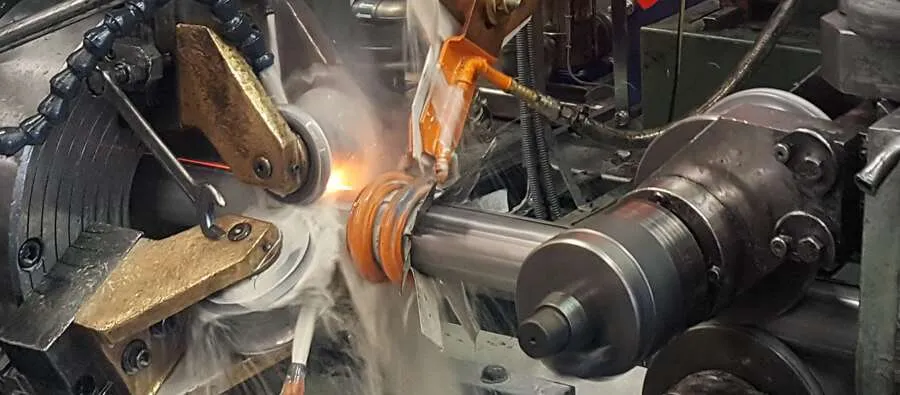
In the high frequency induction tube welding process, high frequency current is induced in the open seam tube by an induction coil located ahead of (upstream from) the weld point, as shown in Fig. 1-1. The tube edges are spaced apart when they go through the coil, forming an open vee whose apex is slightly ahead of the weld point. The coil does not contact the tube.
Fig 1-1
High Frequency Induction Seam Welding
In the high frequency induction tube welding process, high frequency current is induced in the open seam tube by an induction coil located ahead of (upstream from) the weld point, as shown in Fig. 1-1. The tube edges are spaced apart when they go through the coil, forming an open vee whose apex is slightly ahead of the weld point. The coil does not contact the tube.
Fig 1-1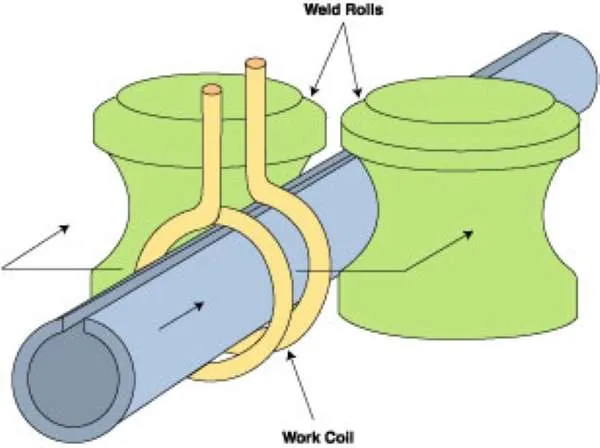 The coil acts as the primary of a high frequency transformer, and the open seam tube acts as a one-turn secondary. As in general induction heating applications, the induced current path in the work piece tends to conform to the shape of the induction coil. Most of the induced current completes its path around the formed strip by flowing along the edges and crowding around the apex of the vee-shaped opening in the strip.
The high frequency current density is highest in the edges near the apex and at the apex itself. Rapid heating takes place, causing the edges to be at welding temperature when they arrive at the apex. Pressure rolls force the heated edges together, completing the weld.
It is the high frequency of the welding current that is responsible for the concentrated heating along the vee edges. It has another advantage, namely that only a very small portion of the total current finds its’ way around the back of the formed strip. Unless the diameter of the tube is very small compared with the vee length, the current prefers the useful path along the edges of the tube forming the vee.
Product: Induction Seam Welder
The coil acts as the primary of a high frequency transformer, and the open seam tube acts as a one-turn secondary. As in general induction heating applications, the induced current path in the work piece tends to conform to the shape of the induction coil. Most of the induced current completes its path around the formed strip by flowing along the edges and crowding around the apex of the vee-shaped opening in the strip.
The high frequency current density is highest in the edges near the apex and at the apex itself. Rapid heating takes place, causing the edges to be at welding temperature when they arrive at the apex. Pressure rolls force the heated edges together, completing the weld.
It is the high frequency of the welding current that is responsible for the concentrated heating along the vee edges. It has another advantage, namely that only a very small portion of the total current finds its’ way around the back of the formed strip. Unless the diameter of the tube is very small compared with the vee length, the current prefers the useful path along the edges of the tube forming the vee.
Product: Induction Seam Welder
| All Solid State (MOSFET) High Frequency Induction Seam Welder For Tube and Pipe | ||||||
| Model | GPWP-60 | GPWP-100 | GPWP-150 | GPWP-200 | GPWP-250 | GPWP-300 |
| Input power | 60KW | 100KW | 150KW | 200KW | 250KW | 300KW |
| Input voltage | 3Phases,380/400/480V | |||||
| DC Voltage | 0-250V | |||||
| DC Current | 0-300A | 0-500A | 800A | 1000A | 1250A | 1500A |
| Frequency | 200-500KHz | |||||
| Output efficiency | 85%-95% | |||||
| Power factor | Full load>0.88 | |||||
| Cooling Water Pressure | >0.3MPa | |||||
| Cooling Water Flow | >60L/min | >83L/min | >114L/min | >114L/min | >160L/min | >160L/min |
| Inlet water temperature | <35°C | |||||
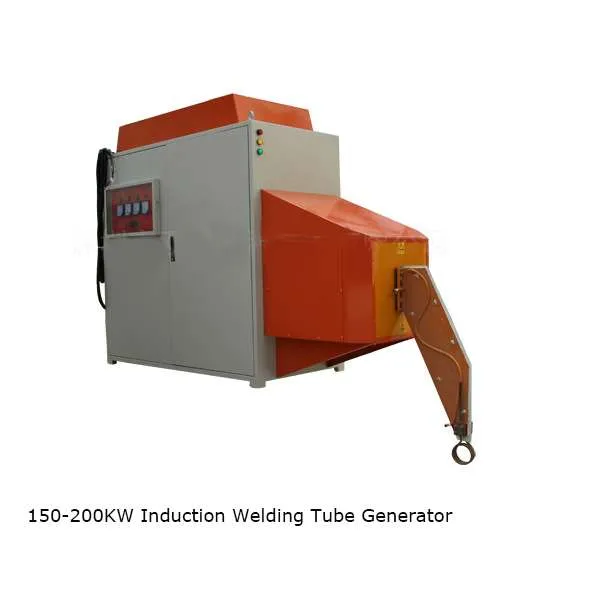 Technical Features:
True all-solid-state IGBT power adjustment and variable current control technology, using unique IGBT soft-switching high-frequency chopping and amorphous filtering for power regulation, high-speed and precise soft-switching IGBT inverter control, to achieve 100-800KHZ/3 -300KW product application.
Technical Features:
True all-solid-state IGBT power adjustment and variable current control technology, using unique IGBT soft-switching high-frequency chopping and amorphous filtering for power regulation, high-speed and precise soft-switching IGBT inverter control, to achieve 100-800KHZ/3 -300KW product application.
- Imported high-power resonant capacitors are used to obtain stable resonant frequency, effectively improve product quality, and realize the stability of the welded pipe process.
- Replace the traditional thyristor power adjustment technology with high-frequency chopping power adjustment technology to achieve microsecond level control, greatly realize the rapid adjustment and stability of the power output of the welding pipe process, the output ripple is extremely small, and the oscillation current is stable. The smoothness and straightness of the weld seam are guaranteed.
- Security. There is no high frequency and high voltage of 10,000 volts in the equipment, which can effectively avoid radiation, interference, discharge, ignition and other phenomena.
- It has a strong ability to resist network voltage fluctuations.
- It has a high power factor in the whole power range, which can effectively save energy.
- High efficiency and energy saving. The equipment adopts high-power soft switching technology from input to output, which minimizes power loss and obtains extremely high electrical efficiency, and has extremely high power factor in the full power range, effectively saving energy, which is different from traditional Compared with the tube type high frequency, it can save 30-40% of the energy saving effect.
- The equipment is miniaturized and integrated, which greatly saves the occupied space. The equipment does not need a step-down transformer, and does not need a power frequency large inductance for SCR adjustment. The small integrated structure brings convenience in installation, maintenance, transportation, and adjustment.
- The frequency range of 200-500KHZ realizes the welding of steel and stainless steel pipes.
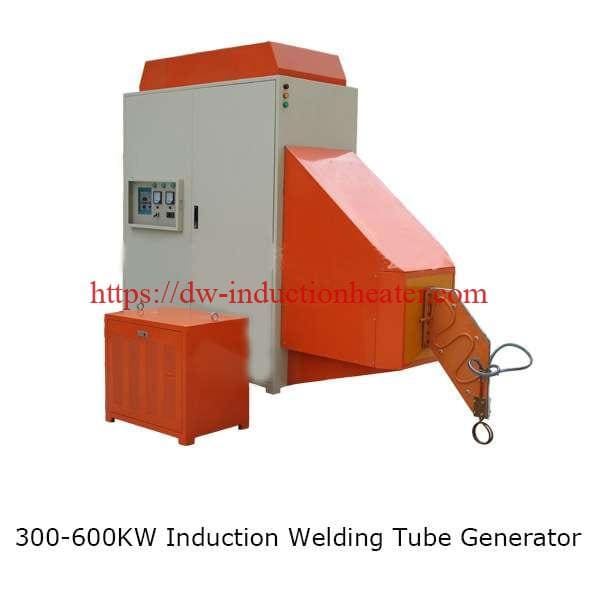 HLQ Induction has the most comprehensive range of solutions for the tube and pipe industry. HLQ Induction Seam Welder is a proven solution for welding stainless steel, aluminum, low-carbon steel and high-strength steel and is possibly the world's best induction welder.
More output: Continuous electronic load matching secures full power output across a wide range of tube sizes.
More uptime: Short-circuit-proof, safe and reliable operation.
Unrivalled efficiency: Diode rectifier with a constant power factor of 0.95 at all power levels, and an efficiency factor of 85-87%.
Eco and energy friendly: High efficiency saves energy and reduces cooling water consumption.
Easy to operate: An easy-to-use control panel with a minimum of manual settings makes the Induction Seam Welder extremely easy to operate.
HLQ Induction has the most comprehensive range of solutions for the tube and pipe industry. HLQ Induction Seam Welder is a proven solution for welding stainless steel, aluminum, low-carbon steel and high-strength steel and is possibly the world's best induction welder.
More output: Continuous electronic load matching secures full power output across a wide range of tube sizes.
More uptime: Short-circuit-proof, safe and reliable operation.
Unrivalled efficiency: Diode rectifier with a constant power factor of 0.95 at all power levels, and an efficiency factor of 85-87%.
Eco and energy friendly: High efficiency saves energy and reduces cooling water consumption.
Easy to operate: An easy-to-use control panel with a minimum of manual settings makes the Induction Seam Welder extremely easy to operate.
 Wide range of power sizes: From 40 kW up to 1000 kW. A frequency range of 200-500 kHz.Modern modular design: The small, compact footprint saves valuable floor-space and simplifies in-line integration. Up to 1000 kW available in a one-cabinet solution.
Complete system: Consisting of a diode rectifier, inverter modules, output section, busbar and operator control system.
Unmatched warranty: three-year warranty on HLQ Induction Seam Welder inverter modules and driver cards.
Full range of consumables: Coils, ferrite, impeders and tube scarfing equipment.
Wide range of power sizes: From 40 kW up to 1000 kW. A frequency range of 200-500 kHz.Modern modular design: The small, compact footprint saves valuable floor-space and simplifies in-line integration. Up to 1000 kW available in a one-cabinet solution.
Complete system: Consisting of a diode rectifier, inverter modules, output section, busbar and operator control system.
Unmatched warranty: three-year warranty on HLQ Induction Seam Welder inverter modules and driver cards.
Full range of consumables: Coils, ferrite, impeders and tube scarfing equipment.

2022年11月28日星期一
Brazing Thin Copper Tube With Induction
Brazing Thin Copper Tube With Induction
Objective: To braze a thin copper oval tube to a brass fitting at 1400 º F and to cap the other end of the copper tube with a brass plate.
Material: Brass fitting - 0.875 in2 and 2.5 in long (22mm2 x 64mm) Copper tube 0.01 in (0.254mm) wall Brass plate 0.10 in (2.54mm) thick and 0.5 in X 0.25 inch Braze alloy shim and white flux
Temperature: 1400 ºF (760 °C)
Frequency: 300 kHz
Equipment: DW-UHF-10KW induction power supply equipped with a remote heat station using two 1.32μF capacitors (total 0.66 μF) Two custom-designed induction heating coils. Process A split, f our-turn induction coil is used to deliver the heat energy into the brass fitting (Fig. 1). To prevent over heating of the edges of the brass fitting and the thin copper tube, a smaller coil diameter (Fig. 2) was added to deliver heat into the brass fitting. A braze shim preform is placed at the joint area, and is then covered with white flux. The height of the coil is adjusted to deliver proportional heat to the assembly. This setting raises the temperature of the thicker brass piece and the thin copper tube at the same rate enabling a uniform flow of the braze shim preform. The other end of the copper tube is brazed successfully using a 2-turn helical coil (Fig.3.)
Results/Benefits • Preservation of the copper's mechanical properties • Minimized heat migration along both ends of the tube • Reduced heat-up time (under 60 sec.)
high frequency induction seam welder
High Frequency Induction Seam Welder Tube and Pipe Solutions
What is induction welding?With induction welding, the heat is electromagnetically induced in the workpiece. The speed and accuracy of induction welding makes it ideal for edge welding of tubes and pipes. In this process, pipes pass an induction coil at high speed. As they do so, their edges are heated, then squeezed together to form a longitudinal weld seam. Induction welding is particularly suitable for high-volume production. Induction welders can also be fitted with contact heads, turning them into dual purpose welding systems.
What are the advantages of induction Seam welding?
Automated induction longitudinal welding is a reliable, high-throughput process. The low power consumption and high efficiency of HLQ Induction welding systems reduce costs. Their controllability and repeatability minimize scrap. Our systems are also flexible—automatic load matching ensures full output power across a wide range of tube sizes. And their small footprint make them easy to integrate or retrofit into production lines.
Where is induction seam welding used?
Induction welding is used in the tube and pipe industry for the longitudinal welding of stainless steel (magnetic and non-magnetic), aluminum, low-carbon and high-strength low-alloy (HSLA) steels and many other conductive materials.
High Frequency Induction Seam Welding
In the high frequency induction tube welding process, high frequency current is induced in the open seam tube by an induction coil located ahead of (upstream from) the weld point, as shown in Fig. 1-1. The tube edges are spaced apart when they go through the coil, forming an open vee whose apex is slightly ahead of the weld point. The coil does not contact the tube.
Fig 1-1
The coil acts as the primary of a high frequency transformer, and the open seam tube acts as a one-turn secondary. As in general induction heating applications, the induced current path in the work piece tends to conform to the shape of the induction coil. Most of the induced current completes its path around the formed strip by flowing along the edges and crowding around the apex of the vee-shaped opening in the strip.
The high frequency current density is highest in the edges near the apex and at the apex itself. Rapid heating takes place, causing the edges to be at welding temperature when they arrive at the apex. Pressure rolls force the heated edges together, completing the weld.
It is the high frequency of the welding current that is responsible for the concentrated heating along the vee edges. It has another advantage, namely that only a very small portion of the total current finds its’ way around the back of the formed strip. Unless the diameter of the tube is very small compared with the vee length, the current prefers the useful path along the edges of the tube forming the vee.
Product: Induction Seam Welder
| All Solid State (MOSFET) High Frequency Induction Seam Welder For Tube and Pipe | ||||||
| Model | GPWP-60 | GPWP-100 | GPWP-150 | GPWP-200 | GPWP-250 | GPWP-300 |
| Input power | 60KW | 100KW | 150KW | 200KW | 250KW | 300KW |
| Input voltage | 3Phases,380/400/480V | |||||
| DC Voltage | 0-250V | |||||
| DC Current | 0-300A | 0-500A | 800A | 1000A | 1250A | 1500A |
| Frequency | 200-500KHz | |||||
| Output efficiency | 85%-95% | |||||
| Power factor | Full load>0.88 | |||||
| Cooling Water Pressure | >0.3MPa | |||||
| Cooling Water Flow | >60L/min | >83L/min | >114L/min | >114L/min | >160L/min | >160L/min |
| Inlet water temperature | <35°C | |||||
Technical Features:
True all-solid-state IGBT power adjustment and variable current control technology, using unique IGBT soft-switching high-frequency chopping and amorphous filtering for power regulation, high-speed and precise soft-switching IGBT inverter control, to achieve 100-800KHZ/3 -300KW product application.
- Imported high-power resonant capacitors are used to obtain stable resonant frequency, effectively improve product quality, and realize the stability of the welded pipe process.
- Replace the traditional thyristor power adjustment technology with high-frequency chopping power adjustment technology to achieve microsecond level control, greatly realize the rapid adjustment and stability of the power output of the welding pipe process, the output ripple is extremely small, and the oscillation current is stable. The smoothness and straightness of the weld seam are guaranteed.
- Security. There is no high frequency and high voltage of 10,000 volts in the equipment, which can effectively avoid radiation, interference, discharge, ignition and other phenomena.
- It has a strong ability to resist network voltage fluctuations.
- It has a high power factor in the whole power range, which can effectively save energy.
- High efficiency and energy saving. The equipment adopts high-power soft switching technology from input to output, which minimizes power loss and obtains extremely high electrical efficiency, and has extremely high power factor in the full power range, effectively saving energy, which is different from traditional Compared with the tube type high frequency, it can save 30-40% of the energy saving effect.
- The equipment is miniaturized and integrated, which greatly saves the occupied space. The equipment does not need a step-down transformer, and does not need a power frequency large inductance for SCR adjustment. The small integrated structure brings convenience in installation, maintenance, transportation, and adjustment.
- The frequency range of 200-500KHZ realizes the welding of steel and stainless steel pipes.
HLQ Induction has the most comprehensive range of solutions for the tube and pipe industry. HLQ Induction Seam Welder is a proven solution for welding stainless steel, aluminum, low-carbon steel and high-strength steel and is possibly the world's best induction welder.
More output: Continuous electronic load matching secures full power output across a wide range of tube sizes.
More uptime: Short-circuit-proof, safe and reliable operation.
Unrivalled efficiency: Diode rectifier with a constant power factor of 0.95 at all power levels, and an efficiency factor of 85-87%.
Eco and energy friendly: High efficiency saves energy and reduces cooling water consumption.
Easy to operate: An easy-to-use control panel with a minimum of manual settings makes the Induction Seam Welder extremely easy to operate.
Wide range of power sizes: From 40 kW up to 1000 kW. A frequency range of 200-500 kHz.Modern modular design: The small, compact footprint saves valuable floor-space and simplifies in-line integration. Up to 1000 kW available in a one-cabinet solution.
Complete system: Consisting of a diode rectifier, inverter modules, output section, busbar and operator control system.
Unmatched warranty: three-year warranty on HLQ Induction Seam Welder inverter modules and driver cards.
Full range of consumables: Coils, ferrite, impeders and tube scarfing equipment.
https://dw-inductionheater.com/product/high-frequency-induction-seam-welder?feed_id=168020&_unique_id=63856b7ad5b07
Induction Soldering Circuit Board
Induction Soldering Circuit Board With IGBT heating system
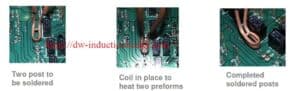
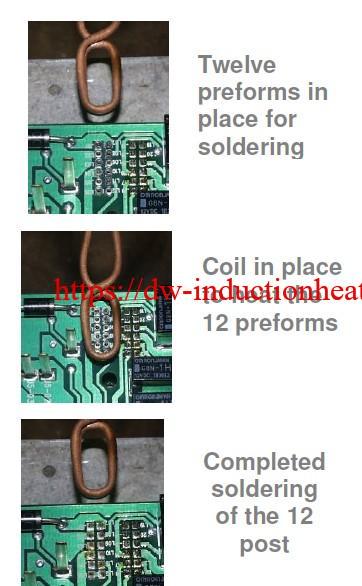
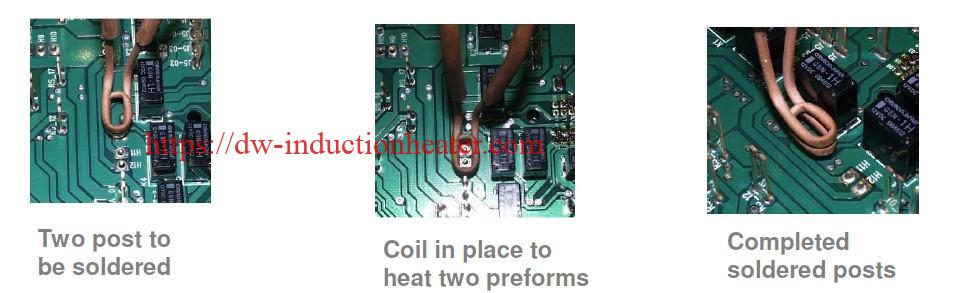
Objective To heat post, lead or lead-free solder preforms for various circuit board soldering applications.
Material Upper and lower circuit boards, small and large lead or lead free preforms.
Temperature < 700 ºF (371ºC) depending on the preform used
Frequency Three turn coil 364 kHz
Small two turn coil 400 kHz
Large two turn coil 350 kHz
Equipment • DW-UHF-4.5 kW induction heating system, equipped with a remote workhead containing two 0.66μF capacitors for a total of 1.32 μF
• An induction heating coil, designed and developed specifically for this application.
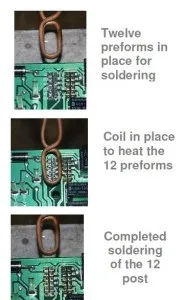
Process Three individual coils are used to heat the various locations on the circuit board depending upon if the location is a single application or a group application. The time varies from 1.8 to 7.5 seconds depending upon location. In production the heat stations and coils are moved into position over the post for automation purposes. Either lead or lead free solder preforms are used. The process time on the lead free solder is slightly longer.
Results/Benefits Induction heating provides:
• Hands-free heating that involves no operator skill for manufacturing, lends itself well to automation.
• Solder controlled by preforms, no excess left on board.
• Good solder flow without over heating the board and damaging adjacent circuits and components.
Induction forging and induction hot forming
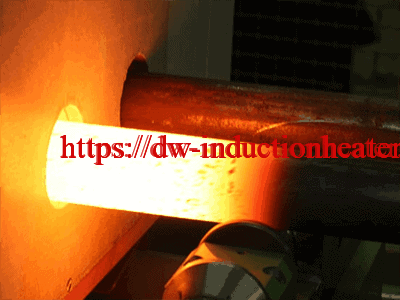 Induction forging and induction hot forming refer to the use of an induction heating machine to pre-heat metals prior to deformation using a press or hammer. Typically metals are heated to between 1,100 and 1,200 °C (2,010 and 2,190 °F) to increase their malleability and aid flow in the forging die.
Metal induction forging and induction hot forming are excellent induction heating applications. Industrial forging and hot forming processes involve bending or shaping a metal billet or bloom after it has been heated to a temperature at which its resistance to deformation is weak. Blocks of non-ferrous materials can also be used.
Induction heating machines or conventional furnaces are used for the initial heating process. Billets can be transported through the inductor via a pneumatic or hydraulic pusher; pinch roller drive; tractor drive; or walking beam. Non-contact pyrometers are used to measure the billet temperature.
Other machines such as mechanical impact presses, bending machines, and hydraulic extrusion presses are used to bend or shape the metal.
The approximate hot forming temperatures of the most commonly used industrial materials are:
• Steel 1200º C • Brass 750º C • Aluminium 550º C
Induction forging and induction hot forming refer to the use of an induction heating machine to pre-heat metals prior to deformation using a press or hammer. Typically metals are heated to between 1,100 and 1,200 °C (2,010 and 2,190 °F) to increase their malleability and aid flow in the forging die.
Metal induction forging and induction hot forming are excellent induction heating applications. Industrial forging and hot forming processes involve bending or shaping a metal billet or bloom after it has been heated to a temperature at which its resistance to deformation is weak. Blocks of non-ferrous materials can also be used.
Induction heating machines or conventional furnaces are used for the initial heating process. Billets can be transported through the inductor via a pneumatic or hydraulic pusher; pinch roller drive; tractor drive; or walking beam. Non-contact pyrometers are used to measure the billet temperature.
Other machines such as mechanical impact presses, bending machines, and hydraulic extrusion presses are used to bend or shape the metal.
The approximate hot forming temperatures of the most commonly used industrial materials are:
• Steel 1200º C • Brass 750º C • Aluminium 550º C
Total Forming Applications
Induction heating machines are commonly used to heat steel billets, bars, brass blocks, and titanium blocks to the proper temperature for forging and hot forming.Partial Forming Applications
Induction heating is also used to heat parts such as pipe ends, axle ends, automotive parts, and bar ends for partial forming and forging processes.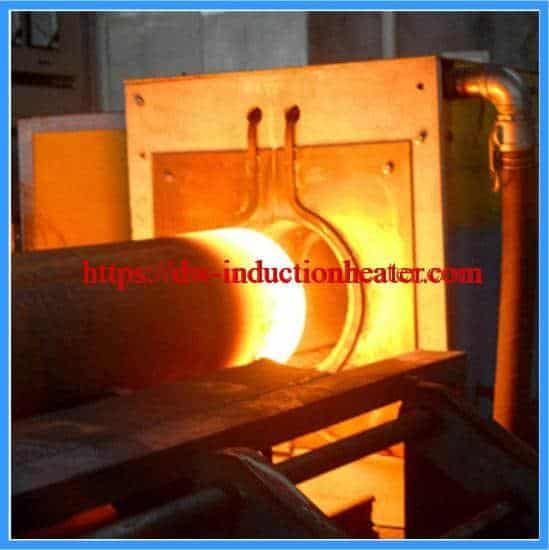
The Induction Heating Advantage
When compared to conventional furnaces, induction heating machines for forging offer significant process and quality advantages:- Much shorter heating times, minimizing scaling and oxidation
- Easy and accurate temperature temperature control. Parts at temperatures outside specifications can be detected and removed
- No time lost waiting for the furnace to ramp up to the required temperature
- Automated induction heating machines require minimal manual labor
- Heat can be directed to one specific point, which is highly important for parts with only one forming area.
- Greater thermal efficiency - heat is generated in the part itself and does not need to be heated in a large chamber.
- Better working conditions. The only heat present in the air is that of the parts themselves. The working conditions are much more pleasant than with a fuel furnace.
订阅:
博文 (Atom)
我的简介

- HLQ induction heating machine
- HLQ induction heating machine manufacturer provides the service of induction brazing,melting,hot forming,hardening surface,annealing,shrink fitting,PWHT,etc.