显示标签为“inductionheatingspring”的博文。显示所有博文

2024年2月17日星期六

Induction Spring Heating Application

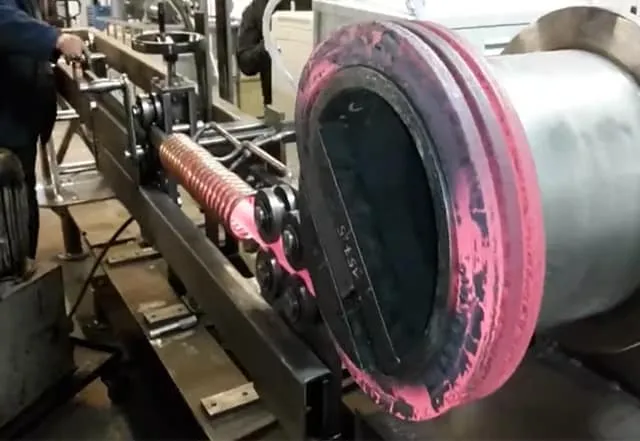
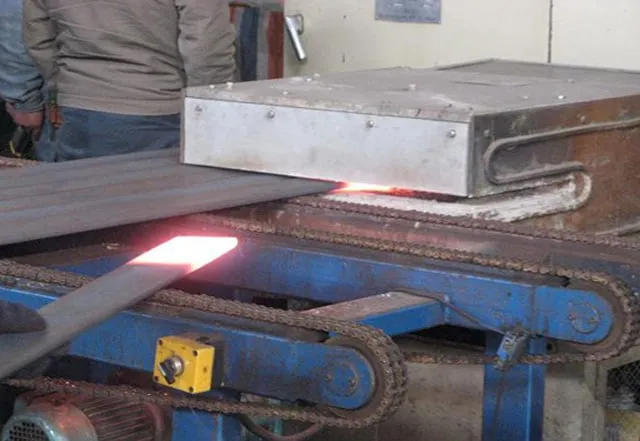
An apparatus for Induction hardening a spring having a helical or beehive shape. The apparatus has a rotation support system and an induction heating system. The rotation support system is designed to support the spring while the spring is heated by the induction heating system. The induction heating system has an induction coil system having a coil system. The coil system has a spaced region designed to receive the spring and to heat the spring while the spring is supported on the rotation support system. Coil springs or leaf springs are made by thermal deformation of steel profiles. Because of the characteristics of spring steel, there are certain requirements for heating temperature and time during the heating process. Except the preheating before rolling into spring coils or forging press into leaf springs, there are also other requests of different heat treatment, such as spring rod wire annealing, and steel panel induction surface hardening. Having the characteristics of rapid heating, fast shut down, accurate power output control, and varies frequency ranges, HLQ's induction heating power supply is very suitable for thermal deformation heating of spring steel, especially in the auto parts industry involving leaf springs or load-bearing spring manufacturing plants. Designed by the professionals at HLQ, our induction heating devices are all well-equipped with the advantages of energy-saving, fast start/stop, 24 hours duty cycle time, high power-point, high automation, high efficiency, easy maintenance, and long use life. Our induction heaters have been widely recognized by customers in the spring steel production industry.
The metal induction hardening process is a standard process used in spring fabrication. One common hardening process consists of a traditional atmospheric furnace. Such hardening processes are very slow. Springs can be formed from a variety of metals (e.g., stainless steel, carbon steel, alloy steel, etc.). When the metal of the spring is properly hardened and tempered, specific metallurgical parameters such as hardness and micro-structure can be attained.
When a spring is hardened by a traditional atmospheric furnace, the spring is first placed in an oven set at a certain temperature for a particular period of time. Thereafter, the spring is removed and quenched in oil or some other quenching liquid. After this initial hardening process, the spring hardness is generally higher than desired. As such, the spring is generally subjected to a tempering process until the spring obtains the desired physical properties. When the spring is properly processed, some of the crystalline structure of the steel is changed to tempered martensite with much of the carbides dissolved so as to provide the desired core structure of the spring and desired surface hardness of the spring.
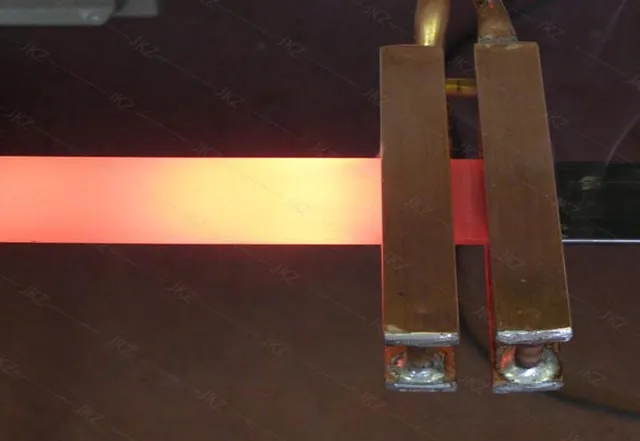
Another process that is used for hardening springs is induction heating. The induction heating process occurs by inducing an electromagnetic field in a conductive material of the spring. Eddy currents are generated within the conductive material whose resistance leads to Joule heating. Induction heating can be used to heat steel to its melting point if need be which is more than sufficient to austenitize the product.
The induction heating process can provide a faster heating cycle time than heating by traditional atmospheric furnaces, and the induction heating process can simplify the material handling of the springs, and can potentially enable automation of the material handling of the spring in the hardening process. Although induction heating has several advantages over traditional atmospheric furnaces, induction heating of springs has problems with evenly heating the spring throughout spring length, overheating the ends of the spring, and the maintaining of induction heating coil efficiency.
https://dw-inductionheater.com/induction-spring-heating-application.html?feed_id=234280&_unique_id=65d19f740dde5

2023年10月14日星期六

Induction Tempering Spring

Induction Tempering Spring with High Frequency Induction Heating Equipment Objective Temper a spring by heating it to 300°C (570°F) in 2 – 4 seconds Material Stainless steel AISI 302 springs- different length from 60 to 110 mm - outer diameters 8 mm.- wire diameter from 0.3 to 0.6 mm Temperature 300°C (570°F) Frequency 326 kHz Equipment • DW-UHF-10kW induction heating system • remote workhead, two 0.33μF capacitors (total 0.66μF) • multi-turn C-channel coil developed for this application Process Springs are mounted on non-metallic mandrels to facilitate loading and unloading and are placed inside the coil (picture). Power is applied for 2 – 4 seconds, completing the tempering process. The C-channel distributes the heating evenly and enables the convenient staging and removal of the springs. Results/Benefits Efficiency: Energy is applied directly to the springs only;surrounding air and fixturing are not heated. Precision: temperature and duration of process are controlled Convenience: method integrates into a continuous process   https://dw-inductionheater.com/induction-tempering-spring.html?feed_id=229026&_unique_id=652b3c22ebdfb

2023年9月26日星期二

Induction Tempering Spring

Induction Tempering Spring with High Frequency Induction Heating Equipment Objective Temper a spring by heating it to 300°C (570°F) in 2 – 4 seconds Material Stainless steel AISI 302 springs- different length from 60 to 110 mm - outer diameters 8 mm.- wire diameter from 0.3 to 0.6 mm Temperature 300°C (570°F) Frequency 326 kHz Equipment • DW-UHF-10kW induction heating system • remote workhead, two 0.33μF capacitors (total 0.66μF) • multi-turn C-channel coil developed for this application Process Springs are mounted on non-metallic mandrels to facilitate loading and unloading and are placed inside the coil (picture). Power is applied for 2 – 4 seconds, completing the tempering process. The C-channel distributes the heating evenly and enables the convenient staging and removal of the springs. Results/Benefits Efficiency: Energy is applied directly to the springs only;surrounding air and fixturing are not heated. Precision: temperature and duration of process are controlled Convenience: method integrates into a continuous process  

2023年9月15日星期五

Induction Tempering Spring

Induction Tempering Spring with High Frequency Induction Heating Equipment Objective Temper a spring by heating it to 300°C (570°F) in 2 – 4 seconds Material Stainless steel AISI 302 springs- different length from 60 to 110 mm - outer diameters 8 mm.- wire diameter from 0.3 to 0.6 mm Temperature 300°C (570°F) Frequency 326 kHz Equipment • DW-UHF-10kW induction heating system • remote workhead, two 0.33μF capacitors (total 0.66μF) • multi-turn C-channel coil developed for this application Process Springs are mounted on non-metallic mandrels to facilitate loading and unloading and are placed inside the coil (picture). Power is applied for 2 – 4 seconds, completing the tempering process. The C-channel distributes the heating evenly and enables the convenient staging and removal of the springs. Results/Benefits Efficiency: Energy is applied directly to the springs only;surrounding air and fixturing are not heated. Precision: temperature and duration of process are controlled Convenience: method integrates into a continuous process  

2023年6月26日星期一

Induction Spring Heating Application

An apparatus for Induction hardening a spring having a helical or beehive shape. The apparatus has a rotation support system and an induction heating system. The rotation support system is designed to support the spring while the spring is heated by the induction heating system. The induction heating system has an induction coil system having a coil system. The coil system has a spaced region designed to receive the spring and to heat the spring while the spring is supported on the rotation support system. Coil springs or leaf springs are made by thermal deformation of steel profiles. Because of the characteristics of spring steel, there are certain requirements for heating temperature and time during the heating process. Except the preheating before rolling into spring coils or forging press into leaf springs, there are also other requests of different heat treatment, such as spring rod wire annealing, and steel panel induction surface hardening. Having the characteristics of rapid heating, fast shut down, accurate power output control, and varies frequency ranges, HLQ's induction heating power supply is very suitable for thermal deformation heating of spring steel, especially in the auto parts industry involving leaf springs or load-bearing spring manufacturing plants. Designed by the professionals at HLQ, our induction heating devices are all well-equipped with the advantages of energy-saving, fast start/stop, 24 hours duty cycle time, high power-point, high automation, high efficiency, easy maintenance, and long use life. Our induction heaters have been widely recognized by customers in the spring steel production industry.
The metal induction hardening process is a standard process used in spring fabrication. One common hardening process consists of a traditional atmospheric furnace. Such hardening processes are very slow. Springs can be formed from a variety of metals (e.g., stainless steel, carbon steel, alloy steel, etc.). When the metal of the spring is properly hardened and tempered, specific metallurgical parameters such as hardness and micro-structure can be attained.
When a spring is hardened by a traditional atmospheric furnace, the spring is first placed in an oven set at a certain temperature for a particular period of time. Thereafter, the spring is removed and quenched in oil or some other quenching liquid. After this initial hardening process, the spring hardness is generally higher than desired. As such, the spring is generally subjected to a tempering process until the spring obtains the desired physical properties. When the spring is properly processed, some of the crystalline structure of the steel is changed to tempered martensite with much of the carbides dissolved so as to provide the desired core structure of the spring and desired surface hardness of the spring.
Another process that is used for hardening springs is induction heating. The induction heating process occurs by inducing an electromagnetic field in a conductive material of the spring. Eddy currents are generated within the conductive material whose resistance leads to Joule heating. Induction heating can be used to heat steel to its melting point if need be which is more than sufficient to austenitize the product.
The induction heating process can provide a faster heating cycle time than heating by traditional atmospheric furnaces, and the induction heating process can simplify the material handling of the springs, and can potentially enable automation of the material handling of the spring in the hardening process. Although induction heating has several advantages over traditional atmospheric furnaces, induction heating of springs has problems with evenly heating the spring throughout spring length, overheating the ends of the spring, and the maintaining of induction heating coil efficiency.
https://dw-inductionheater.com/induction-spring-heating-application.html?feed_id=216286&_unique_id=649a273292a50

2023年6月6日星期二

Induction Tempering Spring

Induction Tempering Spring with High Frequency Induction Heating Equipment Objective Temper a spring by heating it to 300°C (570°F) in 2 – 4 seconds Material Stainless steel AISI 302 springs- different length from 60 to 110 mm - outer diameters 8 mm.- wire diameter from 0.3 to 0.6 mm Temperature 300°C (570°F) Frequency 326 kHz Equipment • DW-UHF-10kW induction heating system • remote workhead, two 0.33μF capacitors (total 0.66μF) • multi-turn C-channel coil developed for this application Process Springs are mounted on non-metallic mandrels to facilitate loading and unloading and are placed inside the coil (picture). Power is applied for 2 – 4 seconds, completing the tempering process. The C-channel distributes the heating evenly and enables the convenient staging and removal of the springs. Results/Benefits Efficiency: Energy is applied directly to the springs only;surrounding air and fixturing are not heated. Precision: temperature and duration of process are controlled Convenience: method integrates into a continuous process  

2023年4月24日星期一

Induction Tempering Spring

Induction Tempering Spring with High Frequency Induction Heating Equipment Objective Temper a spring by heating it to 300°C (570°F) in 2 – 4 seconds Material Stainless steel AISI 302 springs- different length from 60 to 110 mm - outer diameters 8 mm.- wire diameter from 0.3 to 0.6 mm Temperature 300°C (570°F) Frequency 326 kHz Equipment • DW-UHF-10kW induction heating system • remote workhead, two 0.33μF capacitors (total 0.66μF) • multi-turn C-channel coil developed for this application Process Springs are mounted on non-metallic mandrels to facilitate loading and unloading and are placed inside the coil (picture). Power is applied for 2 – 4 seconds, completing the tempering process. The C-channel distributes the heating evenly and enables the convenient staging and removal of the springs. Results/Benefits Efficiency: Energy is applied directly to the springs only;surrounding air and fixturing are not heated. Precision: temperature and duration of process are controlled Convenience: method integrates into a continuous process  

2023年4月7日星期五

Induction Tempering Spring

Induction Tempering Spring with High Frequency Induction Heating Equipment Objective Temper a spring by heating it to 300°C (570°F) in 2 – 4 seconds Material Stainless steel AISI 302 springs- different length from 60 to 110 mm - outer diameters 8 mm.- wire diameter from 0.3 to 0.6 mm Temperature 300°C (570°F) Frequency 326 kHz Equipment • DW-UHF-10kW induction heating system • remote workhead, two 0.33μF capacitors (total 0.66μF) • multi-turn C-channel coil developed for this application Process Springs are mounted on non-metallic mandrels to facilitate loading and unloading and are placed inside the coil (picture). Power is applied for 2 – 4 seconds, completing the tempering process. The C-channel distributes the heating evenly and enables the convenient staging and removal of the springs. Results/Benefits Efficiency: Energy is applied directly to the springs only;surrounding air and fixturing are not heated. Precision: temperature and duration of process are controlled Convenience: method integrates into a continuous process  

2023年3月27日星期一

Induction Tempering Spring

Induction Tempering Spring with High Frequency Induction Heating Equipment Objective Temper a spring by heating it to 300°C (570°F) in 2 – 4 seconds Material Stainless steel AISI 302 springs- different length from 60 to 110 mm - outer diameters 8 mm.- wire diameter from 0.3 to 0.6 mm Temperature 300°C (570°F) Frequency 326 kHz Equipment • DW-UHF-10kW induction heating system • remote workhead, two 0.33μF capacitors (total 0.66μF) • multi-turn C-channel coil developed for this application Process Springs are mounted on non-metallic mandrels to facilitate loading and unloading and are placed inside the coil (picture). Power is applied for 2 – 4 seconds, completing the tempering process. The C-channel distributes the heating evenly and enables the convenient staging and removal of the springs. Results/Benefits Efficiency: Energy is applied directly to the springs only;surrounding air and fixturing are not heated. Precision: temperature and duration of process are controlled Convenience: method integrates into a continuous process  

2023年3月7日星期二

Induction Tempering Spring

Induction Tempering Spring with High Frequency Induction Heating Equipment Objective Temper a spring by heating it to 300°C (570°F) in 2 – 4 seconds Material Stainless steel AISI 302 springs- different length from 60 to 110 mm - outer diameters 8 mm.- wire diameter from 0.3 to 0.6 mm Temperature 300°C (570°F) Frequency 326 kHz Equipment • DW-UHF-10kW induction heating system • remote workhead, two 0.33μF capacitors (total 0.66μF) • multi-turn C-channel coil developed for this application Process Springs are mounted on non-metallic mandrels to facilitate loading and unloading and are placed inside the coil (picture). Power is applied for 2 – 4 seconds, completing the tempering process. The C-channel distributes the heating evenly and enables the convenient staging and removal of the springs. Results/Benefits Efficiency: Energy is applied directly to the springs only;surrounding air and fixturing are not heated. Precision: temperature and duration of process are controlled Convenience: method integrates into a continuous process  

2022年10月3日星期一

Induction Tempering Spring

Induction Tempering Spring with High Frequency Induction Heating Equipment Objective Temper a spring by heating it to 300°C (570°F) in 2 – 4 seconds Material Stainless steel AISI 302 springs- different length from 60 to 110 mm - outer diameters 8 mm.- wire diameter from 0.3 to 0.6 mm Temperature 300°C (570°F) Frequency 326 kHz Equipment • DW-UHF-10kW induction heating system • remote workhead, two 0.33μF capacitors (total 0.66μF) • multi-turn C-channel coil developed for this application Process Springs are mounted on non-metallic mandrels to facilitate loading and unloading and are placed inside the coil (picture). Power is applied for 2 – 4 seconds, completing the tempering process. The C-channel distributes the heating evenly and enables the convenient staging and removal of the springs. Results/Benefits Efficiency: Energy is applied directly to the springs only;surrounding air and fixturing are not heated. Precision: temperature and duration of process are controlled Convenience: method integrates into a continuous process  

2022年9月12日星期一

Induction Spring Heating Application

An apparatus for Induction hardening a spring having a helical or beehive shape. The apparatus has a rotation support system and an induction heating system. The rotation support system is designed to support the spring while the spring is heated by the induction heating system. The induction heating system has an induction coil system having a coil system. The coil system has a spaced region designed to receive the spring and to heat the spring while the spring is supported on the rotation support system. Coil springs or leaf springs are made by thermal deformation of steel profiles. Because of the characteristics of spring steel, there are certain requirements for heating temperature and time during the heating process. Except the preheating before rolling into spring coils or forging press into leaf springs, there are also other requests of different heat treatment, such as spring rod wire annealing, and steel panel induction surface hardening. Having the characteristics of rapid heating, fast shut down, accurate power output control, and varies frequency ranges, HLQ's induction heating power supply is very suitable for thermal deformation heating of spring steel, especially in the auto parts industry involving leaf springs or load-bearing spring manufacturing plants. Designed by the professionals at HLQ, our induction heating devices are all well-equipped with the advantages of energy-saving, fast start/stop, 24 hours duty cycle time, high power-point, high automation, high efficiency, easy maintenance, and long use life. Our induction heaters have been widely recognized by customers in the spring steel production industry.
The metal induction hardening process is a standard process used in spring fabrication. One common hardening process consists of a traditional atmospheric furnace. Such hardening processes are very slow. Springs can be formed from a variety of metals (e.g., stainless steel, carbon steel, alloy steel, etc.). When the metal of the spring is properly hardened and tempered, specific metallurgical parameters such as hardness and micro-structure can be attained.
When a spring is hardened by a traditional atmospheric furnace, the spring is first placed in an oven set at a certain temperature for a particular period of time. Thereafter, the spring is removed and quenched in oil or some other quenching liquid. After this initial hardening process, the spring hardness is generally higher than desired. As such, the spring is generally subjected to a tempering process until the spring obtains the desired physical properties. When the spring is properly processed, some of the crystalline structure of the steel is changed to tempered martensite with much of the carbides dissolved so as to provide the desired core structure of the spring and desired surface hardness of the spring.
Another process that is used for hardening springs is induction heating. The induction heating process occurs by inducing an electromagnetic field in a conductive material of the spring. Eddy currents are generated within the conductive material whose resistance leads to Joule heating. Induction heating can be used to heat steel to its melting point if need be which is more than sufficient to austenitize the product.
The induction heating process can provide a faster heating cycle time than heating by traditional atmospheric furnaces, and the induction heating process can simplify the material handling of the springs, and can potentially enable automation of the material handling of the spring in the hardening process. Although induction heating has several advantages over traditional atmospheric furnaces, induction heating of springs has problems with evenly heating the spring throughout spring length, overheating the ends of the spring, and the maintaining of induction heating coil efficiency.

2022年8月11日星期四

Induction Tempering Spring

Induction Tempering Spring with High Frequency Induction Heating Equipment Objective Temper a spring by heating it to 300°C (570°F) in 2 – 4 seconds Material Stainless steel AISI 302 springs- different length from 60 to 110 mm - outer diameters 8 mm.- wire diameter from 0.3 to 0.6 mm Temperature 300°C (570°F) Frequency 326 kHz Equipment • DW-UHF-10kW induction heating system • remote workhead, two 0.33μF capacitors (total 0.66μF) • multi-turn C-channel coil developed for this application Process Springs are mounted on non-metallic mandrels to facilitate loading and unloading and are placed inside the coil (picture). Power is applied for 2 – 4 seconds, completing the tempering process. The C-channel distributes the heating evenly and enables the convenient staging and removal of the springs. Results/Benefits Efficiency: Energy is applied directly to the springs only;surrounding air and fixturing are not heated. Precision: temperature and duration of process are controlled Convenience: method integrates into a continuous process  

2022年7月6日星期三

Induction Spring Heating Application

An apparatus for Induction hardening a spring having a helical or beehive shape. The apparatus has a rotation support system and an induction heating system. The rotation support system is designed to support the spring while the spring is heated by the induction heating system. The induction heating system has an induction coil system having a coil system. The coil system has a spaced region designed to receive the spring and to heat the spring while the spring is supported on the rotation support system. Coil springs or leaf springs are made by thermal deformation of steel profiles. Because of the characteristics of spring steel, there are certain requirements for heating temperature and time during the heating process. Except the preheating before rolling into spring coils or forging press into leaf springs, there are also other requests of different heat treatment, such as spring rod wire annealing, and steel panel induction surface hardening. Having the characteristics of rapid heating, fast shut down, accurate power output control, and varies frequency ranges, HLQ's induction heating power supply is very suitable for thermal deformation heating of spring steel, especially in the auto parts industry involving leaf springs or load-bearing spring manufacturing plants. Designed by the professionals at HLQ, our induction heating devices are all well-equipped with the advantages of energy-saving, fast start/stop, 24 hours duty cycle time, high power-point, high automation, high efficiency, easy maintenance, and long use life. Our induction heaters have been widely recognized by customers in the spring steel production industry.
The metal induction hardening process is a standard process used in spring fabrication. One common hardening process consists of a traditional atmospheric furnace. Such hardening processes are very slow. Springs can be formed from a variety of metals (e.g., stainless steel, carbon steel, alloy steel, etc.). When the metal of the spring is properly hardened and tempered, specific metallurgical parameters such as hardness and micro-structure can be attained.
When a spring is hardened by a traditional atmospheric furnace, the spring is first placed in an oven set at a certain temperature for a particular period of time. Thereafter, the spring is removed and quenched in oil or some other quenching liquid. After this initial hardening process, the spring hardness is generally higher than desired. As such, the spring is generally subjected to a tempering process until the spring obtains the desired physical properties. When the spring is properly processed, some of the crystalline structure of the steel is changed to tempered martensite with much of the carbides dissolved so as to provide the desired core structure of the spring and desired surface hardness of the spring.
Another process that is used for hardening springs is induction heating. The induction heating process occurs by inducing an electromagnetic field in a conductive material of the spring. Eddy currents are generated within the conductive material whose resistance leads to Joule heating. Induction heating can be used to heat steel to its melting point if need be which is more than sufficient to austenitize the product.
The induction heating process can provide a faster heating cycle time than heating by traditional atmospheric furnaces, and the induction heating process can simplify the material handling of the springs, and can potentially enable automation of the material handling of the spring in the hardening process. Although induction heating has several advantages over traditional atmospheric furnaces, induction heating of springs has problems with evenly heating the spring throughout spring length, overheating the ends of the spring, and the maintaining of induction heating coil efficiency.

2022年6月9日星期四

Induction Spring Heating Application

An apparatus for Induction hardening a spring having a helical or beehive shape. The apparatus has a rotation support system and an induction heating system. The rotation support system is designed to support the spring while the spring is heated by the induction heating system. The induction heating system has an induction coil system having a coil system. The coil system has a spaced region designed to receive the spring and to heat the spring while the spring is supported on the rotation support system. Coil springs or leaf springs are made by thermal deformation of steel profiles. Because of the characteristics of spring steel, there are certain requirements for heating temperature and time during the heating process. Except the preheating before rolling into spring coils or forging press into leaf springs, there are also other requests of different heat treatment, such as spring rod wire annealing, and steel panel induction surface hardening. Having the characteristics of rapid heating, fast shut down, accurate power output control, and varies frequency ranges, HLQ's induction heating power supply is very suitable for thermal deformation heating of spring steel, especially in the auto parts industry involving leaf springs or load-bearing spring manufacturing plants. Designed by the professionals at HLQ, our induction heating devices are all well-equipped with the advantages of energy-saving, fast start/stop, 24 hours duty cycle time, high power-point, high automation, high efficiency, easy maintenance, and long use life. Our induction heaters have been widely recognized by customers in the spring steel production industry.
The metal induction hardening process is a standard process used in spring fabrication. One common hardening process consists of a traditional atmospheric furnace. Such hardening processes are very slow. Springs can be formed from a variety of metals (e.g., stainless steel, carbon steel, alloy steel, etc.). When the metal of the spring is properly hardened and tempered, specific metallurgical parameters such as hardness and micro-structure can be attained.
When a spring is hardened by a traditional atmospheric furnace, the spring is first placed in an oven set at a certain temperature for a particular period of time. Thereafter, the spring is removed and quenched in oil or some other quenching liquid. After this initial hardening process, the spring hardness is generally higher than desired. As such, the spring is generally subjected to a tempering process until the spring obtains the desired physical properties. When the spring is properly processed, some of the crystalline structure of the steel is changed to tempered martensite with much of the carbides dissolved so as to provide the desired core structure of the spring and desired surface hardness of the spring.
Another process that is used for hardening springs is induction heating. The induction heating process occurs by inducing an electromagnetic field in a conductive material of the spring. Eddy currents are generated within the conductive material whose resistance leads to Joule heating. Induction heating can be used to heat steel to its melting point if need be which is more than sufficient to austenitize the product.
The induction heating process can provide a faster heating cycle time than heating by traditional atmospheric furnaces, and the induction heating process can simplify the material handling of the springs, and can potentially enable automation of the material handling of the spring in the hardening process. Although induction heating has several advantages over traditional atmospheric furnaces, induction heating of springs has problems with evenly heating the spring throughout spring length, overheating the ends of the spring, and the maintaining of induction heating coil efficiency.

2022年4月7日星期四

Induction Tempering Spring

Induction Tempering Spring with High Frequency Induction Heating Equipment Objective Temper a spring by heating it to 300°C (570°F) in 2 – 4 seconds Material Stainless steel AISI 302 springs- different length from 60 to 110 mm - outer diameters 8 mm.- wire diameter from 0.3 to 0.6 mm Temperature 300°C (570°F) Frequency 326 kHz Equipment • DW-UHF-10kW induction heating system • remote workhead, two 0.33μF capacitors (total 0.66μF) • multi-turn C-channel coil developed for this application Process Springs are mounted on non-metallic mandrels to facilitate loading and unloading and are placed inside the coil (picture). Power is applied for 2 – 4 seconds, completing the tempering process. The C-channel distributes the heating evenly and enables the convenient staging and removal of the springs. Results/Benefits Efficiency: Energy is applied directly to the springs only;surrounding air and fixturing are not heated. Precision: temperature and duration of process are controlled Convenience: method integrates into a continuous process  

2022年3月11日星期五

Induction Tempering Spring

Induction Tempering Spring with High Frequency Induction Heating Equipment Objective Temper a spring by heating it to 300°C (570°F) in 2 – 4 seconds Material Stainless steel AISI 302 springs- different length from 60 to 110 mm - outer diameters 8 mm.- wire diameter from 0.3 to 0.6 mm Temperature 300°C (570°F) Frequency 326 kHz Equipment • DW-UHF-10kW induction heating system • remote workhead, two 0.33μF capacitors (total 0.66μF) • multi-turn C-channel coil developed for this application Process Springs are mounted on non-metallic mandrels to facilitate loading and unloading and are placed inside the coil (picture). Power is applied for 2 – 4 seconds, completing the tempering process. The C-channel distributes the heating evenly and enables the convenient staging and removal of the springs. Results/Benefits Efficiency: Energy is applied directly to the springs only;surrounding air and fixturing are not heated. Precision: temperature and duration of process are controlled Convenience: method integrates into a continuous process  

2022年1月30日星期日

Induction Spring Heating Application

An apparatus for Induction hardening a spring having a helical or beehive shape. The apparatus has a rotation support system and an induction heating system. The rotation support system is designed to support the spring while the spring is heated by the induction heating system. The induction heating system has an induction coil system having a coil system. The coil system has a spaced region designed to receive the spring and to heat the spring while the spring is supported on the rotation support system. Coil springs or leaf springs are made by thermal deformation of steel profiles. Because of the characteristics of spring steel, there are certain requirements for heating temperature and time during the heating process. Except the preheating before rolling into spring coils or forging press into leaf springs, there are also other requests of different heat treatment, such as spring rod wire annealing, and steel panel induction surface hardening. Having the characteristics of rapid heating, fast shut down, accurate power output control, and varies frequency ranges, HLQ's induction heating power supply is very suitable for thermal deformation heating of spring steel, especially in the auto parts industry involving leaf springs or load-bearing spring manufacturing plants. Designed by the professionals at HLQ, our induction heating devices are all well-equipped with the advantages of energy-saving, fast start/stop, 24 hours duty cycle time, high power-point, high automation, high efficiency, easy maintenance, and long use life. Our induction heaters have been widely recognized by customers in the spring steel production industry.
The metal induction hardening process is a standard process used in spring fabrication. One common hardening process consists of a traditional atmospheric furnace. Such hardening processes are very slow. Springs can be formed from a variety of metals (e.g., stainless steel, carbon steel, alloy steel, etc.). When the metal of the spring is properly hardened and tempered, specific metallurgical parameters such as hardness and micro-structure can be attained.
When a spring is hardened by a traditional atmospheric furnace, the spring is first placed in an oven set at a certain temperature for a particular period of time. Thereafter, the spring is removed and quenched in oil or some other quenching liquid. After this initial hardening process, the spring hardness is generally higher than desired. As such, the spring is generally subjected to a tempering process until the spring obtains the desired physical properties. When the spring is properly processed, some of the crystalline structure of the steel is changed to tempered martensite with much of the carbides dissolved so as to provide the desired core structure of the spring and desired surface hardness of the spring.
Another process that is used for hardening springs is induction heating. The induction heating process occurs by inducing an electromagnetic field in a conductive material of the spring. Eddy currents are generated within the conductive material whose resistance leads to Joule heating. Induction heating can be used to heat steel to its melting point if need be which is more than sufficient to austenitize the product.
The induction heating process can provide a faster heating cycle time than heating by traditional atmospheric furnaces, and the induction heating process can simplify the material handling of the springs, and can potentially enable automation of the material handling of the spring in the hardening process. Although induction heating has several advantages over traditional atmospheric furnaces, induction heating of springs has problems with evenly heating the spring throughout spring length, overheating the ends of the spring, and the maintaining of induction heating coil efficiency.

2021年12月13日星期一

Induction Tempering Spring

Induction Tempering Spring with High Frequency Induction Heating Equipment Objective Temper a spring by heating it to 300°C (570°F) in 2 – 4 seconds Material Stainless steel AISI 302 springs- different length from 60 to 110 mm - outer diameters 8 mm.- wire diameter from 0.3 to 0.6 mm Temperature 300°C (570°F) Frequency 326 kHz Equipment • DW-UHF-10kW induction heating system • remote workhead, two 0.33μF capacitors (total 0.66μF) • multi-turn C-channel coil developed for this application Process Springs are mounted on non-metallic mandrels to facilitate loading and unloading and are placed inside the coil (picture). Power is applied for 2 – 4 seconds, completing the tempering process. The C-channel distributes the heating evenly and enables the convenient staging and removal of the springs. Results/Benefits Efficiency: Energy is applied directly to the springs only;surrounding air and fixturing are not heated. Precision: temperature and duration of process are controlled Convenience: method integrates into a continuous process  

2021年10月31日星期日

Induction Spring Heating Application

An apparatus for Induction hardening a spring having a helical or beehive shape. The apparatus has a rotation support system and an induction heating system. The rotation support system is designed to support the spring while the spring is heated by the induction heating system. The induction heating system has an induction coil system having a coil system. The coil system has a spaced region designed to receive the spring and to heat the spring while the spring is supported on the rotation support system. Coil springs or leaf springs are made by thermal deformation of steel profiles. Because of the characteristics of spring steel, there are certain requirements for heating temperature and time during the heating process. Except the preheating before rolling into spring coils or forging press into leaf springs, there are also other requests of different heat treatment, such as spring rod wire annealing, and steel panel induction surface hardening. Having the characteristics of rapid heating, fast shut down, accurate power output control, and varies frequency ranges, HLQ's induction heating power supply is very suitable for thermal deformation heating of spring steel, especially in the auto parts industry involving leaf springs or load-bearing spring manufacturing plants. Designed by the professionals at HLQ, our induction heating devices are all well-equipped with the advantages of energy-saving, fast start/stop, 24 hours duty cycle time, high power-point, high automation, high efficiency, easy maintenance, and long use life. Our induction heaters have been widely recognized by customers in the spring steel production industry.
The metal induction hardening process is a standard process used in spring fabrication. One common hardening process consists of a traditional atmospheric furnace. Such hardening processes are very slow. Springs can be formed from a variety of metals (e.g., stainless steel, carbon steel, alloy steel, etc.). When the metal of the spring is properly hardened and tempered, specific metallurgical parameters such as hardness and micro-structure can be attained.
When a spring is hardened by a traditional atmospheric furnace, the spring is first placed in an oven set at a certain temperature for a particular period of time. Thereafter, the spring is removed and quenched in oil or some other quenching liquid. After this initial hardening process, the spring hardness is generally higher than desired. As such, the spring is generally subjected to a tempering process until the spring obtains the desired physical properties. When the spring is properly processed, some of the crystalline structure of the steel is changed to tempered martensite with much of the carbides dissolved so as to provide the desired core structure of the spring and desired surface hardness of the spring.
Another process that is used for hardening springs is induction heating. The induction heating process occurs by inducing an electromagnetic field in a conductive material of the spring. Eddy currents are generated within the conductive material whose resistance leads to Joule heating. Induction heating can be used to heat steel to its melting point if need be which is more than sufficient to austenitize the product.
The induction heating process can provide a faster heating cycle time than heating by traditional atmospheric furnaces, and the induction heating process can simplify the material handling of the springs, and can potentially enable automation of the material handling of the spring in the hardening process. Although induction heating has several advantages over traditional atmospheric furnaces, induction heating of springs has problems with evenly heating the spring throughout spring length, overheating the ends of the spring, and the maintaining of induction heating coil efficiency.

关注者

我的简介

我的照片
HLQ induction heating machine manufacturer provides the service of induction brazing,melting,hot forming,hardening surface,annealing,shrink fitting,PWHT,etc.