显示标签为“aluminumbrazing”的博文。显示所有博文

2024年3月20日星期三

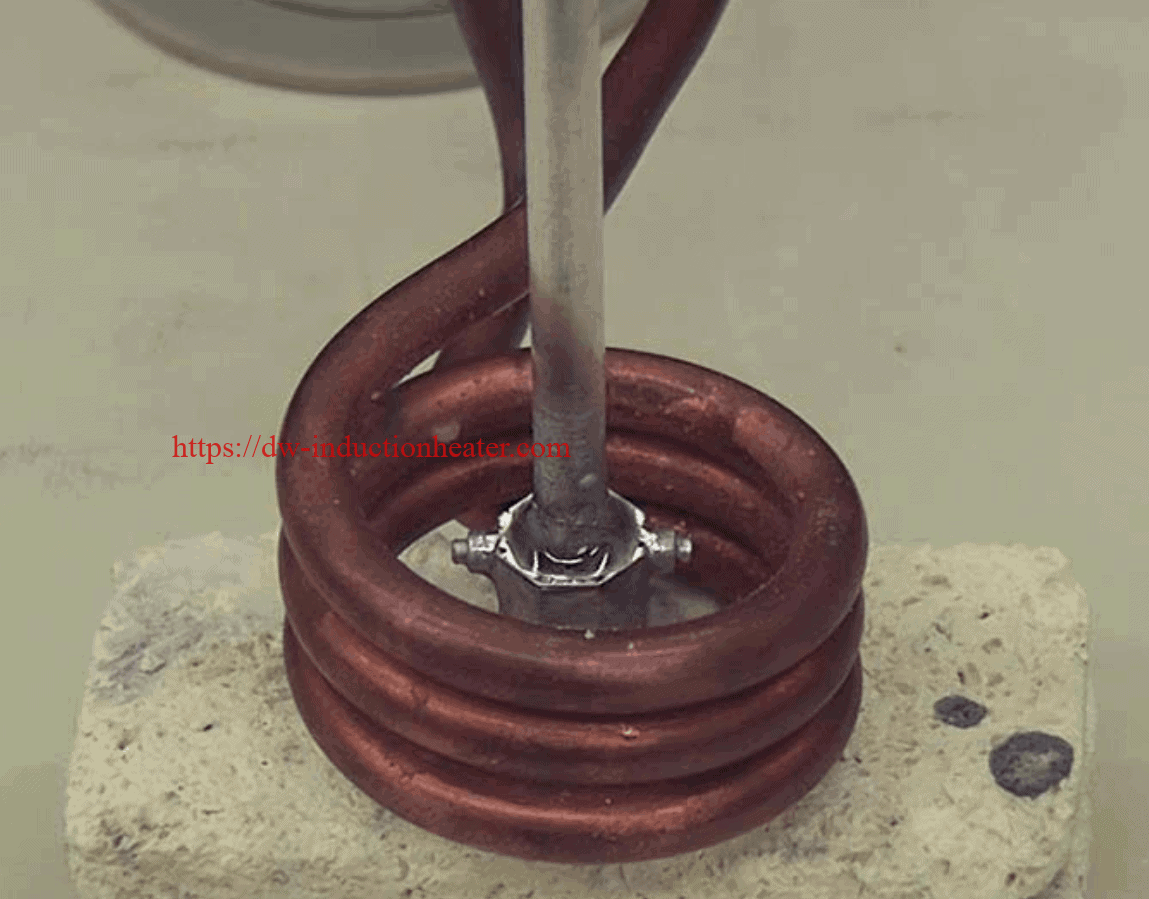
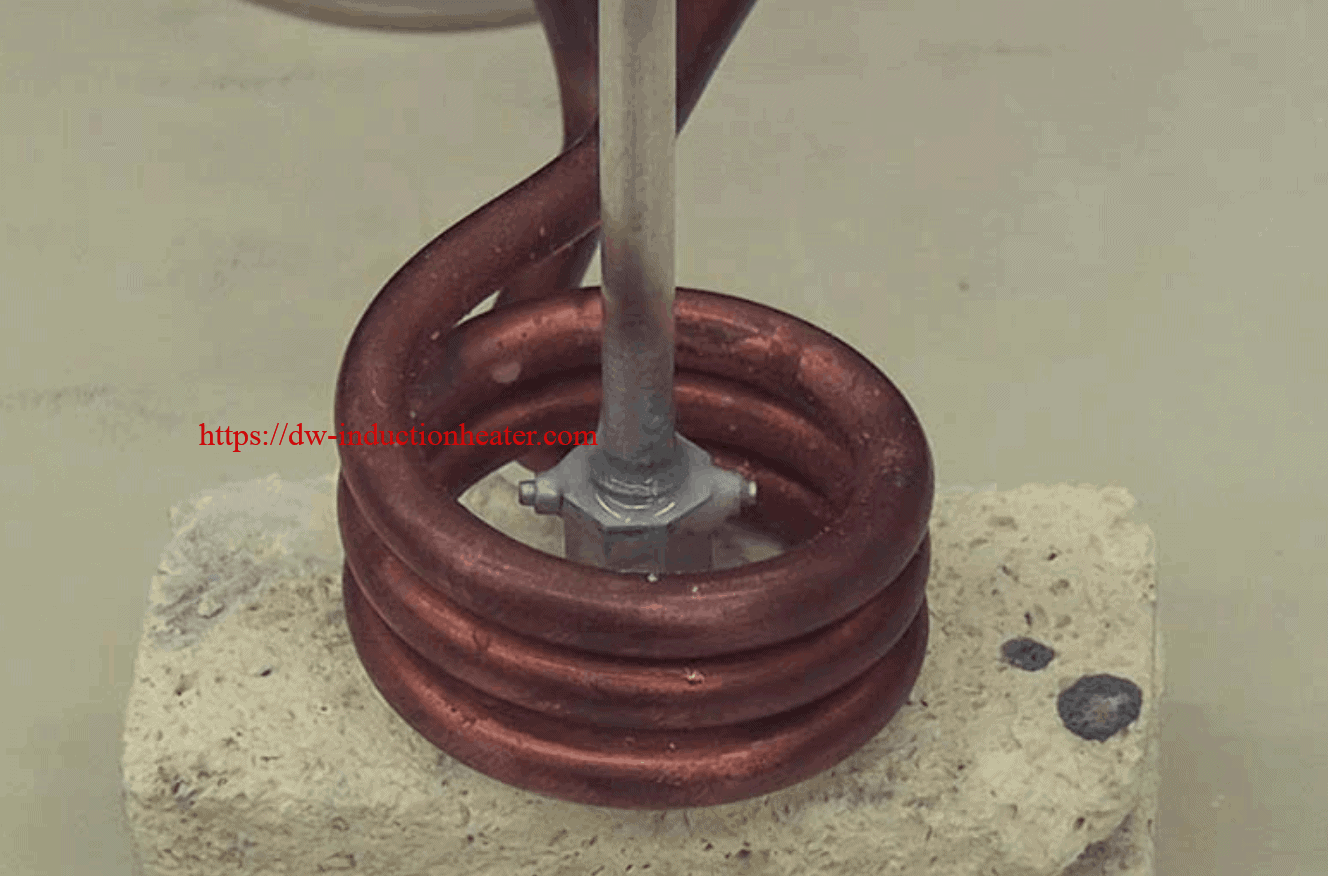
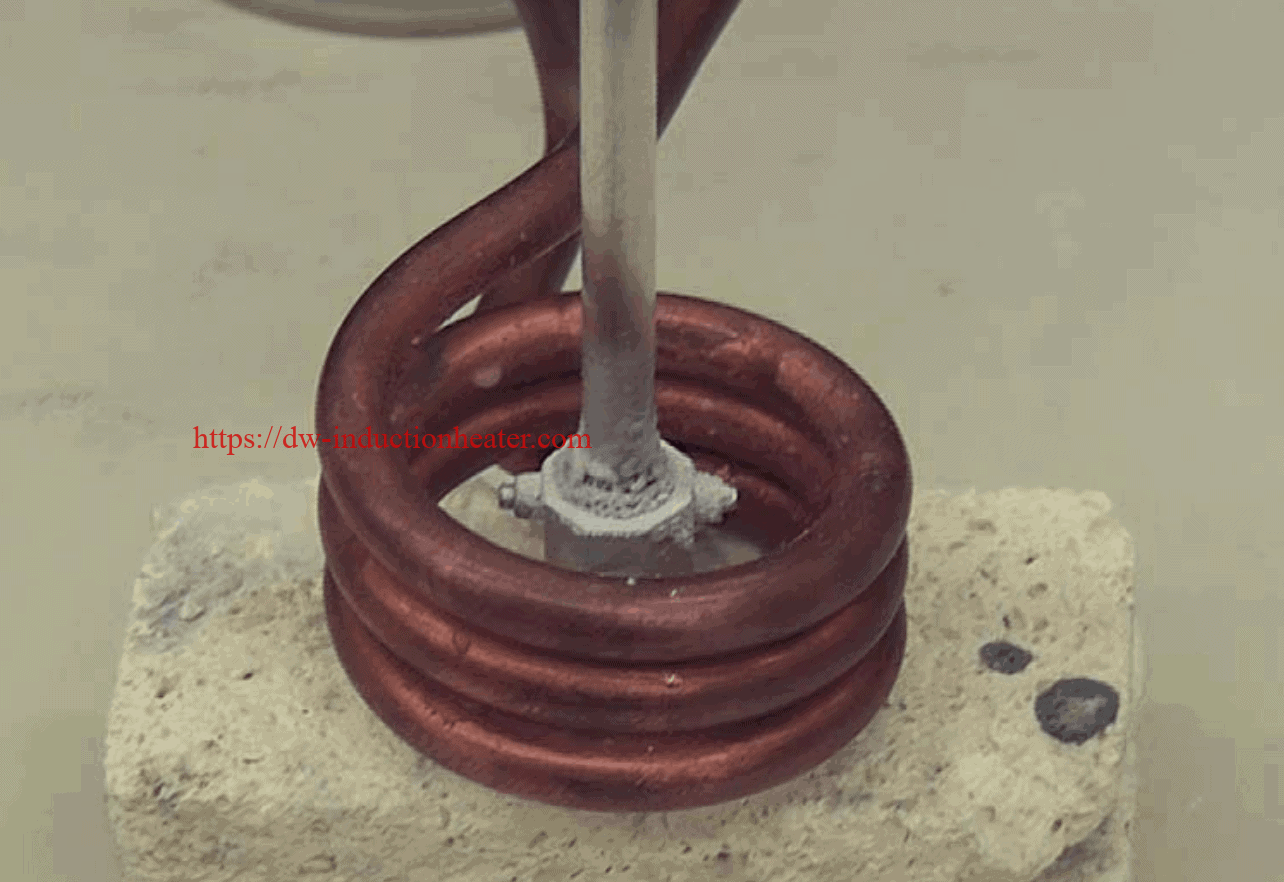
Induction brazing aluminum pipes

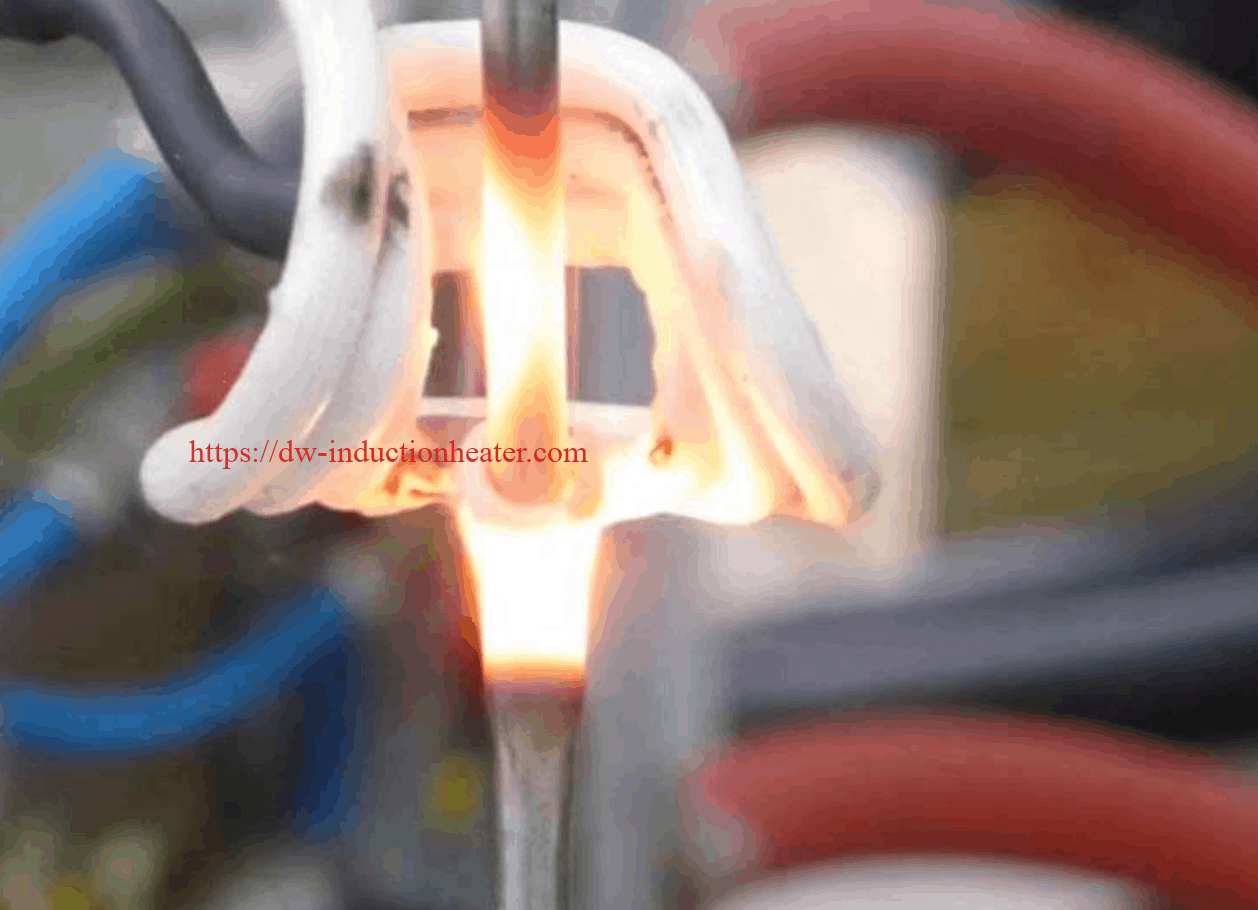
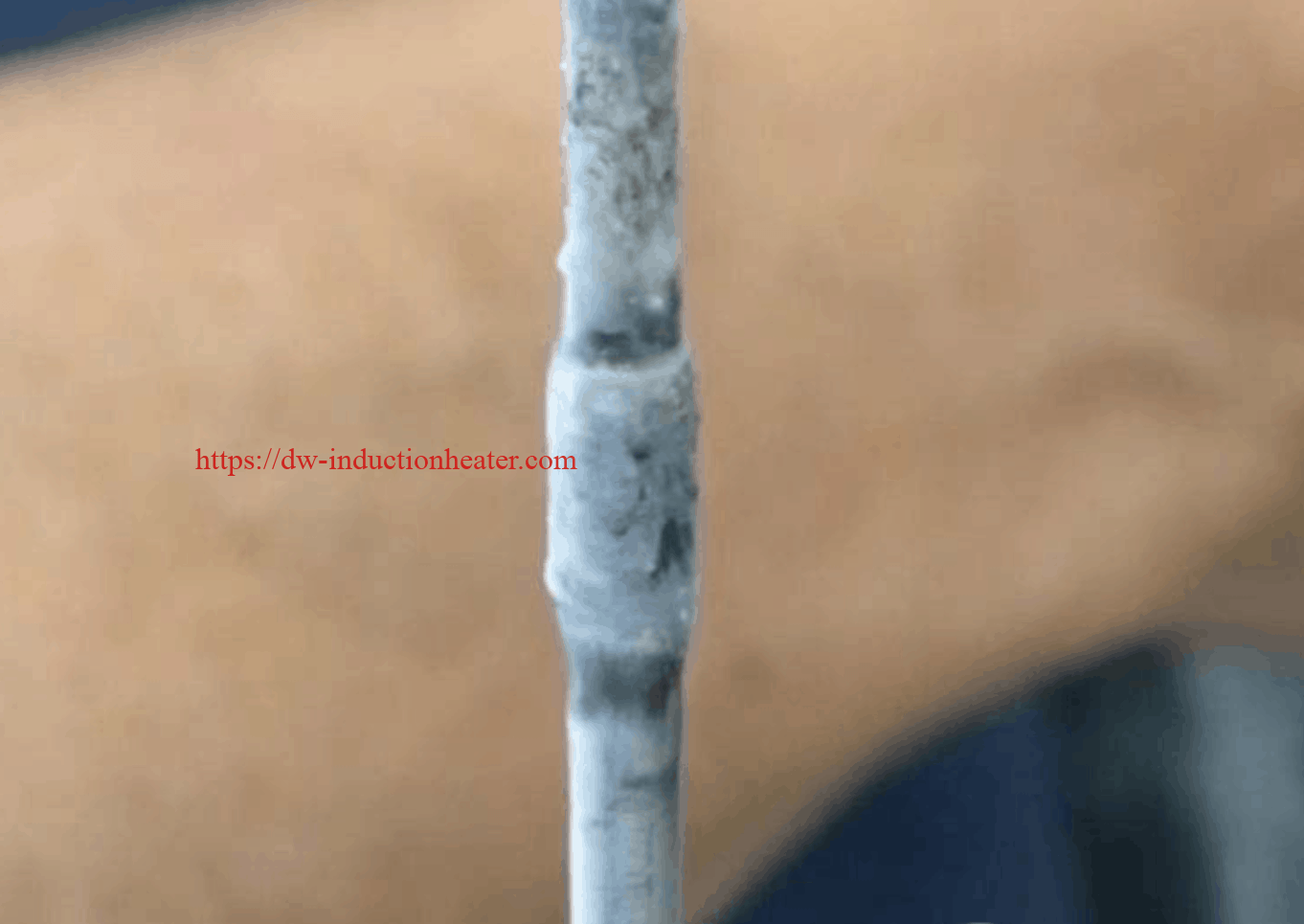
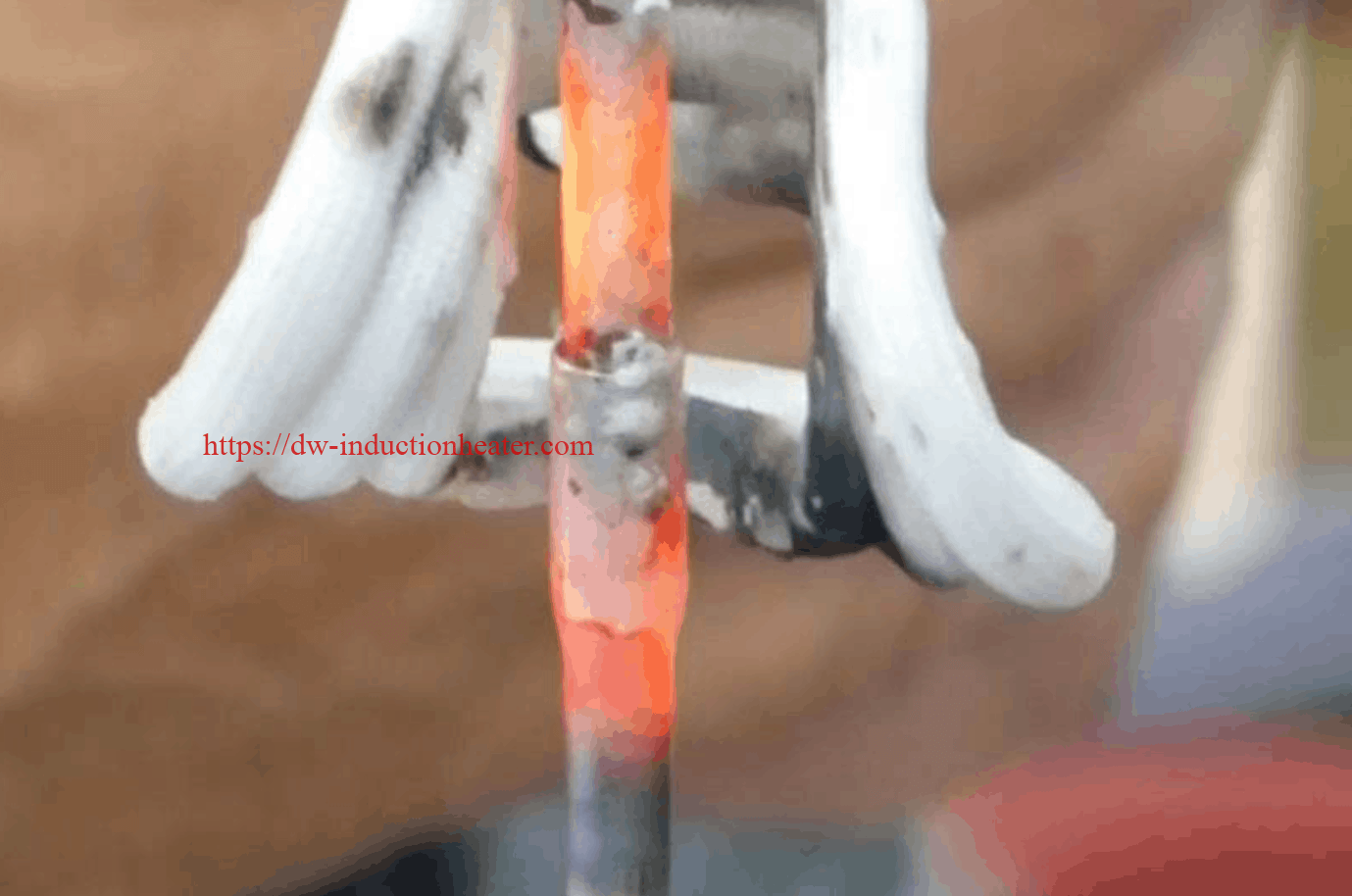
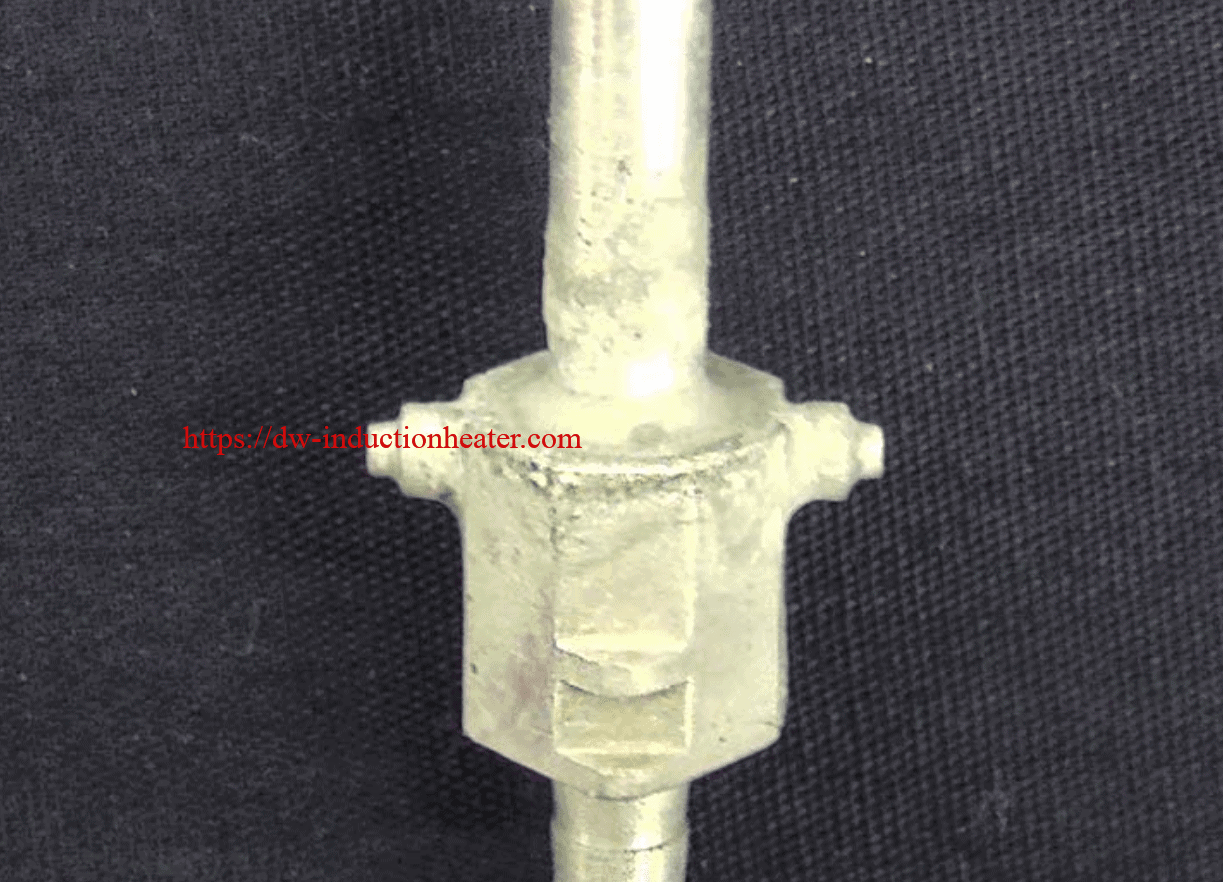
Objective High frequency induction brazing aluminum pipes
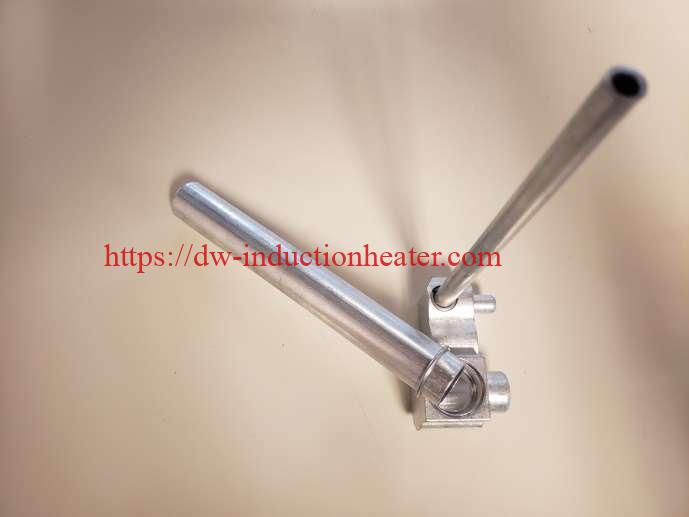
Equipment DW-UHF-6kw-III handheld induction brazing machine Materials Аluminum to aluminum tube Flared at interface 0.25” (6.35mm) Brazed to steel tube 0.19” OD (4.82mm) Power: 4 kW Temperature: 1600°F (871°C) Time: 5 sec
Results and Conclusions: Induction heating provides:
  • Strong durable joints
  • Selective and precise heat zone, resulting in less part distortion and joint stress than welding
  • More consistent results and suitability for large volume production, without the need for batch processing
  • Safer than flame brazing
https://dw-inductionheater.com/high-frequency-induction-brazing-aluminum-pipes-process.html?feed_id=237652&_unique_id=65fb0b42a2829

2024年3月17日星期日

Brazing Aluminum Tubing to Aluminum Parts

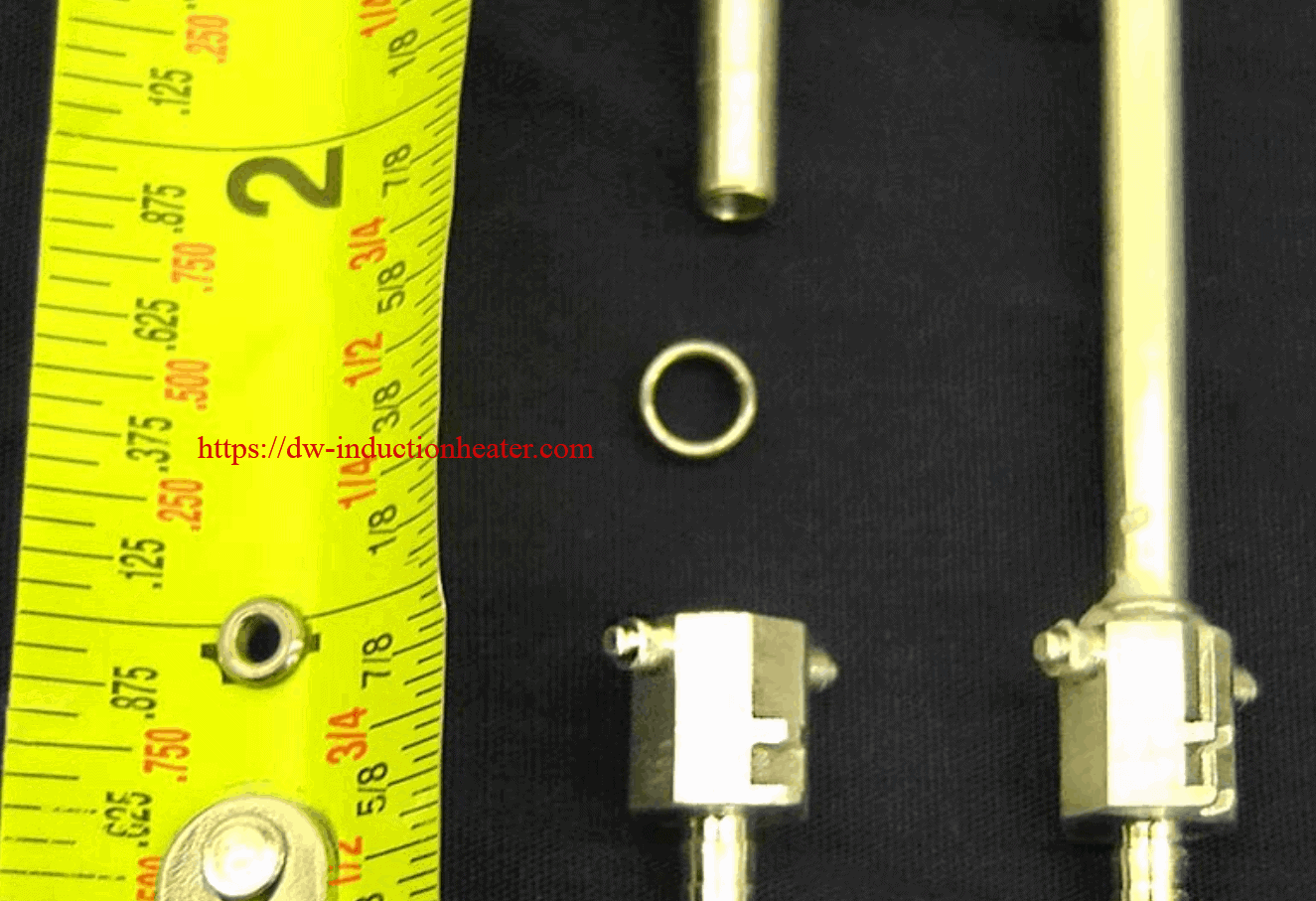
Objective The objective of the application test is induction brazing aluminum tubing to aluminum parts in less than 15 seconds. We have aluminum tubing and an aluminum “receiver”. The brazing alloy is an alloy ring, and has a flow temperature of 1030°F (554°C).
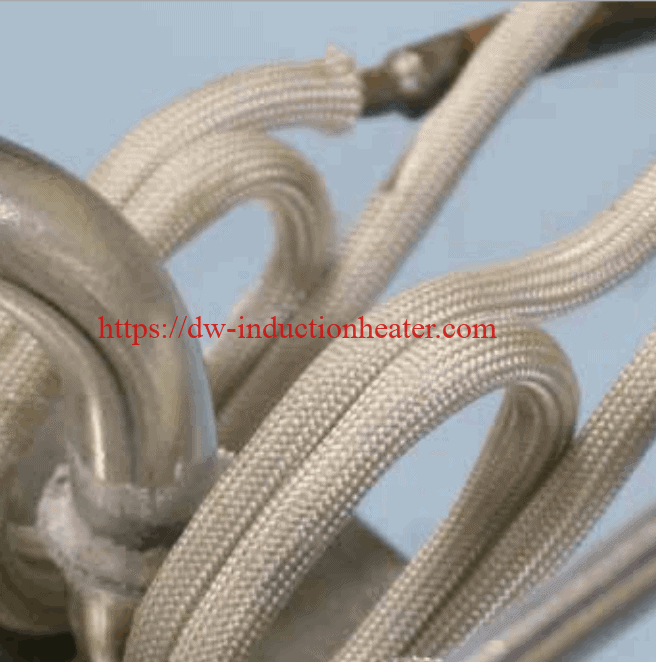
Equipment DW-HF-15kw induction heating machine   [caption id="attachment_97" align="alignnone" width="267"]induction heating units HF-15 induction heating machine HF-15[/caption] Induction heating coil Materials • Aluminum tube: 0.167” (4.242mm) OD, 0.108” (2.743mm) ID • Aluminum component: ID .1675” (4.255mm), depth .288” (7.315mm), chamfer at top area is 0.2375” (6.033mm) ID max • Braze alloy in the form of two-turn alloy ring • Flux Key Parameters Temperature: 1030°F (554°C) Power: 5 kW Time: 14 seconds
Process:
  1. The Aluminum component and tube were assembled together with the alloy ring. Flux was added.
  2. The part was positioned in the induction coil.
  3. Several tests were conducted with different cycle times to confirm the heating time for a good braze.
  4. At 15 seconds the assembly melted.
  5. At 14 seconds, we had success for brazing aluminum to aluminum, and a good quality braze joint was achieved.
Results/Benefits: The 5 kW induction heating system requested by the customer, will meet the customer’s time requirements for induction brazing.
  • Precise control of the time and temperature
  • Power on demand with rapid heat cycles
  • Repeatable process, not operator dependent
  • Safe induction heating with no open flames
  • Energy efficient heating
https://dw-inductionheater.com/brazing-aluminum-tubing-to-aluminum-parts.html?feed_id=237093&_unique_id=65f7790bc0f47

2024年2月26日星期一

Brazing Aluminum Tubes with Induction Heating

Induction Brazing Aluminum Tubes with High Frequency Induction Heating

The novel applications areas of induction heating require analyzing the temperature distribution inside the heated components taking into account the corresponding structures and the material properties. The finite element method (FEM) provides a powerful tool to perform such analyses and optimization of induction heating processes through coupled electromagnetic and thermal numerical analyses and simulations. The main aim of this contribution is to indicate the possibility of application of the proper, sophisticated and efficient induction brazing technology for the manufacturing of solar collectors based on numerical simulation and performed experiments.

Problem description

This work deals with the design of components for solar collectors suitable for brazing process, namely the parts of collecting tubing (Fig. 1a). Tubes are made from the Al alloy of the AW 3000 type with the chemical composition given in the Table 1. For brazing, the alloy of Al 104 type is used (Table 2) together with the flux Braze Tec 32/80 which residues are non-corrosive. The temperature interval between solidus and liquidus temperatures for the Al 104 brazing alloy ranges from 575 °C to 585 °C. The solidus temperature of the tube material is 650 °C. Table 1 Chemical composition of AW 3000 alloy [wt. %]
Si Fe Cu Mn Mg Zn Cr Al
0.05-0.15 0.06-0.35 max. 0.1 0.3-0.6 0.02-0.20 0.05-0.3 max. 0.25 balance
Table 2 Chemical composition of the brazing alloy of the Al 104 type [wt. %]
Si Fe Cu Mn Mg Zn Ti Al
11-13 0.6 max. 0.3 0.15 0.1 0.2 max. 0.15 balance
The brazing process supposes the application of induction heating. It is necessary to design the system of induction heating in such a manner that brazing temperatures should be achieved in the joint zone (brazed metals – brazing alloy) in the same time. From this viewpoint, a proper selection of induction coil, its geometry and operation parameters (mainly the frequency and the source current) is very important. The shape and dimensions of the designed copper water-cooled induction coil are shown in Fig. 1b The effect of relevant parameters of induction heating on the temperature distribution in the brazed parts was assessed using the numerical simulation of induction heating applying the program code ANSYS 10.0.

Simulation model

In accordance with the methodology of solution of coupled electromagnetic and thermal problems by FEM using the ANSYS 10.0 software [3-5], the simulation model of induction heating process for brazing was developed including geometrical, physical, and initial and boundary conditions. The main aim of numerical simulation was to define the optimum parameters of induction heating (the frequency and the source current) to achieve the required temperature distribution in the zone of joint formation. Suggested 3D-model (Fig. 2) for electromagnetic analysis consists of the model of tubes, brazing alloy, water-cooled induction coil and surrounding air (not shown in Fig. 2). In the thermal analysis, only the tubes and brazing alloy were considered. A detail of the mesh generated from the linear, 8-node elements in the zone of joint formation is illustrated in Fig. 2b. Fig. 2 a) Geometrical model for electromagnetic analysis without surrounding air and b) detail of the 3D mesh generated in the zone of joint formation.The temperature dependences of electric and thermal properties of AW 3000 alloy and Al 104 brazing alloy were obtained using JMatPro software [6]. Following from the fact that the applied materials are non-magnetic, their relative permeability µr = 1. The initial temperature of brazed materials was 20 °C. Perfect electric and thermal contacts on the boundary surfaces of materials were supposed. The frequency of the source current in the induction coil was supposed to be 350 kHz. The value of the source current was defined from the interval from 600 A to 700 A. Cooling of the brazed tubes by free convection and radiation to the air with the temperature of 20 °C was taken into account. Combined heat transfer coefficient dependent on the surface temperature of brazed parts was defined. In Fig. 3, the temperature distribution in brazed components after the achievement of required temperatures in the joint zone are shown for chosen values of applied source currents in induction heating coil. The time of 36 seconds using the source current of 600 A seems to be quite long. The fast heating applying the source current of 700 A cannot be sufficient for the melting of the Al 104 brazing alloy. In this reason the source current approximately of the level of 620 A to 640 A is recommended leading to the brazing times from 25 to 27.5 seconds...... Brazing Aluminum Tubes with Induction Heating https://dw-inductionheater.com/brazing-aluminum-tubes-with-induction-heating.html?feed_id=235016&_unique_id=65dd0cab5cb7e

2024年2月21日星期三

Induction Aluminum Brazing with Computer Assisted

Induction Aluminum Brazing with Computer Assisted

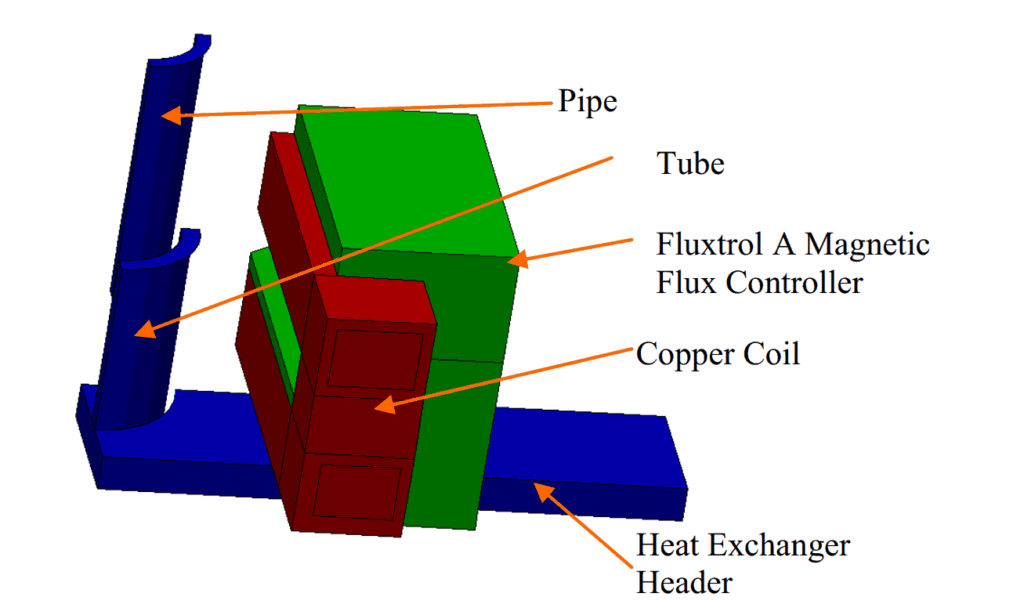
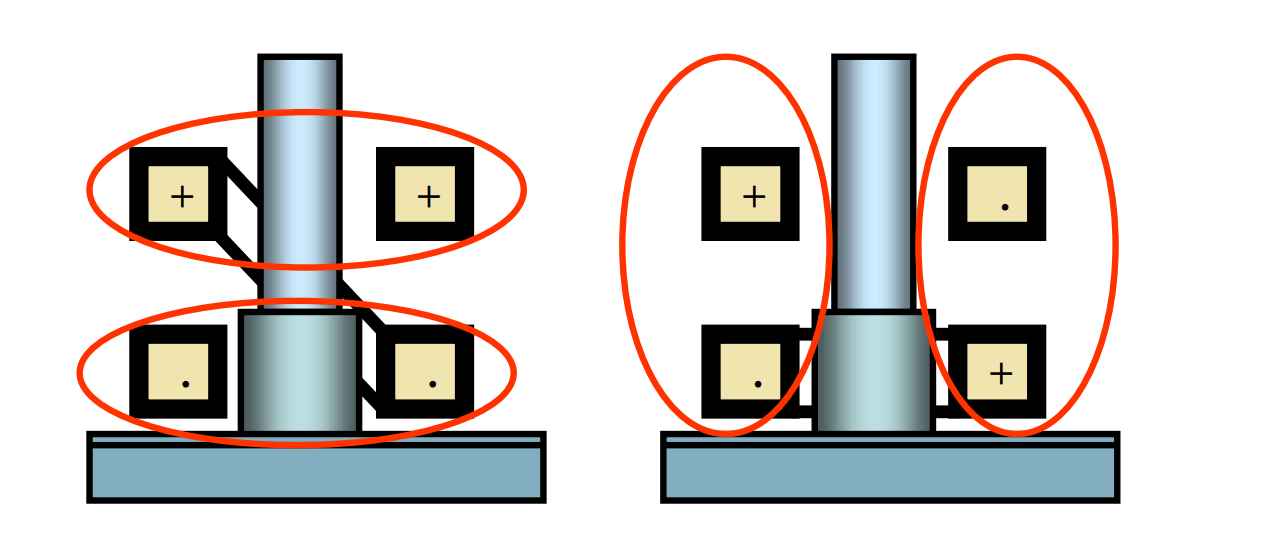
Induction aluminum brazing is becoming more and more common in industry. A typical example is brazing various pipes to an automotive heat  exchanger  body. The induction heating coil widely used for this type of process is non-encircling one, which can be referred to as “Horseshoe-hairpin” style. For these coils, the magnetic field and resulting eddy current distribution are inherently 3-D in nature. In these applications, there are problems with joint quality and consistency of the results from part to part. To solve one such problem for a large automotive manufacturer, Flux3D computer simulation program was used for the process study  and optimization. Optimization included changing the induction coil and magnetic flux controller configuration. New induction coils, which have been experimentally validated in a laboratory, produce parts with higher quality joints in several production sites. Each car requires several different heat exchangers (heater cores, evaporators, condensers, radiators, etc.) for powertrain cooling, air conditioning, oil cooling,  etc. The vast majority of the passenger car heat exchangers today are made of aluminum or aluminum alloys. Even  if the same engine is used for several automobile  models, the connections can vary due to different layouts under the hood. For this reason, it is standard practice  for parts manufacturers to make several basic heat exchanger bodies and then attach different connectors in a secondary operation. Heat exchanger bodies usually consist of aluminum fins, tubes and headers brazed together in a furnace. After brazing, heat exchangers are customized for the given  car model by attaching either nylon tanks or most commonly  different  aluminum  pipes  with   connection blocks. These pipes are attached either by MIG welding, flame or induction brazing. In the case of brazing, very precise temperature control is required due to the small difference in the melting and brazing temperatures for aluminum (20-50 C depending upon alloy, filler metal and atmosphere), high thermal conductivity of aluminum and short distance to other joints brazed in a previous operation. Induction heating is a common method for brazing various pipes to heat exchanger headers. Figure 1 is a picture of an induction brazing set-up for brazing a pipe to a tube on a heat exchanger header. Due to the requirements for precise heating, the face of the induction coil must be in close proximity to the joint to be brazed. Therefore a simple cylindrical coil can not be used, because the part could not be removed after the joint is brazed. There are two main induction coil styles used for brazing these joints: “clamshell” and “horseshoe-hairpin” style inductors. “Clamshell” inductors are similar  to cylindrical inductors, but they open to allow part removal. “Horseshoe-hairpin” inductors are shaped like  a horseshoe for loading the part and are essentially two hairpin coils on opposite sides of the joint. The advantage of using a “Clamshell” inductor is that  the heating is more uniform in circumference and relatively easy to predict. The disadvantage of a “Clamshell” inductor is that the mechanical system required is more complicated and the high current contacts are relatively unreliable. “Horseshoe-hairpin” inductors produce more complicated 3-D heat patterns than “Clamshells”. The advantage of a “Horseshoe-hairpin” style inductor is that the part handling is simplified. [caption id="attachment_6409" align="alignnone" width="1024"] Induction Aluminum Brazing[/caption]

Computer simulation optimizes brazing

A large heat-exchanger manufacturer was having quality problems with brazing the joint shown in Fig. 1 using a horseshoe-hairpin style inductor. The braze joint was good for the majority of parts, but heating would be totally different for some parts, resulting in insufficient joint depth, cold joints and filler metal running up the pipe wall due to local overheating. Even with testing of each heat exchanger for leaks, some parts still leaked at this joint in service. Centre for Induction Technology Inc. was contracted to analyze and solve the problem. The power supply used for the job has a variable frequency of 10 to 25 kHz and rated power of 60 kW. In the brazing process, an operator installs a filler metal ring on the pipe end and inserts the pipe inside the tube. A heat exchanger is placed onto a special rig and moved inside the horseshoe inductor. The entire brazing area is prefluxed. The frequency used to heat up the part typically is 12 to 15 kHz, and heating time is around 20 seconds. The power level is programmed with linear reduction at the end of the heating cycle. An optical pyrometer turns off the power when the temperature on the back side of the joint reaches a preset value. There are many factors that can cause the inconsistency the manufacturer was experiencing, such as variation in joint components (dimensions and position) and unstable and variable (in time) electrical and thermal contact between the tube, pipe, filler ring, etc. Some phenomena are inherently unstable, and small variations of these factors can cause different process dynamics. For example, the open filler metal ring can partially unwind under the electromagnetic forces, and the free end of the ring may be sucked back by capillary forces or remained unmelted. The noise factors are difficult to reduce or eliminate, and the solution to the problem required increasing the robustness of the total process. Computer simulation is an effective tool to analyze and optimize the process. During the evaluation of the brazing process, strong electrodynamic forces were observed. At the moment the power is turned on, the horseshoe coil clearly experiences an expansion due to a sudden application of electrodynamic force. Thus, the inductor was made mechanically stronger, including incorporating an additional fiberglass (G10) plate connecting the roots of two hairpin coils. The other demonstration of electrodynamic forces present was the shifting of molten filler metal away from the areas close to copper turns where the magnetic field is stronger. In a normal process, filler metal distributes uniformly around the joint due to capillary forces and gravity in contrast to an abnormal process where filler metal may run out of the joint or move up along the pipe surface. Because induction aluminum brazing is a very complicated process, it is not feasible to expect an accurate simulation of the whole chain of mutually coupled phenomena (electromagnetic, thermal, mechanical, hydrodynamic and metallurgical). The most important and controllable process is the generation of electromagnetic heat sources, which were analyzed using the Flux 3D program. Due to the complex nature of the induction brazing process, a combination of computer simulation and experiments was used for process design and optimization.   Induction_Aluminum_Brazing with Computer_Assisted https://dw-inductionheater.com/induction-aluminum-brazing-with-computer-assisted.html?feed_id=234460&_unique_id=65d5e87e468ac

2024年1月30日星期二

Aluminum Tubes Induction Brazing

In order to increase the efficiency and to reduce the thermal effect of metal heating, the induction brazing technology is proposed. Advantage of this technology consists mainly in exact location of heating supplied to the brazed joints. Based on the results of numerical simulation it was then possible to design the parameters necessary to achieve brazing temperatures in the desired time. The aim was to minimize this time to avoid an undesired thermal effect on the metals during metallurgical joining.The results of numerical simulation revealed that increasing the current frequency resulted in concentration of maximum temperatures in surface areas of joined metals. With increasing current, the reduction of time required for reaching the brazing temperature was observed.

The advantages of induction brazing of aluminum vs. torch or flame brazing

The low melting temperature of aluminum base metals coupled with the narrow temperature process window of the braze alloys used is a challenge when torch brazing.  The lack of color change while heating aluminum does not provide braze operators any visual indication that the aluminum has reached the proper brazing temperature.  Braze operators introduce a number of variables when torch brazing.  Among these include torch settings and flame type; distance from torch to parts being brazed; location of flame relative to parts being joined; and more. Reasons to consider using induction heating when brazing aluminum include:
  • Quick, rapid heating
  • Controlled, precise heat control
  • Selective (localized) heat
  • Production line adaptability and integration
  • Improved fixture life and simplicity
  • Repeatable, reliable brazed joints
  • Improved safety
Successful induction brazing of aluminum components is highly dependent on designing induction heating coils to focus the electromagnetic heat energy into the areas to be brazed and to heat them uniformly so that the braze alloy melts and flows properly.  Improperly designed induction coils can result in some areas being overheated and other areas not receiving enough heat energy resulting in an incomplete braze joint. For a typical brazed aluminum tube joint, an operator installs an aluminum braze ring, often containing flux, on the aluminum tube and inserts this into another expanded tube or a block fitting.  The parts are then placed into an induction coil and heated.  In a normal process, the braze filler metals melt and flow into the joint interface due to capillary action.

Why induction braze vs. torch braze aluminum components?

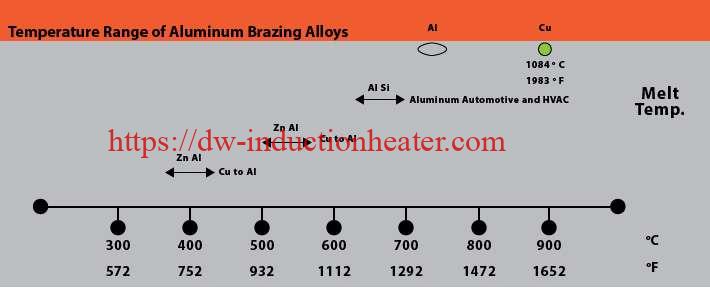
First, a little background on common aluminum alloys prevalent today and the common aluminum braze and solders used for joining.  Brazing aluminum components is much more challenging than brazing copper components.  Copper melts at 1980°F (1083°C) and it changes color as it is heated.  Aluminum alloys often used in HVAC systems start to melt at approximately 1190°F (643°C) and do not provide any visual cues, such as color changes, as it heats. Very precise temperature control is required as the difference in the melting and brazing temperatures for aluminum, dependent upon the aluminum base metal, braze filler metal, and mass of the components to be brazed.  For example, The temperature difference between solidus temperature of two common aluminum alloys, 3003 series aluminum, and 6061 series aluminum, and the liquid’s temperature of frequently used BAlSi-4 braze alloy is 20°F – a very narrow temperature process window, thus necessitating precise control. The selection of base alloys is extremely important with aluminum systems that are being brazed. The best practice is to braze at a temperature that is below the solidus temperature of the alloys the make up the components being brazed together.
AWS A5.8 Classification Nominal Chemical Composition Solidus °F (°C) Liquidus °F(°C) Brazing Temperature
BAISi-3 86% Al 10%Si 4%Cu 970 (521) 1085 (855) 1085~1120 °F
BAISI-4 88% aL 12%Si 1070 (577) 1080 (582) 1080~1120 °F
78 Zn 22%Al 826 (441) 905(471) 905~950 °F
98% Zn 2%Al 715(379) 725(385) 725~765 °F
It should be noted that galvanic corrosion can occur between zinc-rich areas and aluminum.  As noted in the galvanic chart in Figure 1, zinc is less noble and tends to be anodic compared to aluminum.  The lower the potential difference, the lower the rate of corrosion.  The potential difference between zinc and aluminum is minimal compared to the potential between aluminum and copper. Another phenomenon when aluminum is brazed with a zinc alloy is pitting. Local cell or pitting corrosion can occur on any metal. Aluminum is normally protected by a hard, thin film that forms at the surface when they are exposed to oxygen (aluminum oxide) but when a flux removes this protective oxide layer, dissolution of the aluminum can occur.  The longer the filler metal remains molten, the more severe the dissolution is. Aluminum forms a tough oxide layer during brazing, so the use of flux is essential. Fluxing aluminum components can be done separately prior to brazing or an aluminum brazing alloy containing flux can be incorporated into the brazing process. Depending upon the type of flux used (corrosive vs. non-corrosive), an additional step may be required if the flux residue must be removed after brazing.  Consult with a braze and flux manufacturer to get recommendations on brazing alloy and flux based on the materials being joined and the expected brazing temperatures.   Aluminum Tubes Induction Brazing https://dw-inductionheater.com/aluminum-tubes-induction-brazing.html?feed_id=233206&_unique_id=65b957c5e8ec5

2023年10月17日星期二

Brazing Aluminum Tubing to Aluminum Parts

Objective The objective of the application test is induction brazing aluminum tubing to aluminum parts in less than 15 seconds. We have aluminum tubing and an aluminum “receiver”. The brazing alloy is an alloy ring, and has a flow temperature of 1030°F (554°C).
Equipment DW-HF-15kw induction heating machine   [caption id="attachment_97" align="alignnone" width="267"]induction heating units HF-15 induction heating machine HF-15[/caption] Induction heating coil Materials • Aluminum tube: 0.167” (4.242mm) OD, 0.108” (2.743mm) ID • Aluminum component: ID .1675” (4.255mm), depth .288” (7.315mm), chamfer at top area is 0.2375” (6.033mm) ID max • Braze alloy in the form of two-turn alloy ring • Flux Key Parameters Temperature: 1030°F (554°C) Power: 5 kW Time: 14 seconds
Process:
  1. The Aluminum component and tube were assembled together with the alloy ring. Flux was added.
  2. The part was positioned in the induction coil.
  3. Several tests were conducted with different cycle times to confirm the heating time for a good braze.
  4. At 15 seconds the assembly melted.
  5. At 14 seconds, we had success for brazing aluminum to aluminum, and a good quality braze joint was achieved.
Results/Benefits: The 5 kW induction heating system requested by the customer, will meet the customer’s time requirements for induction brazing.
  • Precise control of the time and temperature
  • Power on demand with rapid heat cycles
  • Repeatable process, not operator dependent
  • Safe induction heating with no open flames
  • Energy efficient heating

2023年10月1日星期日

Induction brazing aluminum pipes

Objective High frequency induction brazing aluminum pipes
Equipment DW-UHF-6kw-III handheld induction brazing machine Materials Аluminum to aluminum tube Flared at interface 0.25” (6.35mm) Brazed to steel tube 0.19” OD (4.82mm) Power: 4 kW Temperature: 1600°F (871°C) Time: 5 sec
Results and Conclusions: Induction heating provides:
  • Strong durable joints
  • Selective and precise heat zone, resulting in less part distortion and joint stress than welding
  • More consistent results and suitability for large volume production, without the need for batch processing
  • Safer than flame brazing

2023年7月28日星期五

Induction brazing aluminum pipes

Objective High frequency induction brazing aluminum pipes
Equipment DW-UHF-6kw-III handheld induction brazing machine Materials Аluminum to aluminum tube Flared at interface 0.25” (6.35mm) Brazed to steel tube 0.19” OD (4.82mm) Power: 4 kW Temperature: 1600°F (871°C) Time: 5 sec
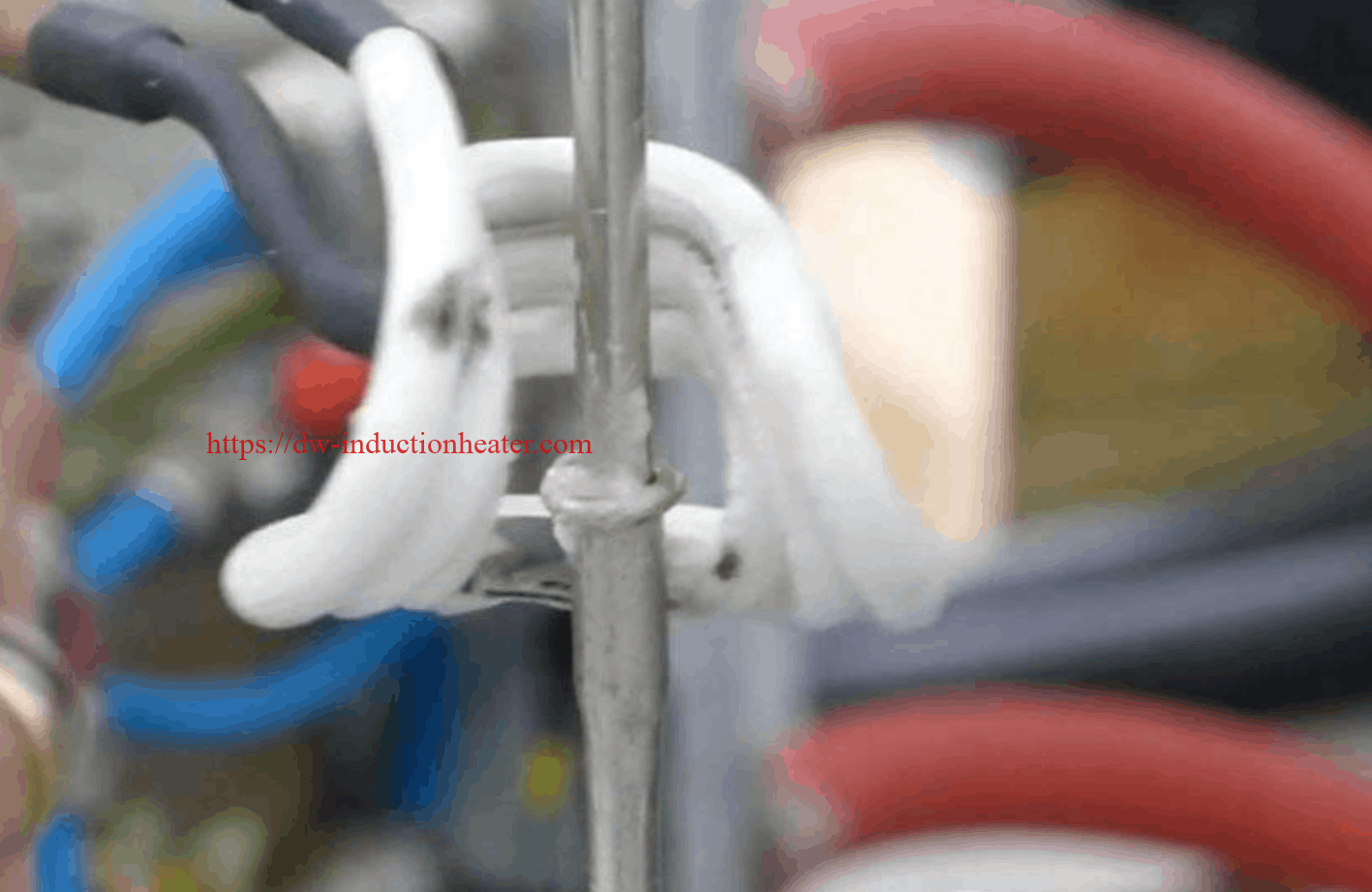
Results and Conclusions: Induction heating provides:
  • Strong durable joints
  • Selective and precise heat zone, resulting in less part distortion and joint stress than welding
  • More consistent results and suitability for large volume production, without the need for batch processing
  • Safer than flame brazing
https://dw-inductionheater.com/high-frequency-induction-brazing-aluminum-pipes-process.html?feed_id=220786&_unique_id=64c398fa47ec3

关注者

我的简介

我的照片
HLQ induction heating machine manufacturer provides the service of induction brazing,melting,hot forming,hardening surface,annealing,shrink fitting,PWHT,etc.