显示标签为“aluminummelting”的博文。显示所有博文

2024年2月14日星期三

Application of induction aluminum melting furnace

Application of induction aluminum melting furnace

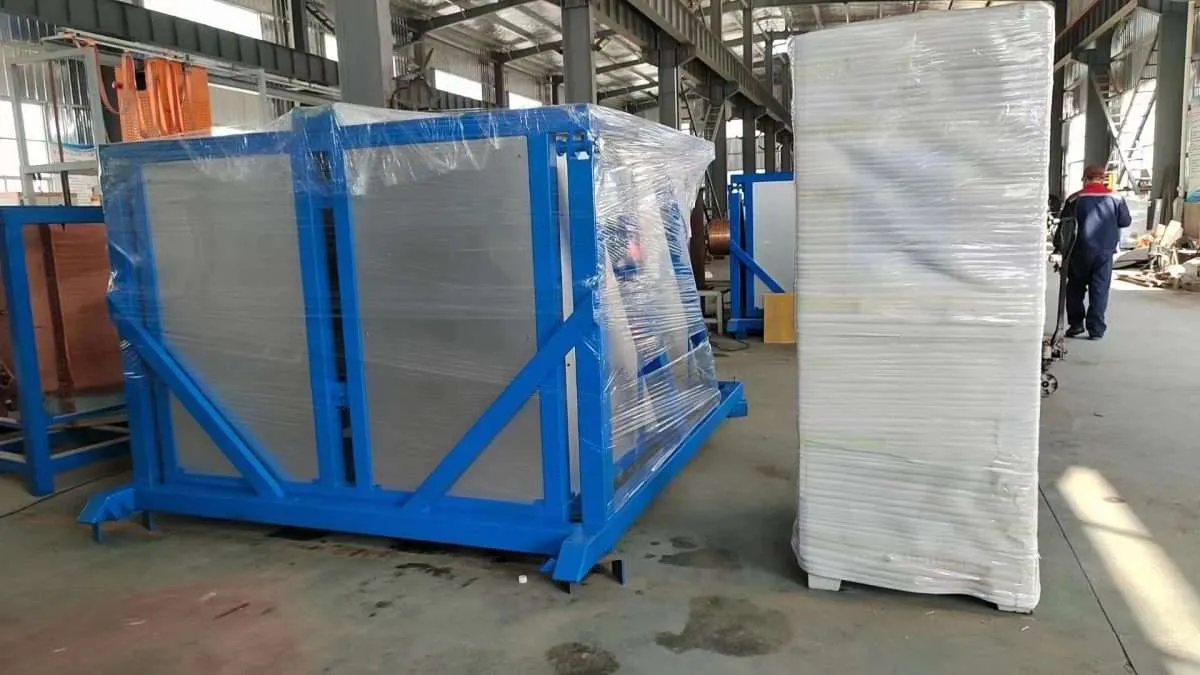
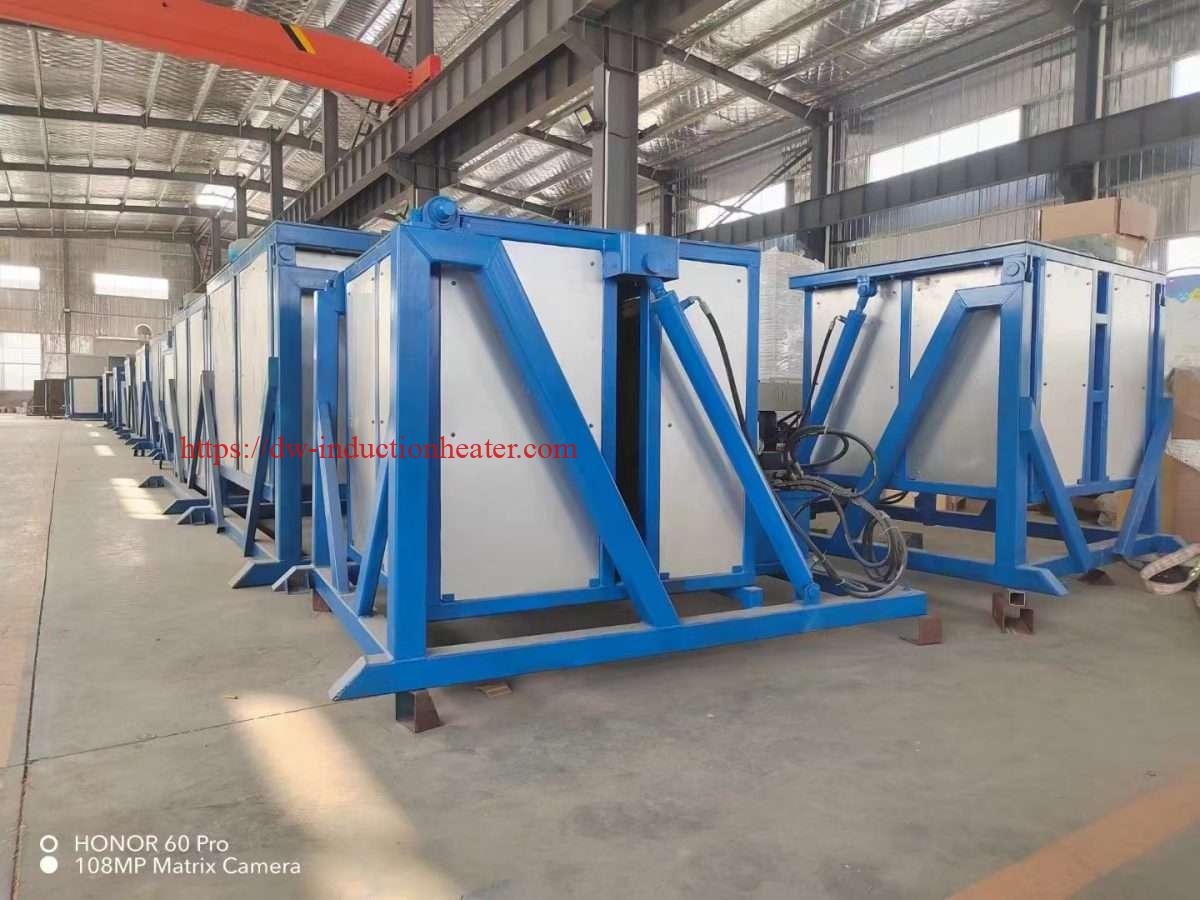
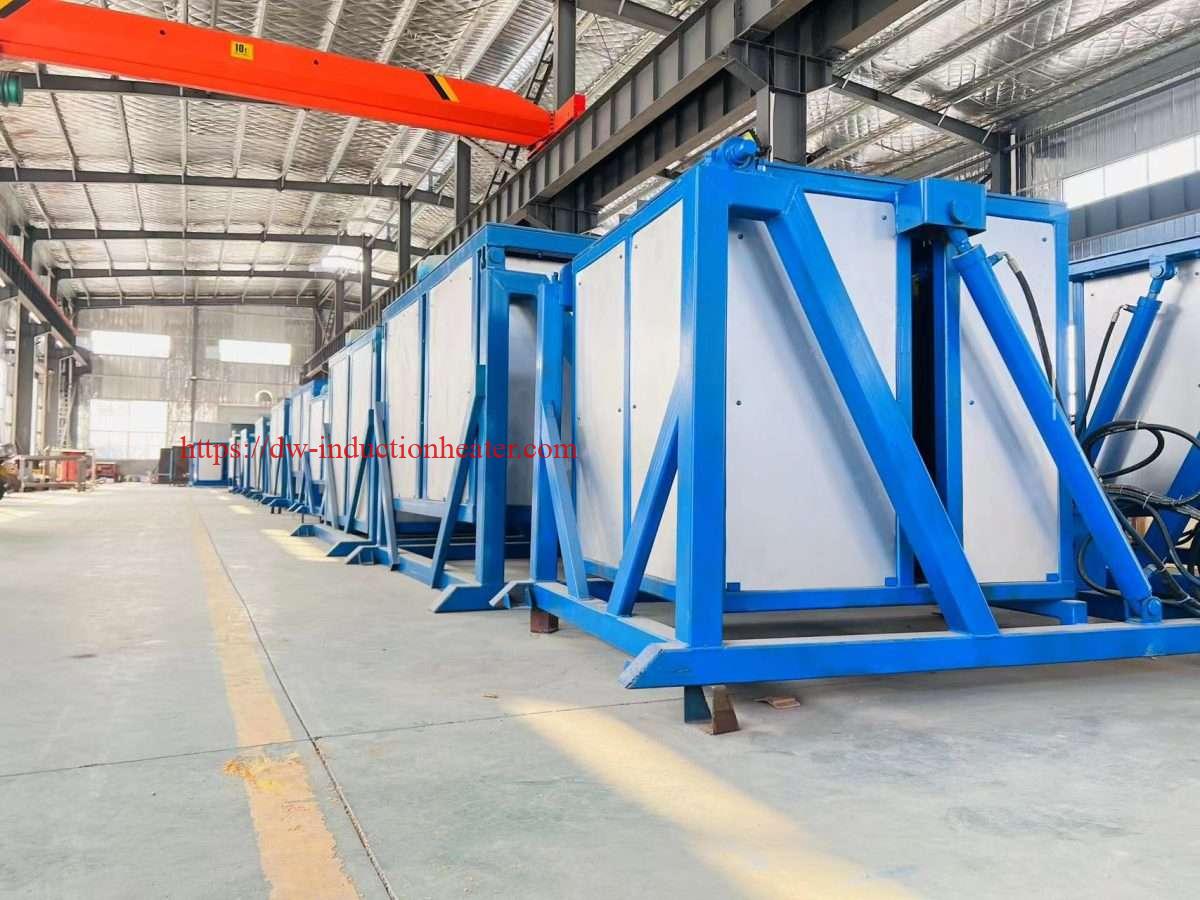
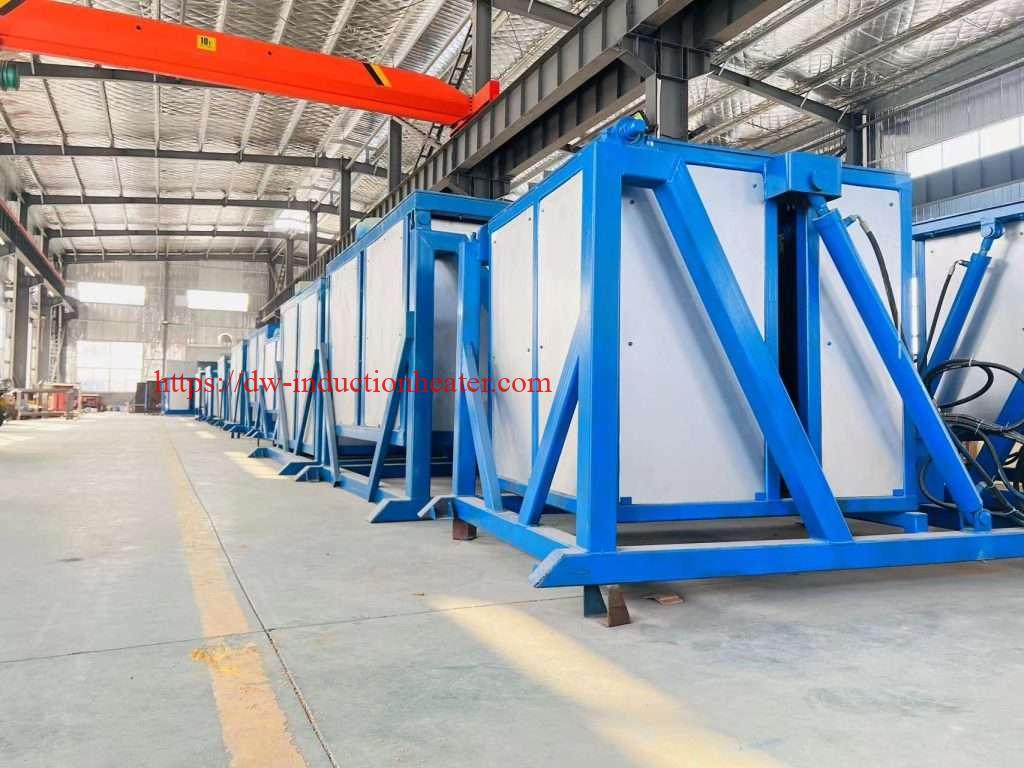
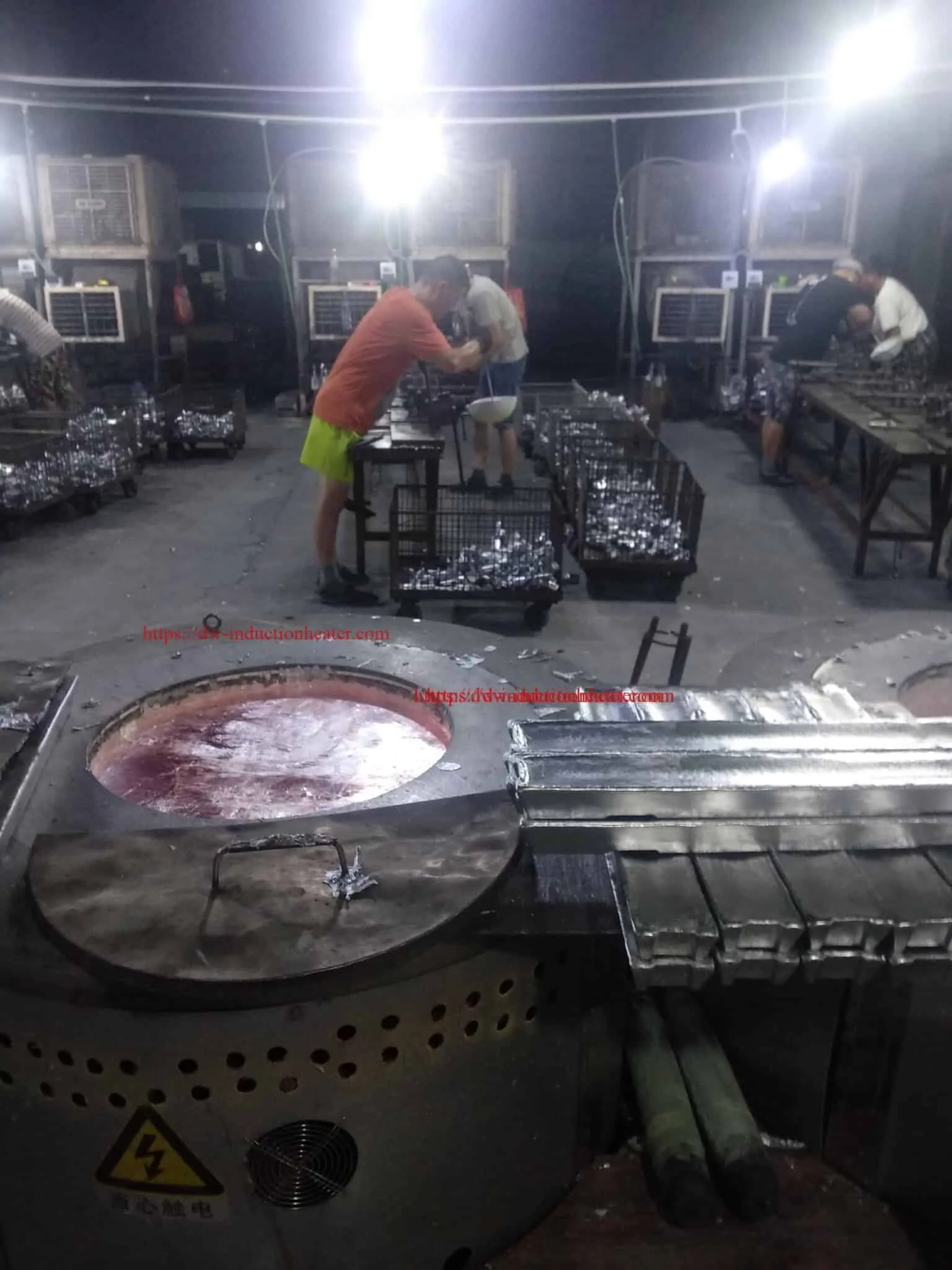
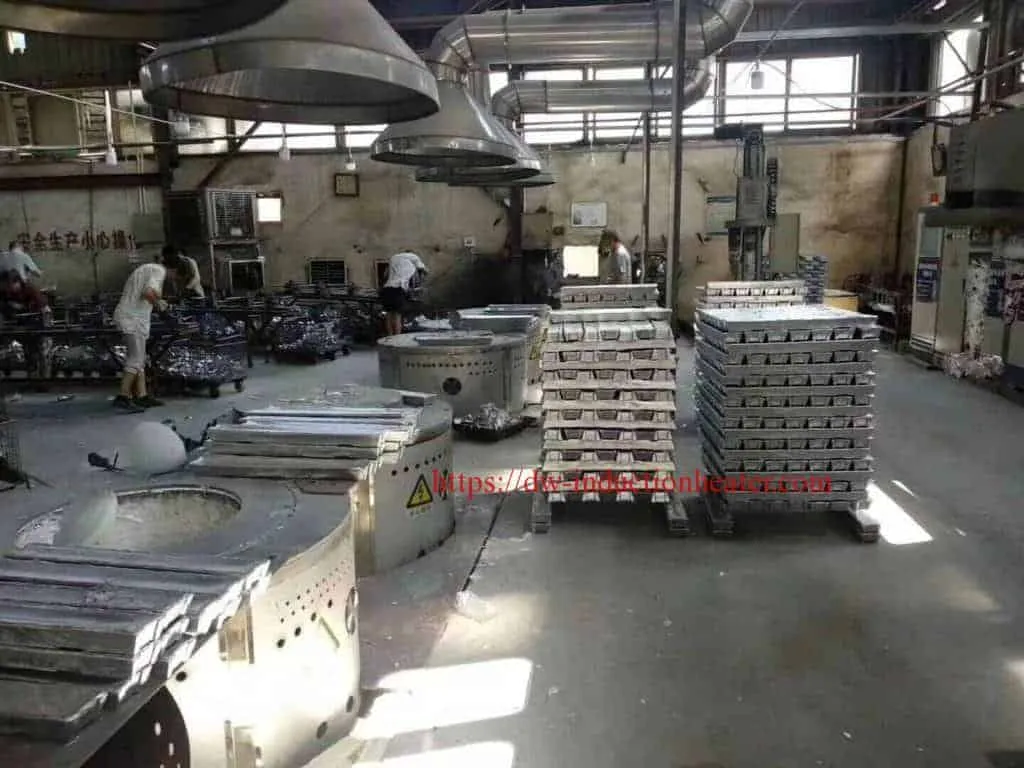
Aluminium melting furnaceThe melting furnace, designed as channel induction furnace, has a total holding capacity of 50 t and a useful pour-off weight of 40 t maximum. The meltdown power is produced by four inductors mounted at defined angles on the furnace floor with a total connected load of 3,400 kW. Each inductor features its own tapped transformer for individual control operations. In the event of failure of one inductor, the others hold the hot heel at temperature while the faulty inductor is being replaced. The furnace is again ready for production operations after a period of 12 hours. The molten metal is poured out through the furnace bearing and can be transferred at zero gradient to the holding furnace at the rate of 4 t/h. The holding-and-casting furnace also accepts the melt through the furnace bearing. This enables the metal to be returned to the melting furnace if required, likewise at zero gradient. Inductor Service Life and Replacement Time The service life of an inductor depends on the installed capacity, the type of cooling system, the shape of the channel, and the type of ceramic lining. Service lives of 250 days are reported for air-cooled inductors rated at 250 kW, but of only 100 days for 400 kW ratings. In both cases, the metal throughput was approximately 1,600 t aluminum.4 By improving the cooling effect and type of ceramic lining, it is possible for 400-kW inductors to attain life factors of 250 days and more with metal throughputs of 2,500 t/inductor. However, service lives of only 100 days are also not unknown. Another operating plant reports service life factors of 15-27 months. Higher inductor ratings of 900 kW and more with production rates of 30 t/day per inductor, necessitating directed flow of the metal and intensive cooling, have not yet been in operation for any length of time. Initial experience showed that vigorous flow causes erosion in the vertical channels. Even though it was not necessary to clean the channels, the desired service life of the inductor was reduced. Further improvements have been made by slowing down the directed flow and by providing a more stable water cooling system, which gives hope for attaining service life factors of 12 months for the high-power inductors. Aluminum scrap can be processed in various melting units: direct-heated furnaces (gas or oil-fired) with heat recovery facilities induction melting furnaces, channel or crucible type. The choice of unit is determined primarily by availability and form of energy and production costs. The present supply of fuel calls for us to re-evaluate its future availability. It is to be expected that rising fuel prices will also entail an increase in the price of substitute energyelectricityin which case thought must be given above all else to the optimum utilization of that form of substitute energy. Here, the induction furnace offers a high-power input utilization factor, since heat is generated by electrical induction directly in the bath. Rising labor costs in the industrialized countries and higher metal prices oblige us to remelt even low-grade, light-gauge scrap and to employ a melting unit where the essential factors that determine processing costs are low, namely energy costs, melt losses, maintenance costs, and labor costs. Application of induction aluminum melting furnace https://dw-inductionheater.com/application-of-induction-aluminum-melting-furnace.html?feed_id=234043&_unique_id=65cc9fe3d3c59

2024年1月16日星期二

Maximizing Efficiency and Productivity with Induction Aluminum Melting Furnace

Maximizing Efficiency and Productivity with Induction Aluminum Melting Furnace

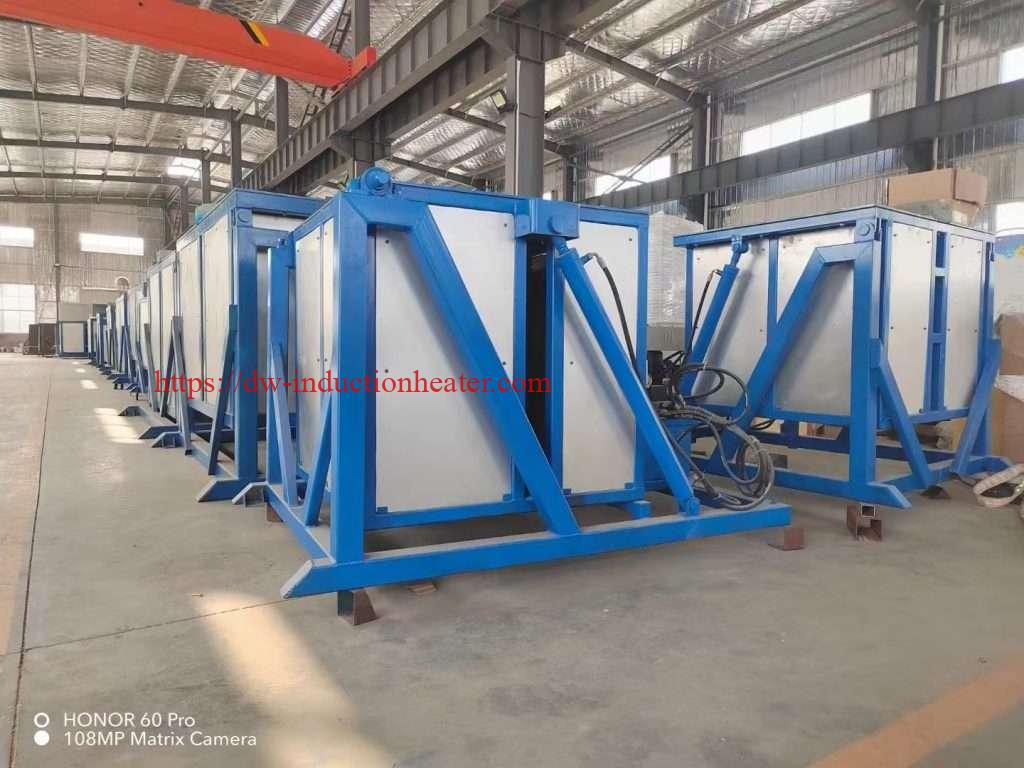
Induction melting is a widely adopted method for melting metals in the foundry industry. It offers wide-ranging advantages including fast melting times, precise temperature control, and reduced energy costs. Induction aluminum melting furnaces have become an increasingly popular option in the aluminum industry. This paper will explore the working principle of induction aluminum melting furnaces, the advantages and disadvantages of using these furnaces, and the various applications of induction melting in the aluminum industry. Introduction: Induction aluminum melting furnaces are widely used in the foundry industry for melting aluminum alloys. The process involves the use of electromagnetic fields to generate electrical currents within the metal, which in turn melt it. Compared to other forms of melting such as gas-fired furnaces, electric resistance furnaces, and oil-fired furnaces, induction melting is more efficient and has a higher capacity for melting. Working Principle: Induction melting involves the use of alternating currents to produce an electromagnetic field that generates electrical currents within the metal. The electrical current induces electrical resistance, which creates heat and melts the metal. The furnace consists of an induction coil that acts as the source of the electromagnetic field and a crucible that contains the metal to be melted. When the coil is energized, the electromagnetic field induces a current within the metal inside the crucible, causing it to heat up and eventually melt. Advantages of Induction Aluminum Melting Furnaces: Induction aluminum melting furnaces offer several advantages over other forms of melting. The key advantages are: 1. Faster melting times - Induction furnaces can melt aluminum alloys much faster compared to other methods, reducing the overall processing time. 2. Precise temperature control – Induction furnaces can vary the heat input, ensuring accurate temperature control throughout the melting process. 3. Reduced energy costs – Induction furnaces are more energy-efficient, and this contributes to lower energy costs. 4. Cleaner melting – Induction furnaces are cleaner than gas-fired furnaces as they do not produce pollutants or emissions. 5. Minimal wastage – Induction furnaces have a high yield, and there is minimal wastage of molten metal during the melting process.
Factors to Consider When Choosing an Induction Melting Furnace:

Several factors should be considered when choosing an induction melting furnace. First, the type of metal being melted should be considered, as different metals require different melting temperatures and times. Second, the volume of metal being melted should be considered, as some furnaces are better suited for high-volume melting. Third, the level of precision and accuracy required should be considered, as some furnaces are better suited for high-precision melting. Finally, the available space and power supply should be considered, as some furnaces require more space and power than others. Applications of Induction Aluminum Melting Furnaces: Induction aluminum melting furnaces have a wide range of applications, including the production of: 1. Automotive components such as engine blocks, wheels, and brake calipers 2. Aerospace parts such as frames, wings, and fuselages 3. Consumer goods such as cans, containers, and cookware 4. Building and construction components such as pipes, sheets, and panels Disadvantages of Induction Aluminum Melting Furnaces: While induction aluminum melting furnaces have many advantages, there are some disadvantages to consider. These include: 1. Higher capital cost – Induction furnaces are more expensive to purchase than gas or oil-fired furnaces. 2. Higher maintenance costs – Induction furnaces require regular maintenance, which can increase operating costs. 3. Complexity – Induction aluminum melting furnaces are complex systems that require skilled operators. Conclusion: Induction aluminum melting furnaces are a popular option in the foundry industry for melting aluminum alloys. The process involves the use of electromagnetic fields to generate electrical currents within the metal, which in turn melt it. The advantages of using induction aluminum melting furnaces include faster melting times, precise temperature control, reduced energy costs, minimal wastage, and cleaner melting. The technologies are extensively used across a wide range of applications, including the production of automotive and aerospace components, consumer goods, and building and construction components. However, induction aluminum melting furnaces have some disadvantages, such as higher capital and maintenance costs and complexity. Therefore, The foundry industry has to weigh the advantages against the disadvantages to determine if induction aluminum melting furnaces are a suitable option for their operations. https://dw-inductionheater.com/maximizing-efficiency-and-productivity-with-induction-aluminum-melting-furnace.html?feed_id=232375&_unique_id=65a77da51d0b2
2023年11月1日星期三

Application of induction aluminum melting furnace

Application of induction aluminum melting furnace

Aluminium melting furnaceThe melting furnace, designed as channel induction furnace, has a total holding capacity of 50 t and a useful pour-off weight of 40 t maximum. The meltdown power is produced by four inductors mounted at defined angles on the furnace floor with a total connected load of 3,400 kW. Each inductor features its own tapped transformer for individual control operations. In the event of failure of one inductor, the others hold the hot heel at temperature while the faulty inductor is being replaced. The furnace is again ready for production operations after a period of 12 hours. The molten metal is poured out through the furnace bearing and can be transferred at zero gradient to the holding furnace at the rate of 4 t/h. The holding-and-casting furnace also accepts the melt through the furnace bearing. This enables the metal to be returned to the melting furnace if required, likewise at zero gradient. Inductor Service Life and Replacement Time The service life of an inductor depends on the installed capacity, the type of cooling system, the shape of the channel, and the type of ceramic lining. Service lives of 250 days are reported for air-cooled inductors rated at 250 kW, but of only 100 days for 400 kW ratings. In both cases, the metal throughput was approximately 1,600 t aluminum.4 By improving the cooling effect and type of ceramic lining, it is possible for 400-kW inductors to attain life factors of 250 days and more with metal throughputs of 2,500 t/inductor. However, service lives of only 100 days are also not unknown. Another operating plant reports service life factors of 15-27 months. Higher inductor ratings of 900 kW and more with production rates of 30 t/day per inductor, necessitating directed flow of the metal and intensive cooling, have not yet been in operation for any length of time. Initial experience showed that vigorous flow causes erosion in the vertical channels. Even though it was not necessary to clean the channels, the desired service life of the inductor was reduced. Further improvements have been made by slowing down the directed flow and by providing a more stable water cooling system, which gives hope for attaining service life factors of 12 months for the high-power inductors. Aluminum scrap can be processed in various melting units: direct-heated furnaces (gas or oil-fired) with heat recovery facilities induction melting furnaces, channel or crucible type. The choice of unit is determined primarily by availability and form of energy and production costs. The present supply of fuel calls for us to re-evaluate its future availability. It is to be expected that rising fuel prices will also entail an increase in the price of substitute energyelectricityin which case thought must be given above all else to the optimum utilization of that form of substitute energy. Here, the induction furnace offers a high-power input utilization factor, since heat is generated by electrical induction directly in the bath. Rising labor costs in the industrialized countries and higher metal prices oblige us to remelt even low-grade, light-gauge scrap and to employ a melting unit where the essential factors that determine processing costs are low, namely energy costs, melt losses, maintenance costs, and labor costs. Application of induction aluminum melting furnace

2023年9月8日星期五

Application of induction aluminum melting furnace

Application of induction aluminum melting furnace

Aluminium melting furnaceThe melting furnace, designed as channel induction furnace, has a total holding capacity of 50 t and a useful pour-off weight of 40 t maximum. The meltdown power is produced by four inductors mounted at defined angles on the furnace floor with a total connected load of 3,400 kW. Each inductor features its own tapped transformer for individual control operations. In the event of failure of one inductor, the others hold the hot heel at temperature while the faulty inductor is being replaced. The furnace is again ready for production operations after a period of 12 hours. The molten metal is poured out through the furnace bearing and can be transferred at zero gradient to the holding furnace at the rate of 4 t/h. The holding-and-casting furnace also accepts the melt through the furnace bearing. This enables the metal to be returned to the melting furnace if required, likewise at zero gradient. Inductor Service Life and Replacement Time The service life of an inductor depends on the installed capacity, the type of cooling system, the shape of the channel, and the type of ceramic lining. Service lives of 250 days are reported for air-cooled inductors rated at 250 kW, but of only 100 days for 400 kW ratings. In both cases, the metal throughput was approximately 1,600 t aluminum.4 By improving the cooling effect and type of ceramic lining, it is possible for 400-kW inductors to attain life factors of 250 days and more with metal throughputs of 2,500 t/inductor. However, service lives of only 100 days are also not unknown. Another operating plant reports service life factors of 15-27 months. Higher inductor ratings of 900 kW and more with production rates of 30 t/day per inductor, necessitating directed flow of the metal and intensive cooling, have not yet been in operation for any length of time. Initial experience showed that vigorous flow causes erosion in the vertical channels. Even though it was not necessary to clean the channels, the desired service life of the inductor was reduced. Further improvements have been made by slowing down the directed flow and by providing a more stable water cooling system, which gives hope for attaining service life factors of 12 months for the high-power inductors. Aluminum scrap can be processed in various melting units: direct-heated furnaces (gas or oil-fired) with heat recovery facilities induction melting furnaces, channel or crucible type. The choice of unit is determined primarily by availability and form of energy and production costs. The present supply of fuel calls for us to re-evaluate its future availability. It is to be expected that rising fuel prices will also entail an increase in the price of substitute energyelectricityin which case thought must be given above all else to the optimum utilization of that form of substitute energy. Here, the induction furnace offers a high-power input utilization factor, since heat is generated by electrical induction directly in the bath. Rising labor costs in the industrialized countries and higher metal prices oblige us to remelt even low-grade, light-gauge scrap and to employ a melting unit where the essential factors that determine processing costs are low, namely energy costs, melt losses, maintenance costs, and labor costs. Application of induction aluminum melting furnace

2023年6月22日星期四

Application of induction aluminum melting furnace

Application of induction aluminum melting furnace

Aluminium melting furnaceThe melting furnace, designed as channel induction furnace, has a total holding capacity of 50 t and a useful pour-off weight of 40 t maximum. The meltdown power is produced by four inductors mounted at defined angles on the furnace floor with a total connected load of 3,400 kW. Each inductor features its own tapped transformer for individual control operations. In the event of failure of one inductor, the others hold the hot heel at temperature while the faulty inductor is being replaced. The furnace is again ready for production operations after a period of 12 hours. The molten metal is poured out through the furnace bearing and can be transferred at zero gradient to the holding furnace at the rate of 4 t/h. The holding-and-casting furnace also accepts the melt through the furnace bearing. This enables the metal to be returned to the melting furnace if required, likewise at zero gradient. Inductor Service Life and Replacement Time The service life of an inductor depends on the installed capacity, the type of cooling system, the shape of the channel, and the type of ceramic lining. Service lives of 250 days are reported for air-cooled inductors rated at 250 kW, but of only 100 days for 400 kW ratings. In both cases, the metal throughput was approximately 1,600 t aluminum.4 By improving the cooling effect and type of ceramic lining, it is possible for 400-kW inductors to attain life factors of 250 days and more with metal throughputs of 2,500 t/inductor. However, service lives of only 100 days are also not unknown. Another operating plant reports service life factors of 15-27 months. Higher inductor ratings of 900 kW and more with production rates of 30 t/day per inductor, necessitating directed flow of the metal and intensive cooling, have not yet been in operation for any length of time. Initial experience showed that vigorous flow causes erosion in the vertical channels. Even though it was not necessary to clean the channels, the desired service life of the inductor was reduced. Further improvements have been made by slowing down the directed flow and by providing a more stable water cooling system, which gives hope for attaining service life factors of 12 months for the high-power inductors. Aluminum scrap can be processed in various melting units: direct-heated furnaces (gas or oil-fired) with heat recovery facilities induction melting furnaces, channel or crucible type. The choice of unit is determined primarily by availability and form of energy and production costs. The present supply of fuel calls for us to re-evaluate its future availability. It is to be expected that rising fuel prices will also entail an increase in the price of substitute energyelectricityin which case thought must be given above all else to the optimum utilization of that form of substitute energy. Here, the induction furnace offers a high-power input utilization factor, since heat is generated by electrical induction directly in the bath. Rising labor costs in the industrialized countries and higher metal prices oblige us to remelt even low-grade, light-gauge scrap and to employ a melting unit where the essential factors that determine processing costs are low, namely energy costs, melt losses, maintenance costs, and labor costs. Application of induction aluminum melting furnace https://dw-inductionheater.com/application-of-induction-aluminum-melting-furnace.html?feed_id=215386&_unique_id=649526bc58785

2023年6月9日星期五

Maximizing Efficiency and Productivity with Induction Aluminum Melting Furnace

Maximizing Efficiency and Productivity with Induction Aluminum Melting Furnace

Induction melting is a widely adopted method for melting metals in the foundry industry. It offers wide-ranging advantages including fast melting times, precise temperature control, and reduced energy costs. Induction aluminum melting furnaces have become an increasingly popular option in the aluminum industry. This paper will explore the working principle of induction aluminum melting furnaces, the advantages and disadvantages of using these furnaces, and the various applications of induction melting in the aluminum industry. Introduction: Induction aluminum melting furnaces are widely used in the foundry industry for melting aluminum alloys. The process involves the use of electromagnetic fields to generate electrical currents within the metal, which in turn melt it. Compared to other forms of melting such as gas-fired furnaces, electric resistance furnaces, and oil-fired furnaces, induction melting is more efficient and has a higher capacity for melting. Working Principle: Induction melting involves the use of alternating currents to produce an electromagnetic field that generates electrical currents within the metal. The electrical current induces electrical resistance, which creates heat and melts the metal. The furnace consists of an induction coil that acts as the source of the electromagnetic field and a crucible that contains the metal to be melted. When the coil is energized, the electromagnetic field induces a current within the metal inside the crucible, causing it to heat up and eventually melt. Advantages of Induction Aluminum Melting Furnaces: Induction aluminum melting furnaces offer several advantages over other forms of melting. The key advantages are: 1. Faster melting times - Induction furnaces can melt aluminum alloys much faster compared to other methods, reducing the overall processing time. 2. Precise temperature control – Induction furnaces can vary the heat input, ensuring accurate temperature control throughout the melting process. 3. Reduced energy costs – Induction furnaces are more energy-efficient, and this contributes to lower energy costs. 4. Cleaner melting – Induction furnaces are cleaner than gas-fired furnaces as they do not produce pollutants or emissions. 5. Minimal wastage – Induction furnaces have a high yield, and there is minimal wastage of molten metal during the melting process.

Factors to Consider When Choosing an Induction Melting Furnace:

Several factors should be considered when choosing an induction melting furnace. First, the type of metal being melted should be considered, as different metals require different melting temperatures and times. Second, the volume of metal being melted should be considered, as some furnaces are better suited for high-volume melting. Third, the level of precision and accuracy required should be considered, as some furnaces are better suited for high-precision melting. Finally, the available space and power supply should be considered, as some furnaces require more space and power than others. Applications of Induction Aluminum Melting Furnaces: Induction aluminum melting furnaces have a wide range of applications, including the production of: 1. Automotive components such as engine blocks, wheels, and brake calipers 2. Aerospace parts such as frames, wings, and fuselages 3. Consumer goods such as cans, containers, and cookware 4. Building and construction components such as pipes, sheets, and panels Disadvantages of Induction Aluminum Melting Furnaces: While induction aluminum melting furnaces have many advantages, there are some disadvantages to consider. These include: 1. Higher capital cost – Induction furnaces are more expensive to purchase than gas or oil-fired furnaces. 2. Higher maintenance costs – Induction furnaces require regular maintenance, which can increase operating costs. 3. Complexity – Induction aluminum melting furnaces are complex systems that require skilled operators. Conclusion: Induction aluminum melting furnaces are a popular option in the foundry industry for melting aluminum alloys. The process involves the use of electromagnetic fields to generate electrical currents within the metal, which in turn melt it. The advantages of using induction aluminum melting furnaces include faster melting times, precise temperature control, reduced energy costs, minimal wastage, and cleaner melting. The technologies are extensively used across a wide range of applications, including the production of automotive and aerospace components, consumer goods, and building and construction components. However, induction aluminum melting furnaces have some disadvantages, such as higher capital and maintenance costs and complexity. Therefore, The foundry industry has to weigh the advantages against the disadvantages to determine if induction aluminum melting furnaces are a suitable option for their operations. https://dw-inductionheater.com/maximizing-efficiency-and-productivity-with-induction-aluminum-melting-furnace.html?feed_id=211786&_unique_id=6483a9dc61b7d

2023年5月25日星期四

Maximizing Efficiency and Productivity with Induction Aluminum Melting Furnace

Maximizing Efficiency and Productivity with Induction Aluminum Melting Furnace

Induction melting is a widely adopted method for melting metals in the foundry industry. It offers wide-ranging advantages including fast melting times, precise temperature control, and reduced energy costs. Induction aluminum melting furnaces have become an increasingly popular option in the aluminum industry. This paper will explore the working principle of induction aluminum melting furnaces, the advantages and disadvantages of using these furnaces, and the various applications of induction melting in the aluminum industry. Introduction: Induction aluminum melting furnaces are widely used in the foundry industry for melting aluminum alloys. The process involves the use of electromagnetic fields to generate electrical currents within the metal, which in turn melt it. Compared to other forms of melting such as gas-fired furnaces, electric resistance furnaces, and oil-fired furnaces, induction melting is more efficient and has a higher capacity for melting. Working Principle: Induction melting involves the use of alternating currents to produce an electromagnetic field that generates electrical currents within the metal. The electrical current induces electrical resistance, which creates heat and melts the metal. The furnace consists of an induction coil that acts as the source of the electromagnetic field and a crucible that contains the metal to be melted. When the coil is energized, the electromagnetic field induces a current within the metal inside the crucible, causing it to heat up and eventually melt. Advantages of Induction Aluminum Melting Furnaces: Induction aluminum melting furnaces offer several advantages over other forms of melting. The key advantages are: 1. Faster melting times - Induction furnaces can melt aluminum alloys much faster compared to other methods, reducing the overall processing time. 2. Precise temperature control – Induction furnaces can vary the heat input, ensuring accurate temperature control throughout the melting process. 3. Reduced energy costs – Induction furnaces are more energy-efficient, and this contributes to lower energy costs. 4. Cleaner melting – Induction furnaces are cleaner than gas-fired furnaces as they do not produce pollutants or emissions. 5. Minimal wastage – Induction furnaces have a high yield, and there is minimal wastage of molten metal during the melting process.

Factors to Consider When Choosing an Induction Melting Furnace:

Several factors should be considered when choosing an induction melting furnace. First, the type of metal being melted should be considered, as different metals require different melting temperatures and times. Second, the volume of metal being melted should be considered, as some furnaces are better suited for high-volume melting. Third, the level of precision and accuracy required should be considered, as some furnaces are better suited for high-precision melting. Finally, the available space and power supply should be considered, as some furnaces require more space and power than others. Applications of Induction Aluminum Melting Furnaces: Induction aluminum melting furnaces have a wide range of applications, including the production of: 1. Automotive components such as engine blocks, wheels, and brake calipers 2. Aerospace parts such as frames, wings, and fuselages 3. Consumer goods such as cans, containers, and cookware 4. Building and construction components such as pipes, sheets, and panels Disadvantages of Induction Aluminum Melting Furnaces: While induction aluminum melting furnaces have many advantages, there are some disadvantages to consider. These include: 1. Higher capital cost – Induction furnaces are more expensive to purchase than gas or oil-fired furnaces. 2. Higher maintenance costs – Induction furnaces require regular maintenance, which can increase operating costs. 3. Complexity – Induction aluminum melting furnaces are complex systems that require skilled operators. Conclusion: Induction aluminum melting furnaces are a popular option in the foundry industry for melting aluminum alloys. The process involves the use of electromagnetic fields to generate electrical currents within the metal, which in turn melt it. The advantages of using induction aluminum melting furnaces include faster melting times, precise temperature control, reduced energy costs, minimal wastage, and cleaner melting. The technologies are extensively used across a wide range of applications, including the production of automotive and aerospace components, consumer goods, and building and construction components. However, induction aluminum melting furnaces have some disadvantages, such as higher capital and maintenance costs and complexity. Therefore, The foundry industry has to weigh the advantages against the disadvantages to determine if induction aluminum melting furnaces are a suitable option for their operations. https://dw-inductionheater.com/maximizing-efficiency-and-productivity-with-induction-aluminum-melting-furnace.html?feed_id=207886&_unique_id=646ffcb93eb57

2023年5月1日星期一

Application of induction aluminum melting furnace

Application of induction aluminum melting furnace

Aluminium melting furnaceThe melting furnace, designed as channel induction furnace, has a total holding capacity of 50 t and a useful pour-off weight of 40 t maximum. The meltdown power is produced by four inductors mounted at defined angles on the furnace floor with a total connected load of 3,400 kW. Each inductor features its own tapped transformer for individual control operations. In the event of failure of one inductor, the others hold the hot heel at temperature while the faulty inductor is being replaced. The furnace is again ready for production operations after a period of 12 hours. The molten metal is poured out through the furnace bearing and can be transferred at zero gradient to the holding furnace at the rate of 4 t/h. The holding-and-casting furnace also accepts the melt through the furnace bearing. This enables the metal to be returned to the melting furnace if required, likewise at zero gradient. Inductor Service Life and Replacement Time The service life of an inductor depends on the installed capacity, the type of cooling system, the shape of the channel, and the type of ceramic lining. Service lives of 250 days are reported for air-cooled inductors rated at 250 kW, but of only 100 days for 400 kW ratings. In both cases, the metal throughput was approximately 1,600 t aluminum.4 By improving the cooling effect and type of ceramic lining, it is possible for 400-kW inductors to attain life factors of 250 days and more with metal throughputs of 2,500 t/inductor. However, service lives of only 100 days are also not unknown. Another operating plant reports service life factors of 15-27 months. Higher inductor ratings of 900 kW and more with production rates of 30 t/day per inductor, necessitating directed flow of the metal and intensive cooling, have not yet been in operation for any length of time. Initial experience showed that vigorous flow causes erosion in the vertical channels. Even though it was not necessary to clean the channels, the desired service life of the inductor was reduced. Further improvements have been made by slowing down the directed flow and by providing a more stable water cooling system, which gives hope for attaining service life factors of 12 months for the high-power inductors. Aluminum scrap can be processed in various melting units: direct-heated furnaces (gas or oil-fired) with heat recovery facilities induction melting furnaces, channel or crucible type. The choice of unit is determined primarily by availability and form of energy and production costs. The present supply of fuel calls for us to re-evaluate its future availability. It is to be expected that rising fuel prices will also entail an increase in the price of substitute energyelectricityin which case thought must be given above all else to the optimum utilization of that form of substitute energy. Here, the induction furnace offers a high-power input utilization factor, since heat is generated by electrical induction directly in the bath. Rising labor costs in the industrialized countries and higher metal prices oblige us to remelt even low-grade, light-gauge scrap and to employ a melting unit where the essential factors that determine processing costs are low, namely energy costs, melt losses, maintenance costs, and labor costs. Application of induction aluminum melting furnace

2023年4月13日星期四

Maximizing Efficiency and Productivity with Induction Aluminum Melting Furnace

Maximizing Efficiency and Productivity with Induction Aluminum Melting Furnace

Induction melting is a widely adopted method for melting metals in the foundry industry. It offers wide-ranging advantages including fast melting times, precise temperature control, and reduced energy costs. Induction aluminum melting furnaces have become an increasingly popular option in the aluminum industry. This paper will explore the working principle of induction aluminum melting furnaces, the advantages and disadvantages of using these furnaces, and the various applications of induction melting in the aluminum industry. Introduction: Induction aluminum melting furnaces are widely used in the foundry industry for melting aluminum alloys. The process involves the use of electromagnetic fields to generate electrical currents within the metal, which in turn melt it. Compared to other forms of melting such as gas-fired furnaces, electric resistance furnaces, and oil-fired furnaces, induction melting is more efficient and has a higher capacity for melting. Working Principle: Induction melting involves the use of alternating currents to produce an electromagnetic field that generates electrical currents within the metal. The electrical current induces electrical resistance, which creates heat and melts the metal. The furnace consists of an induction coil that acts as the source of the electromagnetic field and a crucible that contains the metal to be melted. When the coil is energized, the electromagnetic field induces a current within the metal inside the crucible, causing it to heat up and eventually melt. Advantages of Induction Aluminum Melting Furnaces: Induction aluminum melting furnaces offer several advantages over other forms of melting. The key advantages are: 1. Faster melting times - Induction furnaces can melt aluminum alloys much faster compared to other methods, reducing the overall processing time. 2. Precise temperature control – Induction furnaces can vary the heat input, ensuring accurate temperature control throughout the melting process. 3. Reduced energy costs – Induction furnaces are more energy-efficient, and this contributes to lower energy costs. 4. Cleaner melting – Induction furnaces are cleaner than gas-fired furnaces as they do not produce pollutants or emissions. 5. Minimal wastage – Induction furnaces have a high yield, and there is minimal wastage of molten metal during the melting process.

Factors to Consider When Choosing an Induction Melting Furnace:

Several factors should be considered when choosing an induction melting furnace. First, the type of metal being melted should be considered, as different metals require different melting temperatures and times. Second, the volume of metal being melted should be considered, as some furnaces are better suited for high-volume melting. Third, the level of precision and accuracy required should be considered, as some furnaces are better suited for high-precision melting. Finally, the available space and power supply should be considered, as some furnaces require more space and power than others. Applications of Induction Aluminum Melting Furnaces: Induction aluminum melting furnaces have a wide range of applications, including the production of: 1. Automotive components such as engine blocks, wheels, and brake calipers 2. Aerospace parts such as frames, wings, and fuselages 3. Consumer goods such as cans, containers, and cookware 4. Building and construction components such as pipes, sheets, and panels Disadvantages of Induction Aluminum Melting Furnaces: While induction aluminum melting furnaces have many advantages, there are some disadvantages to consider. These include: 1. Higher capital cost – Induction furnaces are more expensive to purchase than gas or oil-fired furnaces. 2. Higher maintenance costs – Induction furnaces require regular maintenance, which can increase operating costs. 3. Complexity – Induction aluminum melting furnaces are complex systems that require skilled operators. Conclusion: Induction aluminum melting furnaces are a popular option in the foundry industry for melting aluminum alloys. The process involves the use of electromagnetic fields to generate electrical currents within the metal, which in turn melt it. The advantages of using induction aluminum melting furnaces include faster melting times, precise temperature control, reduced energy costs, minimal wastage, and cleaner melting. The technologies are extensively used across a wide range of applications, including the production of automotive and aerospace components, consumer goods, and building and construction components. However, induction aluminum melting furnaces have some disadvantages, such as higher capital and maintenance costs and complexity. Therefore, The foundry industry has to weigh the advantages against the disadvantages to determine if induction aluminum melting furnaces are a suitable option for their operations. https://dw-inductionheater.com/maximizing-efficiency-and-productivity-with-induction-aluminum-melting-furnace.html?feed_id=195788&_unique_id=6438b411eb148

2022年12月8日星期四

Application of induction aluminum melting furnace

Application of induction aluminum melting furnace

Aluminium melting furnaceThe melting furnace, designed as channel induction furnace, has a total holding capacity of 50 t and a useful pour-off weight of 40 t maximum. The meltdown power is produced by four inductors mounted at defined angles on the furnace floor with a total connected load of 3,400 kW. Each inductor features its own tapped transformer for individual control operations. In the event of failure of one inductor, the others hold the hot heel at temperature while the faulty inductor is being replaced. The furnace is again ready for production operations after a period of 12 hours. The molten metal is poured out through the furnace bearing and can be transferred at zero gradient to the holding furnace at the rate of 4 t/h. The holding-and-casting furnace also accepts the melt through the furnace bearing. This enables the metal to be returned to the melting furnace if required, likewise at zero gradient. Inductor Service Life and Replacement Time The service life of an inductor depends on the installed capacity, the type of cooling system, the shape of the channel, and the type of ceramic lining. Service lives of 250 days are reported for air-cooled inductors rated at 250 kW, but of only 100 days for 400 kW ratings. In both cases, the metal throughput was approximately 1,600 t aluminum.4 By improving the cooling effect and type of ceramic lining, it is possible for 400-kW inductors to attain life factors of 250 days and more with metal throughputs of 2,500 t/inductor. However, service lives of only 100 days are also not unknown. Another operating plant reports service life factors of 15-27 months. Higher inductor ratings of 900 kW and more with production rates of 30 t/day per inductor, necessitating directed flow of the metal and intensive cooling, have not yet been in operation for any length of time. Initial experience showed that vigorous flow causes erosion in the vertical channels. Even though it was not necessary to clean the channels, the desired service life of the inductor was reduced. Further improvements have been made by slowing down the directed flow and by providing a more stable water cooling system, which gives hope for attaining service life factors of 12 months for the high-power inductors. Aluminum scrap can be processed in various melting units: direct-heated furnaces (gas or oil-fired) with heat recovery facilities induction melting furnaces, channel or crucible type. The choice of unit is determined primarily by availability and form of energy and production costs. The present supply of fuel calls for us to re-evaluate its future availability. It is to be expected that rising fuel prices will also entail an increase in the price of substitute energyelectricityin which case thought must be given above all else to the optimum utilization of that form of substitute energy. Here, the induction furnace offers a high-power input utilization factor, since heat is generated by electrical induction directly in the bath. Rising labor costs in the industrialized countries and higher metal prices oblige us to remelt even low-grade, light-gauge scrap and to employ a melting unit where the essential factors that determine processing costs are low, namely energy costs, melt losses, maintenance costs, and labor costs. Application of induction aluminum melting furnace

关注者

我的简介

我的照片
HLQ induction heating machine manufacturer provides the service of induction brazing,melting,hot forming,hardening surface,annealing,shrink fitting,PWHT,etc.