显示标签为“aluminumbilletsheater”的博文。显示所有博文

2024年3月20日星期三

Understanding Induction Billets Heater for Hot Billet Forming Processes

What is an induction billets heater for hot billet forming?

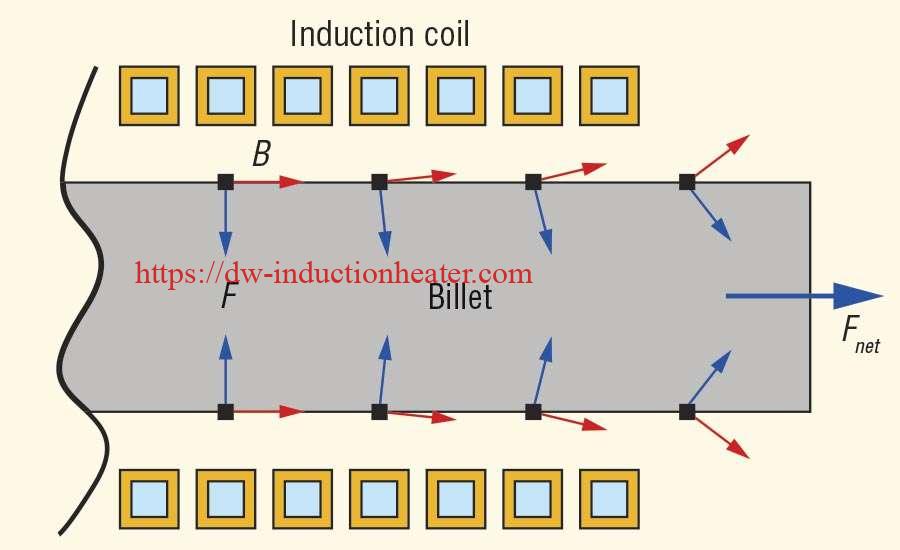
An induction billets heater is a specialized piece of equipment used in the hot billet forming process. It uses electromagnetic induction to heat metal billets to the required temperature for shaping and forming.induction billets heater for hot billets forming The process of hot billet forming is a critical aspect of the manufacturing industry, where the transformation of metal into various shapes and products occurs. A fundamental component of this process is the heating of billets, which are long, solid bars or blocks of metal. The method employed to heat these billets significantly affects the efficiency, quality, and overall cost of production. This is where induction billet heaters come into play, offering a modern, efficient, and precise heating solution. In this comprehensive article, we will explore the technology behind induction billet heaters, their advantages, and their applications in the hot billet forming industry. How does an induction billets heater work? The induction billets heater works by using an electromagnetic field to generate heat within the metal billet. An alternating current is passed through a coil, creating a magnetic field. This magnetic field induces eddy currents within the billet, causing it to heat up rapidly. Technology Overview: Induction heating is based on the principle of electromagnetic induction, discovered by Michael Faraday in the 1830s. It involves generating eddy currents within a conductive material, such as a metal billet, by subjecting it to a varying magnetic field. The interaction between the magnetic field and the eddy currents produces resistive heat within the billet. An induction billet heater typically comprises an induction coil, power supply, and control system, all designed to heat billets uniformly to the desired temperature. Components and Functionality: 1 Coil: The induction coil, often made from copper tubing, is the heart of the billets heater. It is designed to carry a high-frequency alternating current (AC). The shape and size of the coil are tailored to the dimensions of the billets to ensure efficient heating. When a billet is placed within or next to the coil, the alternating magnetic field induces a current in the billet, creating heat. 2. Power Supply: The power supply for an induction billet heater is an inverter that converts electrical energy from the grid to the high-frequency AC needed for the induction process. Modern power supplies are capable of delivering a wide range of frequencies, allowing for precise control over the heating process. 3. Control System: The control system is responsible for regulating the heating cycle, monitoring temperature, and ensuring that the billet is heated uniformly to the set specifications. This is typically achieved through the use of temperature sensors, feedback loops, and advanced software that adjusts the power supply in real time. What are the advantages of using an induction billets heater? Induction billets heaters offer several advantages over traditional heating methods such as gas furnaces or resistance ovens: 1. Efficiency: Induction heating is highly energy-efficient, as the heat is generated directly within the billet without the need for a transfer medium. This direct heating method minimizes heat loss and can significantly reduce energy consumption. 2. Precision: The ability to closely control the power and frequency of the induction heater allows for precise temperature control. This results in uniform heating of the billet, which is essential for maintaining the metallurgical properties of the metal during forming. 3. Speed: Induction heating can be much faster than traditional methods, as the heat is generated almost instantaneously within the billet. This reduces cycle times and increases throughput. 4. Safety: Since induction heating does not rely on combustion, it presents fewer safety hazards than flame-based heating. The absence of flames and reduced emissions contribute to a safer and cleaner working environment. 5. Flexibility: Induction billet heaters can be designed to accommodate a range of billet sizes and compositions, making them suitable for various applications within the metal forming industry. What types of billets can be heated using an induction billets heater? Induction billets heater can be used for heating a wide range of metal billets, including steel, aluminum, copper, and other alloys. The size and shape of the billets can vary, and the induction heater can be customized to suit specific requirements. Applications in Hot Billet Forming: Induction billets heater are employed in a variety of hot billet forming processes, including forging, extrusion, and rolling. In forging, the heated billets are deformed between dies to form complex shapes. In extrusion, heated billets are forced through a die to create elongated products with uniform cross-sections. Rolling involves passing the heated billet through a series of rolls to achieve the desired shape and thickness. Conclusion: Induction billets heaters represent a significant advancement in the field of hot billet forming. Their ability to deliver efficient, precise, and rapid heating has made them indispensable in modern manufacturing setups. With the continued focus on energy efficiency and production optimization, the role of induction heating in the metal industry is set to expand further, driving innovation and quality in the manufacturing processes of the future. https://dw-inductionheater.com/understanding-induction-billets-heater-for-hot-billet-forming-processes.html?feed_id=237586&_unique_id=65faeeada2776
Understanding Induction Billets Heater for Hot Billet Forming Processes

What is an induction billets heater for hot billet forming?

An induction billets heater is a specialized piece of equipment used in the hot billet forming process. It uses electromagnetic induction to heat metal billets to the required temperature for shaping and forming.induction billets heater for hot billets forming The process of hot billet forming is a critical aspect of the manufacturing industry, where the transformation of metal into various shapes and products occurs. A fundamental component of this process is the heating of billets, which are long, solid bars or blocks of metal. The method employed to heat these billets significantly affects the efficiency, quality, and overall cost of production. This is where induction billet heaters come into play, offering a modern, efficient, and precise heating solution. In this comprehensive article, we will explore the technology behind induction billet heaters, their advantages, and their applications in the hot billet forming industry. How does an induction billets heater work? The induction billets heater works by using an electromagnetic field to generate heat within the metal billet. An alternating current is passed through a coil, creating a magnetic field. This magnetic field induces eddy currents within the billet, causing it to heat up rapidly. Technology Overview: Induction heating is based on the principle of electromagnetic induction, discovered by Michael Faraday in the 1830s. It involves generating eddy currents within a conductive material, such as a metal billet, by subjecting it to a varying magnetic field. The interaction between the magnetic field and the eddy currents produces resistive heat within the billet. An induction billet heater typically comprises an induction coil, power supply, and control system, all designed to heat billets uniformly to the desired temperature. Components and Functionality: 1 Coil: The induction coil, often made from copper tubing, is the heart of the billets heater. It is designed to carry a high-frequency alternating current (AC). The shape and size of the coil are tailored to the dimensions of the billets to ensure efficient heating. When a billet is placed within or next to the coil, the alternating magnetic field induces a current in the billet, creating heat. 2. Power Supply: The power supply for an induction billet heater is an inverter that converts electrical energy from the grid to the high-frequency AC needed for the induction process. Modern power supplies are capable of delivering a wide range of frequencies, allowing for precise control over the heating process. 3. Control System: The control system is responsible for regulating the heating cycle, monitoring temperature, and ensuring that the billet is heated uniformly to the set specifications. This is typically achieved through the use of temperature sensors, feedback loops, and advanced software that adjusts the power supply in real time. What are the advantages of using an induction billets heater? Induction billets heaters offer several advantages over traditional heating methods such as gas furnaces or resistance ovens: 1. Efficiency: Induction heating is highly energy-efficient, as the heat is generated directly within the billet without the need for a transfer medium. This direct heating method minimizes heat loss and can significantly reduce energy consumption. 2. Precision: The ability to closely control the power and frequency of the induction heater allows for precise temperature control. This results in uniform heating of the billet, which is essential for maintaining the metallurgical properties of the metal during forming. 3. Speed: Induction heating can be much faster than traditional methods, as the heat is generated almost instantaneously within the billet. This reduces cycle times and increases throughput. 4. Safety: Since induction heating does not rely on combustion, it presents fewer safety hazards than flame-based heating. The absence of flames and reduced emissions contribute to a safer and cleaner working environment. 5. Flexibility: Induction billet heaters can be designed to accommodate a range of billet sizes and compositions, making them suitable for various applications within the metal forming industry. What types of billets can be heated using an induction billets heater? Induction billets heater can be used for heating a wide range of metal billets, including steel, aluminum, copper, and other alloys. The size and shape of the billets can vary, and the induction heater can be customized to suit specific requirements. Applications in Hot Billet Forming: Induction billets heater are employed in a variety of hot billet forming processes, including forging, extrusion, and rolling. In forging, the heated billets are deformed between dies to form complex shapes. In extrusion, heated billets are forced through a die to create elongated products with uniform cross-sections. Rolling involves passing the heated billet through a series of rolls to achieve the desired shape and thickness. Conclusion: Induction billets heaters represent a significant advancement in the field of hot billet forming. Their ability to deliver efficient, precise, and rapid heating has made them indispensable in modern manufacturing setups. With the continued focus on energy efficiency and production optimization, the role of induction heating in the metal industry is set to expand further, driving innovation and quality in the manufacturing processes of the future. https://dw-inductionheater.com/understanding-induction-billets-heater-for-hot-billet-forming-processes.html?feed_id=237552&_unique_id=65fae8aaa1936

2021年11月6日星期六

Induction Billet Heater

Induction billet heater for the heating of copper/aluminum/iron steel billets before hot forming

Product Description For heating various of bar materials: such as steel & iron, bronze, brass, aluminum alloy, etc. Picture just for reference, color is changable with different power. Functions and special specifications customized by customer's requirements. Features and Advantages: 1.Automatic:Automatic feeding, automatic selection of the work-piece is good or bad, automatic measurement of   temperature, automatic discharge. 2. Integrated design: Save installation time,cost and space. 3. Operation panel embedded displays machine operating states, to facilitate fault diagnosis.
  Features Detail
1 Heating fast and stable saving 20%- 30% electric energy than traditional way; High efficiency and low energy consumption
2 Small in size Easy to install, operate and repair
3 Safe and reliable No high voltage, very safe to your workers.
4 A cooling circulation system Able to operate continuously 24 hours
5 complete self-protect function many types of alarm lamps: over-current, over-voltage, over hot, water shortage etc. These lamps can control and protect machine.
6 Environmental protection Almost no oxide layer, produced no exhaust, no waste-water
7 IGBT Type Avoid the interruption of unrelated electric net; Ensure the long-life of the machine.
  Parameter
DW-MF-200 DW-MF-250 DW-MF-300 DW-MF-400 DW-MF-500 DW-MF-600
Input Voltage 3phases, 380V/410V/440V , 50/60Hz
Max Input Current 320A 400A 480A 640A 800A 960A
Oscillating frequency 0.5KHz^20KHz ( Oscillating frequency will be customized according to the size of heating parts)
Duty Cycle Loading 100%,24h continuously work
Cooling Water Desires 0.1MPa
Dimension Host 1000X800X1500mm 1500X800X2800mm 850X1700X1900mm
Extension extension will be customized according to the material and size of heating parts
Weight 110kg 150kg 160kg 170kg 200kg 220kg
Depend on the dimension of extension
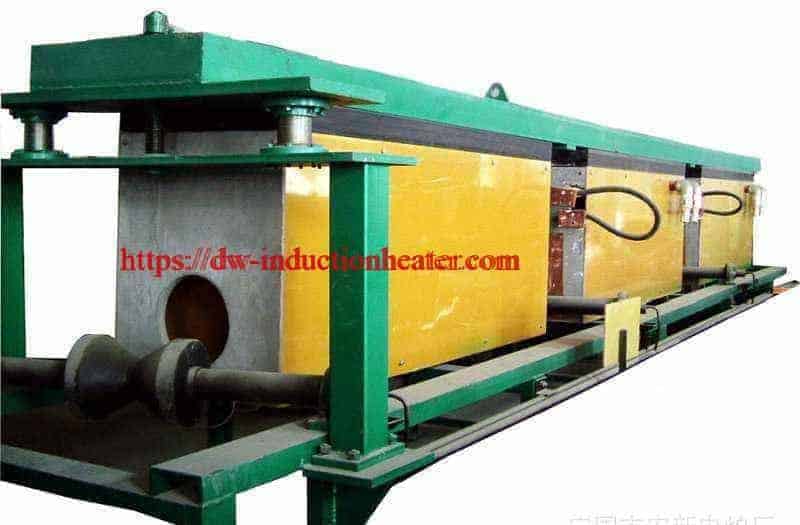
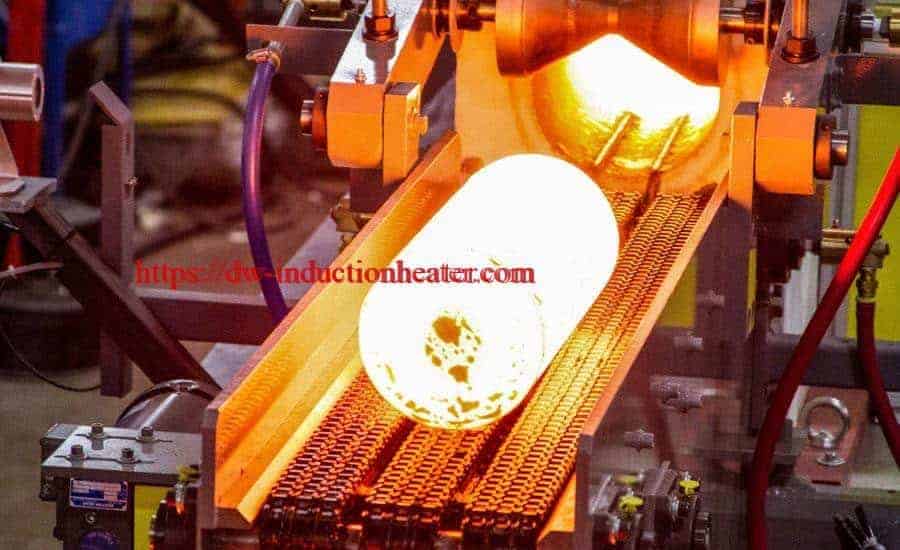
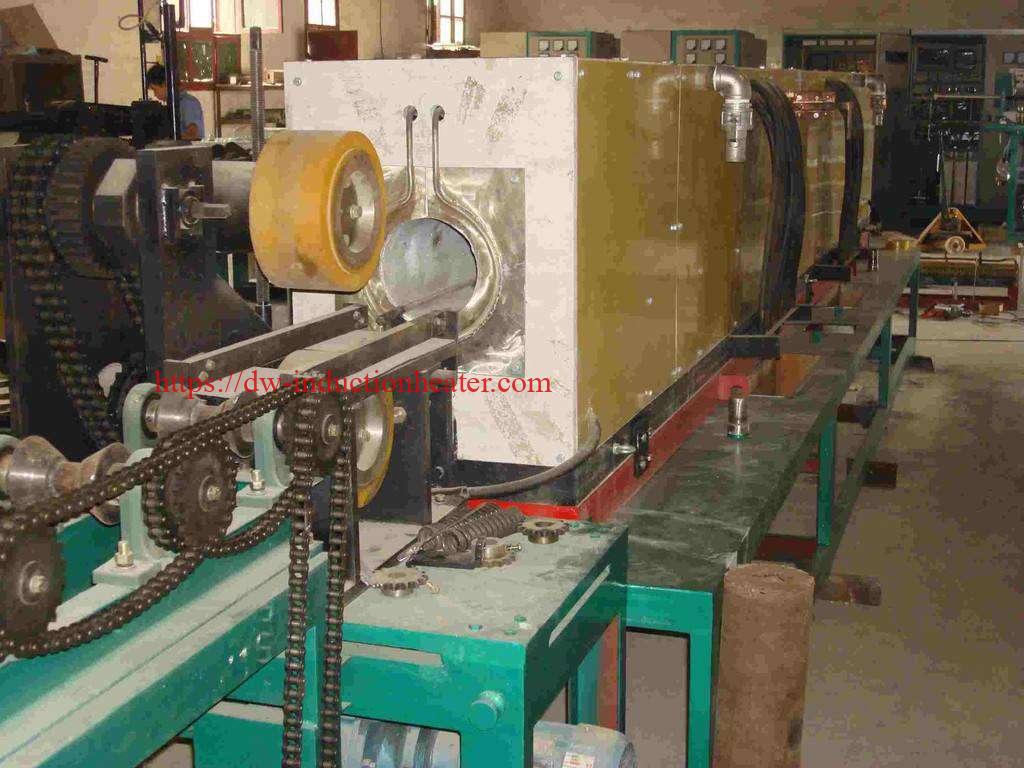
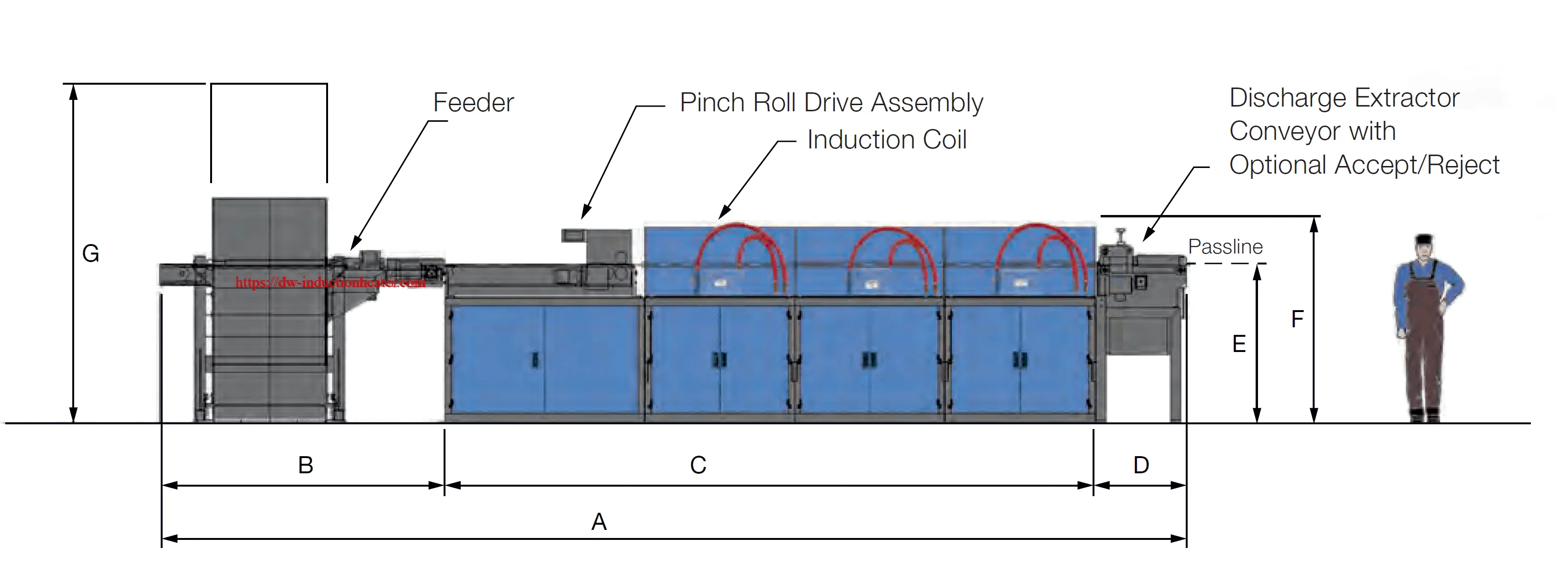
In the induction billet heater the whole of the billets or slug is heated. Normally for short billets or slugs a hopper or bowl is used to automatically present the billets in line to pinch rollers, chain driven tractor units or in some cases pneumatic pushers. The billets are then driven through the coil one behind the other on water cooled rails or ceramic liners are used through the coil bore which reduce friction and prevent wear. The length of the coil is a function of the required soak time, the cycle time per component and the length of the billet. In high volume large cross section work it is not unusual to have 4 or 5 coils in series to give 5 m (16 ft) of coil or more. induction forge heater principle induction forge heating furnace for copper/brass/aluminum/iron steel hot forming induction billets heater for copper/aluminum/iron steel hot forming copper billets/bars/rods forge hot forming

关注者

我的简介

我的照片
HLQ induction heating machine manufacturer provides the service of induction brazing,melting,hot forming,hardening surface,annealing,shrink fitting,PWHT,etc.